
Voge 300 Rally problems: owner checks, trail reliability and used buying guide
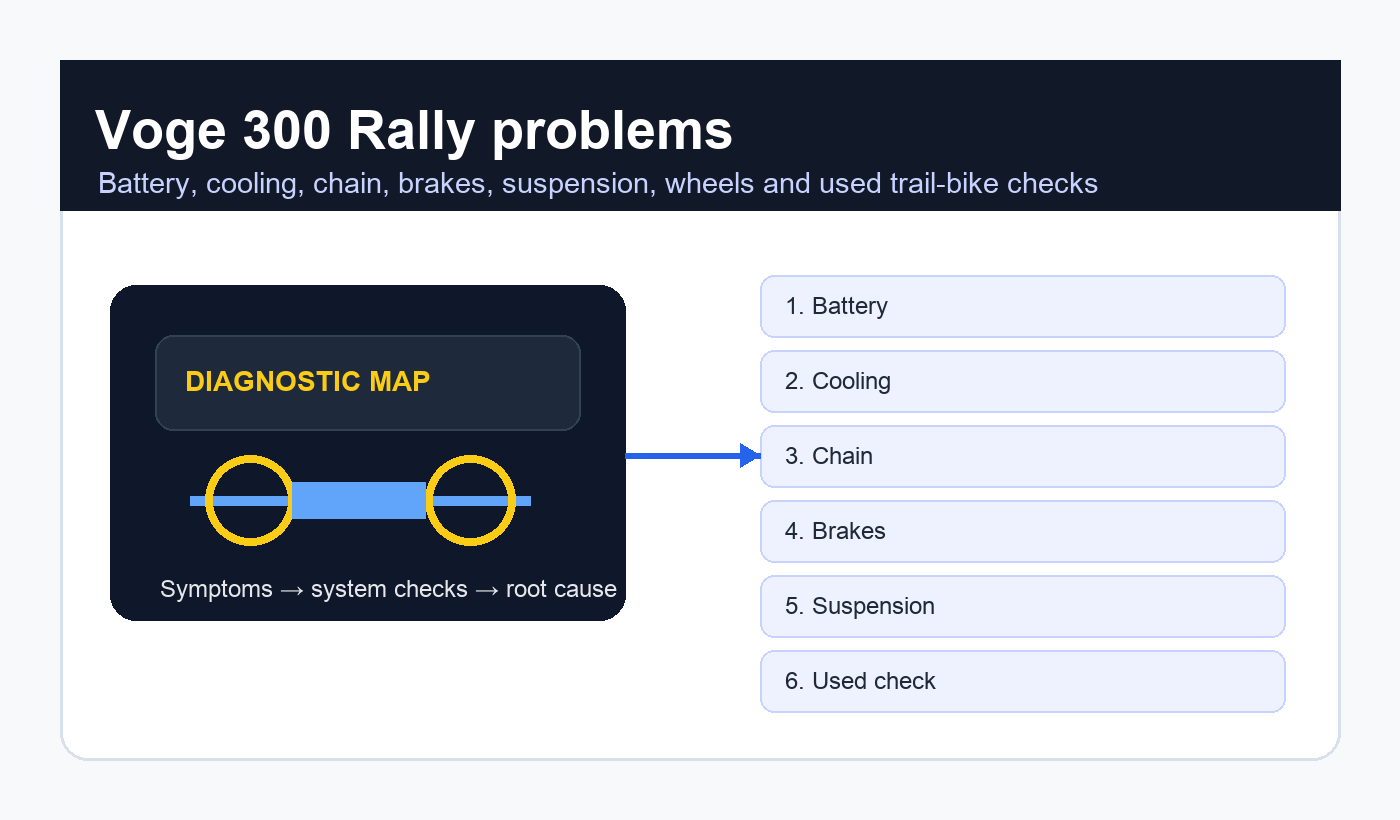
Voge 300 Rally problems should be judged with the motorcycle’s purpose in mind. This is a light adventure and trail-style single-cylinder machine, not a heavy touring bike and not a hard-enduro race bike. It is bought by riders who want simple road travel, gravel roads, commuting, weekend exploring and a manageable seat-to-weight feel. That mixed use means many complaints come from setup, maintenance, accessories and off-road wear rather than one dramatic engine failure.
The useful way to approach Voge 300 Rally problems is to separate normal dual-sport character from real faults. A single-cylinder engine vibrates more than a twin. Long-travel suspension moves more than road-bike suspension. Knobbier tyres make noise and can wander on tarmac. Chain drive needs more attention after mud and water. Real warning signs are different: coolant loss, charging failure, repeated stalling, brake pulsing, ABS faults, loose spokes, oil leaks, electrical cutouts or a chassis that feels unstable after a hard impact.
This guide is written for owners and used buyers who need a practical inspection path. It covers battery and charging, starting, engine and fuelling, cooling, chain and sprockets, clutch and gearbox feel, brakes and ABS, suspension, wheels, tyres, accessories, corrosion, off-road checks, service history and the moments when the ride should stop.
Quick reliability verdict
Voge 300 Rally problems are most likely to show up in ordinary adventure-bike systems: battery voltage, cooling, chain adjustment, fasteners, fork seals, brake sensors, spoke tension, accessory wiring and maintenance after dirt riding. A healthy bike should start cleanly, idle steadily, pull without hesitation, hold temperature, shift predictably, brake straight and feel stable at road speed.
The 300 Rally should not repeatedly show warning lights, flatten batteries, smell of coolant, overheat, stall at junctions, weave because of loose steering bearings, clunk from an abused chain, pulse through the brake lever or cut out after rain. Those symptoms deserve diagnosis, not forum guessing.
For manufacturer information, start with Voge’s official global website. For safety and recall awareness on imported or European-market motorcycles, check official resources such as the European Safety Gate alerts portal, then confirm any concern by VIN with the local importer or dealer.
| Area | Common symptom | First check | Risk if ignored |
|---|---|---|---|
| Battery and charging | Slow cranking, dash reset, random warnings | Load-test battery and charging voltage | Stranding and false fault diagnosis |
| Cooling | Runs hot, fan never starts, coolant smell | Coolant level, radiator, fan, cap | Overheating and engine damage |
| Chain and sprockets | Clunking, snatch, tight spots | Slack, alignment, lubrication, teeth | Bearing stress and chain failure |
| Brakes and ABS | Pulsing, warning light, weak bite | Pads, discs, sensor rings, wiring | Safety risk on road and trail |
| Wheels and suspension | Wobble, harshness, fork oil marks | Tyres, spokes, bearings, fork seals | Instability and expensive wear |
Battery, charging and starting checks
Electrical Voge 300 Rally problems often begin with voltage. Modern adventure-style singles depend on a healthy battery for fuel injection, sensors, dashboard operation and reliable starting. A weak battery can create slow cranking, dash resets, warning lights and intermittent symptoms that look far more serious than they are.
Test resting voltage, cranking voltage and charging voltage before replacing sensors or starter parts. Clean terminals and grounds. Inspect the main fuse area, starter relay and any accessory wiring. If heated grips, auxiliary lights, USB chargers, GPS wiring or trackers have been fitted, disconnect them during diagnosis. Poor accessory wiring is one of the fastest ways to create confusing Voge 300 Rally problems.
If the motorcycle starts after a jump but fails again later, the battery or charging system needs attention. If it cranks normally but does not fire, move toward fuel, spark, injector, side-stand switch, clutch switch and sensor checks. Do not keep draining the battery during repeated start attempts; that can create a second problem.
Engine, fuelling and stalling symptoms
Engine-related Voge 300 Rally problems should be diagnosed from conditions. A single-cylinder engine can feel lumpy at low rpm, but it should not stall repeatedly, hesitate dangerously, smell strongly of fuel or lose power under normal load. Check simple causes first: fuel quality, air filter, spark plug, battery voltage, intake clamps, throttle-body cleanliness and any recent exhaust or intake changes.
Adventure bikes often see dust, water crossings, low-speed heat and luggage. Dust can load the air filter. Water can reach connectors. Heat can expose weak fans or poor coolant service. Luggage can make gearing and clutch feel worse. If the symptom appeared after a trail ride, cleaning, accessory fitment or fuel stop, that timing matters.
For comparison with another lightweight single, read the Honda CRF300L derestriction guide. The Honda topic is tuning-focused, but it explains how small single-cylinder adventure bikes respond to gearing, fuelling and realistic expectations. That perspective helps keep Voge 300 Rally problems grounded in real use.
Cooling system and heat management
Cooling-related Voge 300 Rally problems deserve quick attention because a trail-style bike can collect mud, insects and debris around the radiator. Warmth in traffic is not automatically a fault. Overheating warnings, coolant smell, visible stains, repeated level loss or a fan that never runs are different.
Check coolant only when the engine is cold. Inspect the radiator for blocked fins, bent areas, mud, stone damage and rubbed hoses. Make sure crash bars, auxiliary lights or tool bags are not blocking airflow or touching coolant hoses. After muddy rides, clean the radiator gently rather than blasting seals and connectors with aggressive pressure.
If the temperature rises at road speed, stop and inspect level, radiator condition and possible blockage. If it rises only in traffic, confirm fan operation. If coolant keeps disappearing, do not simply top up forever. Proper Voge 300 Rally problems diagnosis means finding the leak or pressure issue before heat damages the engine.
Chain, sprockets and gearbox feel
Drive-line Voge 300 Rally problems are common on any bike used off pavement. A chain that is too tight can stress countershaft bearings and make suspension feel harsh. A chain that is too loose can clunk and snatch. Mud and grit accelerate wear. Poor alignment makes the bike feel rough and can shorten sprocket life.
Measure chain slack exactly as the manual specifies, with the bike in the correct position. Inspect tight spots, lubrication, rear-wheel alignment, sprocket teeth and the front sprocket area. If gear changes feel notchy, check clutch free play, oil condition, lever adjustment and shift linkage before assuming internal gearbox damage.
| Symptom | Likely area | Owner check | Workshop check |
|---|---|---|---|
| Clunk on throttle | Chain slack or cush drive | Measure slack and inspect teeth | Cush-drive and bearing inspection |
| Notchy shifting | Clutch free play, oil, linkage | Check lever and oil age | Clutch and shift mechanism |
| Vibration at speed | Tyres, chain, wheel balance | Inspect tyres and tight spots | Balance and bearing checks |
| Snatchy low-speed ride | Chain, gearing, fuelling | Fix chain first | Fuel-injection diagnosis if needed |
Brakes, ABS and sensor issues
Brake-related Voge 300 Rally problems are safety issues. Dust, mud, water, wheel removal and stone impacts can affect pads, discs, ABS rings and sensor wiring. Squeal can be minor, but pulsing, grinding, dragging, soft lever feel, ABS warnings or pulling to one side should be inspected immediately.
Check pad thickness, disc condition, caliper movement, brake-fluid age, hose routing, ABS sensor clearance and tone-ring condition. If the warning appeared after tyre replacement, trail riding, washing or wheel removal, inspect the sensor area first. Do not keep clearing warnings without finding the cause.
Suspension, wheels and tyres
Many Voge 300 Rally problems are described as wobble, vague steering, harshness or instability. Sometimes the motorcycle is faulty; often it is set up badly or has been hit hard off road. Tyre pressure, tyre type, luggage position, spoke tension, wheel bearings, steering-head bearings, fork alignment and rear shock preload all change the feel.
Inspect tyres for uneven wear, cuts, wrong pressure and date age. Check spokes by feel and sound where applicable. Look for fork oil around seals and stanchions. Confirm that the handlebar, controls and wheel alignment are straight after falls. If the bike wanders at speed with luggage, move weight lower and forward before blaming the chassis.
For broader adventure-bike comparison, read the Moto Morini X-Cape 650 problems guide and the Moto Morini X-Cape 700 problems guide. Larger bikes differ, but their owner checks around luggage, cooling, electrics and chassis setup are useful context.
Accessory wiring and trail add-ons
A large share of early Voge 300 Rally problems can come from accessories. Riders often add crash bars, handguards, skid plates, auxiliary lights, heated grips, GPS mounts, luggage racks, USB chargers and phone holders before they understand the stock bike. Useful parts can create faults when fitted badly.
Check every accessory after the first few rides. Make sure skid plates do not resonate against the frame, crash bars do not rub hoses, lights are fused properly, luggage racks are tight and wires are not pinched by steering movement. A loose guard can sound like engine trouble. Bad wiring can look like ECU trouble. A heavy rear bag can make suspension and steering feel worse.
How to describe faults to a workshop
Good workshop notes save time. Instead of saying the bike “has electrical issues,” describe whether the dash resets, the starter clicks, the engine cuts out, the ABS light stays on or the battery is flat after parking. Instead of saying it “overheats,” describe whether the fan runs, whether coolant is disappearing, whether the warning appears in traffic or whether the radiator is blocked after mud.
Take photos of warning lights, leaks, damaged connectors and loose brackets. Note mileage, fuel level, weather, whether luggage was fitted and whether the symptom happened after washing or trail riding. Do not erase useful evidence before a dealer visit unless you need to move the motorcycle safely. Clear notes help a technician separate normal single-cylinder behaviour from a genuine fault.
Also keep a simple service log. Write down oil changes, coolant checks, chain replacements, tyre changes, brake pad changes and accessory installations. When a new symptom appears, that timeline often reveals the cause faster than guessing. A fault that begins the day after extra lights were fitted deserves a different investigation from a fault that begins after a muddy river crossing.
Corrosion, fasteners and finish
Corrosion-related Voge 300 Rally problems depend on climate and care. Bikes ridden through winter salt, coastal air, mud or frequent rain need regular cleaning. Pay attention to spoke nipples, fasteners, chain adjusters, exhaust hardware, radiator brackets, electrical connectors and lower-frame areas.
Use protective products where appropriate, rinse salt quickly and avoid forcing water into bearings or connectors. After a wet or muddy ride, dry the chain, lubricate it and inspect exposed bolts. Small fasteners can become a large ownership headache if they corrode before the first major service.
Used buying checklist
Used buyers researching Voge 300 Rally problems should inspect history before accessories. A clean bike with invoices, two keys, original parts, dealer notes and tidy wiring is more valuable than one covered in expensive parts fitted carelessly. Ask how it was used: commuting, trail riding, luggage touring and hard off-road practice leave different marks.
Start it cold. Watch the dash, listen to idle, check fan operation when warm, inspect coolant, look at brake discs, measure chain slack, check tyres, inspect fork seals, look for crash marks and test every switch. Ride at low speed and road speed. A quick loop around a parking lot is not enough for a dual-sport style motorcycle.
| Inspection point | Good sign | Warning sign | Decision |
|---|---|---|---|
| Service history | Invoices and dealer notes | No proof of first service | Budget full baseline service |
| Trail damage | Minor cosmetic marks only | Bent controls, cracked mounts | Inspect alignment carefully |
| Electrical accessories | Fused, tidy, labelled wiring | Tape, twisted wires, random connectors | Assume correction work |
| Cooling | Stable temp and clean radiator | Coolant smell or stains | Diagnose before buying |
| Wheels | True rims and even tyres | Flat spots, loose spokes, wobble | Price repairs before deposit |
Service rhythm after dirt riding
The easiest way to reduce Voge 300 Rally problems is to inspect the bike after the rides it was built for. Dirt, gravel, water and vibration loosen parts faster than smooth commuting. After trail use, check chain slack, spokes, tyre cuts, brake pads, radiator, skid plate, fasteners, handguards and lever position.
Do not wait for the next scheduled service if the bike has had a hard day. Clean the air-filter area as required, inspect for mud packed around cooling parts, check that ABS sensor wires are safe and make sure luggage mounts are still tight. A ten-minute post-ride check can prevent a long walk or an expensive repair.
Luggage, travel and pre-ride checks
Travel can expose Voge 300 Rally problems that never appear during short rides. A rear bag, side racks, tools, water and camping equipment change the way the suspension works and the way the chain loads over bumps. Before a longer trip, set tyre pressures for the load, check preload where possible, inspect rack bolts, measure chain slack with luggage fitted and make sure nothing touches the exhaust, tyre or indicators.
Do a loaded test ride before leaving. Listen for chain slap, rack movement, brake rub, new vibration and steering lightness. If the bike feels vague with luggage, move heavy items lower and forward. If temperature rises in slow traffic while loaded, inspect radiator airflow and fan operation before the trip. These simple checks prevent Voge 300 Rally problems from appearing far from home, where every small fault becomes harder to solve.
When to stop riding
Some Voge 300 Rally problems should stop the ride immediately. Stop for oil pressure warnings, overheating, coolant leaks, fuel smell, brake failure, a loose front end, severe chain tight spots, repeated stalling in traffic, electrical burning smell or a wheel that feels unstable after an impact.
Less urgent symptoms such as mild panel vibration, tyre noise, wind buffeting or suspension that needs preload adjustment can be planned into a service day. The line is simple: braking, steering, cooling, oil pressure, fuel leakage and electrical shutdown faults are not optional.
Common owner mistakes
The first mistake with Voge 300 Rally problems is assuming a new adventure bike needs no fastener checks. The second is fitting accessories before riding the stock bike enough to know its normal feel. The third is ignoring chain slack after dirt riding. The fourth is blaming electronics for symptoms caused by a weak battery. The fifth is buying a used bike without checking local dealer support.
The sixth mistake is confusing normal single-cylinder traits with faults. Vibration, tyre noise and wind movement can be normal. Warning lights, leaks, brake pulsing, electrical cutouts, overheating and steering play are not normal character.
FAQ
Is the Voge 300 Rally reliable?
It can be reliable when maintained and inspected properly. Most Voge 300 Rally problems owners should watch for involve battery health, chain care, cooling, brakes, suspension setup, accessory wiring and trail-use wear.
Why does my bike feel unstable on the road?
Check tyre pressure, tyre type, spoke tension, wheel balance, steering bearings, luggage position and fork alignment. Many Voge 300 Rally problems described as instability are setup or impact related.
What should I check after off-road riding?
Check chain, spokes, tyres, brake pads, radiator, skid plate, fasteners, controls, ABS sensor wiring and leaks. Post-ride inspection prevents many Voge 300 Rally problems.
Can accessories cause electrical faults?
Yes. Poorly fitted lights, chargers, heated grips or trackers can drain the battery or create intermittent electrical Voge 300 Rally problems. Disconnect accessories during diagnosis if symptoms started after installation.
What matters most when buying used?
Service history, cold start, cooling, chain condition, brake feel, wheel condition, fork seals, accessory wiring and dealer support matter most. A careful inspection prevents expensive used Voge 300 Rally problems.
Final advice
Voge 300 Rally problems should be handled with a practical order: battery, charging, fuel, air, cooling, chain, brakes, tyres, suspension, wheels, wiring and service history. That order keeps diagnosis grounded and prevents random parts spending.
If you own one, inspect it after dirt rides and keep service notes. If you are buying one, test it cold and warm, check trail damage carefully and value tidy wiring over shiny accessories. A well-prepared Voge 300 Rally can be a useful lightweight adventure bike, but neglected setup can turn normal wear into repeated Voge 300 Rally problems.