Description
Yamaha X-Max 300 chip tuning: module fitment, CVT response and setup checks
Yamaha X-Max 300 chip tuning should be treated as a measured response upgrade for a modern fuel-injected sport scooter, not as a promise that ignores the CVT, rider weight, wind, belt condition and factory electronics. The XMAX 300 already has a strong base: liquid cooling, fuel injection, automatic transmission and everyday touring practicality. A tuning module only makes sense when it is compatible, installed cleanly and tested with realistic expectations.
This product page explains how to evaluate the Yamaha X-Max 300 Chip Tuning Module before ordering, what to check on the scooter and how to set it up without chasing the highest adjustment number.
Why XMAX 300 tuning is different from small 125 scooter tuning
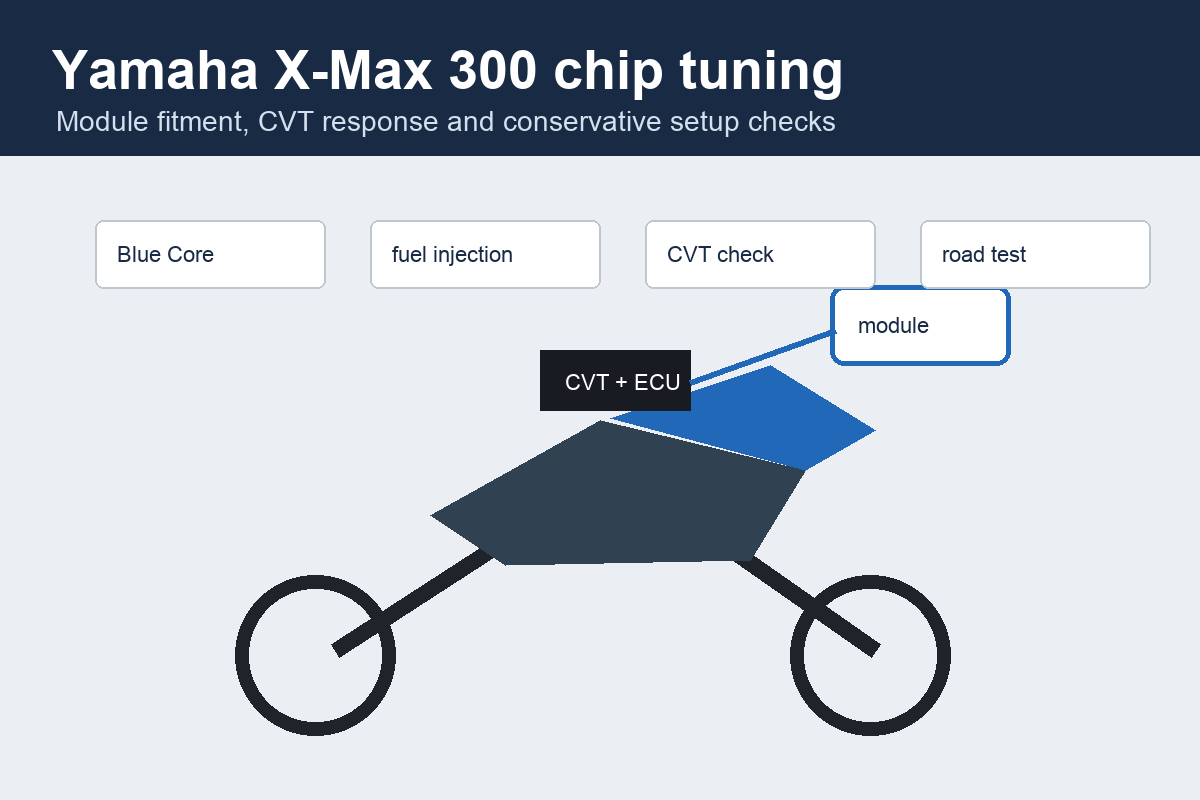
The XMAX 300 has enough engine and chassis performance to make small response changes noticeable, but it also has more systems involved. Yamaha describes the current XMAX engine as a 292 cc liquid-cooled, four-valve Blue Core single with fuel injection and CVT drive. The official Yamaha XMAX features page also notes traction control and twist-and-go CVT convenience.
That means Yamaha X-Max 300 chip tuning should be judged alongside belt condition, roller behavior, clutch engagement and normal service condition. A module can refine how the engine responds, but it cannot repair a worn CVT or replace basic maintenance.
Compatibility checklist before buying
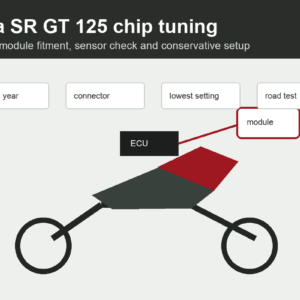
Confirm the exact model year and market version before ordering. XMAX naming varies by region, and some markets use different equipment or emissions calibration. Do not order only because the bodywork looks similar. The connector, sensor location and engine version must match.
| Check | Why it matters | Action before ordering |
|---|---|---|
| Model year | Electronics and connector layout can change | Confirm year and market version |
| Engine health | A module cannot fix poor servicing | Check plug, filter, oil and fault lights |
| CVT condition | Belt and rollers strongly affect acceleration | Inspect if mileage is high or take-off feels uneven |
| Existing upgrades | Exhaust, variator and intake changes alter response | List all modifications before setup advice |
What the module is intended to improve
The realistic aim is cleaner throttle response, better pickup feel and smoother behavior during the riding range where the scooter spends most of its time. It is not a guaranteed top-speed product. Top speed depends on CVT ratio, belt condition, road gradient, rider size, wind and how the ECU manages load.
For the full platform explanation, read our Yamaha X-Max 300 tuning guide. For riders comparing realistic gains, the Yamaha XMAX 300 power increase guide explains how CVT setup, maintenance and electronic response fit together.
Installation approach
Install the module with the ignition off and the scooter safely supported. Work slowly around body panels and wiring clips. Never pull the wiring loom to reach a connector. If the plug does not seat naturally, stop and check the fitment again.
- Remove only the panels needed for proper access.
- Compare the module connector with the scooter connector before plugging in.
- Keep the harness away from hot engine parts, sharp edges and moving suspension points.
- Secure the module so it cannot rattle inside the bodywork.
- Start with the lowest setting and warm the engine fully.
- Test in normal city and open-road riding before increasing the setting.
Setup and test ride method
Yamaha X-Max 300 chip tuning should be evaluated gradually. Choose a familiar route with a mix of low-speed take-off, midrange roll-on and steady cruising. Make one adjustment at a time. If the scooter feels smoother and more willing without warning lights or uneven idle, the setting may suit the bike. If it feels heavy, rich or inconsistent, reduce the setting.
The XMAX is a CVT scooter, so do not confuse engine response with transmission wear. A flat take-off can come from rollers, clutch shoes, belt condition or glazing, not only fueling response.
| Symptom | Possible cause | Owner response |
|---|---|---|
| Smoother roll-on | Setting may be suitable | Keep testing over several rides |
| Judder on take-off | CVT/clutch issue more likely than module | Inspect transmission wear |
| Flat high-speed feel | CVT ratio, wind or setting mismatch | Return to previous setting and compare |
| Warning light | ECU fault or connector problem | Remove change and diagnose before further use |
Official specification context
European Yamaha material lists the XMAX 300 as a 292 cc liquid-cooled, SOHC four-valve single with fuel injection, V-belt automatic transmission, 20.6 kW maximum power and 28.9 Nm maximum torque. The official Yamaha XMAX 300 specifications page is useful because it reminds owners that the scooter’s performance comes from the engine and CVT as a package.
If you are also upgrading dashboard electronics or rider information, see our motorcycle dashboard upgrade guide. It explains why wiring layout, sensor compatibility and clean installation matter on modern scooters.
Who should buy this module
This product suits XMAX 300 riders who want a reversible electronic response upgrade and are willing to test it carefully. It is best for a mechanically healthy scooter with known service history. It is not suitable for a bike with unresolved warning lights, unknown wiring changes or a rider expecting a fixed horsepower number from a simple add-on.
Yamaha X-Max 300 chip tuning is most useful when the scooter is already running well and the owner wants to fine-tune the feel. If the CVT is worn, service the transmission before judging any module.
Responsible use
Performance parts may be restricted to competition, private-road or off-road use depending on local law. Always check road legality, insurance conditions and inspection rules before using tuning parts on public roads. Use a qualified workshop if you are not comfortable with bodywork removal, sensors or wiring.
FAQ
Will this guarantee a higher top speed?
No. It is best understood as a response and setup product. Top speed depends on many mechanical and environmental factors.
Can I use it with a variator kit?
Possibly, but the whole setup should be evaluated together. Tell us about variator, exhaust or intake changes before ordering.
What setting should I start from?
Start from the lowest setting, warm the engine fully and increase only if the scooter remains smooth.
What if the scooter feels worse?
Reduce the setting, inspect the connector and check maintenance. Do not keep riding with poor idle or warning lights.
Final buying advice
Buy this module if you want a reversible way to refine a healthy XMAX 300. Treat the scooter as a complete system: engine, CVT, sensors, tyres and load all affect the final feel. Careful setup beats aggressive adjustment every time.