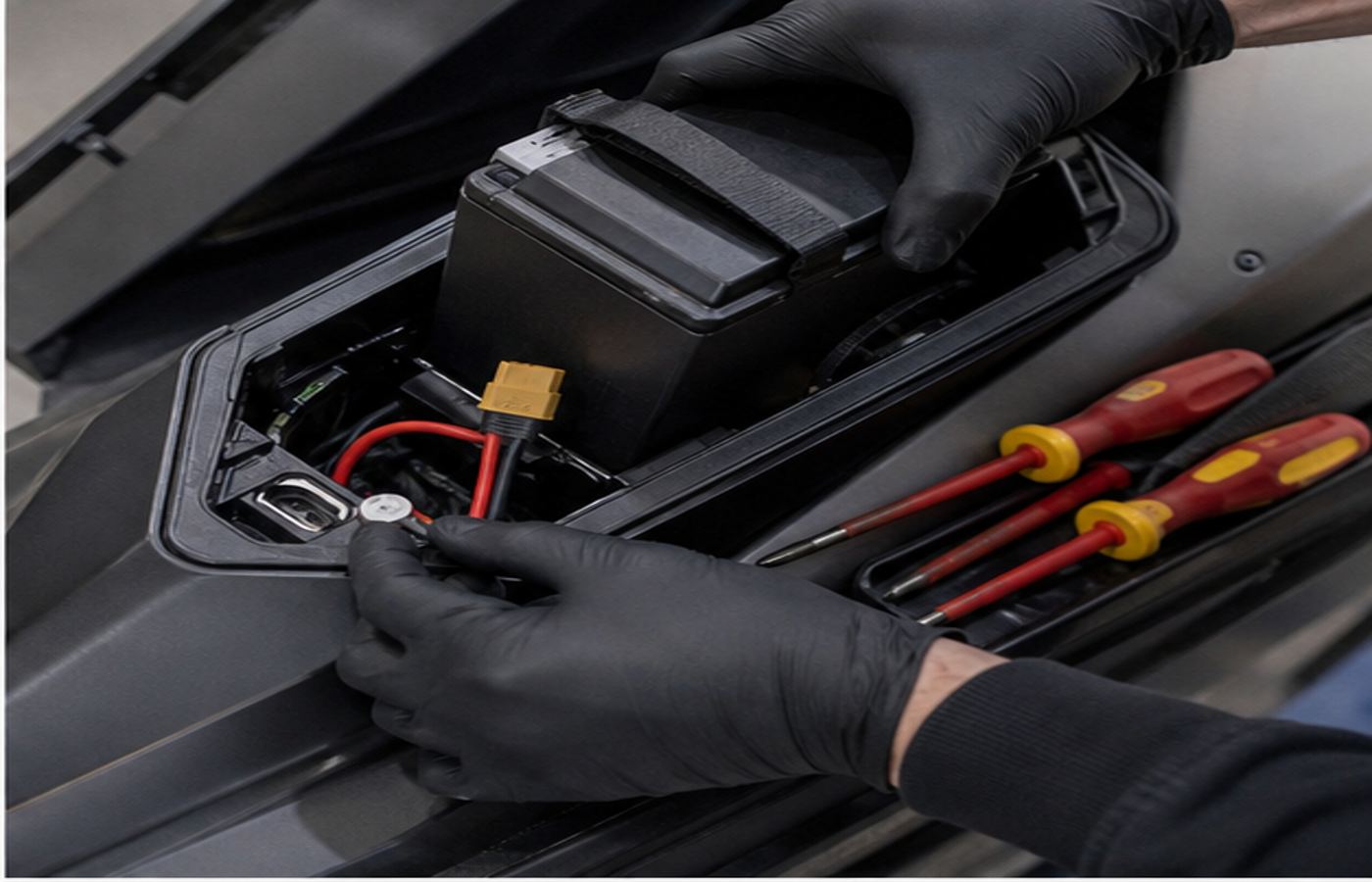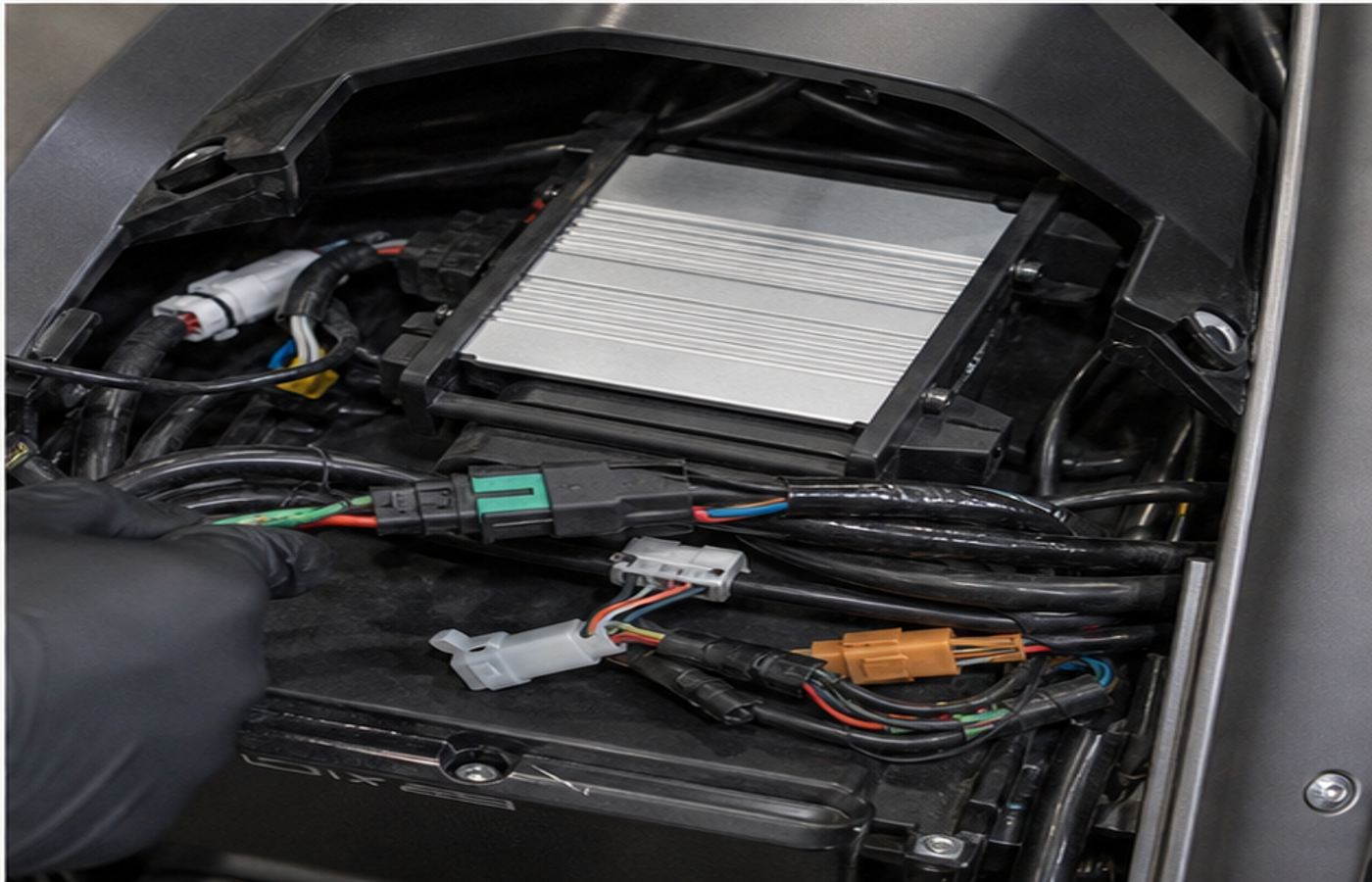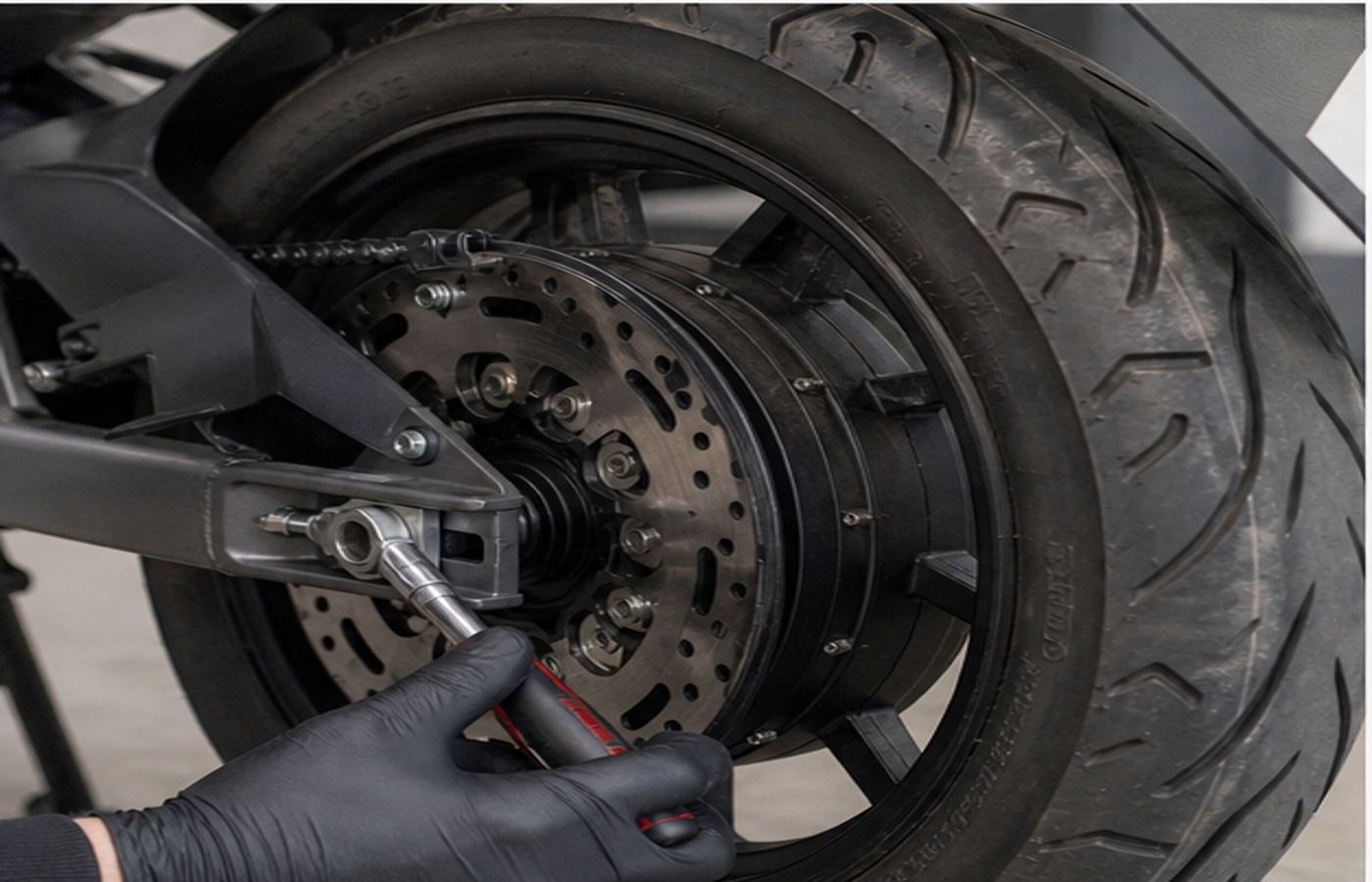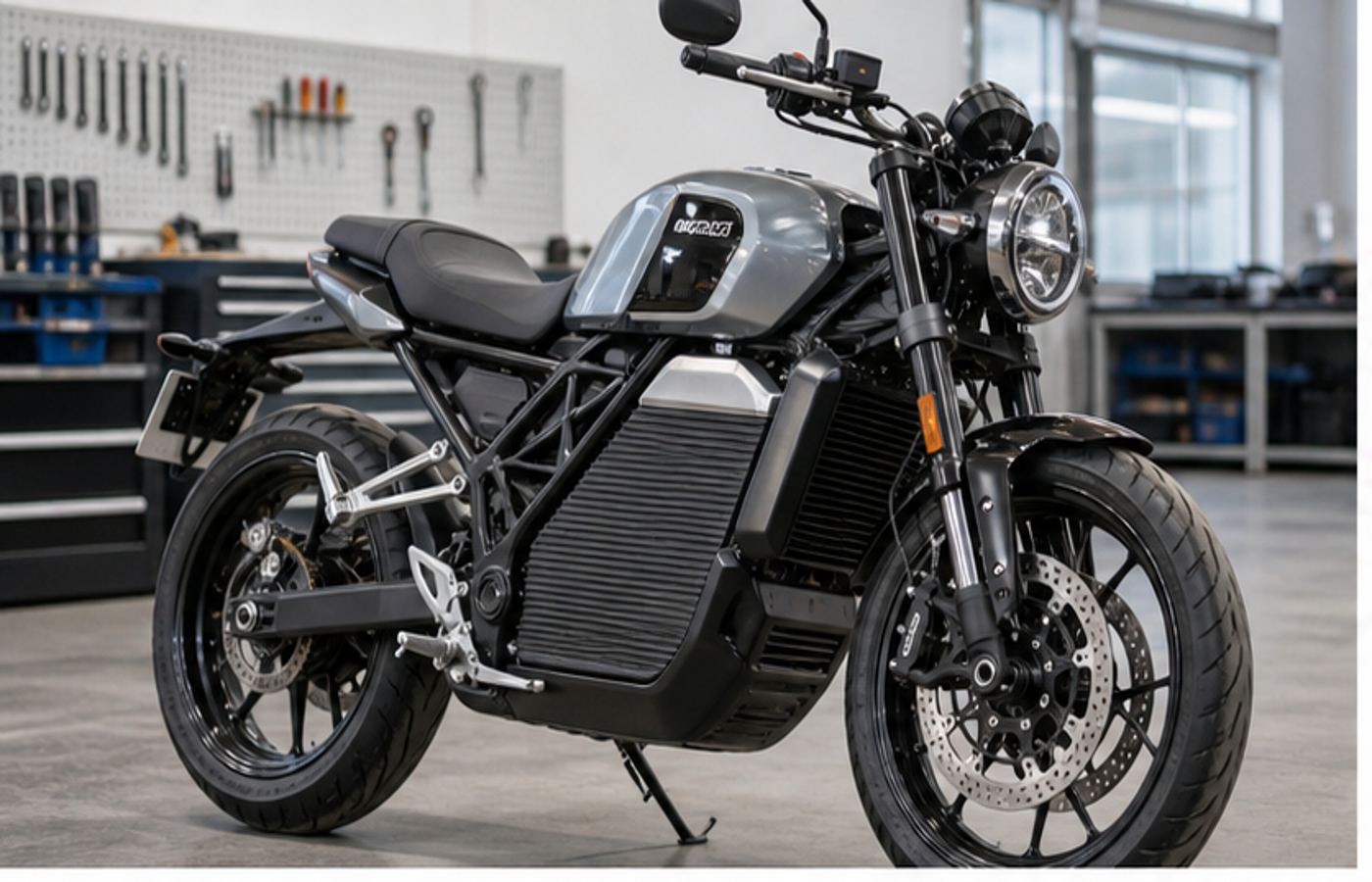
Category: Motorcycle Tuning Guides

English motorcycle tuning guides covering derestriction, chip modules, setup checks and model-specific performance upgrades for riders who want clear fitment information before buying parts.

  • CF Moto 450 MT power increase

    CF Moto 450 MT power increase

    CF Moto 450 MT power increase

    CF Moto 450 MT power increase is best treated as a careful setup job, not a promise that a 450 adventure bike can suddenly behave like a litre-class machine. The 450MT already sits in a useful place for many UK and European riders: light enough for real back-road and gravel work, strong enough for commuting and weekend travel, and close enough to the A2-friendly power window that every modification should be chosen with care.

    Owners usually ask about more power after noticing one of three things. The bike may feel a little soft when loaded with luggage, the throttle may feel muted in the middle of the rev range, or the rider may be comparing chip modules, exhausts, air filters and sprocket changes without knowing which one should come first. CF Moto 450 MT power increase makes sense only when the motorcycle is healthy, the parts fit the exact model, and the owner understands the difference between sharper response and measured horsepower.
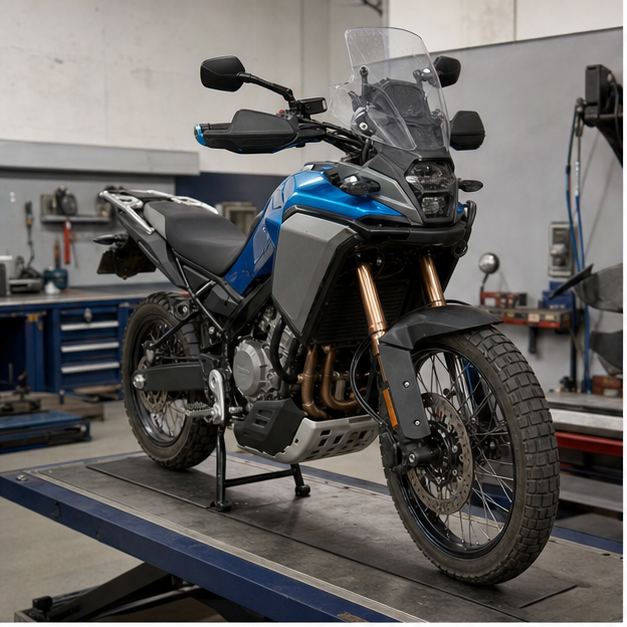
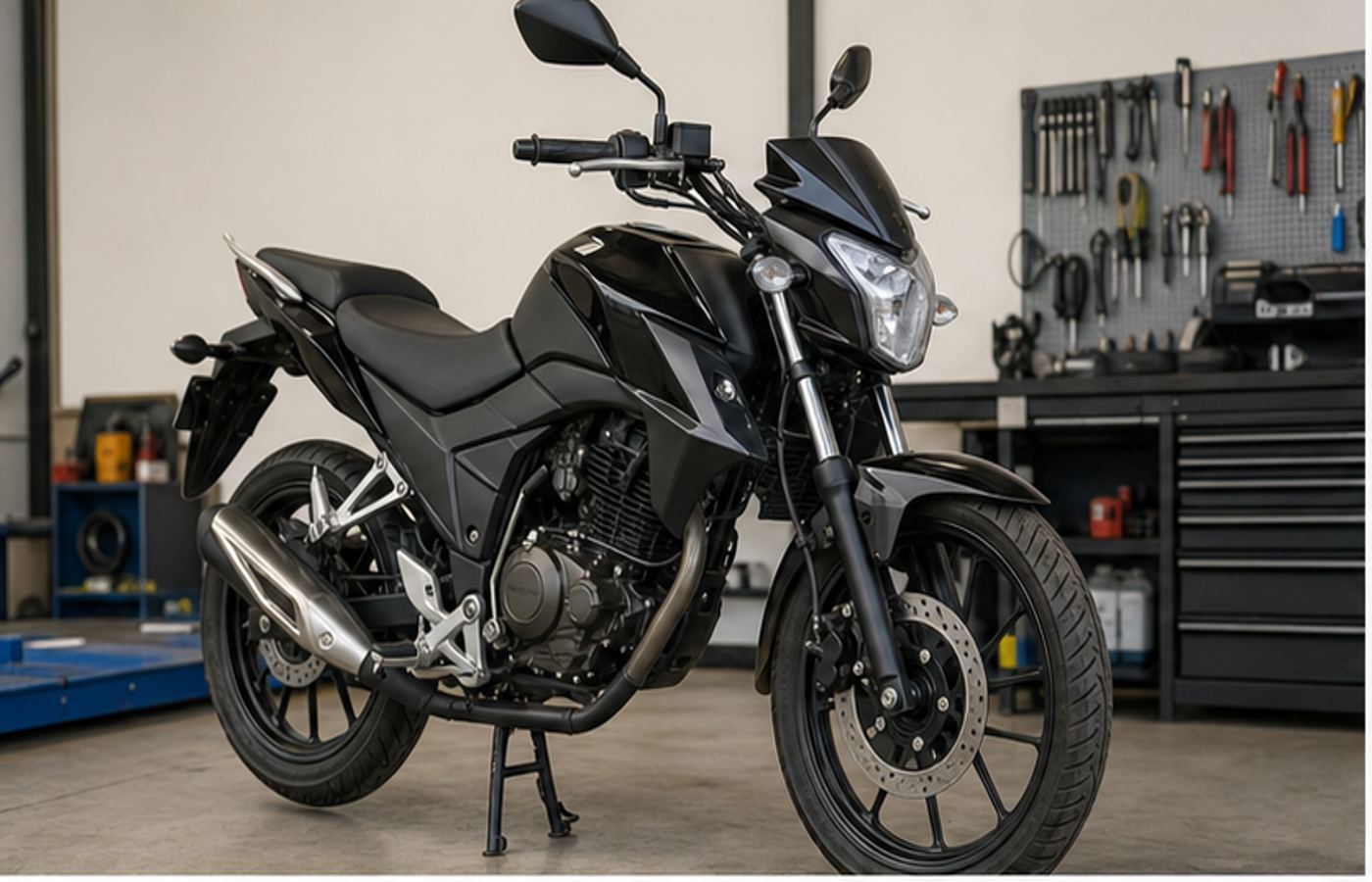
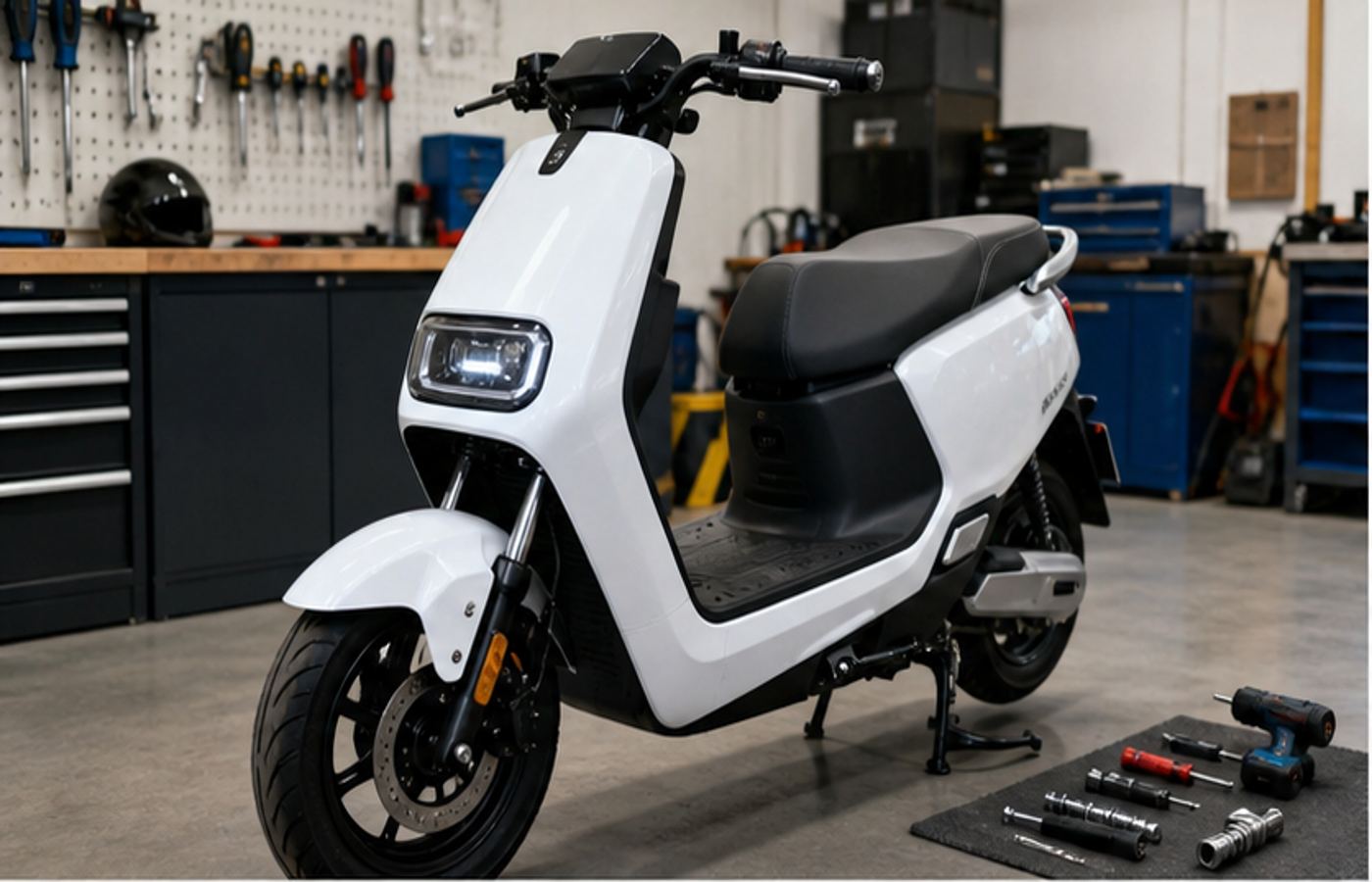
    CF Moto 450 MT power increase
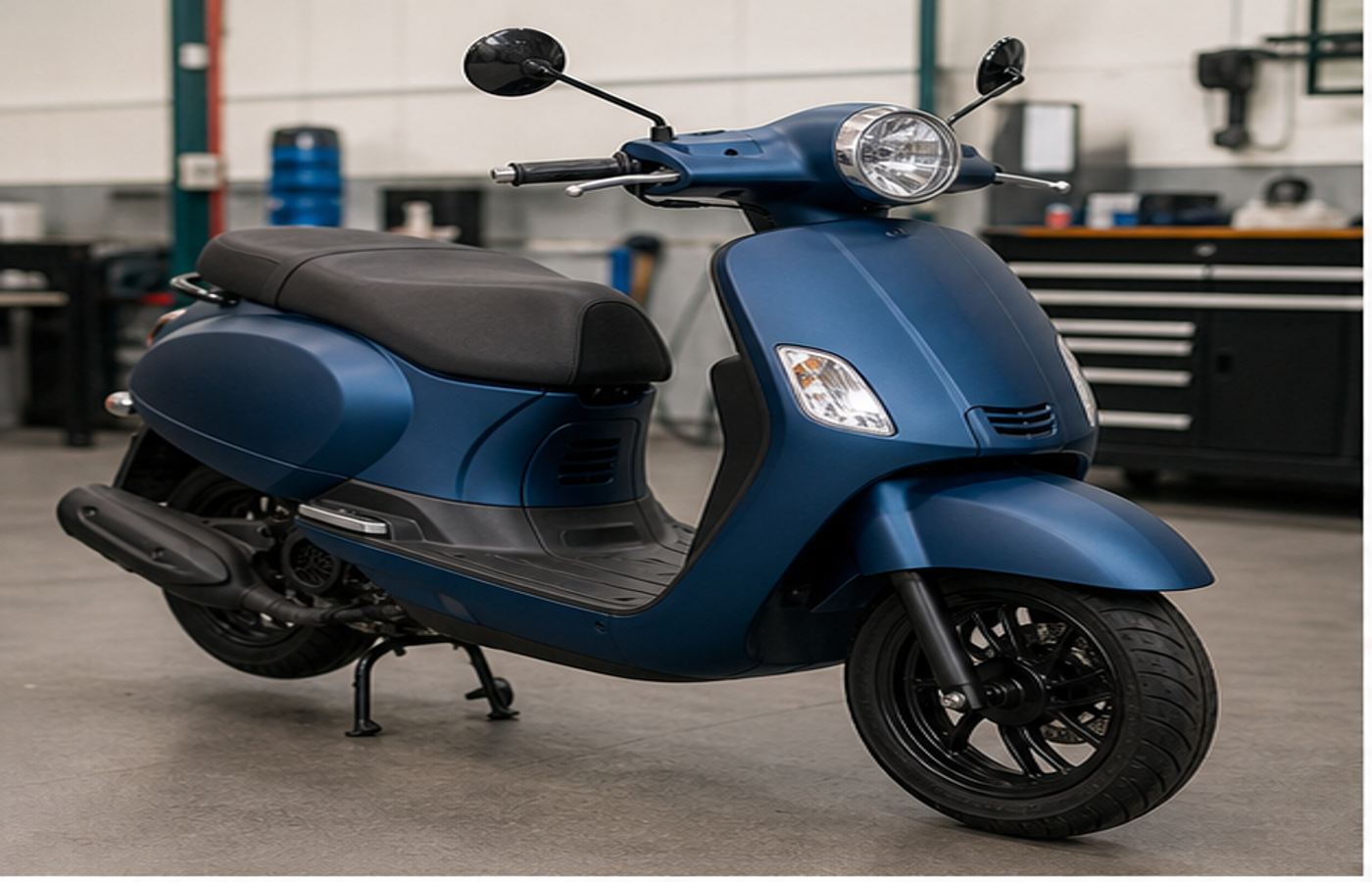
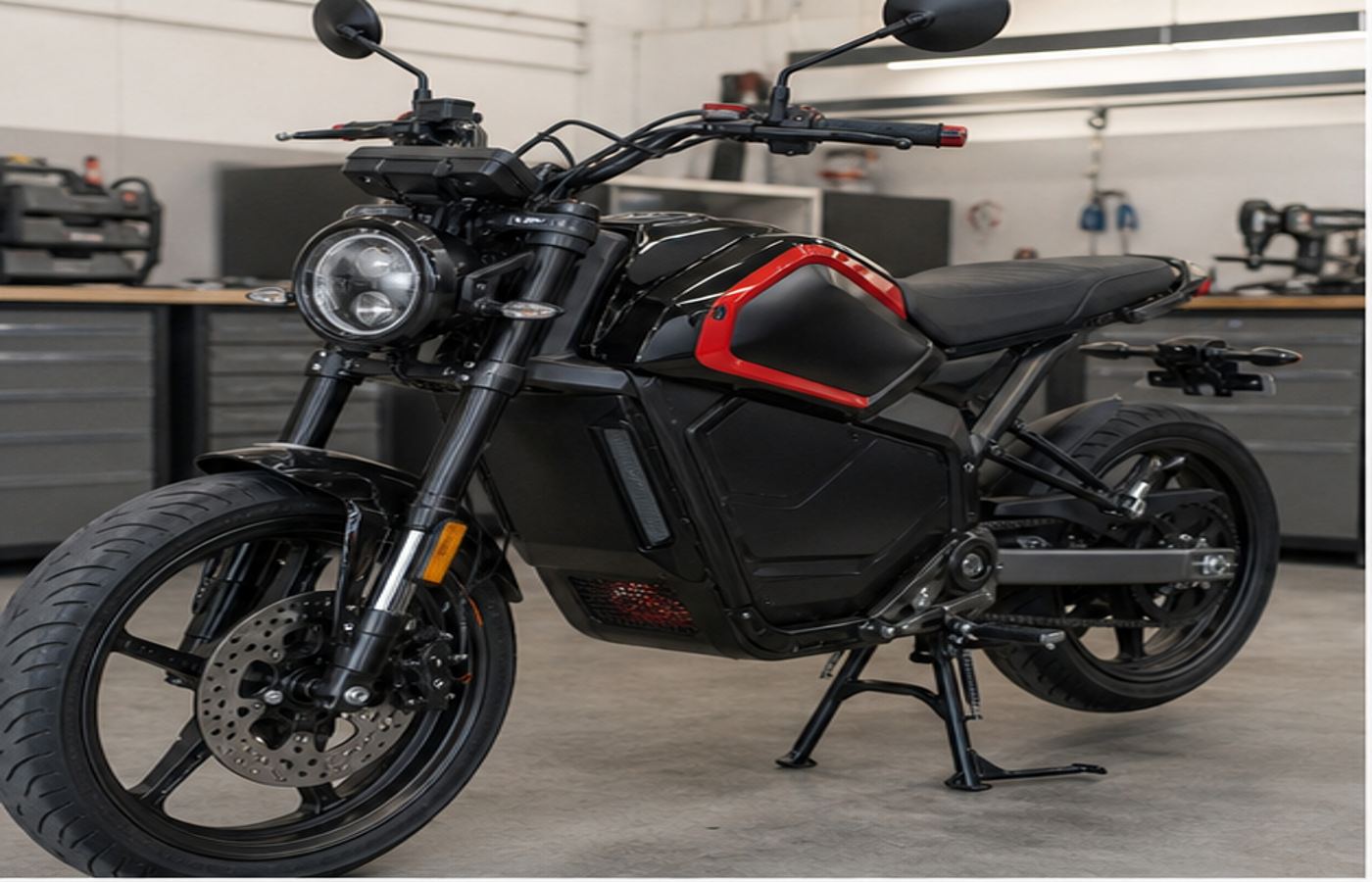
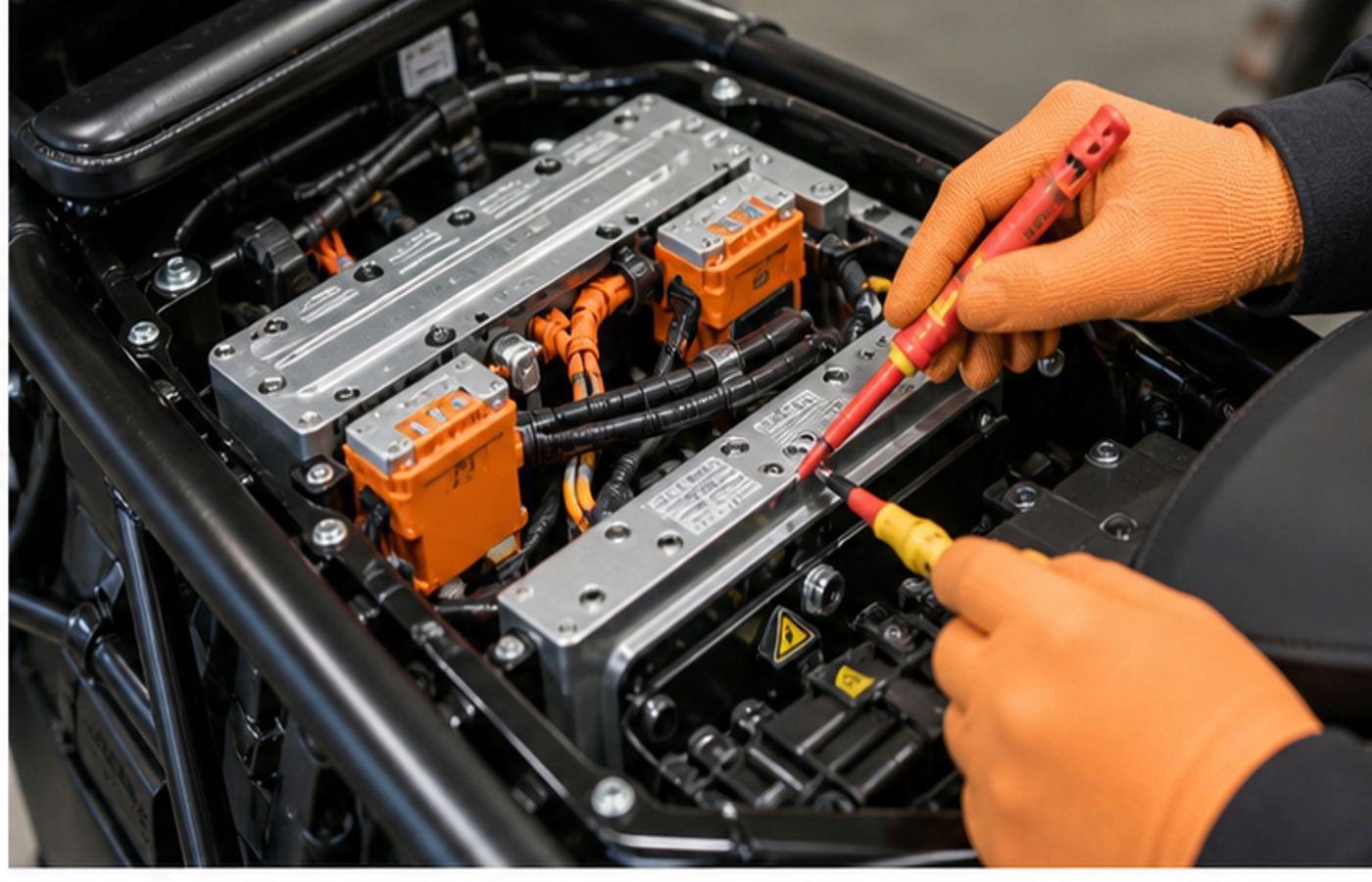
    A realistic 450MT setup starts with service condition, chain, tyres, exhaust fitment and electronic compatibility before chasing bigger numbers.

    What more power really means on the 450MT

    CF Moto 450 MT power increase should be judged by how the bike pulls out of bends, how it climbs with luggage, how it responds at steady throttle and whether it remains calm when hot. A dyno sheet can be useful, but most owners live with the motorcycle between town speeds, fast A-roads, broken lanes and occasional light off-road sections. A louder silencer or aggressive marketing number is not automatically a better motorcycle.

    CFMOTO UK describes the 450MT as a 449 cc parallel-twin adventure motorcycle in the A2-compatible class. That matters because the platform is not an unlimited blank canvas. The bike is built around balance, manageable weight, accessible torque and travel-friendly manners. Official model data should always be checked against the exact market version before ordering tuning parts: CFMOTO UK 450MT model information.

    For many riders, CF Moto 450 MT power increase is less about peak output and more about smoothing weak areas. A reversible fuel module may sharpen response. A correct exhaust can reduce weight and improve sound. A clean air filter can restore lost pull. A suitable sprocket choice can make the bike feel stronger in the gears you actually use. None of those changes should make the machine unreliable, excessively noisy or awkward to ride in traffic.

    Owner complaintFirst checksLikely useful upgradeWhat not to assume
    Feels flat with luggageChain slack, tyre pressure, load weight, air filterGearing review, service baseline, careful fuelling supportThat the engine needs a major remap immediately
    Wants better exhaust soundPipe diameter, bracket position, catalyst and DB-killerRoad-appropriate silencer with proper supportThat louder means faster
    Throttle feels lazyThrottle free play, fault codes, sensor connectors, battery voltageReversible module or professional ECU workThat every 450 CFMOTO uses the same connector
    Needs stronger overtakesRider weight, luggage, gearing, tyre drag and service conditionBalanced exhaust/fuelling/gearing approachThat a single plug-in part can change the whole bike
    Uses gravel and trailsAirbox sealing, cooling, sprocket wear, tyre choiceProtection, tyres and smoother low-speed fuellingThat road-only tuning advice fits adventure use

    Workshop baseline checks before buying parts

    CF Moto 450 MT power increase starts with the unglamorous checks that separate a healthy bike from a bike that simply needs maintenance. Warm the engine fully, listen for intake leaks, check idle quality, inspect the air filter, confirm there are no warning lights, look for stored fault codes if diagnostic access is available, and measure chain slack with the motorcycle loaded as it is normally ridden.

    Service condition changes the result

    A dirty air filter, tired spark plugs, stretched chain, underinflated tyres or dragging brake can make a modern 450 feel weaker than it is. Before spending money, check engine oil level, coolant level, radiator fins, clutch free play, throttle return, battery voltage and tyre pressure. A bike used on dust and wet roads can lose crispness long before it needs performance parts.

    Good CF Moto 450 MT power increase work creates a repeatable baseline. Note cold start, hot restart, idle, steady 30 mph running, 50-70 mph roll-on, hill starts, fan behaviour and fuel economy. Make one change at a time. If a new exhaust is fitted on the same day as a filter, module and sprocket, the owner cannot know which part created a problem or improvement.

    Measure instead of guessing

    Before ordering parts, photograph the ECU area, intake air temperature sensor, oxygen sensor, exhaust bracket, mid-pipe diameter, silencer mount, chain pitch and sprocket tooth count. Compatibility is often lost in small details. Two bikes with the same name can differ by market year, emissions equipment, accessories or previous owner modifications.

    For final-drive work, use the motorcycle chain tension adjustment guide before changing sprockets. Chain condition and axle alignment can make the motorcycle feel sharper or rougher without any engine part being touched.

    ECU, chip module and throttle response

    CF Moto 450 MT power increase often leads owners towards chip tuning, ECU remap searches, fuel controllers and plug-in modules. The important distinction is simple: a module can influence sensor signals or fuelling behaviour within a defined range, while a true ECU remap changes software calibration. Each route has different risks, warranty implications and compatibility requirements.
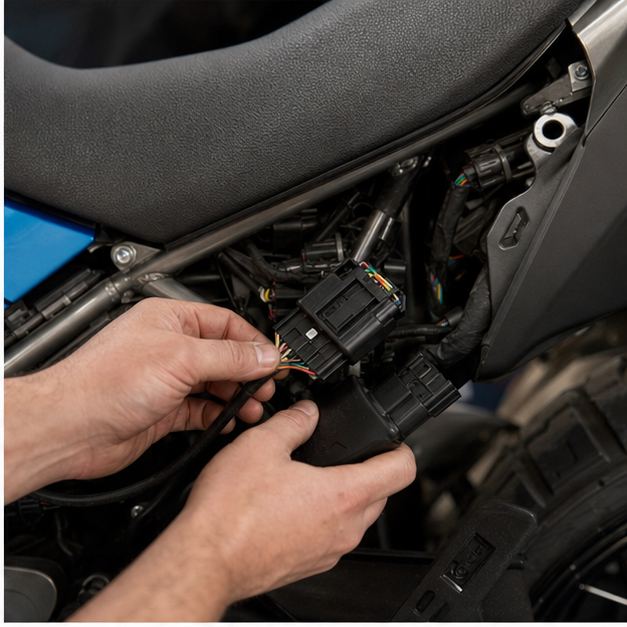
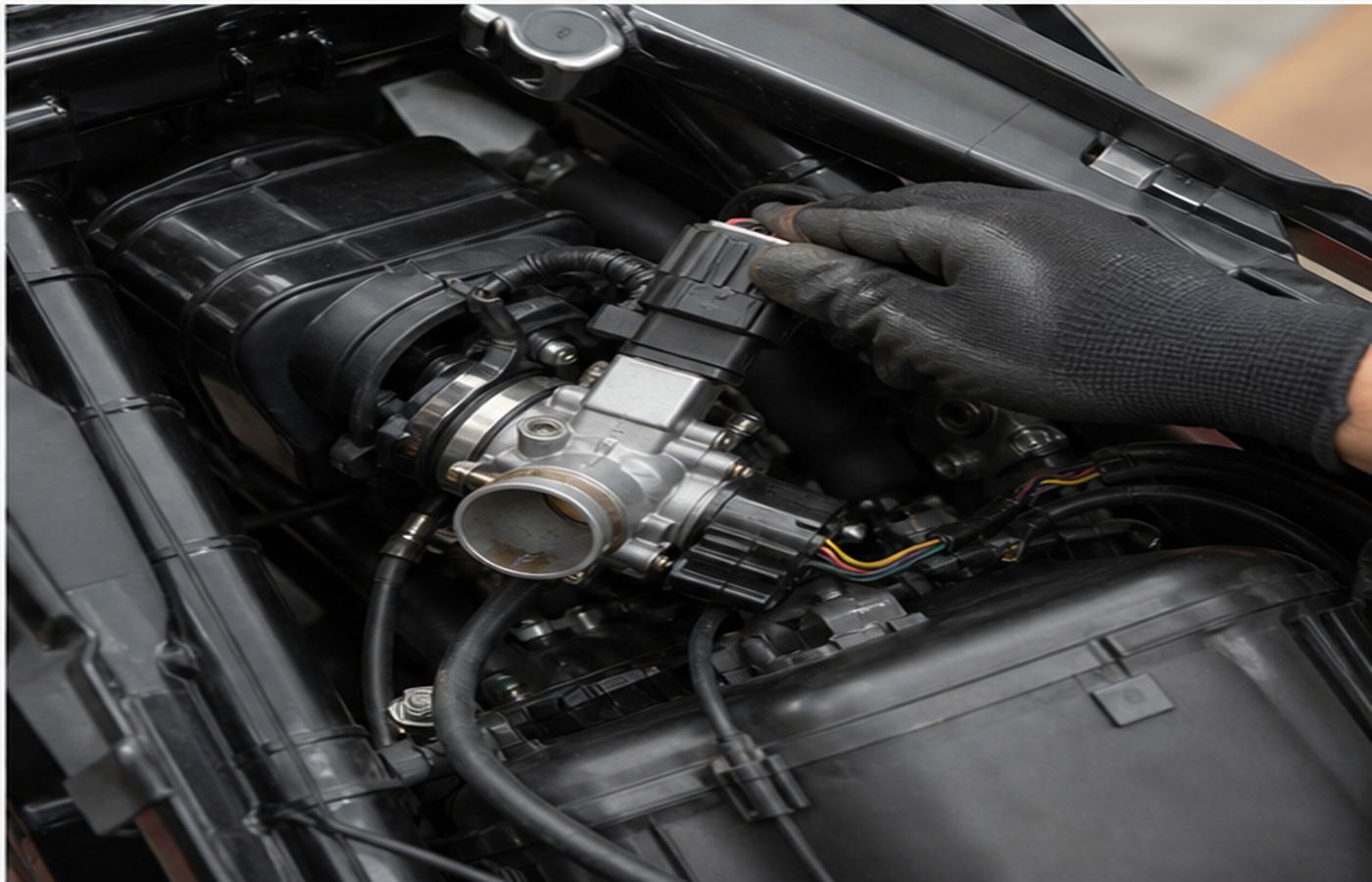
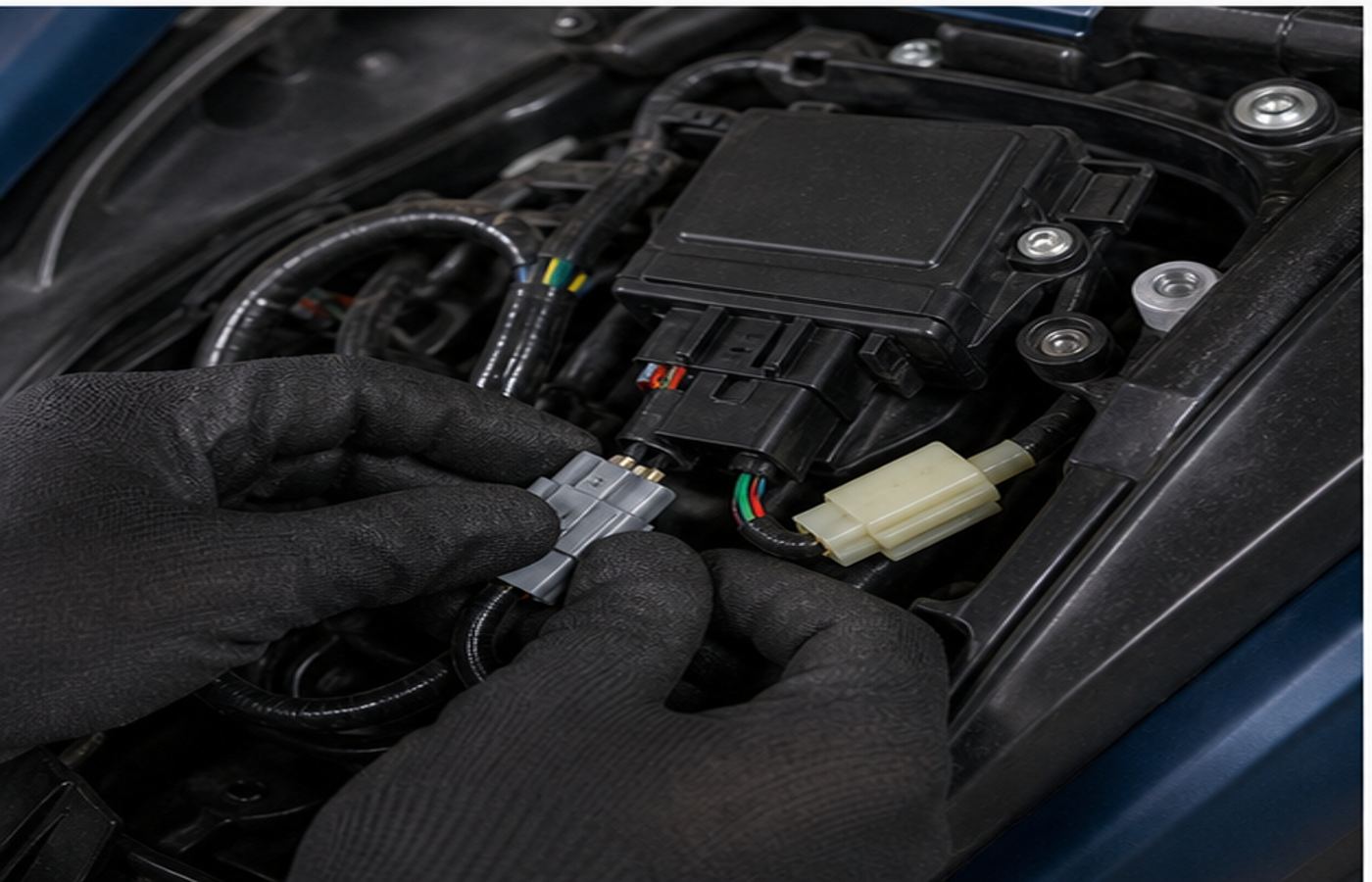
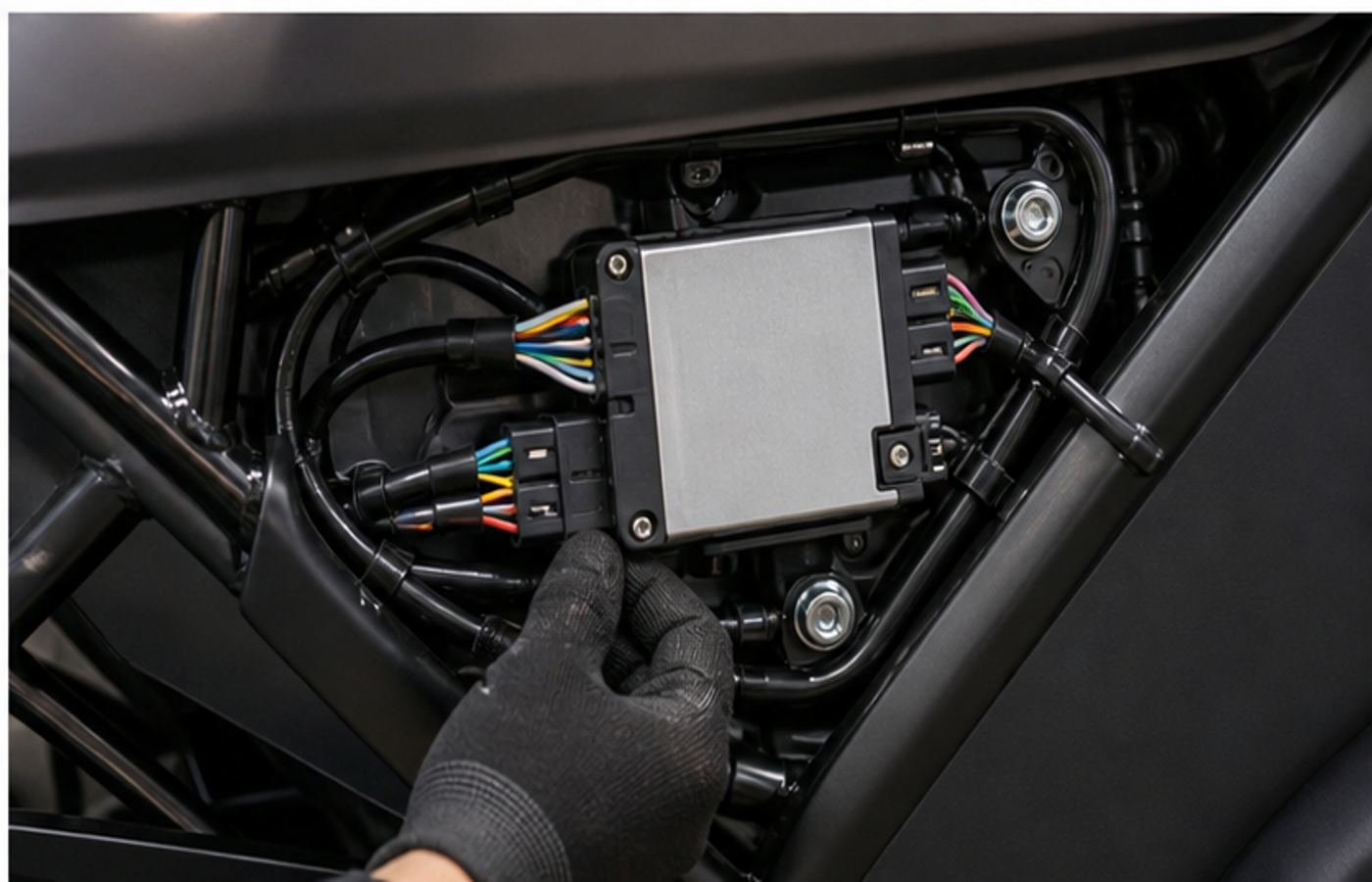
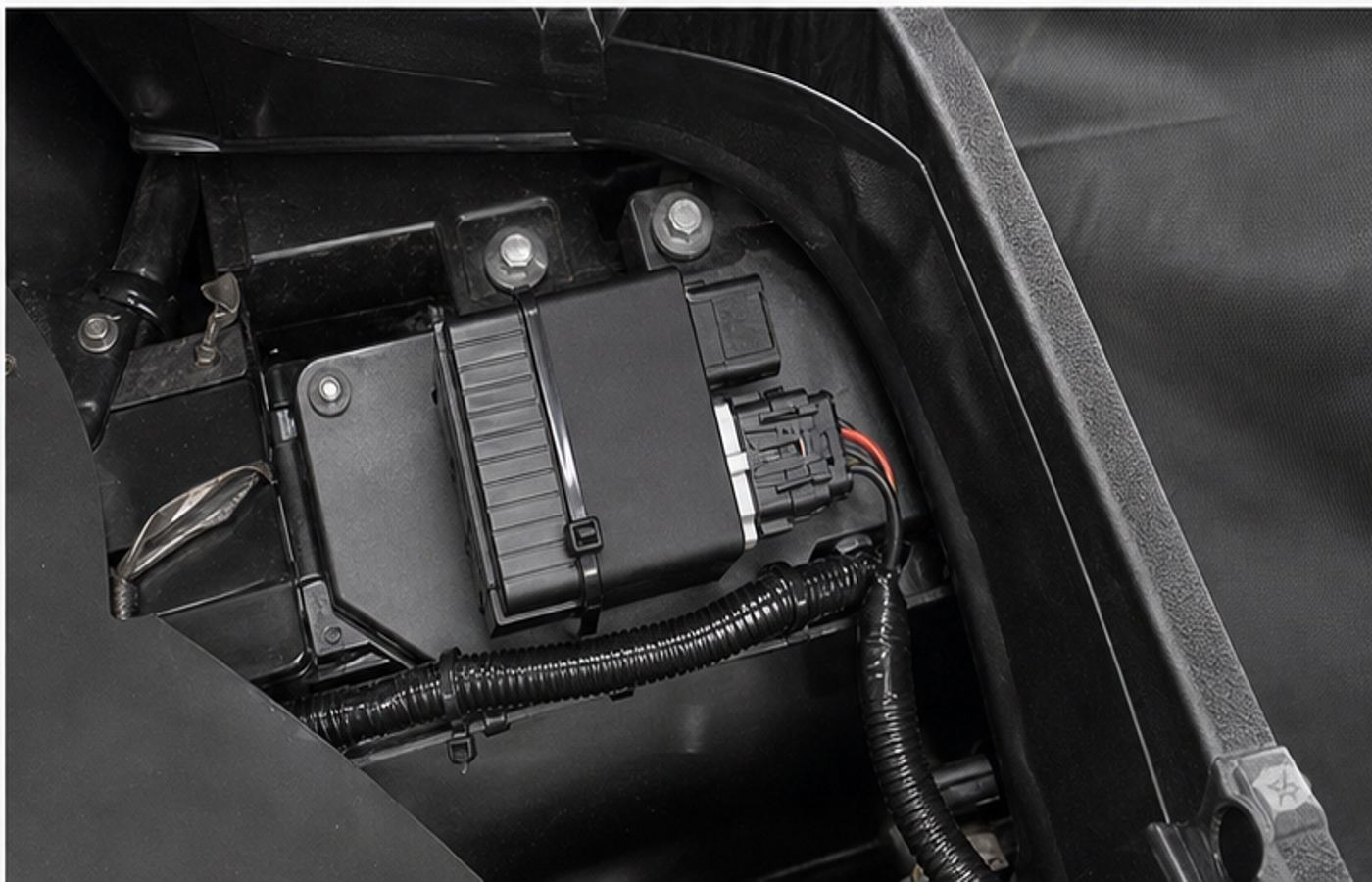
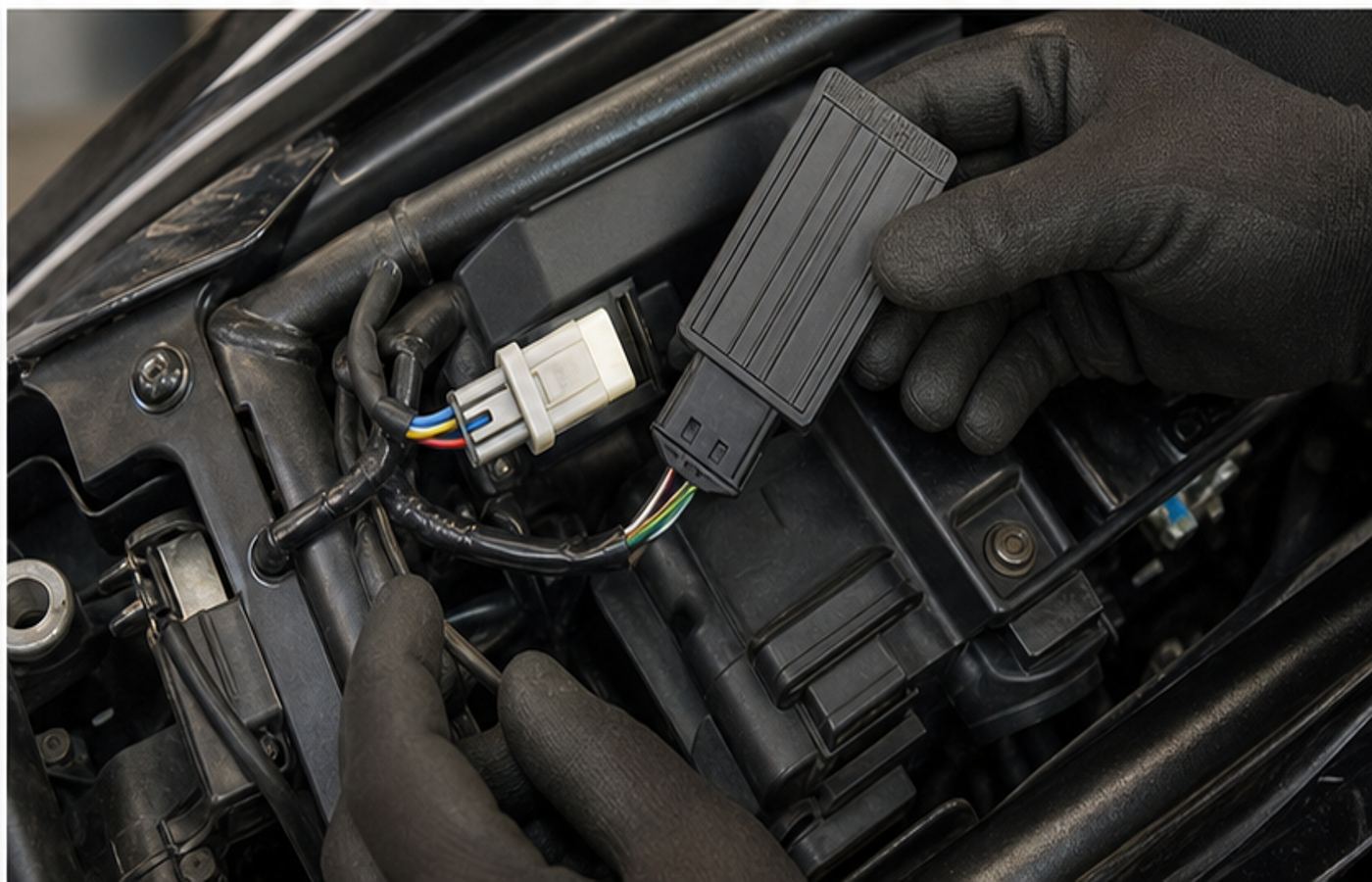
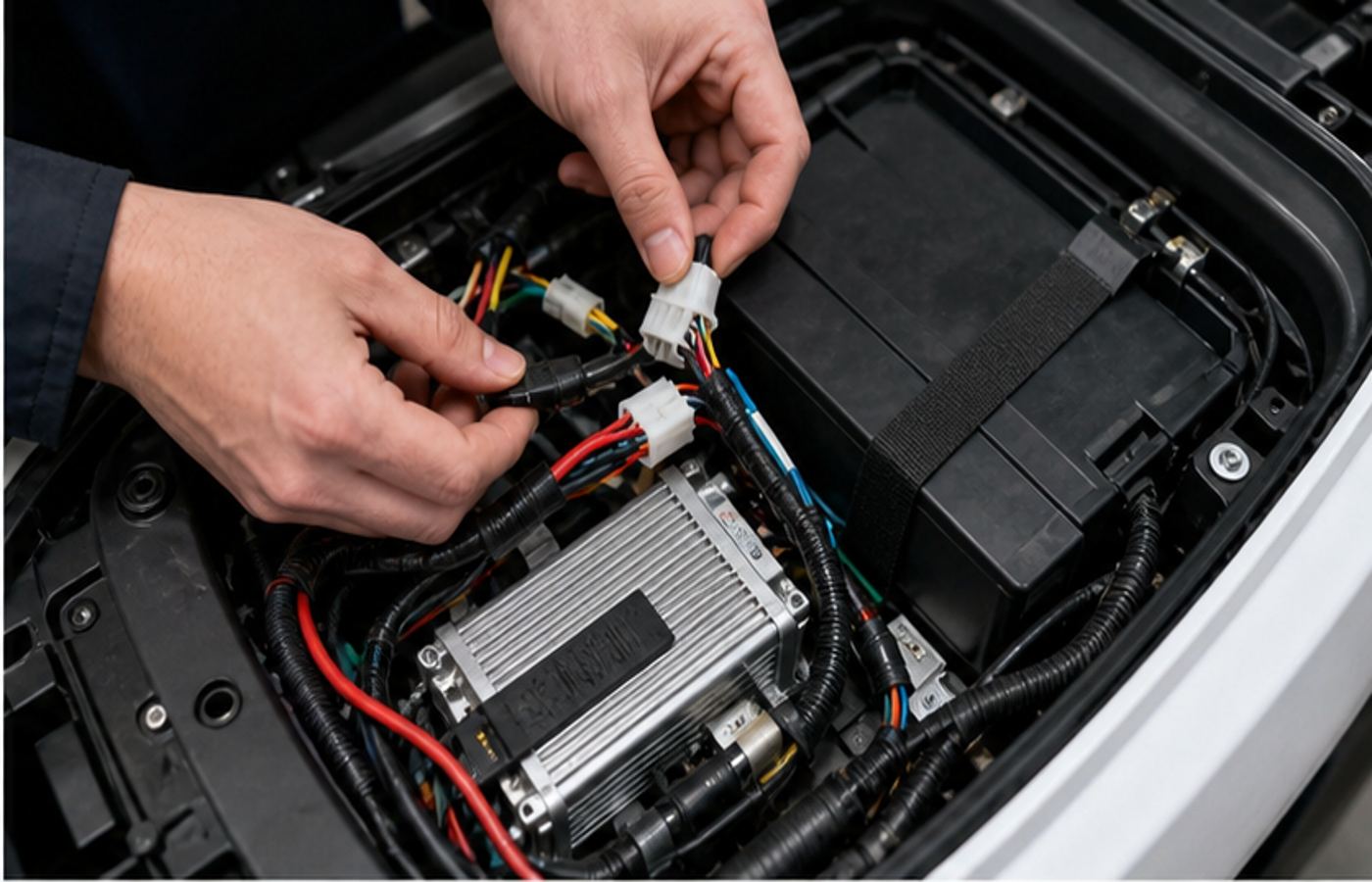
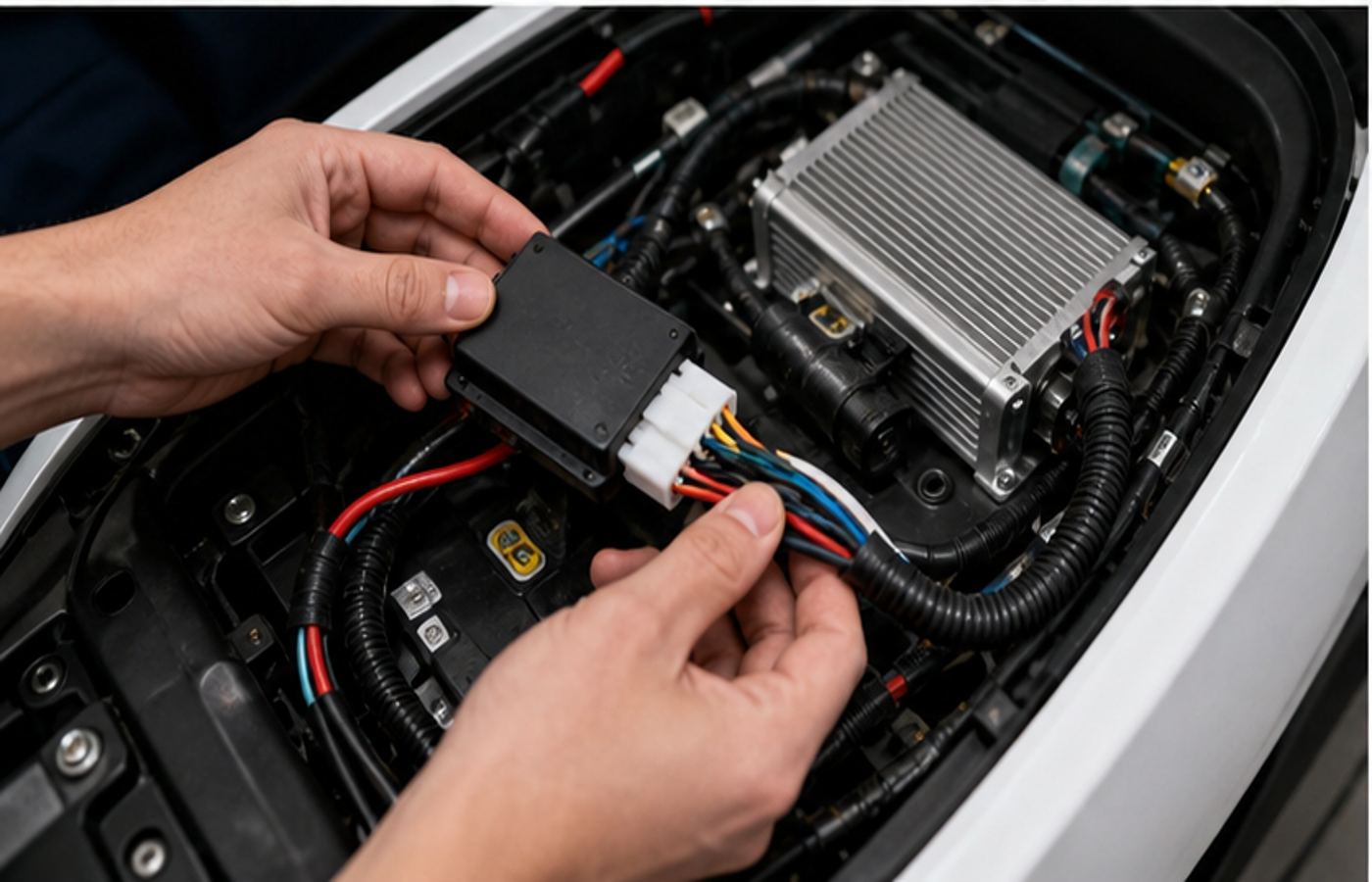
    CF Moto 450 MT ECU module connector check for chip tuning and sensor compatibility
    Never force a connector or assume that a 450MT uses the same sensor layout as a 450SR, 450NK or 450CL-C.

    When a reversible module makes sense

    A reversible module can make sense when the bike is mechanically sound, the connector type is confirmed, the rider wants cleaner throttle response, and the installation can be removed without cutting the loom. CF Moto 450 MT power increase through a module should start on the lowest sensible setting, with a fully warm engine and a short road test before any adjustment.

    The correct approach is conservative. Check for smooth idle, clean hot restart, no warning lights, no fuel smell, no hesitation, no detonation sound and no abnormal heat. If the bike becomes snatchy, smells rich, loses low-speed control or shows a fault, reduce the setting or remove the part and diagnose properly.

    When professional ECU work is the better route

    Professional ECU work is more appropriate when exhaust and intake changes are substantial, when a dyno operator can measure air-fuel behaviour, or when the owner needs a calibrated result rather than a simple response adjustment. It is also the area where warranty and insurance questions become more serious. Keep invoices and declare material performance modifications to the insurer.

    For a comparable dual-sport performance path, the Honda CRF300L power kit guide explains why small adventure and trail bikes need measured, reliable improvements rather than exaggerated claims.

    Exhaust, catalyst, DB-killer and fuelling

    CF Moto 450 MT power increase is commonly linked to exhaust changes because owners want better sound, lower weight and a livelier feel. A good exhaust can improve the riding experience. A poor exhaust can leak, drone, lose midrange torque, overheat soft luggage, interfere with pannier racks or create MOT and insurance problems.
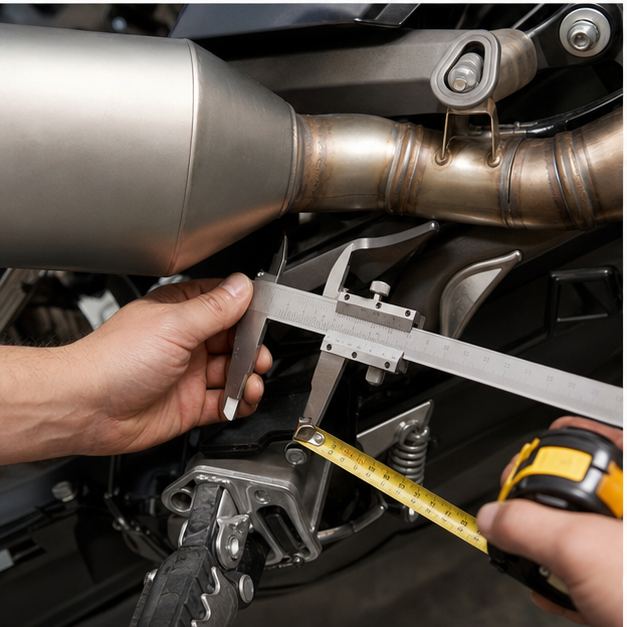
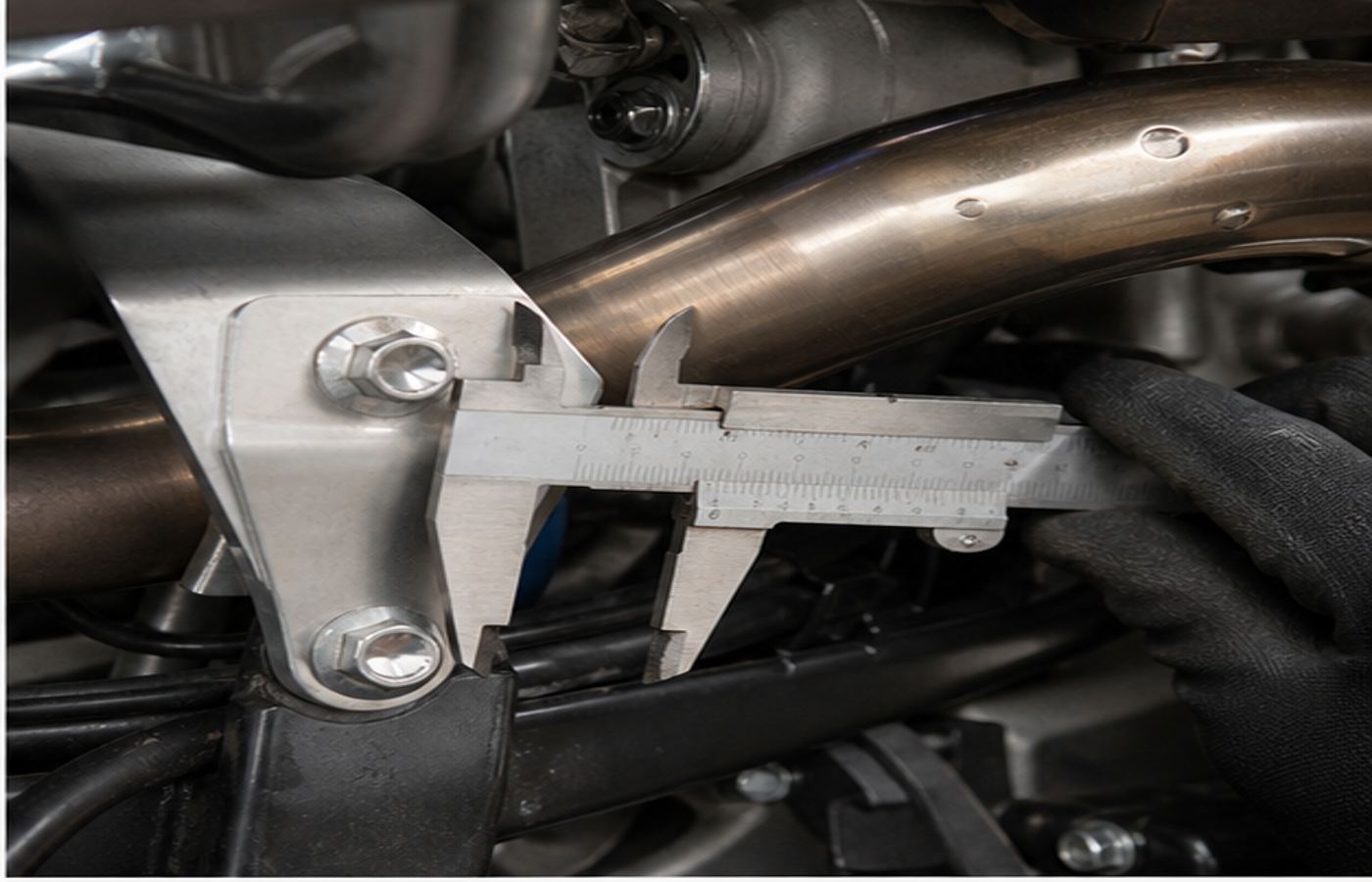
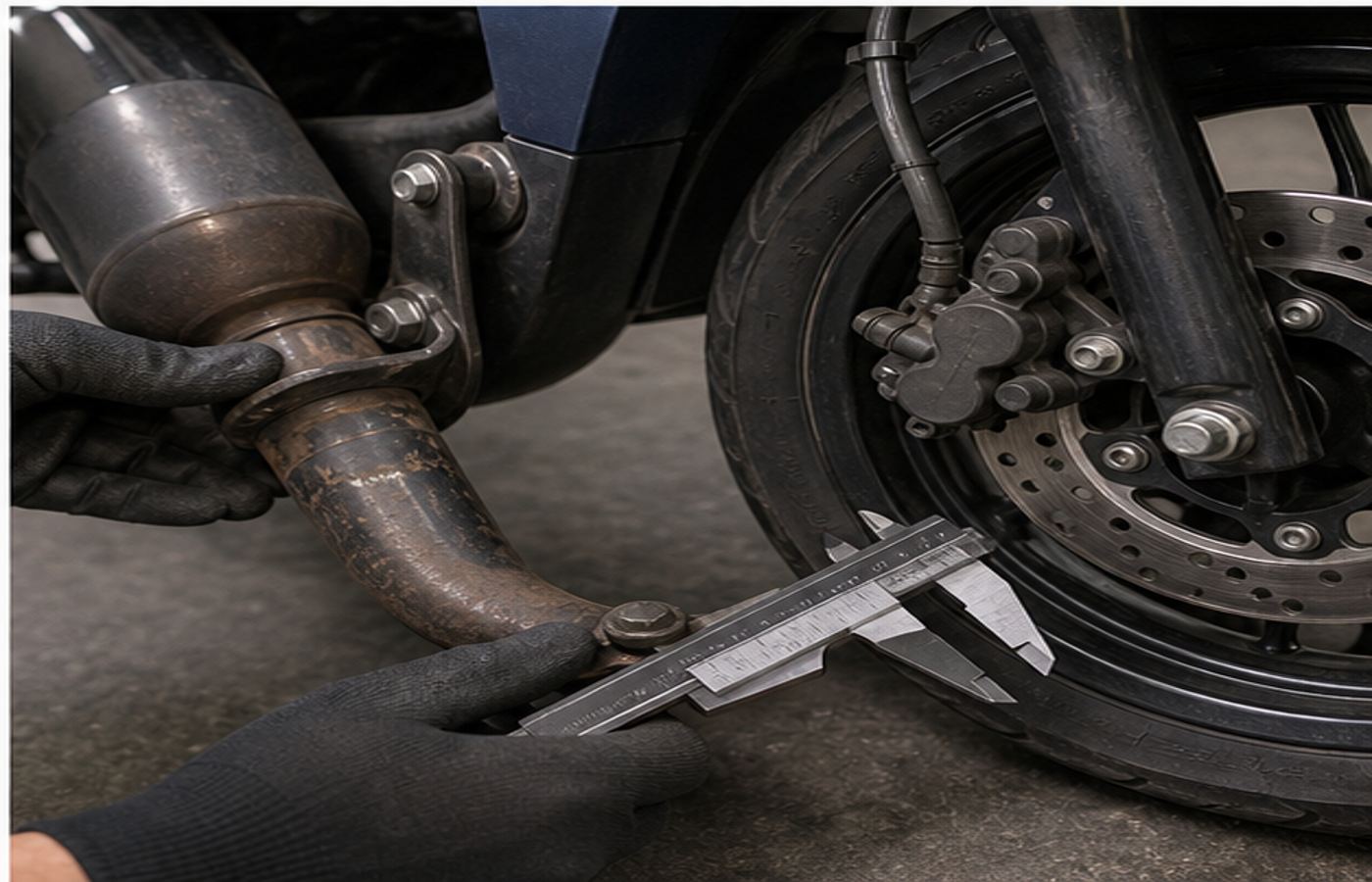
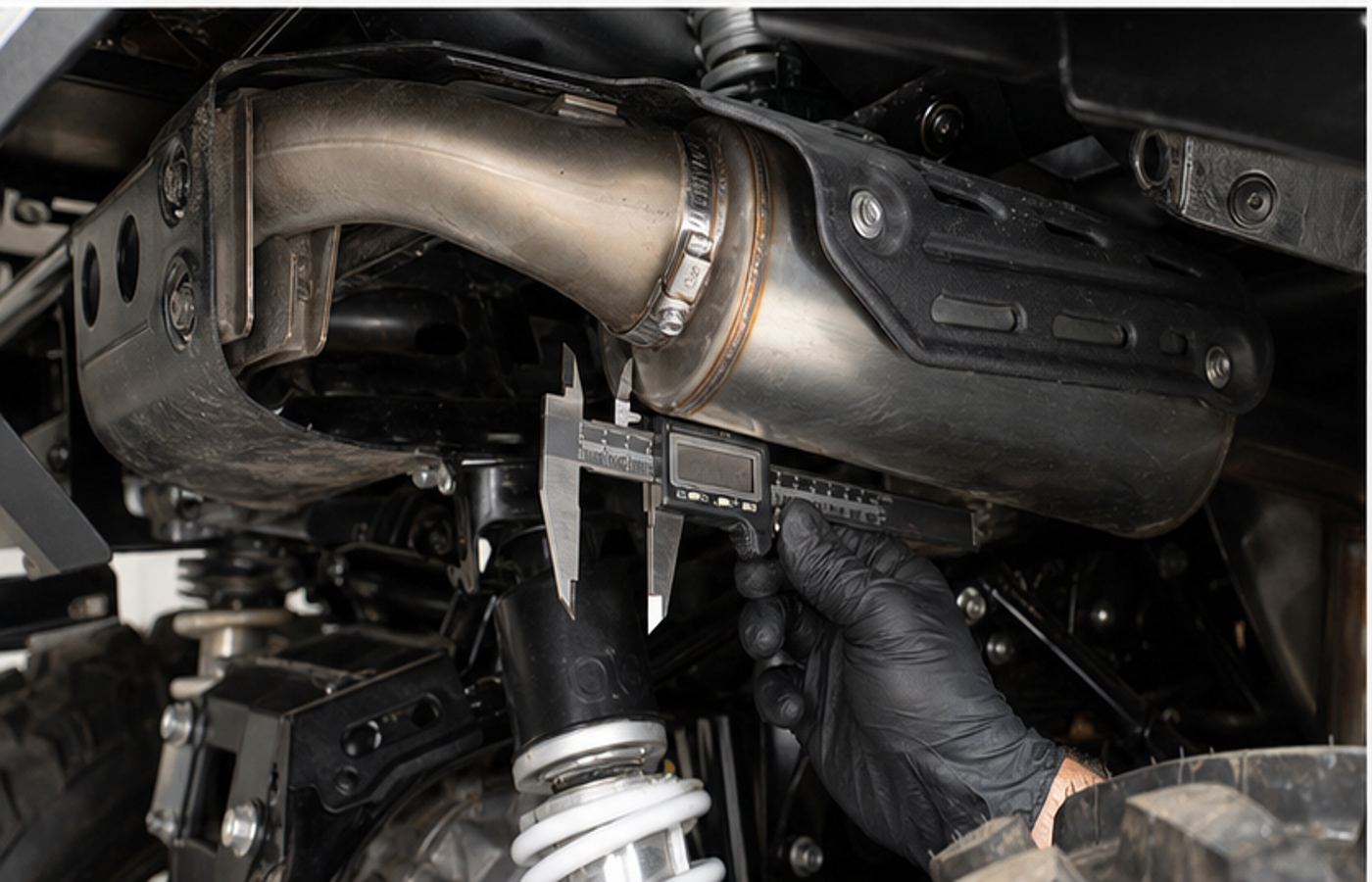
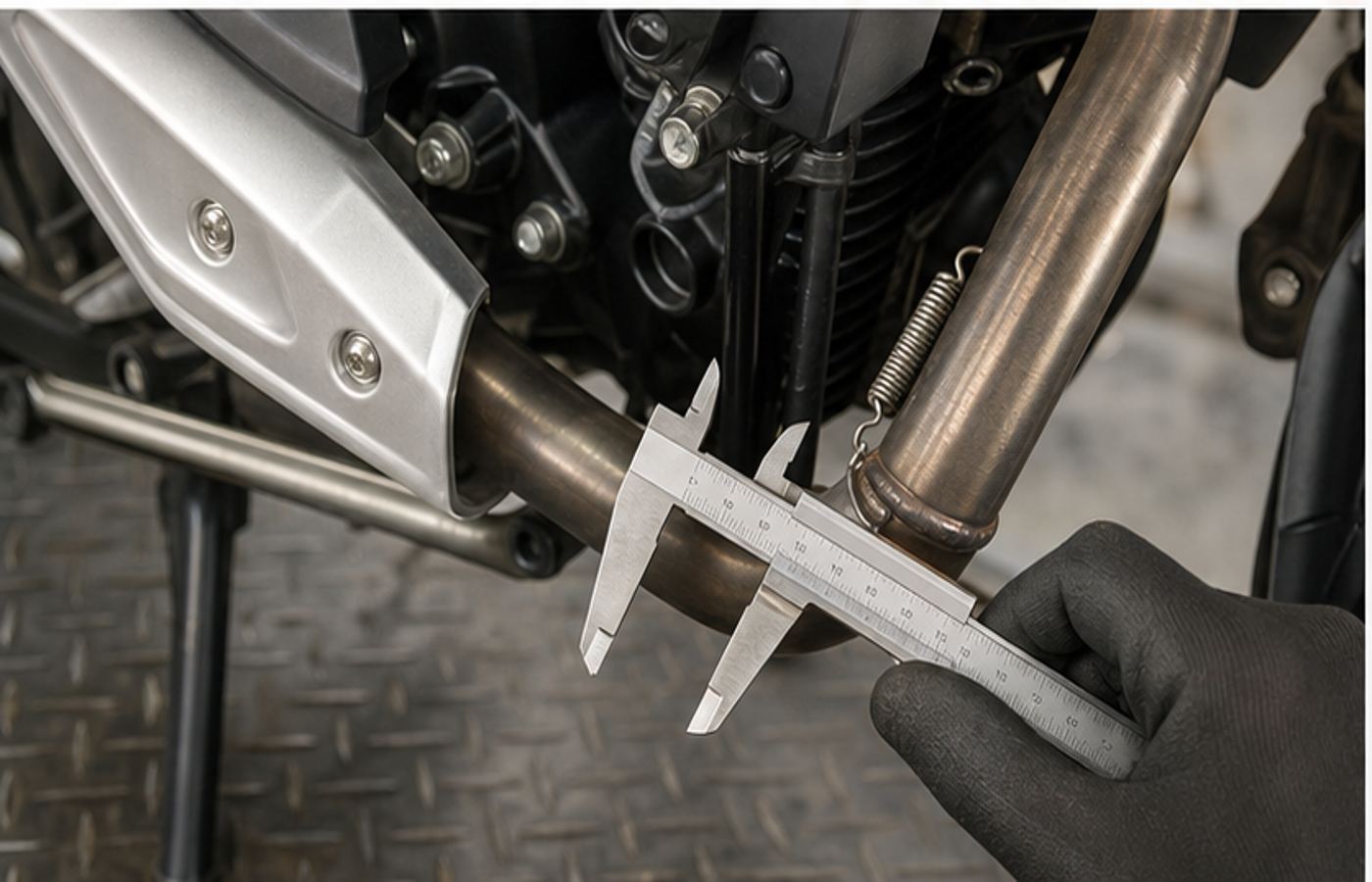
    CF Moto 450 MT exhaust pipe diameter and silencer mounting measurement
    Measure pipe diameter, bracket position, oxygen sensor location, DB-killer status and luggage clearance before choosing an exhaust.

    Pipe diameter and mounting points

    Measure the outside diameter of the pipe where the silencer or link pipe will fit, the mounting centre distance, available space around the rear subframe, heat shield position and clearance to the rear brake hose, passenger peg and luggage rack. Do not rely only on a product photo. Adventure bikes carry soft bags, panniers and straps; heat and clearance matter.

    A quality exhaust for CF Moto 450 MT power increase should retain good gas speed, support the silencer properly and respect sensor location. If the oxygen sensor, catalyst or emissions equipment is removed or moved incorrectly, the bike may run poorly and may not be legal for road use.

    Sound, torque and fuelling

    The 450MT does not need an exhaust that empties the midrange. A very open pipe may sound stronger but feel weaker where adventure riders need drive. After fitting an exhaust, check hot idle, part-throttle cruising, overrun popping, fuel smell, heat and vibration. If symptoms appear, do not mask them with more parts; find the cause.

    Anyone comparing exhaust options should start with dimensions, mounting system and road-use status before ordering. The motorcycle exhausts category is the right internal starting point when the next step is fitment rather than guesswork.

    Air filter, airbox and adventure use

    CF Moto 450 MT power increase should be cautious around intake modifications. The 450MT is an adventure bike, which means dust, rain, puddles, gravel spray and long-distance heat are part of real use. A high-flow filter is useful only if it seals correctly and protects the engine. An open or poorly sealed intake can destroy reliability faster than it creates performance.

    Filtration matters more than marketing

    Before fitting any performance filter, inspect the airbox rim, sealing surface, drain, intake snorkel and filter seating. Dust marks after the filter are a warning sign. A slightly freer-flowing element is not worth dirt ingestion. For most owners, keeping the airbox intact and serviceable is the sensible path.

    Good CF Moto 450 MT power increase work treats intake and exhaust as a pair. If airflow changes at both ends, fuelling should be checked. If the bike is used off-road, clean the filter more often than a pure road bike and avoid modifications that expose the intake to splash or dust.

    Chain, sprockets and road feel

    CF Moto 450 MT power increase does not always require more engine output. Final-drive gearing can change how strong the bike feels. A slightly shorter setup can improve low-speed control, loaded hill starts and gravel-road response. A taller setup can reduce revs on open roads but may make the bike feel lazier into wind or with panniers.
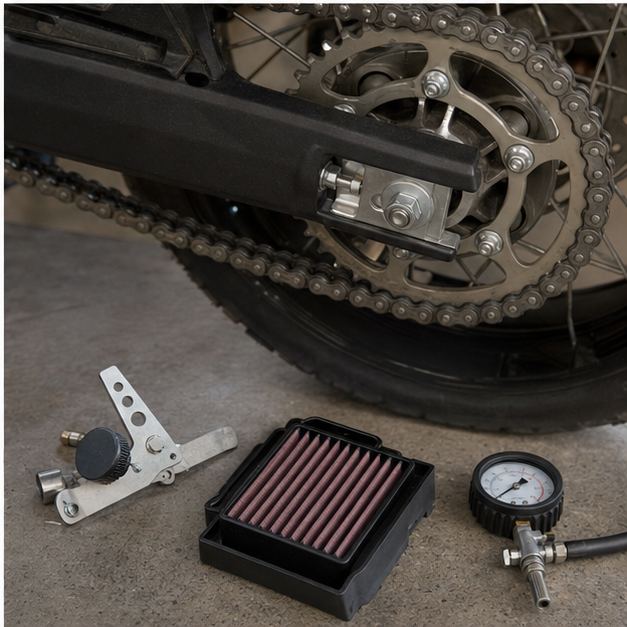
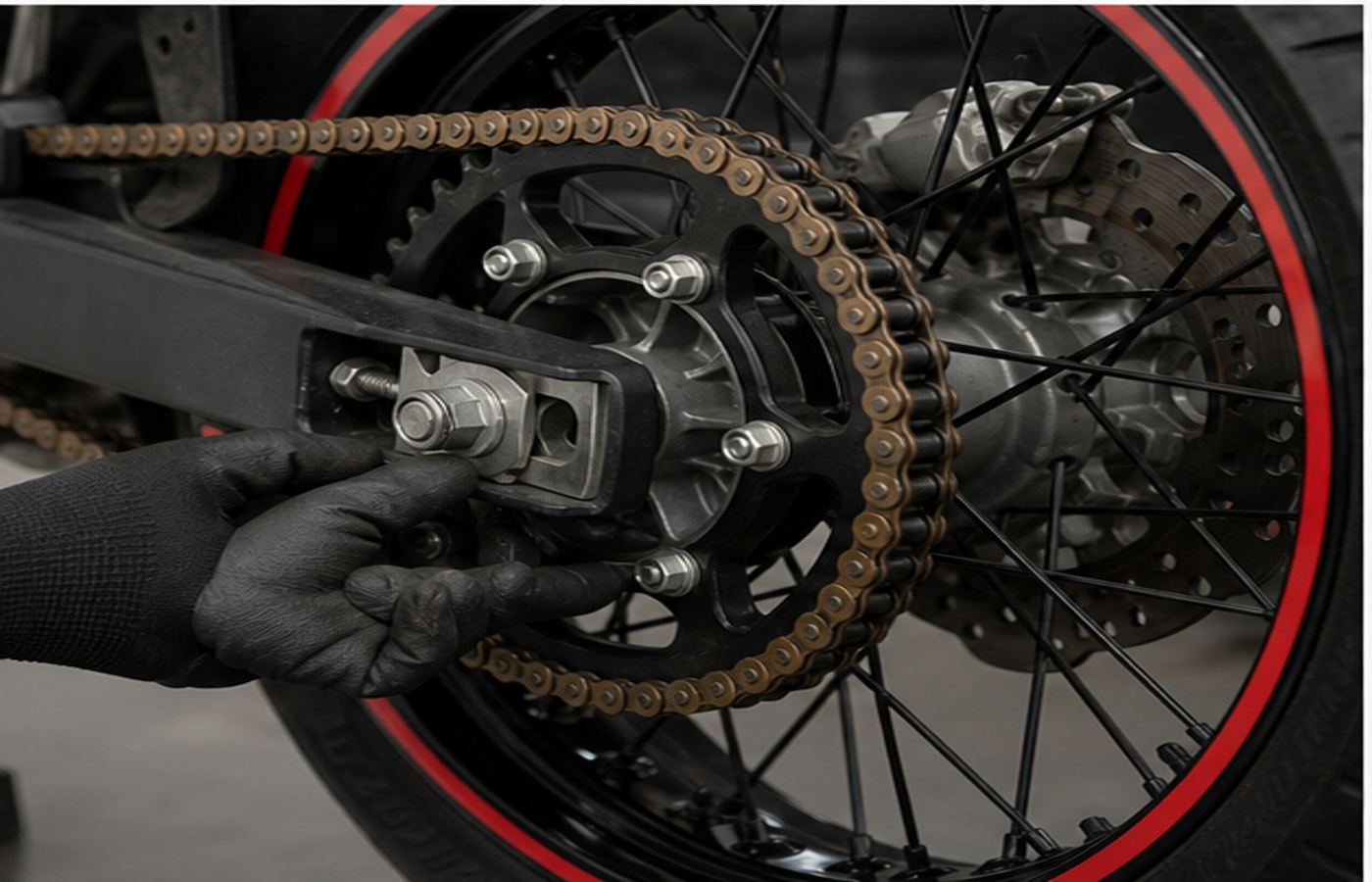
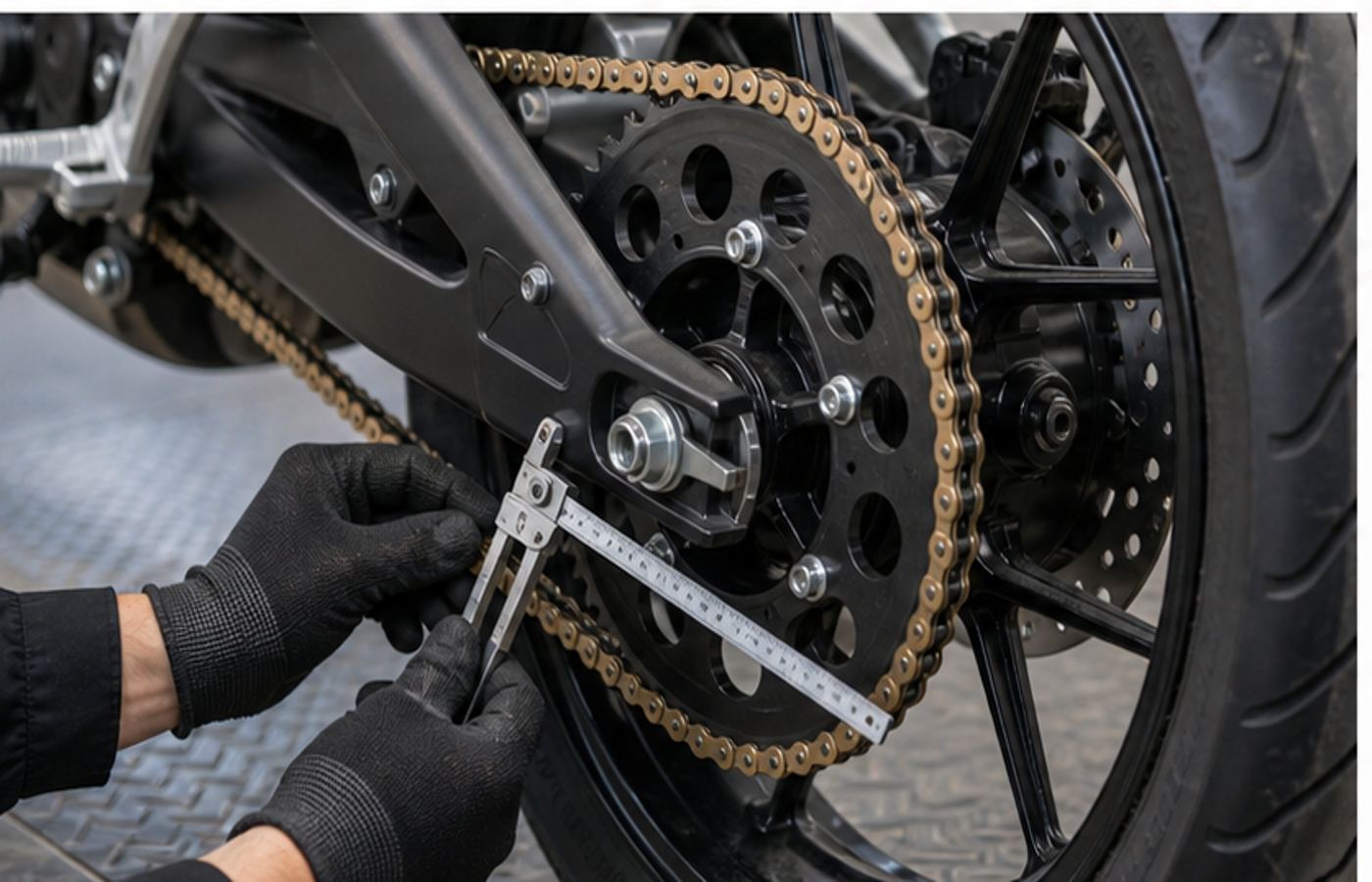
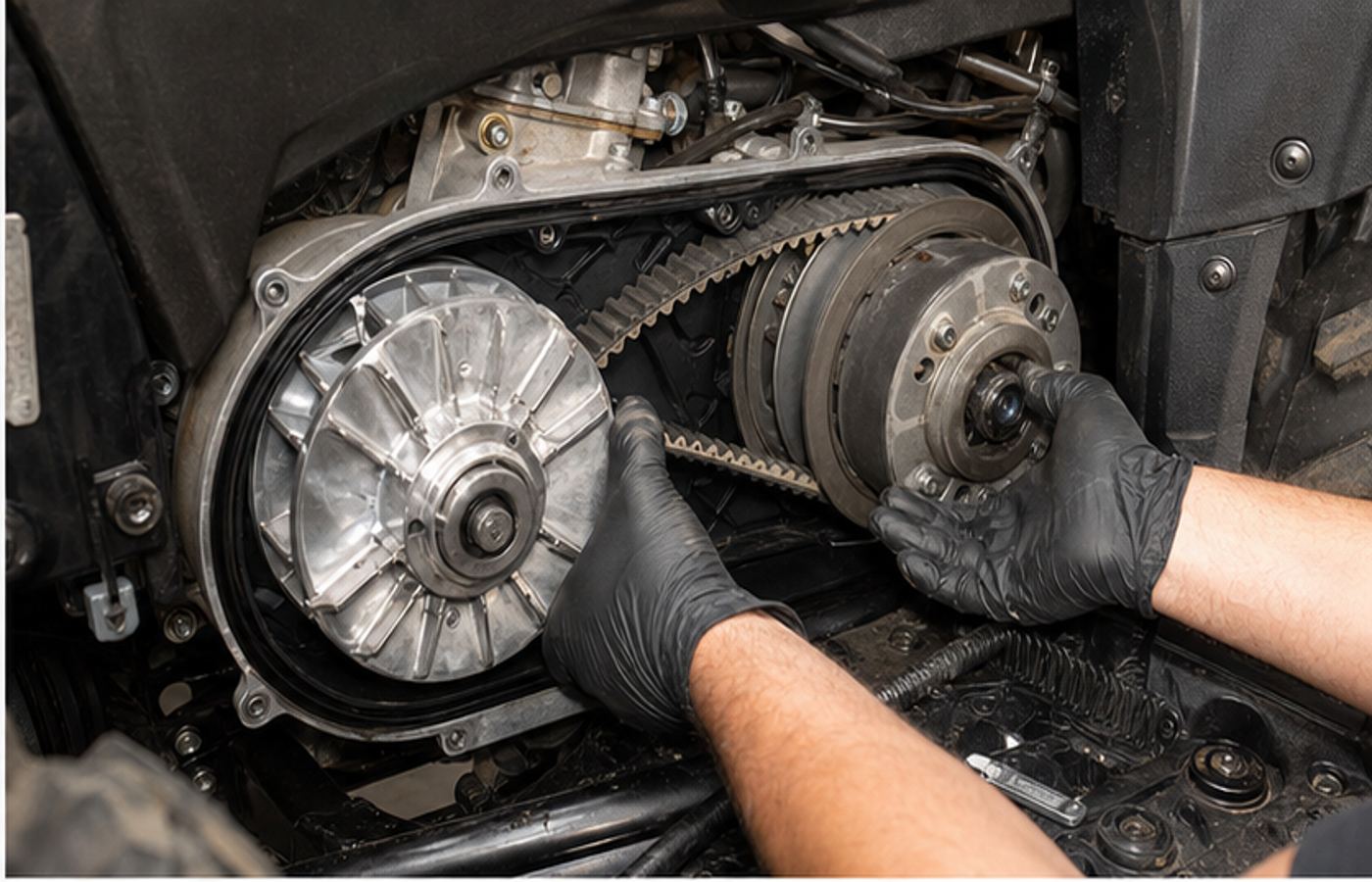
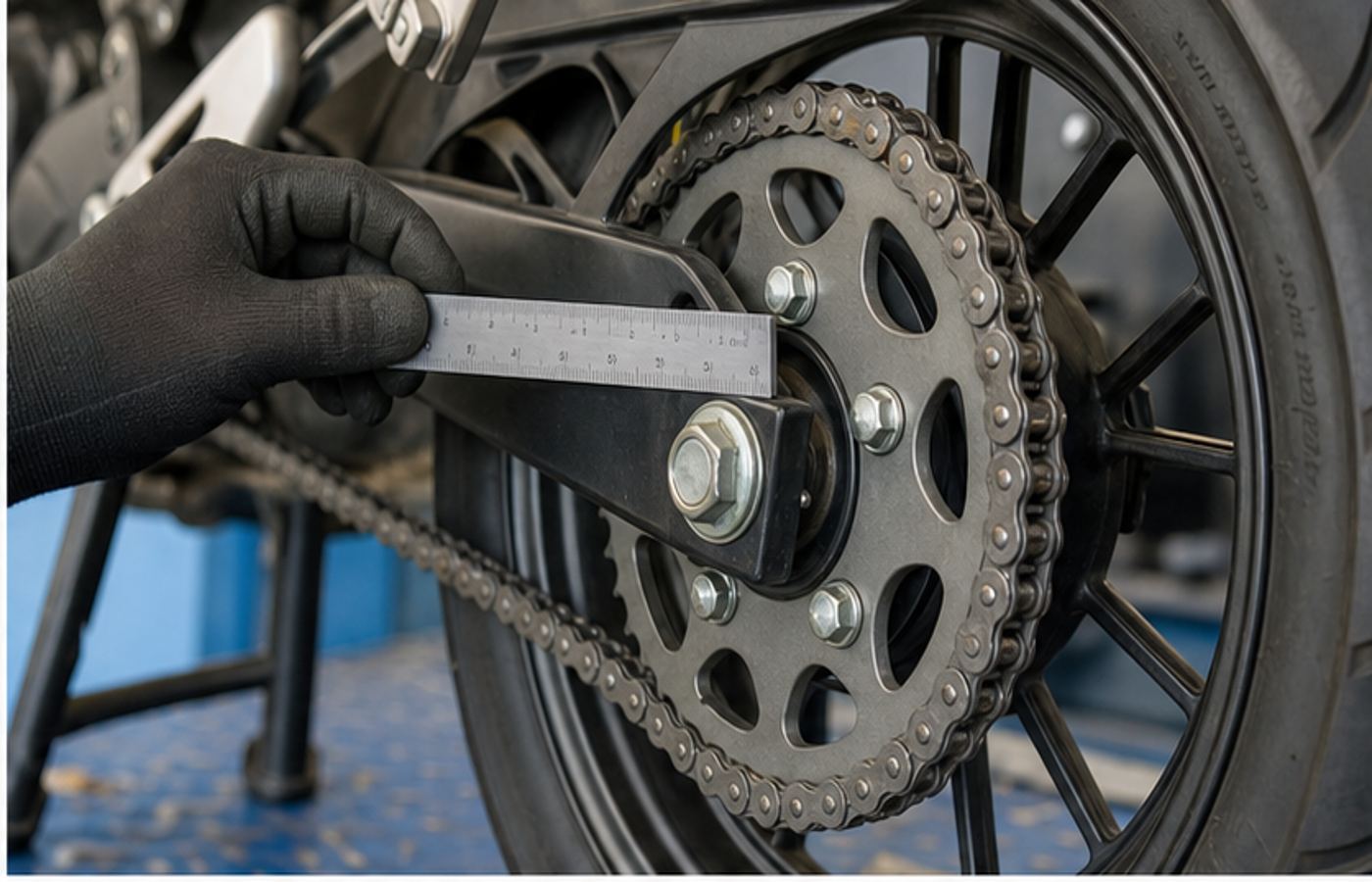
    CF Moto 450 MT chain sprocket air filter and tyre pressure setup checks
    Chain slack, sprocket wear, air filter condition and tyre pressure should be checked before judging performance.

    Gearing is not free horsepower

    A sprocket change does not create power; it changes leverage. Shorter gearing can make the engine feel more eager but may raise cruising revs and fuel use. Taller gearing can calm the bike at speed but may hurt overtaking. Choose based on normal roads, rider weight, luggage and tyre size.

    A realistic CF Moto 450 MT power increase plan should also consider tyres. Aggressive adventure tyres can add rolling resistance and noise. Heavy luggage, crash bars and tools increase load. Sometimes the bike feels weaker because it is carrying too much weight or wearing tyres that suit a different job.

    Compatibility table for 450MT tuning parts

    Compatibility is the part of CF Moto 450 MT power increase that saves money. The 450MT, 450SR, 450NK, 450CL-C and CFMOTO ATVs may share brand language, but they are not the same vehicle. Engine family, exhaust routing, wiring access, emissions equipment and intended use can differ.

    Vehicle or part areaCompatibilityImportant note
    CFMOTO 450MT motorcycleYes, with exact year and market checksConfirm ECU connector, sensor layout, emissions version and accessories
    CFMOTO 450SR / 450NKNot automaticallyRoad-sport models can use different bodywork, exhaust routing and access points
    CFMOTO 450CL-CNot automaticallyCruiser layout changes exhaust clearance, brackets and luggage considerations
    CFMOTO CForce / ATV 450No direct assumptionATV CVT, chassis, airbox and use case are very different
    Universal exhaustPossible only with measurementsCheck pipe diameter, bracket, DB-killer, catalyst, E-mark and heat clearance
    Fuel module or chip tuning unitOnly with matching connector and sensor logicNever cut or force wiring; confirm return policy and support before ordering

    Practical comparison of tuning routes

    The best route depends on whether the rider wants road touring comfort, stronger midrange feel, better gravel control or a more satisfying exhaust note. CF Moto 450 MT power increase should be built in stages, not as a pile of unrelated parts.

    SolutionMain advantagePossible disadvantageBest for
    Full service and baselineRestores lost response and reliabilityLess exciting than visible upgradesEvery owner before tuning
    Reversible fuel moduleCan sharpen throttle feel without permanent wiringMust match connectors and be adjusted conservativelyOwners wanting a removable setup
    Professional ECU calibrationBest measured support for major changesHigher cost and stronger warranty/insurance implicationsExhaust and intake combinations
    Road-appropriate exhaustSound, weight and appearance improvementLegality, noise and fuelling must be checkedRiders wanting character and fitment quality
    Sprocket changeChanges real-world pull and low-speed controlCan make cruising worse if chosen badlyLoaded touring or gravel use
    Tyres and suspension setupImproves confidence more than many engine partsWrong tyres can add drag or nervous steeringAdventure riders and commuters

    CF Moto 450 MT power increase for UK public-road use must be considered alongside licence category, insurance, MOT condition, noise, emissions and vehicle roadworthiness. GOV.UK lists motorcycle licence categories and power limits, including the A2 framework that many mid-capacity bikes are designed around: GOV.UK motorcycle licence categories.

    The UK MOT is not a tuning approval certificate, but it can expose obvious problems. An insecure exhaust, major leak, excessive noise, missing required equipment or a marking such as “not for road use” can cause trouble. The GOV.UK motorcycle MOT manual is the right reference for inspection context: GOV.UK motorcycle MOT inspection manual.

    Road, track, private land and off-road use

    A part described as track-use-only, race-use-only or off-road-use-only should not be treated as road legal. A silencer without an E-mark or with the DB-killer removed may be unsuitable for UK road use depending on the product, markings, noise and emissions impact. A catalytic converter may also be relevant where emissions compliance depends on it.

    Outside the UK, the United States, Canada, Australia, New Zealand and Ireland all have their own approach to exhaust noise, emissions equipment, inspections and insurance disclosure. CF Moto 450 MT power increase advice must therefore be tied to the market where the bike is registered, not copied from a forum in another country.

    Workshop experience: what to check during and after installation

    A careful mechanic does not judge a performance part on the paddock stand. After CF Moto 450 MT power increase work, the bike must be ridden, warmed, cooled and inspected again. Check all connectors, zip-tie positions, wiring clearance near the subframe, exhaust joint leaks, silencer bracket stress, chain slack, axle alignment and tyre pressure. Then inspect again after the first longer ride.

    The difference between theoretical and real compatibility

    Theoretical compatibility means the part claims to suit the model. Real compatibility means the connector clicks without force, the exhaust clears the frame, the heat shield protects the rider, the wiring does not rub, no warning lights appear, and the bike still starts cleanly when hot. This is where many low-quality modifications fail.

    For owners planning a similar middleweight adventure setup, the Himalayan 450 tuning guide is a useful comparison because it shows how exhaust, ECU, gearing, tyres and luggage interact on another modern 450 adventure platform. The Aprilia Pegaso 650 tuning guide is also relevant for single-cylinder adventure-road tuning logic, especially around exhaust and fuelling expectations.

    Common mistakes with the 450MT

    The first mistake is confusing the 450MT with the 450SR, 450NK, 450CL-C or a CForce ATV. The second is buying a module because the plug looks similar in a photo. The third is fitting a loud exhaust without checking catalyst, DB-killer, E-mark, bracket strength and oxygen sensor position. The fourth is expecting a huge horsepower gain from one inexpensive part. The fifth is ignoring warranty and insurance disclosure.

    Another common 450MT upgrade mistake is changing several parts at once. Fit one part, test it, then move on. If a bike develops hesitation after an exhaust, filter, module and sprocket are fitted together, diagnosis becomes slow and expensive. Keep the original parts, keep photos of the installation and keep a record of settings.

    MistakeWhy it causes troubleBetter workshop habit
    Buying by model name onlyMarket versions and connectors can differPhotograph and measure the exact bike
    Removing the DB-killer for road useCan create noise, MOT, police and insurance problemsUse a road-appropriate exhaust setup
    Ignoring the airbox sealDust ingestion can damage the engineInspect sealing surfaces after every filter change
    Over-tightening the chainLoads bearings, output shaft and suspension movementMeasure slack correctly with load in mind
    Expecting remap miraclesThe engine and licence category still define the platformAim for rideability and measured improvement
    Not declaring modificationsInsurance problems can be more costly than the partTell the insurer about material changes

    When to use a professional mechanic

    CF Moto 450 MT power increase should involve a professional when the work touches ECU calibration, fuel mapping, exhaust fabrication, oxygen sensor relocation, catalyst removal, wiring repair, brake-line clearance, or anything that could affect roadworthiness. A good workshop can measure rather than guess, and that often saves money.

    Use professional help if the bike shows a check-engine light, unstable idle, hard hot starting, detonation-like noise, severe overrun popping, fuel smell, exhaust leaks or visible wiring damage. Stop riding if a bracket cracks, the exhaust touches luggage, the rear brake hose is near heat, or the chain becomes tight through suspension travel.

    FAQ

    Is CF Moto 450 MT power increase worth it?

    CF Moto 450 MT power increase is worth it when the goal is sharper response, better midrange feel, correct gearing, better exhaust character and a more confident loaded ride. It is not worth it if the expectation is a huge peak-power jump without cost, legality or reliability trade-offs.

    Can the CFMOTO 450MT make much more horsepower?

    Large gains are unlikely from simple bolt-on parts. The best improvements usually come from restoring service condition, choosing a suitable exhaust, checking fuelling, setting gearing for the rider and keeping the bike light enough for its intended adventure use.

    Does a 450MT need an ECU remap after an exhaust?

    Not automatically. A road-appropriate silencer with the correct catalyst and sensor layout may run acceptably, but hesitation, heat, heavy popping, fuel smell or warning lights mean the bike needs diagnosis before more parts are added.

    Is a chip module safe on the CF Moto 450MT?

    A chip module can be safe only when it is compatible with the exact connector and sensor logic, installed without cutting the loom, adjusted conservatively and tested properly. If anything feels worse, remove it and diagnose the bike.

    Are 450MT and 450SR tuning parts the same?

    No owner should assume that. The 450MT, 450SR, 450NK and 450CL-C have different layouts and use cases. Some engine-related logic may overlap, but exhaust routing, access, brackets and bodywork can be different.

    What is the best first upgrade for the 450MT?

    The best first upgrade is usually a complete baseline: clean air filter, correct chain slack, tyre pressure, brake inspection, fault-code check and a careful road test. That tells you whether the bike really needs performance parts.

    Is tuning legal on a UK 450MT?

    CF Moto 450 MT power increase can be legal for UK road use only if the motorcycle remains within the rider’s licence entitlement, is insured correctly, is roadworthy, is not excessively noisy and keeps required emissions equipment where applicable.

    Will sprockets give more power?

    Sprockets do not create engine power. They change how the available torque reaches the rear wheel. Shorter gearing can feel stronger at low speed, while taller gearing may suit cruising but can hurt loaded overtaking.

    Final buying and setup advice

    CF Moto 450 MT power increase should end with a motorcycle that feels clearer, cleaner and easier to ride, not one that is simply louder or more complicated. Start by confirming the exact model year and market version. Check service condition, airbox sealing, chain slack, tyre pressure, exhaust dimensions, sensor layout and insurance obligations before placing an order.

    If the bike is mainly used for commuting and weekend touring, prioritise reliability, smooth response and legal road equipment. If it carries luggage, consider gearing and weight before chasing horsepower. If it sees gravel, protect the airbox and choose tyres honestly. If the plan involves wiring, ECU work or exhaust fabrication, use a professional.

    The best 450MT upgrade is the one you can explain after a test ride: what changed, why it changed, and why the bike remains safe, roadworthy and enjoyable. Build it that way and the 450MT becomes a better version of itself rather than an unfinished experiment.

    {
    “@context”: “https://schema.org”,
    “@type”: “Article”,
    “headline”: “CF Moto 450 MT power increase”,
    “description”: “CF Moto 450 MT power increase guide to ECU modules, exhaust fitment, air filter checks, gearing, warranty, UK road legality and realistic adventure-bike setup.”,
    “author”: {“@type”: “Organization”, “name”: “X Moto Parts”},
    “publisher”: {“@type”: “Organization”, “name”: “X Moto Parts”},
    “mainEntityOfPage”: “https://xmotoparts.com/cf-moto-450-mt-power-increase/”
    }

    {
    “@context”: “https://schema.org”,
    “@type”: “FAQPage”,
    “mainEntity”: [
    {“@type”: “Question”, “name”: “Is CF Moto 450 MT power increase worth it?”, “acceptedAnswer”: {“@type”: “Answer”, “text”: “It is worth it when the goal is sharper response, better midrange feel, correct gearing, better exhaust character and a more confident loaded ride, not an unrealistic peak-power jump.”}},
    {“@type”: “Question”, “name”: “Can the CFMOTO 450MT make much more horsepower?”, “acceptedAnswer”: {“@type”: “Answer”, “text”: “Large gains are unlikely from simple bolt-on parts. Most improvements come from service condition, suitable exhaust choice, fuelling checks, gearing and weight control.”}},
    {“@type”: “Question”, “name”: “Does a 450MT need an ECU remap after an exhaust?”, “acceptedAnswer”: {“@type”: “Answer”, “text”: “Not automatically. If the bike hesitates, runs hot, pops heavily, smells rich or shows a warning light, it needs diagnosis before more parts are added.”}},
    {“@type”: “Question”, “name”: “Is a chip module safe on the CF Moto 450MT?”, “acceptedAnswer”: {“@type”: “Answer”, “text”: “A chip module can be safe only when it matches the exact connector and sensor logic, is installed without cutting the loom, and is adjusted conservatively.”}},
    {“@type”: “Question”, “name”: “Are 450MT and 450SR tuning parts the same?”, “acceptedAnswer”: {“@type”: “Answer”, “text”: “No. The 450MT, 450SR, 450NK and 450CL-C have different layouts, exhaust routing, brackets, access points and use cases.”}},
    {“@type”: “Question”, “name”: “What is the best first upgrade for the 450MT?”, “acceptedAnswer”: {“@type”: “Answer”, “text”: “A full baseline check is usually the best first step: air filter, chain slack, tyre pressure, brakes, fault codes, throttle feel and road test.”}},
    {“@type”: “Question”, “name”: “Is tuning legal on a UK 450MT?”, “acceptedAnswer”: {“@type”: “Answer”, “text”: “It can be legal only if the motorcycle remains within the rider’s licence entitlement, is insured correctly, is roadworthy, is not excessively noisy and keeps required emissions equipment where applicable.”}},
    {“@type”: “Question”, “name”: “Will sprockets give more power?”, “acceptedAnswer”: {“@type”: “Answer”, “text”: “Sprockets do not create engine power. They change how the available torque reaches the rear wheel, improving low-speed pull or cruising depending on the choice.”}}
    ]
    }
  • Mondial SMX 125 tuning

    Mondial SMX 125 tuning

    Mondial SMX 125 tuning

    Mondial SMX 125 tuning is best understood as careful setup work on a light 125cc supermoto, not as a promise that a learner-legal motorcycle can suddenly behave like a 450. The SMX 125 is the kind of bike riders buy because it feels sharp, tall, light and fun in town or on twisty lanes, but the engine capacity, A1 licence category and road-legal equipment place real limits on what sensible tuning can achieve.

    The right approach starts with the motorcycle as it sits in the workshop: engine condition, chain tension, sprocket choice, exhaust fitment, airbox, throttle response, tyre condition, brakes and whether any previous owner has already altered the bike. Many riders search for a sports exhaust, ECU remap, derestriction, sprocket change or power kit. Some changes can improve response and feel. Some simply make the bike louder, less legal and harder to ride every day.

    This guide explains the practical route for owners who want a better SMX 125 without ruining reliability. It covers exhaust and E-mark checks, EFI and airbox caution, gearing choices, chain and sprocket setup, compatibility, UK A1 road legality, common mistakes and the questions to ask before buying parts.

    Mondial SMX 125 tuning
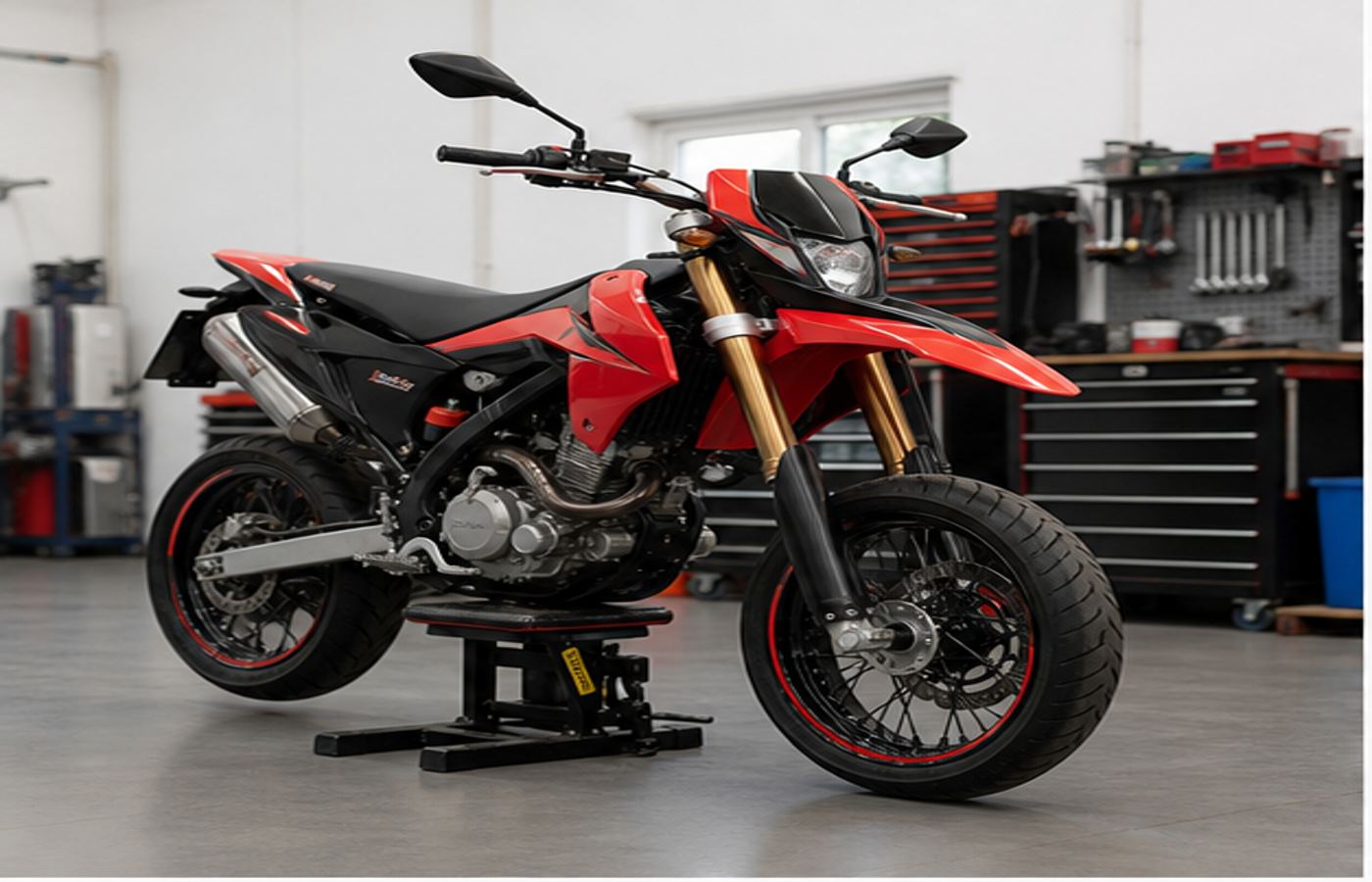
    A useful SMX 125 setup starts with service condition, chain alignment, exhaust fitment and realistic expectations.

    What tuning really means on the SMX 125

    Mondial SMX 125 tuning means improving the way the motorcycle performs within the limits of a small four-stroke 125 engine and its road category. On a bike like this, the gains usually come from sharper response, better gearing for the rider’s roads, a clean exhaust fit, correct maintenance and good chassis setup rather than huge peak horsepower.

    The SMX name is associated with FB Mondial’s supermoto-style 125 platform. Official model information for the current SMX Motard shows a 124 cc single-cylinder four-stroke engine, six-speed gearbox, liquid cooling on current versions, 17-inch wheels, disc brakes and road-oriented supermoto geometry. Use the manufacturer’s current FB Mondial SMX 125 Motard page for broad context, then confirm the exact year and specification of your bike before ordering parts.

    A well set up 125 can feel much better without chasing fantasy numbers. A fresh chain, correct sprocket choice, clean air filter, good plug, adjusted controls, healthy tyres and a correctly fitted exhaust can make the bike smoother and more enjoyable. A badly chosen exhaust, oversized sprocket change or random fuelling box can make it noisy, flat and unreliable.

    Why expectations matter

    Mondial SMX 125 tuning should be realistic because UK A1 riders are already near a legal power ceiling. A 125cc learner-legal motorcycle is not meant to deliver big-bike acceleration. If the goal is better throttle feel, cleaner drive out of corners, less weight, a nicer exhaust note and gearing that suits local roads, tuning can make sense. If the goal is motorway performance, the answer is usually a different licence and motorcycle.

    That does not make tuning pointless. Supermoto riding rewards response and control. A bike that starts cleanly, pulls smoothly, shifts properly, has the right gearing and stops well can feel quicker in real use than a neglected bike with a loud pipe.

    Baseline checks before upgrades

    Mondial SMX 125 tuning should begin with a full service baseline. Check oil level and condition, coolant level where applicable, air filter, spark plug, battery voltage, throttle free play, clutch adjustment, chain slack, sprocket wear, brake pad thickness, tyre pressure and spoke tension if relevant. Do not spend money on performance parts before the bike is mechanically honest.

    AreaWhat to checkWhy it matters
    Engine serviceOil, filter, plug, coolant, air filter and valve/idle behaviourA weak baseline makes every tuning part look worse
    Fuel and airThrottle body, airbox seal, injector or carb setup depending on versionSmall engines are sensitive to poor mixture and air leaks
    TransmissionChain slack, sprocket teeth, wheel alignment and clutch adjustmentDrive feel changes more than riders expect
    ExhaustHeader flange, silencer mount, leaks, catalyst and E-mark statusFitment and legality matter as much as sound
    ChassisTyres, brakes, suspension, steering bearings and fastenersMore response is useless if the bike is unstable or weak under braking

    For nearby 125 setup logic, compare this guide with Mondial HPS 125 tuning, SWM SM 125 R derestriction and Malaguti XSM 125 tuning. Different bikes, same workshop discipline: service first, then choose parts.

    Compatibility table for SMX 125 parts

    Mondial SMX 125 tuning needs part compatibility checks because model years, homologation versions and market specifications can differ. A part advertised for “SMX 125” may fit one production run and not another. Exhaust brackets, header shape, oxygen sensor position, ECU connector, sprocket pitch and brake clearance all need checking.

    Part or setupCompatibilityImportant note
    Slip-on silencerOnly if link pipe, diameter and bracket matchCheck E-mark, DB-killer and road-use approval
    Full exhaust systemDepends on header flange, sensor, catalyst and mount layoutMay affect fuelling, emissions, noise and insurance
    EFI module or remapOnly with matching sensor and ECU logicWrong fuelling can make a 125 run worse or hotter
    Sprocket changeDepends on chain pitch, clearance and wheel alignmentChanges acceleration, cruising revs and speedometer feel
    Air filter or airbox changeUsually safest with standard airbox retainedOpen filters can hurt road use and wet-weather reliability
    Track/private setupMore flexible, still needs safe installationNot automatically legal or insured for public roads

    Anyone looking for a suitable exhaust or module should check pipe diameter, mounting system, sensor position and exact model year before placing an order. The motorcycle exhausts category and motorcycle chip tuning category are useful starting points, but the final decision should be based on measured fitment.

    Exhaust, silencer and header fitment

    Mondial SMX 125 tuning often begins with the exhaust because it is visible, audible and easy to imagine as a performance part. A good exhaust can reduce weight, improve sound and tidy the bike’s look. A poor exhaust can leak, lose low-end response, drone, fail road approval or cook plastics because the bracket and heat shield do not sit correctly.

    Measure the header diameter, link pipe, silencer inlet, bracket spacing, oxygen sensor location where fitted and clearance to the swingarm, shock, plastics and boot. Check whether the system keeps the catalyst if required and whether the silencer has an E-mark and removable or fixed DB-killer. A loud pipe without approval may be sold for off-road or track use only, which is different from a road-legal upgrade.

    Mondial SMX 125 exhaust pipe diameter and mounting measurement for tuning
    Measure pipe diameter, bracket position, sensor location and heat clearance before buying an SMX 125 exhaust.

    Does a sports exhaust need fuelling changes?

    Mondial SMX 125 tuning with exhaust work may or may not need fuelling support. A mild slip-on that retains the catalyst and original intake may run acceptably if it is designed for the bike. A full system, de-cat pipe or very open silencer can change back pressure and mixture enough to create flat spots, heat, popping or poor throttle response.

    The smart test is not just sound. Check starting, idle, throttle pickup, hot running, plug colour where applicable, engine temperature and whether the bike pulls cleanly through the gears. If it feels worse below 7000 rpm, the pipe may be wrong for real road use even if it sounds fast.

    EFI, airbox and throttle response

    Mondial SMX 125 tuning on newer versions may involve electronic fuel injection, sensors and ECU logic. A plug-in module or remap can help only when it is matched to the exact bike and used to support real hardware changes. Random electronic parts can create a richer or leaner mixture in the wrong place, making the bike hesitant, thirsty or hot.

    Before changing fuelling, inspect the airbox seal, air filter, throttle body, injector connector, battery voltage and ground points. Check for warning lights. A weak battery or poor ground can make electronic diagnosis misleading. Keep the airbox unless there is a clear reason to alter it; an exposed pod filter often worsens wet-weather running and intake noise without delivering useful power on a road 125.

    Mondial SMX 125 EFI throttle body ECU connector and airbox check
    Fuel injection and airbox work should be clean, reversible and matched to the exact engine and exhaust setup.

    Throttle response versus peak speed

    Mondial SMX 125 tuning should prioritise rideability. On a supermoto 125, clean pickup out of junctions and corners is more valuable than one optimistic top-speed number. Good throttle response comes from a healthy plug, clean air filter, correct chain slack, good fuel, sound wiring and fuelling that matches the exhaust.

    If the bike hesitates after an upgrade, return to the last known good setup. Check for intake leaks, exhaust leaks, loose connectors and poor battery voltage. Do not keep adding parts to hide a problem created by the first part.

    Chain, sprockets and gearing choices

    Mondial SMX 125 tuning often benefits from a gearing conversation because sprockets change how the bike feels without opening the engine. A smaller front sprocket or larger rear sprocket can improve acceleration and make town riding livelier. Taller gearing can reduce revs at cruising speed but may make the bike struggle into wind or on hills.

    Before changing tooth count, inspect the current chain and sprockets. Hooked teeth, tight spots, rust, poor adjustment and a misaligned rear wheel ruin the feel of any gearing setup. Replace chain and sprockets as a set when worn. Check chain pitch, sprocket carrier, axle adjustment range and chain guard clearance before ordering.

    Mondial SMX 125 chain sprocket axle adjuster and rear wheel check
    Chain slack, sprocket wear and axle alignment have a major effect on how a lightweight 125 feels on the road.
    Setup choiceMain advantagePossible disadvantage
    Standard gearingBalanced for road use and factory calibrationMay feel flat if the rider wants sharper acceleration
    Shorter gearingBetter pull away and livelier corner exitsHigher cruising revs and possible speedometer change
    Taller gearingLower revs at steady speedCan make a 125 struggle uphill or into headwind
    Sports exhaustSound, weight and appearance improvementCompatibility and legality must be checked
    EFI supportCan smooth fuelling after hardware changesWrong setup can make running worse

    For chain setup detail, the motorcycle chain tension adjustment guide is worth reading before deciding whether your SMX needs different sprockets or simply correct adjustment.

    Mondial SMX 125 tuning must stay inside UK road-use reality. GOV.UK explains motorcycle and moped licence categories, including A1 rules for 125cc motorcycles, on its motorcycle licence category page. Riders using a 125 on CBT or A1 entitlement should be especially careful about power, insurance description and roadworthiness.

    Exhaust changes also bring MOT, noise and emissions questions. The official MOT inspection manual for motorcycles explains the inspection framework for roadworthiness, including exhaust condition and noise judgment. A product marked track use only or off-road use only should not be treated as road legal.

    In the UK, an E-mark, DB-killer, catalyst retention and insurer disclosure can all matter depending on the part and the bike’s registration. In the United States, Canada, Australia, New Zealand and Ireland, licensing and road approval rules differ. Do not copy a tuning setup from another country without checking local law.

    Common mistakes

    Mondial SMX 125 tuning goes wrong when the owner buys parts before measuring and servicing. The common pattern is familiar: a loud exhaust, pod filter, random fuelling box, wrong sprocket and loose chain, followed by worse throttle response and confusion. A 125 rewards neat, measured work. It punishes guesswork.

    Buying an exhaust without checking diameter and brackets

    A silencer that nearly fits is not good enough. Check inlet diameter, link pipe angle, bracket location, clearance and sensor/catalyst layout. Exhaust leaks and poor brackets can damage parts and ruin performance.

    Ignoring chain and tyre condition

    A worn chain or old tyre can make a supermoto feel vague and slow. Fixing basics can change the bike more than a tuning part. Tyres, pressure, chain slack and wheel alignment should be checked before judging power.

    Removing the DB-killer for daily road use

    Mondial SMX 125 tuning should not make the bike obnoxious or illegal. Removing a DB-killer may increase noise without improving useful power, and it can create police, MOT or insurance problems.

    Expecting big horsepower from a learner 125

    A 125cc four-stroke has limited headroom. Chasing unrealistic power often reduces reliability and rideability. Better response, correct gearing and clean setup are the sensible goals.

    Workshop-style setup advice

    Mondial SMX 125 tuning should be handled in stages. First, service the bike and record its standard behaviour. Second, check chain and sprockets. Third, measure exhaust fitment. Fourth, decide whether fuelling support is needed. Fifth, test one change at a time. This prevents the usual problem of fitting three parts and not knowing which one caused the issue.

    After fitting any part, inspect fasteners, leaks, cable routing, heat clearance and chain alignment. Ride gently first, then recheck when hot. A proper setup should start easily, idle cleanly, pull without hesitation, shift smoothly and stop confidently. If it only sounds faster, it is not a useful improvement.

    Anyone building a road-focused SMX should keep original parts, use road-approved equipment where required and tell the insurer about modifications. If you are unsure about exhaust approval, fuelling or chain torque settings, use a qualified mechanic. Good tuning should make the bike easier to enjoy, not harder to live with.

    FAQ about Mondial SMX 125 tuning

    What is the best first upgrade for a Mondial SMX 125?

    Mondial SMX 125 tuning should start with maintenance, tyres, chain condition and correct gearing before expensive parts. A clean service baseline often improves the bike more than a random exhaust.

    Will a sports exhaust make the SMX 125 faster?

    A sports exhaust can improve sound, weight and sometimes response, but the gain depends on fitment, catalyst, DB-killer, fuelling and engine condition. A poor exhaust can make the bike louder and slower.

    Do I need to remap after changing the exhaust?

    Some mild slip-ons may work without changes, while full systems or de-cat setups may need fuelling support. Watch for flat spots, heat, popping and poor throttle response after exhaust work.

    Can I change sprockets for better acceleration?

    Yes, if the chain pitch, clearance and adjustment range are correct. Shorter gearing can make the bike livelier, but it may increase cruising revs and reduce relaxed top-speed feel.

    Is Mondial SMX 125 tuning legal in the UK?

    Mondial SMX 125 tuning can be legal when the motorcycle remains roadworthy, insured, within licence entitlement and fitted with approved parts where required. Track-only exhausts and undisclosed modifications can create problems.

    Can a 125 be derestricted for much more power?

    Real gains are limited. A learner-legal 125 is already close to its intended category. Chasing large horsepower from a small four-stroke usually costs reliability and legality.

    What should I check before ordering an exhaust?

    Check model year, header diameter, link pipe angle, silencer bracket, oxygen sensor, catalyst, E-mark, DB-killer and heat clearance before ordering.

    Why did my bike run worse after tuning?

    Common causes are exhaust leaks, poor fuelling, wrong sprocket choice, loose chain, intake leaks, weak battery, dirty air filter or fitting several parts without testing each one separately.

    Final advice before modifying an SMX 125

    Mondial SMX 125 tuning is worth doing when the goal is a sharper, cleaner and more enjoyable 125, not an impossible engine transformation. The best setup usually combines good maintenance, sensible gearing, a correctly fitted road-appropriate exhaust, tidy fuelling and careful chassis checks.

    Before buying parts, identify the exact bike, measure the exhaust, inspect chain and sprockets, confirm legal use and decide how the motorcycle is actually ridden. A city rider, lane rider and private-track rider may need different choices. The sensible result is a motorcycle that feels better every day, starts cleanly, passes inspection and does not create insurance trouble.

    {
    “@context”: “https://schema.org”,
    “@type”: “Article”,
    “headline”: “Mondial SMX 125 tuning”,
    “description”: “Mondial SMX 125 tuning guide to exhaust fitment, EFI setup, chain and sprocket choices, UK A1 legality, common mistakes and realistic supermoto upgrades.”,
    “author”: {
    “@type”: “Organization”,
    “name”: “X Moto Parts”
    },
    “publisher”: {
    “@type”: “Organization”,
    “name”: “X Moto Parts”,
    “logo”: {
    “@type”: “ImageObject”,
    “url”: “https://xmotoparts.com/wp-content/uploads/2026/07/x-moto-parts-logo.png”
    }
    },
    “mainEntityOfPage”: “https://xmotoparts.com/mondial-smx-125-tuning/”,
    “image”: [
    “https://xmotoparts.com/wp-content/uploads/2026/07/mondial-smx-125-tuning.jpg”,
    “https://xmotoparts.com/wp-content/uploads/2026/07/mondial-smx-125-tuning-exhaust-measurement.jpg”,
    “https://xmotoparts.com/wp-content/uploads/2026/07/mondial-smx-125-tuning-chain-sprocket-check.jpg”,
    “https://xmotoparts.com/wp-content/uploads/2026/07/mondial-smx-125-tuning-efi-airbox-check.jpg”
    ]
    }

    {
    “@context”: “https://schema.org”,
    “@type”: “FAQPage”,
    “mainEntity”: [
    {
    “@type”: “Question”,
    “name”: “What is the best first upgrade for a Mondial SMX 125?”,
    “acceptedAnswer”: {
    “@type”: “Answer”,
    “text”: “Mondial SMX 125 tuning should start with maintenance, tyres, chain condition and correct gearing before expensive parts.”
    }
    },
    {
    “@type”: “Question”,
    “name”: “Will a sports exhaust make the SMX 125 faster?”,
    “acceptedAnswer”: {
    “@type”: “Answer”,
    “text”: “A sports exhaust can improve sound, weight and sometimes response, but the gain depends on fitment, catalyst, DB-killer, fuelling and engine condition.”
    }
    },
    {
    “@type”: “Question”,
    “name”: “Do I need to remap after changing the exhaust?”,
    “acceptedAnswer”: {
    “@type”: “Answer”,
    “text”: “Some mild slip-ons may work without changes, while full systems or de-cat setups may need fuelling support.”
    }
    },
    {
    “@type”: “Question”,
    “name”: “Can I change sprockets for better acceleration?”,
    “acceptedAnswer”: {
    “@type”: “Answer”,
    “text”: “Yes, if chain pitch, clearance and adjustment range are correct. Shorter gearing can make the bike livelier but may increase cruising revs.”
    }
    },
    {
    “@type”: “Question”,
    “name”: “Is Mondial SMX 125 tuning legal in the UK?”,
    “acceptedAnswer”: {
    “@type”: “Answer”,
    “text”: “Mondial SMX 125 tuning can be legal when the motorcycle remains roadworthy, insured, within licence entitlement and fitted with approved parts where required.”
    }
    },
    {
    “@type”: “Question”,
    “name”: “Can a 125 be derestricted for much more power?”,
    “acceptedAnswer”: {
    “@type”: “Answer”,
    “text”: “Real gains are limited because a learner-legal 125 is already close to its intended category.”
    }
    },
    {
    “@type”: “Question”,
    “name”: “What should I check before ordering an exhaust?”,
    “acceptedAnswer”: {
    “@type”: “Answer”,
    “text”: “Check model year, header diameter, link pipe angle, silencer bracket, oxygen sensor, catalyst, E-mark, DB-killer and heat clearance before ordering.”
    }
    },
    {
    “@type”: “Question”,
    “name”: “Why did my bike run worse after tuning?”,
    “acceptedAnswer”: {
    “@type”: “Answer”,
    “text”: “Common causes are exhaust leaks, poor fuelling, wrong sprocket choice, loose chain, intake leaks, weak battery, dirty air filter or fitting several parts without testing each one separately.”
    }
    }
    ]
    }

  • Kymco Filly 50i derestriction

    Kymco Filly 50i derestriction

    Kymco Filly 50i derestriction

    Kymco Filly 50i derestriction is not a magic trick for turning a small 50cc scooter into a fast motorcycle. It is a careful diagnosis of why the scooter is limited, whether that limit is electronic, CVT-related, exhaust-related or simply part of the legal moped category, and whether changing it makes sense for the way the scooter will be used.

    The Filly 50i is the kind of light urban scooter people buy for short trips, easy parking and low running costs. When it feels held back at around moped speed, owners often start looking for a limiter, ECU, CDI, variator ring, exhaust restriction or injection adjustment. Sometimes there is a real restriction. Sometimes the scooter is simply tired: worn belt, flat rollers, low tyre pressure, dragging brakes, blocked air filter, weak battery, dirty injector or a previous owner’s messy wiring.

    This guide explains how to inspect the scooter before buying parts, how to think about CVT and electronic limits, what to measure on exhaust and transmission components, what UK riders need to understand about AM moped rules, and which mistakes commonly create poor running rather than useful performance.

    Kymco Filly 50i derestriction
    A 50i scooter should be inspected as a complete moped system before any derestriction part is considered.

    What derestriction means on a 50i scooter

    Kymco Filly 50i derestriction usually means removing or changing a feature that keeps the scooter within its intended 50cc moped performance. On small scooters that feature can be electronic, mechanical or both. Older machines may have CDI limits, exhaust washers or variator spacers. Fuel-injected versions can also involve ECU logic, injector behaviour, throttle position, speed signal and emission calibration.

    The first useful distinction is between a restricted scooter and a neglected scooter. A restricted but healthy scooter usually starts cleanly, idles steadily, pulls smoothly and then reaches a repeatable speed ceiling. A neglected scooter may hesitate, bog, smoke, overheat, slip the belt, vibrate, drag a brake or lose speed on small hills. Those symptoms should be repaired before any tuning part is fitted.

    Kymco model names and specifications vary by market and production year, so confirm your exact machine from the VIN plate, registration documents and owner information. The official Kymco website is the safest starting point for manufacturer context, but the labels and parts on your own scooter are more important than a forum post about another market version.

    Why a 50cc scooter can feel slower than expected

    Kymco Filly 50i derestriction is often searched after the scooter struggles on hills, feels flat at the top end or cannot keep up with traffic where mopeds are expected. That does not prove the limiter is the problem. A worn CVT belt can sit lower in the pulleys and reduce road speed. Flat variator rollers can stop the transmission shifting properly. A blocked air filter or weak spark can make the engine feel strangled. A dragging front brake can steal more power than people expect from a 50cc engine.

    The workshop mindset is simple: restore the scooter to correct standard condition first. On a small moped, every little loss matters. Tyre pressure, brake drag, belt width, roller weight, plug colour, injector cleanliness and exhaust condition all change how much of the engine’s modest power reaches the rear wheel.

    Baseline checks before buying parts

    Kymco Filly 50i derestriction should start with a baseline ride and inspection. Use a safe, legal route and record how the scooter starts cold, idles, accelerates, climbs, reaches top speed and restarts hot. Check whether the limit is smooth and repeatable or whether the scooter feels inconsistent. Inconsistency usually points to maintenance, fuel, ignition, CVT or brake problems rather than a clean restriction.

    Check pointWhat to inspectWhy it matters
    Model identityVIN, year, market, engine label and registration categoryParts vary between 50cc versions and markets
    CVT conditionBelt width, rollers, variator faces, clutch and cover sealingA worn CVT can mimic a speed restriction
    Electrical systemBattery voltage, ECU/CDI connectors, grounds and fault lightsElectronic changes need a healthy loom
    Engine serviceAir filter, spark plug, injector, valve clearance where applicableSmall engines lose performance quickly when neglected
    Chassis dragTyres, brakes, wheel bearings and suspension movementDrag reduces speed and increases fuel use

    For related scooter logic, compare this article with the Honda NSC 50 R power increase guide, the Aprilia SXR 50 exhaust guide and the Super Soco TSX derestriction guide. The drivetrains differ, but the same practical rule applies: diagnose the vehicle before buying parts.

    Compatibility table

    Kymco Filly 50i derestriction can include CVT parts, ECU or CDI work, exhaust changes, intake service or simply returning the scooter to standard health. Some parts are model-specific. Some are universal only in the loosest sense. A 50cc scooter has little spare power, so a wrong part often makes it worse rather than faster.

    Vehicle or part typeCompatibilityImportant note
    Kymco Filly 50i road mopedOnly with parts matched to exact year and engine typeRoad legality and insurance may change if speed category changes
    Variator kitDepends on crankshaft, belt size and roller dimensionsWrong rollers can ruin acceleration or over-rev the engine
    CDI or ECU partOnly if connector, ignition/injection logic and voltage matchFuel-injected scooters are not all CDI-compatible
    Exhaust systemRequires correct flange, mounting points and sensor/catalyst layoutNoise, E-mark and emissions equipment matter for road use
    Private-use projectOften more flexibleSafety, brakes and engine reliability still matter

    Anyone considering parts should photograph the variator, belt, exhaust flange and ECU connector before ordering. The motorcycle exhausts category and chip tuning module category can help with comparison, but final fitment must be based on the exact scooter in front of you.

    CVT, belt and variator checks

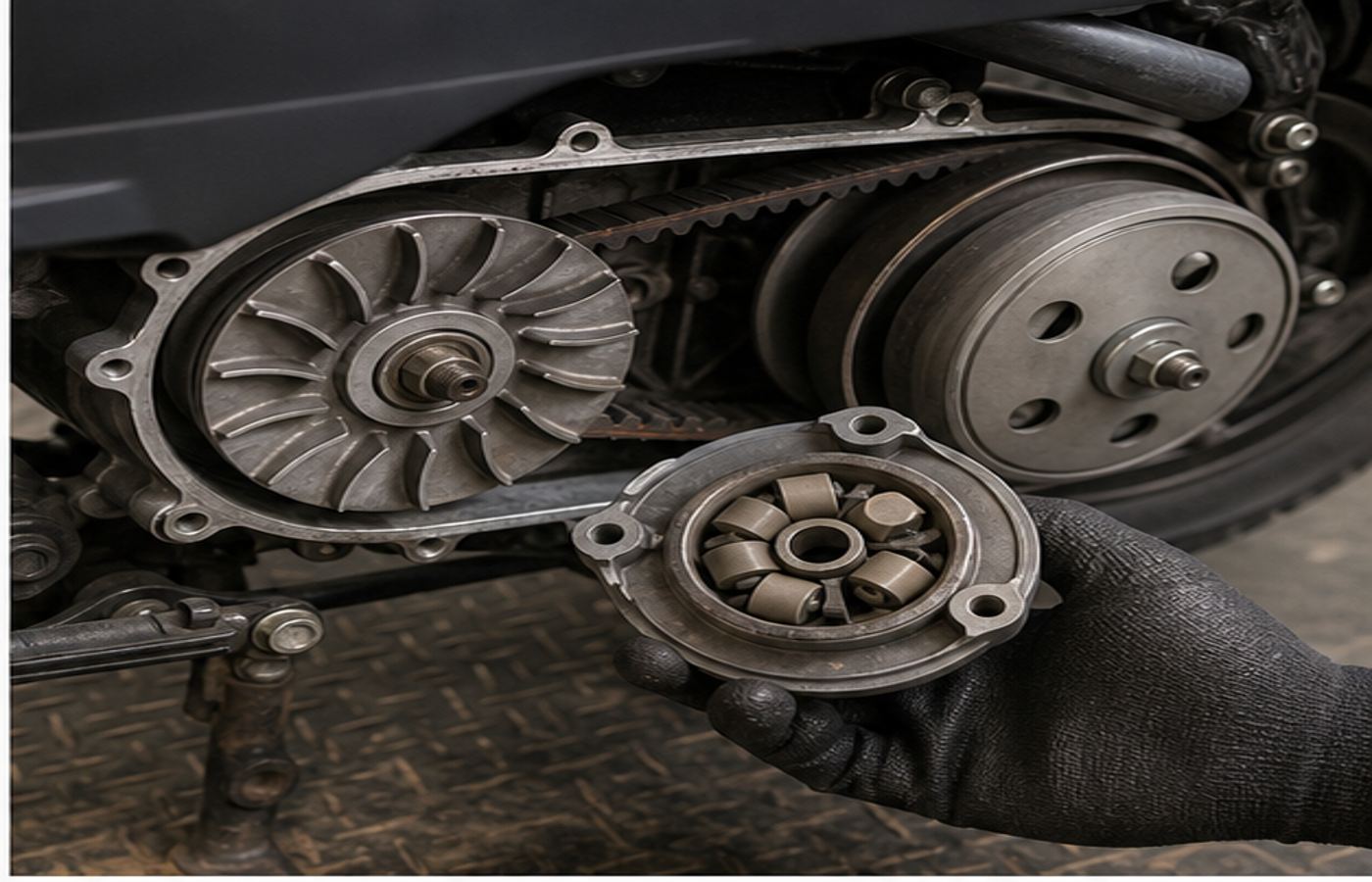
    Kymco Filly 50i derestriction often starts under the CVT cover. The variator, belt and clutch decide how the engine’s small power output becomes road speed. A 50cc scooter can lose several mph from a belt that is too narrow, rollers that have flat spots, clutch dust, a weak contra spring or a variator that does not close fully.

    Remove the CVT cover only when the scooter is safely supported and you have the correct tools. Inspect belt width and condition, check for cracking or glazing, clean clutch dust, look for flat rollers and make sure the variator boss, ramp plate and pulley faces are not damaged. If a spacer or washer is present in the variator, identify whether it is a legal restriction, a factory component or a previous owner’s modification before removing anything.

    Kymco Filly 50i CVT belt variator and roller check before derestriction
    Inspect belt width, roller condition, clutch dust and variator movement before blaming the limiter.

    Roller weight and real road behaviour

    Kymco Filly 50i derestriction can fail if roller weight is chosen blindly. Lighter rollers may improve revs and acceleration but can reduce top speed if too light. Heavier rollers may lower revs but make the scooter lazy off the line. A good setup keeps the engine in its useful power band without screaming, bogging or slipping the belt.

    Do not judge CVT setup from a centre-stand rev test. A scooter behaves differently under load with the rider on it. Test on the road where legal, listen for over-revving, check belt temperature after riding and inspect again for dust or glazing. On a 50cc scooter, smooth drive is often faster in real traffic than a setup that only sounds aggressive.

    SymptomLikely areaWorkshop check
    Revs rise but speed does not followBelt slip or wrong roller setupInspect belt width, clutch and variator faces
    Poor pull awayClutch, rollers or engine serviceCheck clutch shoes, rollers, plug and air filter
    Good acceleration but weak top speedVariator shift, limiter or exhaust restrictionMeasure belt travel and inspect exhaust/flange
    Jerky driveFlat rollers or contaminated clutchOpen CVT and clean/replace worn parts
    Speed varies day to dayFuel, ignition, belt heat or brake dragCheck service items before tuning

    ECU, CDI and injection considerations

    Kymco Filly 50i derestriction can involve electronics, but the phrase “CDI” gets used too loosely online. A fuel-injected 50i may not use the same simple ignition box as an older carburetted scooter. It may have ECU control, sensors, injector timing, idle control and diagnostic behaviour. Plugging in the wrong box can create poor starting, warning lights, misfiring or a scooter that will not run.

    Before touching wiring, check battery voltage, grounds, fuse condition, connector corrosion and whether the scooter has stored faults. Photograph every connector before unplugging it. Do not pull wires by the insulation. Do not force plugs. Do not cut into the harness unless you are prepared to diagnose and repair it properly.

    Kymco Filly 50i ECU CDI connector and wiring check before derestriction
    Fuel-injected scooters need connector, sensor and battery checks before any electronic derestriction part is fitted.

    Fuel injection and throttle response

    Kymco Filly 50i derestriction should not make the scooter hard to start, smoky, flat or thirsty. If it does, the setup is wrong or an existing fault has been exposed. A clean 50i should idle steadily, restart hot, pull away without hesitation and respond predictably to small throttle openings.

    Check the intake boot for cracks, inspect the air filter, look for vacuum leaks where applicable and make sure the throttle cable returns freely. If the scooter has injection, injector cleanliness and sensor inputs matter. Performance work cannot compensate for bad basic maintenance.

    Exhaust, intake and brake checks

    Kymco Filly 50i derestriction sometimes includes exhaust work, especially if the scooter has a restricted header, catalytic equipment or a tired silencer. Before buying an exhaust, measure the flange, stud spacing, pipe route, silencer mount and clearance around bodywork. Check whether the exhaust is road-approved, has an E-mark where required and retains emissions equipment if the scooter needs it for road use.

    A 50cc exhaust that is too open can make the scooter louder without making it quicker. It can also hurt low-speed response, attract unwanted attention and create MOT or insurance problems. Intake changes have the same risk. A pod filter may look sporty but often makes a small road scooter harder to tune and more vulnerable to water and dirt.

    Kymco Filly 50i exhaust pipe brake and mounting check before derestriction
    Measure exhaust fitment and inspect brake condition before increasing speed on a small scooter.

    Brakes and tyres deserve equal attention. A scooter that can travel faster must still stop straight and confidently. Check pad thickness, disc condition, drum adjustment if fitted, lever feel, tyre age, tread and pressure. A tiny gain in speed is not worth poor braking.

    Kymco Filly 50i derestriction has a legal side that UK riders cannot ignore. GOV.UK explains moped and motorcycle licence categories, including AM moped requirements, age rules and category limits, on its motorcycle and moped licence category page. If a scooter is changed so it no longer behaves like the moped it is registered and insured as, the rider may need a different licence category and insurance description.

    Road legality is not only about top speed. It can involve type approval, MOT condition, insurance disclosure, noise, emissions, E-marked exhaust parts, tyres, lights and brakes. GOV.UK’s MOT inspection guidance for motorcycles is also useful for understanding roadworthiness checks; see the MOT inspection manual for motorcycles for the official framework.

    Rules differ in other English-speaking markets. The United States, Canada, Australia, New Zealand and Ireland can classify mopeds and 50cc scooters differently. A derestriction method described in another country may be mechanically interesting but legally irrelevant where you ride. Always separate road use from private land, track use and workshop testing.

    Common mistakes

    Kymco Filly 50i derestriction goes wrong most often because owners skip diagnosis. They buy a CDI for a scooter that needs CVT service. They fit an exhaust without measuring the flange. They remove a variator washer but ignore a worn belt. They copy roller weights from a different engine. They ride an altered moped on the road without checking licence and insurance.

    Buying a universal part without measuring

    Universal does not mean plug-and-play. Measure belt size, roller dimensions, exhaust mounting, connector shape and sensor layout. A part that nearly fits can still damage the scooter or make it run worse.

    Ignoring the service baseline

    A dirty air filter, worn spark plug, weak battery, old belt or dragging brake can make the scooter feel restricted. Fixing those items first often gives the biggest improvement for the least risk.

    Removing legal equipment blindly

    Kymco Filly 50i derestriction should never mean stripping out anything that affects roadworthiness without understanding the consequences. Exhaust emissions parts, noise control, lights, speedometer function and brakes all matter on a road scooter.

    Expecting 125cc performance

    A 50cc four-stroke scooter remains a small-capacity machine. Even when set up well, it has limited power. Chasing unrealistic speed can reduce reliability, increase noise and make the scooter unpleasant for daily use.

    Workshop-style setup advice

    Kymco Filly 50i derestriction should be handled in stages. Start with tyre pressure, brake drag, belt width, roller condition, plug, air filter, battery voltage and exhaust condition. Then identify whether the scooter has a mechanical CVT restriction, an electronic limit, an exhaust restriction or simply normal moped calibration. Only after that should you choose parts.

    After any change, test gently. Check starting, idle, throttle response, brake feel, belt temperature, warning lights and hot restart. Ride a short route, let the scooter cool, inspect again and compare results against your baseline. A clean result is smooth, predictable and repeatable. A scooter that is louder but slower has not been improved, and Kymco Filly 50i derestriction should never hide a fault that still needs repair.

    If you are unsure about wiring, injection faults, exhaust legality or CVT torque settings, use a qualified scooter mechanic. Small scooters are simple in appearance but easy to damage with the wrong tools. A careful owner saves money by measuring twice and buying once.

    FAQ about Kymco Filly 50i derestriction

    Can a Kymco Filly 50i be derestricted?

    Kymco Filly 50i derestriction may be possible on some versions, but it depends on the exact year, market, CVT setup, ECU or CDI arrangement, exhaust design and road-use requirements.

    Is derestricting a 50cc scooter legal in the UK?

    Kymco Filly 50i derestriction can affect UK legality if the scooter no longer fits its registered moped category or the rider’s licence and insurance. Check GOV.UK guidance and speak to the insurer before road use.

    Will derestriction make the Filly 50i much faster?

    It may improve top speed if a genuine restriction is present, but the result is limited by engine power, CVT setup, rider weight, hills, wind and condition. A well-serviced scooter often feels better than a badly modified one.

    Should I change the variator rollers?

    Roller weight can change acceleration and top-speed behaviour, but it must suit the belt, variator and engine. Randomly fitting lighter rollers can make the scooter noisy and slower at the top end.

    Can I fit a sports exhaust?

    A sports exhaust only makes sense if the flange, mounting points, pipe route, emissions equipment and road legality are correct. A loud exhaust that does not match the engine can reduce low-speed response.

    Do I need an ECU or CDI for derestriction?

    Only if the scooter actually has an electronic limit that can be changed safely. Fuel-injected 50i scooters may use ECU logic rather than a simple old-style CDI, so connector and system confirmation are essential.

    What should I check before buying parts?

    Check VIN, model year, belt size, roller dimensions, variator condition, ECU connector, exhaust flange, battery voltage, brake condition and intended road use before ordering anything.

    Why did my scooter get slower after tuning?

    The usual causes are wrong roller weight, belt slip, poor exhaust match, air leaks, weak spark, injector issues or a change that confused the electronic system. Return to baseline and diagnose one area at a time.

    Final advice before modifying a Filly 50i

    Kymco Filly 50i derestriction is worth considering only after the scooter is healthy and the owner understands the legal and mechanical trade-offs. If the scooter is a daily road moped, reliability, braking, tyres, insurance and fuel economy may matter more than a few extra mph. If it is a private-use project, document every change and keep original parts.

    The right path is practical: identify the scooter, service it properly, inspect the CVT, confirm the electronics, measure the exhaust and check the law. Then decide whether a variator setup, compatible electronic part, exhaust work or no modification at all is the sensible answer. For most owners, a cleanly serviced and legally understood scooter is more valuable than a noisy, unreliable one, which is why Kymco Filly 50i derestriction should be treated as a final setup decision rather than the first job.

    {
    “@context”: “https://schema.org”,
    “@type”: “Article”,
    “headline”: “Kymco Filly 50i derestriction”,
    “description”: “Kymco Filly 50i derestriction guide to CVT checks, ECU or CDI compatibility, exhaust fitment, UK moped legality, common mistakes and realistic 50cc scooter setup.”,
    “author”: {
    “@type”: “Organization”,
    “name”: “X Moto Parts”
    },
    “publisher”: {
    “@type”: “Organization”,
    “name”: “X Moto Parts”,
    “logo”: {
    “@type”: “ImageObject”,
    “url”: “https://xmotoparts.com/wp-content/uploads/2026/07/x-moto-parts-logo.png”
    }
    },
    “mainEntityOfPage”: “https://xmotoparts.com/kymco-filly-50i-derestriction/”,
    “image”: [
    “https://xmotoparts.com/wp-content/uploads/2026/07/kymco-filly-50i-derestriction.jpg”,
    “https://xmotoparts.com/wp-content/uploads/2026/07/kymco-filly-50i-derestriction-cvt-check.jpg”,
    “https://xmotoparts.com/wp-content/uploads/2026/07/kymco-filly-50i-derestriction-ecu-check.jpg”,
    “https://xmotoparts.com/wp-content/uploads/2026/07/kymco-filly-50i-derestriction-exhaust-brake-check.jpg”
    ]
    }

    {
    “@context”: “https://schema.org”,
    “@type”: “FAQPage”,
    “mainEntity”: [
    {
    “@type”: “Question”,
    “name”: “Can a Kymco Filly 50i be derestricted?”,
    “acceptedAnswer”: {
    “@type”: “Answer”,
    “text”: “Kymco Filly 50i derestriction may be possible on some versions, but it depends on the exact year, market, CVT setup, ECU or CDI arrangement, exhaust design and road-use requirements.”
    }
    },
    {
    “@type”: “Question”,
    “name”: “Is derestricting a 50cc scooter legal in the UK?”,
    “acceptedAnswer”: {
    “@type”: “Answer”,
    “text”: “Kymco Filly 50i derestriction can affect UK legality if the scooter no longer fits its registered moped category or the rider’s licence and insurance.”
    }
    },
    {
    “@type”: “Question”,
    “name”: “Will derestriction make the Filly 50i much faster?”,
    “acceptedAnswer”: {
    “@type”: “Answer”,
    “text”: “It may improve top speed if a genuine restriction is present, but the result is limited by engine power, CVT setup, rider weight, hills, wind and condition.”
    }
    },
    {
    “@type”: “Question”,
    “name”: “Should I change the variator rollers?”,
    “acceptedAnswer”: {
    “@type”: “Answer”,
    “text”: “Roller weight can change acceleration and top-speed behaviour, but it must suit the belt, variator and engine.”
    }
    },
    {
    “@type”: “Question”,
    “name”: “Can I fit a sports exhaust?”,
    “acceptedAnswer”: {
    “@type”: “Answer”,
    “text”: “A sports exhaust only makes sense if the flange, mounting points, pipe route, emissions equipment and road legality are correct.”
    }
    },
    {
    “@type”: “Question”,
    “name”: “Do I need an ECU or CDI for derestriction?”,
    “acceptedAnswer”: {
    “@type”: “Answer”,
    “text”: “Only if the scooter actually has an electronic limit that can be changed safely; fuel-injected 50i scooters may use ECU logic rather than a simple old-style CDI.”
    }
    },
    {
    “@type”: “Question”,
    “name”: “What should I check before buying parts?”,
    “acceptedAnswer”: {
    “@type”: “Answer”,
    “text”: “Check VIN, model year, belt size, roller dimensions, variator condition, ECU connector, exhaust flange, battery voltage, brake condition and intended road use.”
    }
    },
    {
    “@type”: “Question”,
    “name”: “Why did my scooter get slower after tuning?”,
    “acceptedAnswer”: {
    “@type”: “Answer”,
    “text”: “The usual causes are wrong roller weight, belt slip, poor exhaust match, air leaks, weak spark, injector issues or a change that confused the electronic system.”
    }
    }
    ]
    }

  • Super Soco TSX derestriction

    Super Soco TSX derestriction

    Super Soco TSX derestriction

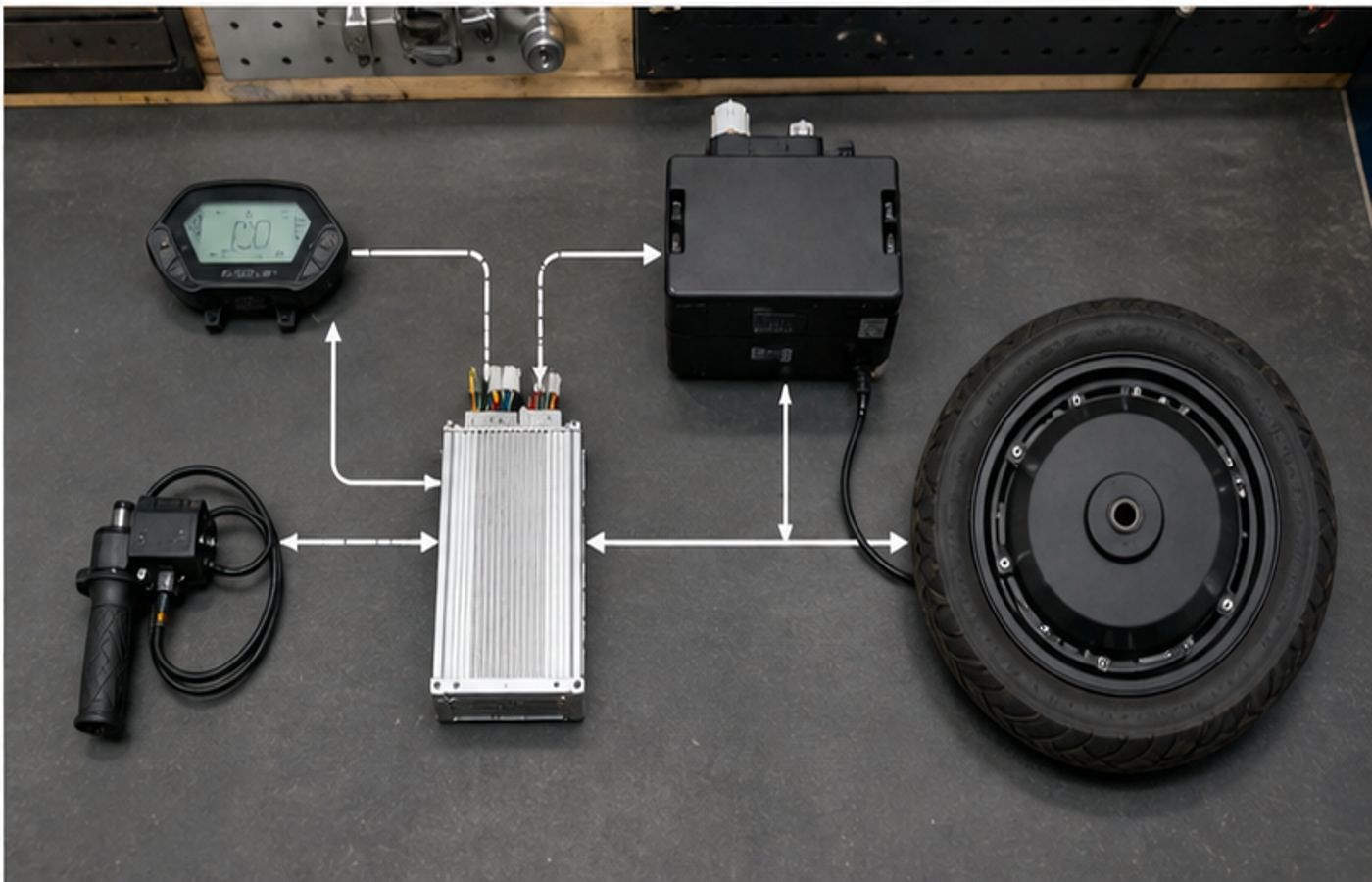
    Super Soco TSX derestriction is one of those jobs that sounds simple when people talk about it online, but becomes much more serious once the panels are off and the battery, controller, hub motor and road-legal approval all come into view. The TSX is a light electric moped-style motorcycle, not a petrol 50 with a washer in the exhaust. If it is limited to 45 km/h, that limit is usually part of the way the vehicle, controller, battery system and homologation work together.

    The useful question is not “which wire makes it faster?” The useful question is whether the bike is healthy, which market version you own, what controller and battery are fitted, whether the work is for public road use or private land, and whether the result will still be safe, insurable and reliable. A TSX with low tyre pressure, dragging brakes, tired battery cells or corroded connectors can feel restricted even before any electronic limit is discussed.

    This guide is written for owners who want a practical workshop view of electric moped speed-limit work. It explains battery and BMS checks, controller compatibility, hub-motor wiring, display communication, braking and tyre condition, UK licence categories, warranty risk and the common mistakes that turn a small electric motorcycle into a fault-finding headache.

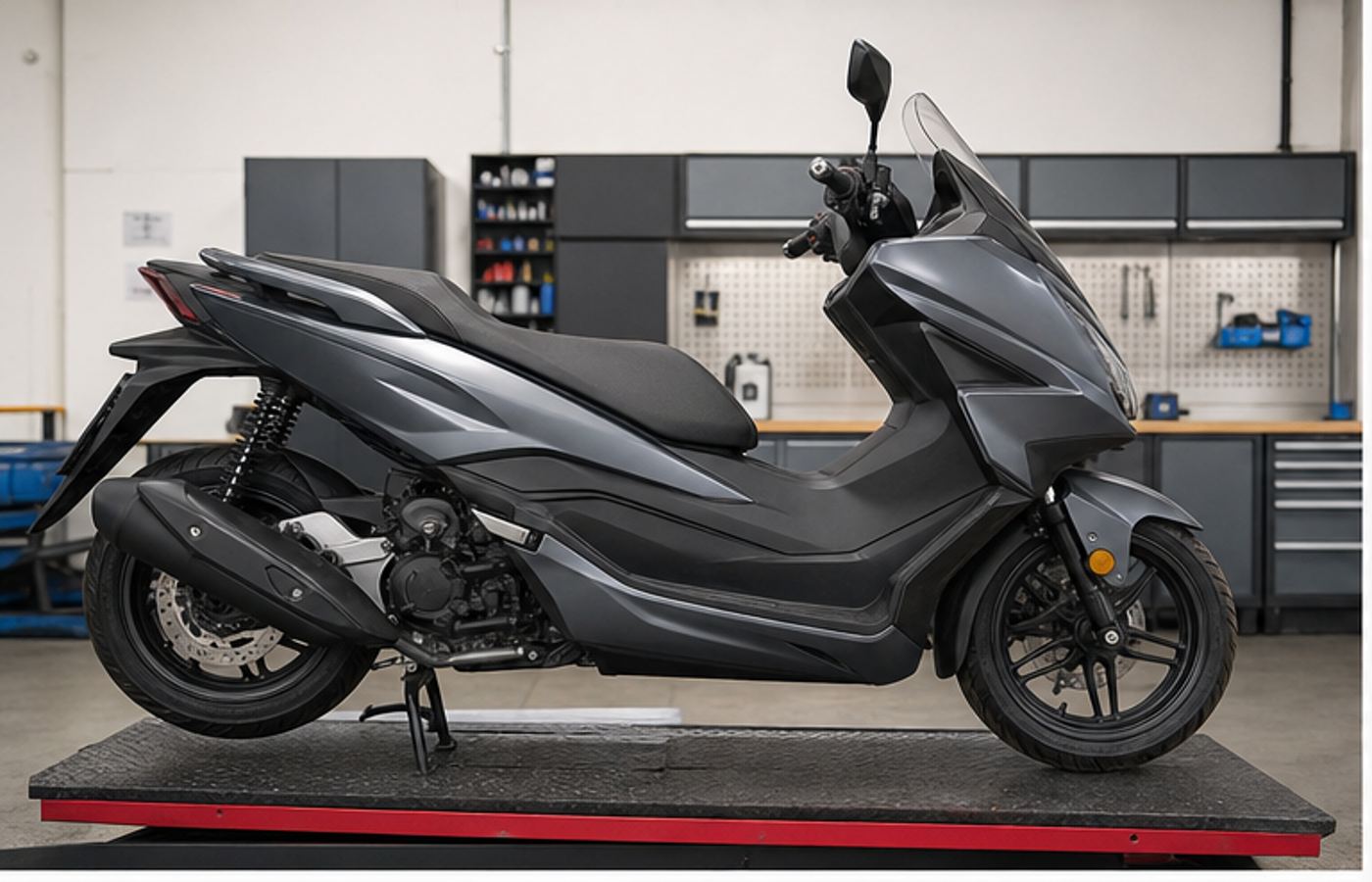
    Super Soco TSX derestriction
    A TSX derestriction decision should begin with model identification, battery condition and safe road-use checks.

    What derestriction really means on the TSX

    Super Soco TSX derestriction usually means trying to change the electronic speed ceiling that keeps the bike inside an L1e-style moped class in many European markets. On a modern electric moped, that ceiling can be managed by the controller, display, throttle mapping, speed sensing, battery current limits or a combination of those systems. It is not a purely mechanical restriction.

    The TSX is popular because it feels more like a small motorcycle than a basic scooter: larger wheels, a motorcycle stance, disc brakes, quiet electric drive and removable lithium battery options depending on version. That does not mean it has unlimited hidden performance. Vmoto’s current TSx information lists an L1e-B homologation, 45 km/h maximum speed, 2.0 kW rated power, 3.5 kW maximum power, 138 Nm maximum torque and battery specifications that can vary by market. Always compare the official Vmoto TSx model page with the exact motorcycle in front of you because local versions can differ.

    A rider may feel a sharp pull away from a junction and then a flat sensation near the legal top speed. That is normal for many electric mopeds. The controller gives useful torque at low speed, then limits current and speed to protect the system and keep the bike inside its approved class. Trying to bypass that logic without understanding the battery and controller can reduce range, create warning lights or make the bike illegal for the rider’s licence.

    Why an electric moped feels different from a petrol 50

    Super Soco TSX derestriction should be approached differently from two-stroke or four-stroke scooter tuning. There is no variator washer, carburettor jet, exhaust washer or CDI box in the old sense. The TSX uses a battery, controller and rear hub motor. Performance is controlled by voltage, current, software maps, thermal limits and the ability of the battery management system to supply power safely.

    That difference changes the whole diagnosis. If the bike is slow, the cause may be battery state of charge, cell balance, cold weather, high rolling resistance, brake drag, a poor connector, a throttle signal fault or a controller protecting itself. Fitting a more aggressive part before checking those basics is like tuning a petrol engine before checking compression and fuel delivery.

    TSX specifications and version differences

    Super Soco TSX derestriction begins with version identification. The TSX name has appeared in different markets, and published figures can vary depending on whether the bike is an older 60V model, a newer Vmoto specification, one-battery or two-battery configuration, or a local homologation variant. Record the VIN, registration details, controller label, battery voltage, battery capacity, charger rating, tyre sizes and dashboard behaviour before ordering anything.

    The most important distinction is whether your bike is legally registered as a moped-type vehicle or as a higher motorcycle category. A 45 km/h L1e-B TSX is not the same practical proposition as a higher-speed electric motorcycle. The body style may look capable of more, but the approval, battery and controller decide what is sensible.

    Area to checkWhat to recordWhy it matters
    Homologation and registrationL1e-B, moped class, local paperwork and insurer descriptionChanging speed may move the bike outside its declared category
    Battery systemVoltage, capacity, number of packs, connector type and chargerThe battery decides current limit, range and thermal margin
    ControllerLabel, rated current, connector layout and mounting positionSpeed-limit changes usually interact with the controller
    Display and controlsRiding modes, warning lights, throttle and brake cut-off responseSome systems need original communication to avoid faults
    Chassis conditionTyres, brakes, wheel bearings, suspension and steeringMore speed requires the bike to be mechanically healthy

    If you are comparing similar electric moped work, the Super Soco CPX derestriction guide, Horwin EK1 derestriction guide and Yadea G5 derestriction guide are useful companion reads. Each platform is different, but the same diagnosis applies: battery health and controller compatibility come first.

    Compatibility table before buying parts

    Super Soco TSX derestriction can involve a reversible module, controller configuration, replacement controller, battery change or simply returning the bike to proper standard condition. The best route depends on use. A commuter used every day on public roads needs a very conservative plan. A private-land project gives more room to experiment, but electrical safety still matters.

    Vehicle or setupCompatibilityImportant note
    Road-registered TSX L1e-BOnly with parts that preserve safe and legal useHigher speed may affect licence, insurance and type approval
    Private-land TSX projectMore flexible, still safety-criticalBattery heat, controller current and braking must be monitored
    Plug-in moduleOnly if connector, voltage and signal logic matchIt should be reversible and secured against vibration and water
    Replacement controllerSpecialist fitment onlyMust match hub motor, hall sensors, throttle, display and battery
    Battery upgradeOnly with correct voltage, BMS, charger and mountingUnsafe battery work can cause serious failure
    Tyre or brake upgradePossible if dimensions and load rating matchHandling and stopping distance matter more after performance changes

    Anyone looking at electric moped tuning parts should first check the controller area and battery label, then compare only products that are meant for the exact TSX version. The motorcycle chip tuning category is useful for understanding how reversible performance modules are normally presented, but final fitment must be checked from the bike itself.

    Battery, BMS and charging checks

    Super Soco TSX derestriction is only as good as the battery behind it. The battery pack stores the energy, but the BMS protects it from over-discharge, over-current, overheating and imbalance. A healthy battery may cope with standard demand comfortably, while an ageing battery may show voltage sag, reduced range or sudden power reduction when more current is requested.

    Start by charging the bike fully with the correct charger. Check the charger fan if fitted, plug condition, charge port, battery locking mechanism, corrosion, swelling, impact damage and water marks. Ride the bike in standard form and record range, indicated speed, battery percentage drop, hill behaviour and any warning lights. Do the same test when the battery is around half charge. That gives a clear baseline before changing anything.

    Super Soco TSX battery connector and BMS check before derestriction
    Battery voltage, connector condition, charger compatibility and BMS behaviour are the first checks before controller work.

    Range after derestriction

    Super Soco TSX derestriction often reduces range because aerodynamic drag and current draw rise quickly as speed increases. Even a small increase above moped speed can use noticeably more energy. If a rider keeps the same battery, asks for more speed and rides harder, the range loss is not a fault; it is physics.

    The best way to judge a setup is repeatable testing. Use the same route, tyre pressures, rider weight, temperature and riding style. A single downhill speedometer number tells you very little. A good test shows whether the bike still starts cleanly, charges normally, avoids warning lights, holds stable power at different charge levels and does not heat connectors.

    SymptomLikely causeOwner check
    Power cuts under accelerationBMS current protection or weak batteryReturn to standard and test battery voltage under load
    Range becomes much shorterHigher speed demand or battery ageingCompare the same route before and after the change
    Bike feels slow in cold weatherBattery temperature effectRetest when the battery is at normal temperature
    Connector gets warmPoor contact or excessive currentStop riding and inspect professionally
    Warning light after installationController or display communication issueUndo the last change and diagnose faults

    Controller, display and wiring checks

    Super Soco TSX derestriction often focuses on the controller because that is where motor current, throttle demand, speed interpretation and protective logic meet. A controller is not a generic box you can replace by matching the colour of a plug. It has to suit battery voltage, motor phase wiring, hall sensors, throttle voltage, brake cut-offs, side-stand logic if fitted, display communication and heat dissipation.

    A reversible plug-in approach is usually preferable to cutting the loom, but reversible does not mean risk-free. Mount any module away from tyre spray, heat, steering movement and sharp plastic edges. Use proper strain relief and avoid trapping the harness under a panel. If the bike throws a fault, loses brake cut-off response or behaves unpredictably, return it to standard before riding further.

    Super Soco TSX controller connector and wiring check for derestriction
    The controller must match the TSX voltage, hub motor, throttle, brake cut-offs, display and battery system.

    Why a universal controller is usually a workshop job

    Super Soco TSX derestriction with a universal controller can look attractive because some listings promise higher current or more speed. In real life, it is a custom electrical installation. The installer has to identify phase wires, hall order, throttle signal range, ignition feed, display compatibility, brake switches, charger relationship, mounting and waterproofing. Getting one part wrong can leave the bike with faults or no safety cut-off.

    For most owners, a proper service baseline and model-specific compatibility check are smarter than chasing the most powerful controller online. A TSX used for commuting should start every time, charge predictably, show no warning lights and stop properly. Those qualities matter more than a short burst of extra speed.

    Hub motor, brakes and tyres

    Super Soco TSX derestriction also depends on the rear hub motor and chassis condition. The motor sits in the wheel, so rear wheel bearings, tyre pressure, brake drag and connector routing all matter. A dragging brake can steal performance and range. An underinflated tyre can make the bike feel sluggish. A damaged motor cable can create intermittent faults that look like controller problems.

    Inspect the rear wheel carefully. Look at the motor cable exit, axle nuts, brake disc, pads, caliper movement, tyre sidewall, tread depth and valve. Spin the wheel with the bike safely supported and listen for scraping or roughness. Check the front brake as well. If the bike is expected to travel faster than its original moped behaviour, braking condition and tyre rating become even more important.

    Super Soco TSX rear hub motor brake and tyre check before derestriction
    Rear hub motor wiring, brake drag, tyre pressure and wheel condition affect both speed and range.

    For broader setup thinking, compare the TSX with the BMW CE 02 derestriction guide. The BMW is a different class of electric machine, but the lesson is similar: approval category, battery behaviour and controller limits are central to a safe decision.

    SolutionMain advantagePossible disadvantage
    Keep the TSX standardBest for legality, warranty, range and everyday reliabilityTop speed remains limited to its approved class
    Correct service issuesOften improves real performance without legal riskDoes not remove a genuine speed limiter
    Reversible moduleLess invasive when truly compatibleStill may affect road legality and battery stress
    Controller replacementCan change motor behaviour more deeplyComplex, risky and often not road-appropriate
    Battery upgradeCan support stronger demand if engineered correctlyExpensive and safety-critical

    Super Soco TSX derestriction has to be separated by use case. In the UK, a 45 km/h electric moped-type vehicle sits in a different practical world from a higher-speed motorcycle. GOV.UK explains moped and motorcycle categories, ages and licence requirements on its motorcycle and moped licence category page. That is the first place a UK rider should check before riding a modified electric moped on public roads.

    If the bike is altered so that it no longer matches the category it was registered and insured under, the rider may face licence, insurance and roadworthiness problems. The MOT tester will not necessarily know every controller detail, but the owner and insurer still need the vehicle to be correctly described. A modified electric moped can also raise questions about braking, tyres, lighting, warning systems and whether the bike remains safe for public road use.

    Do not confuse electric mopeds with electrically assisted pedal cycles. GOV.UK separately explains e-bike rules on its electric bike rules page. A TSX is a motor vehicle, not a pedal-assist bicycle, but the distinction is useful because it shows how important speed, power and classification are in UK law. In the United States, Canada, Australia, New Zealand and Ireland, requirements vary by state, province or national vehicle category, so imported advice should be checked locally.

    Public road, private land and track use

    Super Soco TSX derestriction for public roads should be conservative. The owner needs the correct licence, insurance, registration, roadworthy condition and safe braking. Private land gives more freedom only when the landowner permits it and the bike is used safely. Track or closed-course use may allow non-road parts, but those parts should not be described as road legal unless they genuinely are.

    Common mistakes

    Super Soco TSX derestriction goes wrong when owners skip the boring checks. The first mistake is buying a controller from a listing that does not show the exact connectors. The second is assuming that every TSX uses the same voltage and firmware. The third is ignoring the battery because the bike still turns on. The fourth is riding on public roads without telling the insurer what has changed.

    Forcing connectors

    Connectors that almost fit are dangerous. Pin order, voltage and signal type matter. If a plug needs force, stop. Photograph the original layout and ask for fitment confirmation. A damaged harness is harder to repair than a bad purchase is to return.

    Ignoring brake cut-offs

    Electric mopeds depend on brake cut-off circuits so the motor stops driving when the rider brakes. Any controller or module work that interferes with brake switches should be treated as unsafe until fixed.

    Expecting huge speed from the same battery

    Super Soco TSX derestriction cannot make a small battery behave like a larger pack. Higher speed requires more current and creates more heat. If the system was designed for moped duty, the sensible margin may be smaller than the rider hopes.

    Confusing tuning with repair

    A TSX with a weak battery, sticky brake, poor tyre pressure or damaged motor cable needs repair, not tuning. Restoring standard condition often gives a better real-world result than adding parts to a bike that is already struggling.

    Workshop-style setup advice

    Super Soco TSX derestriction should be handled in stages. First, inspect the bike in standard form. Check tyre pressure, brake drag, wheel bearing feel, battery charge, charger operation, controller area, warning lights and all switches. Second, ride the same short route and record speed, range, hill behaviour and battery drop. Third, inspect the battery and controller labels. Fourth, decide whether the intended use is public road, private land or controlled testing.

    After any change, test gently. Confirm brake cut-off operation, throttle return, lighting, display behaviour, charging and warning lights before attempting higher speed. Ride for a few minutes, stop, feel for unusual heat near connectors and controller mounting, then retest at different battery levels. A neat installation with no faults and predictable range is a better result than a messy installation with one impressive speed run.

    Anyone choosing parts for a TSX should confirm voltage, connector layout, intended use and legal status before ordering. The X Moto Parts shop and related electric scooter guides can help owners compare options, but the final decision should always be based on the exact bike, not a generic promise.

    FAQ about Super Soco TSX derestriction

    Can a Super Soco TSX be derestricted?

    Super Soco TSX derestriction may be technically possible on some versions, but it depends on controller type, battery voltage, BMS behaviour, display communication, market specification and intended use.

    Is derestricting a Super Soco TSX legal in the UK?

    Super Soco TSX derestriction can affect UK road legality if the bike no longer matches its registered moped category, insurance description or the rider’s licence entitlement. Check GOV.UK guidance and speak to the insurer before road use.

    Will derestriction make the TSX much faster?

    It may raise the speed ceiling on some bikes, but the result depends on battery voltage, controller current, hub-motor capacity, rider weight, tyre pressure, wind, hills and temperature. A safe result is repeatable and fault-free, not just fast once.

    Will derestriction reduce range?

    Usually, yes. Higher speed and stronger acceleration demand more current. Super Soco TSX derestriction can shorten range and expose weak batteries sooner.

    Can I fit a universal controller?

    A universal controller is a specialist job because voltage, phase wires, hall sensors, throttle signal, display communication, brake cut-offs and waterproofing must all be correct. It is not normally a simple plug-and-play upgrade.

    Does derestriction void the warranty?

    It can. Controller, wiring, battery or software changes may give a dealer or manufacturer reason to question warranty claims related to electrical faults, battery stress or motor behaviour.

    What should I check before buying a derestriction part?

    Check VIN, year, homologation, battery label, controller label, connector photos, charger rating, display type, brake cut-off operation, tyre condition and intended road use before ordering anything.

    Why does the TSX slow down when the battery is low?

    Electric mopeds often reduce performance as voltage drops or when the BMS protects the battery. Low charge, cold cells or an ageing pack can all make the bike feel restricted even when no limiter fault exists.

    Final advice before modifying a TSX

    Super Soco TSX derestriction should be a technical decision, not a shortcut. If the bike is a road commuter, keeping it reliable, legal, insured and predictable may be the smartest choice. If it is a private-land project, keep every original part, avoid cutting the loom, record every connector and test battery heat and range carefully.

    Before spending money, identify the exact version, test the standard bike, check the battery, inspect the controller and correct any brake, tyre or hub-motor issue. Then decide whether a reversible, compatible module, professional controller work or no modification at all makes sense. The best setup is the one that matches the rider, the bike and the road-use reality.

    {
    “@context”: “https://schema.org”,
    “@type”: “Article”,
    “headline”: “Super Soco TSX derestriction”,
    “description”: “Super Soco TSX derestriction guide to controller compatibility, battery and BMS checks, hub motor inspection, UK legality, warranty risk and realistic electric moped setup.”,
    “author”: {
    “@type”: “Organization”,
    “name”: “X Moto Parts”
    },
    “publisher”: {
    “@type”: “Organization”,
    “name”: “X Moto Parts”,
    “logo”: {
    “@type”: “ImageObject”,
    “url”: “https://xmotoparts.com/wp-content/uploads/2026/07/x-moto-parts-logo.png”
    }
    },
    “mainEntityOfPage”: “https://xmotoparts.com/super-soco-tsx-derestriction/”,
    “image”: [
    “https://xmotoparts.com/wp-content/uploads/2026/07/super-soco-tsx-derestriction.jpg”,
    “https://xmotoparts.com/wp-content/uploads/2026/07/super-soco-tsx-derestriction-battery-check.jpg”,
    “https://xmotoparts.com/wp-content/uploads/2026/07/super-soco-tsx-derestriction-hub-motor-check.jpg”,
    “https://xmotoparts.com/wp-content/uploads/2026/07/super-soco-tsx-derestriction-controller-check.jpg”
    ]
    }

    {
    “@context”: “https://schema.org”,
    “@type”: “FAQPage”,
    “mainEntity”: [
    {
    “@type”: “Question”,
    “name”: “Can a Super Soco TSX be derestricted?”,
    “acceptedAnswer”: {
    “@type”: “Answer”,
    “text”: “Super Soco TSX derestriction may be technically possible on some versions, but it depends on controller type, battery voltage, BMS behaviour, display communication, market specification and intended use.”
    }
    },
    {
    “@type”: “Question”,
    “name”: “Is derestricting a Super Soco TSX legal in the UK?”,
    “acceptedAnswer”: {
    “@type”: “Answer”,
    “text”: “Super Soco TSX derestriction can affect UK road legality if the bike no longer matches its registered moped category, insurance description or the rider’s licence entitlement.”
    }
    },
    {
    “@type”: “Question”,
    “name”: “Will derestriction make the TSX much faster?”,
    “acceptedAnswer”: {
    “@type”: “Answer”,
    “text”: “It may raise the speed ceiling on some bikes, but the result depends on battery voltage, controller current, hub-motor capacity, rider weight, tyre pressure, wind, hills and temperature.”
    }
    },
    {
    “@type”: “Question”,
    “name”: “Will derestriction reduce range?”,
    “acceptedAnswer”: {
    “@type”: “Answer”,
    “text”: “Usually, yes. Higher speed and stronger acceleration demand more current, which can shorten range and expose weak batteries sooner.”
    }
    },
    {
    “@type”: “Question”,
    “name”: “Can I fit a universal controller?”,
    “acceptedAnswer”: {
    “@type”: “Answer”,
    “text”: “A universal controller is a specialist job because voltage, phase wires, hall sensors, throttle signal, display communication, brake cut-offs and waterproofing must all be correct.”
    }
    },
    {
    “@type”: “Question”,
    “name”: “Does derestriction void the warranty?”,
    “acceptedAnswer”: {
    “@type”: “Answer”,
    “text”: “It can. Controller, wiring, battery or software changes may affect warranty claims related to electrical faults, battery stress or motor behaviour.”
    }
    },
    {
    “@type”: “Question”,
    “name”: “What should I check before buying a derestriction part?”,
    “acceptedAnswer”: {
    “@type”: “Answer”,
    “text”: “Check VIN, year, homologation, battery label, controller label, connector photos, charger rating, display type, brake cut-off operation, tyre condition and intended road use.”
    }
    },
    {
    “@type”: “Question”,
    “name”: “Why does the TSX slow down when the battery is low?”,
    “acceptedAnswer”: {
    “@type”: “Answer”,
    “text”: “Electric mopeds often reduce performance as voltage drops or when the BMS protects the battery, especially with low charge, cold cells or an ageing pack.”
    }
    }
    ]
    }

  • Horwin CR6 Pro derestriction

    Horwin CR6 Pro derestriction

    Horwin CR6 Pro derestriction

    Horwin CR6 Pro derestriction is a tempting idea for riders who like the look of a retro electric motorcycle but feel that the bike is being held back by software, licence category, controller settings or market-specific approval. The useful answer is not a quick wire-cutting trick. The CR6 Pro is an electric motorcycle system: battery pack, BMS, motor controller, display, throttle, brake cut-off circuits, gearbox, chain final drive, tyres, brakes and road approval all have to work together.

    Owners usually search for this topic because the bike reaches a very repeatable top speed, feels stronger at low speed than it does near the limit, or appears different from another CR6 Pro shown in a video. Sometimes a real electronic limiter exists. Sometimes the battery is cold, the chain is tight, the tyres are underinflated, the controller is protecting itself from heat, or the rider is comparing two different market versions. A careful diagnosis protects the bike and the rider far better than a blind controller swap.

    This guide explains what to check before modifying a Horwin CR6 Pro, how to think about controller limits and battery current, why chain and sprocket condition still matter on an electric bike, what UK riders must understand about licence categories and insurance, and which mistakes commonly turn a promising project into an expensive fault-finding session.

    Horwin CR6 Pro derestriction
    A CR6 Pro should be assessed as a complete electric motorcycle before any speed-limit or controller work is considered.

    What derestriction really means on the CR6 Pro

    Horwin CR6 Pro derestriction usually means changing, removing or working around a programmed performance limit. On an electric motorcycle, that limit can sit in the motor controller, display communication, throttle mapping, speed signal, battery current limit or the way the bike has been approved for a specific market. It is not the same as fitting a loud exhaust to a petrol 125. There is no exhaust note to open up, no carburettor jet to enlarge and no simple airbox snorkel that magically frees hidden power.

    The CR6 Pro is known as a retro-styled electric bike, and some versions have been described with a manual-style gearbox and chain final drive rather than the usual twist-and-go scooter layout. That makes the riding experience unusual, but the heart of the machine is still electric. The motor only receives the current the controller allows, and the controller only behaves properly when the battery management system, sensors and wiring stay inside safe limits.

    If a bike is designed and registered in a lower-power category, changing its performance can also change the practical and legal identity of the machine. In other words, unlocking more speed is not just a workshop question. It can affect licence entitlement, insurance, warranty, resale value and whether the motorcycle remains suitable for public road use.

    For broad manufacturer context, check current Horwin model information from the official Horwin website, then compare it with the VIN plate, certificate of conformity and documents supplied with your own motorcycle. Electric motorcycles are often revised between markets, and the details printed on the bike matter more than a specification copied from another country.

    Why the bike can feel limited even when nothing is broken

    Horwin CR6 Pro derestriction searches often begin after the rider notices a clear ceiling in speed. That behaviour can be completely normal on an approved electric motorcycle. The controller may reduce current near a programmed maximum speed, the battery voltage may sag under load, or the system may soften torque to protect temperature and range. Electric vehicles can feel very lively from a standstill and then become deliberately calm as the software manages stress.

    There are also ordinary mechanical reasons for disappointing performance. Low tyre pressure, a chain adjusted too tight, a dragging rear brake, a worn wheel bearing, a cold battery, a weak cell group, poor connector condition or a heavy rider on a steep route can all make a CR6 Pro feel slower than expected. A workshop diagnosis starts with these basics because they are cheaper and safer to fix than electronic guesses.

    Model identification and version checks

    Horwin CR6 Pro derestriction should never be planned from the model name alone. Before buying a controller, module or tuning part, identify the exact year, market, VIN, motor rating, battery voltage, battery capacity, display type, controller label, gearbox layout and any approval markings. Photograph every label before panels are removed. If the motorcycle has already been modified by a previous owner, document that before changing anything else.

    The practical question is simple: is the motorcycle a standard road-approved CR6 Pro, a different CR6 variant, an imported version, a private-use project, or a machine with parts from more than one model? A derestriction part that works on one electric motorcycle can be completely wrong for another even if the bodywork looks similar. Connectors, CAN communication, hall sensor layout, throttle voltage and battery protection strategy can differ.

    Check pointWhat to recordWhy it matters
    VIN and documentsYear, market, registration class and certificate detailsRoad legality and part compatibility depend on the exact version
    Battery labelVoltage, capacity, connector type and conditionThe battery decides safe current, range and thermal margin
    Controller labelModel number, rated current, connector layout and mounting positionMost speed-limit changes interact with the controller
    Display and switchesFault lights, modes, communication plugs and brake cut-offsSome controllers need the original display logic to work cleanly
    Chain and sprocketsWear, alignment, slack and tooth countElectric torque can expose poor chain setup quickly

    Riders comparing other electric platforms may find the Horwin EK1 derestriction guide, the Horwin SK1 derestriction guide and the Yadea G5 derestriction guide useful because those guides explain the same battery, controller and approval logic on different electric scooters. The CR6 Pro is more motorcycle-like, but the diagnostic discipline is similar.

    Compatibility table for realistic modifications

    Horwin CR6 Pro derestriction can involve several possible routes. Some owners look for a plug-in module. Others investigate controller programming, replacement controllers, gearing changes, software modes or battery upgrades. The right choice depends on the motorcycle’s exact specification and intended use. A daily commuter used on public roads should be treated very differently from a private-land project.

    Vehicle or setupCompatibilityImportant note
    Road-approved Horwin CR6 ProOnly with parts that preserve legal and electrical compatibilityPerformance changes may affect licence category, insurance and approval
    Private-land CR6 Pro projectMore flexibility, still technically demandingBattery safety, brakes, tyres and controller heat remain critical
    Plug-in moduleDepends on connector, voltage and sensor logicIt should be reversible and secured away from heat and water
    Replacement controllerOnly with matched voltage, current, hall sensors, throttle and displayUsually a specialist installation, not a simple home fit
    Battery upgradeOnly with correct voltage, BMS, mounting and charger compatibilityWrong battery work can be dangerous and expensive
    Chain or sprocket changeMechanically possible only if alignment and clearance are correctIt changes load, acceleration, efficiency and indicated behaviour

    Anyone comparing electric motorcycle performance parts should start with exact model evidence: clear photos of the controller, battery label, connectors and chain area. The motorcycle chip tuning category can help riders understand how reversible modules are presented, but electric motorcycle fitment must be confirmed from the bike itself before ordering.

    Battery, BMS and range checks

    Horwin CR6 Pro derestriction is limited by the battery before it is limited by ambition. The battery pack is not just a fuel tank. It has voltage, capacity, maximum discharge current, cell balance, temperature limits and a battery management system designed to protect the pack. If the controller demands more current than the battery can comfortably supply, the rider may see voltage sag, reduced range, heat, cut-outs or fault codes.

    Before any modification, charge the bike fully, let the battery reach normal temperature, check for swelling, damage, corrosion, loose terminals and charger faults, then ride the bike in standard form. Record indicated speed, range, battery percentage drop, hill performance and whether power fades at low charge. These notes give you a baseline. Without a baseline, a rider may mistake a weaker range for better performance simply because the throttle feels sharper for the first few minutes.

    Horwin CR6 Pro battery connector and BMS check before derestriction
    Battery condition, connector health and BMS behaviour should be checked before changing controller demand.

    Voltage sag, heat and low-charge behaviour

    Horwin CR6 Pro derestriction can reveal a weak battery quickly. A tired pack may feel acceptable at standard output, then struggle when higher current is requested. The symptoms can include sudden power reduction, warning lights, poor hill climbing, hot connectors or noticeably shorter range. That does not always mean the tuning part is defective; it may mean the battery had little spare margin.

    Workshop testing should include several states of charge. A bike that feels good at 100 percent but fades badly at 50 percent is not truly sorted. Check behaviour after repeated starts, an uphill section and a hot restart. Electric motorcycles are quiet, so the rider has fewer engine noises to warn of stress. Smell, temperature, fault lights and range drop become more important clues.

    Symptom after modificationLikely areaPractical check
    Power cuts under hard accelerationBMS current limit or weak batteryReturn to standard, test voltage under load and inspect connectors
    Range drops sharplyHigher current demand or poor efficiencyCompare the same route, weather and riding style before judging
    Warning light appearsController, display or sensor mismatchRead faults if possible and undo the last change
    Bike feels slower when coldBattery temperature protectionTest again once the battery is at normal operating temperature
    Connector becomes hotResistance, poor contact or excessive currentStop riding and inspect professionally before damage occurs

    Controller, display and wiring considerations

    Horwin CR6 Pro derestriction often points toward the controller because that is where motor current, speed interpretation and safety logic meet. A controller is not a universal black box. It must match battery voltage, motor phase wiring, hall sensors, throttle signal, brake cut-offs, stand switch if fitted, display communication and thermal protection. When any of those signals are wrong, the bike may refuse to run, run badly or run without important safety functions.

    A reversible module is usually less invasive than cutting into the loom, but it still has to be correct. The installation should be dry, secure, insulated and mechanically supported. Avoid cable ties that crush wires, sharp edges under panels, connectors left facing upwards where water can collect, and loose modules that rattle against the frame. Good electrical work on a bike should look almost boring: neat routing, original-style protection, no stretched wires and no hidden bodges.

    Horwin CR6 Pro controller connector and tuning module check
    Controller and module work must match the bike’s voltage, connectors, display communication and safety cut-off circuits.

    Why universal controllers are rarely plug-and-play

    Horwin CR6 Pro derestriction using a universal controller can sound attractive because the listing may promise higher current or higher speed. In real workshop terms, a universal controller is a custom electrical project. The installer must match phase wires, hall sensor order, throttle voltage, ignition feed, brake cut-offs, display compatibility, mounting, waterproofing and thermal capacity. Even then, the original battery may not support the demanded current.

    If the bike is used on the road, a controller swap may also make the vehicle no longer match its approval and registration description. The fact that it moves does not mean it is legal, insurable or reliable. For most owners, the conservative path is to diagnose the standard bike first, use only parts that match the exact model, keep every original part, and avoid irreversible loom changes.

    Chain, gearing and road behaviour

    Horwin CR6 Pro derestriction should include a chain and sprocket inspection because electric torque is immediate. A tight chain can waste power, damage bearings and make the bike feel harsh. A loose chain can snatch, slap, wear sprockets and make throttle response untidy. Gearing changes can alter acceleration and cruising behaviour, but they can also increase motor load, reduce efficiency and make the controller work harder.

    Inspect the chain on a stand if you can do so safely. Check slack at the tightest point, look for hooked sprocket teeth, stiff links, dry rollers, poor alignment and evidence of the chain touching the guard. If the rear wheel has been adjusted unevenly, the bike may feel unsettled even before any electronic change. A quiet electric drivetrain makes chain noise more obvious, which is useful if the rider listens carefully.

    Horwin CR6 Pro chain and sprocket check before derestriction
    Chain slack, sprocket wear and wheel alignment affect how cleanly electric torque reaches the road.

    For general motorcycle maintenance context, the motorcycle chain tension adjustment guide is a useful companion before changing gearing or assessing drivetrain drag. On a CR6 Pro, a simple chain correction can sometimes make the bike feel cleaner and more efficient without touching the controller.

    SolutionMain advantagePossible disadvantage
    Standard setupBest chance of preserving road approval, warranty and rangeMay retain a speed ceiling that frustrates some riders
    Reversible moduleLess invasive when genuinely compatibleStill depends on battery, controller and legal use
    Controller replacementPotentially broader performance controlComplex wiring, legal risk and battery stress
    Battery upgradeCan support stronger output when engineered correctlyExpensive and safety-critical
    Sprocket changeCan alter acceleration or cruising rpm equivalentMay reduce efficiency or overload the motor at speed

    Horwin CR6 Pro derestriction has a serious road-use angle in the United Kingdom. Electric mopeds and motorcycles are treated according to category, speed, power and rider entitlement. GOV.UK explains moped and motorcycle licence categories, including AM, A1, A2 and full A entitlement, on its motorcycle and moped licence category page. Before riding a modified electric motorcycle on public roads, the owner must understand what category the bike is registered in and what their licence allows.

    Changing performance can affect more than speed. It may affect insurance disclosure, MOT roadworthiness, braking suitability, tyre speed rating, noise is not the issue here but general road safety still is, and whether the bike remains as described to the insurer. An electric motorcycle does not have an E-marked exhaust, DB-killer or catalytic converter question in the same way a petrol bike does, but it still has approval, lighting, braking, tyre, construction and use obligations.

    In the United States, Canada, Australia, New Zealand and Ireland, rules vary by state, province or national category. Some places separate low-speed electric mopeds from motorcycles differently. Do not copy a controller modification from another country and assume it is legal in the UK. For public road use, the safest approach is to ask the insurer, check registration details and use a qualified workshop. For private land, the legal question may be simpler, but battery safety and rider safety still matter.

    Road, track and private-use distinctions

    Horwin CR6 Pro derestriction for road use should be treated conservatively. A bike used for commuting needs predictable range, charging behaviour, lights, brakes, tyres, insurance and fault-free operation. A private-use project has more room for experimentation, but it should still be tested in controlled conditions. Track or closed-course use may allow non-road parts, but those parts should not be presented as road-approved equipment.

    The UK also has separate rules for electrically assisted pedal cycles, which can confuse riders because those vehicles are not the same as an electric motorcycle. GOV.UK explains the distinction on its electric bike rules page. A CR6 Pro is a motor vehicle, not a pedal-assist bicycle, but the page is helpful because it shows why electric vehicle category details matter.

    Common mistakes

    Horwin CR6 Pro derestriction goes wrong most often when the owner treats the bike like a petrol 125 or a cheap e-scooter. The CR6 Pro needs proper electrical thinking. A petrol rider may expect an exhaust, air filter and fuelling conversation. An electric rider has to think in voltage, current, thermal protection, BMS limits, motor phase wiring, throttle signals, connector sealing and charger compatibility.

    Buying before measuring

    The first mistake is ordering a controller or module without photos of the original controller, connectors and battery label. The second is assuming that all CR6 Pro bikes use the same firmware and wiring. The third is forcing plugs that nearly fit. A connector that looks close but has different pin positions can damage electronics quickly.

    Ignoring battery health

    A weak battery can make any tuning attempt feel disappointing. If a bike loses performance at half charge, struggles in cold weather or shows voltage sag on hills, it needs diagnosis before extra demand is added. A healthy battery is the foundation of any electric motorcycle performance work.

    Changing gearing without understanding load

    Gearing can shift the feel of the bike, but it cannot create free energy. Taller gearing may reduce acceleration and increase controller load at speed. Shorter gearing may feel lively but reduce cruising comfort. The chain, sprockets, motor and controller should be treated as a system.

    Hiding warning lights

    Never ignore or hide an error after a modification. A warning light is not an inconvenience; it is the bike telling you that a safety or control condition has changed. Return to standard, record the fault, inspect connectors and test carefully before riding again.

    Expecting petrol-style gains

    Horwin CR6 Pro derestriction may improve the way a particular bike behaves if a genuine limiter is being addressed, but it cannot make the battery larger, the motor cooler or the brakes stronger. Range, heat and reliability are the trade-offs riders must take seriously.

    Workshop-style setup advice

    Horwin CR6 Pro derestriction should be handled in stages. First, test the standard motorcycle: tyre pressures, brake drag, chain slack, battery state of charge, charger operation, fault lights, range and top speed on a safe private route. Second, inspect the controller and battery without changing anything. Third, decide whether the intended use is road, private land or controlled testing. Fourth, choose only a compatible part and keep the installation reversible wherever possible.

    After installation, do not go straight to a full-throttle top-speed run. Start with the rear wheel safely checked, then a low-speed roll, gentle throttle, brake cut-off test, lighting check and short ride. Let the bike cool, inspect connectors, confirm there are no fault lights, then test again at different charge levels. A proper mechanic wants repeatable behaviour, not one exciting run followed by heat, range loss or faults.

    Anyone looking for a suitable electric motorcycle tuning route should confirm the exact model, battery label, controller connector and road-use plan before placing an order. The X Moto Parts shop is a sensible starting point for comparing related motorcycle parts and guides, but final compatibility should always be based on the specific CR6 Pro in front of you.

    FAQ about Horwin CR6 Pro derestriction

    Can a Horwin CR6 Pro be derestricted?

    Horwin CR6 Pro derestriction may be technically possible on some versions, but it depends on controller type, battery system, display communication, market specification and intended use. It should not be assumed from the model name alone.

    Is derestricting a Horwin CR6 Pro legal in the UK?

    Horwin CR6 Pro derestriction can affect UK road legality if the bike no longer matches its registered category, approval, insurance description or rider licence entitlement. Check GOV.UK categories, insurance and roadworthiness before using a modified bike on public roads.

    Will derestriction improve top speed?

    It may increase the speed ceiling where a genuine electronic limit is present, but the result depends on battery voltage, motor power, controller current, gearing, rider weight, wind, tyres and temperature. A safe setup is judged by repeatable behaviour, not one optimistic speed reading.

    Will derestriction reduce range?

    Often, yes. Higher speed and stronger acceleration require more current from the battery. Horwin CR6 Pro derestriction can reduce range, increase heat and make an ageing battery show weakness sooner.

    Can I fit a universal controller to a Horwin CR6 Pro?

    A universal controller is rarely plug-and-play. It must match voltage, motor phase wiring, hall sensors, throttle signal, display logic, brake cut-offs and thermal needs. For most owners, this is a specialist electrical job.

    Does derestriction void the warranty?

    It can. Controller, battery, wiring or software changes may give a dealer or manufacturer reason to reject warranty claims connected to electrical faults, motor behaviour or battery stress.

    What should I check before ordering a tuning part?

    Check VIN, model year, battery label, controller label, connector photos, display type, charger compatibility, chain condition and road-use plan. A careful purchase starts with evidence from the motorcycle, not a generic listing.

    Why does my CR6 Pro feel slower when the battery is low?

    Electric motorcycles often reduce performance as voltage falls or when the BMS protects the battery. Low charge, cold cells or a tired pack can all make the bike feel restricted even when no fault is present.

    Final advice before modifying a CR6 Pro

    Horwin CR6 Pro derestriction is worth considering only when the rider has a clear reason, a healthy motorcycle and a realistic use case. If the bike is a daily road commuter, reliability, range, brakes, tyres, insurance and licence category should come before extra speed. If it is a private-land project, keep the work reversible, document every connector and test battery heat and range in stages.

    The best decision is often made before any part is purchased. Confirm the exact version, inspect the battery, check the controller, correct chain tension, test the standard bike and decide whether a reversible module, professional controller work or no modification at all is the most sensible route. For riders comparing similar electric two-wheelers, the related electric derestriction guides on X Moto Parts can help build a safer plan before money is spent.

    {
    “@context”: “https://schema.org”,
    “@type”: “Article”,
    “headline”: “Horwin CR6 Pro derestriction”,
    “description”: “Horwin CR6 Pro derestriction guide to battery safety, controller limits, chain checks, UK licence categories, warranty risks and realistic electric motorcycle setup.”,
    “author”: {
    “@type”: “Organization”,
    “name”: “X Moto Parts”
    },
    “publisher”: {
    “@type”: “Organization”,
    “name”: “X Moto Parts”,
    “logo”: {
    “@type”: “ImageObject”,
    “url”: “https://xmotoparts.com/wp-content/uploads/2026/07/x-moto-parts-logo.png”
    }
    },
    “mainEntityOfPage”: “https://xmotoparts.com/horwin-cr6-pro-derestriction/”,
    “image”: [
    “https://xmotoparts.com/wp-content/uploads/2026/07/horwin-cr6-pro-derestriction.jpg”,
    “https://xmotoparts.com/wp-content/uploads/2026/07/horwin-cr6-pro-derestriction-battery-check.jpg”,
    “https://xmotoparts.com/wp-content/uploads/2026/07/horwin-cr6-pro-derestriction-chain-gearing-check.jpg”,
    “https://xmotoparts.com/wp-content/uploads/2026/07/horwin-cr6-pro-derestriction-controller-module-check.jpg”
    ]
    }

    {
    “@context”: “https://schema.org”,
    “@type”: “FAQPage”,
    “mainEntity”: [
    {
    “@type”: “Question”,
    “name”: “Can a Horwin CR6 Pro be derestricted?”,
    “acceptedAnswer”: {
    “@type”: “Answer”,
    “text”: “Horwin CR6 Pro derestriction may be technically possible on some versions, but it depends on controller type, battery system, display communication, market specification and intended use.”
    }
    },
    {
    “@type”: “Question”,
    “name”: “Is derestricting a Horwin CR6 Pro legal in the UK?”,
    “acceptedAnswer”: {
    “@type”: “Answer”,
    “text”: “Horwin CR6 Pro derestriction can affect UK road legality if the bike no longer matches its registered category, approval, insurance description or rider licence entitlement.”
    }
    },
    {
    “@type”: “Question”,
    “name”: “Will derestriction improve top speed?”,
    “acceptedAnswer”: {
    “@type”: “Answer”,
    “text”: “It may increase the speed ceiling where a genuine electronic limit is present, but the result depends on battery voltage, motor power, controller current, gearing, rider weight, wind, tyres and temperature.”
    }
    },
    {
    “@type”: “Question”,
    “name”: “Will derestriction reduce range?”,
    “acceptedAnswer”: {
    “@type”: “Answer”,
    “text”: “Often, yes. Higher speed and stronger acceleration require more current from the battery and can reduce range, increase heat and expose battery weakness.”
    }
    },
    {
    “@type”: “Question”,
    “name”: “Can I fit a universal controller to a Horwin CR6 Pro?”,
    “acceptedAnswer”: {
    “@type”: “Answer”,
    “text”: “A universal controller is rarely plug-and-play because it must match voltage, motor phase wiring, hall sensors, throttle signal, display logic, brake cut-offs and thermal needs.”
    }
    },
    {
    “@type”: “Question”,
    “name”: “Does derestriction void the warranty?”,
    “acceptedAnswer”: {
    “@type”: “Answer”,
    “text”: “It can. Controller, battery, wiring or software changes may affect warranty claims connected to electrical faults, motor behaviour or battery stress.”
    }
    },
    {
    “@type”: “Question”,
    “name”: “What should I check before ordering a tuning part?”,
    “acceptedAnswer”: {
    “@type”: “Answer”,
    “text”: “Check VIN, model year, battery label, controller label, connector photos, display type, charger compatibility, chain condition and road-use plan.”
    }
    },
    {
    “@type”: “Question”,
    “name”: “Why does my CR6 Pro feel slower when the battery is low?”,
    “acceptedAnswer”: {
    “@type”: “Answer”,
    “text”: “Electric motorcycles often reduce performance as voltage falls or when the BMS protects the battery, especially with low charge, cold cells or an ageing pack.”
    }
    }
    ]
    }

  • TGB Blade 1000 derestriction

    TGB Blade 1000 derestriction

    TGB Blade 1000 derestriction

    TGB Blade 1000 derestriction is not just a question of making a big quad faster. The Blade 1000 is already a serious 997 cc V-twin ATV with fuel injection, automatic CVT transmission, selectable 2WD/4WD, locking differentials on some versions and enough torque to get a careless rider into trouble quickly. Before changing anything, the right question is whether the machine is restricted, whether it is mechanically healthy and whether the intended use is road, farm, trail, private land or competition.

    Owners usually start looking at this topic because the quad feels held back at the top end, does not pull as hard as expected, or appears to have different behaviour from another Blade 1000 in a video. Sometimes there is a real limiter. Sometimes there is a market-specific homologation setup. Sometimes the issue is a worn CVT belt, dirty clutches, incorrect tyre pressure, old fuel, a sensor fault or a machine that has spent too much time working hard with poor maintenance.

    This guide explains the practical workshop path: identify the exact Blade 1000 version, check the CVT and driveline, understand ECU and throttle control, measure exhaust fitment, avoid common mistakes, and stay realistic about UK road legality and off-road safety. It is written for riders and mechanics who want useful decisions, not noise for the sake of noise.

    TGB Blade 1000 derestriction
    Derestricting a Blade 1000 should start with version identification, CVT condition and safe-use checks.

    What derestriction really means on the Blade 1000

    TGB Blade 1000 derestriction means identifying and altering a limit that prevents the quad from delivering its intended performance. That limit may be electronic, mechanical, homologation-related or sometimes imagined. On a large ATV, the word derestriction gets used loosely, so it is important to separate real limiters from normal CVT behaviour, traction limits and terrain load.

    A Blade 1000 that feels lazy at speed may not need an ECU change. It may have a glazed belt, dirty clutch sheaves, heavy oversized tyres, incorrect tyre pressure, dragging brakes, old fuel, a blocked air filter or a throttle body issue. A quad that feels sharp on hard ground may feel completely different in mud, sand or with a load on the rack. That is normal ATV physics, not always a restriction.

    Official TGB information for the Blade 1000 LTX EPS ABS lists a 997 cc V-twin, programmed fuel injection, V-belt CVT automatic transmission, shaft drive, selectable drive features and homologation options such as T3 or L7e depending on version and market. You can review the manufacturer’s model specification on the official TGB Blade 1000 LTX EPS ABS page. Use those figures as a reference, then confirm the exact plate and paperwork on your machine.

    Why a 1000 cc ATV can still feel restricted

    Derestriction work often begins after a rider compares two machines that are not actually the same. One may be road-homologated, another off-road only. One may have different tyres, CVT weights, ECU mapping or emissions equipment. One may be a long-wheelbase two-seat model while another is a different trim. Weight, tyre diameter and terrain change performance more than people expect.

    For a mechanic, the first step is to reproduce the complaint. Does the quad stop accelerating at a consistent rpm or road speed? Does it hesitate only when hot? Does it rev but not move strongly? Does it smell rich? Does the belt slip under load? Does the engine braking feel normal? The answers decide whether the issue sits in electronics, transmission, engine condition or chassis drag.

    Engine, CVT and version details to check

    TGB Blade 1000 derestriction is risky if you do not know the exact version. The Blade family includes different trims, wheel sizes, EPS, ABS, homologation categories and market specifications. The same online part may not fit every Blade 1000. Before ordering, photograph the VIN plate, ECU label, throttle body area, oxygen sensor, CVT cover, exhaust system, tyre sizes and any homologation plate.

    AreaWhat to confirmWhy it matters
    Model versionLTX, EPS, ABS, road-homologated, agricultural or off-road-onlyLegal category and wiring details may differ
    Engine managementECU label, sensor layout, throttle body and diagnostic faultsElectronic modules must match the exact system
    CVT transmissionBelt width, belt wear, clutch condition and cover sealingMost “lost power” complaints are felt through the CVT
    TyresDiameter, width, ply rating, tread type and pressureOversized tyres change gearing and increase load
    ExhaustPipe diameter, oxygen sensor, heat shields and silencer mountingPoor fitment can create heat, leaks and fuelling issues

    When a rider asks about unlocking a Blade 1000, a careful parts supplier should ask for this information before promising compatibility. A quad used for farm work, towing and mud needs a different setup from a quad used mainly on hard trails or private land. Heavy tyres and a loaded rack can make aggressive tuning feel worse, not better.

    Compatibility table for parts and setups

    TGB Blade 1000 derestriction can include electronics, CVT setup, exhaust work, intake service, tyre choice and gearing effect through tyre diameter. Each route has a different risk. A reversible module may be easier to remove than a cut wiring loom. CVT tuning may improve how power reaches the ground without touching the ECU. Exhaust work may improve sound but increase heat and noise if chosen badly.

    Vehicle or use caseCompatibilityImportant note
    Road-homologated Blade 1000Only with parts suitable for that approval categoryChanges may affect insurance, MOT, registration or type approval
    Off-road/private land Blade 1000More flexibility, still technically demandingSafety, heat and driveline durability remain critical
    Agricultural useSetup should favour control and reliabilityTowing, load and low-speed work punish aggressive tuning
    ECU or plug-in moduleOnly if connector and sensor layout matchWrong wiring can create faults or poor running
    CVT kitDepends on belt, clutch and intended tyre/loadCan improve response more usefully than top-speed chasing
    Exhaust systemRequires correct pipe, brackets, sensor and heat clearanceNoise and heat management matter on a large ATV

    For related ATV and off-road ownership context, compare this guide with CFMoto ZForce 1000 problems, CFMoto problems and Yamaha Grizzly 700 problems. Those machines differ, but the same workshop logic applies: service condition, CVT health, cooling, 4WD function and safe-use checks come before chasing more power.

    CVT, belt and clutch checks before tuning

    For many owners, TGB Blade 1000 derestriction should begin at the CVT cover. A V-twin can produce strong power, but the rider only feels what the belt and clutches transmit. A worn belt can slip, a glazed belt can feel lazy, a dirty clutch can engage badly, and water or dust inside the cover can make the quad feel inconsistent.

    Check belt width against the service specification, inspect for cracking, glazing and missing teeth, then clean the sheaves properly. Look for flat spots, clutch dust, heat marks and rough engagement. If the quad is used in mud or water, inspect the CVT intake and outlet ducting. A restricted vent or poor seal can cause heat, and heat destroys belts.

    TGB Blade 1000 CVT belt and clutch check before derestriction
    Inspect belt wear, clutch sheaves and CVT ventilation before blaming the ECU for lazy ATV performance.
    SymptomLikely areaWorkshop check
    Engine revs but quad does not pull stronglyCVT belt or clutchInspect belt width, glazing, sheave cleanliness and clutch engagement
    Strong low speed but weak top endLimiter, tyre load, CVT shift-out or terrain dragTest on consistent ground and check tyre diameter
    Power fades when hotCVT heat, engine heat or fuellingCheck vents, radiator, fan operation and diagnostic faults
    Jerky take-offClutch contamination or belt wearClean and inspect clutch faces and belt condition
    Fault light after module installationSensor or connector mismatchReturn to standard and read diagnostic codes

    A clean Blade 1000 setup plan treats CVT setup as part of performance. For mud, towing and low-speed work, clutching for stronger low-end control may be more useful than higher top speed. For trail use, smooth shift-out and temperature control matter. Do not install aggressive parts into a dirty, overheated or worn CVT and expect reliability.

    ECU, sensors and electronic derestriction

    TGB Blade 1000 derestriction may involve the ECU, throttle mapping, speed signal, oxygen sensor behaviour or a plug-in module, depending on version. This is where careful compatibility matters most. A large fuel-injected V-twin does not respond well to random wiring changes. A wrong signal can create poor idle, warning lights, rich running, lean spots, fan behaviour issues or limp mode.

    A reversible electronic module is usually safer than cutting wires, but it still needs the correct connector, voltage and sensor logic. Before installing, disconnect the battery where appropriate, inspect the loom for damage, photograph the original routing and mount the module away from heat, mud and water. After installation, the quad should start cleanly, idle steadily, accept small throttle and show no fault lights.

    TGB Blade 1000 ECU connector and tuning module check for derestriction
    Electronic work should be reversible, dry, secure and matched to the exact ECU and sensor layout.

    Anyone considering a module should compare the broader chip tuning modules category to understand how sensor-based parts are usually presented, then confirm ATV-specific fitment before buying. Ask for connector photos, compatible model years, installation position and whether the part is intended for road use, off-road use or competition only.

    Exhaust, intake and heat management

    TGB Blade 1000 derestriction often attracts exhaust upgrades because a V-twin ATV sounds strong and owners want a deeper tone. A freer exhaust may improve sound and reduce weight, but it can also increase noise, heat and fuelling sensitivity. On an ATV with plastics, racks, passenger equipment and mud protection, heat shields and clearance are not optional details.

    Measure the pipe diameter, oxygen sensor position, silencer mounts and available space before ordering. Check whether the exhaust is road legal, off-road only or competition only. A noisy silencer may be tiring on farm work and unwelcome near lanes, livestock or public rights of way. If the system removes emissions equipment or changes sensor readings, fuelling may need proper diagnosis.

    TGB Blade 1000 exhaust pipe measurement for derestriction and fitment
    Measure exhaust diameter, sensor position and heat shield clearance before choosing an ATV exhaust upgrade.

    The motorcycle exhausts category can help riders compare exhaust fitment ideas, but ATV exhausts need extra attention to mud, water, bodywork heat and working conditions. A good setup should remain manageable after a slow climb, a loaded run or a hot restart.

    TGB Blade 1000 derestriction has to be separated by use case. A quad used only off-road on private land is different from a quad used on public roads. GOV.UK explains that quad bikes used on the road must be approved, registered, taxed and insured, and may need an MOT depending on age. The same guidance also says most quad bikes cannot be used on the road because they do not meet road safety standards. Read the official GOV.UK quad bike rules before assuming a modified ATV is legal for road use.

    Agricultural use has its own practical and legal context. A working quad may be registered as a light agricultural vehicle and used for limited road journeys connected with farm, forestry or horticultural work, but it still needs the correct registration, licensing, insurance, lighting where required and safe condition. A performance change that makes the quad harder to control at low speed may be a bad idea for real work.

    Safety matters even away from the road. The UK Health and Safety Executive notes that ATVs can become unstable quickly and strongly recommends helmets, training and maintenance for quad bike use. Its guidance on ATVs, quad bikes and side-by-side vehicles is worth reading before treating power as the only priority.

    Road use, track use and private land

    For road use, performance changes may affect approval, insurance, noise, emissions, MOT and vehicle description. For private land, the legal burden may be lower, but the physical risk remains. For agricultural work, control and predictability matter more than peak speed. For track or competition use, parts marked “off-road only” may be appropriate, but they should not be presented as road-approved equipment.

    Common mistakes

    The most common TGB Blade 1000 derestriction mistake is assuming that more power is automatically useful. On a heavy 4×4 ATV, traction, stability and temperature are often more important than peak output. A machine that spins tyres, overheats the CVT or becomes snatchy in tight work is not better. It is less controlled.

    MistakeWhat can happenBetter approach
    Ignoring CVT belt conditionSlipping, heat, poor pull and belt failureInspect and service the CVT before tuning
    Fitting oversized tyres without clutchingLost acceleration and extra belt loadMatch tyre size to CVT setup and intended use
    Buying a module without connector proofFault lights, poor running or wiring damageConfirm ECU, sensor and model-year compatibility
    Removing exhaust restriction without heat planningHot plastics, rider discomfort and poor fuellingMeasure, shield and test under real load
    Using road-homologated quads like off-road race machinesLegal, insurance and safety problemsSeparate road, work, private land and competition use
    Testing only on a short flat roadMissed heat, belt and handling problemsTest hills, low-speed work, hot restarts and loaded use

    Workshop advice from real ATV use

    A practical ATV inspection starts before panels come off. I would check tyre size and pressure, look for mud packed around brakes and cooling areas, inspect wheel bearings, confirm 2WD/4WD engagement, check differential lock operation and listen for driveline noise. Then I would inspect the CVT belt and clutches before touching electronics.

    Only after the mechanical baseline is healthy would I look at ECU or module options. The quad should be warmed fully and tested in the type of use it actually sees: towing, farm work, trail riding, mud, hill climbs or road sections where legal. A setup that feels impressive empty on hard ground can be unpleasant with a load or dangerous on loose surfaces.

    Buying path: which upgrade makes sense?

    TGB Blade 1000 derestriction should be staged. Stage one is service: fresh fluids, air filter, spark plugs where due, clean radiator, clean CVT, healthy belt and correct tyres. Stage two is CVT tuning if the complaint is acceleration, belt heat or tyre-load response. Stage three is exhaust and intake only if fitment, heat and legality are clear. Stage four is electronic work when the machine is healthy and compatibility is proven.

    For a work quad, choose reliability and smooth control. For a trail quad, choose predictable throttle and CVT temperature control. For a private-land performance build, document each change and keep enough safety margin in brakes, cooling and driveline. For a road-homologated quad, speak to your insurer and check approval before any performance change.

    FAQ about TGB Blade 1000 derestriction

    Can a TGB Blade 1000 be derestricted?

    TGB Blade 1000 derestriction may be possible on some versions, but it depends on homologation, ECU setup, CVT condition and intended use. Confirm the exact model and legal category before changing anything.

    Is TGB Blade 1000 derestriction legal on UK roads?

    It can affect road legality if the quad no longer matches its approval, registration, insurance or MOT condition. TGB Blade 1000 derestriction for road use should be checked against GOV.UK quad rules, insurer requirements and the vehicle paperwork.

    Will a tuning module improve a Blade 1000?

    A module may improve response only when it matches the ECU and sensor layout and the machine is already healthy. TGB Blade 1000 derestriction with electronics should be reversible, dry, secure and tested for faults.

    Should I tune the CVT before the ECU?

    Often, yes. If the complaint is poor pull, belt heat or lazy response with large tyres, CVT condition and clutching may matter more than ECU work. TGB Blade 1000 derestriction should not ignore the transmission.

    Does an exhaust make the Blade 1000 faster?

    An exhaust can improve sound and sometimes response, but it can also create heat, noise and fuelling issues. For TGB Blade 1000 derestriction, exhaust fitment, sensor position and shielding are just as important as flow.

    Why does my Blade 1000 lose power when hot?

    Possible causes include CVT heat, belt slip, cooling problems, sensor faults, fuel issues or ECU protection behaviour. A proper TGB Blade 1000 derestriction diagnosis should find the heat source before adding parts.

    Can I use bigger tyres after derestriction?

    Bigger tyres increase load and effectively change gearing. They may need CVT setup changes and can reduce acceleration. Account for tyre diameter, weight and terrain before judging the result.

    What should I check before buying parts?

    Check model version, ECU label, CVT belt condition, tyre size, exhaust layout, sensor connectors, use case and road approval. TGB Blade 1000 derestriction works best when parts are chosen from evidence, not assumptions.

    Final verdict

    TGB Blade 1000 derestriction is worth considering only when the quad is correctly identified, mechanically healthy and used in a way that makes the change sensible. A Blade 1000 already has strong V-twin performance. The best upgrades usually make that power cleaner, cooler and easier to control rather than simply louder or more aggressive.

    Before buying anything, inspect the CVT, belt, tyres, brakes, cooling system, exhaust clearance and ECU connectors. Decide whether the quad is for road, work, private land or competition. Then choose parts that match the real use. Start with the relevant ATV and tuning resources on X Moto Parts, compare compatible categories carefully and avoid any modification that makes the machine less safe or less legal for where it will be ridden.

    {
    “@context”: “https://schema.org”,
    “@type”: “Article”,
    “headline”: “TGB Blade 1000 derestriction”,
    “description”: “TGB Blade 1000 derestriction guide to ECU limits, CVT checks, exhaust fitment, UK quad legality, compatibility, common mistakes and ATV workshop setup.”,
    “author”: {
    “@type”: “Organization”,
    “name”: “X Moto Parts”
    },
    “publisher”: {
    “@type”: “Organization”,
    “name”: “X Moto Parts”,
    “logo”: {
    “@type”: “ImageObject”,
    “url”: “https://xmotoparts.com/wp-content/uploads/2026/07/x-moto-parts-logo.png”
    }
    },
    “mainEntityOfPage”: “https://xmotoparts.com/tgb-blade-1000-derestriction/”,
    “image”: [
    “https://xmotoparts.com/wp-content/uploads/2026/07/tgb-blade-1000-derestriction.jpg”,
    “https://xmotoparts.com/wp-content/uploads/2026/07/tgb-blade-1000-derestriction-cvt-check.jpg”,
    “https://xmotoparts.com/wp-content/uploads/2026/07/tgb-blade-1000-derestriction-exhaust-measurement.jpg”,
    “https://xmotoparts.com/wp-content/uploads/2026/07/tgb-blade-1000-derestriction-ecu-module-check.jpg”
    ]
    }

    {
    “@context”: “https://schema.org”,
    “@type”: “FAQPage”,
    “mainEntity”: [
    {
    “@type”: “Question”,
    “name”: “Can a TGB Blade 1000 be derestricted?”,
    “acceptedAnswer”: {
    “@type”: “Answer”,
    “text”: “TGB Blade 1000 derestriction may be possible on some versions, but it depends on homologation, ECU setup, CVT condition and intended use.”
    }
    },
    {
    “@type”: “Question”,
    “name”: “Is TGB Blade 1000 derestriction legal on UK roads?”,
    “acceptedAnswer”: {
    “@type”: “Answer”,
    “text”: “It can affect road legality if the quad no longer matches its approval, registration, insurance or MOT condition.”
    }
    },
    {
    “@type”: “Question”,
    “name”: “Will a tuning module improve a Blade 1000?”,
    “acceptedAnswer”: {
    “@type”: “Answer”,
    “text”: “A module may improve response only when it matches the ECU and sensor layout and the machine is already healthy.”
    }
    },
    {
    “@type”: “Question”,
    “name”: “Should I tune the CVT before the ECU?”,
    “acceptedAnswer”: {
    “@type”: “Answer”,
    “text”: “If the complaint is poor pull, belt heat or lazy response with large tyres, CVT condition and clutching may matter more than ECU work.”
    }
    },
    {
    “@type”: “Question”,
    “name”: “Does an exhaust make the Blade 1000 faster?”,
    “acceptedAnswer”: {
    “@type”: “Answer”,
    “text”: “An exhaust can improve sound and sometimes response, but it can also create heat, noise and fuelling issues.”
    }
    },
    {
    “@type”: “Question”,
    “name”: “Why does my Blade 1000 lose power when hot?”,
    “acceptedAnswer”: {
    “@type”: “Answer”,
    “text”: “Possible causes include CVT heat, belt slip, cooling problems, sensor faults, fuel issues or ECU protection behaviour.”
    }
    },
    {
    “@type”: “Question”,
    “name”: “Can I use bigger tyres after derestriction?”,
    “acceptedAnswer”: {
    “@type”: “Answer”,
    “text”: “Bigger tyres increase load and effectively change gearing, so they may need CVT setup changes and can reduce acceleration.”
    }
    },
    {
    “@type”: “Question”,
    “name”: “What should I check before buying parts?”,
    “acceptedAnswer”: {
    “@type”: “Answer”,
    “text”: “Check model version, ECU label, CVT belt condition, tyre size, exhaust layout, sensor connectors, use case and road approval.”
    }
    }
    ]
    }

  • KSR GRS 125 derestriction

    KSR GRS 125 derestriction

    KSR GRS 125 derestriction

    KSR GRS 125 derestriction should begin with a realistic question, not a rumour: is the motorcycle actually restricted, or is it simply a small A1-class 125 that needs a proper service, correct gearing, clean fuelling and sensible setup? The GRS 125 is a lightweight four-stroke roadster with a manual gearbox, chain final drive and simple commuter-bike logic. It can be made cleaner and more enjoyable, but it will not become a 250 by removing one imaginary limiter.

    Most owners searching this topic want one of three things. They want better pull away from junctions, a little more confidence on hills, or a way to understand whether exhaust, sprocket and chip-style upgrades are worth the money. The honest workshop answer is that the best results come from checking the motorcycle as a complete system: engine health, clutch, chain, gearing, tyres, brakes, exhaust fitment, airbox condition and legal road use.

    This guide is written for riders who own a KSR, Generic or similar GRS 125, and who want clear advice before buying parts. It covers the difference between derestriction and tuning, the compatibility checks that matter, common mistakes, UK road legality, A1 licence limits, installation details and the practical checks a mechanic would make before recommending a part.

    KSR GRS 125 derestriction
    Derestricting a GRS 125 starts with a healthy baseline, not a random box of parts.

    What derestriction really means on a GRS 125

    KSR GRS 125 derestriction is often used as a shortcut phrase for “make the bike faster”. On older two-strokes, derestriction sometimes meant removing a clear physical limiter. On a modern four-stroke 125, the situation is usually different. The motorcycle may already be built close to the legal A1 power envelope, with modest output, a five-speed gearbox and gearing chosen for everyday road use rather than dramatic acceleration.

    The GRS 125 has been listed in European data sources as an A1 learner-legal style motorcycle with an air-cooled single-cylinder four-stroke engine, chain final drive, manual gearbox and power in the region expected for a commuter 125. Technical listings such as 1000PS model data for the KSR Moto GRS 125 show the general engine and chassis layout, although exact details can vary by market and model year. Treat any specification as a starting point, then verify your own bike.

    In practical terms, derestricting a GRS 125 may involve confirming that the bike is not held back by a throttle stop, intake restriction, exhaust restriction, poor gearing or conservative electronic setup. But many bikes that feel slow are not restricted at all. They are under-serviced, overgeared, fitted with tired chains or running with dragging brakes and old tyres.

    Derestriction versus tuning

    Derestriction means removing a limit that prevents the engine from delivering what it was designed to deliver. Tuning means changing the motorcycle to alter response, acceleration, sound or ride feel. For KSR GRS 125 derestriction, the distinction matters because a rider may spend money looking for a hidden limiter when the real improvement is a clean air filter, correct valve clearance, fresh spark plug, healthy clutch and suitable sprocket ratio.

    A useful mechanic’s approach is simple: prove the fault before buying the cure. Does the engine rev cleanly in neutral? Does it pull through the gears without misfire? Does the clutch slip? Is the chain tight in one spot? Is the rear brake dragging? Is the airbox intact? A restricted bike and a poorly maintained bike can feel similar from the saddle, but the repair path is completely different.

    Baseline checks before spending money

    KSR GRS 125 derestriction should never start with the loudest exhaust or the cheapest online controller. Start with a full baseline inspection. A 125 has very little spare torque, so small faults feel big. Low tyre pressure, a dry chain, a dirty air filter, weak fuel delivery, tight valves or an old spark plug can make the bike feel flat even when nothing is electronically limited.

    CheckWhat to inspectWhy it affects performance
    Engine serviceOil, plug, valve clearance, air filter and fuel qualityA small four-stroke loses response quickly when basic service is overdue
    Final driveChain slack, sprocket wear, alignment and lubricationFriction and poor ratio choice can make the bike feel restricted
    ClutchFree play, slip, cable routing and engagement pointSlipping or dragging clutch behaviour steals acceleration
    BrakesPad drag, disc condition, caliper movement and fluid ageDragging brakes waste power and can create heat
    TyresPressure, age, size, profile and load ratingWrong pressure or heavy tyres slow a low-power motorcycle noticeably

    Before any derestriction decision, ride the motorcycle on a repeatable route. Note cold start, hot idle, clutch take-up, hill response, top-gear pull, indicated speed at comfortable rpm and fuel economy. After each change, repeat the same route. This is the only honest way to know whether the bike improved or whether it only became louder.

    If chain condition is suspect, read the motorcycle chain tension adjustment guide before changing sprockets. Chain slack and alignment are not glamorous, but they can transform how a small bike feels in town.

    Compatibility table for parts and setup

    KSR GRS 125 derestriction can involve several categories of parts, but none should be treated as universal. A silencer may fit the pipe diameter but not the hanger angle. A tuning module may match a sensor style but not the exact model-year connector. A sprocket may fit the shaft pattern but create chain-length or speedometer issues. Compatibility is physical, electrical and legal.

    Part or setupCompatibilityImportant note
    Front sprocketDepends on shaft spline and chain sizeOne tooth can noticeably change acceleration and cruising rpm
    Rear sprocketDepends on bolt pattern, offset and chain lengthCheck wheel alignment and clearance after fitting
    Slip-on exhaustDepends on pipe diameter, hanger and clamp positionA road-legal silencer is safer for daily UK use
    Full exhaust systemModel-specific fitment requiredMay affect fuelling, noise, emissions equipment and insurance disclosure
    Fuel or chip moduleOnly if connector and sensor layout matchStart with conservative settings and monitor running quality
    Open air filterUsually not ideal for road reliabilityCan increase noise and disturb low-speed fuelling

    Anyone planning this work should photograph the existing exhaust joint, front sprocket cover, rear sprocket, chain markings, airbox and sensor connectors before ordering parts. If a seller cannot confirm exact fitment from those details, pause rather than guessing. For broader small-bike setup comparisons, the Benelli BN 125 tuning guide and KSR TW 125 tuning guide show similar 125cc decision-making on related commuter-style machines.

    Sprockets, chain and real-world acceleration

    For many owners, KSR GRS 125 derestriction is really a gearing question. If the motorcycle struggles to pull top gear, fitting a taller ratio in the hope of more top speed can make it worse. A 125 needs rpm to make power. Overgearing can drop the engine below its useful range and make the bike feel lazy on hills or into a headwind.

    Shorter gearing can help the GRS 125 leave junctions more cleanly and hold speed better in urban riding. The trade-off is higher rpm at cruising speed, more vibration and possibly a lower comfortable top speed. Taller gearing can reduce rpm at a given speed, but only if the engine has enough torque to pull it. Most riders are happier with a small, reversible gearing change than with an extreme ratio.

    KSR GRS 125 chain and sprocket gearing check before derestriction
    Measure chain condition, sprocket wear and alignment before using gearing changes to improve a 125cc motorcycle.
    Gearing choiceMain advantagePossible disadvantageBest for
    Standard sprocketsBalanced factory feelMay feel flat with heavier riders or hillsMixed commuting
    Slightly shorter gearingBetter launch and hill responseHigher cruising rpmTown riding and stop-start routes
    Slightly taller gearingLower rpm at steady speed if the engine can pull itWeaker acceleration and more downshiftsFlat routes with light rider load
    Worn chain and sprocketsNo advantageNoise, friction, poor feel and safety riskReplace before tuning

    A clean GRS 125 setup plan should include chain maintenance before sprocket experiments. Replace hooked sprockets, set slack at the tightest point, align the wheel carefully and test clutch feel. If the bike suddenly pulls better after a chain kit, the problem was never a hidden limiter.

    Exhaust, intake and fuelling choices

    KSR GRS 125 derestriction often leads owners toward exhaust parts because they are visible and satisfying. A lighter, better-made silencer can improve sound and sometimes make the throttle feel sharper. But a loud exhaust is not the same as a faster motorcycle. On a small four-stroke, a badly matched pipe can reduce low-rpm pull and create popping, leaks or fuelling problems.

    Pipe diameter, bracket position, silencer length, DB-killer design and catalytic converter presence matter. If the exhaust is too open, the engine may feel weaker below the midrange. If the joint leaks, oxygen can enter the pipe and cause popping on overrun. If the hanger is under tension, vibration can crack a bracket. The correct installation should look boring: aligned, sealed, supported and not touching the frame, swingarm or plastics.

    KSR GRS 125 exhaust diameter measurement for derestriction and fitment
    Check exhaust diameter, hanger alignment and clearance before ordering a sport silencer or link pipe.

    For riders comparing exhaust upgrades, the motorcycle exhausts category is useful, but measurements are essential before ordering. Anyone doing KSR GRS 125 derestriction should also check whether the bike uses carburettor or fuel injection in their market version. A carburettor bike may need jetting work after intake or exhaust changes, while an injected bike may need sensor-compatible fuelling support.

    Airbox and filter choices

    The standard airbox is usually the best starting point. Removing it for an open filter can make intake noise louder and filtration worse, especially in wet British weather. A clean, correctly oiled or correctly specified filter is more valuable than a noisy filter that upsets low-speed running. On this motorcycle, airbox integrity is part of reliability.

    Chip module or fuelling support

    If the motorcycle is fuel injected and the sensor layout matches, a conservative tuning module can help refine response after exhaust or intake changes. It should not be sold as a miracle. The goal is smoother fuelling and better throttle feel, not impossible horsepower. During KSR GRS 125 derestriction, start with the lowest setting, warm the bike fully and test hot starts, idle, low-speed roll-on and hill pull before increasing anything.

    KSR GRS 125 sensor connector and tuning module installation check
    Connector compatibility matters more than the product name when fitting a module on a small fuel-injected motorcycle.

    KSR GRS 125 derestriction must be kept inside the law if the motorcycle is used on public roads. In the UK, A1 light motorcycles are limited by engine capacity, power output and power-to-weight ratio. GOV.UK lists A1 rules for light motorcycles up to 125cc and up to 11 kW on its motorcycle licence category guide. Learner riders also need to think about CBT, L plates, insurance and roadworthiness.

    Exhaust legality is separate from licence entitlement. A motorcycle exhaust used on the road must not be insecure, excessively noisy or unsuitable for road use. The DVSA motorcycle MOT manual explains that an exhaust can fail if the noise is clearly unreasonably above the level expected from a similar standard motorcycle, and it also covers insecure or detached exhaust parts in its motorcycle exhaust noise inspection guidance.

    That means any derestriction work should distinguish road use from private land or track use. A road rider should check E-mark or approval markings where relevant, keep the DB-killer fitted if the exhaust is approved with it, avoid removing emissions equipment and inform the insurer about modifications. In the United States, Canada, Australia, New Zealand and Ireland, rules vary by jurisdiction, so the same part can have different legal status in different markets.

    Common mistakes with 125cc derestriction

    The common mistakes in KSR GRS 125 derestriction are predictable because they happen on almost every budget 125. The rider starts with a loud exhaust, ignores the chain, never checks the valve clearance and expects a speed figure that the engine cannot realistically sustain. Then the bike feels rough, loses midrange and becomes harder to live with.

    MistakeWhat happensBetter decision
    Buying an exhaust without measuring the pipePoor fit, leaks, bracket stress or extra fabricationMeasure diameter, hanger position and clearance first
    Assuming all GRS 125 versions are identicalWrong part, wrong connector or incorrect setup adviceConfirm year, market, carburettor or injection and existing parts
    Fitting taller gearing for top speedThe bike cannot pull the ratio and feels slowerChoose gearing for the route, rider weight and engine health
    Removing the airboxNoisy intake, poor wet-weather reliability and fuelling issuesUse a clean, correct filter and keep the intake sealed
    Ignoring UK road legalityMOT, insurance or licence problemsCheck road use, approval, noise and insurer disclosure
    Expecting a huge horsepower gainDisappointment and unnecessary spendingAim for cleaner response, better gearing and reliable setup

    Workshop advice: what I would check first

    A practical GRS 125 inspection starts with the boring items. I would check valve noise and service history, then tyre pressure, brake drag, chain tension, sprocket teeth, clutch free play, throttle action, airbox condition and spark plug colour. If the bike is carburetted, I would inspect the pilot circuit, main jet, float height and intake rubber. If it is injected, I would check connectors, battery voltage and sensor condition.

    The second step is deciding what problem the rider actually wants to solve. If the bike is weak on hills, gearing may help more than an exhaust. If it sounds strangled but pulls well, a legal silencer may improve enjoyment without touching fuelling. If it hesitates after exhaust work, then fuelling diagnosis is needed. If the rider wants a number beyond what a learner-legal 125 can sensibly deliver, the honest advice is to save money for a bigger licence and motorcycle.

    Buying path: choose the right solution

    KSR GRS 125 derestriction works best as a staged plan. Stage one is service and chassis condition. Stage two is gearing if the complaint is acceleration. Stage three is exhaust if fitment, sound and road legality are clear. Stage four is fuelling support only if the bike needs it. Skipping straight to electronics or an open exhaust usually costs more and teaches less.

    For a mild road setup, keep the airbox, use road-legal exhaust parts, make a small sprocket change only if needed and keep documentation for the insurer. For private land, more aggressive experimentation is possible, but engine temperature, fuelling and braking still matter. Choose parts that solve a real problem rather than building a shopping basket from forum claims.

    FAQ about KSR GRS 125 derestriction

    Can a KSR GRS 125 be derestricted?

    KSR GRS 125 derestriction may be possible only if your exact bike has a genuine physical or electronic restriction. Many GRS 125 bikes are simply modest four-stroke 125s, so service, gearing and correct setup often matter more than hunting for a hidden limiter.

    Is KSR GRS 125 derestriction legal in the UK?

    It depends what is changed and how the motorcycle is used. KSR GRS 125 derestriction for public-road use must remain compatible with A1 licence limits, insurance, MOT expectations and roadworthiness rules. Private land is different, but safety still matters.

    Will an exhaust make a KSR GRS 125 faster?

    A good exhaust can improve sound and sometimes response, but it rarely transforms a 125 by itself. For KSR GRS 125 derestriction, exhaust fitment, pipe diameter, DB-killer, bracket alignment and fuelling are more important than noise.

    Should I change the sprockets first?

    Only after checking chain condition and deciding what you want. Shorter gearing can improve acceleration and hill response, while taller gearing can make the bike feel weaker. KSR GRS 125 derestriction should use small, reversible gearing changes.

    Do I need a tuning module?

    You do not need a module on a standard healthy motorcycle. A module may help only if the bike is fuel injected, the connector layout matches and exhaust or intake changes create a real fuelling need. KSR GRS 125 derestriction should never rely on a generic box with unknown compatibility.

    What is the first modification I should make?

    The first “modification” should be maintenance: oil, plug, air filter, valve clearance, chain kit, tyres and brake condition. Once the motorcycle is healthy, derestriction decisions become much clearer.

    Can I use universal exhaust parts?

    Sometimes, but universal does not mean plug-and-play. You must check pipe diameter, hanger position, clearance, sealing and road approval. A badly fitted universal exhaust can make the bike worse.

    Why does my GRS 125 feel slow even when it revs?

    A 125 can feel slow because of gearing, clutch slip, chain drag, tyre pressure, brake drag, valve clearance or rider load. Start by finding those losses before adding performance parts.

    Final verdict

    KSR GRS 125 derestriction is worthwhile only when it is based on evidence. Confirm the exact model, restore the bike to full health, check chain and sprockets, measure the exhaust, understand UK road rules and choose parts that match the motorcycle rather than the fantasy. The best setup is usually not the loudest one; it is the one that pulls cleanly, starts easily, cruises without strain and stays legal for the way you ride.

    If you are preparing a GRS 125 for daily use, focus on service, gearing, tyres and a legal exhaust before considering electronics. If you are building a private-use project, document every change and test one step at a time. For useful next steps, compare related 125cc guides on X Moto Parts, then choose components only after compatibility, measurements and intended road use are clear.

    {
    “@context”: “https://schema.org”,
    “@type”: “Article”,
    “headline”: “KSR GRS 125 derestriction”,
    “description”: “KSR GRS 125 derestriction guide to realistic 125cc performance, gearing, exhaust fitment, UK legality, compatibility checks, common mistakes and workshop setup.”,
    “author”: {
    “@type”: “Organization”,
    “name”: “X Moto Parts”
    },
    “publisher”: {
    “@type”: “Organization”,
    “name”: “X Moto Parts”,
    “logo”: {
    “@type”: “ImageObject”,
    “url”: “https://xmotoparts.com/wp-content/uploads/2026/07/x-moto-parts-logo.png”
    }
    },
    “mainEntityOfPage”: “https://xmotoparts.com/ksr-grs-125-derestriction/”,
    “image”: [
    “https://xmotoparts.com/wp-content/uploads/2026/07/ksr-grs-125-derestriction.jpg”,
    “https://xmotoparts.com/wp-content/uploads/2026/07/ksr-grs-125-derestriction-chain-gearing-check.jpg”,
    “https://xmotoparts.com/wp-content/uploads/2026/07/ksr-grs-125-derestriction-exhaust-measurement.jpg”,
    “https://xmotoparts.com/wp-content/uploads/2026/07/ksr-grs-125-derestriction-module-installation.jpg”
    ]
    }

    {
    “@context”: “https://schema.org”,
    “@type”: “FAQPage”,
    “mainEntity”: [
    {
    “@type”: “Question”,
    “name”: “Can a KSR GRS 125 be derestricted?”,
    “acceptedAnswer”: {
    “@type”: “Answer”,
    “text”: “KSR GRS 125 derestriction may be possible only if the exact bike has a genuine physical or electronic restriction. Many examples need service, gearing and correct setup more than a hidden limiter removal.”
    }
    },
    {
    “@type”: “Question”,
    “name”: “Is KSR GRS 125 derestriction legal in the UK?”,
    “acceptedAnswer”: {
    “@type”: “Answer”,
    “text”: “For public-road use, changes must remain compatible with A1 licence limits, insurance, MOT expectations and roadworthiness rules.”
    }
    },
    {
    “@type”: “Question”,
    “name”: “Will an exhaust make a KSR GRS 125 faster?”,
    “acceptedAnswer”: {
    “@type”: “Answer”,
    “text”: “A good exhaust can improve sound and sometimes response, but it rarely transforms a 125 by itself.”
    }
    },
    {
    “@type”: “Question”,
    “name”: “Should I change the sprockets first?”,
    “acceptedAnswer”: {
    “@type”: “Answer”,
    “text”: “Only after checking chain condition and deciding whether the rider wants stronger acceleration, easier hill response or calmer cruising.”
    }
    },
    {
    “@type”: “Question”,
    “name”: “Do I need a tuning module?”,
    “acceptedAnswer”: {
    “@type”: “Answer”,
    “text”: “A tuning module is not needed on a standard healthy motorcycle. It may help only on compatible fuel-injected bikes when exhaust or intake changes create a real fuelling need.”
    }
    },
    {
    “@type”: “Question”,
    “name”: “What is the first modification I should make?”,
    “acceptedAnswer”: {
    “@type”: “Answer”,
    “text”: “Start with maintenance: oil, plug, air filter, valve clearance, chain kit, tyres and brake condition.”
    }
    },
    {
    “@type”: “Question”,
    “name”: “Can I use universal exhaust parts?”,
    “acceptedAnswer”: {
    “@type”: “Answer”,
    “text”: “Universal exhaust parts can work only when pipe diameter, hanger position, clearance, sealing and road approval are correct.”
    }
    },
    {
    “@type”: “Question”,
    “name”: “Why does my GRS 125 feel slow even when it revs?”,
    “acceptedAnswer”: {
    “@type”: “Answer”,
    “text”: “Common causes include gearing, clutch slip, chain drag, tyre pressure, brake drag, valve clearance or rider load.”
    }
    }
    ]
    }

  • Yadea G5 derestriction

    Yadea G5 derestriction

    Yadea G5 derestriction

    Yadea G5 derestriction is one of those searches that sounds simple until you put the scooter on a bench and start asking the right questions: which G5 version is it, what controller does it use, what battery chemistry is fitted, what licence category does it sit in, and what happens to insurance, warranty and road legality if the scooter no longer behaves like the approved vehicle it was sold as?

    The useful answer is not “cut a wire” or “buy the fastest controller”. A modern electric moped is a system. The controller, battery management system, display, throttle, hub motor, brake sensors, wiring loom, tyres, brakes and legal approval all work together. A careless change can make the scooter unreliable, unsafe or illegal on public roads. A careful approach can help an owner understand what is possible, what is sensible and what should be left alone.

    This guide is written for riders comparing electric scooter tuning options, owners who have seen a 45 km/h speed limit on the Yadea G5, and buyers trying to understand whether a restricted electric moped can be made more responsive without creating expensive problems. It is not a promise of a magic top-speed result. It is a practical workshop guide to checking the scooter properly before spending money.

    Yadea G5 derestriction
    Derestricting a Yadea G5 should start with model identification, battery condition and controller compatibility, not guesswork.

    What derestriction really means on a Yadea G5

    Yadea G5 derestriction usually means trying to remove, alter or work around the electronic speed limitation that keeps the scooter within a moped class. On many European-market electric mopeds, that limit is commonly around 45 km/h, which is roughly 28 mph. The limit is not only a riding comfort issue; it is often part of the vehicle approval, licence category and insurance description.

    The G5 family has been sold in different forms and markets. Official specifications have included hub-motor versions with limited speed and, in some markets, stronger variants with different power figures and higher claimed performance. Yadea’s own model information shows that specifications can vary by version, battery type and market, so a rider should not assume that every online video or parts listing applies to the scooter sitting in the garage. You can compare broad model information on the official Yadea G5/G5S page.

    In workshop terms, derestricting the G5 can involve one of four areas: controller programming, a replacement controller, display or signal changes, or a complete performance conversion involving battery and motor limits. The further you move from the original controller calibration, the more you need to think about heat, current draw, battery health, charging, braking and legal use.

    Why the scooter may feel limited

    A restricted electric moped often feels strong away from a standstill and then stops accelerating cleanly at its programmed maximum speed. That does not necessarily mean the motor has plenty of unused power above that speed. Sometimes the controller is limiting road speed deliberately. Sometimes the battery voltage, motor winding, rolling resistance or tyre pressure means the scooter would not safely hold much more speed anyway.

    This is why G5 speed-limit work should be treated as diagnosis before modification. If the battery is weak, the brakes drag, tyre pressures are low or the rear wheel bearing is tired, the scooter may feel restricted even though the actual problem is poor condition. A healthy baseline matters more on an electric scooter than many riders expect because every watt lost to drag is taken from a small stored-energy budget.

    G5 versions, batteries and controller limits

    The first job is identifying the exact scooter. A G5 derestriction plan cannot be judged properly from the model name alone because the controller, battery pack and approval category may differ. Look for the VIN plate, homologation plate, battery label, charger rating, motor marking, display type and any controller label under the seat or body panels. Photograph the connectors before unplugging anything.

    Some G5 versions use lead-acid battery packs, while stronger versions may use lithium packs. That distinction matters. Lead-acid batteries sag under load and do not like aggressive current demand. Lithium packs can deliver stronger performance, but only if the battery management system, cells, wiring and controller are designed for it. A controller that pulls more current than the pack can safely supply may cause voltage drop, fault codes, overheating or sudden power reduction.

    ComponentWhat to checkWhy it matters
    ControllerLabel, rated voltage, phase wires, connector layout, mounting positionDetermines how the motor is driven and whether any tuning module can connect safely
    BatteryVoltage, chemistry, capacity, age, voltage sag under loadA weak battery can make derestriction feel worse and reduce range sharply
    DisplaySpeed reading, error symbols, mode settings, connector typeSome scooters use the display as part of the control system
    Hub motorRated power, cable condition, bearing noise, heat after ridingMore speed or current can increase heat and mechanical load
    Brakes and tyresPad condition, disc condition, tyre load rating, pressureMore speed is pointless if stopping and stability are not correct

    When an owner asks about unlocking a G5, a good technician will usually ask for photos before recommending anything. The photos should show the controller label, battery label, display plug, motor cable, throttle connector and any existing add-on wiring. If a seller cannot tell you what version their part fits, do not guess.

    Yadea G5 controller and battery connector check before derestriction
    Check the controller label, battery connector, phase wires and loom condition before changing the electric scooter setup.

    Compatibility checks before changing anything

    Derestricting this scooter is only sensible when the parts match the exact scooter. A plug that looks similar can still have different pin order, voltage reference or communication protocol. A controller sold for a visually similar scooter may not communicate with the display. A speed signal change may create a dashboard error. An apparently simple modification can become a no-start problem if the brake switch, side-stand switch or battery lock circuit is affected.

    Vehicle or setupCompatibilityImportant note
    Yadea G5 limited moped versionPossible only after exact controller and battery checksRoad legality and insurance may change if speed or power class changes
    Yadea G5S or higher-output versionDifferent from a standard G5 in many marketsDo not assume parts interchange across versions
    Other Yadea electric scootersNot automatically compatibleConnector shape is not enough; controller logic must match
    Universal electric scooter controllerWorkshop-only in most casesMay require wiring, display changes, throttle calibration and safety checks
    Private land or track projectOften easier legally, still technicalBattery, brakes and heat control remain critical

    If you are comparing electric scooter parts, use the broader X Moto Parts shop as a starting point, then confirm the exact model, connector and intended use before ordering. Riders comparing similar electric moped behaviour may also find the Horwin EK1 derestriction guide and the Super Soco CPX derestriction guide useful because they explain the same controller, battery and road-use logic on different electric platforms.

    Yadea G5 derestriction has a legal side that cannot be ignored. In the UK, mopeds and motorcycles are divided by category, speed, power and rider entitlement. GOV.UK explains moped and motorcycle licence categories, including AM moped limits and A1 light motorcycle rules, on its motorcycle and moped licence category page.

    If a scooter was approved, insured and registered as a moped with a design speed around 45 km/h, making it faster can change the type of vehicle it effectively is. That may affect whether a rider has the correct licence, whether the vehicle remains correctly insured, whether it still matches registration details and whether it is roadworthy. This is especially important for younger riders, CBT riders and anyone using the scooter for commuting.

    Unlike petrol tuning, this electric scooter work does not involve exhaust noise, DB-killers or catalytic converters. The road-use questions instead focus on approval category, maximum design speed, continuous rated power, braking performance, tyres, lighting, warning lights, insurance disclosure and whether the vehicle remains as declared. For electric vehicles, GOV.UK also explains that electric machines outside EAPC rules can be treated as mopeds or motorcycles requiring registration, insurance and a suitable licence on its electric bike rules page. A Yadea G5 is not a pedal-assist bicycle, but the page is useful because it clearly separates light pedal-assist rules from motor vehicle rules.

    Private land is different from public road use

    For private land, a rider has more freedom, provided the landowner permits the use and the scooter is used safely. For public roads, any G5 speed modification should be approached only after checking licence, registration, insurance and local laws. In the United States, Canada, Australia and New Zealand, electric moped categories vary by state, province or territory. Do not copy a modification from another country and assume it is legal at home.

    Derestriction methods owners usually ask about

    Owners researching ways to unlock a G5 usually encounter several possible methods. Some are reversible and conservative. Some are risky. Some are just internet folklore. The right question is not “which one is fastest?” but “which one matches this scooter, keeps the electrical system reliable and is appropriate for where the scooter will be used?”

    SolutionMain advantagePossible disadvantageBest use case
    Keep the scooter standardLegal clarity, warranty protection and predictable rangeLimited top speed may frustrate some ridersPublic-road commuting and younger riders
    Service and rolling-resistance checksImproves real performance without changing approvalDoes not remove an electronic speed limitEvery scooter before modification
    Plug-in signal or tuning moduleCan be reversible if correctly matchedRequires exact connector compatibility and careful setupOwners wanting a controlled, non-permanent approach
    Replacement controllerGreater control over acceleration and speed behaviourCan create wiring, display, heat and legality issuesExperienced workshops and private-use projects
    Battery and controller conversionHighest performance potentialExpensive, complex and often outside road approvalCustom projects, not casual commuting

    Controller programming

    Some controllers allow settings to be changed by diagnostic tools or model-specific software. If available, this is cleaner than cutting wires because it keeps the wiring loom intact. The problem is access. Many owners cannot get official programming tools, and unofficial software can be risky if it writes the wrong parameters. During controller setup, wrong current limits, speed settings or hall-sensor settings can make the scooter jerky, hot or unreliable.

    Plug-in electronic modules

    A plug-in module is attractive because it can be reversible. For a G5 owner, reversibility matters: if the scooter throws faults, loses range or needs warranty inspection, returning to standard can help diagnosis. But a module still has to be electrically correct. Check connector type, wire colours, voltage, mounting position, waterproofing and whether the module interferes with brake-cut circuits.

    Anyone looking for a suitable tuning part should confirm the exact scooter version, take clear photos of the controller area and compare the intended use before ordering. The motorcycle chip tuning category can help you understand how plug-in performance modules are normally presented, but electric scooters require connector confirmation before purchase.

    Replacement controllers

    Controller replacement is the route that creates the most questions. It can alter acceleration, speed ceiling, throttle response and regenerative behaviour if supported. It can also break display communication, disable warning functions, overheat the motor or exceed the battery’s safe current output. For a daily commuter, a controller swap should normally be a professional job.

    Electric scooter module installation during Yadea G5 derestriction checks
    A reversible module or controller check should be installed with the battery isolated, connectors protected and wiring secured away from heat or movement.

    Installation and workshop checks

    Yadea G5 derestriction should begin with safe isolation. Electric scooters use high stored energy even when they are small. Turn the scooter off, remove the key, disconnect the battery where practical and wait before touching controller wiring. Use insulated tools, avoid bridging terminals and never work on damaged battery cables. If you do not recognise the controller, main fuse, phase wires or battery management system, stop and use a qualified technician.

    Pre-installation inspection

    Before any Yadea G5 derestriction work, check tyre pressure, brake drag, wheel bearings, steering, suspension, battery voltage, connector corrosion and error codes. Ride the scooter in standard form and record the maximum indicated speed, range on a normal route, acceleration feel, battery percentage drop and controller temperature after a climb. These notes are not paperwork for the sake of it; they are how you know whether the change improved the scooter or simply made it noisier electrically.

    During installation

    Do not force plugs. Do not pull wires by the insulation. Do not leave a controller or module loose under the seat where it can vibrate, rub through a wire or trap water. If the scooter has a removable battery, make sure the battery locks properly after refitting panels. Good electric scooter tuning work looks boring: tidy harness routing, secure mounting, dry connectors, no dashboard faults and no mystery parts left over.

    Post-installation testing

    After any change, test slowly first. Check throttle return, brake cut-off, lights, indicators, horn, display speed, charger operation and error messages before riding in traffic. Then test in stages: walking speed, gentle acceleration, steady cruise, hill climb and stop-start riding. Watch battery drop and motor heat carefully because a scooter that feels exciting for three minutes may be stressing the pack every time it climbs a hill.

    Yadea G5 derestriction system check showing controller battery hub motor and display
    The battery, controller, display, throttle and hub motor must be treated as one system when evaluating electric scooter derestriction.

    Common mistakes to avoid

    The worst Yadea G5 derestriction mistakes usually come from impatience. Owners buy a controller because a forum post mentions a higher number. They fit it without checking battery chemistry, then wonder why range collapses. They hide warning lights, ignore insurance disclosure or ride an altered moped on the road without understanding the licence category. These are not small details; they are the difference between a useful scooter and a problem.

    MistakeWhat can happenBetter approach
    Assuming every G5 uses the same controllerWrong connector, no start, display fault or damaged wiringIdentify the exact controller and market version first
    Ignoring battery age and voltage sagPoor range, cut-outs, overheating or early battery failureLoad-test the battery before increasing demand
    Riding a modified moped on public roads without checksInsurance, licence and roadworthiness issuesConfirm local rules before road use
    Fitting parts because the plug looks similarIncorrect pinout or incompatible communicationCompare wiring diagrams, labels and supplier data
    Forgetting brakes and tyresHigher speed without matching stopping or stabilityService the chassis before chasing speed
    Expecting car-like tuning gainsDisappointment and unnecessary spendingSet realistic goals around response, usability and condition

    Workshop advice from real use

    The practical test for any G5 derestriction is not a single downhill speedometer photo. A mechanic wants to know how the scooter behaves when the battery is at 100 percent, 60 percent and 30 percent; whether the controller gets hot after repeated starts; whether the brakes remain confident; whether the tyres feel stable; and whether the scooter still charges normally after the modification.

    A good workshop also separates theoretical compatibility from real compatibility. A part may fit the plug but not the software. A battery may have the nominal voltage but not the current capacity. A scooter may reach a higher speed briefly but lose so much range that it becomes worse for commuting. The best decision is sometimes to leave the speed limit alone and focus on battery condition, rolling resistance and rider ergonomics.

    For electric scooter owners comparing other models, the Vespa Elettrica tuning guide is useful for understanding the same range-versus-speed trade-off, while the BMW CE 02 derestriction guide explains why approval category and controller limits matter on newer electric machines.

    Buying decision: should you modify it?

    Changing a Yadea G5 is worth considering only if you have a clear use case. If the scooter is used on public roads as a moped, keeping it standard may be the smartest decision. If it is a private-land project or a workshop-controlled experiment, a reversible, well-documented change is better than cutting into the loom. If it is an older scooter with a tired battery, replacing or testing the battery may deliver more real improvement than changing the controller.

    Before buying anything, ask five questions. Is the scooter definitely a G5 and not a visually similar version? Is the battery healthy? Is the part compatible with the controller and display? Is the intended use legal where the scooter will be ridden? Can the scooter be returned to standard if it develops faults? If the answer to any of these is unclear, pause.

    FAQ about Yadea G5 derestriction

    Can a Yadea G5 be derestricted?

    Yadea G5 derestriction may be technically possible on some versions, but it depends on controller type, battery system, display communication and market specification. It should not be assumed from the model name alone. Check labels, connectors and legality before buying parts.

    Will derestricting a Yadea G5 make it much faster?

    It may increase the speed ceiling on some scooters, but the real result depends on battery voltage, motor power, controller current, rider weight, road gradient, tyres and temperature. Yadea G5 derestriction should be judged by safe, repeatable road behaviour rather than one optimistic speed reading.

    Is Yadea G5 derestriction legal in the UK?

    Yadea G5 derestriction can affect UK road legality if it changes the scooter beyond the moped category it was registered and insured under. Riders should check licence entitlement, insurance, registration details and roadworthiness before using a modified scooter on public roads.

    Does derestriction reduce range?

    Often, yes. Higher speed and stronger acceleration demand more current from the battery. Even if the scooter feels better, Yadea G5 derestriction can reduce range, increase voltage sag and make an older battery show weakness sooner.

    Can I fit a universal electric scooter controller?

    A universal controller can work only when voltage, current, hall sensors, throttle, display, brake cut-off and motor phase wiring are matched correctly. For most owners, Yadea G5 derestriction with a universal controller is a workshop job, not a plug-and-play home modification.

    Will derestriction void the warranty?

    It may. Any change to controller programming, battery load or wiring can give a manufacturer or dealer reason to question warranty coverage. Yadea G5 derestriction should be documented carefully, and riders should understand the risk before modifying a newer scooter.

    What should I check before ordering a derestriction part?

    Check the VIN, model year, controller label, battery voltage, battery chemistry, connector photos, display type and intended road use. A careful Yadea G5 derestriction purchase starts with evidence, not a generic listing.

    Why does my scooter slow down when the battery drops?

    Electric scooters often reduce performance as voltage falls or when the battery management system limits current to protect the pack. Yadea G5 derestriction cannot make a weak or low-charge battery behave like a fresh high-capacity pack.

    Final verdict

    Yadea G5 derestriction should be approached like a technical decision, not a shortcut. Identify the scooter, test the battery, inspect the controller, confirm legal use, then decide whether a reversible module, controller work or no modification at all makes sense. The right result is not simply a higher number on the display; it is a scooter that remains safe, predictable and useful.

    If your G5 is a daily commuter, prioritise reliability, braking, tyres, battery health and insurance clarity. If it is a private-use project, work slowly, document every connector and test heat and range after each change. For riders still comparing electric scooter setups, start with the electric and chip-tuning resources on X Moto Parts, then choose parts only after the exact scooter version and intended use are clear.

    {
    “@context”: “https://schema.org”,
    “@type”: “Article”,
    “headline”: “Yadea G5 derestriction”,
    “description”: “Yadea G5 derestriction guide to controller compatibility, battery checks, UK legality, installation risks, common mistakes and realistic electric scooter tuning choices.”,
    “author”: {
    “@type”: “Organization”,
    “name”: “X Moto Parts”
    },
    “publisher”: {
    “@type”: “Organization”,
    “name”: “X Moto Parts”,
    “logo”: {
    “@type”: “ImageObject”,
    “url”: “https://xmotoparts.com/wp-content/uploads/2026/07/x-moto-parts-logo.png”
    }
    },
    “mainEntityOfPage”: “https://xmotoparts.com/yadea-g5-derestriction/”,
    “image”: [
    “https://xmotoparts.com/wp-content/uploads/2026/07/yadea-g5-derestriction.jpg”,
    “https://xmotoparts.com/wp-content/uploads/2026/07/yadea-g5-derestriction-controller-check.jpg”,
    “https://xmotoparts.com/wp-content/uploads/2026/07/yadea-g5-derestriction-module-installation.jpg”,
    “https://xmotoparts.com/wp-content/uploads/2026/07/yadea-g5-derestriction-system-check.jpg”
    ]
    }

    {
    “@context”: “https://schema.org”,
    “@type”: “FAQPage”,
    “mainEntity”: [
    {
    “@type”: “Question”,
    “name”: “Can a Yadea G5 be derestricted?”,
    “acceptedAnswer”: {
    “@type”: “Answer”,
    “text”: “Yadea G5 derestriction may be technically possible on some versions, but it depends on controller type, battery system, display communication and market specification.”
    }
    },
    {
    “@type”: “Question”,
    “name”: “Will derestricting a Yadea G5 make it much faster?”,
    “acceptedAnswer”: {
    “@type”: “Answer”,
    “text”: “The result depends on battery voltage, motor power, controller current, rider weight, road gradient, tyres and temperature.”
    }
    },
    {
    “@type”: “Question”,
    “name”: “Is Yadea G5 derestriction legal in the UK?”,
    “acceptedAnswer”: {
    “@type”: “Answer”,
    “text”: “Yadea G5 derestriction can affect UK road legality if it changes the scooter beyond the moped category it was registered and insured under.”
    }
    },
    {
    “@type”: “Question”,
    “name”: “Does derestriction reduce range?”,
    “acceptedAnswer”: {
    “@type”: “Answer”,
    “text”: “Higher speed and stronger acceleration demand more current from the battery, so range can be reduced.”
    }
    },
    {
    “@type”: “Question”,
    “name”: “Can I fit a universal electric scooter controller?”,
    “acceptedAnswer”: {
    “@type”: “Answer”,
    “text”: “A universal controller can work only when voltage, current, hall sensors, throttle, display, brake cut-off and motor phase wiring are matched correctly.”
    }
    },
    {
    “@type”: “Question”,
    “name”: “Will derestriction void the warranty?”,
    “acceptedAnswer”: {
    “@type”: “Answer”,
    “text”: “Changes to controller programming, battery load or wiring may affect warranty coverage.”
    }
    },
    {
    “@type”: “Question”,
    “name”: “What should I check before ordering a derestriction part?”,
    “acceptedAnswer”: {
    “@type”: “Answer”,
    “text”: “Check the VIN, model year, controller label, battery voltage, battery chemistry, connector photos, display type and intended road use.”
    }
    },
    {
    “@type”: “Question”,
    “name”: “Why does my scooter slow down when the battery drops?”,
    “acceptedAnswer”: {
    “@type”: “Answer”,
    “text”: “Electric scooters often reduce performance as voltage falls or when the battery management system limits current to protect the pack.”
    }
    }
    ]
    }

  • Honda Forza 125 derestriction

    Honda Forza 125 derestriction

    Honda Forza 125 derestriction

    Honda Forza 125 derestriction is a topic that needs a careful, practical answer because the Forza 125 is already a refined, road-focused scooter, not a rough moped with one simple washer waiting to be removed. A rider who wants better acceleration, cleaner hill climbing or a little more response has to look at the whole machine: service condition, CVT setup, belt wear, exhaust flow, electronic control, weight, wind resistance and UK road legality.

    The first thing to understand about Honda Forza 125 derestriction is that it should not be treated as a promise of turning a legal 125 into a large-capacity maxi-scooter. The Forza 125 sits in the 125cc/A1 world, so realistic gains come from helping the engine stay in its useful rev range, reducing avoidable losses and keeping the scooter healthy. A badly chosen part can make the scooter louder, hotter or less reliable without making it meaningfully quicker.

    This guide explains Honda Forza 125 derestriction from a workshop point of view: what to inspect first, what the CVT can and cannot do, when a response module may help, how exhaust changes affect road use, and which mistakes cause most disappointing results. For related reading, compare the Honda Forza 125 tuning guide, the Honda Forza 125 chip tuning guide and the wider X Moto Parts shop before choosing parts.

    Honda Forza 125 derestriction
    A clean workshop inspection should come before changing CVT, exhaust or electronic parts on a Forza 125.

    What derestriction really means on the Forza 125

    Honda Forza 125 derestriction usually starts because the scooter feels limited at the top end, lazy into a headwind or slow to pull away with a passenger. Some of that is normal 125cc behaviour. The Forza has a large frontal area, automatic transmission and modest displacement. Before assuming there is a hidden limiter, check whether the engine and CVT are doing their job properly.

    Honda lists the Forza 125 as a premium 125cc scooter with liquid cooling, fuel injection and V-Matic transmission. Those official specifications matter because Honda Forza 125 derestriction must respect the original engine design, emissions equipment and transmission layout. Current model details can be checked through Honda UK.

    Derestriction is different from general tuning

    General tuning can include exhaust, variator, fuelling, intake, clutch and maintenance. Honda Forza 125 derestriction is narrower: it asks what is holding this exact scooter back and whether that limitation can be addressed legally and reliably. Sometimes the answer is a worn belt, not a performance part.

    What owners can realistically expect

    The best result from Honda Forza 125 derestriction is usually stronger pick-up, steadier revs under load and a scooter that feels less strangled at urban and A-road speeds. A dramatic top-speed increase is unlikely on a healthy, road-legal Forza 125, especially if the rider is tall, carrying luggage or riding into wind.

    Owner goalRealistic resultWorkshop note
    More launch from traffic lightsOften possibleCVT roller and clutch condition matter most
    Much higher top speedUsually unrealisticPower, gearing and aerodynamics still limit the scooter
    Better hill climbingPossible with correct setupBelt width and roller weight should be checked first
    Louder exhaust noteEasy to achieveNoise does not prove extra performance
    Cleaner throttle responsePossibleOnly if electronics match the exact model and connector

    Service baseline before spending money

    Before buying parts for Honda Forza 125 derestriction, make sure the scooter is healthy. A 125cc engine has little spare torque, so a dragging brake, old belt, blocked air filter, poor tyre pressure or worn rollers can feel like a restriction. Many disappointing builds start because the owner adds parts to a scooter that needed basic service work.

    Basic checks

    Check engine oil, coolant level, air filter, spark plug, tyre pressures, brake drag and final road speed on a known route. If the scooter has high mileage, inspect the belt and rollers before blaming the ECU. A sensible Honda Forza 125 derestriction plan starts with evidence, not guesses.

    Road test before modifications

    Warm the engine fully, ride the same road twice and note how the scooter behaves from 20 to 50 mph, up a hill and into wind. If acceleration is uneven, the CVT may be worn. If speed is fine until the scooter is hot, there may be a fuelling or cooling issue. Honda Forza 125 derestriction works best when the baseline is recorded before parts are fitted.

    Compatibility and model-year checks

    Honda Forza 125 derestriction depends heavily on model year and market version. Euro 4 and Euro 5 scooters may differ in ECU strategy, oxygen sensor behaviour, exhaust catalyst layout and connector positions. A part listed for “Forza 125” should still be checked against the exact scooter before ordering.

    Vehicle or part areaCompatibilityImportant note
    Honda Forza 125Yes, when year-specificConfirm model year, emission standard and sensor layout
    Honda Forza 350 partsUsually noSimilar styling does not mean shared transmission or electronics
    CVT rollersOnly if exact size matchesDiameter, width and weight must all be correct
    Slip-on exhaustDepends on pipe and bracketCheck catalyst, lambda sensor and DB-killer arrangement
    Electronic response moduleDepends on connectorDo not force mismatched plugs
    Track-use partsPrivate use onlyRoad legality and insurance may be affected

    CVT, variator and belt setup

    The CVT is usually the most important mechanical area in Honda Forza 125 derestriction. The variator controls how the belt climbs through the pulley range, and the belt’s width affects effective gearing. Flat-spotted rollers, a glazed clutch or a narrow belt can make the Forza feel restricted even if the engine is healthy.

    Honda Forza 125 CVT variator rollers and belt inspection
    Inspect belt width, roller wear and clutch condition before judging performance parts.

    Roller weight

    Lighter rollers can help the engine reach its stronger rev range sooner, but too light is a common mistake. The scooter may rev loudly without gaining road speed. In Honda Forza 125 derestriction, small changes and repeatable road tests are better than extreme roller choices.

    Belt condition

    A worn belt can sit lower in the pulley and reduce real gearing. Measure belt width rather than judging by eye. If the belt is near its service limit, replace it before testing Honda Forza 125 derestriction parts. A fresh belt can restore performance that was lost gradually.

    CVT issueSymptomPractical fix
    Flat-spotted rollersPulsing accelerationReplace with correct-size rollers or sliders
    Narrow beltLower top speed and weak pullMeasure and replace if worn
    Glazed clutchJudder from a standstillClean or replace worn clutch components
    Too-light rollersHigh revs with little speed gainIncrease weight gradually
    Too-heavy rollersLazy launch and hill responseReduce weight carefully and retest

    Electronic modules and throttle response

    Honda Forza 125 derestriction may include electronic parts, but only when they match the scooter. A response module cannot repair a worn belt, blocked air filter or leaking exhaust. It can only influence the signals it is designed to work with, so connector accuracy and conservative adjustment matter.

    Honda Forza 125 sensor connector check during derestriction module installation
    Connector shape, wiring route and heat protection must be checked before fitting electronic parts.

    Connector and wiring checks

    Photograph the sensor connector, count pins and check the locking tab before ordering any electronic part. During Honda Forza 125 derestriction, wiring should be clipped away from heat, steering movement and sharp edges. If a connector does not click in naturally, stop.

    Setup method

    Install with the ignition off, begin at the lowest setting and test only with a fully warm engine. If the scooter hesitates, surges, smells rich or starts poorly when hot, reduce the setting or remove the module. Riders comparing options can use the Honda Forza 125 chip tuning guide as a reference before ordering unrelated universal electronics.

    Exhaust, E-mark and UK road legality

    Exhaust work is often discussed alongside Honda Forza 125 derestriction, but it must be handled carefully. A road-approved silencer can improve tone and sometimes reduce weight, while a leaking, noisy or non-approved system can fail an MOT, attract unwanted attention and reduce low-speed response.

    The UK motorcycle MOT manual states that exhaust noise can be a major defect if it is clearly above the level expected from a similar motorcycle with a standard silencer. That makes baffle, DB-killer, mounting security and leaks important for any road-going Honda Forza 125 derestriction build. The official guidance is available on GOV.UK.

    A1 licence and road use

    In the UK, a 125cc scooter sits within specific licence and learner rules. Riders should understand CBT, A1 and power restrictions before modifying a scooter. GOV.UK gives current motorcycle licence categories and requirements at ride a motorcycle or moped. The finished scooter should never become incompatible with the rider’s licence or insurance.

    Exhaust measurements

    Measure pipe diameter, check the gasket, confirm oxygen sensor position, inspect the catalyst section and make sure the centre stand clears the pipe. Anyone planning Honda Forza 125 derestriction through exhaust work should compare exact dimensions with a relevant motorcycle exhausts category before ordering.

    Honda Forza 125 exhaust pipe diameter and DB-killer measurement
    Pipe diameter, DB-killer, gasket and catalyst layout should be checked before exhaust changes.
    SolutionMain advantagePossible disadvantageBest use
    Original exhaustQuiet and compliantLess sound and style changeDaily commuting and MOT simplicity
    Road-approved silencerBetter tone with less riskFitment and paperwork still matterRoad riders wanting a cleaner sound
    Universal silencerFlexible and affordableAdapter or bracket work may be neededCustom projects with workshop support
    Full systemMore flow potentialMore legal and fuelling checksExperienced owners or workshops
    Track-only partLight and loudUnsuitable for public roadsPrivate land or circuit use

    Common mistakes

    The most common Honda Forza 125 derestriction mistake is buying parts before diagnosis. Another is fitting extremely light rollers, removing exhaust baffles, ignoring belt wear or assuming a part for a Forza 350 will fit a Forza 125. A refined scooter needs measured changes, not guesswork.

    Changing too many things at once

    If rollers, belt, exhaust and electronics are changed together, it becomes difficult to know what helped or hurt. A good Honda Forza 125 derestriction process changes one area, tests it, records the result and then decides whether the next part is needed.

    Ignoring heat and clearance

    After exhaust or wiring work, check for heat near plastics, hoses and harnesses. A scooter body hides a lot of parts, so poor routing can create problems later. Practical workshop setup includes a heat-cycle recheck after the first ride.

    Expecting illegal results from a legal 125

    If the scooter is used on public roads, keep the build compatible with MOT, insurance and licence rules. A track-only setup belongs on private land or a circuit. Road-focused setup should improve the ride without creating legal headaches.

    Image metadata prepared for this article

    File nameTitleAlt textCaptionPosition
    honda-forza-125-derestriction.jpgHonda Forza 125 main derestriction imageHonda Forza 125 derestrictionA clean workshop inspection should come before changing CVT, exhaust or electronic parts on a Forza 125.Main image after introduction
    honda-forza-125-derestriction-cvt-check.jpgHonda Forza 125 CVT Derestriction CheckHonda Forza 125 CVT variator rollers and belt inspectionInspect belt width, roller wear and clutch condition before judging performance parts.CVT section
    honda-forza-125-derestriction-module-installation.jpgHonda Forza 125 Derestriction Module InstallationHonda Forza 125 sensor connector check during derestriction module installationConnector shape, wiring route and heat protection must be checked before fitting electronic parts.Electronics section
    honda-forza-125-derestriction-exhaust-measurements.jpgHonda Forza 125 Exhaust Measurement GuideHonda Forza 125 exhaust pipe diameter and DB-killer measurementPipe diameter, DB-killer, gasket and catalyst layout should be checked before exhaust changes.Exhaust section

    FAQ about Forza 125 derestriction

    Is derestriction legal in the UK?

    Honda Forza 125 derestriction is only suitable for UK road use if the scooter remains compliant with licence, insurance, MOT, noise and emissions requirements. Track-only or non-approved parts should not be treated as road legal.

    Does the Honda Forza 125 have a simple limiter?

    Many riders look for one hidden limiter, but performance is usually controlled by the engine output, CVT behaviour, belt condition, wind resistance and fuelling. Diagnose the scooter before parts are ordered.

    Will lighter rollers make a Forza 125 faster?

    Lighter rollers can improve acceleration if the original setup is too heavy or worn, but too light can make the scooter over-rev. Roller changes should be small and road-tested carefully.

    Do I need an exhaust for derestriction?

    Not always. A road-approved exhaust can improve tone and sometimes help response, but a loud exhaust alone is not a proper setup. Fitment, fuelling, catalyst and DB-killer checks matter.

    Can I fit Forza 350 parts to a Forza 125?

    Do not assume Forza 350 parts fit a Forza 125. Transmission, electronics, exhaust route and brackets may differ. Proper Honda Forza 125 derestriction uses model-specific checks.

    Should I use a mechanic?

    Use a mechanic if you are unsure about variator torque, belt inspection, sensor wiring, exhaust sealing or legal suitability. Honda Forza 125 derestriction is easier to get right when the measurements and installation are checked professionally.

    Will derestriction damage reliability?

    Careful setup should not automatically damage reliability, but over-revving, poor fuelling, loose exhaust mounts and bad wiring can. A conservative setup is better than an aggressive one that creates heat and wear.

    What should I check before buying parts?

    Check model year, belt condition, roller size, exhaust diameter, catalyst layout, sensor connectors, insurance implications and UK road-use requirements. That preparation makes the work safer and more useful.

    Final buying advice

    Honda Forza 125 derestriction is worth doing only when the scooter is measured and diagnosed properly. Start with service condition, inspect the CVT, replace worn parts, choose year-specific components, keep road legality in mind and avoid any claim that sounds too good for a 125cc scooter. For most UK riders, the best setup is not the loudest or most aggressive one. It is the setup that gives cleaner response while staying reliable, insurable and comfortable every day.

    Before ordering parts, compare the Honda Forza 125 tuning guide, the Honda Forza 125 chip tuning guide and the relevant motorcycle exhausts category. A measured Honda Forza 125 derestriction plan gives the best chance of a scooter that feels stronger without becoming difficult to live with.

    {
    “@context”: “https://schema.org”,
    “@type”: “Article”,
    “headline”: “Honda Forza 125 derestriction”,
    “description”: “A practical Forza 125 guide covering CVT setup, belt wear, electronic modules, exhaust fitment, UK road legality and buying advice.”,
    “author”: {“@type”: “Organization”, “name”: “X Moto Parts”},
    “publisher”: {“@type”: “Organization”, “name”: “X Moto Parts”, “url”: “https://xmotoparts.com/”},
    “mainEntityOfPage”: “https://xmotoparts.com/honda-forza-125-derestriction/”,
    “image”: “https://xmotoparts.com/wp-content/uploads/honda-forza-125-derestriction.jpg”
    }

    {
    “@context”: “https://schema.org”,
    “@type”: “FAQPage”,
    “mainEntity”: [
    {“@type”: “Question”, “name”: “Is derestriction legal in the UK?”, “acceptedAnswer”: {“@type”: “Answer”, “text”: “Derestriction is only suitable for UK road use if the scooter remains compliant with licence, insurance, MOT, noise and emissions requirements.”}},
    {“@type”: “Question”, “name”: “Does the Honda Forza 125 have a simple limiter?”, “acceptedAnswer”: {“@type”: “Answer”, “text”: “Performance is usually controlled by engine output, CVT behaviour, belt condition, wind resistance and fuelling rather than one hidden limiter.”}},
    {“@type”: “Question”, “name”: “Will lighter rollers make a Forza 125 faster?”, “acceptedAnswer”: {“@type”: “Answer”, “text”: “Lighter rollers can improve acceleration if correctly matched, but rollers that are too light can make the scooter over-rev.”}},
    {“@type”: “Question”, “name”: “Do I need an exhaust for derestriction?”, “acceptedAnswer”: {“@type”: “Answer”, “text”: “Not always. A road-approved exhaust can improve tone, but fitment, fuelling, catalyst and DB-killer checks matter.”}},
    {“@type”: “Question”, “name”: “Can I fit Forza 350 parts to a Forza 125?”, “acceptedAnswer”: {“@type”: “Answer”, “text”: “Forza 350 parts should not be assumed to fit because transmission, electronics, exhaust route and brackets may differ.”}},
    {“@type”: “Question”, “name”: “Should I use a mechanic?”, “acceptedAnswer”: {“@type”: “Answer”, “text”: “Use a mechanic if you are unsure about variator torque, belt inspection, sensor wiring, exhaust sealing or legal suitability.”}},
    {“@type”: “Question”, “name”: “Will derestriction damage reliability?”, “acceptedAnswer”: {“@type”: “Answer”, “text”: “Careful setup should not automatically damage reliability, but over-revving, poor fuelling, loose exhaust mounts and bad wiring can.”}},
    {“@type”: “Question”, “name”: “What should I check before buying parts?”, “acceptedAnswer”: {“@type”: “Answer”, “text”: “Check model year, belt condition, roller size, exhaust diameter, catalyst layout, sensor connectors, insurance implications and UK road-use requirements.”}}
    ]
    }

  • Brixton Crossfire 125 XS exhaust

    Brixton Crossfire 125 XS exhaust

    Brixton Crossfire 125 XS exhaust

    Brixton Crossfire 125 XS exhaust is one of the first upgrades many owners consider, because the little XS has the look of a compact custom scrambler and riders naturally want a deeper tone, cleaner rear-end style and a lighter silencer. The important point is simple: an exhaust should fit the motorcycle, suit the 125cc engine and stay sensible for road use, not just look loud in a product photo.

    A good Brixton Crossfire 125 XS exhaust choice starts with measurement. You need to know the inlet diameter, gasket style, bracket position, available clearance around the rear shock, footpeg, swingarm and indicator, and whether the original system includes a catalyst section that must remain in place for road use. On a small four-stroke 125, the wrong pipe can make the bike noisier but weaker at low revs.

    This guide is written for riders choosing a Brixton Crossfire 125 XS exhaust for everyday riding, commuting, weekend fun or a tidy workshop build. It connects practical fitting checks with UK road-legality basics, common installation mistakes and realistic performance expectations. If you are also considering fuelling or general setup, compare this article with the Brixton Crossfire 125 XS tuning guide, the Brixton Crossfire 125 XS chip tuning module and the wider motorcycle exhausts category.

    Brixton Crossfire 125 XS exhaust
    A compact 125cc scrambler-style exhaust needs correct pipe diameter, bracket position and road-use checks before installation.

    What an exhaust changes on a 125cc Brixton

    Brixton Crossfire 125 XS exhaust upgrades usually change three things: sound, appearance and weight. They may also change throttle feel if the original silencer is heavy or restrictive, but a 125cc air-cooled or lightly tuned single-cylinder engine will not become a big-capacity bike just because the silencer is replaced. The engine still needs back pressure, correct fuelling and a leak-free header joint.

    Brixton’s own model information is useful because it shows the Crossfire 125 XS as a small-displacement road motorcycle with compact dimensions and modest power. That context matters when choosing a Brixton Crossfire 125 XS exhaust, because very large universal silencers, oversized link pipes or race-only systems can upset the balance of a small engine. Official model details can be checked on Brixton Motorcycles.

    Sound and tone

    A tasteful Brixton Crossfire 125 XS exhaust should deepen the sound without turning the bike into a harsh, buzzing 125. Short cans can sound sharp on small singles, especially when the baffle is removed. Longer silencers usually control tone better and are less tiring on longer rides.

    Performance expectations

    Do not buy a Brixton Crossfire 125 XS exhaust expecting a huge horsepower gain. The realistic benefit is usually smoother response, a little weight reduction and a more satisfying sound. If the bike already has fuelling changes, intake changes or a chip module, the exhaust must work with those parts rather than against them.

    ChangeLikely resultWhat to check
    Road silencer with DB-killerBetter tone with controlled noiseE-mark, bracket, diameter and leak-free joint
    Short universal silencerSharper sound and custom lookBack pressure, baffle, bracket fabrication and clearance
    Header or full systemMore flow potentialCatalyst, lambda sensor, fuelling and road legality
    Removed baffleLouder exhaust noteNoise, MOT risk, low-end torque and rider comfort
    Exhaust plus fuelling moduleBetter chance of clean responseConnector compatibility and conservative settings

    Fitment and compatibility checks

    Brixton Crossfire 125 XS exhaust fitment should be treated as a physical job first. The bike is compact, the rear section is short and there is not much space to hide bad alignment. Even a silencer that fits the pipe diameter can sit too close to the rear tyre, indicator, side panel or passenger peg area if the bracket is wrong.

    Model-specific versus universal

    A model-specific Brixton Crossfire 125 XS exhaust is usually easier because the link pipe, angle and bracket have already been designed around the frame. A universal silencer can work, but it may need a reducer sleeve, fabricated bracket, spring tab, clamp or altered hanger. Universal does not mean plug-and-play.

    Compatibility table

    Vehicle or setupCompatibilityImportant note
    Brixton Crossfire 125 XSYes, with correct dimensionsMeasure inlet diameter, hanger position and rear clearance
    Other Brixton 125 modelsNot automaticallyFrame, pipe route and bracket angle can differ
    Universal 125cc silencerPossibleMay need adapter sleeve, bracket work and careful leak checks
    Full exhaust systemDepends on engine and model yearConfirm catalyst, lambda sensor and header fitment
    Track-use-only exhaustPrivate use onlyUsually unsuitable for UK public roads
    Custom projectOften possibleProfessional welding or bracket fabrication may be necessary

    Measurements before ordering

    Before ordering a Brixton Crossfire 125 XS exhaust, put the bike on a stable stand and take real measurements. Do not rely only on the outside diameter of a dirty pipe or a guessed listing title. If there is a gasket sleeve, remove and inspect it. If the original exhaust has a stepped link pipe, measure both ends.

    Crossfire 125 XS pipe diameter and flange measurement
    Measure the pipe diameter, flange shape and gasket style before choosing a replacement silencer.

    Pipe diameter

    A Brixton Crossfire 125 XS exhaust pipe that is too loose will leak, blow soot around the joint and may pop on overrun. A pipe that is too tight can damage the gasket, split the clamp or never seat squarely. Measure with callipers if possible and check whether the listing refers to inner diameter or outer diameter.

    Mounting points

    The silencer must be supported without stress. If the bracket pulls the exhaust into position, vibration can crack the hanger or loosen the header joint. A good Brixton Crossfire 125 XS exhaust installation lets the parts sit naturally before bolts are tightened.

    Clearance around heat and movement

    Check chain movement, rear suspension compression, boot position, indicator clearance and side panel heat. A small bike moves around more than it appears when unloaded. Leave enough air gap so the silencer does not melt plastic, mark luggage or burn a passenger’s boot.

    MeasurementHow to checkWhy it matters
    Inlet diameterCallipers on clean pipe surfacePrevents leaks and wrong adapter choice
    Silencer lengthMeasure from inlet to outletAffects sound, rear clearance and visual balance
    Hanger distanceMeasure bolt centre to pipe centreStops bracket stress and vibration cracks
    Lambda/catalyst positionInspect original systemProtects fuelling and road-use compliance
    Rear wheel clearanceCheck with suspension compressed where possiblePrevents contact under load

    UK road legality, E-mark and MOT

    Brixton Crossfire 125 XS exhaust choices for UK road use need more care than track parts. The MOT tester is not there to approve tuning; they inspect whether the motorcycle appears roadworthy and whether the exhaust is secure, complete and not clearly louder than expected from a similar bike with a standard silencer.

    The official motorcycle MOT manual on GOV.UK explains the exhaust-noise inspection standard. It is especially relevant if a Brixton Crossfire 125 XS exhaust has had the baffle removed, has a leaking joint or is sold as a race-use part. You can read the official guidance at GOV.UK motorcycle MOT exhaust noise.

    E-mark and road approval

    For UK and European road riders, an E-marked silencer with the DB-killer fitted is normally the safer route than an open race can. A Brixton Crossfire 125 XS exhaust with no approval marking may still physically fit, but that does not make it road legal. Always keep any paperwork supplied with the part.

    Catalyst and emissions

    If the original system contains a catalytic converter, removing it can create road-use, emissions and insurance issues. Some silencers replace only the rear can and leave the catalyst section in place. Others are sold for private land or track use. For a road-going Brixton Crossfire 125 XS exhaust replacement, know exactly which section you are changing.

    UK, US, Canada and Australia differences

    Do not mix regulations between markets. UK MOT expectations, European E-marking, US state noise laws, Canadian provincial requirements and Australian state rules can differ. A part advertised online may be legal in one market and unsuitable in another. Check the law where the bike is registered and insured.

    Installation advice from the workshop

    Install a Brixton Crossfire 125 XS exhaust with patience. Start with the engine cold, support the original system, loosen fasteners gradually and replace damaged gaskets rather than reusing crushed parts. Clean mating surfaces before fitting the new silencer and tighten from the header backwards only after the whole system is sitting naturally.

    Mechanic fitting a 125cc motorcycle silencer and checking bracket alignment
    Bracket alignment should be checked before final tightening so the exhaust is not held under stress.

    First start and leak check

    After fitting a Brixton Crossfire 125 XS exhaust, start the engine and listen at idle before revving. Feel around the joint carefully without touching hot metal, or use a strip of paper near the joint to detect escaping gas. Popping, soot marks or a ticking sound can point to a leak.

    Heat-cycle recheck

    Ride gently for the first heat cycle, let the bike cool and recheck clamps, springs, hanger bolts and clearance. A new silencer can settle slightly as gaskets compress. This is also the moment to check whether the rear brake line, indicator wiring or side panel is getting too hot.

    When fuelling needs attention

    If the bike hesitates, runs hotter, loses low-end pull or smells rich after an exhaust change, do not keep riding hard. A Brixton Crossfire 125 XS exhaust that changes flow significantly may need a conservative fuelling adjustment or professional diagnosis. Riders looking at electronic support should compare the model-specific Brixton Crossfire 125 XS chip tuning module before buying unrelated universal parts.

    Symptom after fittingLikely causePractical response
    Ticking at the headerExhaust leak or crushed gasketCool the engine, reseat and replace gasket if needed
    Flat low-end responseToo little back pressure or poor fuellingRefit baffle, check leaks and review fuelling
    Rattle over bumpsLoose hanger or clampRetorque and inspect bracket alignment
    Plastic smellInsufficient heat clearanceStop riding and reposition or shield affected parts
    Excessive noiseMissing DB-killer or race canRefit baffle or choose a road-suitable silencer

    Common mistakes

    The most common Brixton Crossfire 125 XS exhaust mistake is choosing by appearance alone. A short black silencer may look perfect, but if the inlet is wrong, the bracket is strained or the baffle is missing, the result is not a good upgrade. It is just a problem waiting to vibrate loose.

    Ignoring DB-killer and baffle design

    Removing the DB-killer can make a 125 unpleasant without making it faster. A controlled baffle helps tone, back pressure and road manners. A practical Brixton Crossfire 125 XS exhaust setup should sound better, not merely louder.

    DB-killer clamp and bracket parts for 125cc exhaust compatibility
    DB-killer, clamp and bracket details affect sound, legal suitability and long-term reliability.

    Confusing universal with easy

    A universal silencer can be a good solution, especially on custom projects, but it must be treated as a fitment project. A universal setup may need reducer sleeves, spring hooks, a hanger strap and careful clearance checks.

    Not telling the insurer

    In the UK, motorcycle modifications can affect insurance. Even a road-approved Brixton Crossfire 125 XS exhaust should be declared according to your policy. Keeping invoices and approval paperwork makes life easier if the bike is inspected or sold later.

    Image metadata prepared for this article

    File nameTitleAlt textCaptionPosition
    brixton-crossfire-125-xs-exhaust.jpgMain Crossfire XS exhaust imageBrixton Crossfire 125 XS exhaustA compact 125cc scrambler-style exhaust needs correct pipe diameter, bracket position and road-use checks before installation.Main image after introduction
    brixton-crossfire-125-xs-exhaust-measurements.jpgCrossfire XS exhaust measurementsCrossfire 125 XS pipe diameter and flange measurementMeasure the pipe diameter, flange shape and gasket style before choosing a replacement silencer.Measurements section
    brixton-crossfire-125-xs-exhaust-installation.jpgCrossfire XS exhaust installationMechanic fitting a 125cc motorcycle silencer and checking bracket alignmentBracket alignment should be checked before final tightening so the exhaust is not held under stress.Installation section
    brixton-crossfire-125-xs-exhaust-db-killer-check.jpgCrossfire XS DB-killer checkDB-killer clamp and bracket parts for 125cc exhaust compatibilityDB-killer, clamp and bracket details affect sound, legal suitability and long-term reliability.Common mistakes section

    FAQ about Crossfire 125 XS exhaust fitment

    Is the exhaust universal?

    A Brixton Crossfire 125 XS exhaust is not automatically universal. A universal silencer may be adapted, but pipe diameter, bracket position, gasket style, clearance and road-use suitability all need checking before purchase.

    Will a new exhaust make the Crossfire 125 XS faster?

    An aftermarket silencer may improve feel and reduce weight, but a huge speed increase is unrealistic on a 125cc four-stroke. Good fitment and correct fuelling matter more than noise.

    Do I need an E-marked exhaust in the UK?

    For UK road use, an E-marked, road-suitable silencer with the DB-killer fitted is normally the safer choice. A race-only or track-only part should not be assumed legal for public roads.

    Can I remove the DB-killer?

    You can physically remove some baffles, but that may make the bike too loud, reduce low-speed rideability and create MOT or insurance issues. A road-focused setup should usually keep the DB-killer installed.

    Do I need to remap after fitting an exhaust?

    Not always. A mild slip-on may run acceptably, but a freer-flowing system should be checked for hesitation, heat, popping and poor throttle response. A mechanic can confirm whether fuelling support is needed.

    What diameter do I need?

    Measure the actual bike before ordering. Listings can refer to inner or outer diameter, and previous owners may have changed parts. The correct diameter is the one that seals properly on your specific motorcycle without forcing the joint.

    Can a bad exhaust damage the engine?

    A badly fitted exhaust can leak, run too lean, overheat surrounding parts or vibrate loose. A poor installation is more likely to cause problems than a carefully fitted road silencer.

    Should I choose a full system or slip-on?

    Most road riders should start with a slip-on or rear silencer because it is easier to fit and keeps more of the original system intact. A full system needs more checks around catalyst, fuelling, brackets and road legality.

    Final buying advice

    Brixton Crossfire 125 XS exhaust upgrades are worthwhile when they are chosen like a mechanic would choose them: measure first, check the bracket, keep the DB-killer, understand the catalyst, avoid race-only parts for public roads and test for leaks after fitting. If the bike is mainly used on UK roads, a neat road-approved silencer is usually a better long-term choice than the shortest and loudest option available.

    Before buying a Brixton Crossfire 125 XS exhaust, compare your measurements with the motorcycle exhausts category, review the related Brixton Crossfire 125 XS tuning guide and consider whether the Brixton Crossfire 125 XS chip tuning module is relevant to your wider setup. A carefully chosen Brixton Crossfire 125 XS exhaust should make the bike more enjoyable without making it unreliable, illegal or awkward to ride every day.

    {
    “@context”: “https://schema.org”,
    “@type”: “Article”,
    “headline”: “Brixton Crossfire 125 XS exhaust”,
    “description”: “A practical Crossfire 125 XS guide covering fitment, pipe diameter, DB-killer, UK road legality, installation and buying advice.”,
    “author”: {“@type”: “Organization”, “name”: “X Moto Parts”},
    “publisher”: {“@type”: “Organization”, “name”: “X Moto Parts”, “url”: “https://xmotoparts.com/”},
    “mainEntityOfPage”: “https://xmotoparts.com/brixton-crossfire-125-xs-exhaust/”,
    “image”: “https://xmotoparts.com/wp-content/uploads/brixton-crossfire-125-xs-exhaust.jpg”
    }

    {
    “@context”: “https://schema.org”,
    “@type”: “FAQPage”,
    “mainEntity”: [
    {“@type”: “Question”, “name”: “Is the exhaust universal?”, “acceptedAnswer”: {“@type”: “Answer”, “text”: “A universal silencer may be adapted, but diameter, bracket position, gasket style, clearance and road-use suitability all need checking.”}},
    {“@type”: “Question”, “name”: “Will a new exhaust make the Crossfire 125 XS faster?”, “acceptedAnswer”: {“@type”: “Answer”, “text”: “A new exhaust may improve feel and reduce weight, but a huge speed increase is unrealistic on a 125cc four-stroke.”}},
    {“@type”: “Question”, “name”: “Do I need an E-marked exhaust in the UK?”, “acceptedAnswer”: {“@type”: “Answer”, “text”: “For UK road use, an E-marked, road-suitable silencer with the DB-killer fitted is normally the safer choice.”}},
    {“@type”: “Question”, “name”: “Can I remove the DB-killer?”, “acceptedAnswer”: {“@type”: “Answer”, “text”: “Removing the DB-killer may make the motorcycle too loud, reduce low-speed rideability and create MOT or insurance issues.”}},
    {“@type”: “Question”, “name”: “Do I need to remap after fitting an exhaust?”, “acceptedAnswer”: {“@type”: “Answer”, “text”: “Not always, but freer-flowing systems should be checked for hesitation, heat, popping and poor throttle response.”}},
    {“@type”: “Question”, “name”: “What diameter do I need?”, “acceptedAnswer”: {“@type”: “Answer”, “text”: “Measure the actual motorcycle before ordering because listings can refer to inner or outer diameter and previous owners may have changed parts.”}},
    {“@type”: “Question”, “name”: “Can a bad exhaust damage the engine?”, “acceptedAnswer”: {“@type”: “Answer”, “text”: “A badly fitted exhaust can leak, run too lean, overheat surrounding parts or vibrate loose.”}},
    {“@type”: “Question”, “name”: “Should I choose a full system or slip-on?”, “acceptedAnswer”: {“@type”: “Answer”, “text”: “Most road riders should start with a slip-on or rear silencer because it is easier to fit and keeps more of the original system intact.”}}
    ]
    }