
Yamaha Grizzly 700 problems
Yamaha Grizzly 700 problems are rarely solved by guessing, because this ATV is a tough utility machine with several systems working together: fuel injection, CVT drive, four-wheel drive, electric power steering, cooling, suspension and heavy-duty electrical equipment. When one part is weak, the symptom can look like something completely different. A poor battery can feel like a starter fault. A dirty radiator can look like an engine problem. A worn belt can make the machine feel underpowered even when the engine itself is healthy.
This guide is written for owners, farm users, trail riders and buyers who want a practical way to understand Yamaha Grizzly 700 problems before spending money on parts. It focuses on real checks you can do in a workshop or yard, the common mistakes people make when diagnosing an ATV, and the difference between a normal wear issue and a warning sign that needs a mechanic. If you are comparing parts, accessories or maintenance upgrades, you can also use the X Moto Parts shop, the CFMoto ZForce 1000 problems guide and the Kymco MXU 500 problems guide as useful related reading for utility ATV ownership.
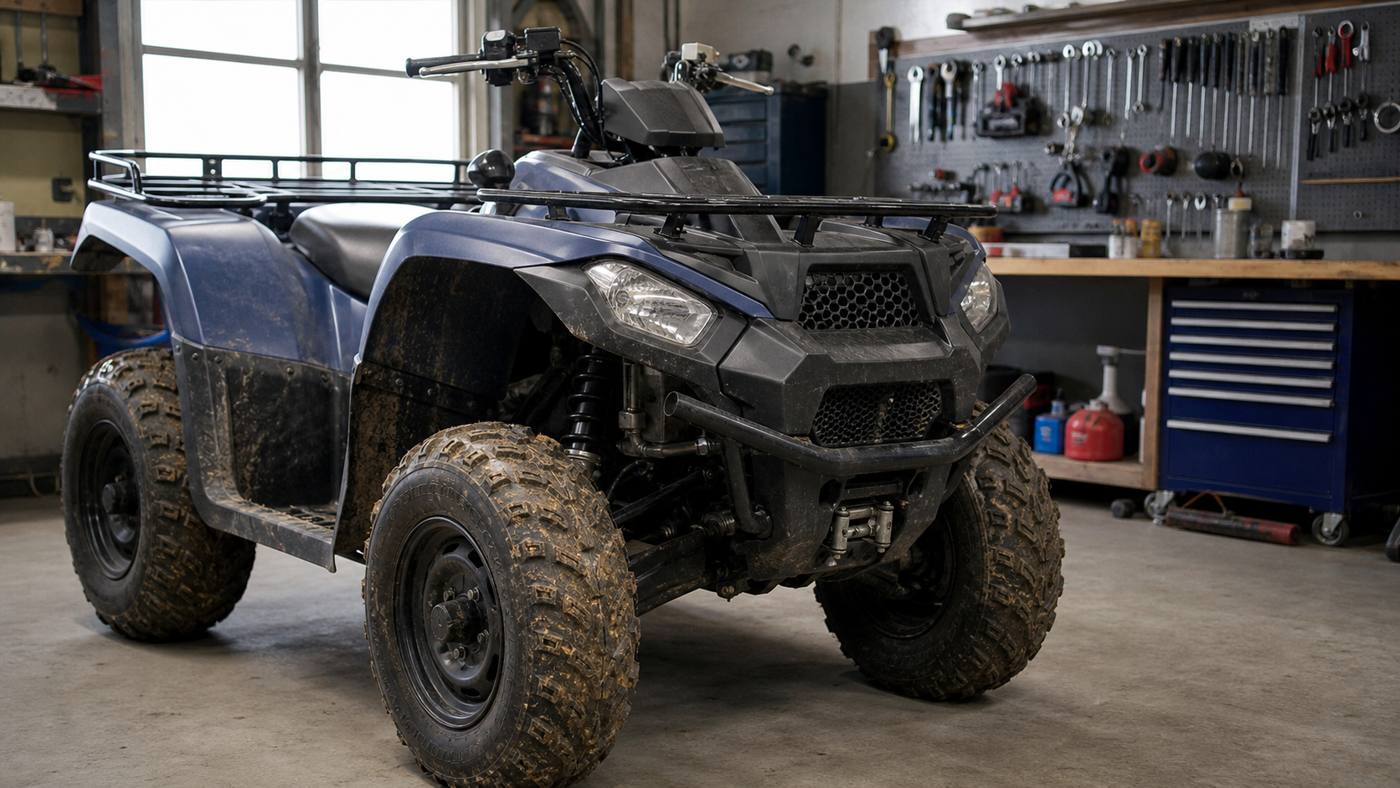
Quick diagnosis before replacing parts
Yamaha Grizzly 700 problems should be diagnosed from the cheapest and most likely causes first. A Grizzly that has spent months starting in cold weather, pulling a trailer, running a winch and crawling through mud is not the same as a road motorcycle that sees dry weekend use. Utility ATVs live hard lives. They idle for long periods, get washed aggressively, carry racks full of equipment, and often run at low speed where cooling airflow is limited.
One reason Yamaha Grizzly 700 problems can be confusing is that the quad may still run well enough to work, even while a belt, connector, radiator or bearing is already close to failure.
The first useful question is not “what part has failed?” but “what changed before the symptom appeared?” If the ATV started cutting out after a deep water crossing, look at the airbox, connectors, crankcase breather routing and belt housing drain. If it overheated after heavy towing, check the radiator fins, coolant level, fan operation and whether the front grille is blocked with grass or mud. If it feels sluggish after a long wet ride, inspect the CVT belt and clutch area before blaming the engine.
| Symptom | Likely first checks | Why it matters |
|---|---|---|
| Slow cranking or clicking | Battery voltage, earth cable, starter relay, terminals | Low voltage can imitate several expensive electrical faults |
| Starts then stalls | Fuel quality, air filter, idle control, intake leaks | Storage, dust and water contamination often show up here first |
| High revs but weak movement | CVT belt, clutch sheaves, belt housing, water ingress | The engine may be fine while the drive system slips |
| Overheating warning | Radiator fins, coolant, fan, thermostat, cap pressure | Low-speed use and mud block cooling very quickly |
| Heavy steering or EPS light | Battery, charging output, EPS connectors, steering joints | EPS depends on stable voltage and clean mechanical movement |
Owners often search for Yamaha Grizzly 700 problems because the machine feels unreliable, but many faults are really maintenance intervals catching up. Before ordering parts, clean the ATV, record the mileage and hours, check the service history, inspect the wiring loom near heat and steering movement, and compare the symptom in 2WD, 4WD and reverse. A simple note sheet saves a lot of wasted money.
Starting, battery and fuel injection issues
Yamaha Grizzly 700 problems involving starting usually begin with voltage. The fuel-injected single-cylinder engine needs the starter motor, fuel pump, ECU, ignition system and sensors to work at the same time. If the battery is weak, the engine may crank slowly, the dash may dim, the relay may click, or the ECU may behave inconsistently. A battery can show acceptable voltage at rest and still collapse under load, so a load test is more useful than a quick glance at a multimeter.
Battery and charging checks
A healthy diagnosis starts with clean battery terminals, a tight earth connection, and a battery that is fully charged before testing. If the quad sits for weeks between use, fitment of alarms, USB chargers, heated grips, GPS units or winch controls can create parasitic drain. Check charging output with the engine running, but do not ignore the condition of the connector blocks and main fuses. Corrosion inside a connector can create intermittent faults that appear only after vibration, rain or pressure washing.
Fuel pump, injector and stale petrol
Yamaha Grizzly 700 problems after storage are often fuel related. Old petrol loses volatility, water can collect in the tank, and fine debris can restrict the filter or injector. Listen for the fuel pump priming when the ignition is switched on. If the pump is silent, inspect the fuse, relay, wiring and kill switch circuit before assuming the pump itself has failed. If the engine fires on throttle but will not idle, look at the idle air circuit, intake boot condition and air filter before changing sensors.
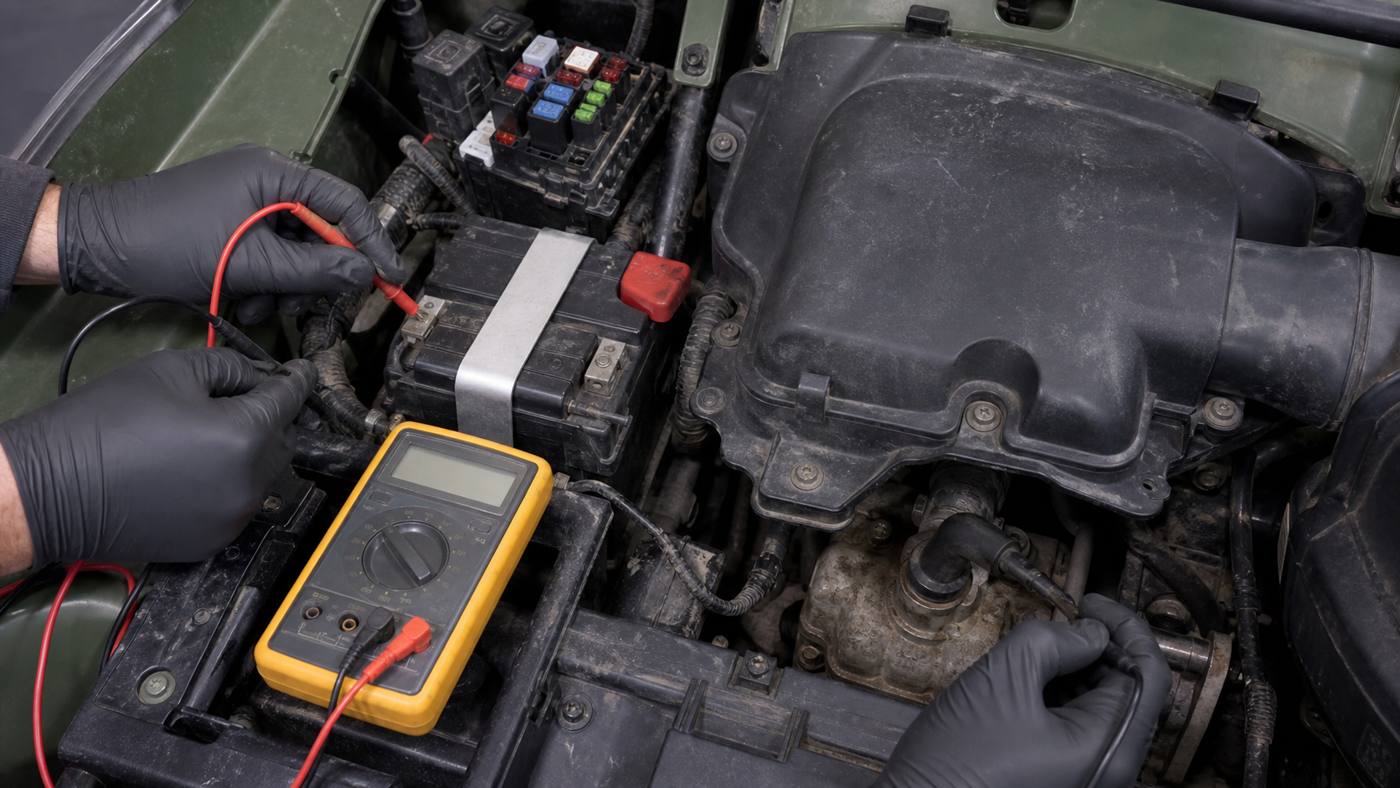
When a diagnostic code helps
Modern fuel injection can record faults, but codes do not always name the failed component. A sensor code can be caused by low voltage, damaged wiring, a poor earth or a connector full of moisture. Treat codes as a direction, not a verdict. If you are not comfortable testing resistance, voltage drop and continuity, a workshop with the right tools can save money by confirming the fault before parts are ordered.
CVT belt, clutch and loss of drive
Yamaha Grizzly 700 problems with poor acceleration, belt smell, jerky take-off or high revs without matching speed usually point toward the CVT area. Yamaha’s utility ATV transmission is designed for smooth low-speed work, but belts still wear, glaze, overheat and suffer if the machine is used for towing, deep mud, steep climbs or repeated stop-start riding. Water inside the belt case can make the ATV feel weak immediately, while an old belt may fail gradually.
How belt wear feels in real use
A worn belt can feel like engine power loss even when the motor runs cleanly. You may notice a delay when applying throttle, a squeal, a hot rubber smell, vibration under load or inconsistent engine braking. If the belt has been overheated, the sides may become shiny and glazed. If the ATV has crossed water above the belt housing vent, drain and inspect the housing rather than trying to ride the slip away under load.
Clutch sheaves and contamination
Yamaha Grizzly 700 problems in the CVT are not always the belt alone. Dust, mud, water, worn rollers, sticking sheaves or damaged seals can change how the clutch engages. If the belt is replaced but the sheaves are dirty or scored, the new belt may wear quickly. Clean the area correctly, avoid petroleum products that attack rubber, and make sure the belt is installed in the proper direction if the manufacturer specifies one.
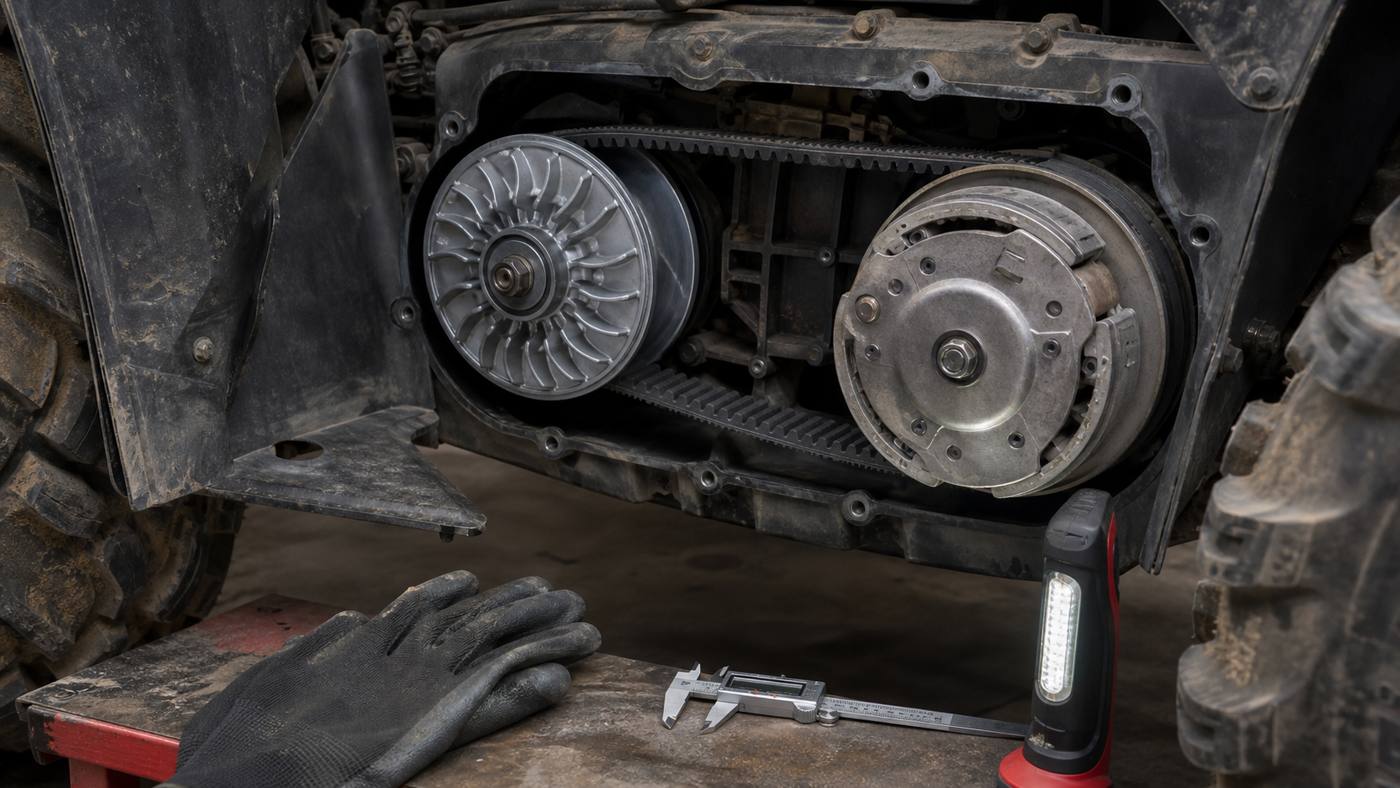
| Drive symptom | Possible cause | Practical check | Best next step |
|---|---|---|---|
| High revs, slow movement | Slipping belt or wet belt housing | Remove cover, inspect belt and drain points | Dry, clean and measure belt before riding hard |
| Jerky take-off | Glazed belt or clutch contamination | Look for shiny belt sides and dust build-up | Service CVT, replace worn parts |
| Burning rubber smell | Overheated belt under heavy load | Check towing weight, tyre pressure and terrain | Reduce load and inspect belt immediately |
| Vibration under throttle | Belt damage or clutch imbalance | Check belt cracks, missing chunks and sheave faces | Replace damaged belt and inspect clutch |
Anyone dealing with Yamaha Grizzly 700 problems around drive or acceleration should match the repair to real use. Farm towing, forestry work and muddy trails need different maintenance discipline from light recreational riding. For related ATV problem comparisons, the CFMoto problems guide is useful because many CVT and cooling principles carry across utility quads.
Overheating, fan and radiator problems
Yamaha Grizzly 700 problems with overheating should be treated seriously because a utility ATV often works at low speed where airflow is poor. The radiator can look acceptable from a distance and still be packed with clay, grass seeds or dust between the fins. A fan that works in the yard may not keep up when the radiator is blocked, coolant is old, the cap does not hold pressure or the thermostat is sticking.
Cooling checks after mud and farm work
Let the machine cool before opening the system. Inspect coolant level, overflow bottle condition, radiator cap seal, fan fuse, fan connector and the radiator surface from both sides if access allows. Use gentle water pressure and avoid folding the fins. A pressure washer used carelessly can damage the radiator and force water into connectors, bearings and the airbox.
Why overheating returns after a quick clean
Yamaha Grizzly 700 problems can return when only the visible mud is removed. The deeper restriction may sit between the radiator fins or behind a plastic shroud. If the ATV overheats under load but not while idling briefly, test it after a full warm-up and check whether the fan cycles correctly. Also inspect tyre pressure and brake drag, because excess rolling resistance makes the engine work harder and creates more heat.
4WD, differential and steering issues
Yamaha Grizzly 700 problems involving four-wheel drive, differential lock or steering often show up after hard off-road use. Clicking CV joints, split boots, contaminated differential oil, heavy steering, front-end vibration and warning lights should not be ignored. A torn boot can turn into an expensive joint failure very quickly when mud and grit enter the grease.
4WD engagement and front driveline checks
Check the obvious first: correct switch operation, battery voltage, connectors, actuator wiring and fluid condition. Then inspect CV boots, driveshaft play, wheel bearings and front differential oil. If the machine has been submerged, change suspect oils rather than waiting for noise. Milky oil is a sign of water contamination and should be handled before the next heavy ride.
EPS and steering feel
Yamaha Grizzly 700 problems with electric power steering may feel like an electrical fault, but mechanical stiffness can also overload the system. Jack the front safely, inspect ball joints, tie-rod ends, steering stem movement and wheel bearings. Low voltage can trigger EPS warnings, especially with winch use, lights and slow-speed work. A stable battery and charging system are part of steering diagnosis.
Compatibility checks for parts and accessories
Yamaha Grizzly 700 problems sometimes begin after the wrong accessory is fitted. Winches, tyres, racks, snorkel kits, LED bars, heated grips, batteries, belts and protective plates must match the vehicle year, mounting points and electrical capacity. A universal part can work well when measured correctly, but “universal” does not mean “plug-and-play”.
| Part or accessory | Compatibility | Important note |
|---|---|---|
| CVT belt | Must match model and year | Check OEM reference, belt width and clutch condition |
| Battery | Depends on size and specification | Cold cranking ability matters if the ATV works in winter |
| Winch | Usually possible with correct mount | Confirm mounting plate, wiring gauge and battery load |
| Tyres | Depends on rim size and clearance | Oversized tyres affect gearing, steering and belt load |
| Skid plates | Model-specific preferred | Poor fitment can trap mud or foul suspension movement |
| Lighting accessories | Electrical capacity must be checked | Bad wiring can create charging and starting faults |
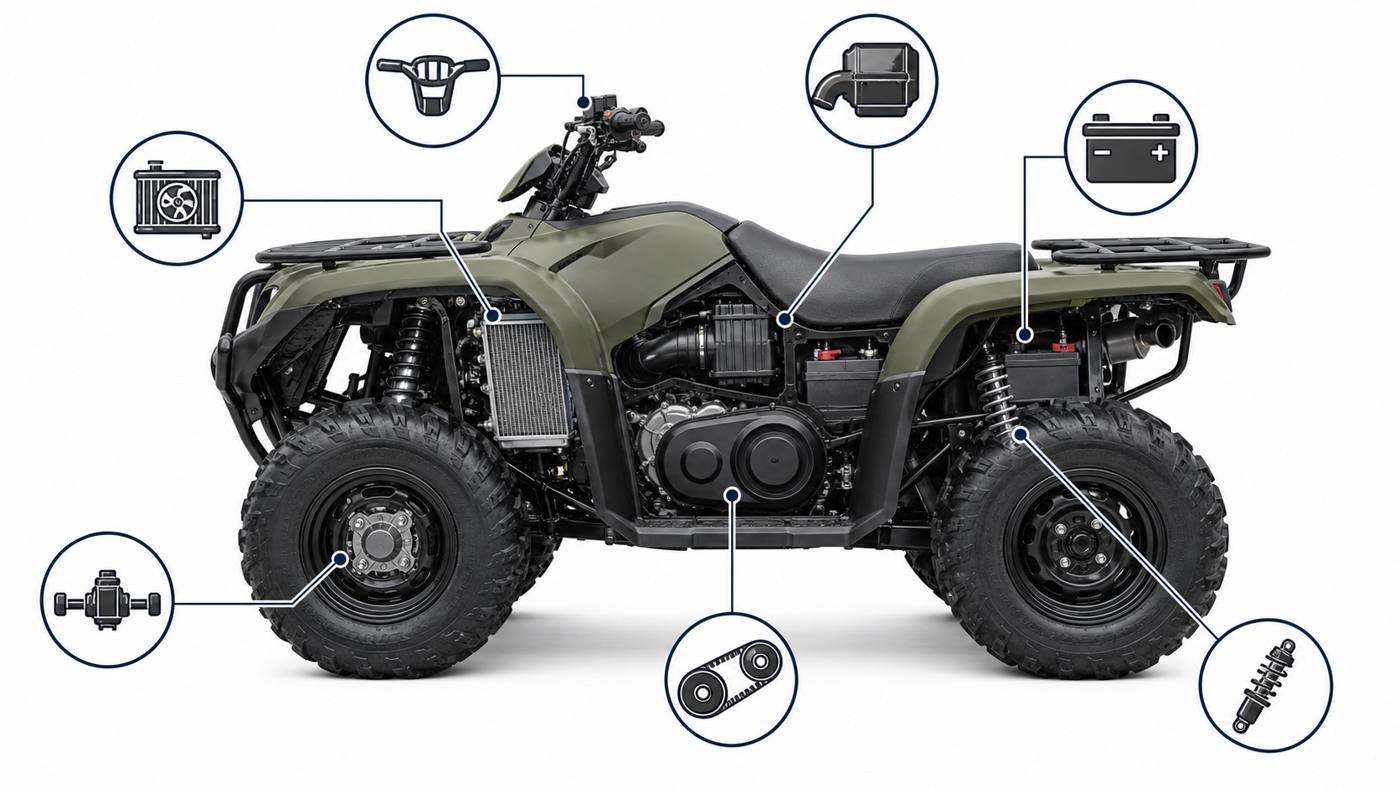
If you are using Yamaha Grizzly 700 problems research before buying parts, measure before ordering. Check the exact year, whether the quad is EPS or non-EPS, current tyre size, any previous snorkel or winch wiring, and whether the machine has been modified for road use or private land only.
Practical comparison: repair, upgrade or inspect first?
| Solution | Main advantage | Possible disadvantage | Best for |
|---|---|---|---|
| Inspect and service first | Lowest cost and prevents wrong purchases | Takes time and basic tools | Unknown service history or intermittent faults |
| Replace with OEM-spec part | Predictable fitment and reliability | May cost more than universal alternatives | Critical parts such as belts, sensors and driveline components |
| Fit upgraded accessory | Can improve usability for work or trail riding | Can increase electrical load or mechanical stress | Winches, protection, tyres and lighting when specified correctly |
| Use universal component | Flexible and often affordable | May need brackets, wiring or adaptation | Non-critical accessories after careful measurement |
| Professional diagnosis | Reduces guesswork on electrical and EFI faults | Labour cost | Recurring warning lights, no-start faults and driveline noise |
UK and anglophone market legal notes
Yamaha Grizzly 700 problems are not only mechanical when the machine is used on public roads. In the UK, quad bikes used on the road generally need to meet road-use requirements, and rules can involve registration, number plates, insurance, tax, MOT where applicable, lighting, construction standards and rider licence conditions. GOV.UK explains quad bike rules for road use, while workplace and agricultural use can also involve safety duties. Always check the current official guidance for your exact use case through GOV.UK quad bike rules and safety guidance such as the HSE farm vehicle safety information.
Road legality is different from private land use, track use, agricultural use and off-road recreational use. A part that is acceptable on private land may not be legal on the road. Lighting changes, exhaust noise, emissions equipment, tyres, mirrors, number plates and towing arrangements may all matter depending on country. The United States, Canada, Australia, New Zealand and Ireland have their own rules, and even within those markets local state, province or territory regulations can change the answer. Do not assume a YouTube setup from another country is legal for your road use.
Insurance and modification disclosure
Any modification that affects performance, noise, lighting, towing, suspension, tyres or road use may need to be disclosed to the insurer. If the ATV is used for farm work, commercial use, forestry or public-road travel between fields, confirm the insurance category rather than assuming private leisure cover is enough.
Common mistakes owners make
Yamaha Grizzly 700 problems become more expensive when owners replace parts without checking the cause. The most common mistake is buying a battery, starter motor, sensor, belt or fuel pump because a forum post mentioned the same symptom. Symptoms overlap. A weak battery, corroded earth and tired starter relay can all create similar starting complaints.
- Replacing the battery without cleaning and testing the earth cable.
- Ignoring belt housing water after deep mud or stream crossings.
- Pressure washing directly into connectors, bearings, radiator fins and airbox openings.
- Fitting oversized tyres without considering belt load, gearing and steering stress.
- Assuming a universal accessory will fit without measuring mounting points and clearance.
- Continuing to ride after overheating instead of stopping and finding the cause.
- Changing sensors because of a code without checking voltage and wiring first.
- Using road legality advice from another country without checking UK or local rules.
- Skipping differential and final drive oil checks after water exposure.
- Buying used machines without checking hours, service records, frame damage and signs of submerged use.
Workshop-style checks before buying a used Grizzly
Yamaha Grizzly 700 problems are easier to judge when the machine is cold. A seller who has warmed the engine before you arrive may be hiding slow starting, smoke, rattles or idle instability. Start it cold, watch the dash, listen for the fuel pump, check smoke, allow the fan to cycle, and test 2WD, 4WD, reverse, brakes and steering at low speed. Look under the plastics for mud staining, mismatched fasteners, damaged wiring, rusty frame sections and bent racks.
| Used ATV check | Good sign | Warning sign |
|---|---|---|
| Cold start | Starts cleanly and idles steadily | Long cranking, throttle needed, dash flicker |
| CVT response | Smooth take-off without squeal | Belt smell, jerking, high revs with low speed |
| Cooling | Fan cycles and radiator is clean | Coolant smell, boiling, packed fins |
| Driveline | No clicking or grinding | Torn boots, milky oil, front-end vibration |
| Electrical accessories | Neat fused wiring and secure connectors | Twisted wires, loose relays, overloaded battery area |
Experience-based mechanic advice
Yamaha Grizzly 700 problems often make sense once you separate theoretical compatibility from real compatibility. A tyre may physically fit but still overload the belt. A winch may bolt on but still strain a tired battery. A light bar may work in the yard but cause charging problems during slow winter use. A snorkel kit may look protective but create intake leaks if poorly sealed. This is why a workshop approach begins with measurement, load, heat and vibration, not just part numbers.
Before installation, measure clearance at full steering lock and through suspension travel. Check that cables do not stretch, hoses do not rub, and wiring is fused close to the battery. After installation, recheck fasteners after the first ride, inspect for coolant leaks, listen for new noises and confirm that the fan, lights and charging system still behave normally. If the repair involves EFI sensors, EPS, front differential internals, clutch service or structural brackets, use a qualified ATV mechanic unless you have the correct tools and service data.
For riders who are comparing utility ATV issues across brands, related guides such as Kymco MXU 700 tuning and CFMoto CForce 1000 problems can help frame common maintenance decisions before ordering parts or accessories.
How to decide what to fix first
Yamaha Grizzly 700 problems should be ranked by risk. Safety and engine damage come first: overheating, brake faults, steering problems, fuel leaks, major electrical burning smells and driveline grinding should be handled immediately. Comfort or accessory issues can wait. If the ATV still starts but runs poorly, do not keep using it hard while hoping the problem clears. A small belt issue can become a stranded machine; a blocked radiator can become engine damage; a torn CV boot can become a joint replacement.
A sensible order is battery and charging, fluids and filters, cooling airflow, CVT inspection, driveline oils, steering/suspension checks, then deeper EFI testing. This order is not glamorous, but it mirrors how reliable workshop diagnosis works. The most expensive part is often not the most likely fault.
Conclusion: choosing the right repair or part
Yamaha Grizzly 700 problems are manageable when diagnosis is patient and the ATV’s real workload is considered. Check battery condition, earth cables, air filter, fuel quality, radiator airflow, coolant, belt condition, differential oil, CV boots, tyre size and accessory wiring before blaming the ECU or replacing major parts. If the machine is used on UK roads, confirm registration, insurance, lighting and road-use requirements. If it is used on farms, estates or private land, think about safety, maintenance intervals and operator training as well as mechanical repair.
The best purchase is the part that matches the exact model, year, workload and legal use of the machine. Universal accessories can be useful when measured carefully, but service-critical components should be chosen with more discipline. If you are unsure, compare the symptom with similar utility ATV guides and then move to a measured inspection before ordering. A calm diagnostic process will usually save more money than guessing.
When Yamaha Grizzly 700 problems are approached in that order, the repair becomes a decision based on evidence rather than another round of expensive trial and error.
FAQ
What are the most common Yamaha Grizzly 700 problems?
The most common issues involve battery weakness, dirty fuel, blocked radiators, worn CVT belts, water in the belt housing, torn CV boots, contaminated differential oil, steering stiffness and accessory wiring faults. The exact cause depends heavily on how the ATV is used and maintained.
Why does my Grizzly 700 crank but not start?
A crank-no-start condition usually needs checks for battery load, fuel pump priming, spark, injector operation, kill switch position, fuses, earth connections and stale petrol. Do not replace the fuel pump until voltage and wiring have been tested.
Why does my Grizzly 700 overheat in mud?
Mud can pack deeply into the radiator fins and reduce cooling airflow. Low-speed riding, towing and clogged fins make the fan work harder. Clean the radiator gently, check coolant level, confirm the fan cycles and inspect the radiator cap and thermostat if overheating returns.
How do I know if the CVT belt is worn?
Typical signs include high revs with poor acceleration, belt smell, jerky take-off, vibration and visible glazing or cracking. Belt width should be measured against the service specification, and the clutch sheaves should be inspected before fitting a new belt.
Can oversized tyres cause reliability issues?
Yes. Larger or heavier tyres can increase belt load, affect gearing, stress steering components and change braking feel. They may physically fit but still create practical reliability problems, especially under towing or deep mud use.
Is a Yamaha Grizzly 700 road legal in the UK?
It can be road legal only when the specific vehicle meets the relevant UK requirements for road use, registration, insurance, tax, lighting, number plates and MOT where applicable. Always check official GOV.UK guidance and the vehicle’s documentation.
Should I pressure wash my ATV after every ride?
Cleaning is important, but aggressive pressure washing can force water into connectors, bearings, seals, radiator fins and the airbox. Use controlled pressure, avoid sensitive areas, and allow the machine to dry before storage.
When should I take the ATV to a mechanic?
Use a qualified mechanic for recurring warning lights, no-start faults after basic checks, EPS issues, internal differential noise, fuel injection diagnosis, clutch service, structural damage, overheating that returns, or any repair requiring special tools.
{
“@context”: “https://schema.org”,
“@type”: “Article”,
“headline”: “Yamaha Grizzly 700 problems”,
“description”: “Yamaha Grizzly 700 problems can usually be traced by checking the battery, fuel system, CVT belt, cooling system, 4WD components and service history in the right order.”,
“image”: “https://xmotoparts.comhttps://xmotoparts.com/wp-content/uploads/2026/07/yamaha-grizzly-700-problems.jpg”,
“author”: {
“@type”: “Organization”,
“name”: “X Moto Parts”
},
“publisher”: {
“@type”: “Organization”,
“name”: “X Moto Parts”,
“logo”: {
“@type”: “ImageObject”,
“url”: “https://xmotoparts.com/wp-content/uploads/x-moto-parts-logo.png”
}
},
“mainEntityOfPage”: {
“@type”: “WebPage”,
“@id”: “https://xmotoparts.com/yamaha-grizzly-700-problems/”
}
}
{
“@context”: “https://schema.org”,
“@type”: “FAQPage”,
“mainEntity”: [
{
“@type”: “Question”,
“name”: “What are the most common Yamaha Grizzly 700 problems?”,
“acceptedAnswer”: {
“@type”: “Answer”,
“text”: “The most common issues involve battery weakness, dirty fuel, blocked radiators, worn CVT belts, water in the belt housing, torn CV boots, contaminated differential oil, steering stiffness and accessory wiring faults.”
}
},
{
“@type”: “Question”,
“name”: “Why does my Grizzly 700 crank but not start?”,
“acceptedAnswer”: {
“@type”: “Answer”,
“text”: “A crank-no-start condition usually needs checks for battery load, fuel pump priming, spark, injector operation, kill switch position, fuses, earth connections and stale petrol.”
}
},
{
“@type”: “Question”,
“name”: “Why does my Grizzly 700 overheat in mud?”,
“acceptedAnswer”: {
“@type”: “Answer”,
“text”: “Mud can pack deeply into the radiator fins and reduce cooling airflow. Clean the radiator gently, check coolant level, confirm the fan cycles and inspect the radiator cap and thermostat if overheating returns.”
}
},
{
“@type”: “Question”,
“name”: “How do I know if the CVT belt is worn?”,
“acceptedAnswer”: {
“@type”: “Answer”,
“text”: “Typical signs include high revs with poor acceleration, belt smell, jerky take-off, vibration and visible glazing or cracking. Belt width should be measured against the service specification.”
}
},
{
“@type”: “Question”,
“name”: “Can oversized tyres cause reliability issues?”,
“acceptedAnswer”: {
“@type”: “Answer”,
“text”: “Yes. Larger or heavier tyres can increase belt load, affect gearing, stress steering components and change braking feel, especially under towing or deep mud use.”
}
},
{
“@type”: “Question”,
“name”: “Is a Yamaha Grizzly 700 road legal in the UK?”,
“acceptedAnswer”: {
“@type”: “Answer”,
“text”: “It can be road legal only when the specific vehicle meets the relevant UK requirements for road use, registration, insurance, tax, lighting, number plates and MOT where applicable.”
}
},
{
“@type”: “Question”,
“name”: “Should I pressure wash my ATV after every ride?”,
“acceptedAnswer”: {
“@type”: “Answer”,
“text”: “Cleaning is important, but aggressive pressure washing can force water into connectors, bearings, seals, radiator fins and the airbox.”
}
},
{
“@type”: “Question”,
“name”: “When should I take the ATV to a mechanic?”,
“acceptedAnswer”: {
“@type”: “Answer”,
“text”: “Use a qualified mechanic for recurring warning lights, no-start faults after basic checks, EPS issues, internal differential noise, fuel injection diagnosis, clutch service, structural damage or overheating that returns.”
}
}
]
}