
Mash X-Ride 650 tuning
Mash X-Ride 650 tuning starts with respecting what the bike actually is: a simple, air-cooled 644 cc single with retro enduro attitude, modern fuel injection, ABS and enough character to feel alive without needing to become a noisy project. The best work sharpens the motorcycle without ruining the charm that makes riders choose it in the first place.
The X-Ride is not a multi-cylinder adventure tourer and not a high-revving supermoto. It is a big single with modest power, honest torque, spoked wheels, visible mechanical parts and a chassis that invites back-road riding. Mash X-Ride 650 tuning should therefore focus on throttle response, exhaust quality, gearing, chain condition, tyre choice, suspension setup and reliability rather than chasing fantasy horsepower.
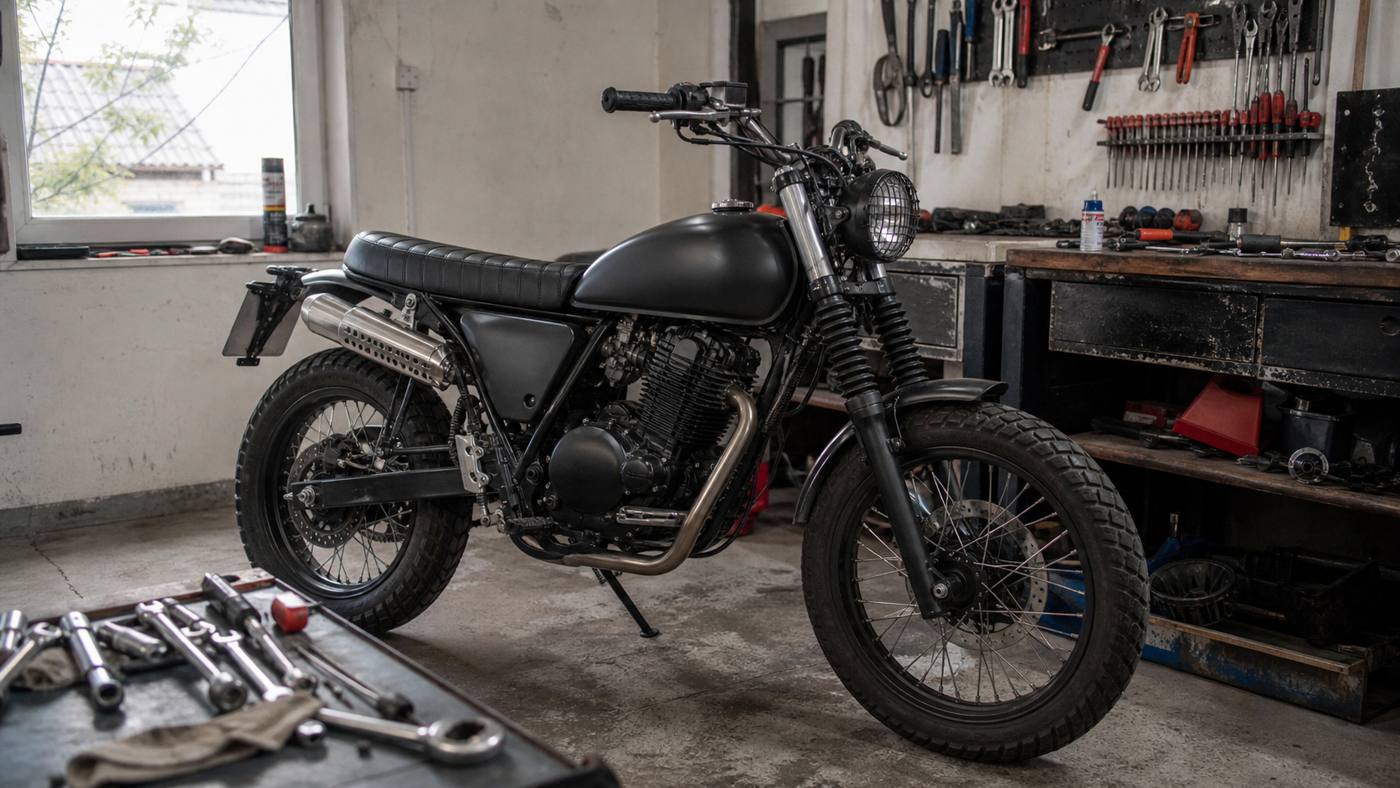
Realistic goals for the X-Ride 650
Mash X-Ride 650 tuning should be measured by how the bike rides between 30 and 70 mph, how cleanly it picks up from low revs, how confidently it exits bends and whether it remains pleasant after an hour. A good single-cylinder setup feels immediate but not snatchy, loud enough to be satisfying but not tiring, and geared so the engine pulls rather than labours.
Mash Motors lists the X-Ride 650 Classic with a 643.7 cc four-stroke single-cylinder engine, electric start, air cooling, 39.3 hp at 6000 rpm, 320 mm front disc, 240 mm rear disc, 120/70-17 front tyre and 150/60-17 rear tyre. The official X-Ride 650 Trail page shows a related 644 cc air-cooled single with 21/18-inch wheel sizes, a taller seat and more trail-focused equipment. Those official numbers matter because Mash X-Ride 650 tuning must be different for the Classic and Trail versions.
If the rider wants a motorway weapon, the X-Ride is the wrong starting point. If the rider wants a lighter, simpler, more tactile road/trail motorcycle with a stronger pulse than a 125 and less bulk than a modern adventure bike, the platform makes sense. The setup should protect that identity.
| Rider goal | Best first area | What to avoid |
|---|---|---|
| More responsive road riding | Service, throttle free play, chain and gearing | Over-rich fuel settings and loud pipes only |
| Better exhaust character | Quality silencer with correct mounting | Removing DB-killer without checking legality |
| Improved trail confidence | Tyres, suspension sag, controls and protection | Road-only tyres and stiff suspension preload |
| Cleaner acceleration | Air filter, plug, chain slack, sprocket condition | Changing electronics before maintenance |
| Better touring comfort | Seat, screen, luggage, tyres and gearing | Tall gearing that makes the single labour |
Baseline checks before buying tuning parts
Mash X-Ride 650 tuning begins with a proper baseline. Warm the bike, listen for intake leaks, check idle stability, inspect plug condition where practical, confirm battery voltage, measure chain slack, check sprocket teeth, inspect tyre age, test both brakes and look for exhaust leaks at the header, joints and silencer mounts.
Why a baseline matters on a big single
A 650 single tells you when something is wrong. A loose chain makes the throttle feel jerky. A tight chain loads bearings and suspension movement. A leaking exhaust creates popping and strange fuelling symptoms. A dirty air filter softens response. A weak battery can upset sensors and starting. Before spending money on Mash X-Ride 650 tuning, remove the small problems that already steal confidence.
Check fasteners carefully. Retro-styled singles vibrate more than many multi-cylinder bikes, even when healthy. Use sensible thread-lock where the service manual allows, torque bolts correctly and look for witness marks around exhaust brackets, footrest mounts, engine plates and rear rack mounts.
Used-bike inspection
For a used X-Ride, inspect modification history. A previous owner may have changed silencers, removed emissions parts, fitted unknown mirrors, altered gearing, fitted unsuitable tyres or cut into the wiring. A bike with mystery wiring should start with documentation and photographs, not new parts.
Exhaust, silencer and fuelling checks
Mash X-Ride 650 tuning often starts with the exhaust because a big single’s sound is part of its personality. A good exhaust can reduce weight, improve finish and make the bike feel more alive. A bad exhaust can lose torque, leak at the header, overheat nearby parts, trigger rough running and create legal problems.
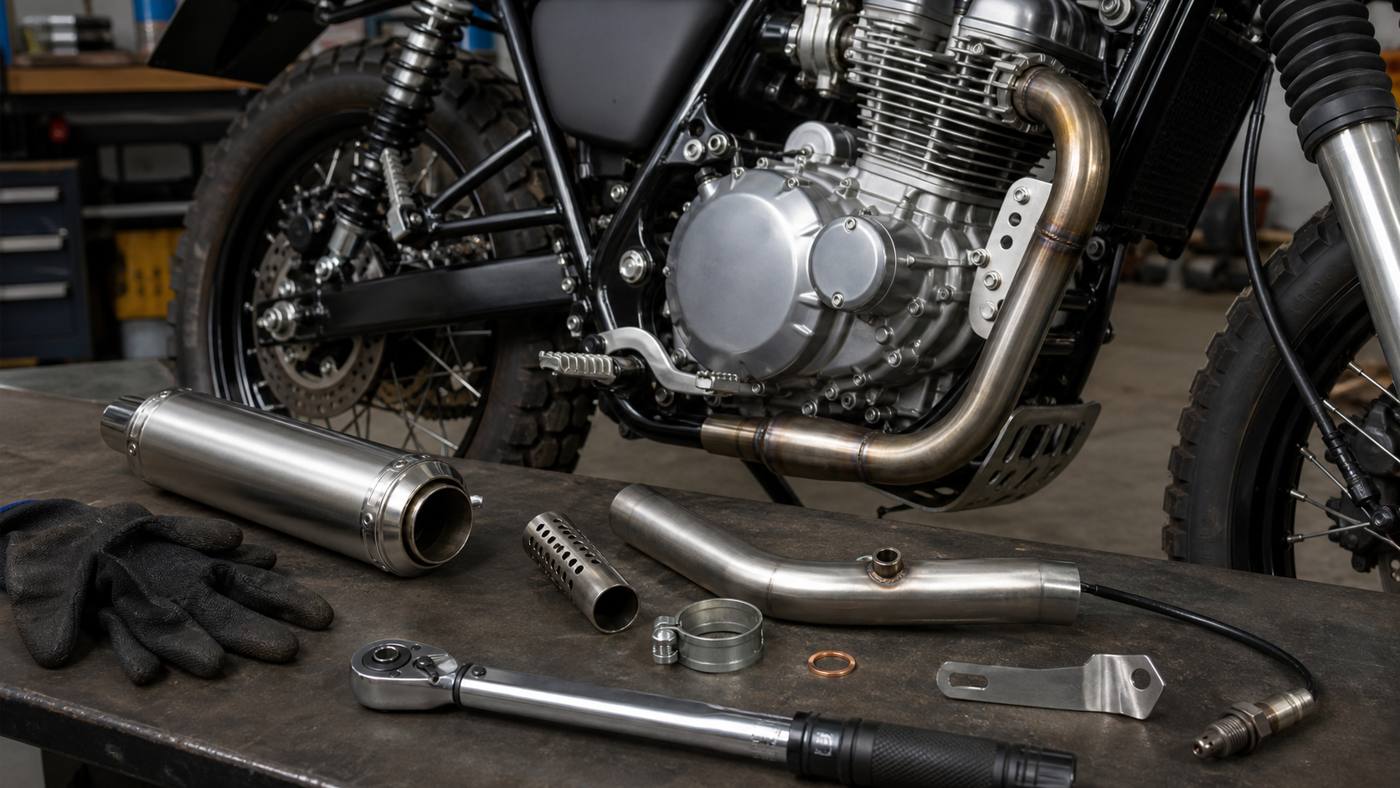
Header, mid-pipe and oxygen sensor
Before ordering an exhaust, inspect the exact version of the bike. Classic and Trail layouts can differ, and market-specific emissions equipment may change bracket positions or sensor access. Mash X-Ride 650 tuning with exhaust parts should include measurement of pipe diameter, mounting centres, oxygen sensor thread, clearance around the frame and rear shock, and the position of heat shields.
Do not leave the oxygen sensor hanging, blocked or badly positioned. A sensor that reads incorrectly can make the bike run poorly. If a system is sold as race-only or not for road use, treat it exactly as that. Anyone looking for exhaust parts should also compare fitment logic in the best motorcycle exhaust brands guide and the motorcycle baffle removal disadvantages guide.
Sound is not the same as torque
A 644 cc air-cooled single wants gas speed and stable fuelling. Too open a pipe can make the bike louder but softer at the revs used on back roads. The exhaust should improve the way the engine pulls from midrange, not just make the garage wall shake.
Airbox, EFI and throttle response
Mash X-Ride 650 tuning should be cautious around the airbox. The standard airbox protects the engine from rain, dust and trail debris, and it gives the fuel-injection system a stable airflow signal. An open pod filter may look clean on a custom build, but it can expose the engine to dirt and create inconsistent fuelling in real weather.
Fuel injection is not a magic correction system
Electronic fuel injection can compensate within limits, but it does not make every exhaust and intake combination perfect. If the bike hesitates, smells rich, pops heavily on overrun or surges at steady throttle, check for leaks, sensor issues, poor battery voltage and air filter condition before blaming the ECU. Good workshop method is simple: one change, one test, one conclusion.
Throttle free play and cable routing
Some riders mistake cable slack or poor routing for lazy fuelling. Check throttle free play, bar movement, grip return and cable condition. A big single with uneven throttle control feels worse than it is. A clean cable setup can make the bike easier to ride before any electronic part is touched.
Gearing, chain and sprocket setup
Mash X-Ride 650 tuning can change dramatically through final-drive setup. Shorter gearing can make the bike feel livelier in town and on trail-like roads. Taller gearing can calm the engine at cruise but may make it labour into wind or on hills. Neither creates engine power; each moves the same torque to a different place.
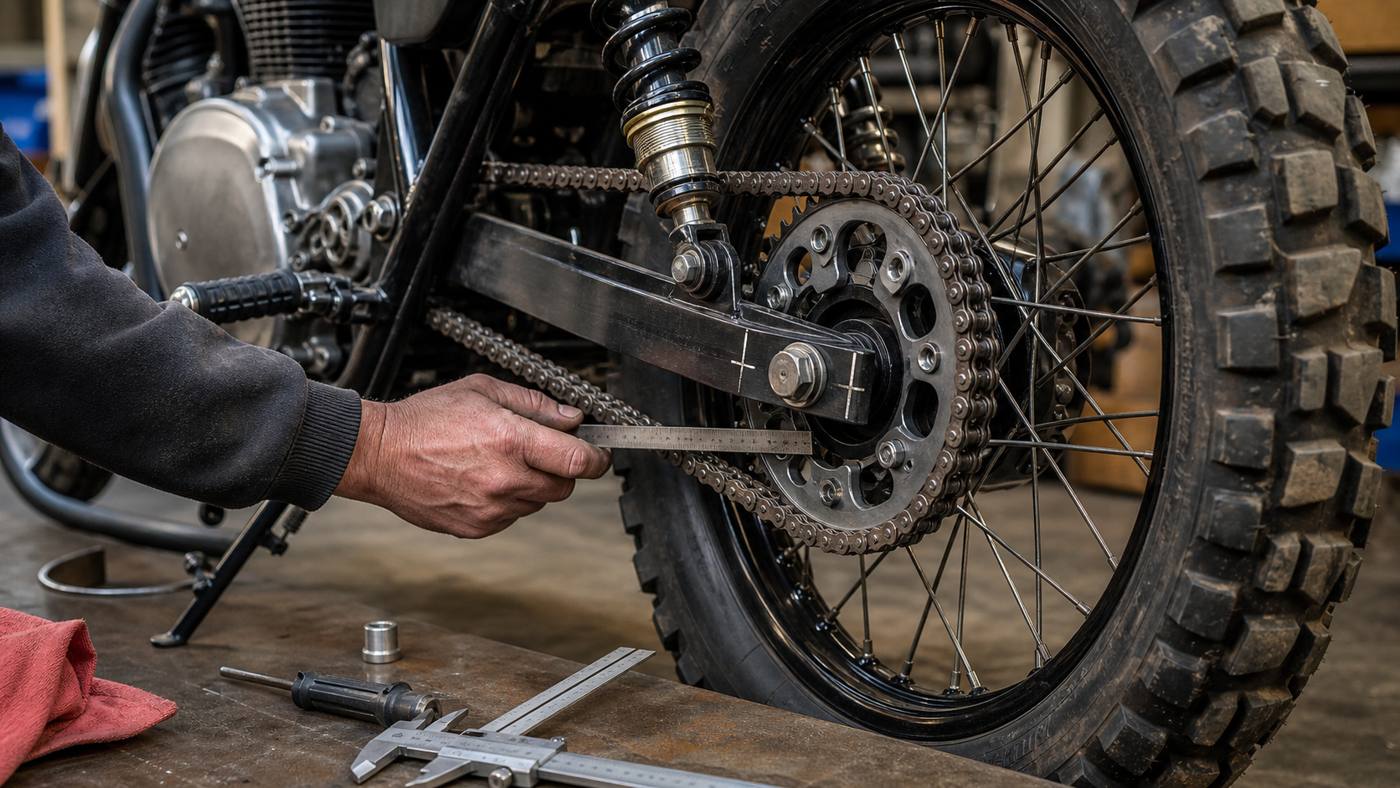
Chain slack and axle alignment
The chain must be adjusted with the suspension position and owner’s manual in mind. Too tight is worse than slightly loose because it loads the output shaft, wheel bearings and suspension movement. If you are unsure, read the motorcycle chain tension adjustment guide before doing sprocket work. Mash X-Ride 650 tuning with gearing starts by making the existing chain correct.
Classic versus Trail gearing
The Classic with 17-inch wheels and the Trail with 21/18-inch wheels do not feel identical. Tyre diameter, wheel weight and intended use change the gearing impression. A sprocket choice that suits road-only riding may feel wrong off-road. The final-drive choice should therefore match the version, tyre size, rider weight and normal route.
Suspension, tyres and real road feel
Mash X-Ride 650 tuning is not only engine work. Tyres and suspension change confidence more than many power parts. A Classic on road-biased tyres needs stability and grip on tarmac. A Trail needs mixed-surface predictability, steering precision and enough sidewall support. Wrong tyres can make the bike feel slow, nervous or vague even when the engine is healthy.
Set sag before criticising the fork
Check rider sag, rear preload, fork behaviour, tyre pressure and wheel balance. If the rear sits too low, steering slows and the front feels light. If the rear is too high or preload is excessive, traction can suffer. A simple setup check can make a bigger improvement than a louder silencer.
Brake and control feel
A strong setup includes brake pads, fluid condition, lever position and control ergonomics. The official specifications show proper disc sizes and ABS, but condition still matters. If the brake lever is spongy or the pads are poor, the bike is not properly finished.
Compatibility table for Mash X-Ride 650 tuning parts
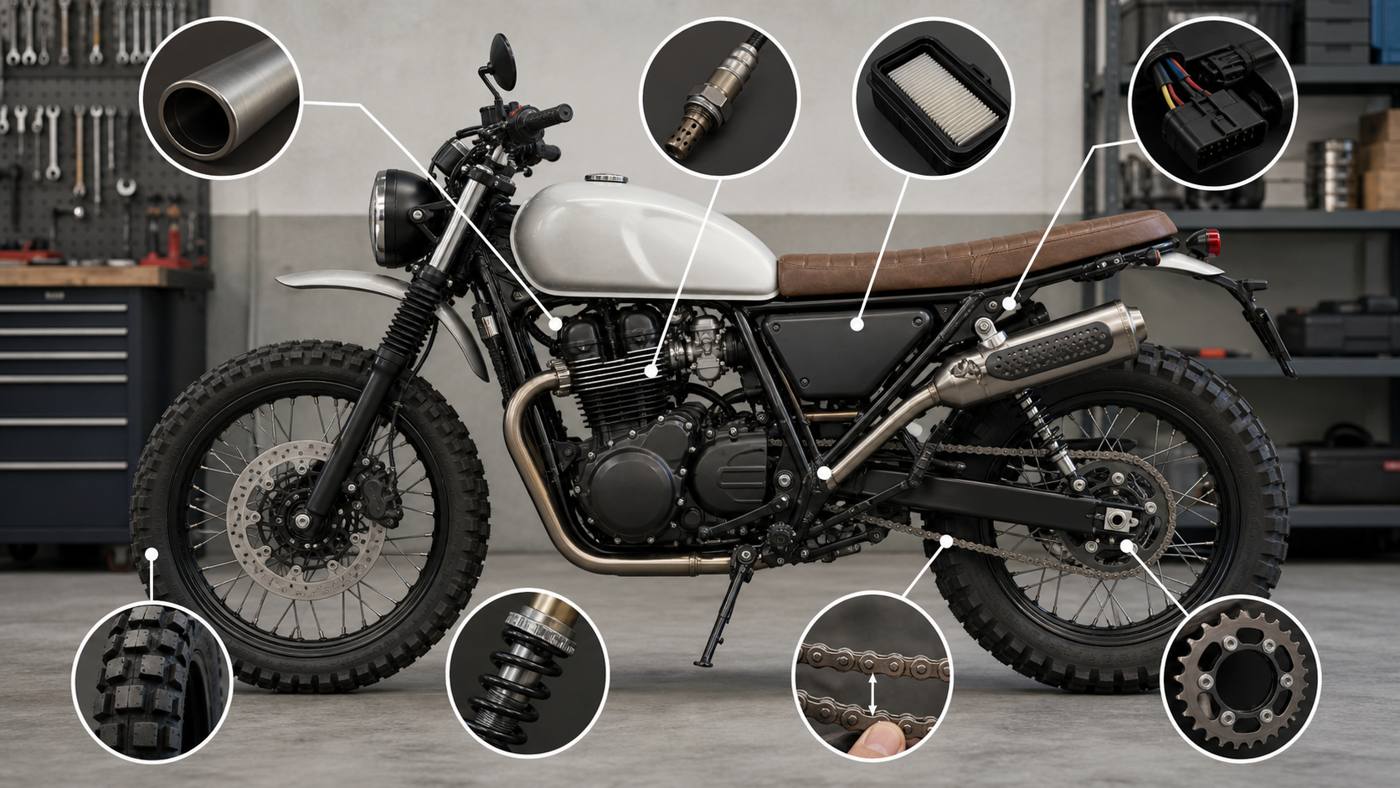
Compatibility is the difference between a clean upgrade and a box of parts that never fits properly. Mash X-Ride 650 tuning should always begin with identifying Classic or Trail, model year, exhaust layout, wheel size and market version.
| Vehicle or part area | Compatibility | Important note |
|---|---|---|
| X-Ride 650 Classic | Yes, with Classic-specific checks | 17-inch wheel setup and road-biased fitment affect choices |
| X-Ride 650 Trail | Yes, with Trail-specific checks | 21/18-inch wheels, higher stance and off-road exhaust routing can differ |
| Universal exhaust | Possible only with measurements | Confirm diameter, bracket, oxygen sensor and DB-killer status |
| Air filter and intake parts | Depends on airbox version | Do not sacrifice filtration for appearance |
| Sprockets and chain | Depends on pitch and tooth count | Confirm chain size, wheel clearance and speedometer implications |
| Electronic module | Only if connector and sensor match | Never force connectors or guess wire function |
Practical comparison of tuning routes
The work should be planned around the rider’s use. A town rider, a back-road rider and a gravel-lane rider need different priorities.
| Solution | Main advantage | Possible disadvantage |
|---|---|---|
| Baseline service | Restores lost response and reliability | Less exciting than visible parts |
| Quality exhaust | Better sound, lower weight and style | Legality, fuelling and bracket fitment must be checked |
| Air filter maintenance | Stable airflow and engine protection | Open filters may hurt wet-weather use |
| Sprocket change | Changes launch, cruise or trail control | Can make cruising worse if chosen badly |
| Suspension and tyres | Improves confidence and grip | Wrong tyre choice can ruin steering feel |
UK and anglophone legal notes
Mash X-Ride 650 tuning for UK road use must remain roadworthy, insured and sensible. GOV.UK motorcycle MOT guidance covers exhaust security and markings; an exhaust with a major leak, an insecure system or markings such as “not for road use” can create an MOT problem: GOV.UK motorcycle MOT structure and exhaust guidance.
Official Mash model information is also worth checking because the Classic and Trail specifications differ by wheels, dimensions and equipment: Mash Motors X-Ride 650 specifications. Use official data to identify the bike before buying parts.
Outside the UK, rules vary. The United States, Canada, Australia, New Zealand and Ireland all treat exhaust noise, emissions equipment, inspection rules and insurance disclosure differently. Mash X-Ride 650 tuning may be acceptable for private land or track use while being unsuitable for public roads. Keep receipts, product documentation and photographs of any work.
Common mistakes with the X-Ride 650
The first mistake is treating the Classic and Trail as identical. The second is buying exhaust parts without checking brackets and oxygen sensor position. The third is fitting a louder silencer and ignoring fuelling. The fourth is choosing tyres only for appearance. The fifth is changing gearing before checking chain condition. The sixth is assuming a universal part is plug-and-play.
The project also goes wrong when riders ignore vibration. Loose fasteners, unsupported silencers, rubbing wiring and weak brackets can turn a simple upgrade into a roadside problem. After any work, inspect again after the first ride and after the first longer heat cycle.
Image metadata prepared for the article
| File name | Title | Alt text | Recommended position |
|---|---|---|---|
| mash-x-ride-650-tuning.jpg | Mash X-Ride 650 tuning | Mash X-Ride 650 tuning | Main featured image after the introduction |
| mash-x-ride-650-tuning-exhaust-checks.jpg | Mash X-Ride 650 exhaust checks | Mash X-Ride 650 exhaust tuning checks with header silencer oxygen sensor and DB-killer | Exhaust section |
| mash-x-ride-650-tuning-chain-suspension.jpg | Mash X-Ride 650 chain and suspension checks | Mash X-Ride 650 chain slack sprocket and rear suspension tuning checks | Gearing section |
| mash-x-ride-650-tuning-compatibility-map.jpg | Mash X-Ride 650 compatibility checks | Mash X-Ride 650 compatibility checks for exhaust airbox ECU chain tyres and suspension | Compatibility section |
FAQ
Is Mash X-Ride 650 tuning worth it?
Mash X-Ride 650 tuning is worth it when the goal is cleaner throttle response, better sound, improved gearing, better tyres and a more confident ride. It is not worth it if the expectation is a huge power increase from one simple part.
Can the Mash X-Ride 650 make much more power?
Large gains are unlikely without serious engine work, and that may hurt reliability and road legality. Most riders get better results from exhaust quality, fuelling stability, gearing and chassis setup.
Does the X-Ride 650 need a remap after an exhaust?
Not automatically. A well-sealed road exhaust may run acceptably, but if the bike hesitates, surges, smells rich or pops heavily, check leaks and sensor behaviour before deciding on fuelling changes.
Are X-Ride 650 Classic and Trail parts interchangeable?
Some parts may overlap, but wheels, stance, exhaust routing and intended use differ. Always confirm the exact model before ordering parts.
What is the best first upgrade?
The best first upgrade is often a full service, correct chain slack, good tyres, brake inspection and suspension sag setup. Those changes let later parts work properly.
Can I fit a universal exhaust?
A universal exhaust may be possible, but only after checking pipe diameter, mounting points, oxygen sensor, heat shield, DB-killer and road-use status. Universal does not mean guaranteed fit.
Is tuning the X-Ride 650 legal in the UK?
Mash X-Ride 650 tuning can be legal in the UK if the motorcycle remains roadworthy, insured, not excessively noisy and compliant with emissions and MOT requirements. Track-only parts should not be used on public roads.
What should I check after tuning?
After any work, check exhaust leaks, loose brackets, chain slack, axle alignment, hot starting, throttle return, wiring clearance, brake feel and tyre pressure. Recheck everything after a longer ride.
Final buying and setup advice
Mash X-Ride 650 tuning should make the bike more enjoyable, not more fragile. Start with the exact model, then service condition, then exhaust fitment, then airbox and EFI checks, then gearing, tyres and suspension. Choose parts that suit the roads you actually ride, because Mash X-Ride 650 tuning only works when the setup matches the owner.
A good X-Ride 650 feels simple, punchy and honest. Preserve that. The work is successful when the motorcycle starts cleanly, pulls smoothly, sounds right, holds a line, stops confidently and still feels like a machine you want to ride home instead of keep repairing.
{
“@context”: “https://schema.org”,
“@type”: “Article”,
“headline”: “Mash X-Ride 650 tuning”,
“description”: “Mash X-Ride 650 tuning guide for exhaust fitment, EFI checks, gearing, chain slack, tyres, suspension setup, compatibility and UK road-use notes.”,
“author”: {“@type”: “Organization”, “name”: “X Moto Parts”},
“publisher”: {“@type”: “Organization”, “name”: “X Moto Parts”},
“mainEntityOfPage”: “https://xmotoparts.com/mash-x-ride-650-tuning/”
}
{
“@context”: “https://schema.org”,
“@type”: “FAQPage”,
“mainEntity”: [
{“@type”: “Question”, “name”: “Is Mash X-Ride 650 tuning worth it?”, “acceptedAnswer”: {“@type”: “Answer”, “text”: “It is worth it when the goal is cleaner throttle response, better sound, improved gearing, better tyres and a more confident ride, not unrealistic horsepower.”}},
{“@type”: “Question”, “name”: “Can the Mash X-Ride 650 make much more power?”, “acceptedAnswer”: {“@type”: “Answer”, “text”: “Large gains are unlikely without serious engine work, and most riders get better results from exhaust quality, fuelling stability, gearing and chassis setup.”}},
{“@type”: “Question”, “name”: “Does the X-Ride 650 need a remap after an exhaust?”, “acceptedAnswer”: {“@type”: “Answer”, “text”: “Not automatically. Check exhaust sealing, oxygen sensor behaviour, intake condition and running symptoms before deciding on fuelling changes.”}},
{“@type”: “Question”, “name”: “Are X-Ride 650 Classic and Trail parts interchangeable?”, “acceptedAnswer”: {“@type”: “Answer”, “text”: “Some parts may overlap, but wheels, stance, exhaust routing and intended use differ, so the exact model must be confirmed.”}},
{“@type”: “Question”, “name”: “What is the best first upgrade?”, “acceptedAnswer”: {“@type”: “Answer”, “text”: “A full service, correct chain slack, good tyres, brake inspection and suspension sag setup are often the best first upgrades.”}},
{“@type”: “Question”, “name”: “Can I fit a universal exhaust?”, “acceptedAnswer”: {“@type”: “Answer”, “text”: “A universal exhaust may be possible if pipe diameter, mounting points, oxygen sensor, heat shield, DB-killer and road-use status are correct.”}},
{“@type”: “Question”, “name”: “Is Mash X-Ride 650 tuning legal in the UK?”, “acceptedAnswer”: {“@type”: “Answer”, “text”: “It can be legal if the motorcycle remains roadworthy, insured, not excessively noisy and compliant with emissions and MOT requirements.”}},
{“@type”: “Question”, “name”: “What should I check after tuning?”, “acceptedAnswer”: {“@type”: “Answer”, “text”: “Check exhaust leaks, loose brackets, chain slack, axle alignment, hot starting, throttle return, wiring clearance, brake feel and tyre pressure after a longer ride.”}}
]
}