
Peugeot Tweet 200 tuning
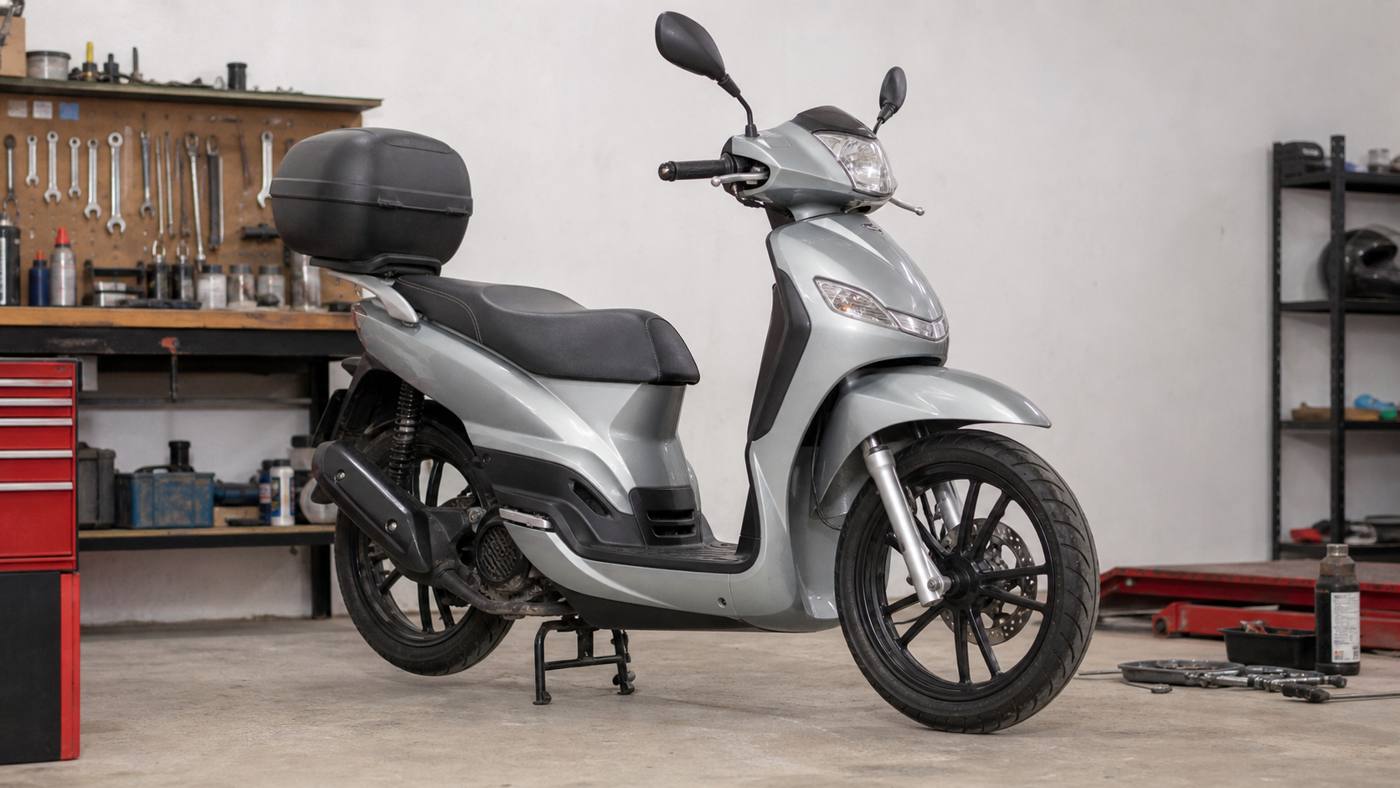
Peugeot Tweet 200 tuning starts with a simple workshop truth: the Tweet 200 is a light, high-wheel city scooter, not a race bike waiting for one miracle part. The useful gains come from making the CVT clean, the belt healthy, the rollers matched to the rider, the exhaust fitted without leaks, the fuel-injection system left stable and the tyres, brakes and suspension working as Peugeot intended.
This guide is for riders who want a sharper scooter without spoiling the reason the Tweet exists. A good Tweet should be easy in traffic, steady over rough streets, quick enough away from lights and reliable on daily errands. Peugeot Tweet 200 tuning should make those normal rides feel cleaner, not louder, fussier or harder to live with.
What tuning really means on the Tweet 200
Peugeot Tweet 200 tuning is mostly about response. The official Peugeot Motocycles Australia specification describes the Tweet 200 as a 170 cc air-cooled, four-stroke, SOHC two-valve single with electronic fuel injection, automatic transmission, 16-inch wheels, 106 kg weight, 5.5 litre fuel capacity, 9 kW at 7500 rpm and 12.5 Nm at 6000 rpm. That tells you a lot before you open the toolbox: the scooter is light, simple, urban and designed around usable torque rather than big horsepower.
That matters because a 170 cc scooter with a CVT does not respond like a manual motorcycle. The rider opens the throttle, but the transmission decides how the engine is loaded. If the belt is worn, the rollers are flat-spotted or the clutch is glazed, Peugeot Tweet 200 tuning with an exhaust or module will feel disappointing. The scooter may rev more, sound busier and still accelerate no better.
The right target is everyday performance: cleaner take-off, steadier roll-on, less hesitation when warm, better hill behaviour with a top box or passenger and a less tired feeling at town speeds. If someone promises a dramatic top-speed transformation from one small part, be cautious. Peugeot Tweet 200 tuning is best judged by repeatable riding on the same route, not by a single downhill number.
For related Peugeot scooter thinking, compare the Peugeot Tweet 125 tuning guide, the Peugeot Django 125 tuning guide and the Peugeot Satelis 125 power increase guide. The engines differ, but the same rule applies: service health first, parts second.
Baseline checks before buying parts
Peugeot Tweet 200 tuning should start with a cold scooter, a basic toolkit and a willingness to inspect boring things. Check oil level, air filter condition, spark plug age, battery voltage, fuel quality, tyre pressure, brake drag, wheel bearings and exhaust leaks. A small scooter has little power to waste. A dragging rear brake or underinflated tyre can hide more performance than a shiny accessory can add.
Workshop checks that matter
Put the scooter on the centre stand if fitted. Spin each wheel and listen. The wheel should rotate freely without scraping, rumbling or heavy brake drag. Check the rear brake disc and caliper for heat after a short ride. Inspect the CVT cover area for belt dust, oil mist or loose fasteners. Good setup begins by removing faults that slow the scooter before any performance part is fitted.
The air-cooled engine also needs clean airflow around the cylinder and fan shrouding. Missing covers, clogged cooling passages or oil leaks around the engine case can make a scooter run hotter. Heat reduces consistency. If a scooter feels strong when cold and weak after twenty minutes, do not blame the exhaust first. Diagnose heat, CVT condition and fuelling stability.
Owner expectations
Many riders start looking for upgrades because the scooter feels slower with a passenger, top box or commuting load. That is normal physics. The Tweet 200 is light, and load changes the way the CVT behaves. Before fitting parts, test the scooter in the same condition you actually use it: same rider, same luggage, same tyre pressure and similar weather.
| Baseline item | What to check | Why it affects tuning |
|---|---|---|
| Tyre pressure | Cold pressure with an accurate gauge | Low pressure wastes power and makes steering heavy |
| Brake drag | Wheel spin, disc heat, caliper movement | Drag makes acceleration and fuel economy worse |
| Drive belt | Width, cracks, glazing, service age | A worn belt changes effective gearing |
| Rollers | Flat spots, wear marks, correct weight | Roller condition controls engine rpm under load |
| Air filter | Dirt, sealing, oil contamination | Poor airflow can mimic a fuelling problem |
| Battery | Resting and charging voltage | EFI scooters need stable electrical supply |
CVT, variator, belt and roller setup
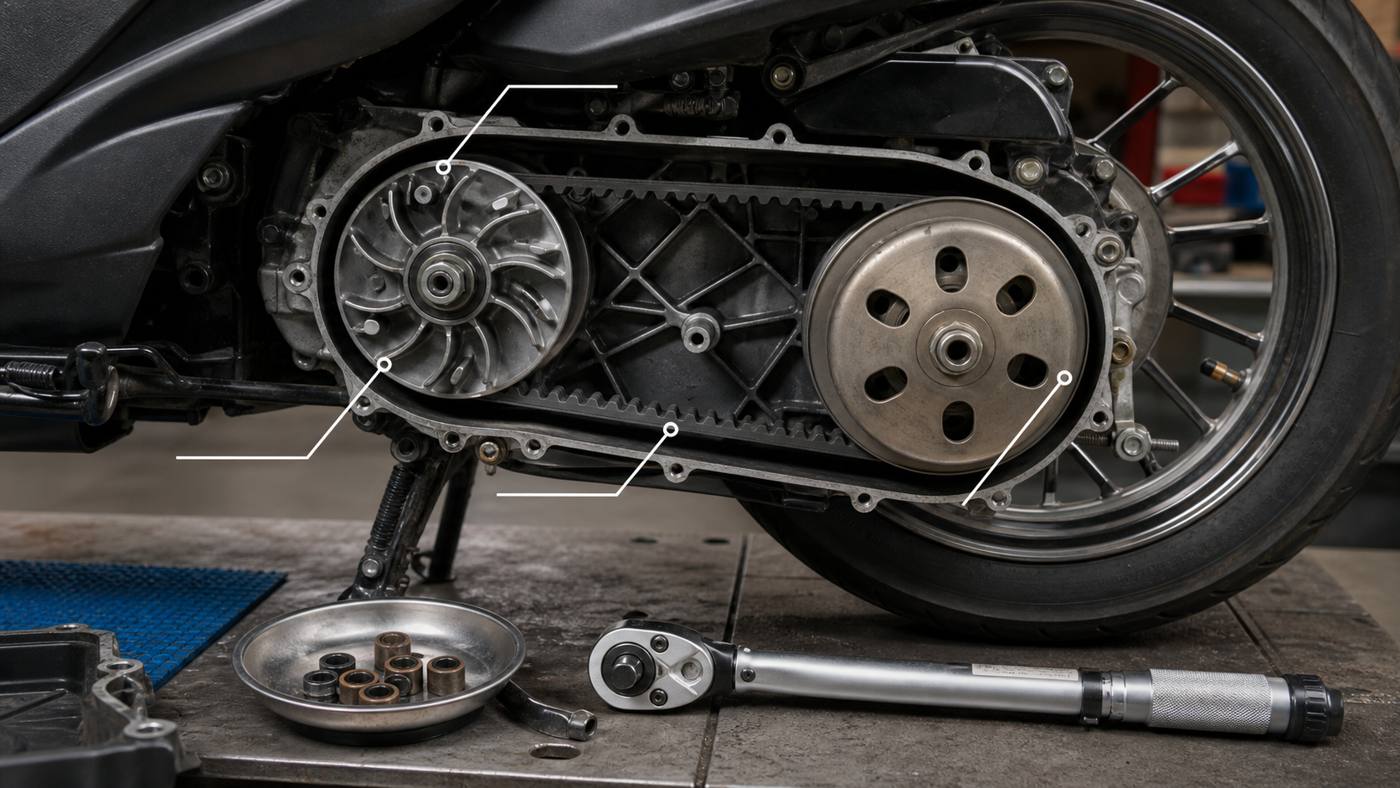
Peugeot Tweet 200 tuning usually gives the most noticeable road feel through the CVT. The variator, roller weights, belt and clutch decide how the engine speed matches the road speed. If the rollers are too heavy, the scooter can feel lazy off the line. If they are too light, it may rev loudly without gaining useful speed. If the belt is worn narrow, the scooter may lose ratio range and feel busy at cruise.
Variator and roller weight logic
Roller changes do not create engine power. They change when and how the engine reaches its useful rpm. For Peugeot Tweet 200 tuning, a slightly lighter roller setup may help a loaded scooter leave junctions more willingly, but too much change makes the engine shout and can reduce relaxed cruising. The right setup is the one that improves launch while still letting the scooter settle at road speed.
Do not copy roller weights blindly from a forum post. Rider weight, hills, tyre size, belt condition, clutch spring condition and exhaust choice all change the result. Measure the old rollers, record their weight, inspect their surfaces and make one change at a time. If the scooter becomes less smooth, go back.
Belt wear and clutch behaviour
A worn belt is a common reason a tuning plan seems to fail. If the belt is narrow, cracked or polished, the variator cannot work as designed. Replace worn service parts before chasing performance. Clean the transmission case carefully, but keep grease away from the belt and pulley faces.
Clutch judder from a stop can feel like engine hesitation. A glazed clutch bell, contaminated shoes or weak springs can make the scooter grab, shake or slip. A rider may then buy an exhaust or fuelling module when the real problem is mechanical friction inside the transmission.
| CVT symptom | Likely area | First practical check |
|---|---|---|
| High revs but poor speed gain | Rollers, belt, clutch slip | Inspect belt width and roller wear |
| Slow launch from traffic lights | Roller weight, clutch, brake drag | Check rear brake, clutch bell and roller condition |
| Vibration from a stop | Clutch glazing or contamination | Inspect clutch shoes and bell surface |
| Weak hill performance | Load, CVT ratio, engine health | Test with correct tyre pressure and clean filter |
| Good cold, worse hot | Heat, belt slip, fuelling, brake drag | Check CVT heat, exhaust leak and brake temperature |
Exhaust, DB-killer and fitment checks
Peugeot Tweet 200 tuning often starts with exhaust sound because the silencer is visible and easy to understand. A better exhaust can reduce weight, improve appearance and make the scooter sound less restricted. A poor exhaust can leak, lose low-speed torque, melt nearby plastic, fail an inspection or become tiring on the commute.
Diameter, bracket and clearance
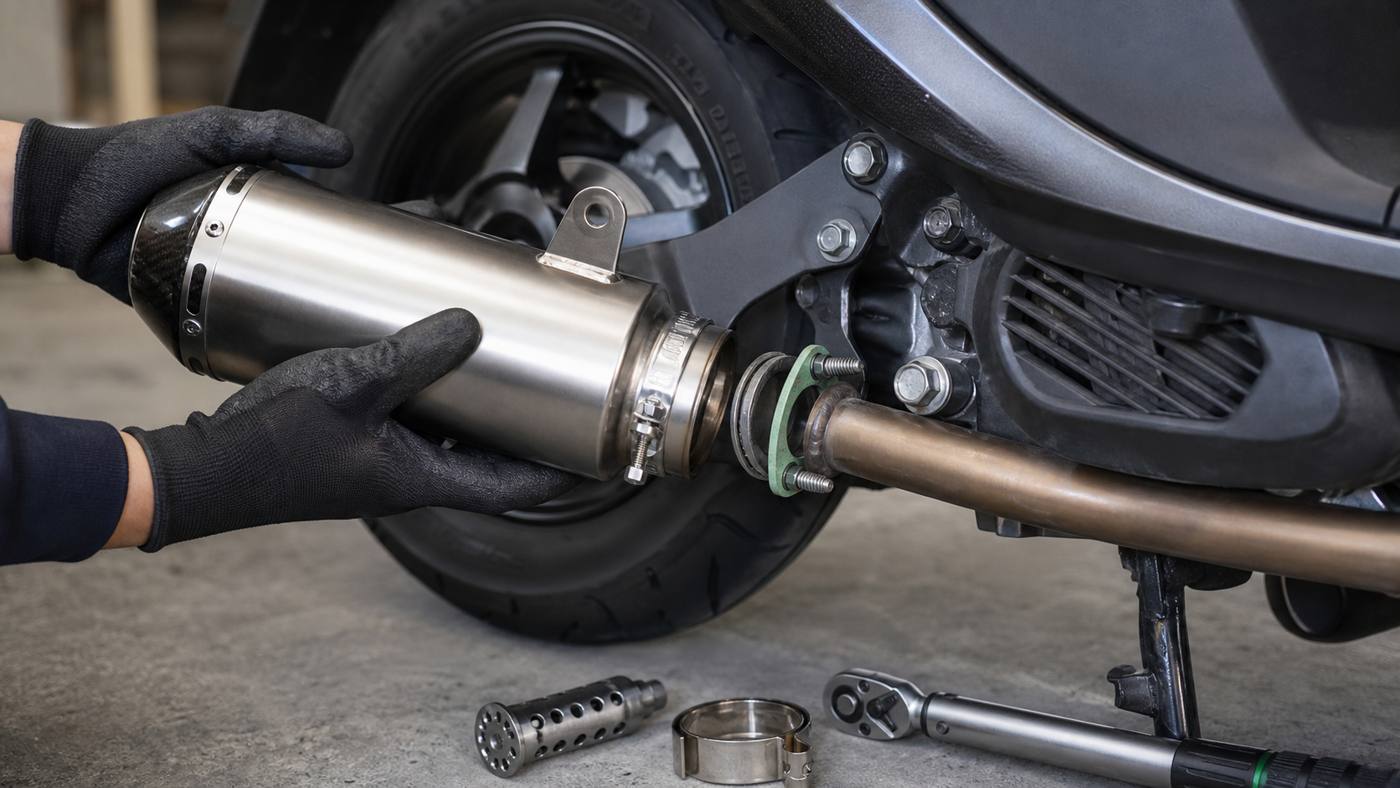
Before ordering, measure the pipe diameter, look at the mounting points and inspect clearance around bodywork, rear suspension and the stand. A universal silencer can sometimes be adapted, but it is not the same as plug-and-play. Exhaust work should include new gaskets where needed and a final leak check after warm-up.
If you are comparing exhaust options, the best motorcycle exhaust brands guide is useful for build-quality thinking, and the motorcycle baffle removal disadvantages guide explains why removing a DB-killer can create more problems than performance.
Sound versus performance
Louder is not automatically quicker. On a small air-cooled single, too little back pressure or a badly matched pipe can weaken response exactly where a city scooter needs it. A good setup keeps a sensible exhaust note, secure mounts and smooth low-speed running.
Fuel injection and intake considerations
Peugeot Tweet 200 tuning must respect the electronic fuel injection system. EFI is excellent for starting, economy and emissions, but it does not mean every intake or exhaust change will self-correct perfectly. If the scooter starts poorly, idles unevenly or smells rich, do not hide the symptom with random parts. Check the plug, battery, intake clamps, air filter, sensor wiring and exhaust sealing.
Air filter and intake
The original airbox is usually the safest foundation. It protects the engine from rain and road dirt, keeps intake noise civilised and gives the EFI system a stable airflow signal. An open filter can look sporty but may make the scooter worse in real weather. Unless the scooter has a clear, tested reason for intake changes, start with a clean standard filter.
Electronic modules
A plug-in module can only help when it is compatible with the exact sensor layout and used conservatively. Start low, warm the scooter fully and test the same route. If a setting causes hesitation, rough idle, strong fuel smell or worse economy, reduce it. The result should feel cleaner, not dramatic for two minutes and annoying afterwards.
Compatibility table for Peugeot Tweet 200 tuning parts
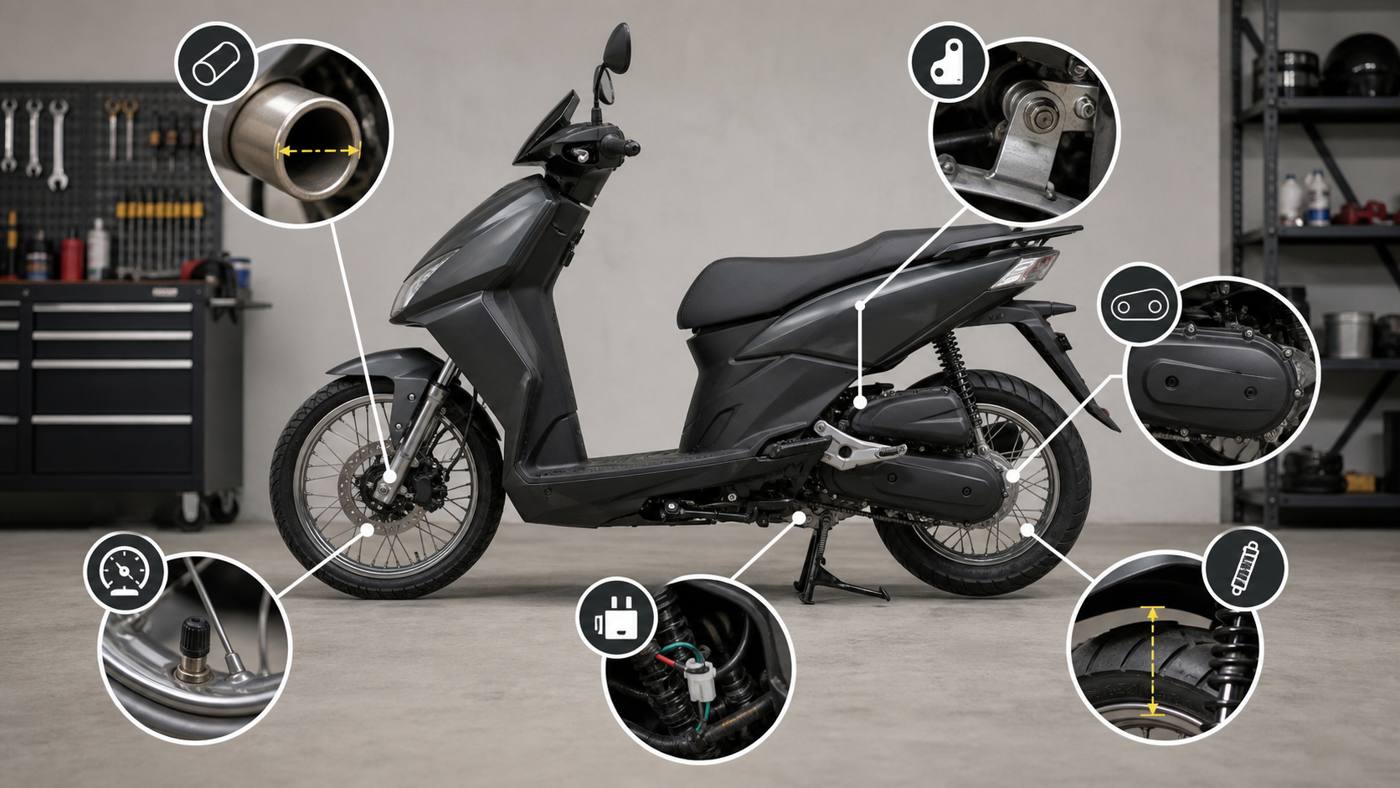
Compatibility is where owners lose money. The Tweet 200 may be sold in different markets and model years, and listings may use Tweet 200, Tweet GT 200 or related naming. Parts should be checked against the actual scooter, not only a product title.
| Vehicle or part area | Compatibility | Important note |
|---|---|---|
| Peugeot Tweet 200 scooter | Yes, when model year is confirmed | Check 170 cc engine version, market trim and mounting points |
| Tweet 125 parts | Sometimes not interchangeable | Similar family does not guarantee exhaust, CVT or ECU fitment |
| Universal scooter exhaust | Possible with measurements | Confirm diameter, bracket, gasket and bodywork clearance |
| CVT roller/variator parts | Depends on dimensions | Measure original rollers, ramp plate and belt before ordering |
| Electronic module | Only if connector and sensor match | Do not force wiring; stop if connector shape differs |
| Custom project | Possible but workshop-led | Professional installation may be needed for brackets or wiring |
Practical comparison of tuning routes
The work should be staged. The table below shows what each route usually improves and where it can go wrong.
| Solution | Main advantage | Possible disadvantage |
|---|---|---|
| Full service and CVT refresh | Restores lost response and reliability | Feels less exciting than buying visible parts |
| Roller weight adjustment | Can improve launch and hill pull | Too light can make the engine rev too much |
| Quality exhaust | Better sound, appearance and possible weight saving | Fitment, legality and noise must be checked |
| Air filter maintenance | Keeps EFI signal stable and protects engine | Open filters can reduce wet-weather reliability |
| Electronic response module | Can refine throttle feel if compatible | Wrong setting can make running worse |
UK and anglophone road-use notes
Peugeot Tweet 200 tuning for road use must stay legal, insurable and roadworthy. In Great Britain, GOV.UK motorcycle MOT guidance says testers inspect the exhaust system on motorcycles with internal combustion engines; a major leak or insecure exhaust is a major defect, and a silencer marked “not for road use” or “track use only” is also a major defect: GOV.UK motorcycle MOT structure and exhaust guidance.
The same GOV.UK motorcycle MOT manual explains the test classes and inspection basis for motorcycles, including Class 1 motorcycles up to 200 cc and Class 2 motorcycles beyond that scope: GOV.UK motorcycle MOT manual introduction. That does not make every modification illegal; it means the scooter must remain safe, secure and appropriate for road use.
Rules vary outside the UK. Australia uses state and territory registration rules plus market-specific learner approval schemes. The United States and Canada differ by state or province. Ireland and New Zealand have their own inspection and roadworthiness systems. Wherever you ride, Peugeot Tweet 200 tuning should not remove required emissions equipment, create excessive exhaust noise, defeat safety equipment or leave the insurer unaware of modifications.
Mechanic-style setup plan
The best Peugeot Tweet 200 tuning plan is simple. First, service the scooter and fix faults. Second, refresh the CVT if the belt or rollers are worn. Third, decide whether you want more responsive launch, better sound, smoother running or luggage/passenger capability. Fourth, choose one change. Fifth, test it on the same route before doing anything else.
Test route
Use a repeatable route with a cold start, warm idle, junction launch, 30-50 mph roll-on where legal, a gentle hill and a stop-start section. Record what changed. The work is only useful if the scooter improves in the riding you actually do.
After-installation checks
After any exhaust or CVT work, recheck fasteners after the first heat cycle. Look for exhaust soot at joints, belt dust, rubbing bodywork, loose brackets and wiring too close to heat. A clean installation should look almost factory. If it looks improvised, it probably needs more work. Peugeot Tweet 200 tuning should survive the first hot ride without new noises, smells or loose parts.
Common mistakes with Peugeot Tweet 200 tuning
Peugeot Tweet 200 tuning goes wrong when the owner skips measurement. The first mistake is ordering an exhaust without checking diameter and mounting points. The second is fitting rollers based only on someone else’s scooter. The third is ignoring belt wear. The fourth is removing the DB-killer and assuming noise equals speed. The fifth is fitting intake parts that expose the engine to rain and dirt.
Other mistakes include forgetting tyre pressure, ignoring brake drag, reusing damaged exhaust gaskets, forcing brackets, leaving CVT dust inside the cover, routing wires near heat, choosing parts only for looks, expecting a 170 cc scooter to behave like a maxi-scooter and failing to tell the insurer about modifications. Good scooter work is not about buying the most aggressive part; it is about making the machine work better as a complete package.
Image metadata prepared for the article
| File name | Title | Alt text | Recommended position |
|---|---|---|---|
| peugeot-tweet-200-tuning.jpg | Peugeot Tweet 200 tuning | Peugeot Tweet 200 tuning | Main featured image after introduction |
| peugeot-tweet-200-tuning-cvt-checks.jpg | Peugeot Tweet 200 CVT checks | Peugeot Tweet 200 CVT belt variator and roller checks | CVT and variator section |
| peugeot-tweet-200-tuning-exhaust-installation.jpg | Peugeot Tweet 200 exhaust installation checks | Peugeot Tweet 200 exhaust installation with gasket clamp bracket and DB-killer checks | Exhaust fitment section |
| peugeot-tweet-200-tuning-compatibility-checks.jpg | Peugeot Tweet 200 compatibility checks | Peugeot Tweet 200 compatibility checks for exhaust CVT sensors tyres and brackets | Compatibility section |
FAQ
Is Peugeot Tweet 200 tuning worth it?
Peugeot Tweet 200 tuning is worth it when the goal is smoother take-off, better CVT response, cleaner exhaust sound and a scooter that feels healthier in traffic. It is not worth it if the expectation is a huge horsepower increase from one part.
Can I make a Peugeot Tweet 200 faster?
You may improve acceleration and response through CVT service, roller setup, tyre pressure, exhaust fitment and careful fuelling checks. Top speed gains are usually limited, and road legality, safety and insurance must come first.
Does the Peugeot Tweet 200 need a remap after an exhaust?
Not automatically. If the exhaust is modest and properly sealed, the EFI may remain stable. If the scooter idles poorly, pops excessively, smells rich or hesitates, inspect for leaks, intake issues and sensor problems before assuming a remap is needed.
Are Tweet 125 and Tweet 200 tuning parts the same?
Not always. The scooters are related, but engine capacity, exhaust fitment, CVT dimensions and model-year details can differ. Always measure the actual part and confirm the listing before ordering.
What is the best first modification?
The best first step is a service and CVT inspection. A new belt, clean variator, correct rollers, fresh plug, clean filter and correct tyre pressure often improve the scooter more than a random performance part.
Is an aftermarket exhaust legal in the UK?
An aftermarket exhaust can be road-legal if it is secure, not excessively noisy, not marked for track-only use, and does not remove required emissions equipment. The exact outcome depends on the product, scooter condition and inspection context.
Can a universal exhaust fit the Peugeot Tweet 200?
A universal exhaust may fit with the correct diameter, bracket, gasket and clearance, but it should not be treated as guaranteed plug-and-play. Measure before buying and use a workshop if bracket fabrication or welding is required.
What should I check after tuning?
After Peugeot Tweet 200 tuning, check exhaust leaks, fastener tightness, belt behaviour, clutch engagement, hot starting, idle stability, tyre pressure, brake drag and whether the scooter still feels smooth after a full warm-up.
Final buying and setup advice
Peugeot Tweet 200 tuning should make the scooter better at the job it was built for: city riding, light commuting, errands and relaxed everyday use. Start with maintenance. Measure parts. Keep the CVT clean. Choose exhaust parts for fitment and legal comfort, not only sound. Treat EFI gently. Tell your insurer about meaningful modifications.
If you want the most sensible path, refresh the service items first, then decide whether the scooter needs CVT tuning, a better exhaust, a reversible electronic response change or simply better tyres and brakes. Anyone choosing parts for Peugeot Tweet 200 tuning should compare related Peugeot guides and suitable categories on X Moto Parts before ordering, especially when the listing claims universal fitment.
{
“@context”: “https://schema.org”,
“@type”: “Article”,
“headline”: “Peugeot Tweet 200 tuning”,
“description”: “Peugeot Tweet 200 tuning guide for CVT setup, variator rollers, exhaust fitment, EFI checks, compatibility, UK road-use notes and common scooter tuning mistakes.”,
“author”: {“@type”: “Organization”, “name”: “X Moto Parts”},
“publisher”: {“@type”: “Organization”, “name”: “X Moto Parts”},
“mainEntityOfPage”: “https://xmotoparts.com/peugeot-tweet-200-tuning/”
}
{
“@context”: “https://schema.org”,
“@type”: “FAQPage”,
“mainEntity”: [
{“@type”: “Question”, “name”: “Is Peugeot Tweet 200 tuning worth it?”, “acceptedAnswer”: {“@type”: “Answer”, “text”: “It is worth it when the goal is smoother take-off, better CVT response, cleaner exhaust sound and a healthier scooter in traffic, not unrealistic horsepower.”}},
{“@type”: “Question”, “name”: “Can I make a Peugeot Tweet 200 faster?”, “acceptedAnswer”: {“@type”: “Answer”, “text”: “Acceleration and response may improve through service, CVT setup, tyre pressure, exhaust fitment and careful fuel-injection checks, but top-speed gains are usually limited.”}},
{“@type”: “Question”, “name”: “Does the Peugeot Tweet 200 need a remap after an exhaust?”, “acceptedAnswer”: {“@type”: “Answer”, “text”: “Not automatically. Inspect sealing, intake condition, idle stability and sensor behaviour before assuming electronic calibration is required.”}},
{“@type”: “Question”, “name”: “Are Tweet 125 and Tweet 200 tuning parts the same?”, “acceptedAnswer”: {“@type”: “Answer”, “text”: “Not always. Engine, exhaust, CVT and model-year details can differ, so the actual scooter should be measured before ordering.”}},
{“@type”: “Question”, “name”: “What is the best first modification?”, “acceptedAnswer”: {“@type”: “Answer”, “text”: “A service and CVT inspection are the best first steps because worn belts, rollers, filters and tyres often hide lost performance.”}},
{“@type”: “Question”, “name”: “Is an aftermarket exhaust legal in the UK?”, “acceptedAnswer”: {“@type”: “Answer”, “text”: “It can be legal if secure, not excessively noisy, not track-only, and not removing required emissions equipment. The product and inspection context matter.”}},
{“@type”: “Question”, “name”: “Can a universal exhaust fit the Peugeot Tweet 200?”, “acceptedAnswer”: {“@type”: “Answer”, “text”: “It may fit if diameter, bracket, gasket and clearance are correct, but universal does not mean guaranteed plug-and-play.”}},
{“@type”: “Question”, “name”: “What should I check after tuning?”, “acceptedAnswer”: {“@type”: “Answer”, “text”: “Check exhaust leaks, fasteners, belt behaviour, clutch engagement, hot starting, idle stability, tyre pressure and brake drag after a full warm-up.”}}
]
}