
Super Soco TSX derestriction
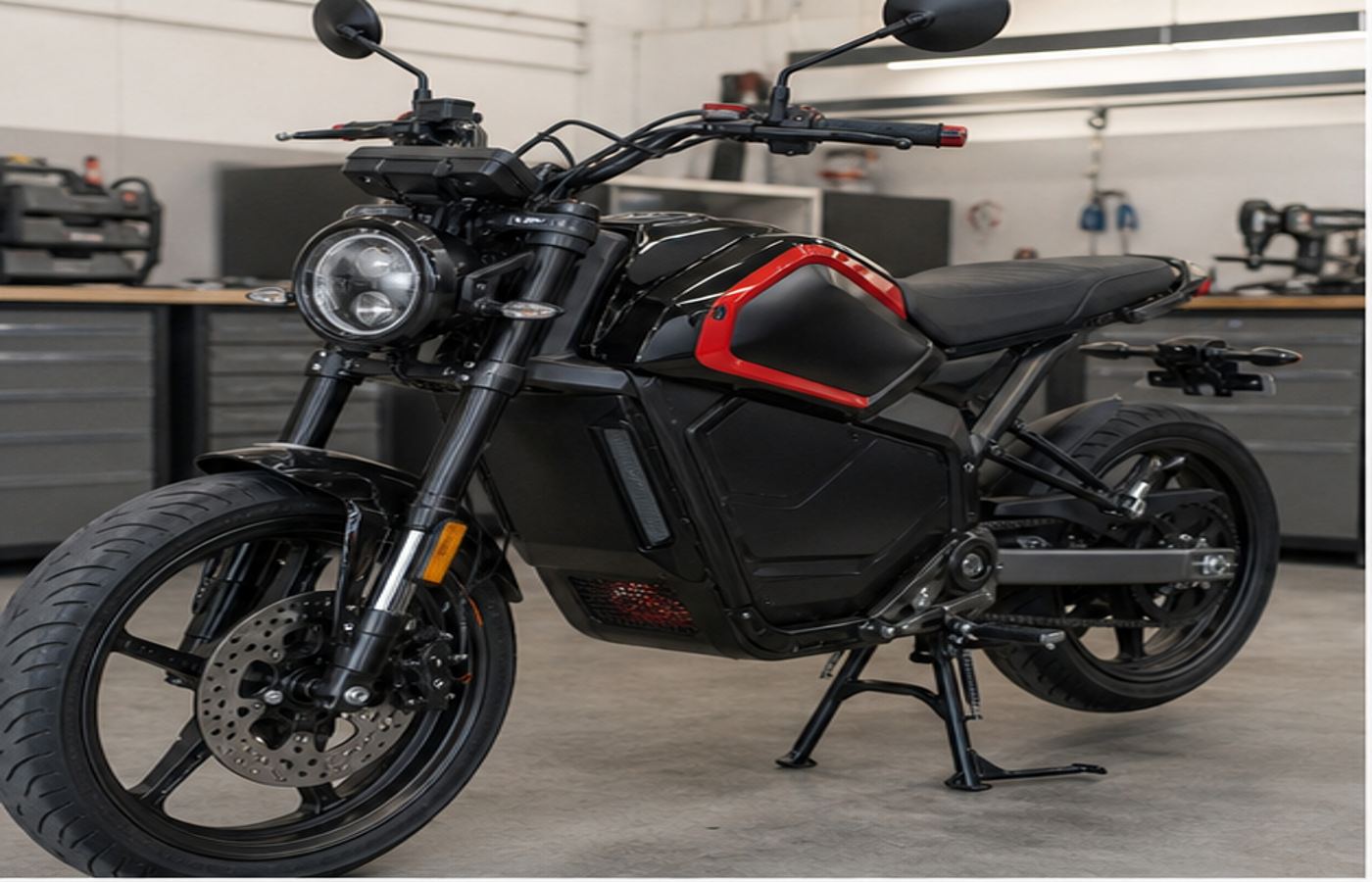
Super Soco TSX derestriction is one of those jobs that sounds simple when people talk about it online, but becomes much more serious once the panels are off and the battery, controller, hub motor and road-legal approval all come into view. The TSX is a light electric moped-style motorcycle, not a petrol 50 with a washer in the exhaust. If it is limited to 45 km/h, that limit is usually part of the way the vehicle, controller, battery system and homologation work together.
The useful question is not “which wire makes it faster?” The useful question is whether the bike is healthy, which market version you own, what controller and battery are fitted, whether the work is for public road use or private land, and whether the result will still be safe, insurable and reliable. A TSX with low tyre pressure, dragging brakes, tired battery cells or corroded connectors can feel restricted even before any electronic limit is discussed.
This guide is written for owners who want a practical workshop view of electric moped speed-limit work. It explains battery and BMS checks, controller compatibility, hub-motor wiring, display communication, braking and tyre condition, UK licence categories, warranty risk and the common mistakes that turn a small electric motorcycle into a fault-finding headache.
What derestriction really means on the TSX
Super Soco TSX derestriction usually means trying to change the electronic speed ceiling that keeps the bike inside an L1e-style moped class in many European markets. On a modern electric moped, that ceiling can be managed by the controller, display, throttle mapping, speed sensing, battery current limits or a combination of those systems. It is not a purely mechanical restriction.
The TSX is popular because it feels more like a small motorcycle than a basic scooter: larger wheels, a motorcycle stance, disc brakes, quiet electric drive and removable lithium battery options depending on version. That does not mean it has unlimited hidden performance. Vmoto’s current TSx information lists an L1e-B homologation, 45 km/h maximum speed, 2.0 kW rated power, 3.5 kW maximum power, 138 Nm maximum torque and battery specifications that can vary by market. Always compare the official Vmoto TSx model page with the exact motorcycle in front of you because local versions can differ.
A rider may feel a sharp pull away from a junction and then a flat sensation near the legal top speed. That is normal for many electric mopeds. The controller gives useful torque at low speed, then limits current and speed to protect the system and keep the bike inside its approved class. Trying to bypass that logic without understanding the battery and controller can reduce range, create warning lights or make the bike illegal for the rider’s licence.
Why an electric moped feels different from a petrol 50
Super Soco TSX derestriction should be approached differently from two-stroke or four-stroke scooter tuning. There is no variator washer, carburettor jet, exhaust washer or CDI box in the old sense. The TSX uses a battery, controller and rear hub motor. Performance is controlled by voltage, current, software maps, thermal limits and the ability of the battery management system to supply power safely.
That difference changes the whole diagnosis. If the bike is slow, the cause may be battery state of charge, cell balance, cold weather, high rolling resistance, brake drag, a poor connector, a throttle signal fault or a controller protecting itself. Fitting a more aggressive part before checking those basics is like tuning a petrol engine before checking compression and fuel delivery.
TSX specifications and version differences
Super Soco TSX derestriction begins with version identification. The TSX name has appeared in different markets, and published figures can vary depending on whether the bike is an older 60V model, a newer Vmoto specification, one-battery or two-battery configuration, or a local homologation variant. Record the VIN, registration details, controller label, battery voltage, battery capacity, charger rating, tyre sizes and dashboard behaviour before ordering anything.
The most important distinction is whether your bike is legally registered as a moped-type vehicle or as a higher motorcycle category. A 45 km/h L1e-B TSX is not the same practical proposition as a higher-speed electric motorcycle. The body style may look capable of more, but the approval, battery and controller decide what is sensible.
| Area to check | What to record | Why it matters |
|---|---|---|
| Homologation and registration | L1e-B, moped class, local paperwork and insurer description | Changing speed may move the bike outside its declared category |
| Battery system | Voltage, capacity, number of packs, connector type and charger | The battery decides current limit, range and thermal margin |
| Controller | Label, rated current, connector layout and mounting position | Speed-limit changes usually interact with the controller |
| Display and controls | Riding modes, warning lights, throttle and brake cut-off response | Some systems need original communication to avoid faults |
| Chassis condition | Tyres, brakes, wheel bearings, suspension and steering | More speed requires the bike to be mechanically healthy |
If you are comparing similar electric moped work, the Super Soco CPX derestriction guide, Horwin EK1 derestriction guide and Yadea G5 derestriction guide are useful companion reads. Each platform is different, but the same diagnosis applies: battery health and controller compatibility come first.
Compatibility table before buying parts
Super Soco TSX derestriction can involve a reversible module, controller configuration, replacement controller, battery change or simply returning the bike to proper standard condition. The best route depends on use. A commuter used every day on public roads needs a very conservative plan. A private-land project gives more room to experiment, but electrical safety still matters.
| Vehicle or setup | Compatibility | Important note |
|---|---|---|
| Road-registered TSX L1e-B | Only with parts that preserve safe and legal use | Higher speed may affect licence, insurance and type approval |
| Private-land TSX project | More flexible, still safety-critical | Battery heat, controller current and braking must be monitored |
| Plug-in module | Only if connector, voltage and signal logic match | It should be reversible and secured against vibration and water |
| Replacement controller | Specialist fitment only | Must match hub motor, hall sensors, throttle, display and battery |
| Battery upgrade | Only with correct voltage, BMS, charger and mounting | Unsafe battery work can cause serious failure |
| Tyre or brake upgrade | Possible if dimensions and load rating match | Handling and stopping distance matter more after performance changes |
Anyone looking at electric moped tuning parts should first check the controller area and battery label, then compare only products that are meant for the exact TSX version. The motorcycle chip tuning category is useful for understanding how reversible performance modules are normally presented, but final fitment must be checked from the bike itself.
Battery, BMS and charging checks
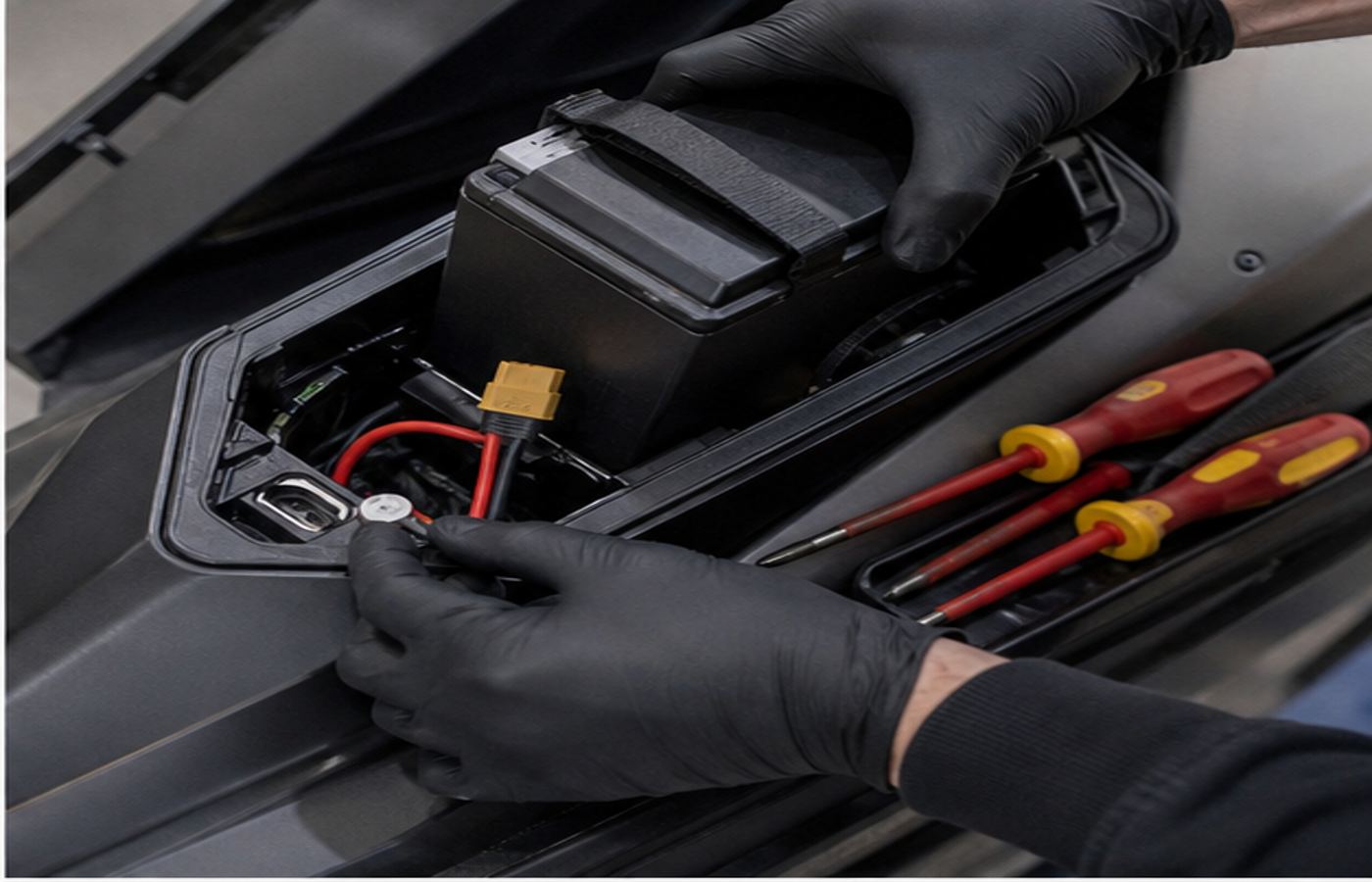
Super Soco TSX derestriction is only as good as the battery behind it. The battery pack stores the energy, but the BMS protects it from over-discharge, over-current, overheating and imbalance. A healthy battery may cope with standard demand comfortably, while an ageing battery may show voltage sag, reduced range or sudden power reduction when more current is requested.
Start by charging the bike fully with the correct charger. Check the charger fan if fitted, plug condition, charge port, battery locking mechanism, corrosion, swelling, impact damage and water marks. Ride the bike in standard form and record range, indicated speed, battery percentage drop, hill behaviour and any warning lights. Do the same test when the battery is around half charge. That gives a clear baseline before changing anything.
Range after derestriction
Super Soco TSX derestriction often reduces range because aerodynamic drag and current draw rise quickly as speed increases. Even a small increase above moped speed can use noticeably more energy. If a rider keeps the same battery, asks for more speed and rides harder, the range loss is not a fault; it is physics.
The best way to judge a setup is repeatable testing. Use the same route, tyre pressures, rider weight, temperature and riding style. A single downhill speedometer number tells you very little. A good test shows whether the bike still starts cleanly, charges normally, avoids warning lights, holds stable power at different charge levels and does not heat connectors.
| Symptom | Likely cause | Owner check |
|---|---|---|
| Power cuts under acceleration | BMS current protection or weak battery | Return to standard and test battery voltage under load |
| Range becomes much shorter | Higher speed demand or battery ageing | Compare the same route before and after the change |
| Bike feels slow in cold weather | Battery temperature effect | Retest when the battery is at normal temperature |
| Connector gets warm | Poor contact or excessive current | Stop riding and inspect professionally |
| Warning light after installation | Controller or display communication issue | Undo the last change and diagnose faults |
Controller, display and wiring checks
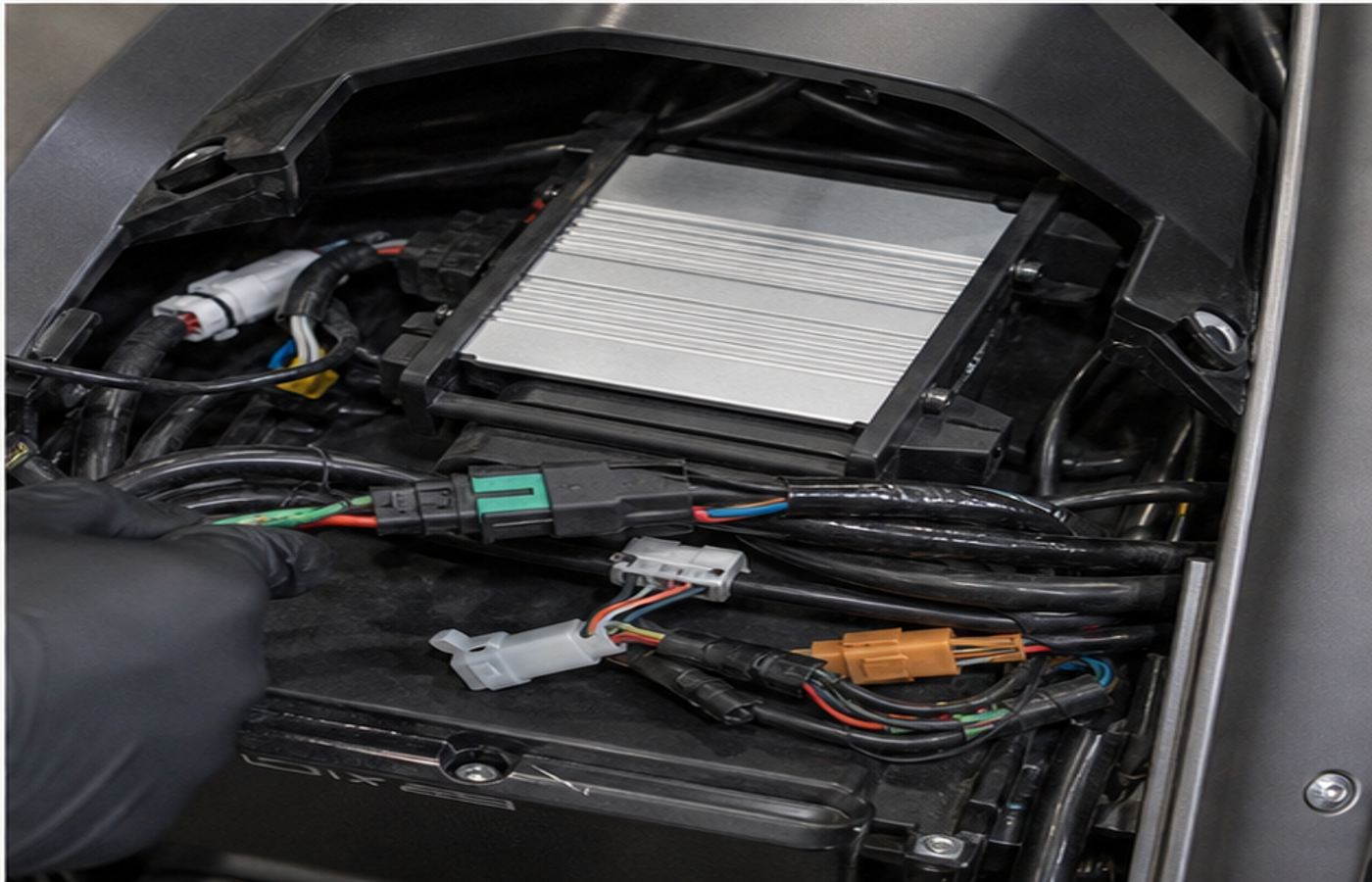
Super Soco TSX derestriction often focuses on the controller because that is where motor current, throttle demand, speed interpretation and protective logic meet. A controller is not a generic box you can replace by matching the colour of a plug. It has to suit battery voltage, motor phase wiring, hall sensors, throttle voltage, brake cut-offs, side-stand logic if fitted, display communication and heat dissipation.
A reversible plug-in approach is usually preferable to cutting the loom, but reversible does not mean risk-free. Mount any module away from tyre spray, heat, steering movement and sharp plastic edges. Use proper strain relief and avoid trapping the harness under a panel. If the bike throws a fault, loses brake cut-off response or behaves unpredictably, return it to standard before riding further.
Why a universal controller is usually a workshop job
Super Soco TSX derestriction with a universal controller can look attractive because some listings promise higher current or more speed. In real life, it is a custom electrical installation. The installer has to identify phase wires, hall order, throttle signal range, ignition feed, display compatibility, brake switches, charger relationship, mounting and waterproofing. Getting one part wrong can leave the bike with faults or no safety cut-off.
For most owners, a proper service baseline and model-specific compatibility check are smarter than chasing the most powerful controller online. A TSX used for commuting should start every time, charge predictably, show no warning lights and stop properly. Those qualities matter more than a short burst of extra speed.
Hub motor, brakes and tyres
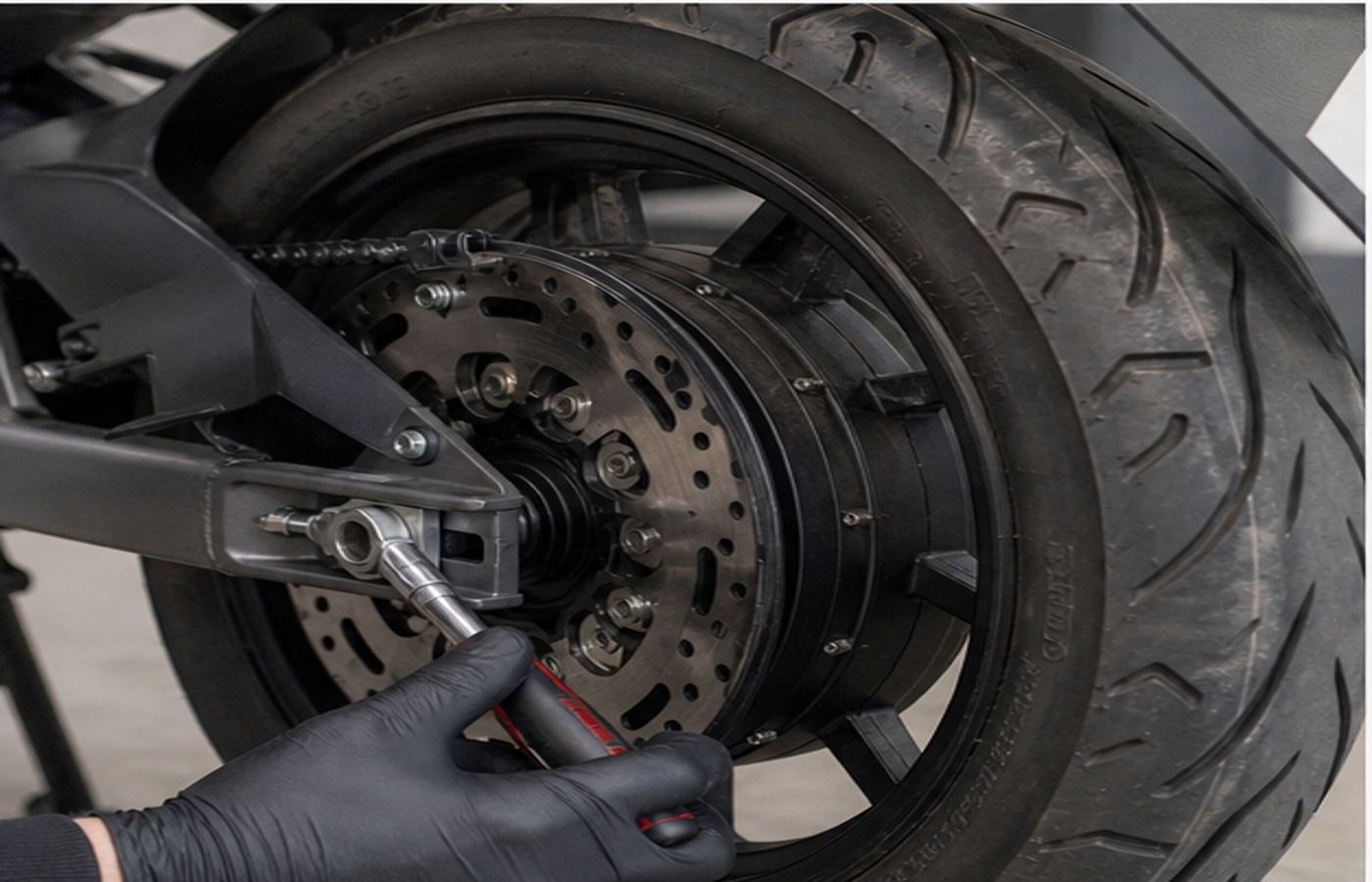
Super Soco TSX derestriction also depends on the rear hub motor and chassis condition. The motor sits in the wheel, so rear wheel bearings, tyre pressure, brake drag and connector routing all matter. A dragging brake can steal performance and range. An underinflated tyre can make the bike feel sluggish. A damaged motor cable can create intermittent faults that look like controller problems.
Inspect the rear wheel carefully. Look at the motor cable exit, axle nuts, brake disc, pads, caliper movement, tyre sidewall, tread depth and valve. Spin the wheel with the bike safely supported and listen for scraping or roughness. Check the front brake as well. If the bike is expected to travel faster than its original moped behaviour, braking condition and tyre rating become even more important.
For broader setup thinking, compare the TSX with the BMW CE 02 derestriction guide. The BMW is a different class of electric machine, but the lesson is similar: approval category, battery behaviour and controller limits are central to a safe decision.
| Solution | Main advantage | Possible disadvantage |
|---|---|---|
| Keep the TSX standard | Best for legality, warranty, range and everyday reliability | Top speed remains limited to its approved class |
| Correct service issues | Often improves real performance without legal risk | Does not remove a genuine speed limiter |
| Reversible module | Less invasive when truly compatible | Still may affect road legality and battery stress |
| Controller replacement | Can change motor behaviour more deeply | Complex, risky and often not road-appropriate |
| Battery upgrade | Can support stronger demand if engineered correctly | Expensive and safety-critical |
UK legality, licence categories and insurance
Super Soco TSX derestriction has to be separated by use case. In the UK, a 45 km/h electric moped-type vehicle sits in a different practical world from a higher-speed motorcycle. GOV.UK explains moped and motorcycle categories, ages and licence requirements on its motorcycle and moped licence category page. That is the first place a UK rider should check before riding a modified electric moped on public roads.
If the bike is altered so that it no longer matches the category it was registered and insured under, the rider may face licence, insurance and roadworthiness problems. The MOT tester will not necessarily know every controller detail, but the owner and insurer still need the vehicle to be correctly described. A modified electric moped can also raise questions about braking, tyres, lighting, warning systems and whether the bike remains safe for public road use.
Do not confuse electric mopeds with electrically assisted pedal cycles. GOV.UK separately explains e-bike rules on its electric bike rules page. A TSX is a motor vehicle, not a pedal-assist bicycle, but the distinction is useful because it shows how important speed, power and classification are in UK law. In the United States, Canada, Australia, New Zealand and Ireland, requirements vary by state, province or national vehicle category, so imported advice should be checked locally.
Public road, private land and track use
Super Soco TSX derestriction for public roads should be conservative. The owner needs the correct licence, insurance, registration, roadworthy condition and safe braking. Private land gives more freedom only when the landowner permits it and the bike is used safely. Track or closed-course use may allow non-road parts, but those parts should not be described as road legal unless they genuinely are.
Common mistakes
Super Soco TSX derestriction goes wrong when owners skip the boring checks. The first mistake is buying a controller from a listing that does not show the exact connectors. The second is assuming that every TSX uses the same voltage and firmware. The third is ignoring the battery because the bike still turns on. The fourth is riding on public roads without telling the insurer what has changed.
Forcing connectors
Connectors that almost fit are dangerous. Pin order, voltage and signal type matter. If a plug needs force, stop. Photograph the original layout and ask for fitment confirmation. A damaged harness is harder to repair than a bad purchase is to return.
Ignoring brake cut-offs
Electric mopeds depend on brake cut-off circuits so the motor stops driving when the rider brakes. Any controller or module work that interferes with brake switches should be treated as unsafe until fixed.
Expecting huge speed from the same battery
Super Soco TSX derestriction cannot make a small battery behave like a larger pack. Higher speed requires more current and creates more heat. If the system was designed for moped duty, the sensible margin may be smaller than the rider hopes.
Confusing tuning with repair
A TSX with a weak battery, sticky brake, poor tyre pressure or damaged motor cable needs repair, not tuning. Restoring standard condition often gives a better real-world result than adding parts to a bike that is already struggling.
Workshop-style setup advice
Super Soco TSX derestriction should be handled in stages. First, inspect the bike in standard form. Check tyre pressure, brake drag, wheel bearing feel, battery charge, charger operation, controller area, warning lights and all switches. Second, ride the same short route and record speed, range, hill behaviour and battery drop. Third, inspect the battery and controller labels. Fourth, decide whether the intended use is public road, private land or controlled testing.
After any change, test gently. Confirm brake cut-off operation, throttle return, lighting, display behaviour, charging and warning lights before attempting higher speed. Ride for a few minutes, stop, feel for unusual heat near connectors and controller mounting, then retest at different battery levels. A neat installation with no faults and predictable range is a better result than a messy installation with one impressive speed run.
Anyone choosing parts for a TSX should confirm voltage, connector layout, intended use and legal status before ordering. The X Moto Parts shop and related electric scooter guides can help owners compare options, but the final decision should always be based on the exact bike, not a generic promise.
FAQ about Super Soco TSX derestriction
Can a Super Soco TSX be derestricted?
Super Soco TSX derestriction may be technically possible on some versions, but it depends on controller type, battery voltage, BMS behaviour, display communication, market specification and intended use.
Is derestricting a Super Soco TSX legal in the UK?
Super Soco TSX derestriction can affect UK road legality if the bike no longer matches its registered moped category, insurance description or the rider’s licence entitlement. Check GOV.UK guidance and speak to the insurer before road use.
Will derestriction make the TSX much faster?
It may raise the speed ceiling on some bikes, but the result depends on battery voltage, controller current, hub-motor capacity, rider weight, tyre pressure, wind, hills and temperature. A safe result is repeatable and fault-free, not just fast once.
Will derestriction reduce range?
Usually, yes. Higher speed and stronger acceleration demand more current. Super Soco TSX derestriction can shorten range and expose weak batteries sooner.
Can I fit a universal controller?
A universal controller is a specialist job because voltage, phase wires, hall sensors, throttle signal, display communication, brake cut-offs and waterproofing must all be correct. It is not normally a simple plug-and-play upgrade.
Does derestriction void the warranty?
It can. Controller, wiring, battery or software changes may give a dealer or manufacturer reason to question warranty claims related to electrical faults, battery stress or motor behaviour.
What should I check before buying a derestriction part?
Check VIN, year, homologation, battery label, controller label, connector photos, charger rating, display type, brake cut-off operation, tyre condition and intended road use before ordering anything.
Why does the TSX slow down when the battery is low?
Electric mopeds often reduce performance as voltage drops or when the BMS protects the battery. Low charge, cold cells or an ageing pack can all make the bike feel restricted even when no limiter fault exists.
Final advice before modifying a TSX
Super Soco TSX derestriction should be a technical decision, not a shortcut. If the bike is a road commuter, keeping it reliable, legal, insured and predictable may be the smartest choice. If it is a private-land project, keep every original part, avoid cutting the loom, record every connector and test battery heat and range carefully.
Before spending money, identify the exact version, test the standard bike, check the battery, inspect the controller and correct any brake, tyre or hub-motor issue. Then decide whether a reversible, compatible module, professional controller work or no modification at all makes sense. The best setup is the one that matches the rider, the bike and the road-use reality.
{
“@context”: “https://schema.org”,
“@type”: “Article”,
“headline”: “Super Soco TSX derestriction”,
“description”: “Super Soco TSX derestriction guide to controller compatibility, battery and BMS checks, hub motor inspection, UK legality, warranty risk and realistic electric moped setup.”,
“author”: {
“@type”: “Organization”,
“name”: “X Moto Parts”
},
“publisher”: {
“@type”: “Organization”,
“name”: “X Moto Parts”,
“logo”: {
“@type”: “ImageObject”,
“url”: “https://xmotoparts.com/wp-content/uploads/2026/07/x-moto-parts-logo.png”
}
},
“mainEntityOfPage”: “https://xmotoparts.com/super-soco-tsx-derestriction/”,
“image”: [
“https://xmotoparts.com/wp-content/uploads/2026/07/super-soco-tsx-derestriction.jpg”,
“https://xmotoparts.com/wp-content/uploads/2026/07/super-soco-tsx-derestriction-battery-check.jpg”,
“https://xmotoparts.com/wp-content/uploads/2026/07/super-soco-tsx-derestriction-hub-motor-check.jpg”,
“https://xmotoparts.com/wp-content/uploads/2026/07/super-soco-tsx-derestriction-controller-check.jpg”
]
}
{
“@context”: “https://schema.org”,
“@type”: “FAQPage”,
“mainEntity”: [
{
“@type”: “Question”,
“name”: “Can a Super Soco TSX be derestricted?”,
“acceptedAnswer”: {
“@type”: “Answer”,
“text”: “Super Soco TSX derestriction may be technically possible on some versions, but it depends on controller type, battery voltage, BMS behaviour, display communication, market specification and intended use.”
}
},
{
“@type”: “Question”,
“name”: “Is derestricting a Super Soco TSX legal in the UK?”,
“acceptedAnswer”: {
“@type”: “Answer”,
“text”: “Super Soco TSX derestriction can affect UK road legality if the bike no longer matches its registered moped category, insurance description or the rider’s licence entitlement.”
}
},
{
“@type”: “Question”,
“name”: “Will derestriction make the TSX much faster?”,
“acceptedAnswer”: {
“@type”: “Answer”,
“text”: “It may raise the speed ceiling on some bikes, but the result depends on battery voltage, controller current, hub-motor capacity, rider weight, tyre pressure, wind, hills and temperature.”
}
},
{
“@type”: “Question”,
“name”: “Will derestriction reduce range?”,
“acceptedAnswer”: {
“@type”: “Answer”,
“text”: “Usually, yes. Higher speed and stronger acceleration demand more current, which can shorten range and expose weak batteries sooner.”
}
},
{
“@type”: “Question”,
“name”: “Can I fit a universal controller?”,
“acceptedAnswer”: {
“@type”: “Answer”,
“text”: “A universal controller is a specialist job because voltage, phase wires, hall sensors, throttle signal, display communication, brake cut-offs and waterproofing must all be correct.”
}
},
{
“@type”: “Question”,
“name”: “Does derestriction void the warranty?”,
“acceptedAnswer”: {
“@type”: “Answer”,
“text”: “It can. Controller, wiring, battery or software changes may affect warranty claims related to electrical faults, battery stress or motor behaviour.”
}
},
{
“@type”: “Question”,
“name”: “What should I check before buying a derestriction part?”,
“acceptedAnswer”: {
“@type”: “Answer”,
“text”: “Check VIN, year, homologation, battery label, controller label, connector photos, charger rating, display type, brake cut-off operation, tyre condition and intended road use.”
}
},
{
“@type”: “Question”,
“name”: “Why does the TSX slow down when the battery is low?”,
“acceptedAnswer”: {
“@type”: “Answer”,
“text”: “Electric mopeds often reduce performance as voltage drops or when the BMS protects the battery, especially with low charge, cold cells or an ageing pack.”
}
}
]
}