
Yadea G5 derestriction
Yadea G5 derestriction is one of those searches that sounds simple until you put the scooter on a bench and start asking the right questions: which G5 version is it, what controller does it use, what battery chemistry is fitted, what licence category does it sit in, and what happens to insurance, warranty and road legality if the scooter no longer behaves like the approved vehicle it was sold as?
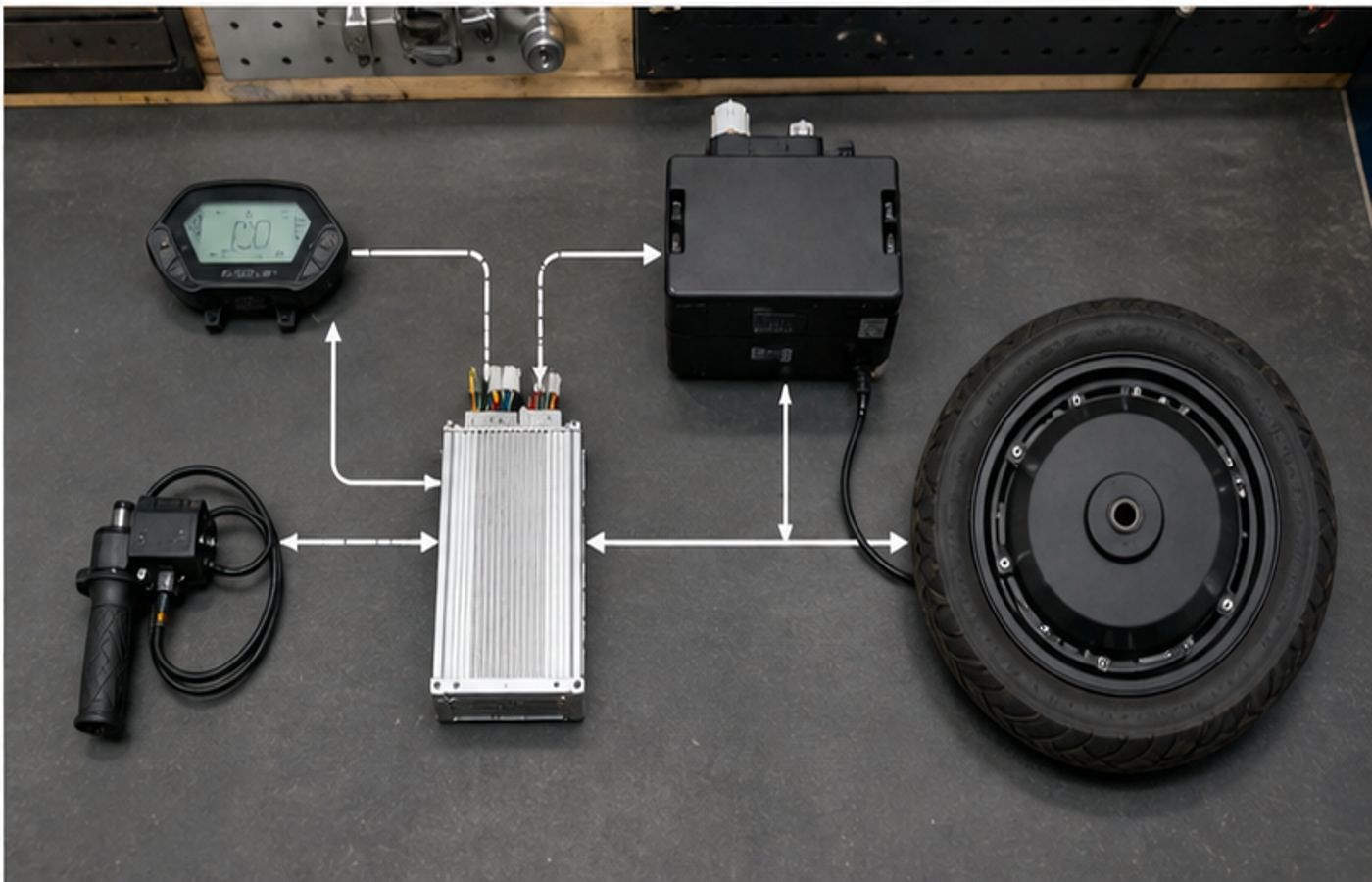
The useful answer is not “cut a wire” or “buy the fastest controller”. A modern electric moped is a system. The controller, battery management system, display, throttle, hub motor, brake sensors, wiring loom, tyres, brakes and legal approval all work together. A careless change can make the scooter unreliable, unsafe or illegal on public roads. A careful approach can help an owner understand what is possible, what is sensible and what should be left alone.
This guide is written for riders comparing electric scooter tuning options, owners who have seen a 45 km/h speed limit on the Yadea G5, and buyers trying to understand whether a restricted electric moped can be made more responsive without creating expensive problems. It is not a promise of a magic top-speed result. It is a practical workshop guide to checking the scooter properly before spending money.
What derestriction really means on a Yadea G5
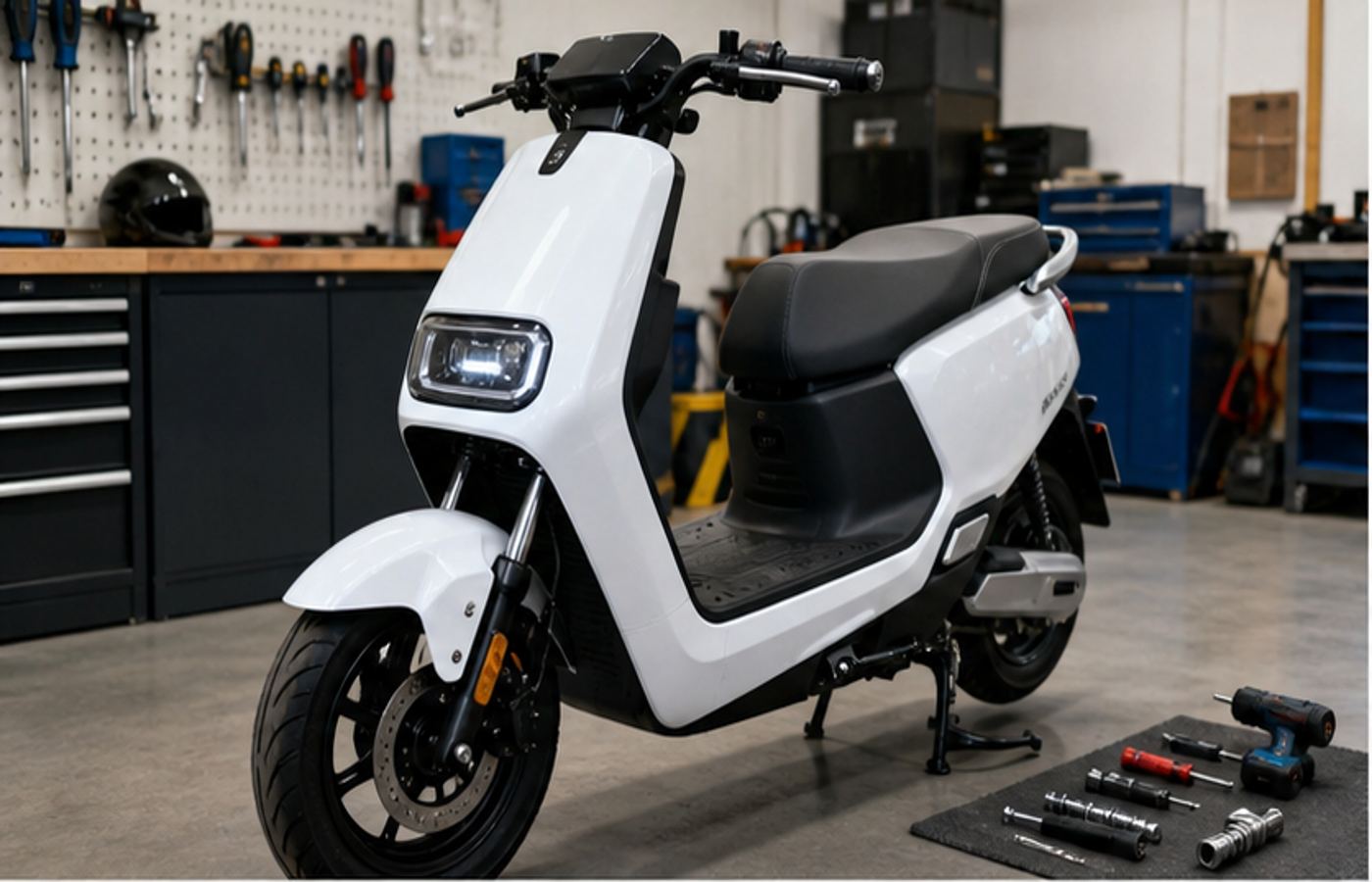
Yadea G5 derestriction usually means trying to remove, alter or work around the electronic speed limitation that keeps the scooter within a moped class. On many European-market electric mopeds, that limit is commonly around 45 km/h, which is roughly 28 mph. The limit is not only a riding comfort issue; it is often part of the vehicle approval, licence category and insurance description.
The G5 family has been sold in different forms and markets. Official specifications have included hub-motor versions with limited speed and, in some markets, stronger variants with different power figures and higher claimed performance. Yadea’s own model information shows that specifications can vary by version, battery type and market, so a rider should not assume that every online video or parts listing applies to the scooter sitting in the garage. You can compare broad model information on the official Yadea G5/G5S page.
In workshop terms, derestricting the G5 can involve one of four areas: controller programming, a replacement controller, display or signal changes, or a complete performance conversion involving battery and motor limits. The further you move from the original controller calibration, the more you need to think about heat, current draw, battery health, charging, braking and legal use.
Why the scooter may feel limited
A restricted electric moped often feels strong away from a standstill and then stops accelerating cleanly at its programmed maximum speed. That does not necessarily mean the motor has plenty of unused power above that speed. Sometimes the controller is limiting road speed deliberately. Sometimes the battery voltage, motor winding, rolling resistance or tyre pressure means the scooter would not safely hold much more speed anyway.
This is why G5 speed-limit work should be treated as diagnosis before modification. If the battery is weak, the brakes drag, tyre pressures are low or the rear wheel bearing is tired, the scooter may feel restricted even though the actual problem is poor condition. A healthy baseline matters more on an electric scooter than many riders expect because every watt lost to drag is taken from a small stored-energy budget.
G5 versions, batteries and controller limits
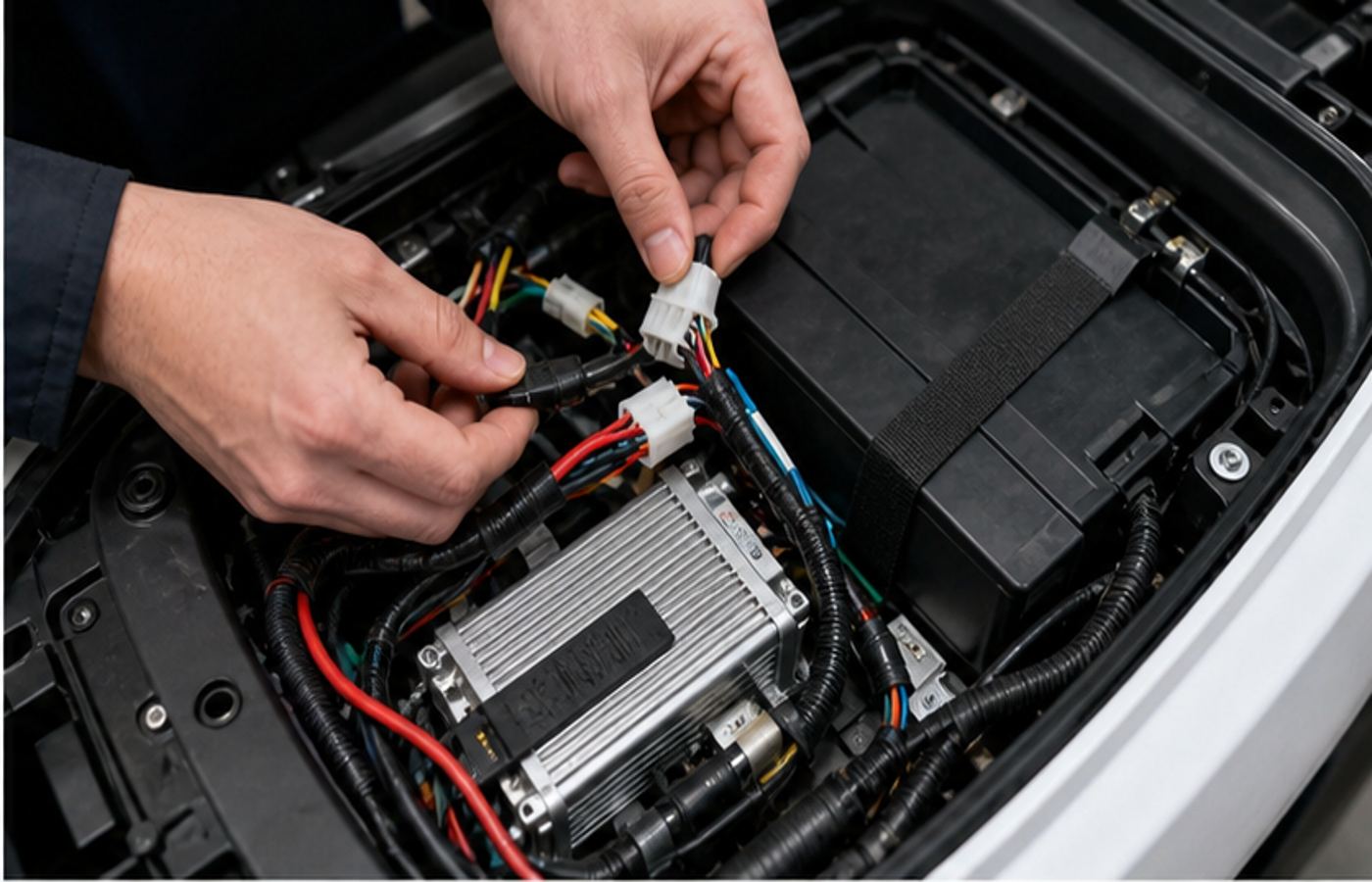
The first job is identifying the exact scooter. A G5 derestriction plan cannot be judged properly from the model name alone because the controller, battery pack and approval category may differ. Look for the VIN plate, homologation plate, battery label, charger rating, motor marking, display type and any controller label under the seat or body panels. Photograph the connectors before unplugging anything.
Some G5 versions use lead-acid battery packs, while stronger versions may use lithium packs. That distinction matters. Lead-acid batteries sag under load and do not like aggressive current demand. Lithium packs can deliver stronger performance, but only if the battery management system, cells, wiring and controller are designed for it. A controller that pulls more current than the pack can safely supply may cause voltage drop, fault codes, overheating or sudden power reduction.
| Component | What to check | Why it matters |
|---|---|---|
| Controller | Label, rated voltage, phase wires, connector layout, mounting position | Determines how the motor is driven and whether any tuning module can connect safely |
| Battery | Voltage, chemistry, capacity, age, voltage sag under load | A weak battery can make derestriction feel worse and reduce range sharply |
| Display | Speed reading, error symbols, mode settings, connector type | Some scooters use the display as part of the control system |
| Hub motor | Rated power, cable condition, bearing noise, heat after riding | More speed or current can increase heat and mechanical load |
| Brakes and tyres | Pad condition, disc condition, tyre load rating, pressure | More speed is pointless if stopping and stability are not correct |
When an owner asks about unlocking a G5, a good technician will usually ask for photos before recommending anything. The photos should show the controller label, battery label, display plug, motor cable, throttle connector and any existing add-on wiring. If a seller cannot tell you what version their part fits, do not guess.
Compatibility checks before changing anything
Derestricting this scooter is only sensible when the parts match the exact scooter. A plug that looks similar can still have different pin order, voltage reference or communication protocol. A controller sold for a visually similar scooter may not communicate with the display. A speed signal change may create a dashboard error. An apparently simple modification can become a no-start problem if the brake switch, side-stand switch or battery lock circuit is affected.
| Vehicle or setup | Compatibility | Important note |
|---|---|---|
| Yadea G5 limited moped version | Possible only after exact controller and battery checks | Road legality and insurance may change if speed or power class changes |
| Yadea G5S or higher-output version | Different from a standard G5 in many markets | Do not assume parts interchange across versions |
| Other Yadea electric scooters | Not automatically compatible | Connector shape is not enough; controller logic must match |
| Universal electric scooter controller | Workshop-only in most cases | May require wiring, display changes, throttle calibration and safety checks |
| Private land or track project | Often easier legally, still technical | Battery, brakes and heat control remain critical |
If you are comparing electric scooter parts, use the broader X Moto Parts shop as a starting point, then confirm the exact model, connector and intended use before ordering. Riders comparing similar electric moped behaviour may also find the Horwin EK1 derestriction guide and the Super Soco CPX derestriction guide useful because they explain the same controller, battery and road-use logic on different electric platforms.
UK road legality, licence and insurance issues
Yadea G5 derestriction has a legal side that cannot be ignored. In the UK, mopeds and motorcycles are divided by category, speed, power and rider entitlement. GOV.UK explains moped and motorcycle licence categories, including AM moped limits and A1 light motorcycle rules, on its motorcycle and moped licence category page.
If a scooter was approved, insured and registered as a moped with a design speed around 45 km/h, making it faster can change the type of vehicle it effectively is. That may affect whether a rider has the correct licence, whether the vehicle remains correctly insured, whether it still matches registration details and whether it is roadworthy. This is especially important for younger riders, CBT riders and anyone using the scooter for commuting.
Unlike petrol tuning, this electric scooter work does not involve exhaust noise, DB-killers or catalytic converters. The road-use questions instead focus on approval category, maximum design speed, continuous rated power, braking performance, tyres, lighting, warning lights, insurance disclosure and whether the vehicle remains as declared. For electric vehicles, GOV.UK also explains that electric machines outside EAPC rules can be treated as mopeds or motorcycles requiring registration, insurance and a suitable licence on its electric bike rules page. A Yadea G5 is not a pedal-assist bicycle, but the page is useful because it clearly separates light pedal-assist rules from motor vehicle rules.
Private land is different from public road use
For private land, a rider has more freedom, provided the landowner permits the use and the scooter is used safely. For public roads, any G5 speed modification should be approached only after checking licence, registration, insurance and local laws. In the United States, Canada, Australia and New Zealand, electric moped categories vary by state, province or territory. Do not copy a modification from another country and assume it is legal at home.
Derestriction methods owners usually ask about
Owners researching ways to unlock a G5 usually encounter several possible methods. Some are reversible and conservative. Some are risky. Some are just internet folklore. The right question is not “which one is fastest?” but “which one matches this scooter, keeps the electrical system reliable and is appropriate for where the scooter will be used?”
| Solution | Main advantage | Possible disadvantage | Best use case |
|---|---|---|---|
| Keep the scooter standard | Legal clarity, warranty protection and predictable range | Limited top speed may frustrate some riders | Public-road commuting and younger riders |
| Service and rolling-resistance checks | Improves real performance without changing approval | Does not remove an electronic speed limit | Every scooter before modification |
| Plug-in signal or tuning module | Can be reversible if correctly matched | Requires exact connector compatibility and careful setup | Owners wanting a controlled, non-permanent approach |
| Replacement controller | Greater control over acceleration and speed behaviour | Can create wiring, display, heat and legality issues | Experienced workshops and private-use projects |
| Battery and controller conversion | Highest performance potential | Expensive, complex and often outside road approval | Custom projects, not casual commuting |
Controller programming
Some controllers allow settings to be changed by diagnostic tools or model-specific software. If available, this is cleaner than cutting wires because it keeps the wiring loom intact. The problem is access. Many owners cannot get official programming tools, and unofficial software can be risky if it writes the wrong parameters. During controller setup, wrong current limits, speed settings or hall-sensor settings can make the scooter jerky, hot or unreliable.
Plug-in electronic modules
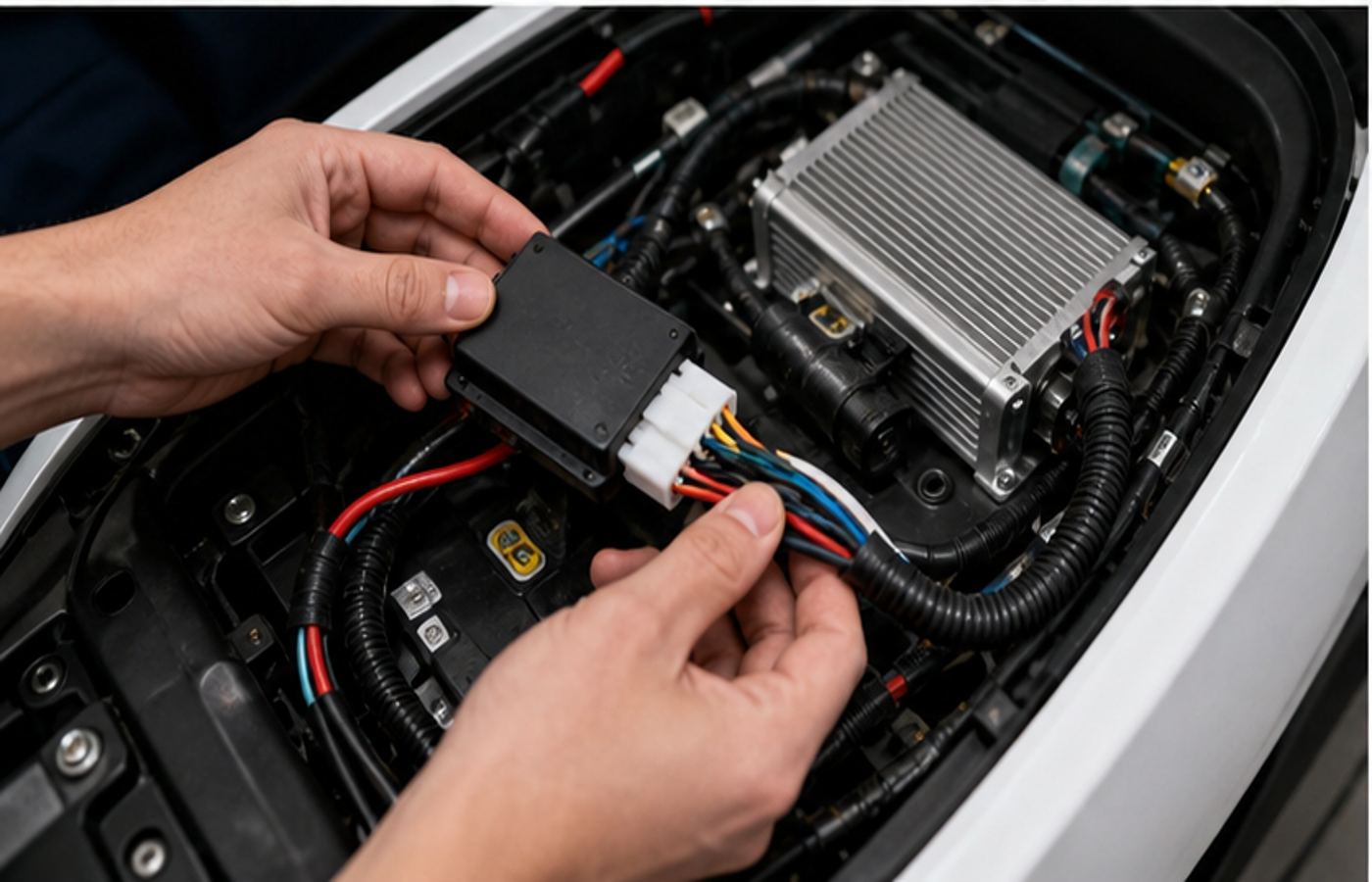
A plug-in module is attractive because it can be reversible. For a G5 owner, reversibility matters: if the scooter throws faults, loses range or needs warranty inspection, returning to standard can help diagnosis. But a module still has to be electrically correct. Check connector type, wire colours, voltage, mounting position, waterproofing and whether the module interferes with brake-cut circuits.
Anyone looking for a suitable tuning part should confirm the exact scooter version, take clear photos of the controller area and compare the intended use before ordering. The motorcycle chip tuning category can help you understand how plug-in performance modules are normally presented, but electric scooters require connector confirmation before purchase.
Replacement controllers
Controller replacement is the route that creates the most questions. It can alter acceleration, speed ceiling, throttle response and regenerative behaviour if supported. It can also break display communication, disable warning functions, overheat the motor or exceed the battery’s safe current output. For a daily commuter, a controller swap should normally be a professional job.
Installation and workshop checks
Yadea G5 derestriction should begin with safe isolation. Electric scooters use high stored energy even when they are small. Turn the scooter off, remove the key, disconnect the battery where practical and wait before touching controller wiring. Use insulated tools, avoid bridging terminals and never work on damaged battery cables. If you do not recognise the controller, main fuse, phase wires or battery management system, stop and use a qualified technician.
Pre-installation inspection
Before any Yadea G5 derestriction work, check tyre pressure, brake drag, wheel bearings, steering, suspension, battery voltage, connector corrosion and error codes. Ride the scooter in standard form and record the maximum indicated speed, range on a normal route, acceleration feel, battery percentage drop and controller temperature after a climb. These notes are not paperwork for the sake of it; they are how you know whether the change improved the scooter or simply made it noisier electrically.
During installation
Do not force plugs. Do not pull wires by the insulation. Do not leave a controller or module loose under the seat where it can vibrate, rub through a wire or trap water. If the scooter has a removable battery, make sure the battery locks properly after refitting panels. Good electric scooter tuning work looks boring: tidy harness routing, secure mounting, dry connectors, no dashboard faults and no mystery parts left over.
Post-installation testing
After any change, test slowly first. Check throttle return, brake cut-off, lights, indicators, horn, display speed, charger operation and error messages before riding in traffic. Then test in stages: walking speed, gentle acceleration, steady cruise, hill climb and stop-start riding. Watch battery drop and motor heat carefully because a scooter that feels exciting for three minutes may be stressing the pack every time it climbs a hill.
Common mistakes to avoid
The worst Yadea G5 derestriction mistakes usually come from impatience. Owners buy a controller because a forum post mentions a higher number. They fit it without checking battery chemistry, then wonder why range collapses. They hide warning lights, ignore insurance disclosure or ride an altered moped on the road without understanding the licence category. These are not small details; they are the difference between a useful scooter and a problem.
| Mistake | What can happen | Better approach |
|---|---|---|
| Assuming every G5 uses the same controller | Wrong connector, no start, display fault or damaged wiring | Identify the exact controller and market version first |
| Ignoring battery age and voltage sag | Poor range, cut-outs, overheating or early battery failure | Load-test the battery before increasing demand |
| Riding a modified moped on public roads without checks | Insurance, licence and roadworthiness issues | Confirm local rules before road use |
| Fitting parts because the plug looks similar | Incorrect pinout or incompatible communication | Compare wiring diagrams, labels and supplier data |
| Forgetting brakes and tyres | Higher speed without matching stopping or stability | Service the chassis before chasing speed |
| Expecting car-like tuning gains | Disappointment and unnecessary spending | Set realistic goals around response, usability and condition |
Workshop advice from real use
The practical test for any G5 derestriction is not a single downhill speedometer photo. A mechanic wants to know how the scooter behaves when the battery is at 100 percent, 60 percent and 30 percent; whether the controller gets hot after repeated starts; whether the brakes remain confident; whether the tyres feel stable; and whether the scooter still charges normally after the modification.
A good workshop also separates theoretical compatibility from real compatibility. A part may fit the plug but not the software. A battery may have the nominal voltage but not the current capacity. A scooter may reach a higher speed briefly but lose so much range that it becomes worse for commuting. The best decision is sometimes to leave the speed limit alone and focus on battery condition, rolling resistance and rider ergonomics.
For electric scooter owners comparing other models, the Vespa Elettrica tuning guide is useful for understanding the same range-versus-speed trade-off, while the BMW CE 02 derestriction guide explains why approval category and controller limits matter on newer electric machines.
Buying decision: should you modify it?
Changing a Yadea G5 is worth considering only if you have a clear use case. If the scooter is used on public roads as a moped, keeping it standard may be the smartest decision. If it is a private-land project or a workshop-controlled experiment, a reversible, well-documented change is better than cutting into the loom. If it is an older scooter with a tired battery, replacing or testing the battery may deliver more real improvement than changing the controller.
Before buying anything, ask five questions. Is the scooter definitely a G5 and not a visually similar version? Is the battery healthy? Is the part compatible with the controller and display? Is the intended use legal where the scooter will be ridden? Can the scooter be returned to standard if it develops faults? If the answer to any of these is unclear, pause.
FAQ about Yadea G5 derestriction
Can a Yadea G5 be derestricted?
Yadea G5 derestriction may be technically possible on some versions, but it depends on controller type, battery system, display communication and market specification. It should not be assumed from the model name alone. Check labels, connectors and legality before buying parts.
Will derestricting a Yadea G5 make it much faster?
It may increase the speed ceiling on some scooters, but the real result depends on battery voltage, motor power, controller current, rider weight, road gradient, tyres and temperature. Yadea G5 derestriction should be judged by safe, repeatable road behaviour rather than one optimistic speed reading.
Is Yadea G5 derestriction legal in the UK?
Yadea G5 derestriction can affect UK road legality if it changes the scooter beyond the moped category it was registered and insured under. Riders should check licence entitlement, insurance, registration details and roadworthiness before using a modified scooter on public roads.
Does derestriction reduce range?
Often, yes. Higher speed and stronger acceleration demand more current from the battery. Even if the scooter feels better, Yadea G5 derestriction can reduce range, increase voltage sag and make an older battery show weakness sooner.
Can I fit a universal electric scooter controller?
A universal controller can work only when voltage, current, hall sensors, throttle, display, brake cut-off and motor phase wiring are matched correctly. For most owners, Yadea G5 derestriction with a universal controller is a workshop job, not a plug-and-play home modification.
Will derestriction void the warranty?
It may. Any change to controller programming, battery load or wiring can give a manufacturer or dealer reason to question warranty coverage. Yadea G5 derestriction should be documented carefully, and riders should understand the risk before modifying a newer scooter.
What should I check before ordering a derestriction part?
Check the VIN, model year, controller label, battery voltage, battery chemistry, connector photos, display type and intended road use. A careful Yadea G5 derestriction purchase starts with evidence, not a generic listing.
Why does my scooter slow down when the battery drops?
Electric scooters often reduce performance as voltage falls or when the battery management system limits current to protect the pack. Yadea G5 derestriction cannot make a weak or low-charge battery behave like a fresh high-capacity pack.
Final verdict
Yadea G5 derestriction should be approached like a technical decision, not a shortcut. Identify the scooter, test the battery, inspect the controller, confirm legal use, then decide whether a reversible module, controller work or no modification at all makes sense. The right result is not simply a higher number on the display; it is a scooter that remains safe, predictable and useful.
If your G5 is a daily commuter, prioritise reliability, braking, tyres, battery health and insurance clarity. If it is a private-use project, work slowly, document every connector and test heat and range after each change. For riders still comparing electric scooter setups, start with the electric and chip-tuning resources on X Moto Parts, then choose parts only after the exact scooter version and intended use are clear.
{
“@context”: “https://schema.org”,
“@type”: “Article”,
“headline”: “Yadea G5 derestriction”,
“description”: “Yadea G5 derestriction guide to controller compatibility, battery checks, UK legality, installation risks, common mistakes and realistic electric scooter tuning choices.”,
“author”: {
“@type”: “Organization”,
“name”: “X Moto Parts”
},
“publisher”: {
“@type”: “Organization”,
“name”: “X Moto Parts”,
“logo”: {
“@type”: “ImageObject”,
“url”: “https://xmotoparts.com/wp-content/uploads/2026/07/x-moto-parts-logo.png”
}
},
“mainEntityOfPage”: “https://xmotoparts.com/yadea-g5-derestriction/”,
“image”: [
“https://xmotoparts.com/wp-content/uploads/2026/07/yadea-g5-derestriction.jpg”,
“https://xmotoparts.com/wp-content/uploads/2026/07/yadea-g5-derestriction-controller-check.jpg”,
“https://xmotoparts.com/wp-content/uploads/2026/07/yadea-g5-derestriction-module-installation.jpg”,
“https://xmotoparts.com/wp-content/uploads/2026/07/yadea-g5-derestriction-system-check.jpg”
]
}
{
“@context”: “https://schema.org”,
“@type”: “FAQPage”,
“mainEntity”: [
{
“@type”: “Question”,
“name”: “Can a Yadea G5 be derestricted?”,
“acceptedAnswer”: {
“@type”: “Answer”,
“text”: “Yadea G5 derestriction may be technically possible on some versions, but it depends on controller type, battery system, display communication and market specification.”
}
},
{
“@type”: “Question”,
“name”: “Will derestricting a Yadea G5 make it much faster?”,
“acceptedAnswer”: {
“@type”: “Answer”,
“text”: “The result depends on battery voltage, motor power, controller current, rider weight, road gradient, tyres and temperature.”
}
},
{
“@type”: “Question”,
“name”: “Is Yadea G5 derestriction legal in the UK?”,
“acceptedAnswer”: {
“@type”: “Answer”,
“text”: “Yadea G5 derestriction can affect UK road legality if it changes the scooter beyond the moped category it was registered and insured under.”
}
},
{
“@type”: “Question”,
“name”: “Does derestriction reduce range?”,
“acceptedAnswer”: {
“@type”: “Answer”,
“text”: “Higher speed and stronger acceleration demand more current from the battery, so range can be reduced.”
}
},
{
“@type”: “Question”,
“name”: “Can I fit a universal electric scooter controller?”,
“acceptedAnswer”: {
“@type”: “Answer”,
“text”: “A universal controller can work only when voltage, current, hall sensors, throttle, display, brake cut-off and motor phase wiring are matched correctly.”
}
},
{
“@type”: “Question”,
“name”: “Will derestriction void the warranty?”,
“acceptedAnswer”: {
“@type”: “Answer”,
“text”: “Changes to controller programming, battery load or wiring may affect warranty coverage.”
}
},
{
“@type”: “Question”,
“name”: “What should I check before ordering a derestriction part?”,
“acceptedAnswer”: {
“@type”: “Answer”,
“text”: “Check the VIN, model year, controller label, battery voltage, battery chemistry, connector photos, display type and intended road use.”
}
},
{
“@type”: “Question”,
“name”: “Why does my scooter slow down when the battery drops?”,
“acceptedAnswer”: {
“@type”: “Answer”,
“text”: “Electric scooters often reduce performance as voltage falls or when the battery management system limits current to protect the pack.”
}
}
]
}