
KSR GRS 125 derestriction
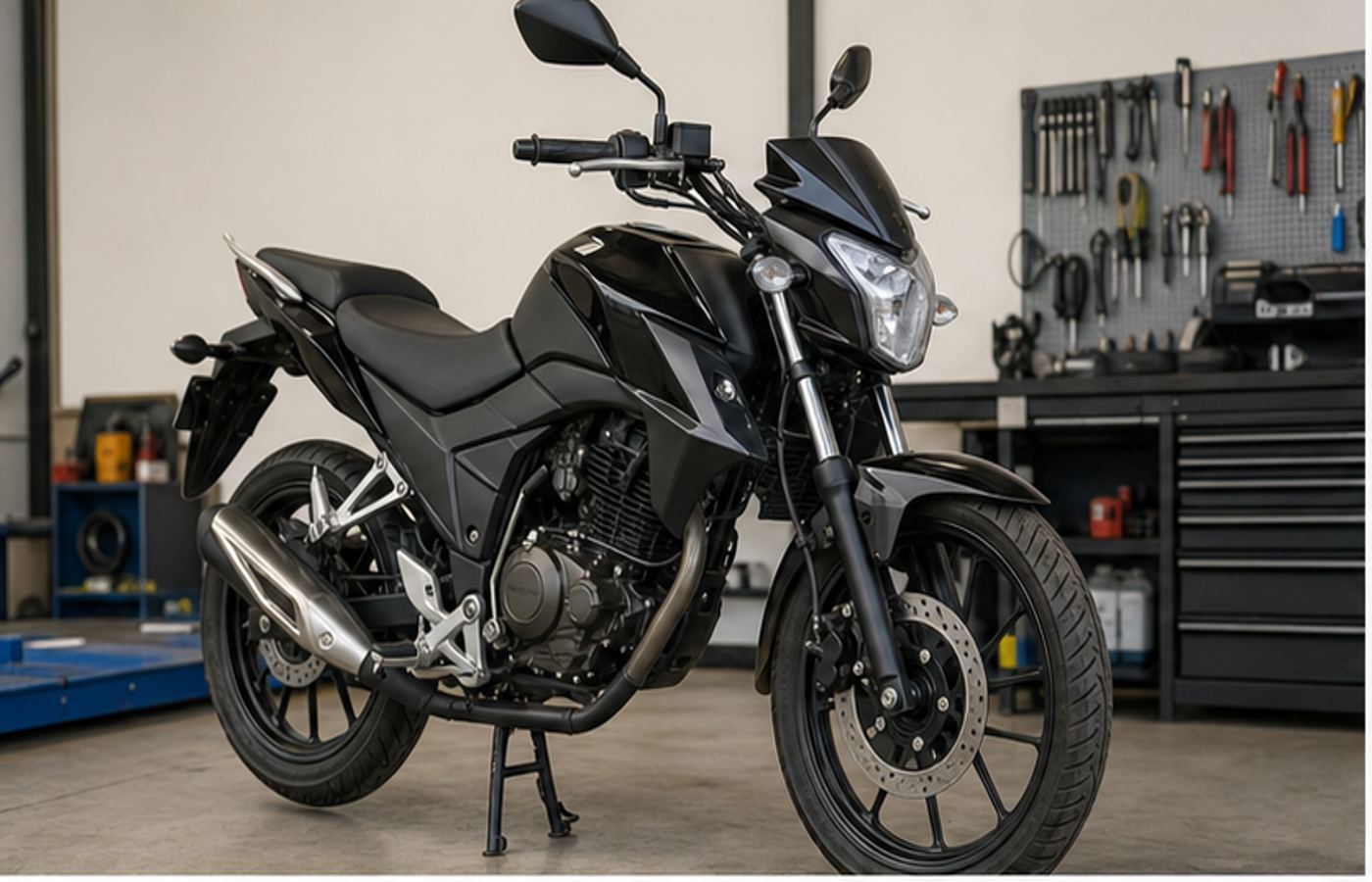
KSR GRS 125 derestriction should begin with a realistic question, not a rumour: is the motorcycle actually restricted, or is it simply a small A1-class 125 that needs a proper service, correct gearing, clean fuelling and sensible setup? The GRS 125 is a lightweight four-stroke roadster with a manual gearbox, chain final drive and simple commuter-bike logic. It can be made cleaner and more enjoyable, but it will not become a 250 by removing one imaginary limiter.
Most owners searching this topic want one of three things. They want better pull away from junctions, a little more confidence on hills, or a way to understand whether exhaust, sprocket and chip-style upgrades are worth the money. The honest workshop answer is that the best results come from checking the motorcycle as a complete system: engine health, clutch, chain, gearing, tyres, brakes, exhaust fitment, airbox condition and legal road use.
This guide is written for riders who own a KSR, Generic or similar GRS 125, and who want clear advice before buying parts. It covers the difference between derestriction and tuning, the compatibility checks that matter, common mistakes, UK road legality, A1 licence limits, installation details and the practical checks a mechanic would make before recommending a part.
What derestriction really means on a GRS 125
KSR GRS 125 derestriction is often used as a shortcut phrase for “make the bike faster”. On older two-strokes, derestriction sometimes meant removing a clear physical limiter. On a modern four-stroke 125, the situation is usually different. The motorcycle may already be built close to the legal A1 power envelope, with modest output, a five-speed gearbox and gearing chosen for everyday road use rather than dramatic acceleration.
The GRS 125 has been listed in European data sources as an A1 learner-legal style motorcycle with an air-cooled single-cylinder four-stroke engine, chain final drive, manual gearbox and power in the region expected for a commuter 125. Technical listings such as 1000PS model data for the KSR Moto GRS 125 show the general engine and chassis layout, although exact details can vary by market and model year. Treat any specification as a starting point, then verify your own bike.
In practical terms, derestricting a GRS 125 may involve confirming that the bike is not held back by a throttle stop, intake restriction, exhaust restriction, poor gearing or conservative electronic setup. But many bikes that feel slow are not restricted at all. They are under-serviced, overgeared, fitted with tired chains or running with dragging brakes and old tyres.
Derestriction versus tuning
Derestriction means removing a limit that prevents the engine from delivering what it was designed to deliver. Tuning means changing the motorcycle to alter response, acceleration, sound or ride feel. For KSR GRS 125 derestriction, the distinction matters because a rider may spend money looking for a hidden limiter when the real improvement is a clean air filter, correct valve clearance, fresh spark plug, healthy clutch and suitable sprocket ratio.
A useful mechanic’s approach is simple: prove the fault before buying the cure. Does the engine rev cleanly in neutral? Does it pull through the gears without misfire? Does the clutch slip? Is the chain tight in one spot? Is the rear brake dragging? Is the airbox intact? A restricted bike and a poorly maintained bike can feel similar from the saddle, but the repair path is completely different.
Baseline checks before spending money
KSR GRS 125 derestriction should never start with the loudest exhaust or the cheapest online controller. Start with a full baseline inspection. A 125 has very little spare torque, so small faults feel big. Low tyre pressure, a dry chain, a dirty air filter, weak fuel delivery, tight valves or an old spark plug can make the bike feel flat even when nothing is electronically limited.
| Check | What to inspect | Why it affects performance |
|---|---|---|
| Engine service | Oil, plug, valve clearance, air filter and fuel quality | A small four-stroke loses response quickly when basic service is overdue |
| Final drive | Chain slack, sprocket wear, alignment and lubrication | Friction and poor ratio choice can make the bike feel restricted |
| Clutch | Free play, slip, cable routing and engagement point | Slipping or dragging clutch behaviour steals acceleration |
| Brakes | Pad drag, disc condition, caliper movement and fluid age | Dragging brakes waste power and can create heat |
| Tyres | Pressure, age, size, profile and load rating | Wrong pressure or heavy tyres slow a low-power motorcycle noticeably |
Before any derestriction decision, ride the motorcycle on a repeatable route. Note cold start, hot idle, clutch take-up, hill response, top-gear pull, indicated speed at comfortable rpm and fuel economy. After each change, repeat the same route. This is the only honest way to know whether the bike improved or whether it only became louder.
If chain condition is suspect, read the motorcycle chain tension adjustment guide before changing sprockets. Chain slack and alignment are not glamorous, but they can transform how a small bike feels in town.
Compatibility table for parts and setup
KSR GRS 125 derestriction can involve several categories of parts, but none should be treated as universal. A silencer may fit the pipe diameter but not the hanger angle. A tuning module may match a sensor style but not the exact model-year connector. A sprocket may fit the shaft pattern but create chain-length or speedometer issues. Compatibility is physical, electrical and legal.
| Part or setup | Compatibility | Important note |
|---|---|---|
| Front sprocket | Depends on shaft spline and chain size | One tooth can noticeably change acceleration and cruising rpm |
| Rear sprocket | Depends on bolt pattern, offset and chain length | Check wheel alignment and clearance after fitting |
| Slip-on exhaust | Depends on pipe diameter, hanger and clamp position | A road-legal silencer is safer for daily UK use |
| Full exhaust system | Model-specific fitment required | May affect fuelling, noise, emissions equipment and insurance disclosure |
| Fuel or chip module | Only if connector and sensor layout match | Start with conservative settings and monitor running quality |
| Open air filter | Usually not ideal for road reliability | Can increase noise and disturb low-speed fuelling |
Anyone planning this work should photograph the existing exhaust joint, front sprocket cover, rear sprocket, chain markings, airbox and sensor connectors before ordering parts. If a seller cannot confirm exact fitment from those details, pause rather than guessing. For broader small-bike setup comparisons, the Benelli BN 125 tuning guide and KSR TW 125 tuning guide show similar 125cc decision-making on related commuter-style machines.
Sprockets, chain and real-world acceleration
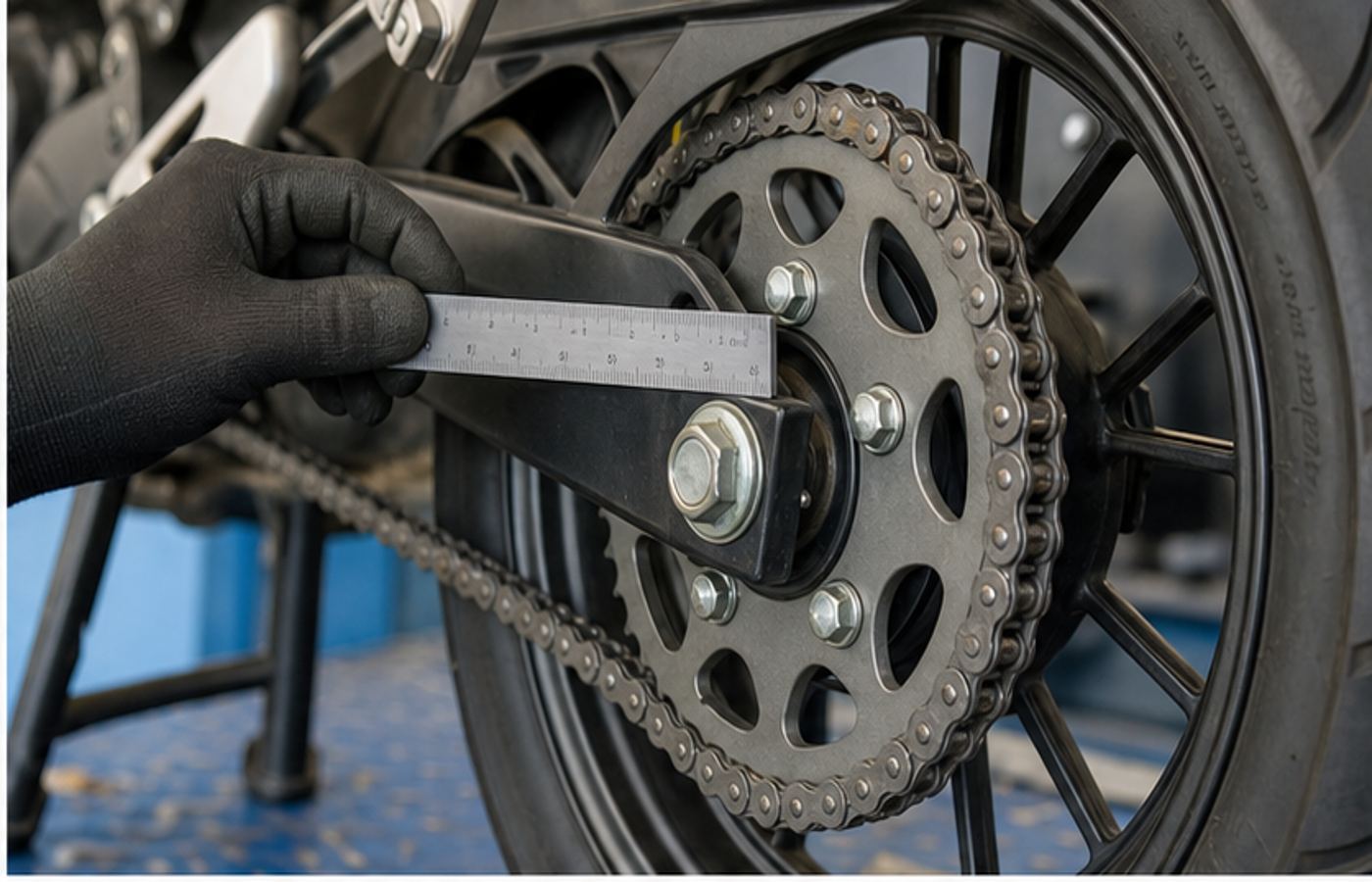
For many owners, KSR GRS 125 derestriction is really a gearing question. If the motorcycle struggles to pull top gear, fitting a taller ratio in the hope of more top speed can make it worse. A 125 needs rpm to make power. Overgearing can drop the engine below its useful range and make the bike feel lazy on hills or into a headwind.
Shorter gearing can help the GRS 125 leave junctions more cleanly and hold speed better in urban riding. The trade-off is higher rpm at cruising speed, more vibration and possibly a lower comfortable top speed. Taller gearing can reduce rpm at a given speed, but only if the engine has enough torque to pull it. Most riders are happier with a small, reversible gearing change than with an extreme ratio.
| Gearing choice | Main advantage | Possible disadvantage | Best for |
|---|---|---|---|
| Standard sprockets | Balanced factory feel | May feel flat with heavier riders or hills | Mixed commuting |
| Slightly shorter gearing | Better launch and hill response | Higher cruising rpm | Town riding and stop-start routes |
| Slightly taller gearing | Lower rpm at steady speed if the engine can pull it | Weaker acceleration and more downshifts | Flat routes with light rider load |
| Worn chain and sprockets | No advantage | Noise, friction, poor feel and safety risk | Replace before tuning |
A clean GRS 125 setup plan should include chain maintenance before sprocket experiments. Replace hooked sprockets, set slack at the tightest point, align the wheel carefully and test clutch feel. If the bike suddenly pulls better after a chain kit, the problem was never a hidden limiter.
Exhaust, intake and fuelling choices
KSR GRS 125 derestriction often leads owners toward exhaust parts because they are visible and satisfying. A lighter, better-made silencer can improve sound and sometimes make the throttle feel sharper. But a loud exhaust is not the same as a faster motorcycle. On a small four-stroke, a badly matched pipe can reduce low-rpm pull and create popping, leaks or fuelling problems.
Pipe diameter, bracket position, silencer length, DB-killer design and catalytic converter presence matter. If the exhaust is too open, the engine may feel weaker below the midrange. If the joint leaks, oxygen can enter the pipe and cause popping on overrun. If the hanger is under tension, vibration can crack a bracket. The correct installation should look boring: aligned, sealed, supported and not touching the frame, swingarm or plastics.
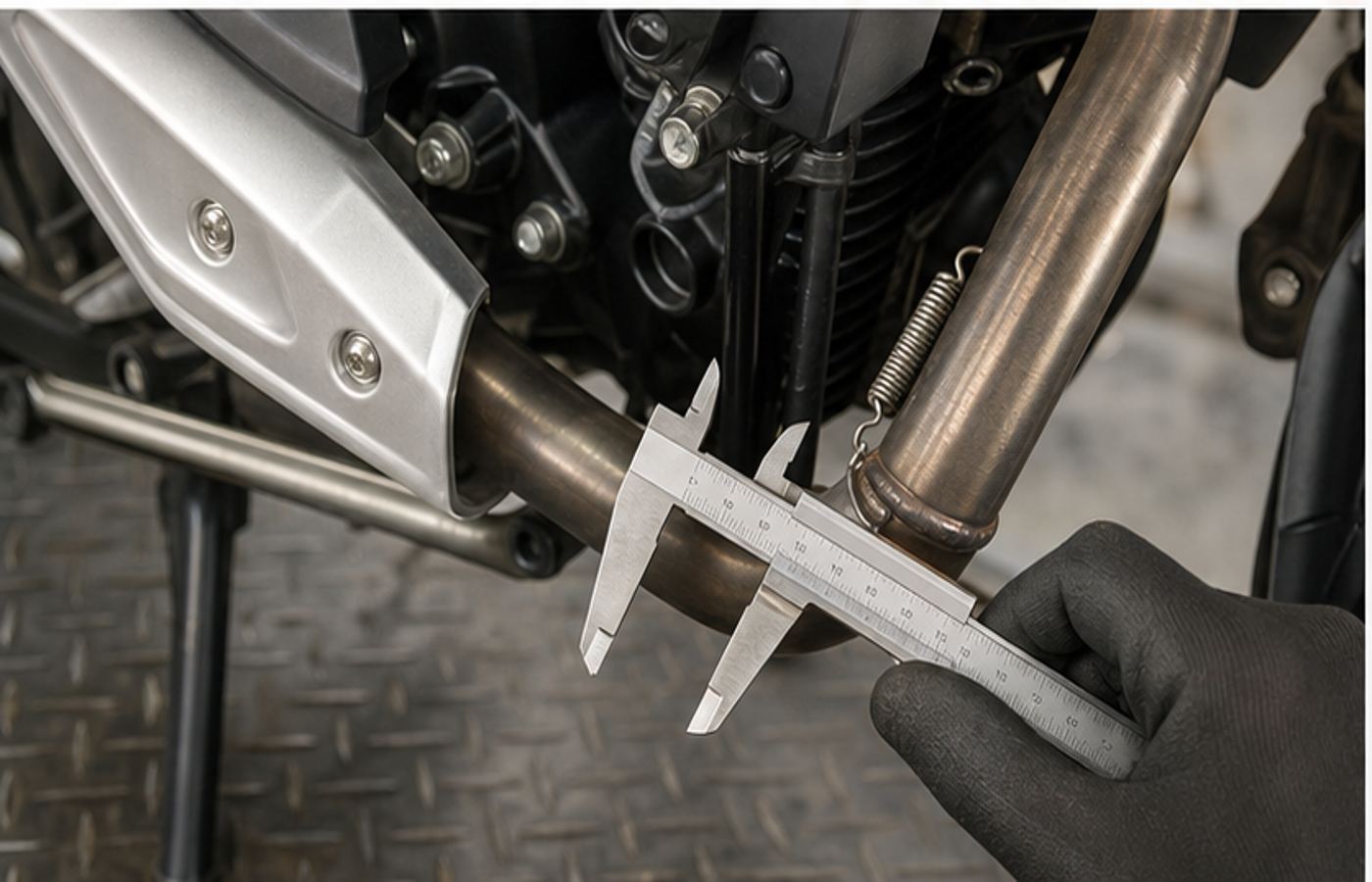
For riders comparing exhaust upgrades, the motorcycle exhausts category is useful, but measurements are essential before ordering. Anyone doing KSR GRS 125 derestriction should also check whether the bike uses carburettor or fuel injection in their market version. A carburettor bike may need jetting work after intake or exhaust changes, while an injected bike may need sensor-compatible fuelling support.
Airbox and filter choices
The standard airbox is usually the best starting point. Removing it for an open filter can make intake noise louder and filtration worse, especially in wet British weather. A clean, correctly oiled or correctly specified filter is more valuable than a noisy filter that upsets low-speed running. On this motorcycle, airbox integrity is part of reliability.
Chip module or fuelling support
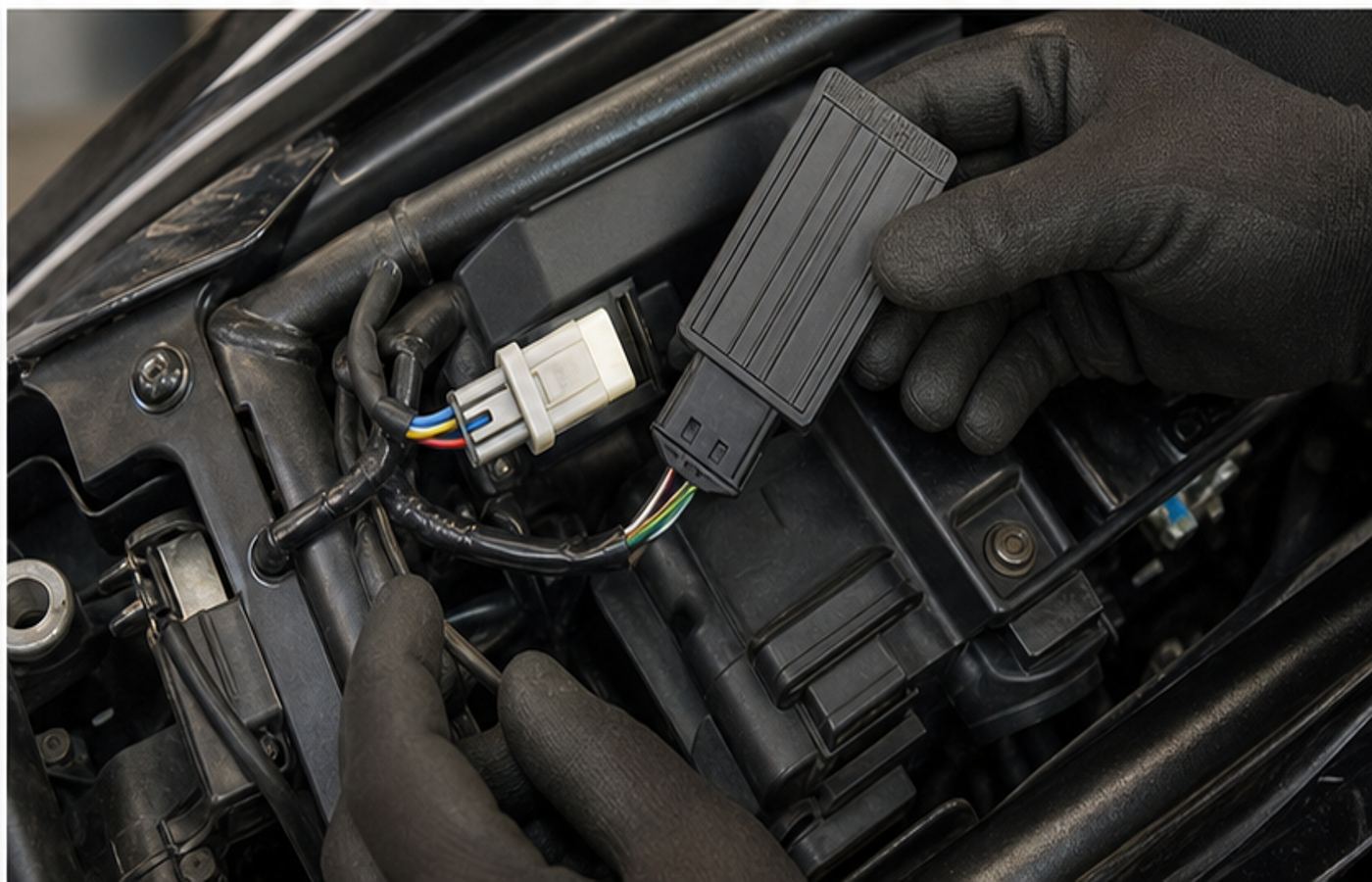
If the motorcycle is fuel injected and the sensor layout matches, a conservative tuning module can help refine response after exhaust or intake changes. It should not be sold as a miracle. The goal is smoother fuelling and better throttle feel, not impossible horsepower. During KSR GRS 125 derestriction, start with the lowest setting, warm the bike fully and test hot starts, idle, low-speed roll-on and hill pull before increasing anything.
UK road legality and A1 licence limits
KSR GRS 125 derestriction must be kept inside the law if the motorcycle is used on public roads. In the UK, A1 light motorcycles are limited by engine capacity, power output and power-to-weight ratio. GOV.UK lists A1 rules for light motorcycles up to 125cc and up to 11 kW on its motorcycle licence category guide. Learner riders also need to think about CBT, L plates, insurance and roadworthiness.
Exhaust legality is separate from licence entitlement. A motorcycle exhaust used on the road must not be insecure, excessively noisy or unsuitable for road use. The DVSA motorcycle MOT manual explains that an exhaust can fail if the noise is clearly unreasonably above the level expected from a similar standard motorcycle, and it also covers insecure or detached exhaust parts in its motorcycle exhaust noise inspection guidance.
That means any derestriction work should distinguish road use from private land or track use. A road rider should check E-mark or approval markings where relevant, keep the DB-killer fitted if the exhaust is approved with it, avoid removing emissions equipment and inform the insurer about modifications. In the United States, Canada, Australia, New Zealand and Ireland, rules vary by jurisdiction, so the same part can have different legal status in different markets.
Common mistakes with 125cc derestriction
The common mistakes in KSR GRS 125 derestriction are predictable because they happen on almost every budget 125. The rider starts with a loud exhaust, ignores the chain, never checks the valve clearance and expects a speed figure that the engine cannot realistically sustain. Then the bike feels rough, loses midrange and becomes harder to live with.
| Mistake | What happens | Better decision |
|---|---|---|
| Buying an exhaust without measuring the pipe | Poor fit, leaks, bracket stress or extra fabrication | Measure diameter, hanger position and clearance first |
| Assuming all GRS 125 versions are identical | Wrong part, wrong connector or incorrect setup advice | Confirm year, market, carburettor or injection and existing parts |
| Fitting taller gearing for top speed | The bike cannot pull the ratio and feels slower | Choose gearing for the route, rider weight and engine health |
| Removing the airbox | Noisy intake, poor wet-weather reliability and fuelling issues | Use a clean, correct filter and keep the intake sealed |
| Ignoring UK road legality | MOT, insurance or licence problems | Check road use, approval, noise and insurer disclosure |
| Expecting a huge horsepower gain | Disappointment and unnecessary spending | Aim for cleaner response, better gearing and reliable setup |
Workshop advice: what I would check first
A practical GRS 125 inspection starts with the boring items. I would check valve noise and service history, then tyre pressure, brake drag, chain tension, sprocket teeth, clutch free play, throttle action, airbox condition and spark plug colour. If the bike is carburetted, I would inspect the pilot circuit, main jet, float height and intake rubber. If it is injected, I would check connectors, battery voltage and sensor condition.
The second step is deciding what problem the rider actually wants to solve. If the bike is weak on hills, gearing may help more than an exhaust. If it sounds strangled but pulls well, a legal silencer may improve enjoyment without touching fuelling. If it hesitates after exhaust work, then fuelling diagnosis is needed. If the rider wants a number beyond what a learner-legal 125 can sensibly deliver, the honest advice is to save money for a bigger licence and motorcycle.
Buying path: choose the right solution
KSR GRS 125 derestriction works best as a staged plan. Stage one is service and chassis condition. Stage two is gearing if the complaint is acceleration. Stage three is exhaust if fitment, sound and road legality are clear. Stage four is fuelling support only if the bike needs it. Skipping straight to electronics or an open exhaust usually costs more and teaches less.
For a mild road setup, keep the airbox, use road-legal exhaust parts, make a small sprocket change only if needed and keep documentation for the insurer. For private land, more aggressive experimentation is possible, but engine temperature, fuelling and braking still matter. Choose parts that solve a real problem rather than building a shopping basket from forum claims.
FAQ about KSR GRS 125 derestriction
Can a KSR GRS 125 be derestricted?
KSR GRS 125 derestriction may be possible only if your exact bike has a genuine physical or electronic restriction. Many GRS 125 bikes are simply modest four-stroke 125s, so service, gearing and correct setup often matter more than hunting for a hidden limiter.
Is KSR GRS 125 derestriction legal in the UK?
It depends what is changed and how the motorcycle is used. KSR GRS 125 derestriction for public-road use must remain compatible with A1 licence limits, insurance, MOT expectations and roadworthiness rules. Private land is different, but safety still matters.
Will an exhaust make a KSR GRS 125 faster?
A good exhaust can improve sound and sometimes response, but it rarely transforms a 125 by itself. For KSR GRS 125 derestriction, exhaust fitment, pipe diameter, DB-killer, bracket alignment and fuelling are more important than noise.
Should I change the sprockets first?
Only after checking chain condition and deciding what you want. Shorter gearing can improve acceleration and hill response, while taller gearing can make the bike feel weaker. KSR GRS 125 derestriction should use small, reversible gearing changes.
Do I need a tuning module?
You do not need a module on a standard healthy motorcycle. A module may help only if the bike is fuel injected, the connector layout matches and exhaust or intake changes create a real fuelling need. KSR GRS 125 derestriction should never rely on a generic box with unknown compatibility.
What is the first modification I should make?
The first “modification” should be maintenance: oil, plug, air filter, valve clearance, chain kit, tyres and brake condition. Once the motorcycle is healthy, derestriction decisions become much clearer.
Can I use universal exhaust parts?
Sometimes, but universal does not mean plug-and-play. You must check pipe diameter, hanger position, clearance, sealing and road approval. A badly fitted universal exhaust can make the bike worse.
Why does my GRS 125 feel slow even when it revs?
A 125 can feel slow because of gearing, clutch slip, chain drag, tyre pressure, brake drag, valve clearance or rider load. Start by finding those losses before adding performance parts.
Final verdict
KSR GRS 125 derestriction is worthwhile only when it is based on evidence. Confirm the exact model, restore the bike to full health, check chain and sprockets, measure the exhaust, understand UK road rules and choose parts that match the motorcycle rather than the fantasy. The best setup is usually not the loudest one; it is the one that pulls cleanly, starts easily, cruises without strain and stays legal for the way you ride.
If you are preparing a GRS 125 for daily use, focus on service, gearing, tyres and a legal exhaust before considering electronics. If you are building a private-use project, document every change and test one step at a time. For useful next steps, compare related 125cc guides on X Moto Parts, then choose components only after compatibility, measurements and intended road use are clear.
{
“@context”: “https://schema.org”,
“@type”: “Article”,
“headline”: “KSR GRS 125 derestriction”,
“description”: “KSR GRS 125 derestriction guide to realistic 125cc performance, gearing, exhaust fitment, UK legality, compatibility checks, common mistakes and workshop setup.”,
“author”: {
“@type”: “Organization”,
“name”: “X Moto Parts”
},
“publisher”: {
“@type”: “Organization”,
“name”: “X Moto Parts”,
“logo”: {
“@type”: “ImageObject”,
“url”: “https://xmotoparts.com/wp-content/uploads/2026/07/x-moto-parts-logo.png”
}
},
“mainEntityOfPage”: “https://xmotoparts.com/ksr-grs-125-derestriction/”,
“image”: [
“https://xmotoparts.com/wp-content/uploads/2026/07/ksr-grs-125-derestriction.jpg”,
“https://xmotoparts.com/wp-content/uploads/2026/07/ksr-grs-125-derestriction-chain-gearing-check.jpg”,
“https://xmotoparts.com/wp-content/uploads/2026/07/ksr-grs-125-derestriction-exhaust-measurement.jpg”,
“https://xmotoparts.com/wp-content/uploads/2026/07/ksr-grs-125-derestriction-module-installation.jpg”
]
}
{
“@context”: “https://schema.org”,
“@type”: “FAQPage”,
“mainEntity”: [
{
“@type”: “Question”,
“name”: “Can a KSR GRS 125 be derestricted?”,
“acceptedAnswer”: {
“@type”: “Answer”,
“text”: “KSR GRS 125 derestriction may be possible only if the exact bike has a genuine physical or electronic restriction. Many examples need service, gearing and correct setup more than a hidden limiter removal.”
}
},
{
“@type”: “Question”,
“name”: “Is KSR GRS 125 derestriction legal in the UK?”,
“acceptedAnswer”: {
“@type”: “Answer”,
“text”: “For public-road use, changes must remain compatible with A1 licence limits, insurance, MOT expectations and roadworthiness rules.”
}
},
{
“@type”: “Question”,
“name”: “Will an exhaust make a KSR GRS 125 faster?”,
“acceptedAnswer”: {
“@type”: “Answer”,
“text”: “A good exhaust can improve sound and sometimes response, but it rarely transforms a 125 by itself.”
}
},
{
“@type”: “Question”,
“name”: “Should I change the sprockets first?”,
“acceptedAnswer”: {
“@type”: “Answer”,
“text”: “Only after checking chain condition and deciding whether the rider wants stronger acceleration, easier hill response or calmer cruising.”
}
},
{
“@type”: “Question”,
“name”: “Do I need a tuning module?”,
“acceptedAnswer”: {
“@type”: “Answer”,
“text”: “A tuning module is not needed on a standard healthy motorcycle. It may help only on compatible fuel-injected bikes when exhaust or intake changes create a real fuelling need.”
}
},
{
“@type”: “Question”,
“name”: “What is the first modification I should make?”,
“acceptedAnswer”: {
“@type”: “Answer”,
“text”: “Start with maintenance: oil, plug, air filter, valve clearance, chain kit, tyres and brake condition.”
}
},
{
“@type”: “Question”,
“name”: “Can I use universal exhaust parts?”,
“acceptedAnswer”: {
“@type”: “Answer”,
“text”: “Universal exhaust parts can work only when pipe diameter, hanger position, clearance, sealing and road approval are correct.”
}
},
{
“@type”: “Question”,
“name”: “Why does my GRS 125 feel slow even when it revs?”,
“acceptedAnswer”: {
“@type”: “Answer”,
“text”: “Common causes include gearing, clutch slip, chain drag, tyre pressure, brake drag, valve clearance or rider load.”
}
}
]
}