
TGB Blade 1000 derestriction
TGB Blade 1000 derestriction is not just a question of making a big quad faster. The Blade 1000 is already a serious 997 cc V-twin ATV with fuel injection, automatic CVT transmission, selectable 2WD/4WD, locking differentials on some versions and enough torque to get a careless rider into trouble quickly. Before changing anything, the right question is whether the machine is restricted, whether it is mechanically healthy and whether the intended use is road, farm, trail, private land or competition.
Owners usually start looking at this topic because the quad feels held back at the top end, does not pull as hard as expected, or appears to have different behaviour from another Blade 1000 in a video. Sometimes there is a real limiter. Sometimes there is a market-specific homologation setup. Sometimes the issue is a worn CVT belt, dirty clutches, incorrect tyre pressure, old fuel, a sensor fault or a machine that has spent too much time working hard with poor maintenance.
This guide explains the practical workshop path: identify the exact Blade 1000 version, check the CVT and driveline, understand ECU and throttle control, measure exhaust fitment, avoid common mistakes, and stay realistic about UK road legality and off-road safety. It is written for riders and mechanics who want useful decisions, not noise for the sake of noise.
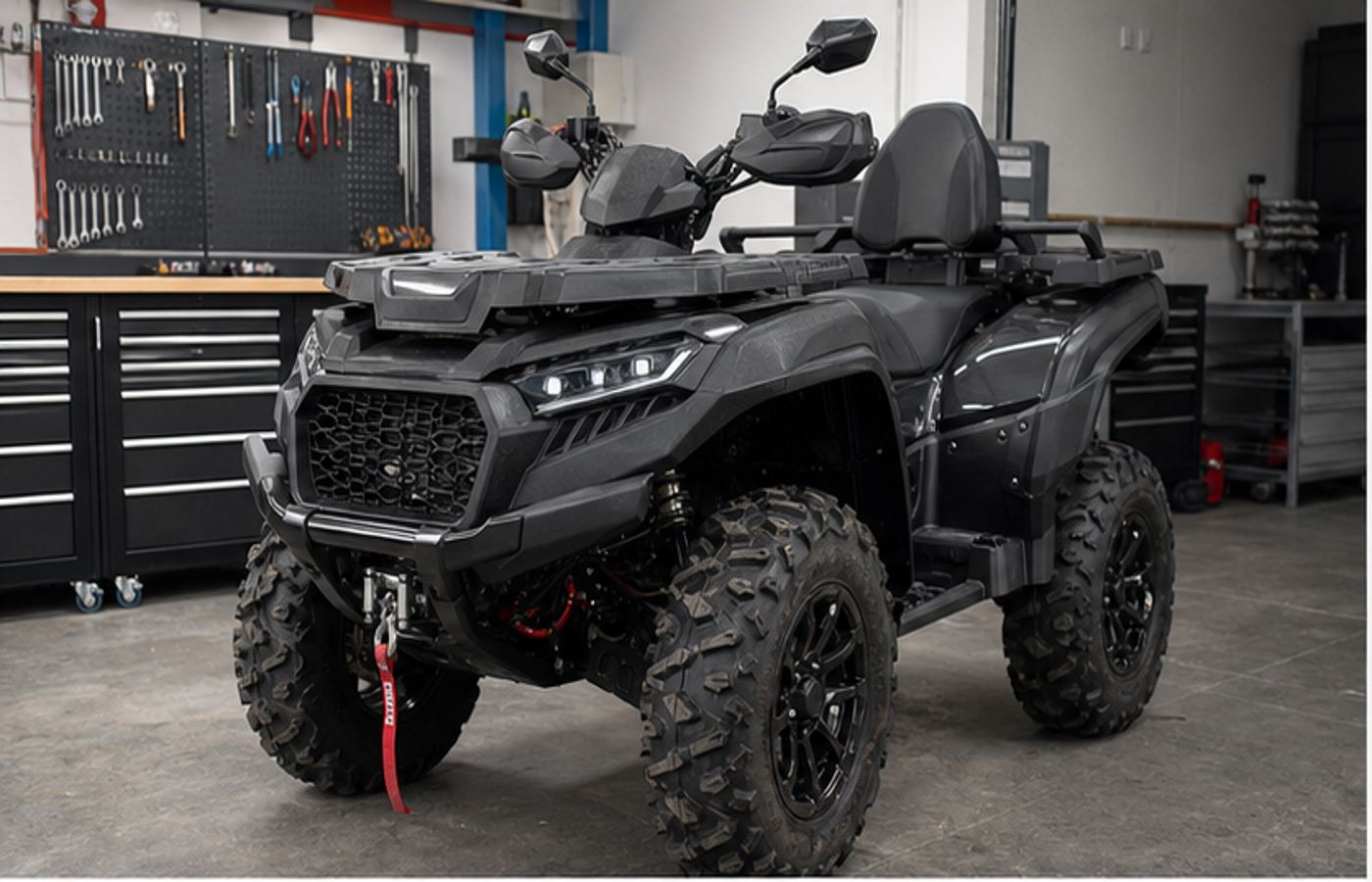
What derestriction really means on the Blade 1000
TGB Blade 1000 derestriction means identifying and altering a limit that prevents the quad from delivering its intended performance. That limit may be electronic, mechanical, homologation-related or sometimes imagined. On a large ATV, the word derestriction gets used loosely, so it is important to separate real limiters from normal CVT behaviour, traction limits and terrain load.
A Blade 1000 that feels lazy at speed may not need an ECU change. It may have a glazed belt, dirty clutch sheaves, heavy oversized tyres, incorrect tyre pressure, dragging brakes, old fuel, a blocked air filter or a throttle body issue. A quad that feels sharp on hard ground may feel completely different in mud, sand or with a load on the rack. That is normal ATV physics, not always a restriction.
Official TGB information for the Blade 1000 LTX EPS ABS lists a 997 cc V-twin, programmed fuel injection, V-belt CVT automatic transmission, shaft drive, selectable drive features and homologation options such as T3 or L7e depending on version and market. You can review the manufacturer’s model specification on the official TGB Blade 1000 LTX EPS ABS page. Use those figures as a reference, then confirm the exact plate and paperwork on your machine.
Why a 1000 cc ATV can still feel restricted
Derestriction work often begins after a rider compares two machines that are not actually the same. One may be road-homologated, another off-road only. One may have different tyres, CVT weights, ECU mapping or emissions equipment. One may be a long-wheelbase two-seat model while another is a different trim. Weight, tyre diameter and terrain change performance more than people expect.
For a mechanic, the first step is to reproduce the complaint. Does the quad stop accelerating at a consistent rpm or road speed? Does it hesitate only when hot? Does it rev but not move strongly? Does it smell rich? Does the belt slip under load? Does the engine braking feel normal? The answers decide whether the issue sits in electronics, transmission, engine condition or chassis drag.
Engine, CVT and version details to check
TGB Blade 1000 derestriction is risky if you do not know the exact version. The Blade family includes different trims, wheel sizes, EPS, ABS, homologation categories and market specifications. The same online part may not fit every Blade 1000. Before ordering, photograph the VIN plate, ECU label, throttle body area, oxygen sensor, CVT cover, exhaust system, tyre sizes and any homologation plate.
| Area | What to confirm | Why it matters |
|---|---|---|
| Model version | LTX, EPS, ABS, road-homologated, agricultural or off-road-only | Legal category and wiring details may differ |
| Engine management | ECU label, sensor layout, throttle body and diagnostic faults | Electronic modules must match the exact system |
| CVT transmission | Belt width, belt wear, clutch condition and cover sealing | Most “lost power” complaints are felt through the CVT |
| Tyres | Diameter, width, ply rating, tread type and pressure | Oversized tyres change gearing and increase load |
| Exhaust | Pipe diameter, oxygen sensor, heat shields and silencer mounting | Poor fitment can create heat, leaks and fuelling issues |
When a rider asks about unlocking a Blade 1000, a careful parts supplier should ask for this information before promising compatibility. A quad used for farm work, towing and mud needs a different setup from a quad used mainly on hard trails or private land. Heavy tyres and a loaded rack can make aggressive tuning feel worse, not better.
Compatibility table for parts and setups
TGB Blade 1000 derestriction can include electronics, CVT setup, exhaust work, intake service, tyre choice and gearing effect through tyre diameter. Each route has a different risk. A reversible module may be easier to remove than a cut wiring loom. CVT tuning may improve how power reaches the ground without touching the ECU. Exhaust work may improve sound but increase heat and noise if chosen badly.
| Vehicle or use case | Compatibility | Important note |
|---|---|---|
| Road-homologated Blade 1000 | Only with parts suitable for that approval category | Changes may affect insurance, MOT, registration or type approval |
| Off-road/private land Blade 1000 | More flexibility, still technically demanding | Safety, heat and driveline durability remain critical |
| Agricultural use | Setup should favour control and reliability | Towing, load and low-speed work punish aggressive tuning |
| ECU or plug-in module | Only if connector and sensor layout match | Wrong wiring can create faults or poor running |
| CVT kit | Depends on belt, clutch and intended tyre/load | Can improve response more usefully than top-speed chasing |
| Exhaust system | Requires correct pipe, brackets, sensor and heat clearance | Noise and heat management matter on a large ATV |
For related ATV and off-road ownership context, compare this guide with CFMoto ZForce 1000 problems, CFMoto problems and Yamaha Grizzly 700 problems. Those machines differ, but the same workshop logic applies: service condition, CVT health, cooling, 4WD function and safe-use checks come before chasing more power.
CVT, belt and clutch checks before tuning
For many owners, TGB Blade 1000 derestriction should begin at the CVT cover. A V-twin can produce strong power, but the rider only feels what the belt and clutches transmit. A worn belt can slip, a glazed belt can feel lazy, a dirty clutch can engage badly, and water or dust inside the cover can make the quad feel inconsistent.
Check belt width against the service specification, inspect for cracking, glazing and missing teeth, then clean the sheaves properly. Look for flat spots, clutch dust, heat marks and rough engagement. If the quad is used in mud or water, inspect the CVT intake and outlet ducting. A restricted vent or poor seal can cause heat, and heat destroys belts.
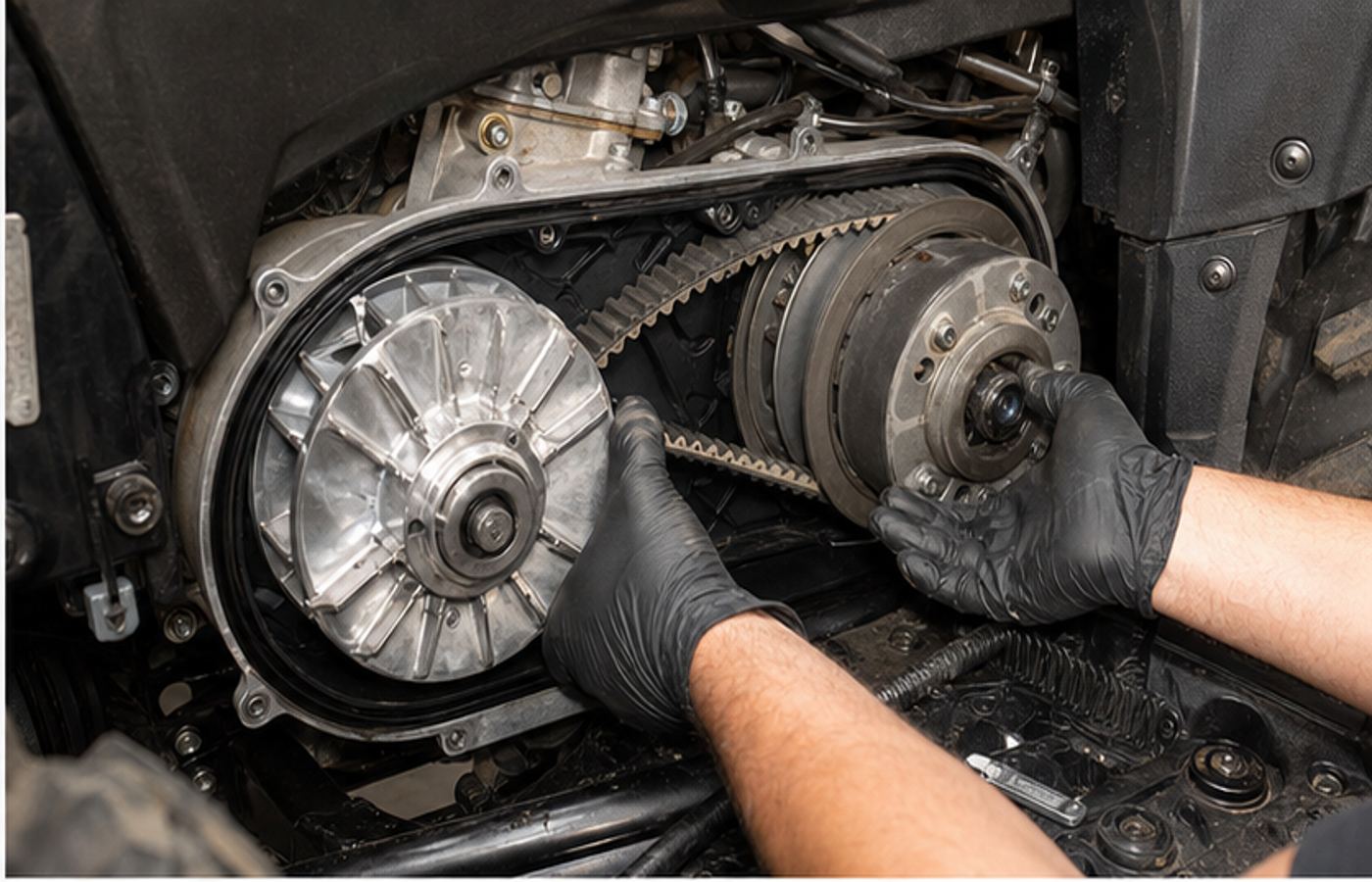
| Symptom | Likely area | Workshop check |
|---|---|---|
| Engine revs but quad does not pull strongly | CVT belt or clutch | Inspect belt width, glazing, sheave cleanliness and clutch engagement |
| Strong low speed but weak top end | Limiter, tyre load, CVT shift-out or terrain drag | Test on consistent ground and check tyre diameter |
| Power fades when hot | CVT heat, engine heat or fuelling | Check vents, radiator, fan operation and diagnostic faults |
| Jerky take-off | Clutch contamination or belt wear | Clean and inspect clutch faces and belt condition |
| Fault light after module installation | Sensor or connector mismatch | Return to standard and read diagnostic codes |
A clean Blade 1000 setup plan treats CVT setup as part of performance. For mud, towing and low-speed work, clutching for stronger low-end control may be more useful than higher top speed. For trail use, smooth shift-out and temperature control matter. Do not install aggressive parts into a dirty, overheated or worn CVT and expect reliability.
ECU, sensors and electronic derestriction
TGB Blade 1000 derestriction may involve the ECU, throttle mapping, speed signal, oxygen sensor behaviour or a plug-in module, depending on version. This is where careful compatibility matters most. A large fuel-injected V-twin does not respond well to random wiring changes. A wrong signal can create poor idle, warning lights, rich running, lean spots, fan behaviour issues or limp mode.
A reversible electronic module is usually safer than cutting wires, but it still needs the correct connector, voltage and sensor logic. Before installing, disconnect the battery where appropriate, inspect the loom for damage, photograph the original routing and mount the module away from heat, mud and water. After installation, the quad should start cleanly, idle steadily, accept small throttle and show no fault lights.
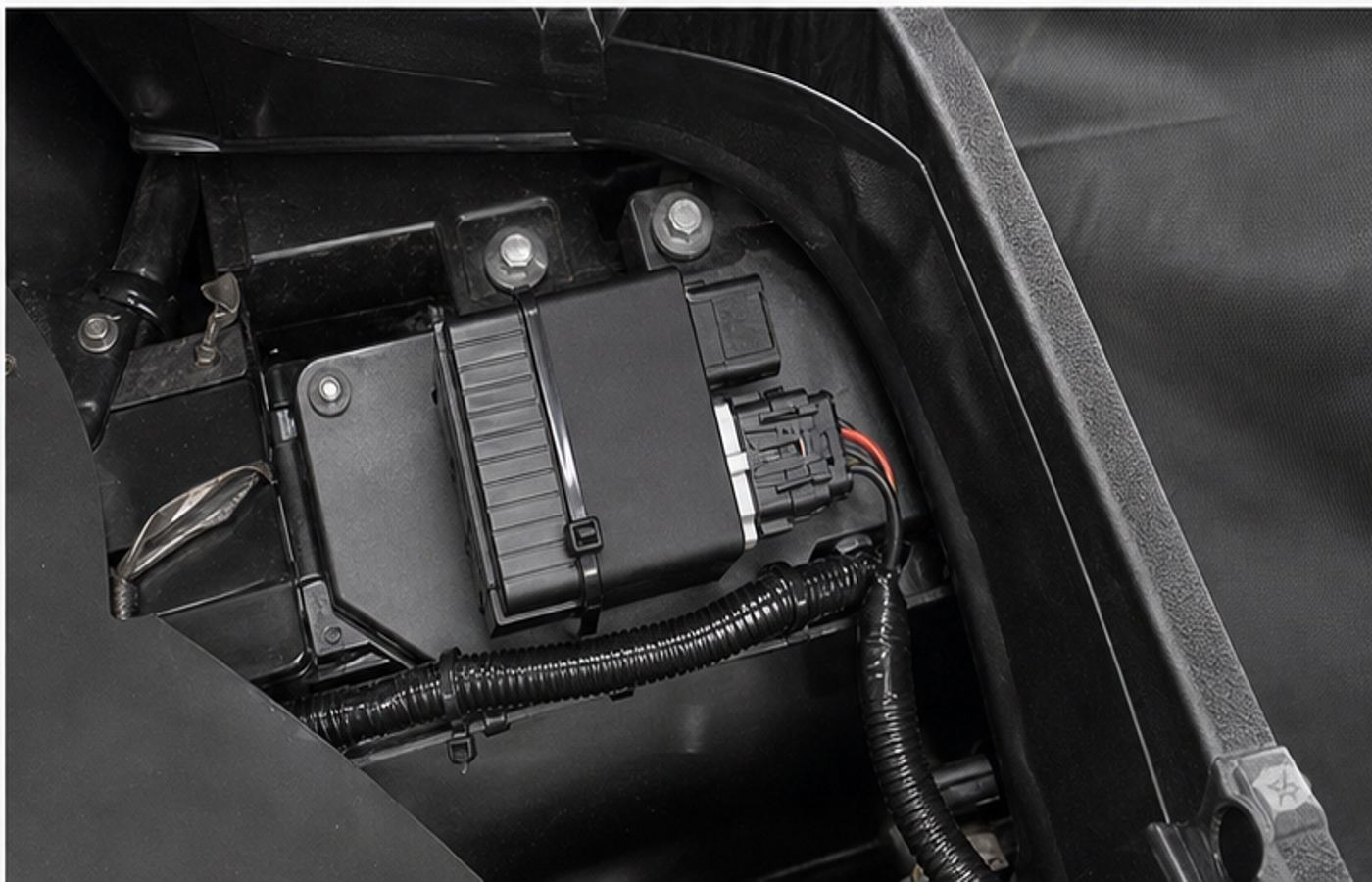
Anyone considering a module should compare the broader chip tuning modules category to understand how sensor-based parts are usually presented, then confirm ATV-specific fitment before buying. Ask for connector photos, compatible model years, installation position and whether the part is intended for road use, off-road use or competition only.
Exhaust, intake and heat management
TGB Blade 1000 derestriction often attracts exhaust upgrades because a V-twin ATV sounds strong and owners want a deeper tone. A freer exhaust may improve sound and reduce weight, but it can also increase noise, heat and fuelling sensitivity. On an ATV with plastics, racks, passenger equipment and mud protection, heat shields and clearance are not optional details.
Measure the pipe diameter, oxygen sensor position, silencer mounts and available space before ordering. Check whether the exhaust is road legal, off-road only or competition only. A noisy silencer may be tiring on farm work and unwelcome near lanes, livestock or public rights of way. If the system removes emissions equipment or changes sensor readings, fuelling may need proper diagnosis.
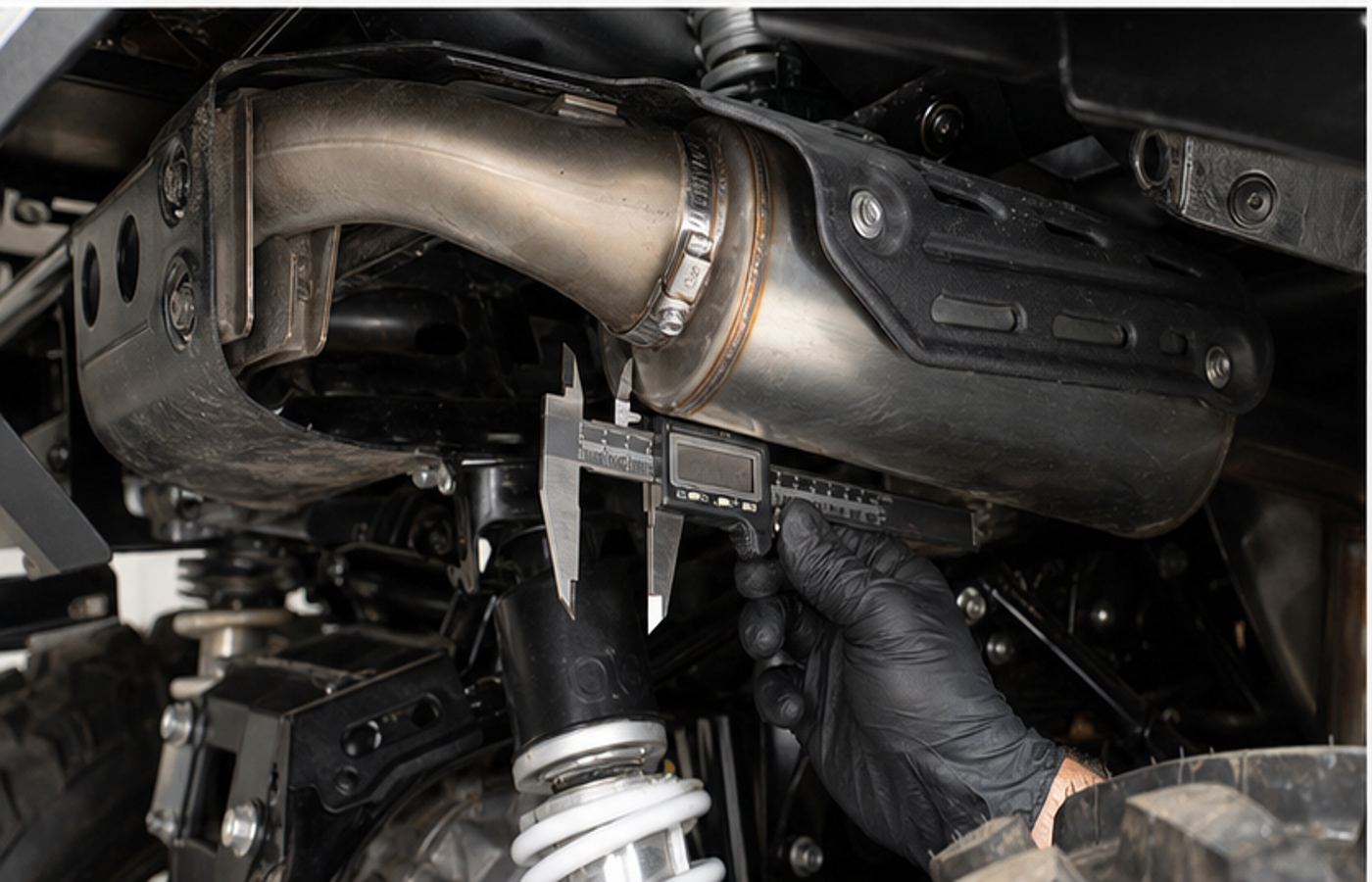
The motorcycle exhausts category can help riders compare exhaust fitment ideas, but ATV exhausts need extra attention to mud, water, bodywork heat and working conditions. A good setup should remain manageable after a slow climb, a loaded run or a hot restart.
UK road legality, agricultural use and off-road safety
TGB Blade 1000 derestriction has to be separated by use case. A quad used only off-road on private land is different from a quad used on public roads. GOV.UK explains that quad bikes used on the road must be approved, registered, taxed and insured, and may need an MOT depending on age. The same guidance also says most quad bikes cannot be used on the road because they do not meet road safety standards. Read the official GOV.UK quad bike rules before assuming a modified ATV is legal for road use.
Agricultural use has its own practical and legal context. A working quad may be registered as a light agricultural vehicle and used for limited road journeys connected with farm, forestry or horticultural work, but it still needs the correct registration, licensing, insurance, lighting where required and safe condition. A performance change that makes the quad harder to control at low speed may be a bad idea for real work.
Safety matters even away from the road. The UK Health and Safety Executive notes that ATVs can become unstable quickly and strongly recommends helmets, training and maintenance for quad bike use. Its guidance on ATVs, quad bikes and side-by-side vehicles is worth reading before treating power as the only priority.
Road use, track use and private land
For road use, performance changes may affect approval, insurance, noise, emissions, MOT and vehicle description. For private land, the legal burden may be lower, but the physical risk remains. For agricultural work, control and predictability matter more than peak speed. For track or competition use, parts marked “off-road only” may be appropriate, but they should not be presented as road-approved equipment.
Common mistakes
The most common TGB Blade 1000 derestriction mistake is assuming that more power is automatically useful. On a heavy 4×4 ATV, traction, stability and temperature are often more important than peak output. A machine that spins tyres, overheats the CVT or becomes snatchy in tight work is not better. It is less controlled.
| Mistake | What can happen | Better approach |
|---|---|---|
| Ignoring CVT belt condition | Slipping, heat, poor pull and belt failure | Inspect and service the CVT before tuning |
| Fitting oversized tyres without clutching | Lost acceleration and extra belt load | Match tyre size to CVT setup and intended use |
| Buying a module without connector proof | Fault lights, poor running or wiring damage | Confirm ECU, sensor and model-year compatibility |
| Removing exhaust restriction without heat planning | Hot plastics, rider discomfort and poor fuelling | Measure, shield and test under real load |
| Using road-homologated quads like off-road race machines | Legal, insurance and safety problems | Separate road, work, private land and competition use |
| Testing only on a short flat road | Missed heat, belt and handling problems | Test hills, low-speed work, hot restarts and loaded use |
Workshop advice from real ATV use
A practical ATV inspection starts before panels come off. I would check tyre size and pressure, look for mud packed around brakes and cooling areas, inspect wheel bearings, confirm 2WD/4WD engagement, check differential lock operation and listen for driveline noise. Then I would inspect the CVT belt and clutches before touching electronics.
Only after the mechanical baseline is healthy would I look at ECU or module options. The quad should be warmed fully and tested in the type of use it actually sees: towing, farm work, trail riding, mud, hill climbs or road sections where legal. A setup that feels impressive empty on hard ground can be unpleasant with a load or dangerous on loose surfaces.
Buying path: which upgrade makes sense?
TGB Blade 1000 derestriction should be staged. Stage one is service: fresh fluids, air filter, spark plugs where due, clean radiator, clean CVT, healthy belt and correct tyres. Stage two is CVT tuning if the complaint is acceleration, belt heat or tyre-load response. Stage three is exhaust and intake only if fitment, heat and legality are clear. Stage four is electronic work when the machine is healthy and compatibility is proven.
For a work quad, choose reliability and smooth control. For a trail quad, choose predictable throttle and CVT temperature control. For a private-land performance build, document each change and keep enough safety margin in brakes, cooling and driveline. For a road-homologated quad, speak to your insurer and check approval before any performance change.
FAQ about TGB Blade 1000 derestriction
Can a TGB Blade 1000 be derestricted?
TGB Blade 1000 derestriction may be possible on some versions, but it depends on homologation, ECU setup, CVT condition and intended use. Confirm the exact model and legal category before changing anything.
Is TGB Blade 1000 derestriction legal on UK roads?
It can affect road legality if the quad no longer matches its approval, registration, insurance or MOT condition. TGB Blade 1000 derestriction for road use should be checked against GOV.UK quad rules, insurer requirements and the vehicle paperwork.
Will a tuning module improve a Blade 1000?
A module may improve response only when it matches the ECU and sensor layout and the machine is already healthy. TGB Blade 1000 derestriction with electronics should be reversible, dry, secure and tested for faults.
Should I tune the CVT before the ECU?
Often, yes. If the complaint is poor pull, belt heat or lazy response with large tyres, CVT condition and clutching may matter more than ECU work. TGB Blade 1000 derestriction should not ignore the transmission.
Does an exhaust make the Blade 1000 faster?
An exhaust can improve sound and sometimes response, but it can also create heat, noise and fuelling issues. For TGB Blade 1000 derestriction, exhaust fitment, sensor position and shielding are just as important as flow.
Why does my Blade 1000 lose power when hot?
Possible causes include CVT heat, belt slip, cooling problems, sensor faults, fuel issues or ECU protection behaviour. A proper TGB Blade 1000 derestriction diagnosis should find the heat source before adding parts.
Can I use bigger tyres after derestriction?
Bigger tyres increase load and effectively change gearing. They may need CVT setup changes and can reduce acceleration. Account for tyre diameter, weight and terrain before judging the result.
What should I check before buying parts?
Check model version, ECU label, CVT belt condition, tyre size, exhaust layout, sensor connectors, use case and road approval. TGB Blade 1000 derestriction works best when parts are chosen from evidence, not assumptions.
Final verdict
TGB Blade 1000 derestriction is worth considering only when the quad is correctly identified, mechanically healthy and used in a way that makes the change sensible. A Blade 1000 already has strong V-twin performance. The best upgrades usually make that power cleaner, cooler and easier to control rather than simply louder or more aggressive.
Before buying anything, inspect the CVT, belt, tyres, brakes, cooling system, exhaust clearance and ECU connectors. Decide whether the quad is for road, work, private land or competition. Then choose parts that match the real use. Start with the relevant ATV and tuning resources on X Moto Parts, compare compatible categories carefully and avoid any modification that makes the machine less safe or less legal for where it will be ridden.
{
“@context”: “https://schema.org”,
“@type”: “Article”,
“headline”: “TGB Blade 1000 derestriction”,
“description”: “TGB Blade 1000 derestriction guide to ECU limits, CVT checks, exhaust fitment, UK quad legality, compatibility, common mistakes and ATV workshop setup.”,
“author”: {
“@type”: “Organization”,
“name”: “X Moto Parts”
},
“publisher”: {
“@type”: “Organization”,
“name”: “X Moto Parts”,
“logo”: {
“@type”: “ImageObject”,
“url”: “https://xmotoparts.com/wp-content/uploads/2026/07/x-moto-parts-logo.png”
}
},
“mainEntityOfPage”: “https://xmotoparts.com/tgb-blade-1000-derestriction/”,
“image”: [
“https://xmotoparts.com/wp-content/uploads/2026/07/tgb-blade-1000-derestriction.jpg”,
“https://xmotoparts.com/wp-content/uploads/2026/07/tgb-blade-1000-derestriction-cvt-check.jpg”,
“https://xmotoparts.com/wp-content/uploads/2026/07/tgb-blade-1000-derestriction-exhaust-measurement.jpg”,
“https://xmotoparts.com/wp-content/uploads/2026/07/tgb-blade-1000-derestriction-ecu-module-check.jpg”
]
}
{
“@context”: “https://schema.org”,
“@type”: “FAQPage”,
“mainEntity”: [
{
“@type”: “Question”,
“name”: “Can a TGB Blade 1000 be derestricted?”,
“acceptedAnswer”: {
“@type”: “Answer”,
“text”: “TGB Blade 1000 derestriction may be possible on some versions, but it depends on homologation, ECU setup, CVT condition and intended use.”
}
},
{
“@type”: “Question”,
“name”: “Is TGB Blade 1000 derestriction legal on UK roads?”,
“acceptedAnswer”: {
“@type”: “Answer”,
“text”: “It can affect road legality if the quad no longer matches its approval, registration, insurance or MOT condition.”
}
},
{
“@type”: “Question”,
“name”: “Will a tuning module improve a Blade 1000?”,
“acceptedAnswer”: {
“@type”: “Answer”,
“text”: “A module may improve response only when it matches the ECU and sensor layout and the machine is already healthy.”
}
},
{
“@type”: “Question”,
“name”: “Should I tune the CVT before the ECU?”,
“acceptedAnswer”: {
“@type”: “Answer”,
“text”: “If the complaint is poor pull, belt heat or lazy response with large tyres, CVT condition and clutching may matter more than ECU work.”
}
},
{
“@type”: “Question”,
“name”: “Does an exhaust make the Blade 1000 faster?”,
“acceptedAnswer”: {
“@type”: “Answer”,
“text”: “An exhaust can improve sound and sometimes response, but it can also create heat, noise and fuelling issues.”
}
},
{
“@type”: “Question”,
“name”: “Why does my Blade 1000 lose power when hot?”,
“acceptedAnswer”: {
“@type”: “Answer”,
“text”: “Possible causes include CVT heat, belt slip, cooling problems, sensor faults, fuel issues or ECU protection behaviour.”
}
},
{
“@type”: “Question”,
“name”: “Can I use bigger tyres after derestriction?”,
“acceptedAnswer”: {
“@type”: “Answer”,
“text”: “Bigger tyres increase load and effectively change gearing, so they may need CVT setup changes and can reduce acceleration.”
}
},
{
“@type”: “Question”,
“name”: “What should I check before buying parts?”,
“acceptedAnswer”: {
“@type”: “Answer”,
“text”: “Check model version, ECU label, CVT belt condition, tyre size, exhaust layout, sensor connectors, use case and road approval.”
}
}
]
}