
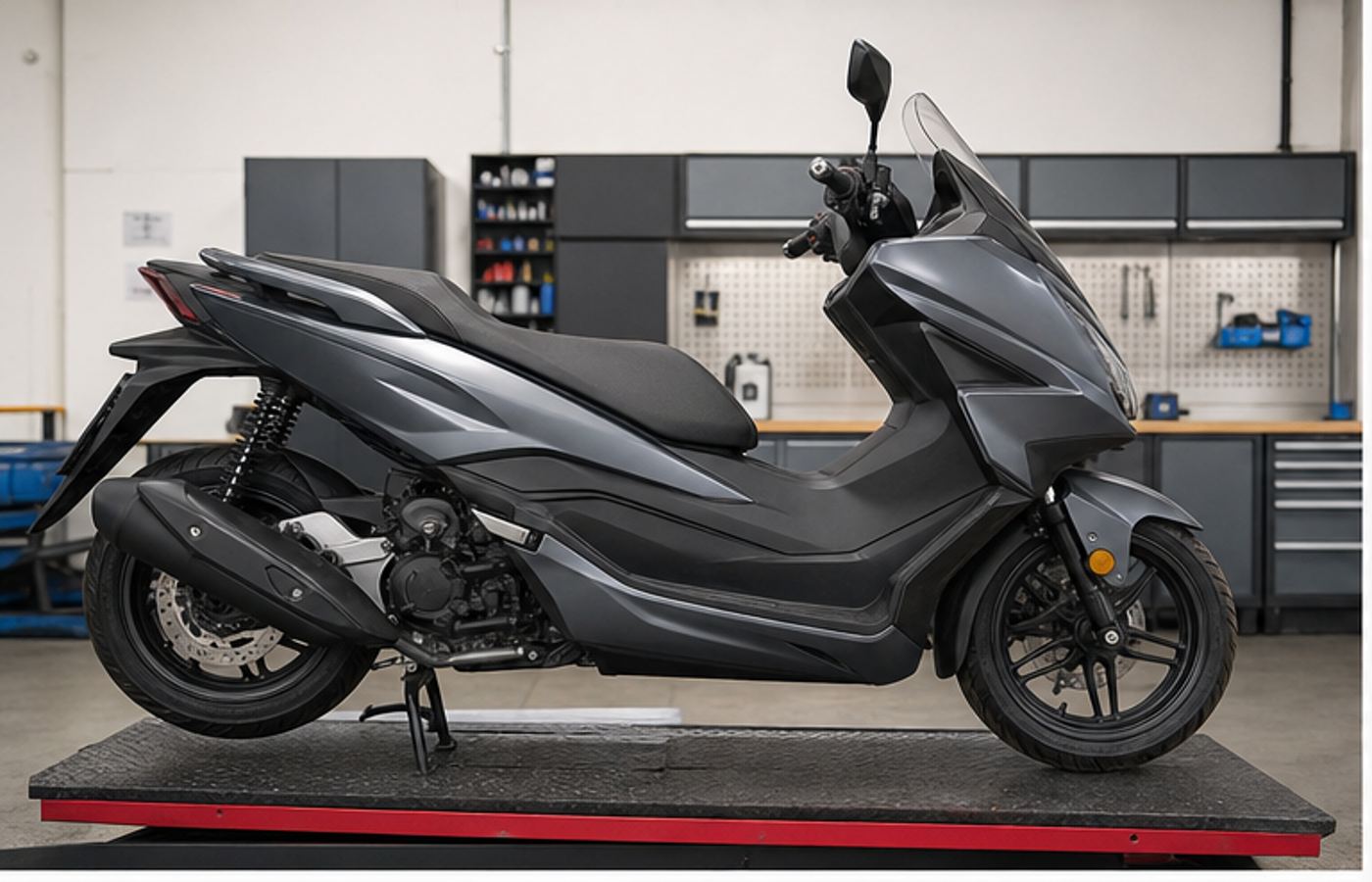
Honda Forza 125 derestriction
Honda Forza 125 derestriction is a topic that needs a careful, practical answer because the Forza 125 is already a refined, road-focused scooter, not a rough moped with one simple washer waiting to be removed. A rider who wants better acceleration, cleaner hill climbing or a little more response has to look at the whole machine: service condition, CVT setup, belt wear, exhaust flow, electronic control, weight, wind resistance and UK road legality.
The first thing to understand about Honda Forza 125 derestriction is that it should not be treated as a promise of turning a legal 125 into a large-capacity maxi-scooter. The Forza 125 sits in the 125cc/A1 world, so realistic gains come from helping the engine stay in its useful rev range, reducing avoidable losses and keeping the scooter healthy. A badly chosen part can make the scooter louder, hotter or less reliable without making it meaningfully quicker.
This guide explains Honda Forza 125 derestriction from a workshop point of view: what to inspect first, what the CVT can and cannot do, when a response module may help, how exhaust changes affect road use, and which mistakes cause most disappointing results. For related reading, compare the Honda Forza 125 tuning guide, the Honda Forza 125 chip tuning guide and the wider X Moto Parts shop before choosing parts.

What derestriction really means on the Forza 125
Honda Forza 125 derestriction usually starts because the scooter feels limited at the top end, lazy into a headwind or slow to pull away with a passenger. Some of that is normal 125cc behaviour. The Forza has a large frontal area, automatic transmission and modest displacement. Before assuming there is a hidden limiter, check whether the engine and CVT are doing their job properly.
Honda lists the Forza 125 as a premium 125cc scooter with liquid cooling, fuel injection and V-Matic transmission. Those official specifications matter because Honda Forza 125 derestriction must respect the original engine design, emissions equipment and transmission layout. Current model details can be checked through Honda UK.
Derestriction is different from general tuning
General tuning can include exhaust, variator, fuelling, intake, clutch and maintenance. Honda Forza 125 derestriction is narrower: it asks what is holding this exact scooter back and whether that limitation can be addressed legally and reliably. Sometimes the answer is a worn belt, not a performance part.
What owners can realistically expect
The best result from Honda Forza 125 derestriction is usually stronger pick-up, steadier revs under load and a scooter that feels less strangled at urban and A-road speeds. A dramatic top-speed increase is unlikely on a healthy, road-legal Forza 125, especially if the rider is tall, carrying luggage or riding into wind.
| Owner goal | Realistic result | Workshop note |
|---|---|---|
| More launch from traffic lights | Often possible | CVT roller and clutch condition matter most |
| Much higher top speed | Usually unrealistic | Power, gearing and aerodynamics still limit the scooter |
| Better hill climbing | Possible with correct setup | Belt width and roller weight should be checked first |
| Louder exhaust note | Easy to achieve | Noise does not prove extra performance |
| Cleaner throttle response | Possible | Only if electronics match the exact model and connector |
Service baseline before spending money
Before buying parts for Honda Forza 125 derestriction, make sure the scooter is healthy. A 125cc engine has little spare torque, so a dragging brake, old belt, blocked air filter, poor tyre pressure or worn rollers can feel like a restriction. Many disappointing builds start because the owner adds parts to a scooter that needed basic service work.
Basic checks
Check engine oil, coolant level, air filter, spark plug, tyre pressures, brake drag and final road speed on a known route. If the scooter has high mileage, inspect the belt and rollers before blaming the ECU. A sensible Honda Forza 125 derestriction plan starts with evidence, not guesses.
Road test before modifications
Warm the engine fully, ride the same road twice and note how the scooter behaves from 20 to 50 mph, up a hill and into wind. If acceleration is uneven, the CVT may be worn. If speed is fine until the scooter is hot, there may be a fuelling or cooling issue. Honda Forza 125 derestriction works best when the baseline is recorded before parts are fitted.
Compatibility and model-year checks
Honda Forza 125 derestriction depends heavily on model year and market version. Euro 4 and Euro 5 scooters may differ in ECU strategy, oxygen sensor behaviour, exhaust catalyst layout and connector positions. A part listed for “Forza 125” should still be checked against the exact scooter before ordering.
| Vehicle or part area | Compatibility | Important note |
|---|---|---|
| Honda Forza 125 | Yes, when year-specific | Confirm model year, emission standard and sensor layout |
| Honda Forza 350 parts | Usually no | Similar styling does not mean shared transmission or electronics |
| CVT rollers | Only if exact size matches | Diameter, width and weight must all be correct |
| Slip-on exhaust | Depends on pipe and bracket | Check catalyst, lambda sensor and DB-killer arrangement |
| Electronic response module | Depends on connector | Do not force mismatched plugs |
| Track-use parts | Private use only | Road legality and insurance may be affected |
CVT, variator and belt setup
The CVT is usually the most important mechanical area in Honda Forza 125 derestriction. The variator controls how the belt climbs through the pulley range, and the belt’s width affects effective gearing. Flat-spotted rollers, a glazed clutch or a narrow belt can make the Forza feel restricted even if the engine is healthy.

Roller weight
Lighter rollers can help the engine reach its stronger rev range sooner, but too light is a common mistake. The scooter may rev loudly without gaining road speed. In Honda Forza 125 derestriction, small changes and repeatable road tests are better than extreme roller choices.
Belt condition
A worn belt can sit lower in the pulley and reduce real gearing. Measure belt width rather than judging by eye. If the belt is near its service limit, replace it before testing Honda Forza 125 derestriction parts. A fresh belt can restore performance that was lost gradually.
| CVT issue | Symptom | Practical fix |
|---|---|---|
| Flat-spotted rollers | Pulsing acceleration | Replace with correct-size rollers or sliders |
| Narrow belt | Lower top speed and weak pull | Measure and replace if worn |
| Glazed clutch | Judder from a standstill | Clean or replace worn clutch components |
| Too-light rollers | High revs with little speed gain | Increase weight gradually |
| Too-heavy rollers | Lazy launch and hill response | Reduce weight carefully and retest |
Electronic modules and throttle response
Honda Forza 125 derestriction may include electronic parts, but only when they match the scooter. A response module cannot repair a worn belt, blocked air filter or leaking exhaust. It can only influence the signals it is designed to work with, so connector accuracy and conservative adjustment matter.

Connector and wiring checks
Photograph the sensor connector, count pins and check the locking tab before ordering any electronic part. During Honda Forza 125 derestriction, wiring should be clipped away from heat, steering movement and sharp edges. If a connector does not click in naturally, stop.
Setup method
Install with the ignition off, begin at the lowest setting and test only with a fully warm engine. If the scooter hesitates, surges, smells rich or starts poorly when hot, reduce the setting or remove the module. Riders comparing options can use the Honda Forza 125 chip tuning guide as a reference before ordering unrelated universal electronics.
Exhaust, E-mark and UK road legality
Exhaust work is often discussed alongside Honda Forza 125 derestriction, but it must be handled carefully. A road-approved silencer can improve tone and sometimes reduce weight, while a leaking, noisy or non-approved system can fail an MOT, attract unwanted attention and reduce low-speed response.
The UK motorcycle MOT manual states that exhaust noise can be a major defect if it is clearly above the level expected from a similar motorcycle with a standard silencer. That makes baffle, DB-killer, mounting security and leaks important for any road-going Honda Forza 125 derestriction build. The official guidance is available on GOV.UK.
A1 licence and road use
In the UK, a 125cc scooter sits within specific licence and learner rules. Riders should understand CBT, A1 and power restrictions before modifying a scooter. GOV.UK gives current motorcycle licence categories and requirements at ride a motorcycle or moped. The finished scooter should never become incompatible with the rider’s licence or insurance.
Exhaust measurements
Measure pipe diameter, check the gasket, confirm oxygen sensor position, inspect the catalyst section and make sure the centre stand clears the pipe. Anyone planning Honda Forza 125 derestriction through exhaust work should compare exact dimensions with a relevant motorcycle exhausts category before ordering.

| Solution | Main advantage | Possible disadvantage | Best use |
|---|---|---|---|
| Original exhaust | Quiet and compliant | Less sound and style change | Daily commuting and MOT simplicity |
| Road-approved silencer | Better tone with less risk | Fitment and paperwork still matter | Road riders wanting a cleaner sound |
| Universal silencer | Flexible and affordable | Adapter or bracket work may be needed | Custom projects with workshop support |
| Full system | More flow potential | More legal and fuelling checks | Experienced owners or workshops |
| Track-only part | Light and loud | Unsuitable for public roads | Private land or circuit use |
Common mistakes
The most common Honda Forza 125 derestriction mistake is buying parts before diagnosis. Another is fitting extremely light rollers, removing exhaust baffles, ignoring belt wear or assuming a part for a Forza 350 will fit a Forza 125. A refined scooter needs measured changes, not guesswork.
Changing too many things at once
If rollers, belt, exhaust and electronics are changed together, it becomes difficult to know what helped or hurt. A good Honda Forza 125 derestriction process changes one area, tests it, records the result and then decides whether the next part is needed.
Ignoring heat and clearance
After exhaust or wiring work, check for heat near plastics, hoses and harnesses. A scooter body hides a lot of parts, so poor routing can create problems later. Practical workshop setup includes a heat-cycle recheck after the first ride.
Expecting illegal results from a legal 125
If the scooter is used on public roads, keep the build compatible with MOT, insurance and licence rules. A track-only setup belongs on private land or a circuit. Road-focused setup should improve the ride without creating legal headaches.
Image metadata prepared for this article
| File name | Title | Alt text | Caption | Position |
|---|---|---|---|---|
| honda-forza-125-derestriction.jpg | Honda Forza 125 main derestriction image | Honda Forza 125 derestriction | A clean workshop inspection should come before changing CVT, exhaust or electronic parts on a Forza 125. | Main image after introduction |
| honda-forza-125-derestriction-cvt-check.jpg | Honda Forza 125 CVT Derestriction Check | Honda Forza 125 CVT variator rollers and belt inspection | Inspect belt width, roller wear and clutch condition before judging performance parts. | CVT section |
| honda-forza-125-derestriction-module-installation.jpg | Honda Forza 125 Derestriction Module Installation | Honda Forza 125 sensor connector check during derestriction module installation | Connector shape, wiring route and heat protection must be checked before fitting electronic parts. | Electronics section |
| honda-forza-125-derestriction-exhaust-measurements.jpg | Honda Forza 125 Exhaust Measurement Guide | Honda Forza 125 exhaust pipe diameter and DB-killer measurement | Pipe diameter, DB-killer, gasket and catalyst layout should be checked before exhaust changes. | Exhaust section |
FAQ about Forza 125 derestriction
Is derestriction legal in the UK?
Honda Forza 125 derestriction is only suitable for UK road use if the scooter remains compliant with licence, insurance, MOT, noise and emissions requirements. Track-only or non-approved parts should not be treated as road legal.
Does the Honda Forza 125 have a simple limiter?
Many riders look for one hidden limiter, but performance is usually controlled by the engine output, CVT behaviour, belt condition, wind resistance and fuelling. Diagnose the scooter before parts are ordered.
Will lighter rollers make a Forza 125 faster?
Lighter rollers can improve acceleration if the original setup is too heavy or worn, but too light can make the scooter over-rev. Roller changes should be small and road-tested carefully.
Do I need an exhaust for derestriction?
Not always. A road-approved exhaust can improve tone and sometimes help response, but a loud exhaust alone is not a proper setup. Fitment, fuelling, catalyst and DB-killer checks matter.
Can I fit Forza 350 parts to a Forza 125?
Do not assume Forza 350 parts fit a Forza 125. Transmission, electronics, exhaust route and brackets may differ. Proper Honda Forza 125 derestriction uses model-specific checks.
Should I use a mechanic?
Use a mechanic if you are unsure about variator torque, belt inspection, sensor wiring, exhaust sealing or legal suitability. Honda Forza 125 derestriction is easier to get right when the measurements and installation are checked professionally.
Will derestriction damage reliability?
Careful setup should not automatically damage reliability, but over-revving, poor fuelling, loose exhaust mounts and bad wiring can. A conservative setup is better than an aggressive one that creates heat and wear.
What should I check before buying parts?
Check model year, belt condition, roller size, exhaust diameter, catalyst layout, sensor connectors, insurance implications and UK road-use requirements. That preparation makes the work safer and more useful.
Final buying advice
Honda Forza 125 derestriction is worth doing only when the scooter is measured and diagnosed properly. Start with service condition, inspect the CVT, replace worn parts, choose year-specific components, keep road legality in mind and avoid any claim that sounds too good for a 125cc scooter. For most UK riders, the best setup is not the loudest or most aggressive one. It is the setup that gives cleaner response while staying reliable, insurable and comfortable every day.
Before ordering parts, compare the Honda Forza 125 tuning guide, the Honda Forza 125 chip tuning guide and the relevant motorcycle exhausts category. A measured Honda Forza 125 derestriction plan gives the best chance of a scooter that feels stronger without becoming difficult to live with.
{
“@context”: “https://schema.org”,
“@type”: “Article”,
“headline”: “Honda Forza 125 derestriction”,
“description”: “A practical Forza 125 guide covering CVT setup, belt wear, electronic modules, exhaust fitment, UK road legality and buying advice.”,
“author”: {“@type”: “Organization”, “name”: “X Moto Parts”},
“publisher”: {“@type”: “Organization”, “name”: “X Moto Parts”, “url”: “https://xmotoparts.com/”},
“mainEntityOfPage”: “https://xmotoparts.com/honda-forza-125-derestriction/”,
“image”: “https://xmotoparts.com/wp-content/uploads/honda-forza-125-derestriction.jpg”
}
{
“@context”: “https://schema.org”,
“@type”: “FAQPage”,
“mainEntity”: [
{“@type”: “Question”, “name”: “Is derestriction legal in the UK?”, “acceptedAnswer”: {“@type”: “Answer”, “text”: “Derestriction is only suitable for UK road use if the scooter remains compliant with licence, insurance, MOT, noise and emissions requirements.”}},
{“@type”: “Question”, “name”: “Does the Honda Forza 125 have a simple limiter?”, “acceptedAnswer”: {“@type”: “Answer”, “text”: “Performance is usually controlled by engine output, CVT behaviour, belt condition, wind resistance and fuelling rather than one hidden limiter.”}},
{“@type”: “Question”, “name”: “Will lighter rollers make a Forza 125 faster?”, “acceptedAnswer”: {“@type”: “Answer”, “text”: “Lighter rollers can improve acceleration if correctly matched, but rollers that are too light can make the scooter over-rev.”}},
{“@type”: “Question”, “name”: “Do I need an exhaust for derestriction?”, “acceptedAnswer”: {“@type”: “Answer”, “text”: “Not always. A road-approved exhaust can improve tone, but fitment, fuelling, catalyst and DB-killer checks matter.”}},
{“@type”: “Question”, “name”: “Can I fit Forza 350 parts to a Forza 125?”, “acceptedAnswer”: {“@type”: “Answer”, “text”: “Forza 350 parts should not be assumed to fit because transmission, electronics, exhaust route and brackets may differ.”}},
{“@type”: “Question”, “name”: “Should I use a mechanic?”, “acceptedAnswer”: {“@type”: “Answer”, “text”: “Use a mechanic if you are unsure about variator torque, belt inspection, sensor wiring, exhaust sealing or legal suitability.”}},
{“@type”: “Question”, “name”: “Will derestriction damage reliability?”, “acceptedAnswer”: {“@type”: “Answer”, “text”: “Careful setup should not automatically damage reliability, but over-revving, poor fuelling, loose exhaust mounts and bad wiring can.”}},
{“@type”: “Question”, “name”: “What should I check before buying parts?”, “acceptedAnswer”: {“@type”: “Answer”, “text”: “Check model year, belt condition, roller size, exhaust diameter, catalyst layout, sensor connectors, insurance implications and UK road-use requirements.”}}
]
}