
Italjet Dragster 200 tuning
Italjet Dragster 200 tuning should begin with a simple truth: this scooter already feels special because of its chassis, styling and direct riding position, so the best upgrades are the ones that make it sharper without making it crude. The goal is not to bolt on loud parts and hope for miracles. The goal is to make the throttle cleaner, the CVT more responsive, the exhaust properly matched, the brakes and tyres confident, and the whole scooter more satisfying in real riding.
The Dragster is not a sleepy commuter scooter. It is a compact sport scooter with exposed frame attitude, firm chassis feedback and a riding character that encourages owners to personalise it. That is exactly why Italjet Dragster 200 tuning needs discipline. A badly chosen variator, a poorly sealed exhaust, a random fuel module or an oversized air filter can make the scooter louder but less enjoyable. A carefully measured setup can make it feel tighter, quicker off the line and more composed on fast urban roads.
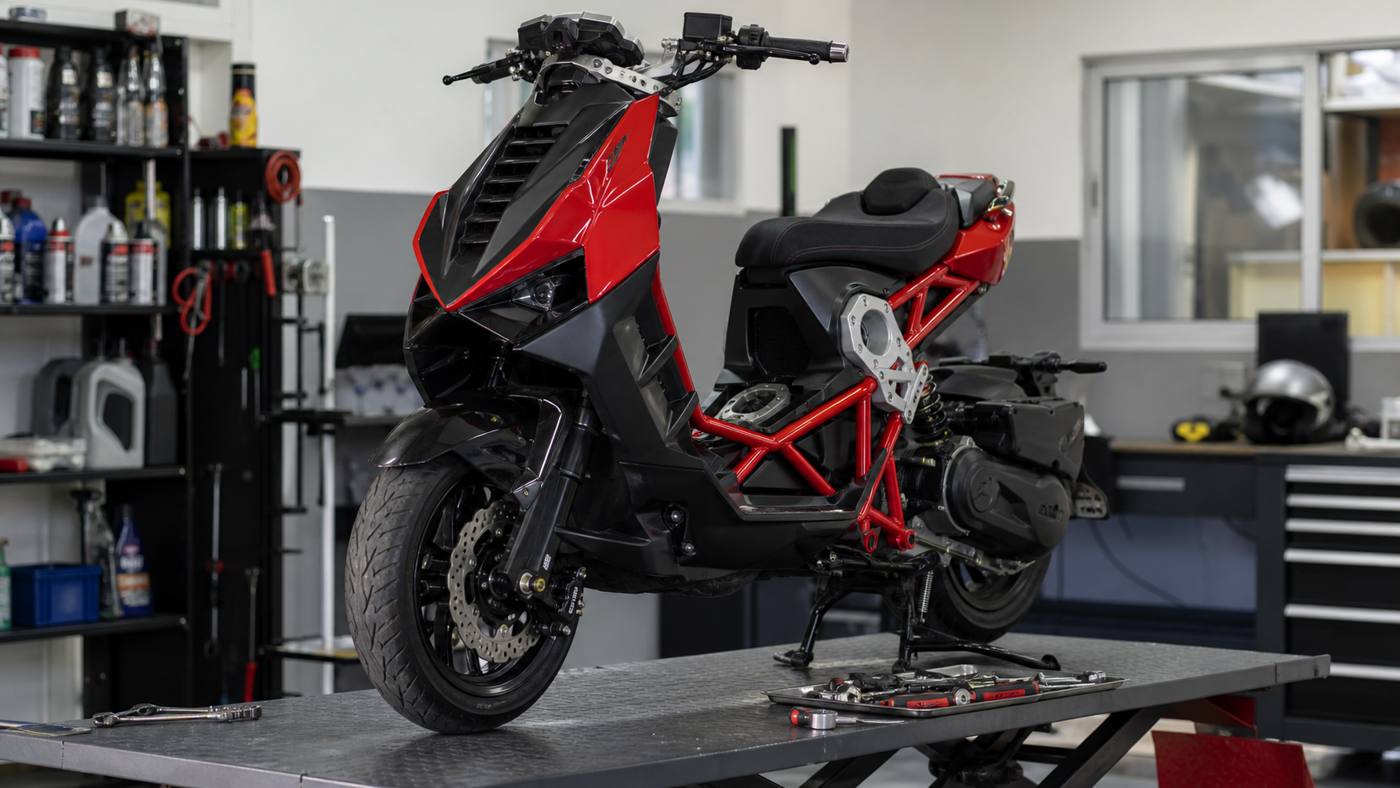
This guide is written for owners deciding what to change first, what to leave alone, and how to avoid the common mistake of confusing noise with performance. If you are comparing related scooter setup ideas, read the Aprilia SR GT 200 tuning chip module guide, the Peugeot Django 125 tuning guide and the Lambretta X300 tuning guide for useful comparisons across modern scooters.
Start with a proper baseline
Italjet Dragster 200 tuning starts before the first performance part is ordered. A sport scooter with a worn belt, squared-off rear tyre, weak battery, dirty air filter or dragging brake will never give a fair result. You can fit a premium exhaust and still feel disappointed if the CVT is tired. You can change roller weights and still feel flatness if the throttle body is dirty or the engine is due a service.
The baseline should include fresh engine oil, correct coolant level where applicable, clean air filter, healthy spark plug, correct tyre pressures, free wheel rotation, good brake feel, correct belt condition and no unresolved warning lights. Record the current behaviour before making changes: cold start, idle, take-off rpm, 30 to 50 mph roll-on feel, vibration, belt noise, fuel consumption and whether the scooter struggles on hills.
| Baseline check | What good looks like | Why it matters for tuning |
|---|---|---|
| CVT belt | No cracks, glazing or width loss | A worn belt changes acceleration and top-speed feel |
| Rollers or sliders | Even wear and correct movement | Flat-spotted rollers create vibration and lazy shifting |
| Air filter | Clean, sealed and correctly fitted | Air leaks or restriction can ruin fuelling |
| Tyres | Correct size, pressure and profile | Handling changes can be mistaken for power changes |
| Brakes | Free rotation and strong lever feel | Dragging brakes make a scooter feel slow |
A good mechanic treats Italjet Dragster 200 tuning like a sequence, not a shopping list. Restore the scooter first. Then choose one change, test it properly, and only then move to the next. That makes every pound spent easier to judge.
CVT, variator, belt and clutch setup
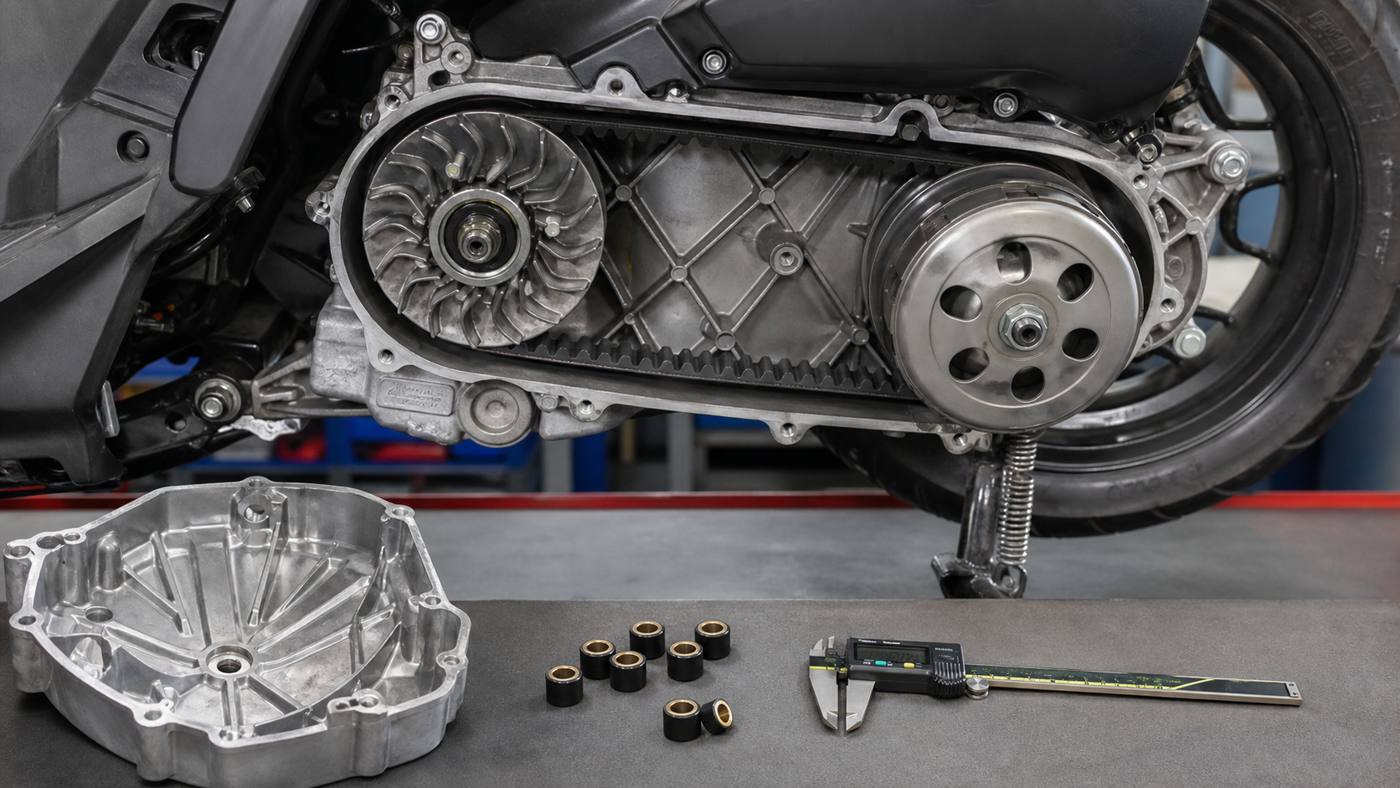
Italjet Dragster 200 tuning is often most noticeable in the CVT because the transmission controls how the engine reaches the road. On a scooter, the rider does not choose gears. The variator, roller weight, belt, clutch springs and contra spring decide how the engine revs under load. That is why a modest CVT change can feel stronger in town than a louder exhaust.
Variator and roller weight behaviour
Lighter rollers usually let the engine rev higher before the variator shifts. That can improve take-off and midrange if the engine makes useful power there. Too light, and the scooter screams without gaining speed. Heavier rollers can calm the revs and may help cruising, but too heavy can make acceleration dull. The correct setup depends on rider weight, hills, riding style, belt condition and whether the exhaust or intake has changed.
For Italjet Dragster 200 tuning, avoid copying roller weights blindly from another owner unless the scooters are in the same condition and used in the same environment. City riding, hilly roads, motorway-style stretches and two-up use all ask different things from the CVT.
Belt condition before performance parts
Italjet Dragster 200 tuning can be ruined by an old belt. A belt that has lost width effectively changes the gear ratio. A glazed belt slips. A cracked belt is a reliability risk. If the scooter feels inconsistent, vibrates on take-off or smells hot after hard use, remove the cover and inspect the belt before blaming the engine.
Clutch springs and real-world take-off
Stronger clutch springs can raise engagement rpm, making the scooter feel more aggressive from a stop. On a sport scooter that sounds tempting, but it can also make traffic riding jerky. The Dragster should feel eager, not annoying. A clutch setup that works on a weekend blast may be tiring in daily urban use.
| CVT change | Main advantage | Possible disadvantage | Best used when |
|---|---|---|---|
| Fresh OEM-spec belt | Restores lost response | Not exciting as a purchase | The belt is worn, glazed or old |
| Lighter rollers | Sharper acceleration | Can raise cruising rpm too much | The scooter feels lazy on take-off |
| Performance variator | Can improve shift curve | Needs correct setup and testing | Baseline CVT is already healthy |
| Clutch spring change | More aggressive launch feel | Can become jerky in traffic | The rider wants sportier take-off |
| Contra spring change | Can improve back-shift under load | May increase belt heat | There is a clear hill or load problem |
Anyone planning Italjet Dragster 200 tuning around the transmission should keep notes. Write down the original roller weight, belt reference, mileage, test route and rpm feel. If a change makes one area better and another worse, you need that record to choose intelligently.
Airflow, exhaust and fuel-injection tuning
Italjet Dragster 200 tuning becomes more sensitive when airflow is changed. The engine management has limits. A legal slip-on, a different air filter, a decat pipe, a full exhaust or a fuel module can each alter the way the scooter responds. The question is not whether the part looks sporty. The question is whether it matches the engine, sensors, emissions equipment and road-use requirements.
Exhaust fitment and sensor checks
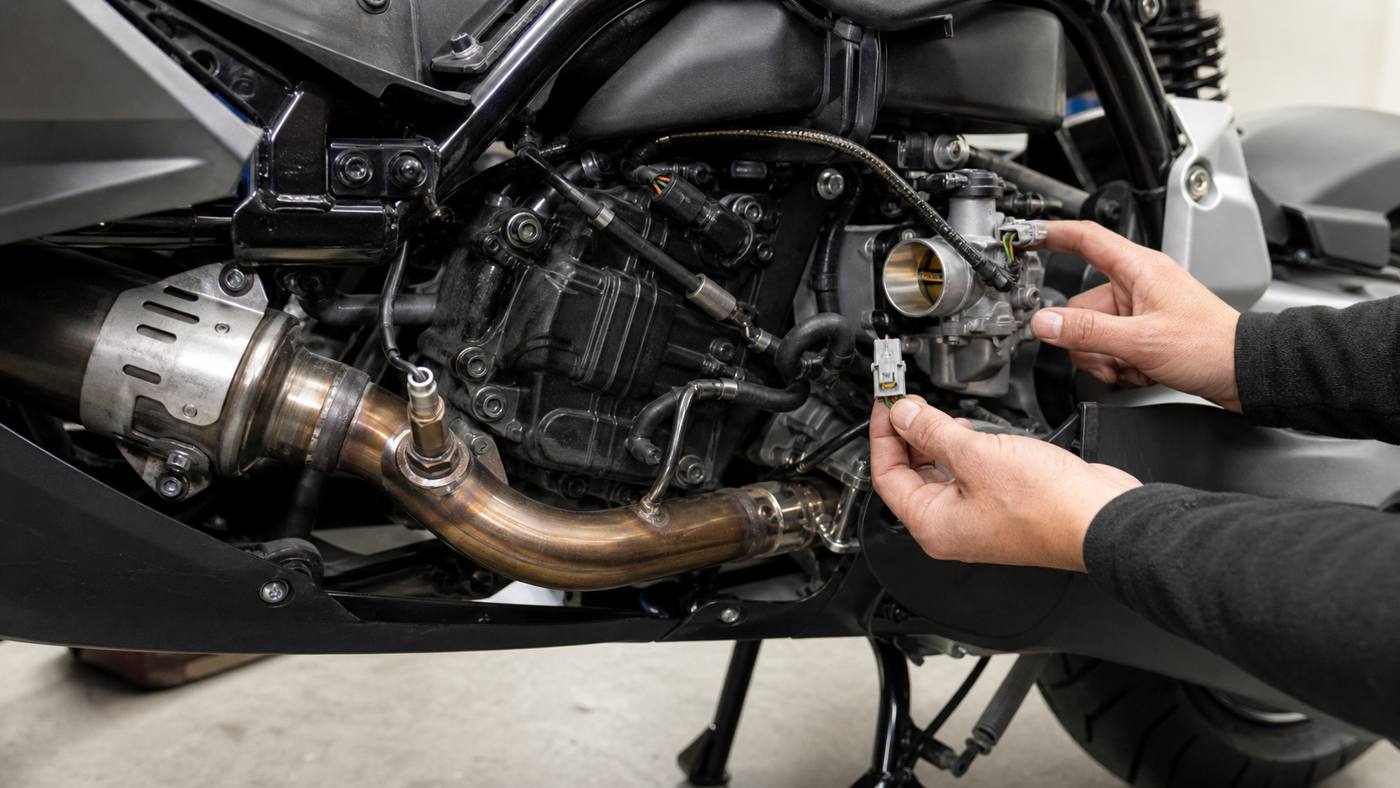
An exhaust should be chosen by diameter, mounting points, sensor provision, catalyst arrangement, silencer volume and bracket alignment. If the scooter uses an oxygen sensor, the exhaust must place it correctly. A badly positioned sensor, leak near the header or missing gasket can create rough running, popping, warning lights or hot running. For Italjet Dragster 200 tuning, exhaust work should be installed cleanly and checked after the first heat cycle.
Fuel modules and ECU expectations
A reversible fuel module or piggyback-style device can be useful only when it is compatible with the exact model and installed correctly. It should not be used to hide a mechanical fault. If the engine hesitates because of an air leak, dirty injector or weak plug, electronics will not magically make it healthy. If you are considering electronics, compare relevant X Moto Parts guidance such as the chip tuning modules category and the Aprilia SR GT 200 tuning chip module guide.
Air filter and intake changes
Italjet Dragster 200 tuning does not automatically need an open filter. Many open filters add noise, pull warmer air from inside the bodywork, reduce weather protection and make fuelling harder to control. A quality panel filter or clean standard airbox can be the better road solution. If the airbox is modified, check water exposure, intake temperature, idle quality and whether the scooter becomes worse in rain.
| Engine-side upgrade | Useful benefit | Check before buying | Common risk |
|---|---|---|---|
| Road-legal slip-on | Sound, looks and possible weight saving | E-mark, mounting, sensor/catalyst compatibility | Too loud or poorly supported |
| Full exhaust system | Greater airflow change | Fuelling, catalyst, MOT and road legality | Flat spots or legal trouble |
| Panel air filter | Cleaner airflow with standard protection | Exact airbox shape and seal | False economy if poorly fitted |
| Open intake | More intake sound | Rain protection and fuelling | Hot air, water exposure and lean running |
| Fuel module | Can refine response after airflow changes | Connector match, sensor type and settings | Used to mask a mechanical fault |
Tyres, brakes and suspension feel
Italjet Dragster 200 tuning should never ignore the chassis. This scooter’s appeal is not only engine output; it is the way it looks and reacts. If tyres are old, squared off or mismatched, the scooter may feel nervous or heavy. If brake pads are poor or fluid is old, the rider loses confidence. If suspension preload or tyre pressures are wrong, a power upgrade will not fix the ride.
Good tyres can make the Dragster feel more expensive. Fresh brake fluid can restore lever consistency. Correct wheel alignment and torque checks matter after any rear wheel, exhaust or CVT work. A sport scooter with confident brakes and clean turn-in often feels faster because the rider can carry speed smoothly rather than forcing acceleration after every corner.
Compatibility checks before buying parts
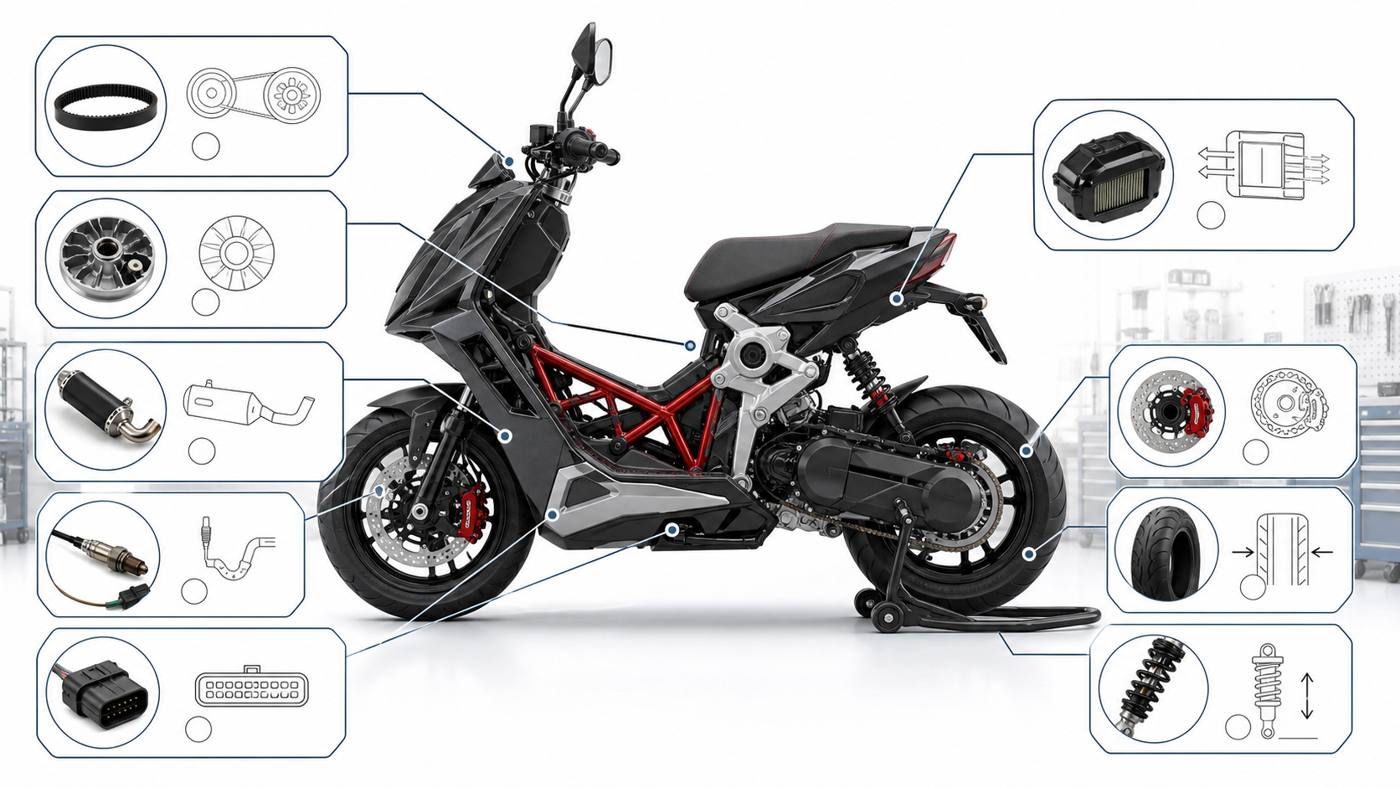
Italjet Dragster 200 tuning needs exact compatibility checks because model year, market version, emissions specification and previous-owner modifications can change what fits. Do not rely only on the word Dragster. Check whether the part is for 125, 200 or another market version, and confirm mounting points before ordering.
| Component | Compatibility check | Important note |
|---|---|---|
| Variator kit | Exact engine/CVT version and belt size | Wrong ramp profile or roller size can ruin shifting |
| Exhaust | Header diameter, bracket, sensor and catalyst layout | A universal silencer may need fabrication |
| Fuel module | Connector type, sensor logic and model year | Do not cut wiring until compatibility is proven |
| Air filter | Airbox shape, seal and weather exposure | Bad sealing allows dust into the engine |
| Tyres | Factory size, load rating and clearance | Profile changes affect handling and speed reading |
| Brake upgrades | Disc size, caliper mount and pad compound | Road pads must work cold and in wet weather |
When Italjet Dragster 200 tuning involves parts sold as universal, measure twice. A universal exhaust may fit with brackets on one scooter and foul bodywork on another. A universal fuel controller may connect physically but still be wrong electronically. A universal air filter may look sporty but leave the engine exposed to water and dust.
Setup paths for different riders
Italjet Dragster 200 tuning should match the rider. A daily commuter wants reliability, legal noise and clean traffic response. A weekend rider may accept a sportier CVT feel. A show-build owner may care about aesthetics but still needs safe brackets, heat clearance and proper braking. The best setup is the one that solves your riding problem.
| Rider goal | Best first changes | Avoid | Why |
|---|---|---|---|
| Daily road use | Service, belt, tyres, legal exhaust | Very loud pipes and harsh clutch springs | Reliability and comfort matter every day |
| Sharper town launch | CVT service, roller testing, clutch inspection | Random roller weights | Take-off feel comes mostly from transmission setup |
| Sportier sound | Quality road-legal silencer | Removing catalyst or DB-killer for road use | Noise can create MOT, police and insurance issues |
| Better road confidence | Tyres, brake pads, fluid and suspension checks | Power parts before chassis maintenance | Control often improves real pace more than noise |
| Private-road project | Full system, fuelling and CVT matching | Using track-only parts on public roads | Rules and insurance change outside private use |
UK road legality and anglophone-market notes
Italjet Dragster 200 tuning for UK road use must be separated from private-road or track-only work. Exhaust noise, emissions equipment, number plate visibility, indicators, mirrors, tyres, insurance disclosure and MOT condition can all matter. The UK MOT inspection manual includes checks around exhaust condition, security and noise, and owners should compare any exhaust change with the current official guidance from the GOV.UK motorcycle MOT inspection manual. For model background and official product context, use Italjet’s official site rather than random forum figures: Italjet official website.
In the UK, a road scooter should not be made excessively noisy, unsafe or emissions-non-compliant. A silencer marked for road use is different from a race-only pipe. A catalyst-equipped system should not be removed casually for road riding. A DB-killer is not just a sound preference if the exhaust was approved with it fitted. Construction and Use rules, MOT standards and insurance terms can overlap, so keep documentation for road-legal parts.
United States, Canada, Australia and other markets
Italjet Dragster 200 tuning advice changes by country. The United States may involve EPA and state-level rules. Canada can vary by province. Australia and New Zealand have their own roadworthy and noise requirements. Ireland follows its own roadworthiness and insurance context. If a part is sold as off-road-only or track-use-only, do not assume it is acceptable on public roads just because it fits.
Common mistakes
Italjet Dragster 200 tuning goes wrong when the owner chases drama instead of evidence. The scooter is already dramatic to look at. The tuning should make it better to ride, not merely louder in a car park.
- Buying a variator kit without measuring belt condition first.
- Changing roller weight too aggressively and losing real speed.
- Fitting an exhaust without checking sensor position, catalyst layout or bracket support.
- Removing a DB-killer or catalyst on a road scooter without understanding legal and insurance consequences.
- Using an open filter that draws hot air or water.
- Cutting wiring for a module before confirming connector compatibility.
- Ignoring tyres and brakes while chasing engine feel.
- Judging performance by sound rather than repeatable road testing.
- Copying settings from a 125, 200 or different market version without checking the exact hardware.
- Expecting a 200cc scooter to behave like a maxi-scooter after bolt-on parts.
Workshop testing after each change
Italjet Dragster 200 tuning should be tested on the same route, in the same conditions where possible. Use a short loop with stop-start traffic, one hill, one steady cruise section and one safe roll-on test. Listen for belt slip, exhaust leaks, intake noise, vibration and cooling behaviour. Let the scooter heat-soak, then restart it. Some faults appear only when warm.
After exhaust work, recheck fasteners after the first ride. After CVT work, inspect for belt dust, unusual heat and cover sealing. After electrical work, check for warning lights, wet-weather protection and cable rubbing. After tyre or brake changes, ride gently until bedding-in is complete. This is the experience part of Italjet Dragster 200 tuning: a part is not proven when it is fitted; it is proven after it behaves properly in real use.
What to buy first
Italjet Dragster 200 tuning has a sensible order. If the scooter is not freshly serviced, buy service parts first. If the CVT is worn, refresh it before fitting sport parts. If the tyres are old, replace them before chasing speed. If the exhaust is damaged or too quiet for your taste, choose a road-legal system with correct fitment. If airflow changes create fuelling symptoms, then consider compatible fuel-injection support.
Owners who want a natural next step can browse X Moto Parts scooter and motorcycle parts and compare parts against the exact model, year and use case. A useful order is: service, CVT health, tyres and brakes, legal exhaust, then electronics only when the mechanical baseline is good.
FAQ
Is Italjet Dragster 200 tuning worth it?
Italjet Dragster 200 tuning is worth it when the owner wants sharper response, cleaner CVT behaviour, better sound and stronger road feel without harming reliability. It is not worth it if the goal is unrealistic horsepower from random bolt-on parts.
What is the best first upgrade for a Dragster 200?
The best first upgrade is usually a baseline service and CVT inspection. A fresh belt, healthy rollers, correct tyre pressure and clean air filter often improve the scooter more than an expensive part fitted to a neglected machine.
Will a variator make the Dragster 200 faster?
A variator can improve acceleration and shift behaviour, but it does not create engine power by itself. Correct roller weight and belt condition decide whether the scooter feels sharper or simply revvier.
Do I need a remap after fitting an exhaust?
A mild road-legal silencer may not need deep fuelling work, but a full exhaust, catalyst change, open intake or sensor-layout change can affect fuelling. Watch for hesitation, popping, warning lights, hot running or poor idle.
Can I use a universal exhaust?
A universal exhaust may be possible only if diameter, brackets, sensor position, catalyst needs, silencer clearance and heat protection are correct. Universal does not mean plug-and-play.
Is a loud exhaust legal in the UK?
For public-road use, the exhaust must be secure, in suitable condition and not excessively noisy. Road legality can also involve emissions equipment, approval markings, insurance and MOT condition. Track-only parts should stay off public roads.
Can tuning damage the engine?
Poor tuning can damage reliability if it creates lean running, overheating, belt slip, intake leaks or excessive CVT heat. Careful tuning with measured changes is much safer than fitting parts without testing.
Should I tune the 125 and 200 versions the same way?
No. The 125 and 200 may share styling, but engine output, CVT behaviour, market equipment and legal licence context can differ. Parts and settings should be checked for the exact version.
Final verdict
Italjet Dragster 200 tuning works best when it respects what the scooter already is: compact, stylish, responsive and more emotional than a normal commuter. Start with maintenance. Inspect the CVT. Choose roller weights carefully. Use a legal exhaust if the scooter is ridden on public roads. Preserve sensor placement, catalyst function where required and clean fuelling. Do not ignore tyres, brakes and suspension, because those are the parts that let the rider enjoy the extra response safely.
The right setup should make the Dragster feel cleaner and more precise, not rougher. If you are unsure what fits, measure the part, check the exact model year, confirm road legality and ask for support before cutting, drilling or forcing anything into place. Done properly, Italjet Dragster 200 tuning turns a striking scooter into a better one rather than a louder one.
{
“@context”: “https://schema.org”,
“@type”: “Article”,
“headline”: “Italjet Dragster 200 tuning”,
“description”: “Sport scooter tuning guide covering CVT setup, exhaust fitment, fuel-injection checks, compatibility, UK road legality and practical buying decisions.”,
“image”: “https://xmotoparts.comhttps://xmotoparts.com/wp-content/uploads/2026/07/italjet-dragster-200-tuning.jpg”,
“author”: {
“@type”: “Organization”,
“name”: “X Moto Parts”
},
“publisher”: {
“@type”: “Organization”,
“name”: “X Moto Parts”,
“logo”: {
“@type”: “ImageObject”,
“url”: “https://xmotoparts.com/wp-content/uploads/x-moto-parts-logo.png”
}
},
“mainEntityOfPage”: {
“@type”: “WebPage”,
“@id”: “https://xmotoparts.com/italjet-dragster-200-tuning/”
}
}
{
“@context”: “https://schema.org”,
“@type”: “FAQPage”,
“mainEntity”: [
{
“@type”: “Question”,
“name”: “Is Italjet Dragster 200 tuning worth it?”,
“acceptedAnswer”: {
“@type”: “Answer”,
“text”: “It is worth it when the owner wants sharper response, cleaner CVT behaviour, better sound and stronger road feel without harming reliability.”
}
},
{
“@type”: “Question”,
“name”: “What is the best first upgrade for a Dragster 200?”,
“acceptedAnswer”: {
“@type”: “Answer”,
“text”: “The best first upgrade is usually a baseline service and CVT inspection, including belt condition, rollers, tyre pressure and air-filter condition.”
}
},
{
“@type”: “Question”,
“name”: “Will a variator make the Dragster 200 faster?”,
“acceptedAnswer”: {
“@type”: “Answer”,
“text”: “A variator can improve acceleration and shift behaviour, but it does not create engine power by itself.”
}
},
{
“@type”: “Question”,
“name”: “Do I need a remap after fitting an exhaust?”,
“acceptedAnswer”: {
“@type”: “Answer”,
“text”: “A mild road-legal silencer may not need deep fuelling work, but a full exhaust, catalyst change, open intake or sensor-layout change can affect fuelling.”
}
},
{
“@type”: “Question”,
“name”: “Can I use a universal exhaust?”,
“acceptedAnswer”: {
“@type”: “Answer”,
“text”: “A universal exhaust may be possible only if diameter, brackets, sensor position, catalyst needs, silencer clearance and heat protection are correct.”
}
},
{
“@type”: “Question”,
“name”: “Is a loud exhaust legal in the UK?”,
“acceptedAnswer”: {
“@type”: “Answer”,
“text”: “For public-road use, the exhaust must be secure, in suitable condition and not excessively noisy. Road legality can also involve emissions equipment, approval markings, insurance and MOT condition.”
}
},
{
“@type”: “Question”,
“name”: “Can tuning damage the engine?”,
“acceptedAnswer”: {
“@type”: “Answer”,
“text”: “Poor tuning can damage reliability if it creates lean running, overheating, belt slip, intake leaks or excessive CVT heat.”
}
},
{
“@type”: “Question”,
“name”: “Should I tune the 125 and 200 versions the same way?”,
“acceptedAnswer”: {
“@type”: “Answer”,
“text”: “No. The 125 and 200 may share styling, but engine output, CVT behaviour, market equipment and legal licence context can differ.”
}
}
]
}