
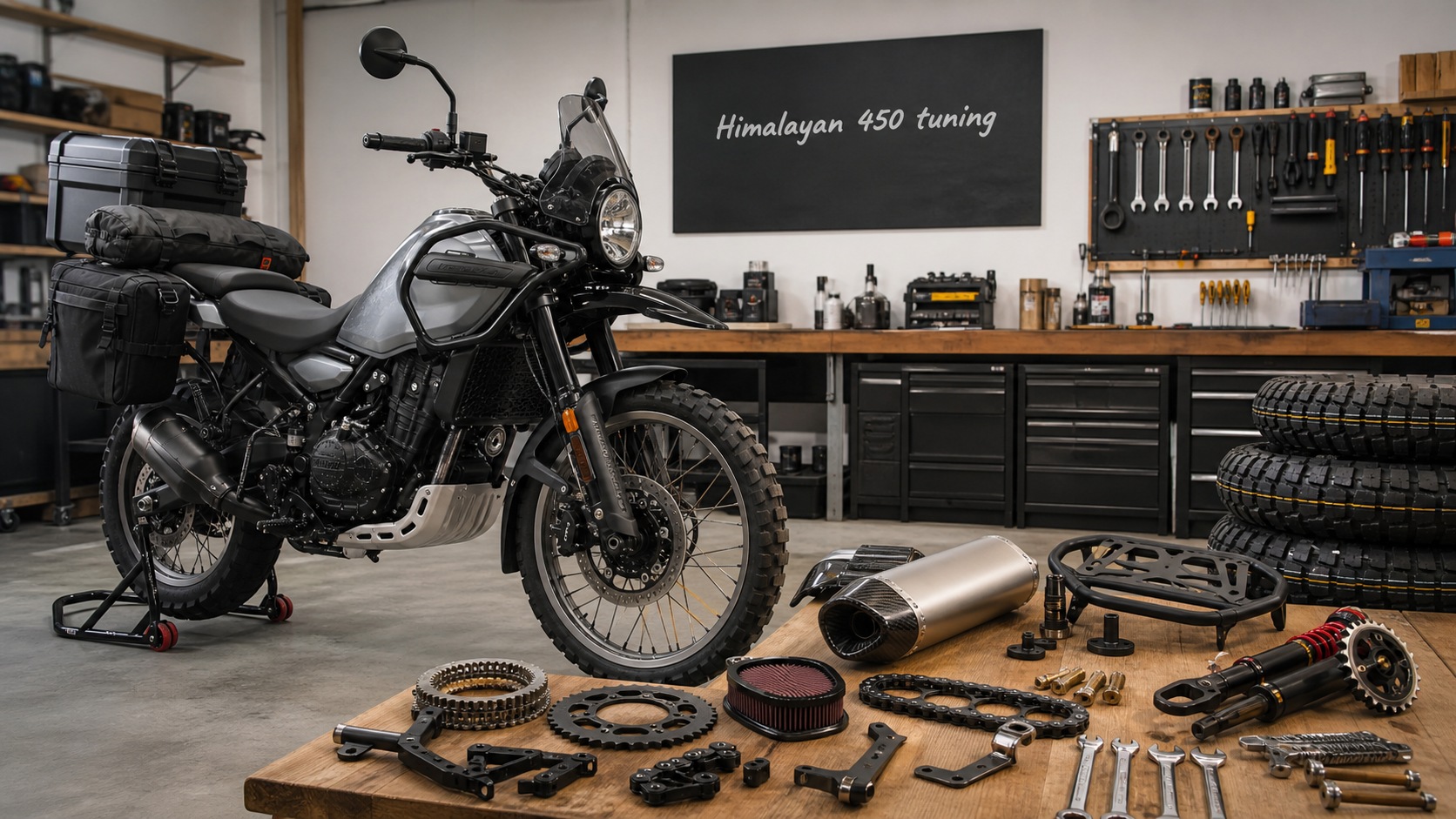
Himalayan 450 tuning: a practical adventure-bike guide to exhaust, ECU, gearing, suspension and trail-ready reliability
Himalayan 450 tuning is not about turning Royal Enfield’s adventure single into a race bike. It is about making the motorcycle work better for the way it is actually ridden: commuting during the week, carrying luggage, climbing mountain roads, handling gravel, surviving heat and still feeling calm when the road turns broken. The new 450 is already a much stronger platform than the old 411, so tuning should be precise rather than desperate.

The smartest Himalayan 450 tuning starts with a baseline: service condition, chain tension, tyre pressure, spoke tension, brake feel, suspension sag and how the engine behaves when hot. After that, the upgrades that usually make sense are a well-chosen exhaust, clean intake strategy, careful ECU or fuel correction, realistic gearing, better tyres, suspension setup and protection parts that do not overload the bike.
A good Himalayan 450 tuning plan should improve response without damaging the bike’s travel character. If a modification makes the motorcycle louder but worse on long days, weaker at low rpm, hotter in traffic or more fragile off-road, it has failed the real brief. This guide is written from a mechanic’s perspective: what to check first, what parts actually change the ride, and how to test changes without fooling yourself.
Search intent and related keywords
The Search Console cluster is strong and clear: Himalayan 450 tuning, Royal Enfield Himalayan 450 tuning, Himalayan 450 ECU remap, Himalayan 450 exhaust, centralina Himalayan 450, remap Himalayan 450, Royal Enfield Himalayan performance, Himalayan 450 air filter, Himalayan 450 gearing, Himalayan 450 suspension, adventure bike tuning, Sherpa 450 engine, Himalayan 450 power increase, Himalayan 450 slip-on exhaust, Himalayan 450 mapping, Himalayan 450 accessories, Himalayan 450 tyres, Himalayan 450 luggage and Himalayan 450 off-road setup.
That tells us riders are not asking one narrow question. They want to know how far Himalayan 450 tuning can go before it stops being useful. Some want more power for road riding. Some want smoother low-speed control off-road. Some want better luggage handling. Some are fitting exhausts and need to know whether fueling has to be checked. All of those needs belong in one serious guide.
| Search phrase | Real rider intent | Best first answer |
|---|---|---|
| ECU remap | Cleaner throttle and support for hardware changes | Scan and baseline the bike before mapping |
| Exhaust tuning | Less weight, better sound, possible response | Choose road-legal parts and test fueling |
| Power increase | Better overtaking and loaded hill climbing | Use exhaust, intake and mapping as a package |
| Off-road setup | More control on gravel and trails | Tyres, suspension sag and protection before horsepower |
Know the platform before modifying it
The Himalayan 450 uses Royal Enfield’s liquid-cooled Sherpa 450 single, a major change from the old air/oil-cooled 411. That matters because old Himalayan advice does not automatically apply. The 450 has a different engine, six-speed gearbox, different electronics and a more modern chassis. Treating it like a 411 with a bigger piston is the first mistake in Himalayan 450 tuning.
Use official model information as the starting point. Royal Enfield’s own Himalayan page is the best first reference for current model details and accessories: Royal Enfield Himalayan. For road legality in Europe, especially around emissions and type approval, the broader L-category framework is explained in Regulation (EU) No 168/2013.
Before buying anything, confirm model year, market, emissions version, stock or modified exhaust, intake condition and whether the bike has stored fault codes. Sensible Himalayan 450 tuning depends on the exact motorcycle, not just the badge on the tank.
Baseline service and inspection
The first stage of Himalayan 450 tuning is boring but powerful: check the basics. Chain slack, spoke tension, tyre pressure, brake pad condition, coolant level, oil level, air filter cleanliness, throttle feel, clutch adjustment and fasteners all affect how the motorcycle feels. An adventure bike that has been ridden on dust, rain and gravel can lose sharpness long before it needs performance parts.
Inspect the airbox if the bike has seen dirt. Check radiator fins if it has been used in mud. Look for loose luggage racks, tired wheel bearings, bent levers, chain tight spots and damaged handguards. A motorcycle carrying travel equipment can develop small problems that feel like poor engine performance.
Record the current behaviour
Before changing parts, write down how the bike behaves. A useful Himalayan 450 tuning baseline includes cold start, hot restart, idle stability, steady 50-70 km/h throttle, hill pull, top-gear roll-on, engine braking, fan behaviour, fuel consumption and vibration. Without that baseline, a louder exhaust can trick you into believing the bike is stronger.
Exhaust tuning without losing travel manners
A slip-on exhaust is one of the most common Himalayan 450 tuning upgrades. It can reduce weight, improve sound and clean up the rear of the bike visually. But the Himalayan is not a short-distance showpiece. It is often ridden for hours, loaded with luggage and used off-road. The exhaust must survive vibration, heat, dust and pannier clearance.
Choose an exhaust with proper brackets, heat shielding, sensor compatibility where relevant and road approval for your market. Avoid setups that drone badly at cruising speed. A pipe that sounds exciting for ten minutes can become exhausting after a 400 km day.
When fueling needs checking
If the exhaust changes flow substantially, or if the catalytic layout is altered, fueling should be checked. Lean hesitation, hot smell, excessive popping, poor low-speed control and rough steady throttle are warning signs. Good Himalayan 450 tuning should make the engine easier to use, not more nervous.
Air filter and intake changes
Adventure bikes live in dirty air. That makes intake work different from street-bike tuning. A high-flow filter can be useful if it seals well, but filtration quality matters more than marketing. Dust ingestion is not a performance upgrade. For most riders, Himalayan 450 tuning should keep the airbox sealed and focus on a quality filter that can be maintained correctly.
If the bike is used on dusty tracks, inspect and service the filter more often than the road-only schedule suggests. If intake and exhaust changes are combined, fueling becomes more important. More air only helps when the engine receives the correct fuel and the filter still protects the cylinder.
ECU remap, fuel modules and throttle feel
Electronic tuning is where Himalayan 450 tuning can become either excellent or messy. A careful ECU remap or fuel module can smooth throttle transitions, support exhaust/intake changes and improve roll-on response. A poor map can create warning lights, hot running, rich fuel smell, hesitation or bad cold starts.
Do not remap a bike with unresolved faults. Scan it first if possible. Check battery health, sensor connections, air leaks and exhaust leaks. Then decide what you want from mapping: smoother low-speed control, better mid-range, support for hardware changes or a more refined throttle. Be specific. A map built only for a dyno peak may not be the best map for an adventure bike.
| Electronic change | What it can improve | What to watch |
|---|---|---|
| Mild fuel module | Response after intake/exhaust changes | Connector fitment and conservative settings |
| ECU remap | Throttle, fueling and mid-range delivery | Quality of tuner and diagnostic backup |
| Throttle adaptation/reset | Can clean up feel after service | Use proper procedure for the bike |
| Maximum-power map | Possible dyno gain | Heat, fuel consumption and off-road control |
Gearing and sprocket changes
Gearing is one of the most honest forms of Himalayan 450 tuning. A slightly shorter final drive can make loaded hill starts and slow trail work easier. A taller setup can reduce revs on open roads but may make the bike weaker with luggage or into headwind. The right choice depends on terrain, rider weight, luggage and how often the bike sees highways.
Do not gear the motorcycle for an imaginary top-speed run if you bought it for travel. If the bike spends time on gravel, steep roads or two-up touring, usable control matters more than a few rpm at cruise. Count the sprocket teeth already fitted before ordering, because a used bike may not still be stock.
Suspension setup before suspension parts
Many riders jump to suspension upgrades before measuring sag. The Himalayan 450 carries different loads: solo rider, panniers, camping kit, passenger, crash bars and tools. A proper Himalayan 450 tuning suspension setup starts with sag, preload, tyre pressure and realistic weight distribution.
If the front feels vague, check tyre condition and pressure before blaming the fork. If the rear squats with luggage, adjust preload before buying parts. If the bike bottoms off-road, then springs, shock quality or damping may need work. A well-set stock suspension can be better than expensive parts adjusted badly.
Tyres: the upgrade that changes everything
Tyres are often the most noticeable Himalayan 450 tuning change. A road-biased tyre makes the bike calmer on asphalt. A more aggressive adventure tyre improves loose-surface grip but can add noise, slower steering and faster wear. Choose based on where the bike actually rides, not on how rugged the tread looks in photos.
| Use case | Tyre direction | Trade-off |
|---|---|---|
| Mostly road touring | Road-biased adventure tyre | Less bite in mud or loose gravel |
| Mixed road and gravel | 50/50 adventure tyre | More noise and wear than road rubber |
| Trail-heavy riding | More aggressive tread | Slower road steering and vibration |
| Loaded travel | Strong carcass and correct pressure | Can feel firmer when unloaded |
Protection parts and weight discipline
Crash bars, skid plates, handguards and luggage racks are part of real-world Himalayan 450 tuning, but every accessory adds weight. Too much protection can make the bike feel heavier, raise the centre of gravity and add vibration. Fit what protects the way you ride, not every part in the catalogue.
A strong sump guard makes sense for rocky tracks. Handguards make sense if the bike falls or hits brush. Radiator protection is sensible if the bike sees stones and mud. Oversized luggage racks and heavy decorative parts should be questioned. Adventure tuning is as much about restraint as equipment.
Cooling and heat management
The 450’s liquid-cooled engine is a big step forward, but heat still matters. Slow trails, loaded climbs, hot cities and mud-blocked radiator fins all create stress. After Himalayan 450 tuning, pay attention to fan cycling, coolant level, radiator cleanliness and whether the bike smells hot after slow work.
Do not block airflow with badly positioned accessories. Keep radiator guards practical, not decorative armor that traps mud. If a remap or exhaust change increases heat, investigate before long trips. Reliable adventure performance is worth more than one extra peak number.
Stage plan for the Himalayan 450
A structured Himalayan 450 tuning plan keeps the bike balanced. Stage 0 restores and measures. Stage 1 improves rideability. Stage 2 matches breathing and electronics. Stage 3 is specialist work for riders who understand the compromises.
Stage 0: service and setup
Check chain, tyres, spokes, brakes, fluids, air filter, fasteners, sag and luggage fitment. Ride the bike and record the baseline.
Stage 1: practical ride improvement
Choose tyres for your terrain, set suspension sag, fit sensible protection, adjust gearing if needed and keep the bike light. This is often the most useful Himalayan 450 tuning for riders who travel.
Stage 2: breathing and mapping
Add a quality exhaust, maintain good filtration and use careful fuel correction or remapping if the hardware requires it. Test low-speed control, loaded roll-on and hot running, not just full throttle.
Stage 3: specialist performance work
Internal engine work, aggressive mapping and major hardware changes should be left to specialists. They may be interesting, but they can compromise warranty, legality, heat management and travel reliability.
Testing after modifications
After any Himalayan 450 tuning, use a repeatable test route. Include slow town riding, a hot restart, a steep hill, a rough road, a steady cruise and a short overtaking pull. Check fuel economy and heat afterward. If the bike is better only during one full-throttle moment but worse everywhere else, the setup is not right.
Recheck fasteners after the first ride. Exhaust brackets, bash plates, luggage racks and handguards can settle. Chain slack should be checked after gearing changes. Tyre pressure should be adjusted for load. A travel bike needs post-install inspection because it will be asked to work far from home.
A good Himalayan 450 tuning notebook should include sprocket sizes, tyre model, pressure used with luggage, suspension settings, exhaust part number, mapping date and fuel economy. When the bike later feels different on a trip, those notes help you separate normal wear from a setup problem.
Long-distance reliability checks
For a motorcycle used on travel roads, reliability checks are part of the upgrade, not an afterthought. Before a long ride, inspect the chain guide, wheel spokes, rack bolts, exhaust mounts, brake pads, clutch free play, coolant level and any wiring added for accessories. A loose rack or rubbing wire can ruin a trip faster than a small power gain can improve it. Pack the tools needed for the fasteners you have actually changed, not only the factory toolkit.
After dusty or wet riding, clean around the airbox, radiator and chain before judging performance. Mud on the radiator can raise temperature. Dust in the filter can soften throttle response. A dry chain can make the bike feel rough. These are normal adventure-bike realities, and they matter more as the motorcycle carries luggage and works harder.
Common mistakes
The first mistake in Himalayan 450 tuning is copying old Himalayan 411 advice. The second is fitting a loud exhaust without checking fueling. The third is adding too much heavy protection. The fourth is ignoring suspension sag. The fifth is using tyres that look adventurous but do not suit the actual riding.
Another mistake is chasing peak horsepower at the expense of control. The Himalayan is an adventure motorcycle. Smooth throttle, predictable engine braking, stable luggage handling and cooling matter more than a dyno headline.
Internal guides worth reading next
If you are comparing adventure and touring setups, read the Voge 300 Rally suspension upgrade guide for chassis thinking on a smaller adventure bike. The Honda CB500X tuning article gives a useful parallel for mid-size travel bikes. For another torque-focused motorcycle, see Moto Guzzi V7 850 power increase. If you are considering electric/off-road tuning logic, the KTM Freeride E tuning guide is a different but useful comparison.
FAQ
What is the best first upgrade?
The best first Himalayan 450 tuning upgrade is setup: tyres for your terrain, correct pressure, sag, chain condition and a clean air filter. These change real riding more than many engine parts.
Does the Himalayan 450 need an ECU remap?
Not always. A stock bike may not need mapping. If exhaust or intake flow changes, or if throttle response becomes uneven, then a careful remap or fuel correction can make sense.
Is an exhaust worth fitting?
A good exhaust can reduce weight and improve sound, but it must be durable, legal for your market and tested for fueling. Loudness alone is not performance.
Should I change sprockets?
Sprockets can help if you ride loaded, off-road or in hills. A shorter setup can improve control, while a taller setup may hurt pull. Test based on your real routes.
Can the Himalayan 450 be made much faster?
Himalayan 450 tuning can improve response and usability, but the bike should remain a reliable adventure single. If the goal is much higher road speed, a different motorcycle may be the honest answer.
Final verdict
Himalayan 450 tuning works best when it respects the motorcycle’s mission. The 450 has enough engine to be enjoyable, enough chassis to travel and enough electronics to benefit from careful setup. It does not need reckless modifications to become better.
The smartest Himalayan 450 tuning result is a bike that starts cleanly, pulls better when loaded, stays cool in slow work, feels stable on gravel and remains dependable far from home. Build toward that result and every part has a reason.