
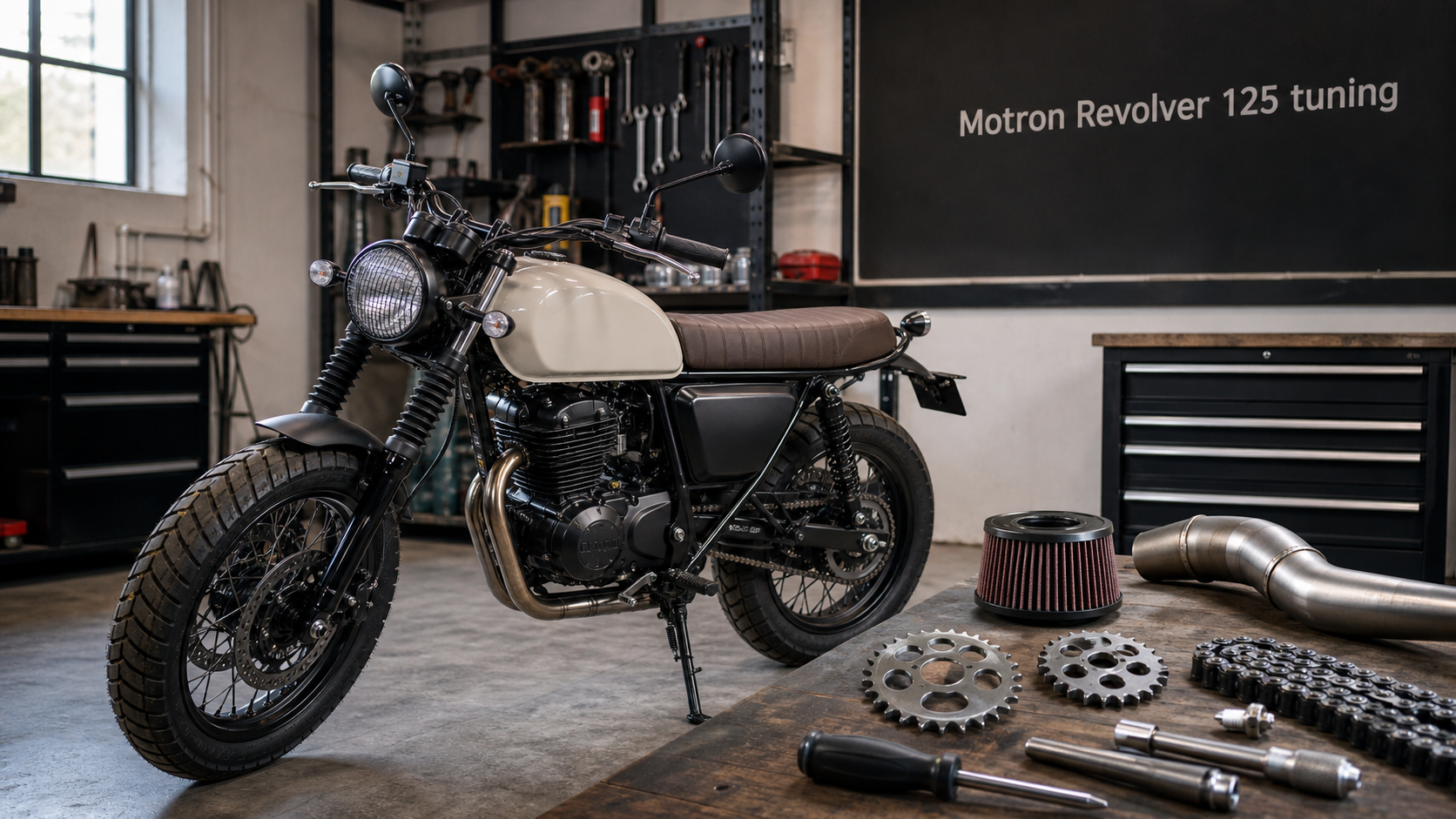
Motron Revolver 125 tuning: a practical mechanic’s guide to safe power, exhaust, gearing and setup
Motron Revolver 125 tuning starts with a reality check. The Revolver 125 is a small retro-style 125, so the best upgrades are not about chasing impossible horsepower numbers. They are about making the bike start cleanly, pull better through the middle of the rev range, feel sharper off the throttle, use the correct gearing and stay reliable for daily riding.

Owners searching for Motron Revolver 125 tuning usually want the same thing: more response, a better sound, a little more hill-climbing confidence and a bike that does not feel flat with a heavier rider or a passenger. Those are reasonable goals. The mistake is expecting a 125 cc commuter engine to become a larger motorcycle because of an exhaust, filter or plug-in module.
The right Motron Revolver 125 tuning approach is staged. First confirm the engine is healthy. Then check gearing, chain, tyres and brakes. After that, consider intake, exhaust and fueling changes as a matched package. If the bike is still new, ride it long enough to understand its normal behaviour before changing everything at once.
What the search data says
The keyword cluster is clear: Motron Revolver 125 tuning, Motron Revolver 125 performance, Motron Revolver 125 exhaust, Motron Revolver 125 problems, Motron Revolver 125 power increase, 125cc tuning, retro 125 tuning, air filter upgrade, sprocket change, ECU module, carburettor setup, fuel injection tuning and road-legal exhaust. The rider behind those searches is not looking for theory. They want to know what is worth doing first.
This guide treats Motron Revolver 125 tuning as a workshop process. If the bike hesitates, you diagnose. If it feels short-geared, you measure. If the exhaust is changed, you check fueling. If the bike is weak on hills, you look at the full picture: rider weight, wind, gearing, valve condition, fuel quality, tyre pressure and chain drag.
| Owner goal | Best first move | What not to do |
|---|---|---|
| Better acceleration | Service health, chain condition and gearing | Fit random electronics before diagnosis |
| More sound | Road-legal exhaust with correct fitment | Remove baffles and lose low-rpm pull |
| Higher cruising speed | Reduce drag and check gearing realistically | Overgear the bike until fifth becomes weak |
| Cleaner throttle response | Air filter, plug, fueling and intake leaks | Mask a fault with tuning parts |
Know the 125 cc limit
Every Motron Revolver 125 tuning plan has to respect the size of the engine. A 125 four-stroke has limited torque. It can be made crisper and more efficient, but it cannot ignore physics. Wind resistance, rider weight, gradients and gearing affect performance heavily. A small change that feels strong in town may not change top speed much at all.
In Europe, 125 cc motorcycles are often tied to A1 licence limits and type approval rules. The European framework for L-category vehicles is set out in Regulation (EU) No 168/2013. Before modifying a road bike, check your licence, insurance and inspection rules. Tuning that creates legal trouble is not a good upgrade.
For manufacturer and brand context, check official brand/importer information where available, such as KSR Group, because Motron has been distributed through European importer networks. Use official sources for year, market and parts compatibility whenever possible, especially before ordering electronics or exhaust components.
Baseline service before parts
The first step in Motron Revolver 125 tuning is service condition. Check oil level and age, spark plug, air filter, valve clearance, battery voltage, charging output, chain tension, sprocket wear, brake drag and tyre pressure. Many 125s feel slow because they are slightly out of adjustment in several small ways.
A tight chain can steal response. Low tyre pressure can make the bike feel heavy. A dirty filter can soften throttle. Tight valves can make warm starting and performance worse. Old fuel can cause hesitation. These are not exciting upgrades, but they are the foundation of real Motron Revolver 125 tuning.
Valve clearance and compression
If the bike has mileage on it or symptoms when hot, valve clearance matters. Tight valves reduce sealing and can make the engine feel flat. A compression check is useful if the bike feels weak compared with a similar 125. Do not tune around a tired engine.
Air leaks and intake rubber
Small engines are sensitive to intake leaks. A cracked rubber boot or loose clamp can create lean running, poor idle and hesitation. Before any Motron Revolver 125 tuning part is fitted, inspect the intake path carefully.
Air filter and intake options
A clean standard filter is usually the best first intake step. A freer-flowing filter can help if it seals properly and the fueling can support it, but an exposed pod filter is not automatically better. Many retro 125 owners fit open filters for looks and sound, then lose smoothness in traffic.
For mild Motron Revolver 125 tuning, keep filtration strong. The bike may see rain, dust, short trips and city traffic. A bad intake setup can let dirt in, pull hot air or make the mixture unstable. If you change intake flow, test cold start, warm idle, steady cruise and full-throttle pull.
Exhaust tuning: sound without losing torque
An exhaust is the most visible Motron Revolver 125 tuning upgrade. It can reduce weight, improve appearance and give the small single a deeper sound. But the exhaust should be chosen for rideability, not only volume. A very open pipe can make a 125 weaker at the rpm used most on the road.
Use a system with proper brackets, heat protection, sensor compatibility if needed and road approval where required. If the bike begins to pop excessively, surge, smell hot or hesitate after an exhaust change, fueling must be checked. A louder bike is not automatically a faster bike.
| Exhaust symptom | Likely cause | Correct response |
|---|---|---|
| More noise but weaker low rpm | Pipe too open or poor match | Use a baffled/approved system or retune |
| Popping on deceleration | Air leak or lean condition possible | Check joints, gaskets and fueling |
| Hot smell after hard riding | Lean mixture or exhaust leak possible | Stop testing and inspect |
| Rattles after installation | Bracket stress or loose hardware | Refit with correct alignment |
Fueling, ECU modules and carburettor versions
Depending on year and market, small 125 motorcycles may be carburetted or fuel injected. Confirm what your bike actually has before buying parts. Motron Revolver 125 tuning on a carburetted bike means jetting, needle position, float height and intake sealing. On a fuel-injected version, it means sensor health, ECU strategy, possible fuel module compatibility and fault-code checks.
For carburettor work, do not overjet because it “feels safer.” Too rich can be soft and smoky. Too lean can be hot and hesitant. For fuel injection, do not plug in a module before confirming the bike is fault-free. Electronics should refine a healthy setup, not hide a problem.
A useful Motron Revolver 125 tuning fuel check is done in stages. First judge idle and low throttle in town. Then test a steady cruise. Finally test a short full-throttle pull where legal and safe. If the bike is clean at full throttle but poor in the middle, the problem may not be the main jet or maximum fuel correction. It may be needle position, transition fueling, intake sealing or exhaust mismatch.
Sprocket gearing: the most honest performance change
Gearing changes can be more noticeable than engine parts. Shorter gearing helps the bike pull away and climb hills. Taller gearing can reduce cruising rpm but may make top gear weak. This is one of the most practical areas of Motron Revolver 125 tuning because it changes how the existing power reaches the rear wheel.
Do not make large changes without testing. If you ride in hills or carry a passenger, shorter gearing may make the bike more pleasant. If you ride flat roads and want calmer cruising, a slight taller change may help. If the engine cannot pull the taller ratio, top speed can actually get worse.
The best Motron Revolver 125 tuning gearing choice depends on roads, not ego. A rider in a windy coastal area may prefer stock or shorter gearing because the bike has to fight air resistance. A lighter rider on flat roads may tolerate a slightly taller ratio. Always count the teeth already fitted before ordering, because used bikes may not still have factory gearing.
| Riding situation | Gearing direction | Trade-off |
|---|---|---|
| City riding and hills | Slightly shorter | More rpm at cruise |
| Flat commuting | Stock or slightly taller | May reduce pull in top gear |
| Passenger use | Slightly shorter | More frequent shifting |
| Top-speed chasing | Only after service checks | Wind and power may still limit speed |
Clutch, chain and rolling resistance
A 125 cannot afford wasted power. Chain drag, worn sprockets, sticky brakes and poor wheel bearings can ruin performance. Before spending on Motron Revolver 125 tuning parts, put the bike on a stand and check how freely everything moves.
Adjust the chain at the tightest point. Lubricate it properly. Inspect sprocket teeth. Check brake calipers and rear brake adjustment. Confirm wheel bearings feel smooth. These simple checks often make a small bike feel cleaner because less power is being wasted.
Ignition and spark plug choices
A fresh correct-spec spark plug is cheap and important. Do not use an incorrect heat range because someone online called it a racing plug. The ignition system should be healthy, the cap should fit securely and the plug colour should be checked after tuning changes. Sensible Motron Revolver 125 tuning uses the correct parts, not the most exotic-looking ones.
Suspension, tyres and brakes
Power is only useful if the bike feels safe. Tyres, brake pads, fork condition and rear shocks should be part of Motron Revolver 125 tuning. Old tyres can make a bike feel slow through corners because the rider cannot trust it. Weak brakes make higher speed less useful. Poor suspension turns a nice retro 125 into a nervous machine on rough roads.
Choose tyres that match your roads. Set pressure cold. Check brake fluid age if hydraulic brakes are fitted. Inspect pads and discs. If the rear shocks are tired, replacing them may make the bike feel more confident than a small engine modification.
Stage plan for the Revolver 125
A good Motron Revolver 125 tuning plan keeps the bike usable. Stage 0 restores the motorcycle. Stage 1 sharpens response. Stage 2 matches breathing and fueling. Stage 3 is only for owners who accept cost, legality and reliability compromises.
Stage 0: restore
Service oil, plug, filter, valves, chain, sprockets, brakes and tyres. Fix intake leaks and electrical issues. Ride the bike after service before deciding it needs performance parts.
Stage 1: sharpen
Consider gearing suited to your roads, a quality air filter, clean chain setup and careful throttle/fueling checks. This is where most riders get the best value from Motron Revolver 125 tuning.
Stage 2: breathe and tune
Fit a road-legal exhaust if desired, then support it with correct carburettor or fuel-injection setup. Test hot and cold behaviour. The motorcycle should be smoother, not just louder.
Stage 3: engine work
Big-bore ideas, cam work and internal modifications can become expensive and legally complicated. For most owners, the better choice is a well set up 125 or a larger motorcycle when the licence allows it.
Testing after modifications
After Motron Revolver 125 tuning, test the same route before and after. Use one hill, one open-road stretch and one town section. Record whether the bike pulls the same gear better, starts hot, idles cleanly and holds speed without extra vibration. Do not judge only by sound.
Recheck fasteners after the first ride. Look for exhaust leaks, chain slack changes, loose brackets, oil seepage and rubbing wires. If the bike has a warning light or abnormal heat, stop and diagnose before riding hard.
After a week of Motron Revolver 125 tuning, check the same points again. New exhaust gaskets can settle, chains can need readjustment, and cable ties can shift. A careful second inspection is what separates tidy workshop work from rushed modification.
Maintenance schedule after tuning
Tuned small motorcycles should be watched a little more closely than untouched bikes, especially after exhaust, intake or gearing changes. Keep notes for oil mileage, spark plug condition, chain adjustments, fuel consumption and any hot-start change. If the bike begins using more fuel, running hotter or vibrating more, the setup deserves another look.
A sensible Motron Revolver 125 tuning maintenance routine includes a plug check after the first longer ride, a fastener check after heat cycles and a chain inspection after the first week. If you changed gearing, compare fuel use and cruising rpm. If you changed exhaust or intake, check for leaks and discoloration around joints. Small problems are easiest to fix early.
Keep the original parts whenever possible. A standard airbox cover, original sprockets, factory exhaust parts and previous jets or sensors make troubleshooting easier later. If inspection rules change, if the bike is sold, or if a modification causes an unexpected side effect, returning to a known baseline is valuable. Label small parts in bags and write down what was changed, including dates and mileage. That simple habit saves hours of guessing when a minor running issue appears months after the upgrade.
Common mistakes
The first mistake in Motron Revolver 125 tuning is chasing top speed before service. The second is fitting a loud exhaust without checking mixture. The third is overgearing the bike because lower rpm sounds more comfortable. The fourth is using cheap filters that do not seal. The fifth is forgetting tyres and brakes.
Another mistake is copying settings from a different 125. Even if the engine looks similar, weight, exhaust, ECU, carburettor, sprockets and rider use can change the result. Tune your bike, not someone else’s comment.
Internal guides worth reading next
For another Motron platform, read the Motron Nomad 125 tuning guide. If you are comparing retro 125 motorcycles, the Brixton Cromwell 125 tuning article is useful. The Keeway RKF 125 tuning guide explains a sportier 125 approach, while UM Renegade Commando 125 tuning is helpful for another small cruiser-style setup.
FAQ
What is the best first upgrade?
The best first Motron Revolver 125 tuning upgrade is a full service and setup check. If the chain, tyres, filter, plug and valves are wrong, performance parts will not fix the real problem.
Does an exhaust add power?
A good exhaust can improve sound and may support response when matched correctly, but a very open pipe can reduce low-rpm torque. Always check fueling after major exhaust changes.
Should I change sprockets?
Sprockets can help if your riding needs better acceleration or hill climbing. Make small changes and test. Taller gearing is not automatically faster on a 125.
Is an ECU module worth it?
It can be useful on a compatible fuel-injected bike, especially after intake or exhaust changes. It should be installed only after the motorcycle is healthy and fault-free.
Can the Revolver 125 become much faster?
Motron Revolver 125 tuning can make the bike more responsive and better matched to your roads, but it will not turn a 125 into a large motorcycle. The best gains are rideability gains.
Final verdict
Motron Revolver 125 tuning works when it is honest. Service the bike, reduce drag, choose gearing carefully, keep the intake sealed, use a sensible exhaust and support fueling only when needed. That creates a 125 that feels cleaner and more useful without becoming unreliable.
The smartest Motron Revolver 125 tuning result is not the loudest bike outside the cafe. It is a Revolver that starts easily, pulls better through real roads, stays legal, keeps its retro character and remains dependable enough to ride every day.