
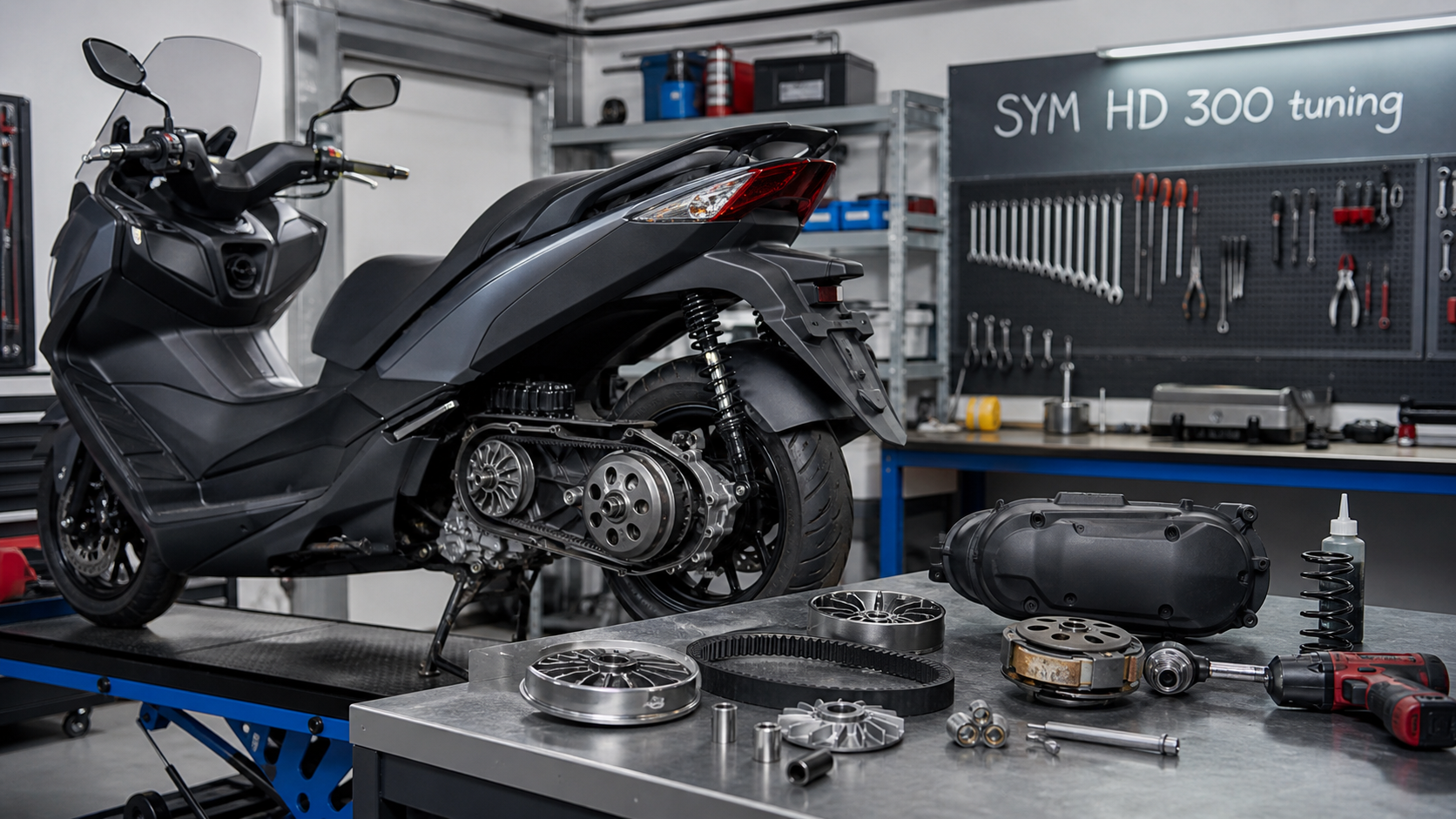
SYM HD 300 tuning: a mechanic’s guide to CVT setup, exhaust, fueling and reliable scooter performance
SYM HD 300 tuning should start with one simple idea: this is a practical high-wheel 300-class scooter, not a race bike in disguise. The HD 300 can be made sharper, stronger from the lights and more confident on fast roads, but the best gains come from setup quality rather than throwing random parts at it. A healthy variator, correct belt, clean clutch, sensible exhaust and good tyres will do more for the rider than a loud pipe on a neglected scooter.

The riders searching for SYM HD 300 tuning usually want a scooter that pulls harder in town, climbs hills without feeling lazy, holds speed better with a passenger and feels more responsive after an exhaust or air-filter change. Those are realistic goals. What is not realistic is expecting a plug-in part or a noisy silencer to turn the HD 300 into a maxi-scooter with twice the displacement.
A good SYM HD 300 tuning plan works in stages: baseline service first, CVT inspection second, variator and roller choice third, then intake, exhaust and fueling only if the scooter needs it. Because the HD 300 is used for commuting, delivery, weekend rides and two-up riding, reliability matters. The perfect setup is not the one that feels wild for five minutes; it is the one that still starts, idles, cools and accelerates cleanly six months later.
Search intent and keyword cluster
The query behind this article appears as “sym hd 300 βελτιωση”, which is Greek for improvement or performance upgrade. It clusters naturally with SYM HD 300 tuning, SYM HD 300 variator, SYM HD 300 exhaust, SYM HD 300 performance, SYM HD 300 acceleration, SYM HD 300 rollers, SYM HD 300 sliders, SYM HD 300 clutch, SYM HD 300 belt, SYM HD 300 ECU, SYM HD 300 air filter, SYM HD 300 top speed and SYM HD 300 service. The real intent is not abstract SEO; it is a rider asking where money should be spent first.
That is why this SYM HD 300 tuning guide is written like a workshop conversation. Before buying a part, you need to know what the scooter is doing now. Does it rev too high without moving? Does it bog when hot? Does the clutch judder? Does the belt smell after hills? Does the engine feel clean but the scooter still accelerates slowly? Each symptom points to a different fix.
| Owner search | Likely real problem | Best first check |
|---|---|---|
| More acceleration | CVT not holding the engine in the right range | Variator, belt width, rollers and clutch |
| More top speed | Power, gearing, wind and belt condition limit speed | Baseline service and belt/variator inspection |
| Exhaust tuning | Owner wants sound and possible response | Road-legal exhaust and fueling behaviour |
| Hill climbing | CVT heat, roller weight or worn belt | Belt, clutch, variator faces and test ride |
Know the HD 300 before changing parts
The HD 300 belongs to SYM’s practical high-wheel scooter family. Depending on market and year, the exact displacement, emissions equipment, ABS/CBS equipment and ECU strategy can vary. Before ordering parts for SYM HD 300 tuning, confirm model year, engine code, emissions standard, belt specification, roller size and whether the scooter is stock.
Use official manufacturer information where available. SYM’s global site is the safest starting point for model-family reference and brand information: SYM Global. For road-use limits in Europe, the type-approval framework for L-category vehicles is set out in Regulation (EU) No 168/2013. Those two references matter because tuning that ignores model identity or road legality can become expensive very quickly.
Many parts listings group several SYM scooters together. Do not assume that a variator kit for another 300-class SYM model automatically suits your HD 300. The engine family may be related, but belt length, ramp angle, clutch diameter, sensor layout and emissions year can differ. Careful SYM HD 300 tuning begins with fitment, not enthusiasm.
Baseline service: the cheapest performance gain
The first stage of SYM HD 300 tuning is not glamorous. Change old oil, check coolant, inspect spark plug condition, clean or replace the air filter, scan for fault codes if possible, inspect intake rubbers, check tyre pressure and make sure the brakes are not dragging. A scooter with a dirty filter, old belt and sticky rear brake can feel transformed after basic work.
On a CVT scooter, maintenance is performance. The engine can be healthy, but if the transmission is dusty, the rollers are flat-spotted, the belt is narrow or the clutch bell is glazed, acceleration becomes dull. Owners often blame the ECU or exhaust when the real problem lives under the CVT cover.
Record a baseline ride
Before any SYM HD 300 tuning part is fitted, ride the scooter and write down how it behaves. Note rpm feel, launch smoothness, cruising speed, hill behaviour, vibration, fuel consumption, hot restart and whether there is belt smell after hard use. If you do not record the baseline, you will not know if the part improved performance or merely changed the noise.
A useful SYM HD 300 tuning baseline includes the same route before and after the change. Use one hill, one stop-start traffic section and one steady cruise section. A scooter can feel exciting for the first kilometre after a noisy part is fitted, but only repeatable testing shows whether the change really improved drive.
CVT tuning: where the HD 300 really responds
The CVT is the heart of SYM HD 300 tuning. It decides how quickly the engine reaches its useful rpm range and how efficiently that power reaches the rear wheel. Variator weights, slider shape, belt condition, contra spring, clutch shoes and bell temperature all influence how the scooter launches and accelerates.
Lighter rollers or sliders usually let the engine rev higher before the transmission upshifts. That can make the scooter feel stronger off the line and on hills. Too light, however, and the engine can scream without adding speed. Heavier weights can calm cruising rpm but may make the scooter lazy. The correct choice depends on rider weight, passenger use, local hills, exhaust setup and how much engine speed you can tolerate.
| CVT change | What it can improve | Risk if wrong |
|---|---|---|
| Fresh OEM-quality belt | Restores ratio range and grip | Cheap belts can slip or wear fast |
| Lighter rollers/sliders | Sharper launch and hill response | Too much rpm, heat and noise |
| Performance variator | Smoother ratio change and better acceleration | Poor fitment can reduce reliability |
| Clutch service | Cleaner takeoff and less judder | Aggressive springs can make traffic annoying |
| Contra spring change | Can hold ratio under load | Extra belt heat if overdone |
Variator and rollers
For most owners, the best SYM HD 300 tuning result comes from a clean variator, measured belt and carefully chosen roller or slider weight. Do not start with the most aggressive kit. Start with a known baseline and make small changes. If the scooter accelerates better but cruises at a tiring rpm, adjust again. If it revs higher but does not gain road speed, the setup is inefficient.
Belt width and heat
A worn belt can make the scooter feel slower because it changes the effective gearing. Measure the belt instead of judging it by appearance. Belt dust, glazing, cracks, smell and inconsistent acceleration are all clues. Serious SYM HD 300 tuning protects the belt because a daily scooter that eats belts is not well tuned.
Clutch and bell condition
If the HD 300 shudders when pulling away, the clutch may be glazed or contaminated. Clean the bell, inspect shoe wear and check for heat marks. A clutch problem can mimic poor engine performance. Fix that before fitting exhaust or electronic parts.
Exhaust tuning without ruining the scooter
An exhaust can be part of SYM HD 300 tuning, especially if the owner wants a deeper sound, lighter rear section or a little more character. The best exhaust for a commuter scooter is not always the loudest one. It should fit correctly, keep heat shielding sensible, include any required approval for your market and avoid making the engine weak at low and mid rpm.
Too many scooter builds lose rideability because the exhaust is chosen for volume. A 300-class single needs usable torque. If the pipe makes the scooter drone, pop excessively, smell hot or hesitate at steady throttle, the setup is not finished. A road-legal silencer with correct brackets and careful fueling checks is usually a better long-term choice than an open pipe.
Air filter and intake changes
Intake work should be conservative on a practical scooter. A fresh quality filter is often enough for mild SYM HD 300 tuning. Open filters can bring more induction noise and possible airflow changes, but they can also pull hot air, admit water or dirt and make fueling less stable. The airbox exists for a reason, especially on a scooter ridden in traffic and rain.
If the air filter is old, replacing it may restore response. If the intake is modified together with an exhaust, then fueling behaviour must be checked. Do not assume more air equals more power. The mixture still has to be correct, and the engine still has to stay cool.
ECU, fuel modules and remapping
Electronic changes can help SYM HD 300 tuning when the hardware needs support. A mild fuel module or professional ECU calibration can improve throttle response after intake/exhaust changes, but it should not be used to hide maintenance problems. Scan for errors first, inspect wiring and make sure sensors are working correctly.
A poor electronic setup can create warning lights, rich fuel smell, lean hesitation, poor cold starting or hot running. If the scooter already runs cleanly with stock hardware, CVT work may give a more noticeable result than electronics. If the scooter has a freer exhaust and intake, fuel correction becomes more relevant.
Gearing, tyres and chassis setup
Because the HD 300 is a high-wheel scooter, chassis condition matters. Old tyres, low pressure, tired shocks or dragging brakes can make the scooter feel slower because the rider cannot trust it. A complete SYM HD 300 tuning plan includes tyres, brakes and suspension, not just engine parts.
Check tyre pressure cold. Inspect tread profile, not just tread depth. A squared rear tyre can make the scooter feel heavy. Brake pads, discs, fluid age and caliper movement should also be checked. If you ride two-up, set rear preload correctly. Better confidence can make the scooter faster on real roads than a tiny engine change.
Daily-rider setup
The best daily SYM HD 300 tuning setup is moderate: full service, clean CVT, fresh belt if needed, sensible rollers or sliders, road-legal exhaust only if desired, clean air filter, good tyres and no extreme clutch springs. The scooter should launch smoothly, cruise calmly and restart cleanly after sitting in traffic.
Daily riding includes heat, rain, cold starts, stop-and-go traffic and occasional passenger weight. A setup that only feels good at full throttle is incomplete. The HD 300 should still crawl smoothly behind cars and pull away without judder when hot.
Sportier setup
A sportier SYM HD 300 tuning package can include a performance variator, matched weights, a quality exhaust, careful fuel correction if needed, premium tyres and fresh brake components. Even here, restraint matters. The goal is stronger acceleration and better response, not a scooter that becomes noisy, hot and tiring.
Test the setup on roads you actually use. If you ride hills, watch belt temperature and repeated launches. If you ride fast ring roads, check cruising rpm and vibration. If you carry a passenger, test two-up before deciding the roller weight is correct.
After sporty SYM HD 300 tuning, inspect the CVT again after a short running-in period. Fresh dust, belt marks, hot smell or new vibration are early warnings. A setup that feels strong but overheats the belt will cost more in the long run than it gains on the road.
Problem diagnosis after tuning
After SYM HD 300 tuning, every new symptom should be treated as information. Do not keep riding hard if the scooter smells hot, slips, surges or shows a warning light. Stop, inspect and correct the cause. The best tuners are patient because they understand that one poor setting can ruin an otherwise good build.
Good SYM HD 300 tuning also includes maintenance notes. Write down roller weight, belt brand, mileage, exhaust model and any fueling change. The next service becomes easier, and if the scooter later develops a fault, you can separate normal wear from the tuning work.
| Symptom | Likely area | First response |
|---|---|---|
| High rpm but weak acceleration | Rollers too light, belt slip or variator issue | Inspect belt and try a calmer weight |
| Judder from a stop | Clutch glazing or bell contamination | Clean/inspect clutch and bell |
| Hot smell after hills | CVT heat or belt slip | Stop hard testing and inspect transmission |
| Flat throttle after exhaust | Fueling or exhaust mismatch | Check leaks, sensor data and correction |
| Warning light | Sensor, wiring or calibration issue | Scan codes before further riding |
Common mistakes
The first mistake in SYM HD 300 tuning is fitting parts before servicing the scooter. The second is using roller weights copied from another rider without knowing their weight, roads and exhaust. The third is buying a loud exhaust and ignoring fueling. The fourth is forgetting belt width. The fifth is judging success only by top speed.
Another mistake is making the scooter unpleasant for the job it actually does. If the HD 300 is used every day, aggressive clutch springs, excessive rpm and loud exhaust drone can become irritating. A good setup feels stronger without making normal riding worse.
Internal guides worth reading next
If you want to compare scooter tuning paths, read the Kymco AK 550 tuning guide for a larger CVT scooter perspective. The BMW C400X tuning article is useful for understanding premium mid-size scooter setup. For another practical Honda high-wheel scooter comparison, see Honda SH 350 tuning. If you are working with smaller touring scooters, the Peugeot Satelis 125 power increase guide explains why service health matters before tuning.
FAQ
What is the best first upgrade for the SYM HD 300?
The best first SYM HD 300 tuning upgrade is usually a full service plus CVT inspection. A clean variator, healthy belt and correct roller condition can restore more performance than a random exhaust.
Will a performance variator make the HD 300 faster?
A good variator can improve acceleration and make the engine stay in a better rpm range. It may not increase true top speed. Fitment, belt condition and roller choice decide whether the result is useful.
Should I fit a sport exhaust?
A sport exhaust can be worthwhile if it is legal, well made and does not hurt low-rpm response. Check fueling and avoid pipes chosen only for loudness.
Do I need ECU tuning?
Not always. Mild SYM HD 300 tuning often responds more clearly to CVT work. ECU or fuel-module changes make more sense when intake or exhaust changes alter fueling demand.
Can I tune the HD 300 for two-up riding?
Yes, but choose a setup that manages heat and load. Slightly sharper CVT response, fresh belt, good tyres and correct preload are more useful than an extreme high-rpm setup.
Final verdict
SYM HD 300 tuning works best when it respects the scooter’s purpose. The HD 300 is practical, quick enough for real commuting and capable of feeling much better when the CVT, belt, clutch, tyres and fueling are right. It does not need reckless modifications to become more enjoyable.
The smartest SYM HD 300 tuning result is a scooter that launches cleaner, climbs better, cruises without stress and remains reliable in daily use. Start with service condition, tune the transmission carefully, add exhaust or electronics only when they solve a real problem, and test every change on the roads where the scooter actually lives.
When SYM HD 300 tuning is done with that mindset, the scooter keeps its everyday usefulness and gains the sharper response owners actually feel. That is the difference between a modified scooter and a properly set up one.