
Aprilia Pegaso 650 tuning
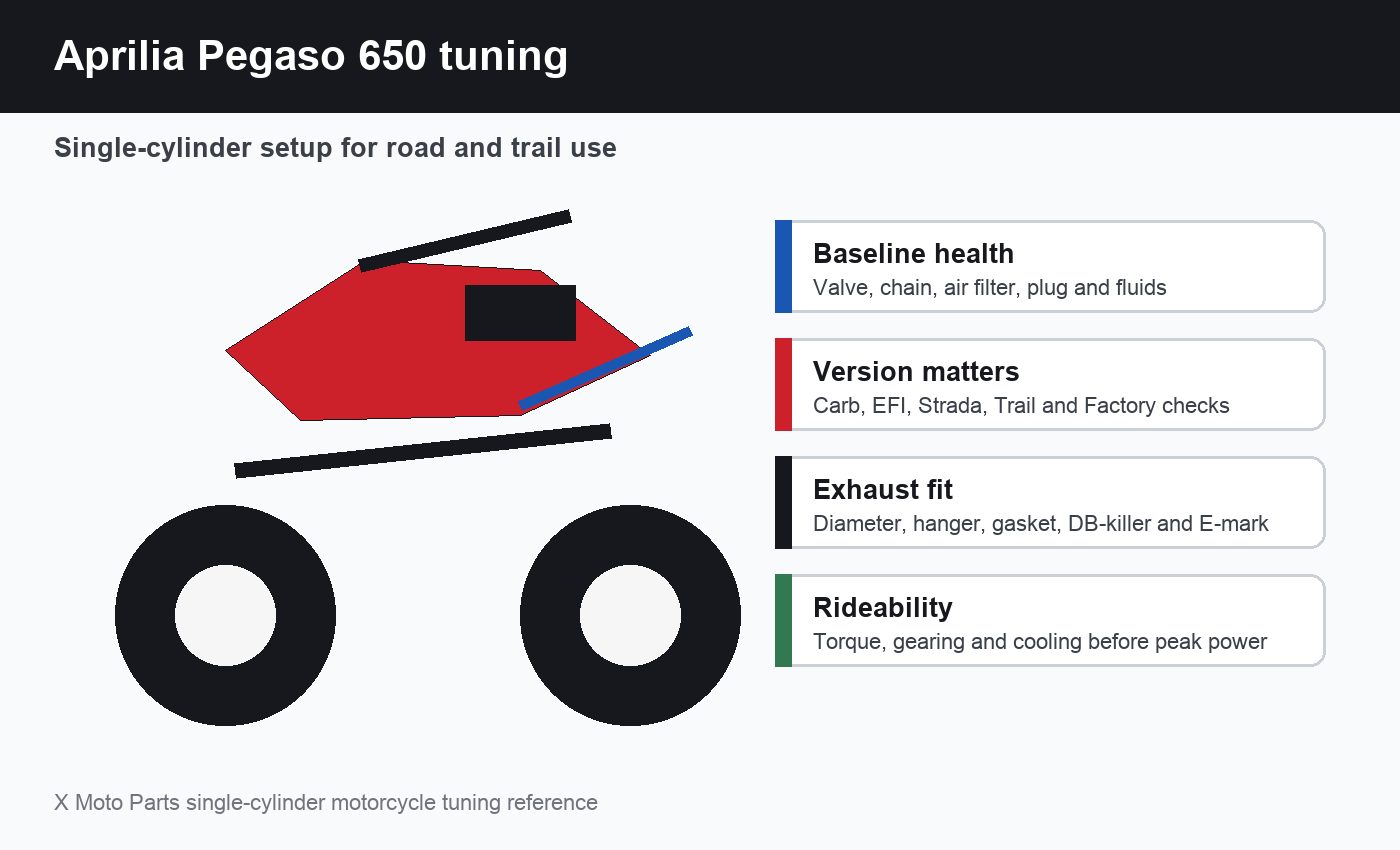
Aprilia Pegaso 650 tuning should make a big single-cylinder motorcycle easier to ride, stronger in the mid-range and more dependable, not simply louder. The Pegaso name covers different years and versions, from earlier Rotax-based machines to later models with different fuel systems and chassis trim, so a good upgrade plan starts with identifying the exact bike before buying parts.
Most owners want the same things: cleaner throttle response, less hesitation, stronger drive out of bends, a better exhaust note, improved gearing for road or light trail use and fewer rough spots at low rpm. Those goals are realistic. What is not realistic is expecting a mild exhaust, filter or plug-in module to turn the Pegaso into a modern twin-cylinder adventure bike. A well-set Pegaso remains a torquey, characterful single.
This guide explains how to approach tuning like a mechanic: baseline checks, exhaust fitment, carburettor or EFI logic, gearing and chain setup, compatibility between versions, road legality and the common mistakes that create surging, heat, noise and poor reliability.
Identify the exact Pegaso 650 version first
Aprilia Pegaso 650 tuning starts with the model year. Earlier Pegaso 650 machines and later Pegaso 650 Strada, Trail and Factory-style versions do not all use the same engine management, exhaust layout, airbox details, dashboard logic or chassis parts. Some owners use the same name for quite different motorcycles, which is why compatibility mistakes are common.
Before buying anything, write down the year, version, VIN details if needed, engine type, fuel system, current exhaust, airbox condition, sprocket sizes, chain pitch and any existing modifications. If the bike has been through several owners, do not assume it is standard. Used Pegasos often arrive with aftermarket silencers, missing DB-killers, altered gearing, open filters or old wiring repairs. A careful Aprilia Pegaso 650 tuning plan starts by finding out what has already been changed.
A realistic Aprilia Pegaso 650 tuning result is usually about mid-range torque and throttle smoothness. The engine is already large enough to feel strong on country roads, but a worn chain, dirty air filter, leaking exhaust gasket or badly chosen sprocket can make it feel rough and tired. Start by making the motorcycle honest.
For similar single-cylinder and road-trail tuning logic, the Mash X-Ride 650 tuning guide is useful. Riders comparing Aprilia road-trail behaviour can also read the Fantic Caballero 500 tuning guide and the motorcycle chain tension adjustment guide.
| Owner goal | Most relevant area | First check |
|---|---|---|
| Stronger mid-range | Fuelling, intake and exhaust seal | Air filter, intake leaks, plug colour, exhaust gasket and throttle response |
| Better sound | Silencer and link pipe | Diameter, hanger alignment, DB-killer, E-mark and road-use notes |
| Less snatchy throttle | Fuel system and chain setup | Idle, throttle free play, chain slack and worn sprockets |
| Improved road gearing | Front/rear sprockets | Current tooth count, chain condition and riding speed |
| Trail or touring use | Tyres, suspension and cooling | Tyre type, fork/shock condition, fan operation and luggage clearance |
Baseline checks before performance parts
Aprilia Pegaso 650 tuning should begin with service condition. Check engine oil, coolant, air filter, spark plug, battery voltage, charging output, throttle cables, clutch adjustment, chain slack, sprocket wear, tyre pressure, brake drag, wheel bearings and any warning lights. A single-cylinder motorcycle can feel dramatically worse when the basics are off.
Listen cold and hot. A worn chain can make throttle response feel harsh. An exhaust leak can make the engine pop on overrun and confuse fuelling judgement. A weak battery can upset EFI behaviour on later bikes. Tight valves, dirty carburettor circuits or a blocked air filter can make a Pegaso feel flat no matter what exhaust is fitted.
A proper Aprilia Pegaso 650 tuning baseline uses a repeatable road test. Ride the same hill, the same bends and the same cruising section before and after each change. Note surging, hesitation, heat, fan behaviour, clutch feel and fuel economy. If you change exhaust, filter and gearing together, you will not know what helped or hurt.
What to fix before tuning
Fix vacuum leaks, old fuel, worn chain kits, weak batteries, dirty filters and leaking exhaust joints before chasing performance. Many complaints described as tuning problems are ordinary maintenance problems. A big single needs clean combustion and a tight drivetrain to feel smooth.
Aprilia Pegaso 650 tuning works best when the motorcycle is already dependable. If the bike hunts at idle, stalls hot, surges at steady throttle or smells rich, diagnose the cause before adding parts. A good mechanic wants a stable baseline before making changes.
Exhaust, intake and fuelling setup
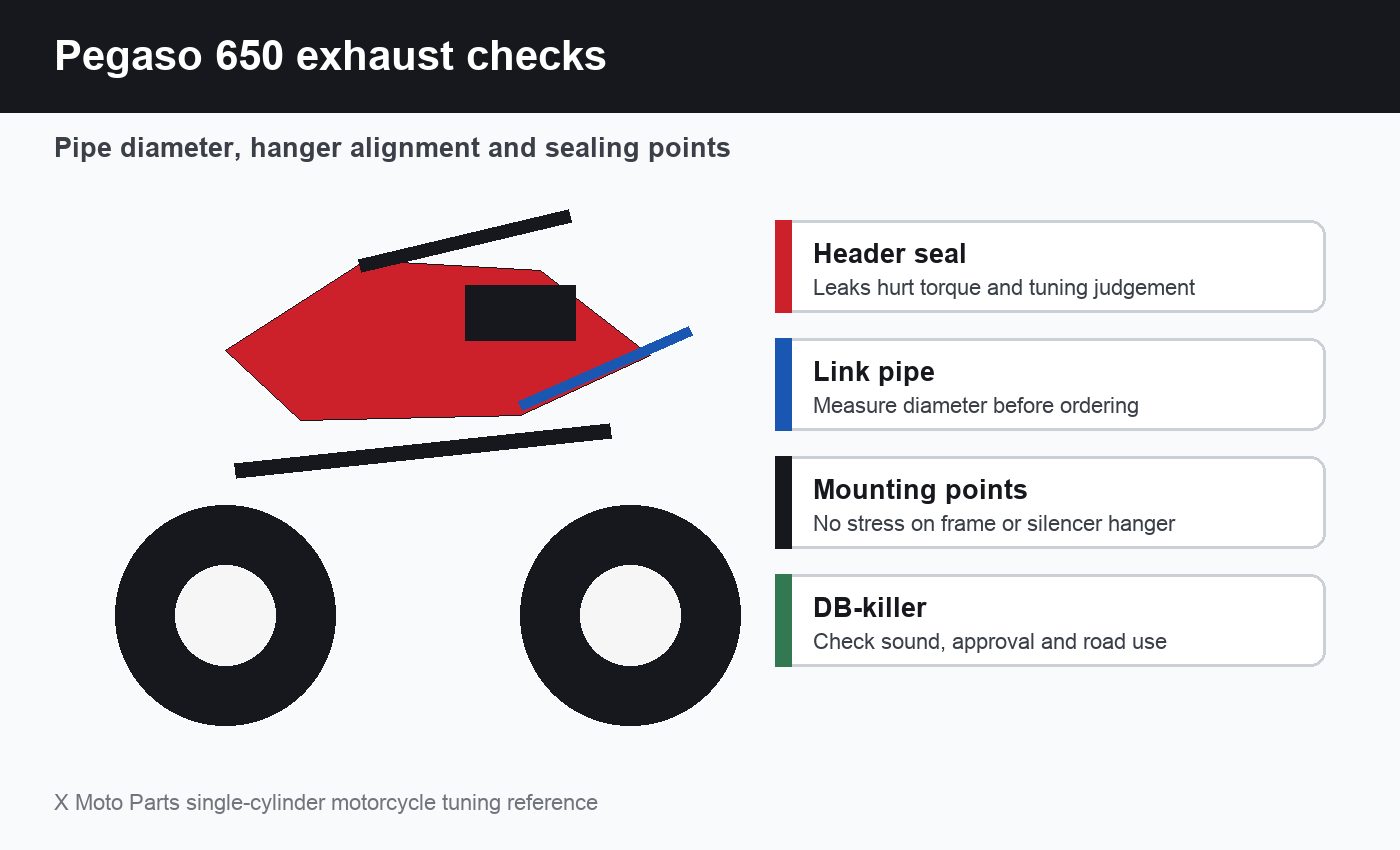
The exhaust is often the first part considered in Aprilia Pegaso 650 tuning, and it can be worthwhile. A well-made silencer can reduce weight, improve sound and help the single feel freer. But the Pegaso also needs low-rpm torque, so an exhaust that is too open, too loud or badly sealed can make the bike worse on the road.
Measure the link pipe diameter and inspect the mounting points before buying. Check whether your bike uses a single or twin-exit arrangement, how the hanger aligns, whether the side panel or luggage rack clears the silencer and whether a catalyst or emissions equipment is present on your version. A universal exhaust may be adaptable, but it is not automatically correct.
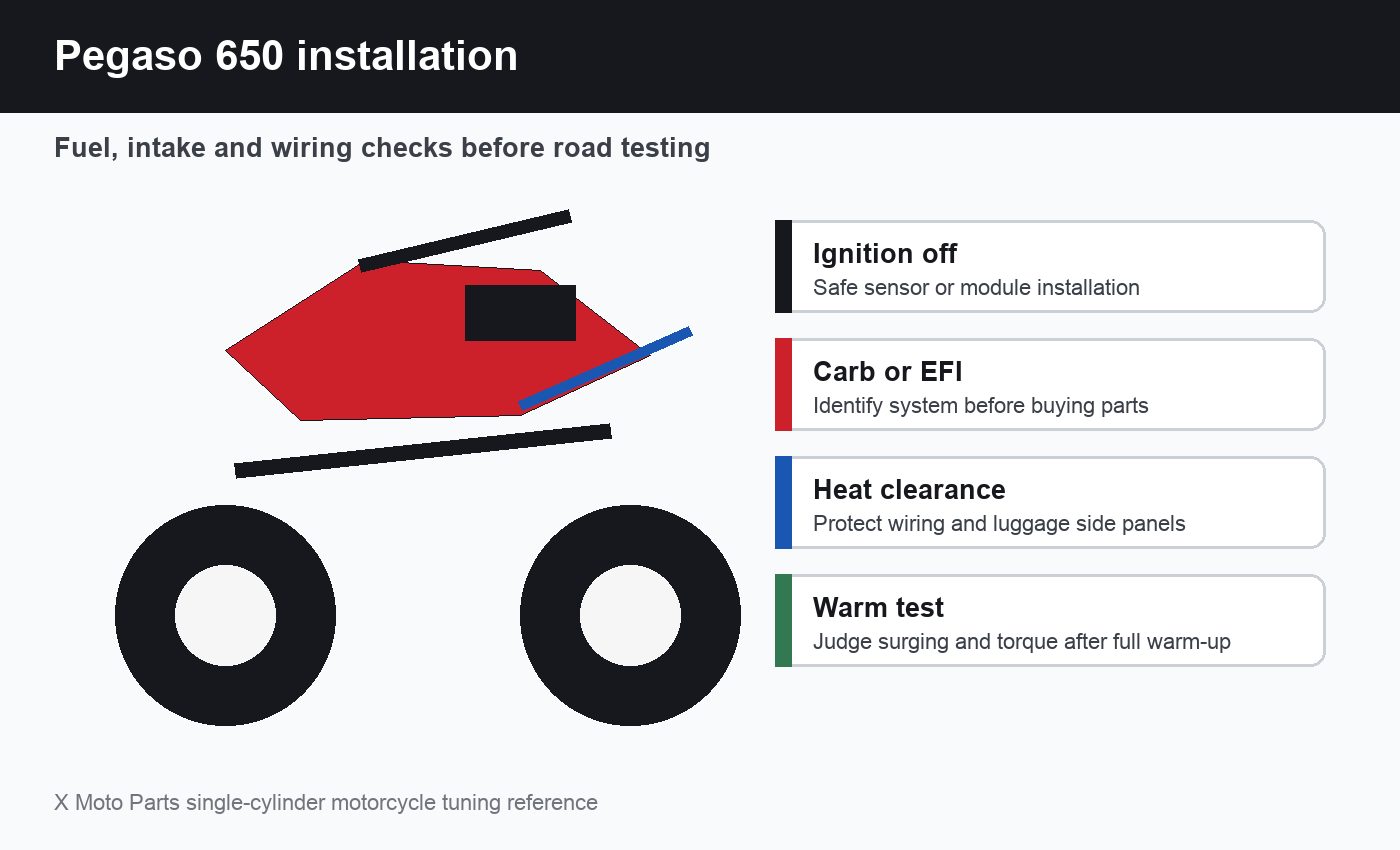
Intake work needs the same restraint. A clean standard airbox often gives better wet-weather reliability than an exposed filter. If you use a freer filter, check sealing and fuelling carefully. Earlier carburettor bikes may need jetting changes; later injection bikes may need sensor checks or compatible fuelling support. Aprilia Pegaso 650 tuning must follow the fuel system fitted to the bike, not a generic internet recipe.
| Upgrade | Main advantage | Possible disadvantage | Best use |
|---|---|---|---|
| Service refresh | Restores lost smoothness and torque | Less exciting than visible parts | Any unknown or high-mileage Pegaso |
| Road-approved silencer | Better sound and lower weight | Fitment and approval must be checked | Road riders wanting a cleaner note |
| Open exhaust | More aggressive sound | Can reduce low-rpm pull and create legal issues | Private-area or track-only use where appropriate |
| Air filter upgrade | Cleaner airflow when maintained | Poor sealing can harm reliability | When combined with correct fuelling checks |
| Fuelling adjustment | Can smooth response after changes | Wrong setup can cause rich or lean running | Only after version and fuel system are confirmed |
Carburettor versus fuel injection logic
A key Aprilia Pegaso 650 tuning decision is whether the motorcycle is carburetted or fuel-injected. Carburettor bikes may need pilot, needle and main jet attention after intake or exhaust changes. Fuel-injected bikes need sensor health, battery voltage, intake sealing and compatible electronics. The symptoms can look similar, but the fixes are different.
If a carburettor bike hesitates off idle, clean and inspect before rejetting blindly. If an EFI bike surges, check throttle body condition, connectors and intake leaks before adding fuel. A tuning part should solve a known problem, not become a way to avoid diagnosis. For Aprilia Pegaso 650 tuning, the right fuelling path depends entirely on the bike in front of you.
Gearing, chain and road feel
Aprilia Pegaso 650 tuning is not only about engine parts. Gearing changes can transform how the bike feels. A smaller front sprocket or larger rear sprocket can make the bike pull harder at low speed, but it may raise cruising rpm and increase vibration. Taller gearing can calm cruising, but it can make the bike lazy in town or on trails.
Before changing sprockets, inspect chain and sprocket wear. A tight spot, hooked teeth or poor alignment can make throttle response jerky. Correct chain slack matters on a long-travel motorcycle because suspension movement changes chain tension. If the chain is too tight, it can damage bearings and make the ride harsh. If it is too loose, it can snatch and wear quickly.
For road use, many riders prefer a setup that improves roll-on response without making the engine busy at cruising speed. For trail or mountain use, shorter gearing may be worth the compromise. Aprilia Pegaso 650 tuning should match the roads you ride, not the gearing someone else liked on a different version.
Compatibility checks for Pegaso 650 parts
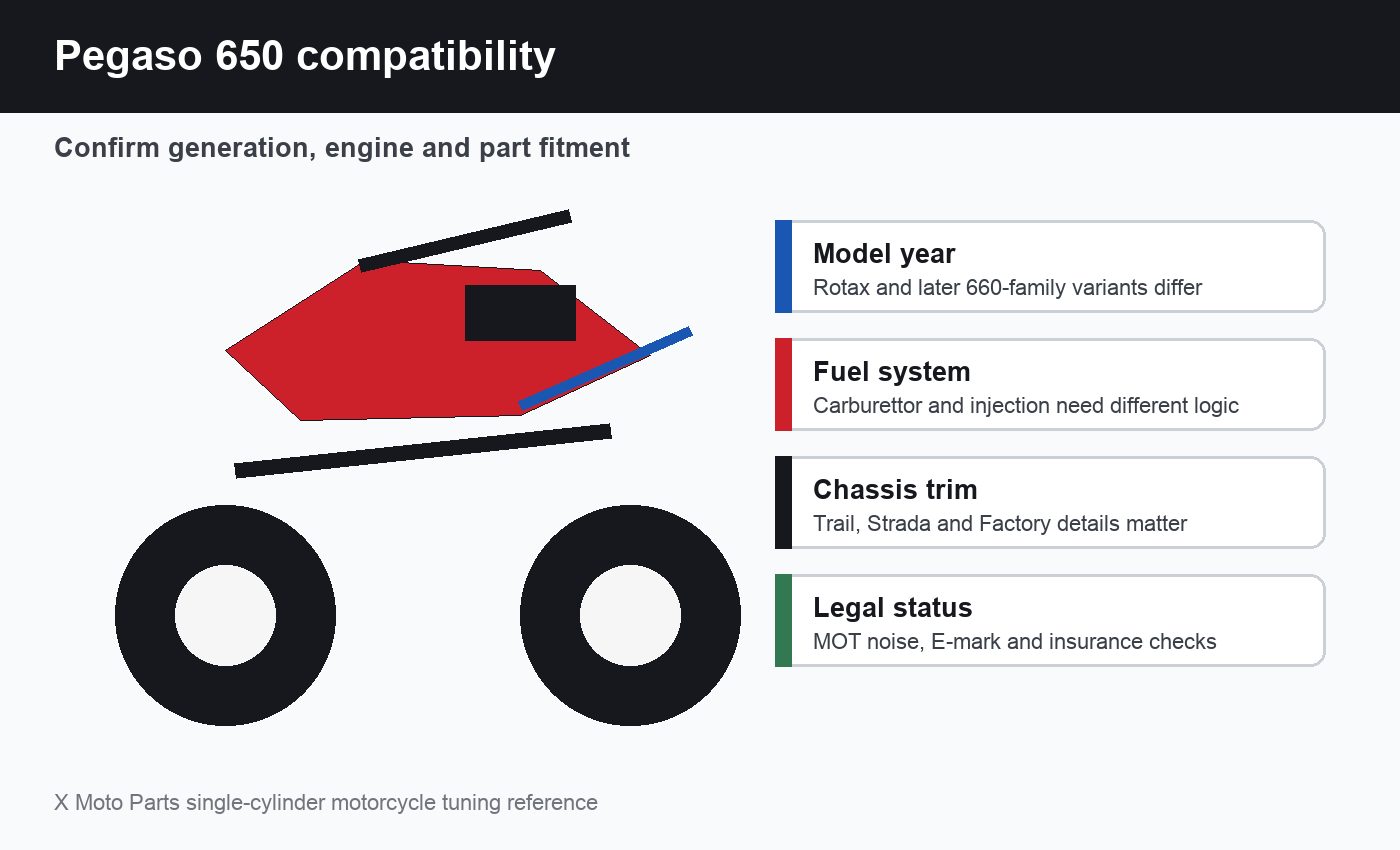
Compatibility is where many Pegaso projects go wrong. Aprilia Pegaso 650 tuning has to consider early and later versions, Rotax-based and later 660-family associations, carburettor versus EFI, Strada, Trail and Factory-style trim, exhaust route, airbox, sensor layout and mounting brackets. Model name alone is not enough.
| Part or vehicle area | Compatibility | Important note |
|---|---|---|
| Aprilia Pegaso 650 motorcycle | Yes, when exact year/version is confirmed | Check engine family, fuel system and trim before ordering. |
| Aftermarket exhaust | Depends on pipe diameter and mounting | Check header, link pipe, hanger, clearance, DB-killer and E-mark. |
| Air filter and intake parts | Version-specific | Airbox design and sealing can differ between models. |
| Fuelling parts | Only with matching carb/EFI setup | Carb jets and EFI modules are not interchangeable solutions. |
| Sprockets and chain | Dimension-specific | Confirm chain pitch, tooth count, carrier and intended road use. |
After measuring, the motorcycle exhausts category is a useful place to compare exhaust options, while the performance parts category can help riders think about supporting upgrades without buying blindly.
UK road legality, MOT and insurance
Aprilia Pegaso 650 tuning for public roads must respect noise, emissions, inspection and insurance rules. In the UK, motorcycle MOT inspection includes exhaust security and noise. A silencer that is clearly unreasonably louder than a similar motorcycle with a standard silencer can be a problem, and products marked for track use only are not road parts.
Road riders should check E-mark or approval information where relevant, keep the DB-killer fitted if approval depends on it, avoid removing emissions equipment and disclose modifications to insurance. In the United States, Canada, Australia, Ireland and New Zealand, rules vary by state, province or national framework. A part can physically fit and still be unsuitable for public roads.
For UK reference, the GOV.UK motorcycle MOT exhaust noise section explains how exhaust noise is assessed. For general rider-safety context when changing performance, tyres or braking feel, the NHTSA motorcycle safety resource is also useful for anglophone riders, although local legal rules still apply.
Road use versus private-area tuning
Road-focused Aprilia Pegaso 650 tuning should keep the bike civil, insurable, reliable and comfortable. Private-area or track-only work can be more aggressive, but safe installation still matters. Loose exhaust brackets, hot wiring, poor fuel hose routing and badly adjusted chains are dangerous anywhere.
Common mistakes that make the Pegaso worse
The most common mistake is treating every Pegaso 650 as the same motorcycle. Another is fitting a loud exhaust without checking fuelling, exhaust leaks or DB-killer status. A third is changing sprockets before inspecting the chain. A fourth is assuming an open filter will help without considering rain, dust and airbox sealing.
Aprilia Pegaso 650 tuning should be guided by the bike’s symptoms. If it surges, inspect fuelling and chain snatch. If it lacks drive, check compression feel, filter, plug, exhaust seal and gearing. If it runs hot, check cooling, fan operation and mixture before chasing more power.
| Mistake | What happens | Better approach |
|---|---|---|
| Ignoring model year | Wrong exhaust, filter or fuel part | Confirm version before ordering. |
| Removing DB-killer for road use | Noise, MOT and insurance problems | Use approved parts correctly fitted. |
| Changing gearing with worn chain | Jerky response and fast wear | Inspect chain and sprockets as a set. |
| Opening intake without fuelling checks | Flat spots, lean running or poor wet-weather behaviour | Keep the airbox sealed and tune carefully. |
| Expecting peak horsepower miracles | Disappointment and poor choices | Optimise torque, response and reliability. |
Workshop sequence for a clean Pegaso setup
A reliable Aprilia Pegaso 650 tuning sequence is simple: identify the exact version, restore service condition, inspect chain and sprockets, check exhaust sealing, test the bike warm, then change one part at a time. Exhaust, intake, fuelling and gearing should support each other rather than fight each other.
After installation, check for exhaust leaks, loose hangers, hot side panels, cable strain, fuel smell, surging, warning lights, chain noise and fuel-economy changes. Recheck fasteners after the first heat cycle. If welding, fabrication, carburettor tuning or EFI diagnosis is beyond your comfort level, use a mechanic. A tidy Aprilia Pegaso 650 tuning job should feel cleaner on the road, not more temperamental.
Used-bike checks before ordering parts
A Pegaso that has lived through years of commuting, winter storage or mixed road and trail use deserves a close inspection before money is spent on upgrades. Look around the cylinder head, exhaust ports, coolant hoses, regulator wiring, battery earth point and rear subframe mounts. A small leak, corroded connector or tired rubber mount can change the way the bike feels more than many riders expect.
Check the clutch cable for smooth movement, the throttle for clean return, the sidestand switch for intermittent cutting out and the rear brake for dragging after a ride. Inspect the front sprocket area after removing built-up chain paste; oil and grit can hide wear, leaks and poor alignment. If the bike has hard luggage, also check silencer clearance and heat shielding because a new pipe may sit slightly differently from the old one.
On the test ride, hold a steady throttle through town, then roll on from low rpm in a higher gear. A healthy big single may pulse, but it should not cough, surge violently or feel as if the chain is snapping tight. After the ride, let the bike idle until the fan cycle can be confirmed, then shut it off and restart it hot. These simple checks separate a motorcycle ready for upgrades from one that first needs repair.
FAQ about Pegaso 650 tuning
Is Aprilia Pegaso 650 tuning worth it?
Aprilia Pegaso 650 tuning is worth it when the goal is better mid-range, smoother throttle and a cleaner exhaust setup. It is not worth it if the owner expects a mild road build to become a modern high-output adventure bike.
What should I tune first on a Pegaso 650?
Start with service condition, chain and sprockets, air filter, plug, exhaust sealing, throttle adjustment and fuel-system health. Those checks make later upgrades meaningful.
Does a sports exhaust improve the Pegaso 650?
A suitable exhaust can reduce weight and improve sound, but it must seal properly, fit the brackets, suit the fuel system and remain legal for the intended use.
Do I need to rejet or remap after an exhaust?
It depends on the version and fuel system. Carburettor bikes may need jetting work, while fuel-injected bikes need sensor and fuelling checks. Mild changes may not need major adjustment.
Can gearing changes help the Pegaso 650?
Yes. Shorter gearing can improve low-speed pull, while taller gearing can calm cruising. The right choice depends on road use, chain condition and rider preference.
Are all Pegaso 650 parts interchangeable?
No. Model year, engine family, fuel system, exhaust route and trim can differ. Always confirm exact compatibility before ordering.
Is an aftermarket exhaust legal in the UK?
It depends on approval, markings, noise, emissions equipment and installation condition. Track-only parts and excessively noisy silencers can create MOT and insurance problems.
Why does my Pegaso run worse after tuning?
Common causes include exhaust leaks, wrong fuelling, intake leaks, poor jetting, weak battery, worn chain, unsuitable gearing or a part fitted for the wrong model year.
Final verdict
Aprilia Pegaso 650 tuning works best when it respects the motorcycle’s character: a strong, practical single that rewards torque, clean fuelling and a tidy drivetrain. Identify the exact version, fix maintenance issues, choose exhaust parts by measurement, keep the airbox and fuel system sensible, and use gearing to suit your roads.
Before ordering parts, confirm model year, fuel system, exhaust diameter, hanger points, DB-killer status, chain and sprocket dimensions, road legality and insurance implications. A measured Aprilia Pegaso 650 tuning plan will make the bike more enjoyable without turning it into a fragile collection of mismatched parts.