
Yamaha RMAX 1000 problems: complete reliability, diagnosis and used-buying guide
Yamaha RMAX 1000 problems is a phrase owners usually search after the machine has stopped feeling as refined as Yamaha’s reputation suggests. The Wolverine RMAX 1000 family is capable, comfortable and serious on trails, but it is still a high-load side-by-side with heat, belts, electronics, suspension parts and owner modifications all working in harsh conditions. A well-kept RMAX can be excellent; a neglected one can become expensive quickly.

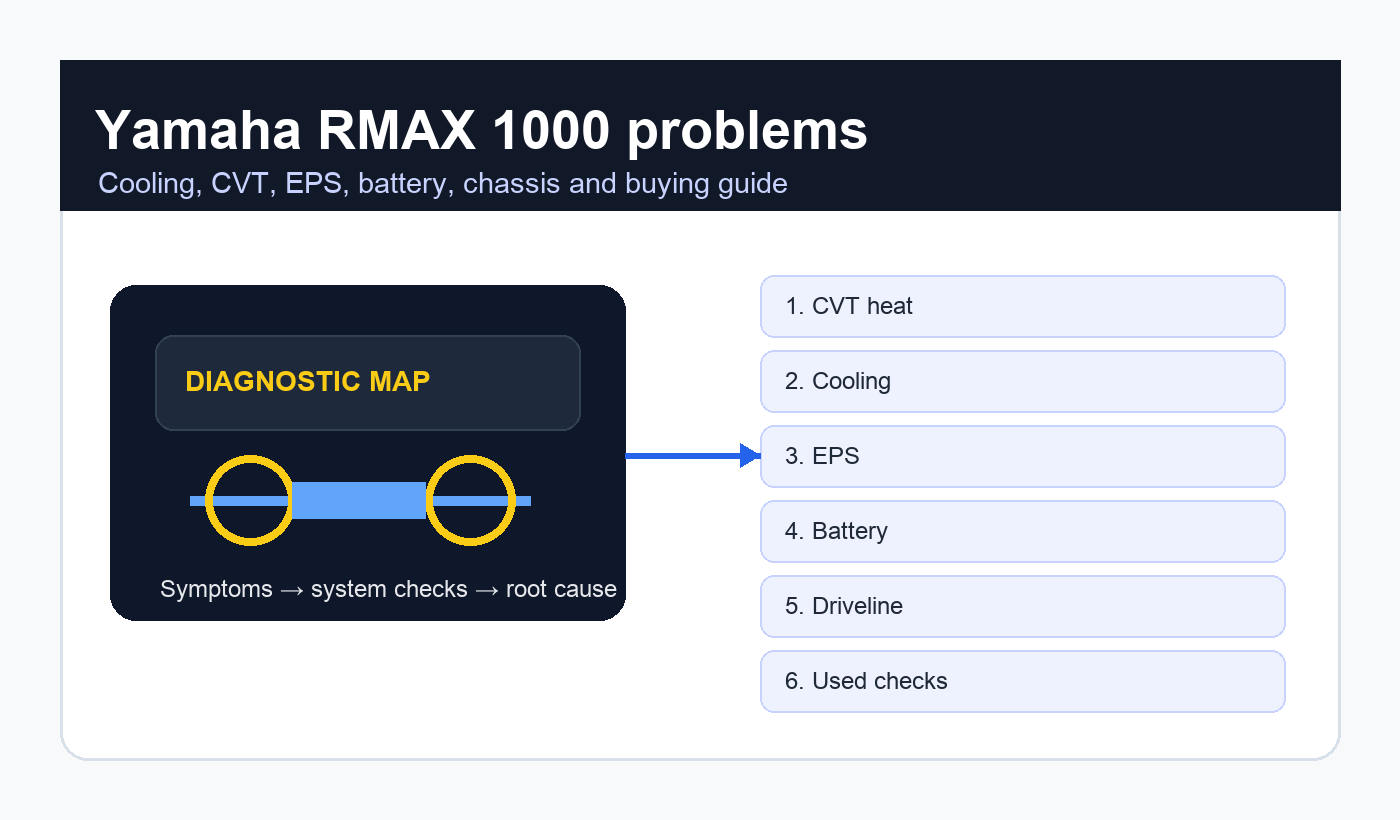
This guide looks at Yamaha RMAX 1000 problems from an owner and buyer perspective: overheating, CVT belt heat, clutch calibration, engine braking feel, hard starting, battery drain, EPS warnings, suspension noise, wheel bearings, brake wear, 4WD/differential complaints, dust intrusion, accessory wiring and recall checks. The goal is not to attack the machine. It is to separate normal wear from symptoms that deserve immediate testing.
Quick answer: the problems owners report most often
The most common Yamaha RMAX 1000 problems involve CVT belt heat or smell, clutch noise, overheating in slow terrain, battery or charging weakness, EPS warnings, rough idle, hard starts, brake noise, suspension bushings, wheel bearings, axle boots, driveline clunks, dust sealing concerns and accessory wiring issues. Many are maintenance and use-related rather than design disasters, but they still matter because a side-by-side is often ridden far from easy recovery.
What owners need to know first
This guide is written for owners, buyers and technicians dealing with Yamaha RMAX 1000 problems in the real world. It focuses on symptoms, checks, realistic repair decisions, legal limits where relevant, and the points worth confirming before buying parts or trusting a seller’s claim.
| Intent cluster | Related topics | Reader need |
|---|---|---|
| CVT and driveline | belt smell, clutch noise, Ultramatic, engine braking, driveline clunk | Know whether the belt, clutch or use pattern is causing heat. |
| Cooling | overheating, fan, radiator, coolant, hot trail riding | Prevent heat damage during slow riding. |
| Electrical | battery drain, EPS light, starter, accessories, charging | Test voltage and wiring before replacing expensive modules. |
| Chassis | wheel bearings, bushings, brakes, axles, suspension noise | Price used repairs and protect control. |
| Safety and ownership | recall lookup, owner manual, maintenance schedule, used buying | Check official information and service history. |
RMAX context: why the machine is not the same as a lighter trail UTV
Yamaha RMAX 1000 problems have to be read through the machine’s job. The RMAX 1000 is not a tiny farm runabout. It is a high-capability recreational utility side-by-side with a large twin-cylinder engine, selectable drive modes on many trims, Yamaha’s Ultramatic CVT logic and enough weight, tire and suspension capability to encourage harder riding. That capability is exactly why maintenance discipline matters.
Yamaha’s official model pages for the Wolverine RMAX2 1000 and related RMAX family are the correct place to confirm current model positioning and features. Older model-year details should still be checked against the exact owner’s manual and VIN.
CVT belt heat, clutch feel and Ultramatic behavior
CVT complaints sit near the center of Yamaha RMAX 1000 problems. A rider may notice belt smell after slow crawling, a clunk during takeoff, high rpm without expected speed, inconsistent engine braking or a whining sound from the clutch area. Yamaha’s Ultramatic system has a strong reputation, but it still depends on clean airflow, correct belt condition, clutch cleanliness and realistic load.
| CVT symptom | Likely area | First check |
|---|---|---|
| Burning belt smell | Heat from load, clutch slip, blocked CVT intake | Inspect belt, sheaves, clutch dust and intake/exhaust ducts. |
| Jerky launch | Glazed belt, dirty clutch, worn mounts | Check belt condition and clutch faces before replacing parts. |
| Engine braking feels odd | CVT calibration, belt condition, terrain expectation | Compare behavior to manual guidance and recent service history. |
| High rpm, slow acceleration | Belt slip or clutch not shifting properly | Inspect belt width, clutch movement and tire/load changes. |
If Yamaha RMAX 1000 problems only show up after deep mud, crawling or carrying passengers and gear, recreate the load during diagnosis. A quick driveway rev will not show the same heat and clutch behavior as a long climb in low-speed terrain.
For recurring CVT-related Yamaha RMAX 1000 problems, inspect the system after the same kind of ride that creates the smell or slip. Heat marks and belt dust tell a clearer story than a clean garage test.
Overheating and slow-terrain cooling issues
Overheating-related Yamaha RMAX 1000 problems usually begin with airflow and cleanliness. Slow trails, mud, tall grass and dust can reduce radiator performance. A fan that works in the shop can still underperform when the radiator is packed from the back side. Coolant age, weak caps, air pockets and damaged fins also matter.
| Cooling symptom | What it suggests | Diagnostic move |
|---|---|---|
| Temperature rises only crawling | Radiator airflow or fan issue | Clean radiator carefully and verify fan command. |
| Heat after service | Air pocket or low coolant | Bleed system and inspect for leaks. |
| Coolant pushed out | Cap, overheating, combustion leak, overfill | Pressure test and check operating temperature. |
| Hot only with accessories/load | Added weight, blocked airflow, harder terrain | Inspect modifications and riding conditions. |
Heat-related Yamaha RMAX 1000 problems should be handled before the next hard ride. A radiator cleaning routine after muddy trips is not cosmetic maintenance; it is engine protection.
When cooling-related Yamaha RMAX 1000 problems appear on a nearly new-looking machine, look for hidden mud in the radiator core and check whether accessories are blocking airflow.
Battery drain, charging and accessory wiring
Electrical Yamaha RMAX 1000 problems often come from add-ons. Light bars, stereos, GPS devices, winches, heated gear and communication systems are useful, but poor wiring can create parasitic draw, blown fuses, weak cranking and EPS warnings. Even a good battery will look bad if the charging system or ground path is compromised.
| Electrical symptom | Likely cause | Test |
|---|---|---|
| Slow crank | Weak battery, cable resistance, starter load | Load test battery and voltage-drop main cables. |
| Battery dead after parking | Parasitic draw from accessory or old battery | Measure key-off current after modules sleep. |
| EPS warning | Low voltage, ground fault, steering load | Check battery, charging voltage and front-end drag. |
| Random accessory faults | Bad splice, water intrusion, undersized wiring | Inspect fuse protection and harness routing. |
When Yamaha RMAX 1000 problems involve electrical symptoms, start with voltage, grounds and wiring quality. Control modules are rarely the first suspect when a machine has multiple aftermarket circuits and unknown installation work.
EPS and steering complaints
EPS-related Yamaha RMAX 1000 problems can feel like heavy steering, inconsistent assist, warning lights, or steering that becomes vague on rough trails. Low voltage can cause assist complaints, but mechanical wear can create similar sensations. A worn tie rod, bearing, bushing or alignment issue can make the system feel worse than it is.
Lift the front end safely and inspect for play before blaming the EPS unit. Check wheel bearings, tie rods, ball joints, rack movement, tire pressure and tire size. Then verify battery and charging output. Steering diagnosis should combine mechanical inspection with electrical testing, because either side can fool you.
Suspension noise, bushings and wheel bearings
Chassis wear is one of the quietest Yamaha RMAX 1000 problems until it becomes loud. Clicking axles, clunking suspension, loose wheel bearings, worn bushings and brake rattles can all sound similar from the driver’s seat. The RMAX is capable enough that owners may ride faster over rough terrain than they realize, and that load eventually shows up in joints and bearings.
| Noise or feel | Possible source | Inspection |
|---|---|---|
| Clicking in turns | CV axle or boot damage | Inspect boots, grease loss and joint play. |
| Clunk over bumps | Bushing, shock mount, sway bar, loose cargo | Check chassis joints with wheels unloaded. |
| Wobble or hum | Wheel bearing or tire issue | Rock wheel and spin while listening. |
| Brake scrape | Pad wear, debris, rotor damage | Inspect pads and clean after mud. |
For a related powersports comparison, see our Polaris RZR 800 problems guide. Different brand, same lesson: chassis noises need wheel-off inspection before they are dismissed as normal trail sounds.
Fuel, throttle response and hard starting
Fuel-related Yamaha RMAX 1000 problems can appear as hard starting, rough idle, hesitation, stalling after heat soak or poor throttle response. Recreational machines can sit for weeks, so old fuel, moisture, restricted filters and weak batteries often join the same complaint. Before changing sensors, verify fuel quality, air filter condition, intake sealing and battery voltage under cranking load.
A symptom diary helps here. Note whether the machine is cold, hot, wet, dusty, loaded or parked on an incline when the problem occurs. Patterns matter. A hot restart complaint points you in a different direction than a cold-only rough idle.
Fuel-related Yamaha RMAX 1000 problems are easier to solve when the owner records fuel age, ambient temperature and whether the issue happens after trail vibration or only after storage.
Also check the service basics before chasing electronic explanations. A restricted air filter, stale fuel, loose intake clamp, weak battery or poor ground can create hesitation and rough running that looks more sophisticated than it is. Good diagnosis starts by proving the simple systems healthy.
Dust intrusion and air filter discipline
Dust-related Yamaha RMAX 1000 problems are serious because fine dust can shorten engine life. The RMAX is often used in dry trails, group rides and dusty convoy conditions. A poor air filter seal, damaged intake boot or careless cleaning routine can let abrasive dust into the intake, leading to low compression, oil consumption and expensive engine wear.
Inspect the airbox after dusty rides. Look for dust downstream of the filter, check seals, avoid over-oiling or under-oiling serviceable filters, and make sure the lid and intake tract are seated correctly. If a used machine has dust past the filter, compression and leakdown testing become more important.
4WD, differential and driveline checks
Driveline Yamaha RMAX 1000 problems may include clunks, delayed engagement, binding, clicking or unusual vibration. Some noises are normal mechanical feedback, but changes after a hard ride deserve inspection. Check fluid condition, axle boots, driveshaft joints, mounts, fasteners and tire matching. Mismatched tires can create driveline stress that looks like a differential problem.
| Driveline check | Why it matters | Warning sign |
|---|---|---|
| Fluid level and color | Shows service history and contamination | Metallic oil, water contamination, burnt smell. |
| Axle boots | Protect CV joints from dirt | Tears, grease spray, clicking under load. |
| Tire matching | Prevents driveline bind | Different sizes or uneven wear across axle. |
| Mounts and fasteners | Reduces clunk and vibration | Loose bolts, cracked mounts, shifted components. |
Recall and safety checks
Recall status belongs in any serious article about Yamaha RMAX 1000 problems. For U.S. safety notices, the CPSC recalls database is an authoritative place to search manufacturer and model terms. Owners should also check Yamaha dealer records and VIN-specific campaigns before buying or riding a used RMAX.
A recall lookup is not the same as a condition inspection. Check fuel lines, heat shielding, brake components, seat belts, rollover protection, wiring near hot components and any aftermarket repairs. A machine can be recall-clear and still poorly maintained.
Safety-related Yamaha RMAX 1000 problems should always be separated from comfort complaints. A radio glitch can wait; brake, belt, steering, heat or fuel concerns should not.
For a used purchase, keep the safety check visible in your price calculation. Missing service records, damaged seat belts, bent protection structure, mismatched tires or improvised wiring should reduce the value even if the engine starts nicely during the viewing.
Used buying checklist
Many Yamaha RMAX 1000 problems only appear after the machine reaches operating temperature. A seller’s driveway start is not enough. Let the fan cycle, drive at low speed, test 4WD, listen under deceleration, check brakes, inspect belt smell after the ride, and look again for coolant, oil, gear oil and axle grease leaks.
| Buying check | Good sign | Warning sign |
|---|---|---|
| Cold start | Starts cleanly, idle stabilizes | Long crank, smoke, fuel smell. |
| Cooling | Temperature stabilizes and fan cycles | Heat warning, coolant push, fan inoperative. |
| CVT | Smooth engagement, no belt odor | Jerks, squeals, high rpm/low speed. |
| Chassis | Tight bearings, bushings and steering | Clunks, wandering, torn boots. |
| Paperwork | VIN, manual, service records, recall check | No records, unclear ownership, fresh code clearing. |
Repair priority order
The smartest way to handle Yamaha RMAX 1000 problems is to rank repairs by risk. Fix brakes, steering, recall concerns and wheel-bearing play first. Then cooling, fuel and charging. Then CVT service and clutch inspection. Comfort accessories should wait until the machine proves mechanically reliable.
| Priority | System | Reason |
|---|---|---|
| 1 | Safety, brakes, steering, recalls | Direct rider protection and vehicle control. |
| 2 | Cooling and fuel | Prevents engine damage and trail breakdowns. |
| 3 | Battery, grounds and charging | Stabilizes EPS, starting and accessories. |
| 4 | CVT belt and clutch | Restores drivability and protects expensive parts. |
| 5 | Suspension refinement and accessories | Only after the basics are correct. |
Mistakes owners make
The biggest mistake with Yamaha RMAX 1000 problems is assuming Yamaha reliability means maintenance can be casual. A strong brand reputation does not clean radiators, inspect belts, tighten battery terminals or replace worn bushings. Another mistake is adding accessories before understanding the charging system and wiring load.
Owners also overlook small clues. Belt smell, a slow crank, a warmer-than-usual ride, dust after the air filter, or a faint chassis clunk are early warnings. Treat them early and the machine stays a trail tool; ignore them and the repair list grows.
The best defense against repeat Yamaha RMAX 1000 problems is a written baseline: belt condition, battery voltage, coolant behavior, filter sealing, tire size and accessory wiring before the next modification.
That baseline is especially useful after adding tires, skid plates, winches or lighting. Extra weight and electrical load change how the vehicle behaves, so documenting the before-and-after condition gives you a clean way to spot whether the modification introduced the complaint.
Internal resources for comparison
For broader side-by-side troubleshooting, our Polaris RZR 570 problems guide is useful because compact UTVs share many heat, belt, EPS and chassis diagnostic patterns. Our Arctic Cat 1000 problems article also helps compare how larger-displacement powersports machines develop similar cooling and driveline symptoms.
Frequently asked questions
Is the Yamaha RMAX 1000 reliable?
Yes, it can be very reliable, but Yamaha RMAX 1000 problems appear when heat, belt load, wiring, dust, chassis wear or deferred service are ignored. Condition matters more than reputation.
Why does my RMAX smell like a belt?
Belt smell usually means heat and slip. Inspect the belt, clutch faces, CVT ducts, tire size, load and riding style. If the smell returns after a new belt, the cause was not only the belt.
Why does the EPS warning come on?
Low voltage, weak charging, bad grounds, mechanical steering drag or wiring faults can all contribute. Test the battery and front-end parts before assuming the EPS unit has failed.
What should I check before buying a used RMAX?
Check VIN, recall status, cooling behavior, CVT feel, belt smell, 4WD operation, brake wear, wheel bearings, suspension bushings, axle boots, battery health, accessory wiring and service records.
Are overheating complaints serious?
Yes. Heat-related Yamaha RMAX 1000 problems should be handled quickly because repeated overheating can damage an otherwise good engine. Start with radiator cleanliness, fan operation, coolant level and bleeding.
Final verdict
Yamaha RMAX 1000 problems do not mean the Wolverine RMAX is a weak platform. They mean the machine is powerful, heavy enough to work hard, and often used in conditions that punish cooling, belts, wiring, brakes and suspension. Most issues become manageable when the owner tests systems in order instead of replacing parts by rumor.
If you own one, begin with cooling cleanliness, belt and clutch inspection, battery and ground checks, air filter sealing, chassis play and recall research. If you are buying one, choose service history over accessories. Handled that way, Yamaha RMAX 1000 problems become a practical diagnostic checklist rather than a reason to avoid the machine.