Fantic Caballero 250 problems: Complete Used-Bike Diagnostic and Ownership Guide
Fantic Caballero 250 problems is a useful search because the Caballero 250 sits in a slightly awkward but interesting place. It is not as common as the 125 learner versions or the better-known 500, yet it carries the same retro-scrambler identity: light weight, simple fun, stylish bodywork and a design that attracts riders who want character rather than a plain commuter. That mix makes used-bike inspection especially important.
Most complaints around a small or mid-size scrambler are not mysterious. They usually fall into starting and battery issues, fuel injection behavior, cooling and fan operation, chain and sprocket wear, clutch adjustment, brake and suspension wear, electrical connectors, tire choice, corrosion and parts availability. The challenge is separating normal use from neglect.
This guide treats Fantic Caballero 250 problems as a practical owner and buyer topic. It explains reader need, related topics, common symptoms, used-bike inspection, maintenance priorities and the difference between a real model weakness and a poorly serviced motorcycle.

What owners need to know first
This guide is written for owners, buyers and technicians dealing with Fantic Caballero 250 problems in the real world. It focuses on symptoms, checks, realistic repair decisions, legal limits where relevant, and the points worth confirming before buying parts or trusting a seller’s claim.
Associated terms include Fantic Caballero reliability, Caballero Scrambler 250, Caballero Rally, Fantic 250 engine, used scrambler checklist, fuel injection problems, starter relay, battery drain, coolant fan, overheating, clutch cable adjustment, chain wear, sprocket wear, brake pads, fork seals, wheel bearings, spoke wheels, ABS light, ECU warning light, parts availability, dealer support, motorcycle corrosion, off-road use and retro scrambler maintenance.
| Reader need | What the rider wants | Best answer |
|---|---|---|
| Used buying | Is the 250 risky? | Inspect service history, wear and parts support |
| Fault diagnosis | Why does it start, stall or run hot? | Group symptoms by system |
| Comparison | 250 versus 125 or 500 | Explain rarity, performance and ownership cost |
| Parts concern | Can it be maintained easily? | Check dealer network and compatible service parts |
What the Caballero 250 is
The Caballero line is Fantic’s retro scrambler family, blending classic styling with modern brakes, fuel injection and lightweight road/trail attitude. For current brand and model-family context, start from the official Fantic website. The 250 is best understood as a light, stylish single-cylinder motorcycle rather than a heavy touring bike or hardcore enduro.
Fantic Caballero 250 problems often comes from mismatched expectations. A rider who expects Japanese commuter-level parts availability may be frustrated. A rider who expects a race enduro may also be frustrated. A rider who wants a characterful lightweight scrambler and inspects carefully can have a better ownership experience.
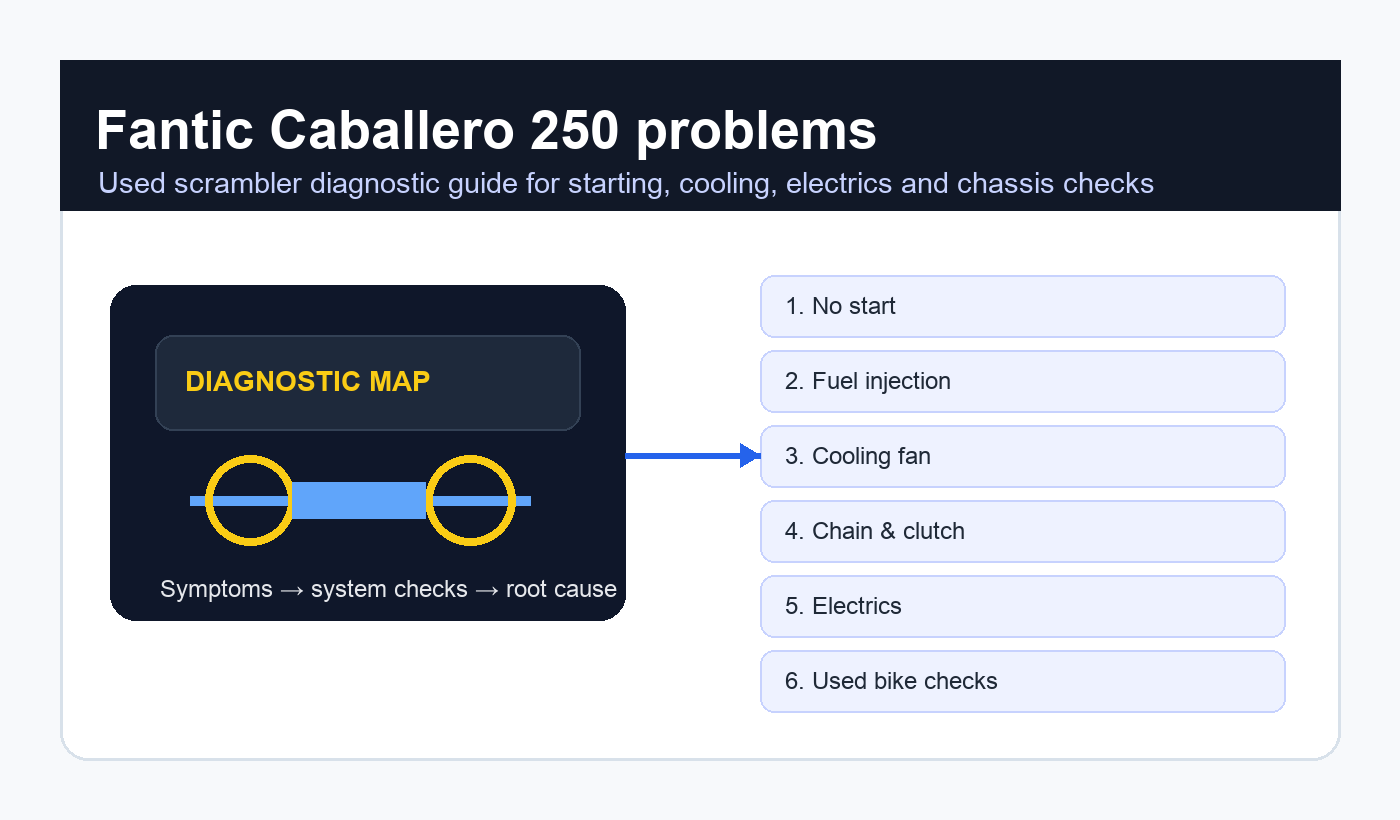
The fastest symptom map
When people discuss Fantic Caballero 250 problems, the same system groups appear repeatedly: starting, idle, heat, clutch, chain, brakes, suspension and electrics. The right approach is to identify the system first, then inspect evidence. A weak battery is not an ECU fault. A loose chain is not a gearbox failure. A dirty radiator is not always a bad thermostat.
| Symptom | Likely area | First checks | Urgency |
|---|---|---|---|
| Slow crank or no start | Battery, relay, terminals | Load-test battery, inspect grounds, check relay click | Medium |
| Stalling at idle | Fuel, intake, throttle body, sensor data | Check fuel age, air leaks, plug, idle adaptation | Medium |
| Runs hot in traffic | Cooling system | Fan, coolant level, radiator blockage | High |
| Hard shifting | Clutch adjustment or oil | Lever free play, cable, oil condition, chain tension | Medium |
| Wobble or vague steering | Tires, bearings, suspension | Tire age/pressure, head bearings, fork seals | High |
| Random warning light | Voltage or connector issue | Battery, charging voltage, scan codes, connectors | Medium |
Starting and battery issues
Fantic Caballero 250 problems often begins with a no-start story. Lightweight motorcycles use relatively small batteries, and a bike that sits between weekend rides can become weak quickly. A battery can show acceptable voltage at rest and still fail under starter load. The first step is a real load test, not a guess.
Inspect terminals, ground points, starter relay, main fuse and charging voltage. If the bike has aftermarket lights, USB chargers, alarms or tracking devices, check for parasitic draw. Owners sometimes replace the battery repeatedly while the real problem is poor charging, a weak ground or an accessory wired badly.
Fuel injection, idle and stalling
Fuel-injected singles can be sensitive to basic maintenance. Fantic Caballero 250 problems with idle trouble may involve old fuel, dirty injector, intake leak, weak spark plug, throttle-body deposits, sensor faults or low voltage. If the bike stalls only when hot, heat-related electrical behavior or idle control should be considered.
A scan tool or dealer diagnostic system is useful when a warning light is present. But do not ignore mechanical basics. A dirty air filter, tight valve clearance, poor fuel or cracked intake boot can create symptoms that look electronic.
Cooling system checks
Fantic Caballero 250 problems with heat symptoms should be taken seriously. A small single-cylinder engine can run hot in traffic, especially after slow trail-style riding or muddy conditions. Check coolant level, radiator fins, fan operation, hoses, cap condition and signs of leaks. Make sure the fan actually switches on before assuming the gauge is wrong.
If overheating repeats, stop riding until diagnosed. Continued heat can damage gaskets, oil quality, sensors and engine components. A used bike that has been repeatedly overheated is worth less than one with clean fluids and stable temperature behavior.
Clutch, gearbox feel and chain condition
Some Fantic Caballero 250 problems searches are really about driveline adjustment. A tight or dry chain can make shifting feel harsh. A loose chain can snatch and clunk. Poor clutch free play can make neutral hard to find. Old oil can affect shift feel. Before blaming the gearbox, inspect the service items that make the gearbox feel good.
| Complaint | Likely simple cause | What to inspect |
|---|---|---|
| Hard to find neutral | Clutch free play or oil condition | Cable adjustment, lever, oil service |
| Snatchy low-speed ride | Chain slack or throttle abruptness | Chain tension, sprockets, fueling |
| Clunk on/off throttle | Chain/sprocket wear | Hooked teeth, tight spots, rear cush drive if fitted |
| Slipping under load | Clutch wear or wrong oil | Oil spec, cable free play, clutch plates |
Suspension, brakes and tires
Fantic Caballero 250 problems can include complaints about handling, but tires and suspension setup are often the real cause. Scrambler-style bikes may wear mixed-use tires, and tire choice changes the feel dramatically. Old rubber, low pressure, squared tread or mismatched tires can make the bike wander.
Check fork seals, shock leakage, steering-head bearings, wheel bearings, spoke tension if applicable, brake pad thickness, rotor condition and brake-fluid age. A light motorcycle should feel easy and precise. If it feels vague, heavy or nervous, inspect the chassis before assuming the model is bad.
Electrical connectors and weather exposure
Many lightweight stylish motorcycles are used in cities, rain, short trips and occasional dirt roads. Fantic Caballero 250 problems with intermittent electrical behavior can come from connectors, grounds, battery voltage or moisture. Inspect exposed connectors, switchgear, fuse box, regulator wiring and any non-factory accessories.
Use contact cleaner carefully and fix damaged seals rather than just spraying everything. Electrical diagnosis should be methodical: battery first, charging second, grounds third, then switches, sensors and wiring.
Parts availability and dealer support
One practical part of Fantic Caballero 250 problems is not a mechanical defect at all: parts support. Less common models can be perfectly enjoyable but slower to support if a specific panel, sensor, exhaust part or trim piece is needed. Before buying, call a dealer or parts supplier and ask about common service items and known delays.
Consumables such as oil filters, chains, sprockets, pads, tires, levers and batteries should be easy enough to source. Model-specific plastics, sensors or exhaust components may require more patience. That should influence the price of a used bike.
Used buying checklist
A buyer researching Fantic Caballero 250 problems should never inspect only the paint and seat. Ask for a cold start. Let the bike idle until warm. Confirm fan operation. Check charging voltage. Inspect chain, tires, brake pads, fork seals, lights, warning lamps and service invoices. Look underneath for impact damage and around the engine for leaks.
| Area | Good sign | Warning sign |
|---|---|---|
| Cold start | Starts cleanly without throttle drama | Seller warms it before arrival |
| Temperature | Fan cycles and heat stays controlled | Coolant smell, stains, rising gauge |
| Driveline | Clean chain, smooth clutch, good sprockets | Hooked teeth, tight spots, hard neutral |
| Electrics | Stable voltage and no warning lights | Random accessories and dead battery history |
| Chassis | Straight bars, clean fork seals, fresh tires | Wobble, bent controls, old tires |
| Paperwork | Invoices and original parts | No service history or unclear modifications |
Modifications and owner habits
Fantic Caballero 250 problems on a modified bike needs extra caution. Exhausts, air filters, ECU modules, tail tidies, LED indicators and bar-end mirrors can be fine when installed correctly. They can also create fueling issues, warning lights, bad wiring, inspection trouble or water entry. A clean stock bike is often a better buy than a modified one with no documentation.
Off-road styling does not mean the bike has been treated gently. Look for mud packed behind guards, damaged rims, scratched engine cases, bent levers and impact marks. Light trail use is different from repeated hard impacts.
Cost thinking
The smart way to approach Fantic Caballero 250 problems is to price the bike with its maintenance needs. A cheap purchase can become expensive if it needs tires, chain kit, brake service, fork seals, battery, fluids and diagnostic work immediately. Those are normal wear items, but they still cost money.
Do not reject every bike with wear. Use wear as negotiation evidence. A well-used bike with honest records can be better than a shiny bike with hidden overheating or electrical problems.
Road test procedure
A road test should be calm and deliberate. Begin with a cold start, then listen for chain noise, valve noise, exhaust leaks and starter behavior. Let the bike warm fully. Check that idle settles without hunting, the throttle returns cleanly and the clutch engagement point is predictable. A short ride around the block is not enough if the complaint appears only when hot.
During the ride, test low-speed fueling, steady throttle, gentle acceleration, braking, suspension response and straight-line stability. The motorcycle should not surge badly at constant speed, wander under braking or feel unstable over small bumps. After the ride, inspect again for coolant smell, oil seepage, brake heat, fan operation and new warning lights. A second inspection after heat soak often reveals leaks that are invisible when cold.
Paperwork that changes the value
Documentation can be worth real money. Service invoices, previous MOT or inspection records, dealer stamps, parts receipts and original accessories help prove that the motorcycle has been looked after. A rare or less common model without paperwork is not automatically bad, but uncertainty should reduce the price.
Look for evidence of regular oil changes, coolant service, brake-fluid changes, chain kits, tires, battery replacement and any diagnostic work. If the seller mentions a known issue that was repaired, ask for the invoice. A verbal claim is weaker than a dated receipt with part numbers.
Parts strategy for long-term ownership
A smart owner builds a small parts strategy. Identify the nearest dealer or specialist, note common consumable part numbers and check availability for filters, pads, chain kits, levers and cables before a trip or riding season. This is especially useful for motorcycles that are stylish but not as common as mass-market commuter bikes.
Keeping the bike reliable is often about planning rather than panic. Ordering service parts before they are urgent, keeping the battery charged during storage and fixing small leaks early prevents many “reliability” stories from starting in the first place.
For a rider who uses the bike daily, it is also worth keeping a simple maintenance log. Date, mileage, oil, filters, chain adjustments, tire pressures and any warning-light events create a record that makes future diagnosis faster and resale easier.
When to use a dealer or specialist
Home checks are reasonable for tires, chain, battery, visible leaks, brake pads and basic service history. A dealer or specialist is better for warning lights, fuel injection diagnosis, repeated overheating, charging faults, ABS concerns and internal engine noises. For safety recalls in markets where the vehicle is listed, official databases such as NHTSA recalls are worth checking, alongside local dealer support.
A good technician should ask how the bike is used: city commuting, weekend riding, trail roads, storage, rain, short trips or long rides. Use pattern changes likely causes.
How to separate model problems from owner problems
Every used motorcycle carries two histories: the engineering history of the model and the personal history of the owner. A design can be basically sound and still become troublesome after poor storage, cheap accessories, skipped oil changes, pressure washing, crash damage or repeated short rides on a weak battery. That is why a serious inspection does not begin with reputation alone.
Look for patterns. A single worn chain is maintenance. A chain, sprockets, tires, pads, fork seals and battery all near the end of life show a bike that has been consumed rather than maintained. A bike with minor cosmetic marks but fresh fluids, good tires and honest receipts may be the better machine.
Storage and seasonal use
Seasonal storage can create faults that look like model weaknesses. Old fuel can make idle poor. A discharged battery can damage starting confidence. Corrosion can creep into connectors. Tires can develop flat spots or age before they wear out. Before judging the motorcycle, restore the basics: fresh fuel, charged battery, clean terminals, correct pressures and a proper warm-up inspection.
Common mistakes
The first mistake with Fantic Caballero 250 problems is assuming rarity equals unreliability. The second is assuming style equals durability. The third is buying a modified bike without paperwork. The fourth is ignoring battery and charging basics. The fifth is treating poor chain maintenance as gearbox failure.
Another mistake is comparing every Caballero 250 complaint with the 500 or 125. Family styling does not mean identical engine behavior, parts price or used-market support.
Related internal reading
For more owner-diagnostic logic, read our Kymco MXU 500 problems guide, Kymco X-Town 300i problems guide, and powersports problem guides. The machines differ, but the inspection method is the same: start with symptoms, verify basics and price the used vehicle honestly.
FAQ
Is the Caballero 250 unreliable?
Not automatically. Many Fantic Caballero 250 problems searches come from used-bike age, maintenance gaps, battery condition, chain wear or modifications rather than one universal defect.
What should I check first?
Start with battery, charging voltage, service history, chain condition, tires, coolant level and warning lights. Those basics explain many complaints.
Should I buy a modified one?
Only if the work is clean, legal, documented and the original parts are included. Undocumented wiring or exhaust changes increase risk.
Are parts hard to find?
Consumables are usually easier than model-specific trim or electronics. Check local dealer support before buying a rare used example.
Final practical verdict
The practical answer to Fantic Caballero 250 problems is that the bike should be judged by condition, service history and support, not by forum fear. A clean, documented Caballero 250 can be an enjoyable lightweight scrambler. A neglected one can become expensive quickly.
Fantic Caballero 250 problems after storage usually begins with battery and fuel checks.
Fantic Caballero 250 problems with heat symptoms should begin with coolant, radiator and fan operation.
Fantic Caballero 250 problems with hard shifting should include clutch, chain and oil checks.
Fantic Caballero 250 problems with warning lights needs voltage and diagnostic scanning.
Fantic Caballero 250 problems on a used bike should include tire, brake and fork inspection.
Fantic Caballero 250 problems with modifications should be judged by paperwork and workmanship.
Fantic Caballero 250 problems can be normal wear, but repeated symptoms deserve proper diagnosis.
Fantic Caballero 250 problems with poor parts support should affect negotiation before purchase.
Fantic Caballero 250 problems are best handled with calm inspection, service records and realistic used-bike pricing.
Fantic Caballero 250 problems should not stop a buyer automatically, but it should make the inspection serious.