
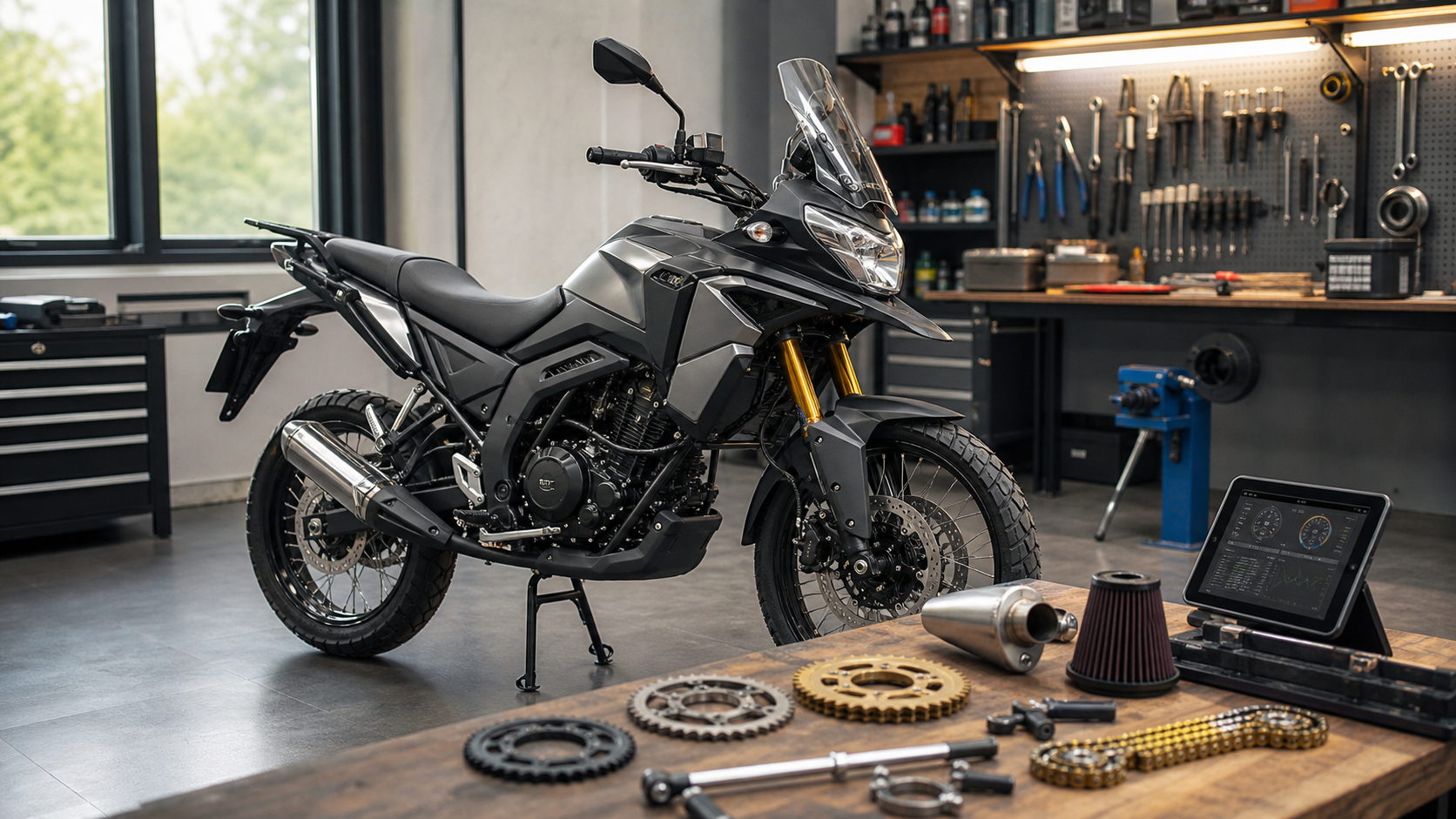
SYM NHT 125 tuning: mechanic’s guide to sharper adventure 125 performance
SYM NHT 125 tuning starts with a simple truth: this is a small-displacement adventure-style 125, not a race bike. The best upgrades make it pull cleaner, respond better in town, climb hills with less effort and stay reliable when the road turns rough or wet. If a tuning plan makes the bike noisy but harder to ride, it has missed the point.

Riders usually search this topic because they like the light weight and upright position but want a bit more confidence from the engine. Some want better acceleration after traffic lights. Some want a little more drive on hills. Others are looking at exhausts, filters, sprockets, ECU modules or derestriction ideas. The right answer depends on the exact bike, its condition and how it is ridden.
This guide is written as a practical workshop article. It is not a promise of miracle horsepower. A 125 cc four-stroke engine has limits, and the NHT needs those limits respected. The aim is to build a sensible setup: service first, then tyres and rolling resistance, then gearing, intake and exhaust, then fueling support only if the bike actually needs it.
What riders really want from SYM NHT 125 tuning
SYM NHT 125 tuning can mean different things. One rider wants a quicker launch in town. Another wants better pull with luggage. Another wants an exhaust that sounds deeper. Another is trying to fix flat response after fitting an aftermarket silencer. Before buying parts, decide what problem you are solving.
The NHT 125 is useful because it is light, approachable and styled for mixed road use. That does not mean it should be built like a motocross bike. A good setup keeps cold starting normal, idle stable, fuel consumption reasonable and throttle response smooth on broken roads. The best SYM NHT 125 tuning is noticed in everyday riding, not just in one loud full-throttle run.
Related search data around the topic includes SYM NHT 125 performance, SYM NHT 125 exhaust, NHT 125 derestriction, SYM NHT 125 sprocket, SYM NHT 125 air filter, 125 adventure tuning, 125cc power increase, fuel injection module, ECU tuning, slip-on exhaust, final drive gearing, hill climbing, top speed, acceleration, road legal exhaust, spark plug, valve clearance, chain tension, tyre pressure, throttle response and fuel economy. Those are not separate mysteries; they are parts of the same small-bike setup.
Confirm the exact bike before changing parts
Before any SYM NHT 125 tuning, confirm the model year, market version and engine setup. SYM sells different small-capacity models across markets, and parts listings can be confusing. A supplier may ask for production year, VIN, engine code, injection type, exhaust layout and connector photos. Do not assume one online listing fits every NHT 125.
Use the official SYM model information for your country where available, starting from the SYM global website, then compare it with your registration document and service book. Official pages help identify the family, but local specifications can still differ. That matters for exhaust approval, emissions equipment and electrical connectors.
| Before ordering | What to check | Why it matters |
|---|---|---|
| Model year | VIN plate and registration | Parts and emissions versions can change |
| Fuel system | Injection sensors and connector layout | Modules must match the wiring |
| Exhaust type | Stock, slip-on or full system | Fueling and legality depend on it |
| Current gearing | Front/rear sprocket teeth | Acceleration and top speed depend on ratios |
| Riding use | City, hills, commute, light trails | The best setup changes with the job |
Service baseline before tuning
SYM NHT 125 tuning should not begin with a box of parts. It should begin with a service check. A 125 loses performance quickly when the air filter is dirty, the chain is tight, tyres are soft, brakes drag, valves are out of adjustment, the plug is old or fuel is stale. Fixing those issues often makes the bike feel sharper without any tuning part.
Start with fresh oil of the correct grade, a clean air filter, correct spark plug, healthy battery and proper valve-clearance check according to the workshop schedule. Inspect the throttle cable free play, clutch adjustment, chain slack and sprocket wear. Make sure the wheels spin freely and the brake calipers release properly. On a small engine, even a dragging brake can feel like missing horsepower.
A useful SYM NHT 125 tuning test is to ride the motorcycle before changing anything, then write down what it does. Does it start cold? Does idle settle? Does it hesitate at small throttle? Does it pull cleanly on a hill? Does it run worse when hot? These notes become your baseline. Without them, every change becomes guesswork.
Gearing: often the biggest real-world change
For many riders, SYM NHT 125 tuning is really a gearing question. A 125 with adventure styling may feel tall if the rider is heavy, the route is hilly or luggage is fitted. Changing sprocket ratio can make the bike feel more willing at low and mid speed. The trade-off is that shorter gearing may reduce relaxed cruising and increase rpm at road speed.
If the bike struggles to hold speed uphill but otherwise runs well, gearing may help more than an exhaust. Count the existing front and rear sprocket teeth before ordering. Do not make a big jump unless you understand the effect. One tooth on the front sprocket can feel like a large change. After any gearing change, check chain length, chain adjustment, speedometer behavior and whether the engine feels too busy on your normal roads.
| Rider complaint | Possible gearing direction | Trade-off |
|---|---|---|
| Weak hill starts | Slightly shorter gearing | Higher cruising rpm |
| Too busy on open roads | Slightly taller gearing | Less acceleration |
| City commute feels flat | Shorter gearing may help | More gear changes |
| Already near redline often | Do not shorten blindly | Find service or fueling fault first |
Exhaust upgrades and road manners
SYM NHT 125 tuning often includes an exhaust because it is visible, sounds different and changes the personality of the bike. A well-made road-legal silencer can reduce weight and improve tone. A badly chosen exhaust can remove low-rpm torque, drone on long rides, leak at joints and attract unwanted attention.
For a 125, judge the exhaust by rideability. Does the bike pull cleanly from low rpm? Does it hesitate after a throttle opening? Does it become louder without feeling stronger? Does the rider get tired of the sound after 30 minutes? A small adventure-style bike needs usable torque more than volume.
If exhaust work changes fueling, SYM NHT 125 tuning may need a conservative module or proper diagnostic check. Do not fit an open exhaust, remove emissions hardware and then blame the bike when it runs badly. Road legality also matters. In Europe, type-approved motorcycles are regulated under frameworks such as Regulation (EU) No 168/2013, so riders should check local requirements before changing road-use exhaust equipment.
Air filter and intake changes
A clean stock airbox is usually the safest starting point for SYM NHT 125 tuning. Open filters can sound stronger but may reduce filtration, increase intake noise and upset low-speed fueling. For a bike that may see rain, dust or light gravel, protection matters. A performance filter can make sense if it fits correctly and is maintained correctly, but it should not be used as a shortcut around basic service.
Inspect the airbox for poor sealing, missing screws, cracked rubber boots and oil contamination. Intake leaks can make a small injected engine feel weak, lean or inconsistent. If the bike runs poorly after an intake change, return to the stock setup and test again. The simplest configuration is often the most reliable.
Fueling modules and ECU expectations
SYM NHT 125 tuning may include an external fueling module or chip-style unit when the bike has a compatible sensor layout. The purpose is not to double horsepower. It is to refine signal behavior within a controlled range, often after exhaust or intake changes. Compatibility is everything: connector type, model year and sensor location must match.
Start with the lowest or most conservative setting. Warm the engine fully before judging response. Test steady throttle, low-speed roll-on, hill climbing and hot restart. If the bike becomes heavy, rich, inconsistent or harder to start, reduce the setting. If a warning light appears, stop and diagnose. A good SYM NHT 125 tuning setup should feel cleaner, not confused.
| After module fitting | Good sign | Bad sign | Action |
|---|---|---|---|
| Cold start | Starts normally | Needs throttle or stalls | Check connector and setting |
| Warm idle | Settles smoothly | Hunts or smells rich | Lower setting |
| Hill pull | Cleaner drive | Flat or hesitant | Return to baseline and inspect leaks |
| Steady cruise | No surging | On-off throttle feel | Check fueling and chain slack |
| Warning lights | None | Engine light | Stop and scan before riding further |
Tyres, chain and rolling resistance
On a small motorcycle, tyres and chain condition affect performance more than many riders expect. SYM NHT 125 tuning should include tyre pressure, tyre type, wheel alignment, chain lubrication and brake drag. A chunky tyre may look right for adventure styling but can slow the bike on tarmac. A dry or tight chain can make the engine feel weaker.
Use tyre pressures appropriate to the load and riding style. Check them cold. Lubricate and adjust the chain correctly, leaving the right slack for suspension movement. Inspect sprocket teeth for hooking. Spin the wheels and listen for dragging pads. If the motorcycle rolls freely, any engine upgrade will be easier to feel.
Road-test method
The best SYM NHT 125 tuning road test is repeatable. Use the same route before and after changes. Include a cold start, slow traffic, a hill, a steady 50-70 km/h section and a short legal full-throttle run. If the bike is used with a top box or soft luggage, test it that way. A setup that only feels good empty may disappoint on real rides.
Change one part at a time. Service the bike, ride. Change gearing, ride. Fit exhaust, ride. Add fueling correction, ride. Write notes. If everything is changed together, you will not know which part helped and which part caused a problem. Patient testing is the difference between a tuned bike and a noisy mystery.
What to check after one week
A first ride can be misleading because excitement hides details. After a week, inspect the motorcycle cold and then again after a normal ride. Look for loose exhaust joints, melted cable ties, rubbed wiring, chain slack changes, oil seepage, loose hand guards and fasteners around crash bars or luggage mounts. Small adventure-style motorcycles vibrate, and vibration can reveal a poor installation quickly.
Also compare fuel consumption and starting behavior. If the bike now uses much more fuel, smells rich, starts poorly when hot or feels rough at steady throttle, the setting may be wrong even if acceleration feels slightly sharper. A correct setup should feel boringly dependable after the novelty wears off. The engine should idle cleanly, pull from small throttle openings and restart without the rider needing to think about it.
Do the same check with the tools you actually carry. If the bike is used for commuting, look at the setup after rain and after a week of short cold trips. If it is used on weekend gravel roads, inspect the airbox seal, fork legs, spokes, engine guard and rear number-plate area for vibration marks. A small 125 can survive a lot of use when the owner notices small changes early. Loose brackets, dry chains and rubbing cables are cheap problems on day seven and expensive problems after a season.
| One-week check | Healthy result | Needs attention |
|---|---|---|
| Exhaust joints | Dry, tight, no ticking leak | Soot marks or popping on overrun |
| Wiring route | Secure and clear of heat | Rub marks, loose ties or crushed cable |
| Fuel use | Similar to before during normal riding | Large increase with no useful gain |
| Hot restart | Starts normally | Long crank or rich smell |
Best upgrade order
SYM NHT 125 tuning works best in stages. A rider on a budget should spend money where the motorcycle gives the biggest return. Maintenance and setup come first. Then gearing if the complaint is acceleration. Then exhaust and intake only if the stock bike is healthy. Fueling support comes after the hardware is known.
| Stage | Upgrade/check | Why it comes here |
|---|---|---|
| 1 | Service, plug, filter, valves, oil | Restores lost performance |
| 2 | Tyres, brakes, chain, sprockets | Removes rolling drag |
| 3 | Gearing choice | Changes how power feels on hills |
| 4 | Road-legal exhaust | Sound and possible flow improvement |
| 5 | Fueling module or ECU check | Matches response to hardware |
Common mistakes
The most common SYM NHT 125 tuning mistake is expecting a simple part to overcome displacement. The second is fitting a loud exhaust and ignoring the lost low-rpm pull. The third is installing an intake that filters poorly. The fourth is using gearing that feels quick for five minutes but becomes tiring on normal roads. The fifth is changing electronics before fixing maintenance.
Another mistake is copying a setup from a different market. A bike in another country may have different emissions equipment, exhaust approval, ECU calibration or sprocket setup. Use other riders’ experience as a clue, not as a guarantee. Your motorcycle, your route and your legal environment decide what works.
Internal guides worth reading next
SYM NHT 125 tuning sits close to other light motorcycle tuning topics. The SYM HD 300 tuning guide is useful for understanding how SYM engines respond to realistic setup changes, even though it is a larger scooter. The Keeway RKF 125 tuning guide explains the same 125 cc limits from a naked-bike angle. The Honda CB125F power increase guide is helpful for riders comparing commuter reliability, gearing and mild upgrades.
For riders considering a more adventure-style small bike, the Voge 300 Rally power increase guide shows how load, terrain and gearing change the way power is felt on taller mixed-use motorcycles.
FAQ
Is SYM NHT 125 tuning worth it?
SYM NHT 125 tuning is worth it when the goal is cleaner response, better hill pull and a more usable setup. It is not worth it if the rider expects big-bike acceleration from a 125.
What is the first upgrade I should do?
Start with service and setup: air filter, plug, valve clearance, oil, tyre pressure, chain and brake drag. Many NHT 125 bikes feel much better after basic maintenance. SYM NHT 125 tuning should build on a healthy motorcycle.
Will an exhaust make the NHT 125 faster?
A good exhaust may reduce weight and improve response slightly, especially with correct fueling, but it can also remove low-rpm pull if chosen badly. Judge it by road performance, not only sound. SYM NHT 125 tuning should keep the bike easy to ride.
Should I change sprockets?
If you ride hills or want stronger low-speed acceleration, a small gearing change may help. If you ride long open roads, shorter gearing may become tiring. SYM NHT 125 tuning should match your route, not someone else’s.
Can I use a fueling module?
Yes, if the module is compatible with your exact model year and connector layout. Start with conservative settings and test warm. SYM NHT 125 tuning with electronics should be reversible, tidy and fault-free.
How do I know if I went too far?
You went too far if the bike starts worse, idles poorly, smells rich, hesitates, shows a warning light, loses fuel economy badly or becomes tiring to ride. A good SYM NHT 125 tuning setup feels more natural, not more fragile.
Final mechanic’s advice
SYM NHT 125 tuning is most successful when it stays realistic. Service the motorcycle properly, make sure it rolls freely, choose gearing for your roads, keep exhaust changes legal and use fueling support only when it solves a real problem. A small adventure 125 should feel eager, simple and dependable.
If the bike starts cleanly, pulls hills better, cruises without strain, uses reasonable fuel and remains comfortable on rough roads, the work has been worthwhile. The best SYM NHT 125 tuning does not turn the motorcycle into something else; it makes the NHT feel like the best version of itself.