
Beta Alp 200 tuning: a practical owner’s guide to sensible upgrades, fitment and road use
Beta Alp 200 tuning starts with a simple question: do you want the small Beta to feel cleaner, easier to ride and better suited to your lanes, trails and commute, or are you expecting it to become a completely different motorcycle? The Alp 200 is a light, friendly on-off road bike, and the best upgrades respect that character. A good setup can improve throttle response, reduce tired running, sharpen gearing for slow terrain and make the exhaust or intake package work more consistently. A bad setup can make the bike louder, less reliable and harder to live with.
This guide is written for owners who want useful changes rather than pub-talk horsepower figures. We will look at exhaust choice, carburettor or fuelling checks, sprocket gearing, air filter condition, chain setup, road legality, MOT concerns, off-road use and the common mistakes that turn a simple weekend job into a running problem. If you are planning Beta Alp 200 tuning for a UK bike, treat compatibility and legality as part of the job, not as an afterthought.
What tuning really means on this small Beta
Beta Alp 200 tuning is not the same thing as building a race bike. The Alp 200 was bought by many riders because it is approachable, narrow, light and forgiving. It suits green lanes, back-road exploring, town riding and low-speed control. When you tune a motorcycle like this, the most useful gains usually come from making the engine respond predictably, making the gearing suit your terrain and keeping the chassis stable after any change.
The older Alp 200 platform is commonly discussed around carburettor setup, intake cleanliness, exhaust restrictions, sprocket size, clutch feel and maintenance condition. Some owners also search for chip modules or plug-in devices, but compatibility depends heavily on the exact year, market version and sensor layout. Before buying any electronic product, identify the motorcycle accurately and compare connector photos, not just the model name.
If your bike is tired, Beta Alp 200 tuning should begin with service basics: valve clearance if applicable, fresh spark plug, clean air filter, correct idle, healthy battery, no intake leaks, good fuel, correct chain slack and tyres that match your use. A poorly maintained motorcycle can feel restricted even when the engine is simply not running as it should.
What most owners are actually trying to improve
Most riders researching Beta Alp 200 tuning have one of five goals. They want stronger low-end pull, a little more road speed, easier hill starts, a better exhaust note or a fix for flat throttle response. These are reasonable expectations if the bike is set up properly, but they need different solutions.
A rider using the Alp 200 on lanes may benefit more from a gearing change than from a loud silencer. A commuter may want smoother roll-on response and reliable cold starting. A rider who has fitted an aftermarket exhaust may need to check jetting, plug colour, leaks and the DB-killer before judging the result. A bike that stumbles after a modification is giving you useful information: something in the fuelling, air intake, exhaust sealing or ignition condition needs attention.
| Owner goal | Most sensible first check | Upgrade path | Risk if ignored |
|---|---|---|---|
| More pull at low speed | Chain, sprockets, clutch adjustment and idle stability | Shorter gearing, clean air filter, careful fuelling check | Over-spending on parts when the gearing is wrong |
| Better sound | Exhaust diameter, bracket alignment and DB-killer fitment | Road-suitable silencer or universal exhaust with adapter | Excessive noise, leaks or MOT trouble |
| Smoother throttle | Carburettor cleanliness, intake leaks and spark plug condition | Jetting correction or conservative module only if compatible | Flat spots, rich running or hard starting |
| More road speed | Tyre size, gearing, brake drag and engine health | Careful gearing choice after confirming the bike can pull it | Losing hill-climb ability for a small speed gain |
| Trail reliability | Fasteners, footrests, spokes, chain guide and cooling condition | Protection parts, service work, sensible gearing | Loose parts and avoidable breakdowns away from home |
Anyone comparing tuning parts should first read a fitment-focused guide such as the universal motorcycle exhaust buying guide, because pipe diameter and mounting space matter more than the product photo.
Compatibility checks before buying parts
Compatibility is highly dependent on model year and market specification. Some motorcycles are older carburettor versions, while later small-displacement bikes in different markets can have emission equipment, different exhaust construction or revised electrical layouts. Do not assume that a part listed for “Beta Alp” fits every Alp ever sold.
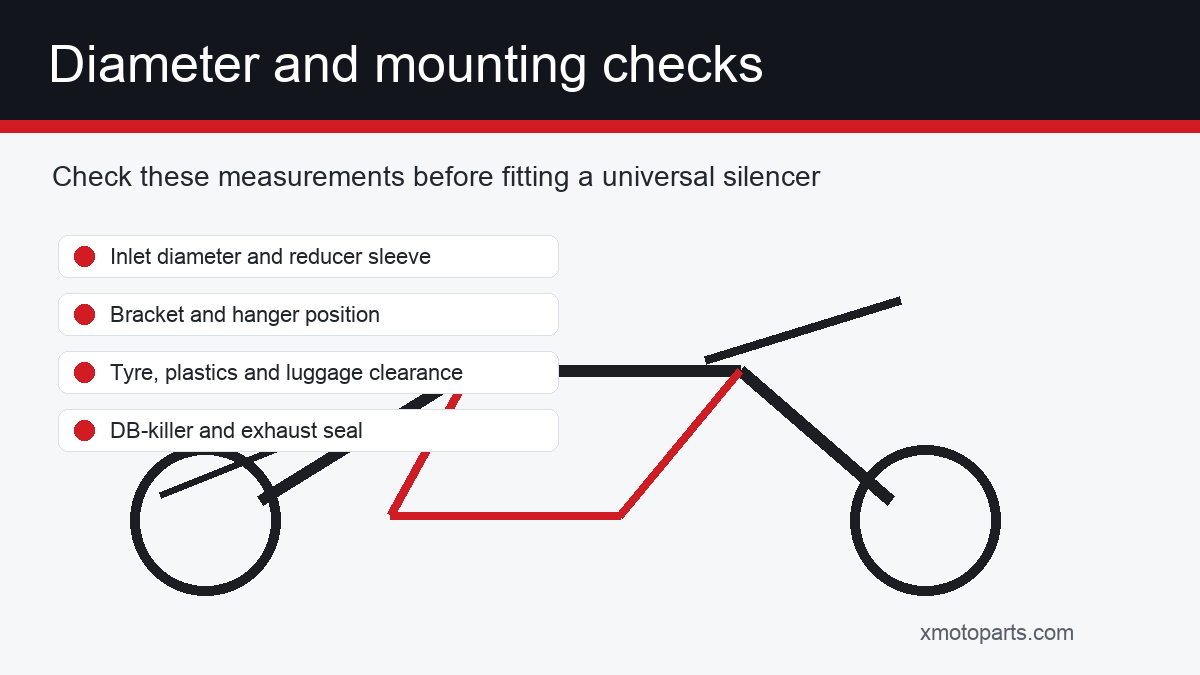
Measure before buying. On an exhaust, check the inlet diameter, link pipe angle, available length, hanger point, clearance to the tyre, clearance to the plastics and whether the original heat shield can be retained. On fuelling parts, check whether your bike actually has the sensor, connector and control system the product requires. On gearing, count the existing front and rear sprocket teeth before ordering, then confirm chain pitch and chain length.
| Vehicle or use case | Compatibility | Important note |
|---|---|---|
| Beta Alp 200 road/trail bike | Yes, with model-year checks | Confirm exhaust diameter, hanger location and carburettor or electrical layout |
| Beta Alp 4.0 or Alp X | Not the same platform | Modern 350 cc Alp models use different dimensions and engine specification |
| Universal motorcycle exhaust | Possible | Adapter sleeve, bracket work and DB-killer choice may be required |
| Carburettor jetting parts | Depends on exact carburettor | Inspect the carb body, jet sizes and intake condition before ordering |
| Electronic tuning module | Only if the connectors match | Do not buy by model name alone; compare sensor connectors and wiring |
| Custom project | Often possible | Professional fabrication may be needed for safe exhaust and bracket alignment |
Exhaust, silencer and DB-killer choices
For many owners, Beta Alp 200 tuning begins with the exhaust because it is visible, audible and relatively easy to understand. A lighter silencer can improve the feel of the bike, and a freer-flowing system can help the engine breathe when matched with correct fuelling. However, an exhaust is not magic. If the pipe diameter is wrong, the bracket is strained or the DB-killer is removed for road use, the result can be worse than standard.
A universal exhaust can be a good option when it is chosen with measurements in mind. The inlet diameter must suit the link pipe or reducer sleeve, the outlet should not point at plastics or luggage, and the hanger must support the silencer without loading the header. If you want to compare real fitment issues before ordering, the universal motorcycle exhaust with DB-killer page is a useful internal reference for the kind of dimensions and components that need checking.
When considering Beta Alp 200 tuning through an exhaust upgrade, keep the DB-killer discussion honest. Removing the baffle may make the bike louder, but louder is not the same as faster. On a small single-cylinder engine, too little back pressure or a poorly matched silencer can soften low-speed response, increase popping on overrun and make the bike tiring on longer rides.
| Exhaust solution | Main advantage | Possible disadvantage | Best use |
|---|---|---|---|
| Original silencer | Usually quiet, stable and road-friendly | Heavier and less characterful | Commuting, MOT confidence, long-term reliability |
| Road-suitable aftermarket silencer | Better note and appearance | Still needs fitment and fuelling checks | Everyday road/trail use |
| Universal exhaust | Flexible and often affordable | Adapter and bracket work may be required | Custom fitments where measurements are confirmed |
| Track-use-only exhaust | Maximum sound and flow potential | Not suitable for road use if marked accordingly | Private land or closed-course use only |
| Full custom system | Can be tailored to the bike | Highest cost and fabrication risk | Special builds handled by an experienced fabricator |
What to check after fitting an exhaust
After any exhaust-related Beta Alp 200 tuning, start the engine and check for leaks at the header, sleeve and silencer joints. A ticking sound, soot mark or hot gas smell usually means the joint is not sealed. Let the bike warm fully, then check idle, throttle pickup and overrun behaviour. Recheck the clamp and hanger after the first ride, because heat cycles can settle the parts.
If your main goal is exhaust tone, compare options inside the best motorcycle exhaust brands guide before buying purely by appearance. A quiet, well-mounted silencer that keeps low-end drive is usually better than a short can that looks aggressive but makes the bike unpleasant.
Carburettor, fuel delivery and electronic modules
Beta Alp 200 tuning often exposes issues that were already there. A dirty pilot jet, split intake rubber, blocked tank breather or weak spark plug can make the bike feel flat, then the owner blames the new exhaust or filter. Before adjusting fuelling, confirm the basics. The engine should start reliably, idle without hunting, accept small throttle openings and pull cleanly under load.
On carburettor bikes, tuning may involve idle mixture, pilot jet, needle position or main jet changes, but do not jump to larger jets without evidence. Read the plug after real riding, listen for hesitation, and make one change at a time. If the bike runs rich, it may smell of fuel, foul plugs and feel lazy. If it runs lean, it may surge, pop sharply, overheat or hesitate when the throttle is opened.
Some riders ask whether a plug-in module belongs in this kind of project. The honest answer is: only when the vehicle has the correct control system and the module has been designed for that setup. A generic product cannot compensate for a carburettor problem, an exhaust leak or incorrect installation. If a module is compatible, start with the lowest setting and increase carefully only if the bike runs cleanly.
Workshop-style fuelling checks
Use a repeatable test route. Warm the engine fully, ride at small throttle, half throttle and brief full-throttle load, then compare behaviour. Keep notes. If a change improves one area but damages another, go back. Beta Alp 200 tuning works best when every adjustment is reversible until the final setup is proven.
Gearing, chain and trail control
Many owners overlook gearing, but it can be the most useful part of Beta Alp 200 tuning. A smaller front sprocket or larger rear sprocket can make slow climbs easier and reduce clutch abuse. The trade-off is higher cruising revs and possibly less comfortable road speed. Taller gearing may help a bike feel calmer on tarmac, but only if the engine has enough torque to pull it without labouring.
Before changing sprockets, inspect the chain and sprocket teeth. Hooked teeth, tight spots and incorrect slack will ruin the feel of the bike. A new gearing setup on a worn chain is false economy. If you are unsure how to measure slack and alignment properly, use the motorcycle chain tension adjustment guide before fitting new sprockets.
| Change | Riding effect | Trade-off | Who it suits |
|---|---|---|---|
| Shorter gearing | Stronger low-speed control and easier climbs | Higher revs on the road | Trail riders and technical-lane use |
| Standard gearing refreshed | Restores smoothness and predictable drive | No dramatic change in character | Owners of worn, neglected bikes |
| Taller gearing | Lower revs at a given road speed | Weaker pull uphill or into wind | Light riders using flatter road routes |
| New chain and sprockets together | Most reliable result | Higher initial cost | Any owner doing a proper refresh |
Installation checks from a mechanic’s point of view
Beta Alp 200 tuning should be installed like service work, not like decoration. Lay out every part before starting. Check clamps, sleeves, spacers, washers, cable routing and heat clearance. If a bracket needs to be forced into place, stop and correct the alignment. Stress on a silencer hanger or intake joint usually becomes a crack, leak or vibration later.
For exhaust work, use a new gasket or sealing method appropriate to the joint. For carburettor work, photograph the original settings and keep the original jets. For gearing work, torque fasteners correctly and use thread locking compound where the manual specifies it. Beta’s own support area points owners towards official manuals and technical documentation, which is the right starting point for specifications and maintenance information: Betamotor manuals and technical documents.
UK road legality, MOT and insurance
Any road-focused Beta Alp 200 tuning must respect UK legality. The UK MOT does not reward a motorcycle for sounding sporty. The exhaust must be secure, complete and not excessively noisy. GOV.UK’s motorcycle MOT guidance explains that exhaust noise must not be clearly unreasonable compared with a similar motorcycle using a standard silencer, and that insecure exhaust parts are serious defects: GOV.UK motorcycle MOT exhaust noise guidance.
Also pay attention to markings. A silencer marked “NOT FOR ROAD USE”, “TRACK USE ONLY” or similar wording can create MOT and road-use problems. E-marking, DB-killer presence, catalytic converter requirements and emissions equipment depend on the motorcycle’s age, market and exact product. UK road use is different from private land or closed-course use, and rules in the United States, Canada, Australia, New Zealand and Ireland can differ again.
Insurance matters too. If Beta Alp 200 tuning changes the exhaust, intake, fuelling or performance, tell your insurer. Some riders avoid reporting small changes because the part seems minor, but undeclared modifications can create trouble after a claim. If a product is sold as off-road-use-only, treat it that way unless you have clear evidence it is legal for your road use.
Road, trail and private-land use are not the same
A bike used on the public road needs road-legal equipment. A bike used on private land with permission may have more freedom, but noise, landowner rules and local restrictions still matter. A track-only setup can make sense for closed-course riding, but it should not be treated as a road setup. Sensible upgrades separate those use cases clearly.
Common mistakes owners should avoid
The most common mistake is buying parts before measuring the bike. Owners see a silencer, sprocket or module listed for a similar machine and assume it will bolt on. The second mistake is chasing volume instead of driveability. A louder exhaust can make the bike feel faster at first, but if low-speed response suffers, the Alp becomes worse at the riding it is good at.
Other mistakes include ignoring the DB-killer, choosing an exhaust without checking bracket position, fitting a universal part as if it were plug-and-play, changing jets without cleaning the carburettor first, forgetting to inspect the air filter, fitting new sprockets to a worn chain, failing to check for exhaust leaks, expecting big horsepower gains from a small trail bike and overlooking insurance or MOT implications.
Good Beta Alp 200 tuning avoids all of that. Measure first, change one thing at a time, keep standard parts, test ride carefully and check the bike again after heat and vibration have done their work.
How to choose the right upgrade path
If you mainly ride green lanes, start with tyres, chain condition, gearing and reliable low-speed throttle response. If you mainly ride on the road, prioritise smooth running, legal exhaust noise, lighting, brakes and comfort. If you want a better sound, choose an exhaust that keeps the DB-killer, mounts securely and does not require ugly bracket tension.
If your bike already has an aftermarket exhaust and feels worse than before, do not keep buying parts blindly. Inspect the seal, check fuelling, confirm the airbox has not been opened beyond what the engine can use and verify that the gearing still suits your riding. Beta Alp 200 tuning is most satisfying when the final motorcycle feels easier to ride, not merely more modified.
FAQ about Beta Alp 200 tuning
Is Beta Alp 200 tuning worth it?
Beta Alp 200 tuning is worth it when the goal is smoother response, better gearing for your terrain, cleaner exhaust fitment or a refreshed setup. It is less worthwhile if you expect a small dual-purpose motorcycle to gain dramatic power without cost, noise or reliability trade-offs.
Can I fit a universal exhaust to a Beta Alp 200?
A universal exhaust can fit if the inlet diameter, link pipe angle, hanger point and available clearance are correct. You may need an adapter sleeve or custom bracket. Never assume a universal silencer is plug-and-play just because the engine size looks similar.
Do I need to rejet after an exhaust change?
You may need to adjust carburettor jetting if the exhaust and intake flow change enough to affect mixture. Symptoms include hesitation, popping, weak pull, rich smell or plug fouling. Make one change at a time and keep the original jets so you can return to baseline.
Will Beta Alp 200 tuning increase top speed?
Beta Alp 200 tuning can improve how the bike pulls, but top speed depends on engine condition, gearing, rider weight, wind, tyre choice and road gradient. Shorter gearing improves control but can reduce comfortable road speed, while taller gearing only helps if the engine can pull it.
Is an aftermarket exhaust legal in the UK?
An aftermarket exhaust can be legal if it is secure, not excessively noisy, suitable for road use and does not remove required emissions equipment for that motorcycle. Avoid road use with parts marked “not for road use” or “track use only”. When rules vary, check your MOT tester, insurer and product documentation.
Should I remove the DB-killer?
For public-road use, removing the DB-killer is usually a bad idea. It can make the bike too loud, reduce low-speed rideability and create MOT or police attention. A retained DB-killer is normally the better choice for real-world riding.
Can a tuning module replace proper maintenance?
No. Beta Alp 200 tuning should never be used to hide dirty carburettor passages, air leaks, weak ignition parts, poor fuel, worn chains or incorrect valve/service condition. Fix mechanical basics before adding electronics or performance parts.
When should I ask a mechanic to help?
Use a mechanic if the exhaust needs fabrication, the bike runs lean or hot, the carburettor needs internal work, the electrical connectors are uncertain, or the modification affects brakes, steering, frame attachments or road legality. A small labour bill is cheaper than a damaged engine or unsafe fitment.
Final verdict
Beta Alp 200 tuning should make the motorcycle more useful, not less civilised. Start with service condition, then choose upgrades around how you actually ride. For lanes and technical tracks, gearing, chain condition and clean throttle response matter more than noise. For road use, exhaust legality, secure mounting, insurance disclosure and MOT expectations matter as much as performance.
Before buying, check the exact model year, measure the exhaust and sprocket details, inspect the intake and carburettor, keep original parts and avoid products that promise too much. If a universal exhaust or tuning component genuinely matches your bike, install it carefully and test it like a mechanic: warm engine, short ride, fastener recheck, leak check and another ride after everything has cooled.
The best Beta Alp 200 tuning result is a bike that starts cleanly, pulls smoothly, climbs better, stays legal for the way you use it and still feels like the friendly Alp that made you buy it in the first place.