
Fantic Caballero 500 problems: the owner-focused guide to faults, weak points and sensible fixes
Fantic Caballero 500 problems is a search that deserves a balanced answer. The Caballero 500 is not a fragile motorcycle by reputation alone, and the current official specification shows a serious machine: a 463 cc DOHC single-cylinder engine, 44 HP, Ride-by-Wire, slipper clutch, Arrow exhaust, liquid cooling, cornering ABS, traction control, spoked wheels and a light chassis. But a minimalist, stylish, A2-friendly scrambler that invites road and dirt use can still produce recurring owner complaints when maintenance, setup or expectations are wrong.
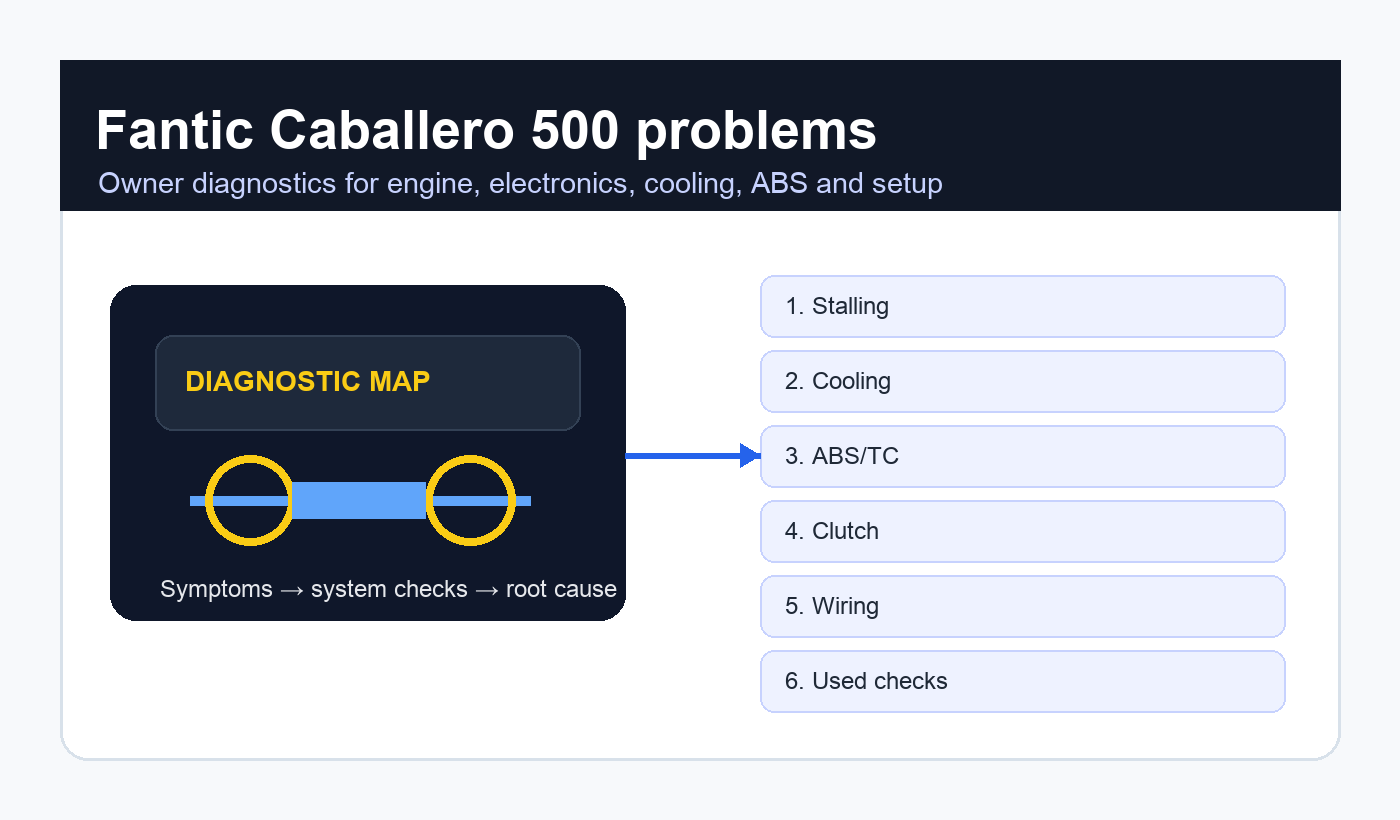
The useful question is not whether every Caballero 500 is trouble. The useful question is which symptoms deserve attention, which are normal single-cylinder behavior, which belong to older model years, and which require dealer diagnostics. This guide approaches the bike as a system: engine, electronics, cooling, clutch, brakes, suspension, tires, fasteners, wiring and the way the motorcycle is actually ridden.
What owners need to know first
This guide is written for owners, buyers and technicians dealing with Fantic Caballero 500 problems in the real world. It focuses on symptoms, checks, realistic repair decisions, legal limits where relevant, and the points worth confirming before buying parts or trusting a seller’s claim.
The related topic area includes Fantic Caballero 500 reliability, Fantic Caballero 500 engine problems, Caballero 500 stalling, Caballero 500 starting problem, Fantic Caballero 500 overheating, Caballero 500 electrical problems, Fantic Caballero 500 ABS fault, Caballero 500 traction control, Fantic Caballero 500 Ride by Wire, Caballero 500 clutch issue, Fantic Caballero 500 gearbox, Caballero 500 oil leak, Fantic Caballero 500 coolant leak, Caballero 500 battery drain, Fantic Caballero 500 service intervals, Fantic Caballero 500 Rally problems, Fantic Caballero Scrambler 500 problems, Caballero 500 fuel injection, Fantic Caballero 500 vibration, Caballero 500 suspension, Fantic Caballero 500 tires and Caballero 500 off-road setup.
The best article for Fantic Caballero 500 problems must therefore avoid two lazy extremes. It should not pretend the bike is flawless, and it should not turn scattered complaints into a verdict against the model. Good diagnosis starts with the exact symptom, model year, mileage, use pattern and service history.
| Reader need | What the rider likely wants | Best answer |
|---|---|---|
| Buyer research | Is the Caballero 500 reliable enough? | Separate real weak points from internet noise. |
| Current fault | Why is my bike stalling, overheating or showing a warning? | Give a diagnostic path before replacing parts. |
| Off-road use | What breaks when the bike is used on gravel? | Focus on tires, suspension, fasteners, guards and service intervals. |
| Electronics | Are Ride-by-Wire, ABS or TC causing issues? | Explain sensors, battery voltage and dealer scan needs. |
Use the official specification as the baseline
Fantic Caballero 500 problems are easier to understand when the factory hardware is clear. Fantic’s official Scrambler 500 page describes the latest Caballero 500 with a 463 cc liquid-cooled DOHC single, 44 HP at 8000 rpm, 42 Nm at 7000 rpm, electronic injection, Ride-by-Wire throttle body, six gears, wet multi-disc anti-hopping clutch and a stainless Arrow exhaust. The chassis includes a steel CrMo single-beam frame, spoked wheels, Pirelli Scorpion Rally STR tires, a 320 mm front disc, 230 mm rear disc and Continental cornering ABS with traction control.
Those details matter because the Caballero is mechanically more advanced than its retro styling suggests. A rider who expects a simple old-school scrambler may be surprised by ride modes, sensors and electronic throttle behavior. A rider who expects an enduro may be surprised by road-biased compromises. Many complaints live in that gap between image and use.
For reference, use Fantic’s official Caballero Scrambler 500 specification for model data and NHTSA motorcycle safety guidance for the wider safety principle that tires, braking, visibility and rider control matter as much as engine performance.
Stalling, rough idle and starting issues
The most frustrating Fantic Caballero 500 problems for daily riders are low-speed stalling, hesitant cold starts, inconsistent idle and poor throttle pickup. On a modern injected single, those symptoms can come from battery voltage, throttle calibration, sensor data, air leaks, fuel quality, software updates, idle control strategy, spark plug condition or simple service neglect.
Start with the basics. Confirm battery health under load, not only static voltage. Check terminals and ground points. Inspect the air filter and intake tract. Make sure there are no obvious vacuum leaks or loose clamps. If the bike has sat for weeks, drain questionable fuel and start again with fresh fuel. A single-cylinder engine can sound dramatic even when the cause is mundane.
Ride-by-Wire adds another layer. If the throttle response feels inconsistent, a dealer-level diagnostic scan may be needed to check stored faults, sensor plausibility and software status. Guessing at parts is expensive; electronic symptoms need data.
| Symptom | Common area | First checks |
|---|---|---|
| Stalls when hot | Idle strategy, sensor data, fuel vapor, valves | Scan faults, check fan operation, valve clearance and fuel quality. |
| Hard cold start | Battery, spark, injector, enrichment strategy | Load-test battery, inspect plug, use fresh fuel. |
| Snatchy throttle | Ride-by-Wire calibration or chain slack | Check updates, throttle learning, chain adjustment. |
| Misfire under load | Ignition, fuel supply, sensor fault | Read codes, inspect plug cap, filter and injector behavior. |
Heat, cooling and fan behavior
Fantic Caballero 500 problems sometimes appear as heat complaints. A 463 cc single in a compact retro chassis can feel warm in city traffic, especially near the rider’s legs. Warmth is not automatically overheating. Real overheating means temperature warnings, coolant loss, boiling, fan failure, repeated cut-out or poor recovery after the bike starts moving.
The latest official pages emphasize an optimized cooling system and oil cooler, which is helpful, but owners still need to keep the system clean. Check coolant level when cold, radiator fins, fan operation, hose condition, cap seal and any signs of dried coolant. Off-road dust and mud can reduce cooling efficiency faster than a road-only rider expects.
If the bike overheats after a slow trail ride, the diagnostic path is different from one that overheats on a clear road at steady speed. The former may be airflow and dirt; the latter suggests a deeper cooling or engine issue.
Electrical warnings, ABS and traction control faults
Electronic Fantic Caballero 500 problems can be intimidating because the Caballero uses modern assistance systems. ABS lights, traction control warnings, ride mode confusion or intermittent display issues often trace back to battery voltage, wheel-speed sensors, damaged wiring, dirty sensor rings, connector moisture or previous accessory installation.
Do not ignore a persistent ABS warning. Cornering ABS and traction control are safety systems, and the bike should be scanned if a warning remains after normal startup. Also inspect sensor gaps, tone rings, brake work history and any pressure washing around hubs or wiring. A simple damaged sensor lead can create a dashboard drama.
Accessory wiring deserves special suspicion. Heated grips, auxiliary lights, USB chargers and GPS trackers can be useful, but poor splices, unfused circuits and loose grounds create intermittent problems that look like factory faults. The Caballero’s clean styling leaves less room to hide messy wiring, so neat routing matters.
| Warning | Likely cause | What to do |
|---|---|---|
| ABS light stays on | Wheel sensor, tone ring, voltage or stored fault | Inspect sensors and scan system. |
| TC warning | Wheel-speed mismatch, tire change, sensor fault | Check tire sizes, pressures and sensor data. |
| Display flicker | Battery, connector, ground or accessory wiring | Load-test battery and inspect harness. |
| Ride mode odd behavior | Switchgear, software or throttle data | Clean switchgear, scan and check updates. |
Clutch, gearbox and driveline complaints
Some Fantic Caballero 500 problems involve clutch feel, neutral selection, shift quality or chain snatch. The official anti-hopping clutch is designed to improve control during downshifts, but lever adjustment, cable or hydraulic condition depending on model configuration, oil choice, chain slack and rider technique still matter.
Check free play, lever movement, chain slack, sprocket wear and oil condition before judging the gearbox. A dry or over-tight chain can make the throttle feel abrupt and the transmission feel rough. A new bike may also shift differently after break-in and first service.
False neutrals or heavy shifting that persist after proper adjustment deserve dealer inspection. Do not mask drivetrain problems with thicker oil or aggressive clutch habits. Document when the issue happens: cold, hot, under load, on downshifts, or only during slow riding.
Vibration, fasteners and single-cylinder character
Fantic Caballero 500 problems often include vibration complaints, and this is where expectations matter. A large single-cylinder motorcycle will pulse more than a twin. That character is part of the appeal, but excessive buzzing, loose mirrors, rattling panels or numb hands can indicate loose fasteners, engine mounts, handlebar setup, tire imbalance or worn contact points.
Use a torque check after the first service period and again after off-road use. Pay attention to exhaust guards, skid plates, luggage racks, number plates, mirrors and turn signals. A minimalist scrambler with accessories can develop noises that sound mechanical but are just hardware settling.
Suspension, tires and off-road expectations
Many Fantic Caballero 500 problems are really setup complaints. The Scrambler 500 and Rally 500 are styled and equipped for mixed use, but they are not the same motorcycle. The Rally’s 21-inch front wheel and longer-travel suspension suit rougher terrain, while the Scrambler’s road/off-road compromise is different. If a rider takes a road-biased setup into rough trails at speed, complaints about grip, bottoming or instability may reflect the use case more than a defect.
Pirelli Scorpion Rally STR tires are respected mixed-use rubber, but no tire is perfect everywhere. Tire pressure, load, terrain and rider pace matter. On wet pavement, gravel, mud or fast broken roads, setup makes a huge difference. Suspension preload should match rider weight and luggage, and tire pressures should be chosen responsibly for road safety.
| Complaint | Likely explanation | Practical fix |
|---|---|---|
| Front feels vague on gravel | Tire pressure, rider position, Scrambler geometry | Adjust pressure within safe limits and slow the pace. |
| Rear feels harsh | Preload or damping mismatch | Set sag/preload for rider and luggage. |
| Wanders on road | Tires, spokes, wheel balance, pressure | Inspect wheels, pressures and tire wear. |
| Bottoms off-road | Use beyond setup or spring support | Consider Rally setup or suspension tuning. |
Oil leaks, coolant weeps and fluid checks
Fluid-related Fantic Caballero 500 problems should be treated with evidence. A light mist around a breather is not the same as an active oil leak. A dried coolant mark is not the same as a failing water pump. Clean the area, ride briefly, and inspect again. Photograph the location and level changes before visiting a dealer.
Check oil level according to the manual procedure, not by guesswork. Overfilling can create breathing and mess. Underfilling is obviously dangerous. Coolant level should be checked cold, and repeated loss should be investigated rather than topped up endlessly.
Model-year differences and used-bike checks
A serious guide to Fantic Caballero 500 problems must acknowledge that used bikes vary. Earlier Caballero 500 versions and the newest Euro5+ models may not share identical engine, electronics or calibration. A complaint from an older forum thread may not apply to a current bike with the new Minarelli-produced 460 cc engine, Ride-by-Wire and updated tech pack.
When buying used, ask for service invoices, software update history, warranty repairs, accessory installation details, off-road use evidence, tire age, chain condition, battery age and whether the bike has been pressure washed aggressively. A clean seller story is worth more than a shiny tank.
| Used-bike check | Why it matters | Red flag |
|---|---|---|
| Cold start | Reveals idle, battery and fueling behavior | Seller warms the bike before arrival. |
| Warning lights | Shows ABS/TC/electronic health | Lights remain on or have been dismissed as normal. |
| Fasteners/accessories | Shows vibration and workmanship | Missing bolts, loose guards, messy wiring. |
| Service record | Confirms oil, valves and updates | No invoices or vague DIY claims. |
Owner checklist before blaming the model
Before calling every symptom Fantic Caballero 500 problems, separate the bike from the maintenance history. A low battery, old fuel, dirty air filter, over-tight chain or wrong tire pressure can make a modern single feel worse than it is.
When Fantic Caballero 500 problems appear after accessory installation, inspect that accessory first. Loose grounds, unfused lights, crushed connectors and routing near heat can create intermittent faults that look like factory electronics trouble.
When Fantic Caballero 500 problems appear only after off-road rides, inspect mud around the radiator, wheel sensors, chain, brake pads, skid plate mounts and exposed wiring. Dirt changes the diagnostic order.
When Fantic Caballero 500 problems appear only in traffic, focus on fan operation, coolant level, idle stability, clutch control and heat soak. A problem that never appears on open roads has a different cause than a constant misfire.
When Fantic Caballero 500 problems appear only at high speed, look at tire balance, spoke tension, wheel bearings, steering bearings, suspension setup and luggage. Not every stability complaint is an engine fault.
When Fantic Caballero 500 problems are reported by a seller, ask for dates, invoices and fault-code printouts. A verbal explanation is useful, but written evidence tells you whether the issue was repaired or merely forgotten.
When Fantic Caballero 500 problems repeat after several repairs, stop replacing random parts and build a timeline: mileage, temperature, fuel, weather, load, gear, warning lights and exact conditions. Patterns solve intermittent faults.
When Fantic Caballero 500 problems involve safety systems, do not ride around the warning. ABS, traction control, brakes and tires are not comfort features; they are part of the motorcycle’s safety envelope.
When Fantic Caballero 500 problems are compared with another bike, compare use as well. A commuter Scrambler, a trail-ridden Rally and a low-mileage weekend bike will not age in the same way.
Internal guides that help with diagnosis
If you are comparing Fantic Caballero 500 problems, read the earlier Fantic Caballero 250 problems guide for smaller-model context. The Mondial HPS 125 derestriction guide helps explain retro-single expectations and road-use compromises. For electronics and scan-tool thinking, OBD2 protocol list gives useful background on why generic diagnostics need the right protocol and context.
FAQ
Are Fantic Caballero 500 problems common enough to avoid the bike?
No single answer fits every model year and owner. The Caballero 500 can be a rewarding bike, but buyers should inspect service history, electronics, cooling, tires, fasteners and accessory wiring carefully.
Do Fantic Caballero 500 problems include serious engine failures?
Most owner complaints are more often around starting, idle, electronics, heat, setup or maintenance than catastrophic engine failure. Any knocking, oil pressure warning, coolant loss or repeated overheating needs immediate professional diagnosis.
Can Fantic Caballero 500 problems come from off-road use?
Yes. Dirt, vibration, water, impacts and low-speed heat can reveal weak maintenance, loose hardware, clogged radiators, worn tires or unsuitable suspension setup.
Are electrical Fantic Caballero 500 problems usually expensive?
Not always. Battery voltage, grounds, wheel sensors and poor accessory wiring are common first checks. Dealer diagnostics become important when warning lights persist or ride modes behave unpredictably.
What should I check first when diagnosing Fantic Caballero 500 problems?
Start with battery health, fault codes, fuel quality, air filter, chain slack, tire pressure, coolant level and visible wiring. Then move into model-specific scan data and workshop checks.
Final verdict
Fantic Caballero 500 problems should be approached with evidence, not panic. The motorcycle is modern under its retro skin, and that means many symptoms require a blend of old-fashioned mechanical inspection and electronic diagnosis. A healthy Caballero 500 should start cleanly, idle consistently, run at stable temperature, shift predictably and keep its warning lights off after startup.
The best way to avoid Fantic Caballero 500 problems is to buy carefully, service on time, keep the battery strong, protect wiring, clean the cooling system after dirty rides, set suspension and tire pressure for real use, and investigate warnings early. That is how the Caballero stays what it is meant to be: light, stylish, lively and enjoyable rather than mysterious.