Category: Powersports Problem Guides

  • Fantic Caballero 250 problems: Complete Used-Bike Diagnostic Guide

    Fantic Caballero 250 problems: Complete Used-Bike Diagnostic Guide

    Fantic Caballero 250 problems: Complete Used-Bike Diagnostic and Ownership Guide

    Fantic Caballero 250 problems is a useful search because the Caballero 250 sits in a slightly awkward but interesting place. It is not as common as the 125 learner versions or the better-known 500, yet it carries the same retro-scrambler identity: light weight, simple fun, stylish bodywork and a design that attracts riders who want character rather than a plain commuter. That mix makes used-bike inspection especially important.

    Most complaints around a small or mid-size scrambler are not mysterious. They usually fall into starting and battery issues, fuel injection behavior, cooling and fan operation, chain and sprocket wear, clutch adjustment, brake and suspension wear, electrical connectors, tire choice, corrosion and parts availability. The challenge is separating normal use from neglect.

    This guide treats Fantic Caballero 250 problems as a practical owner and buyer topic. It explains reader need, related topics, common symptoms, used-bike inspection, maintenance priorities and the difference between a real model weakness and a poorly serviced motorcycle.

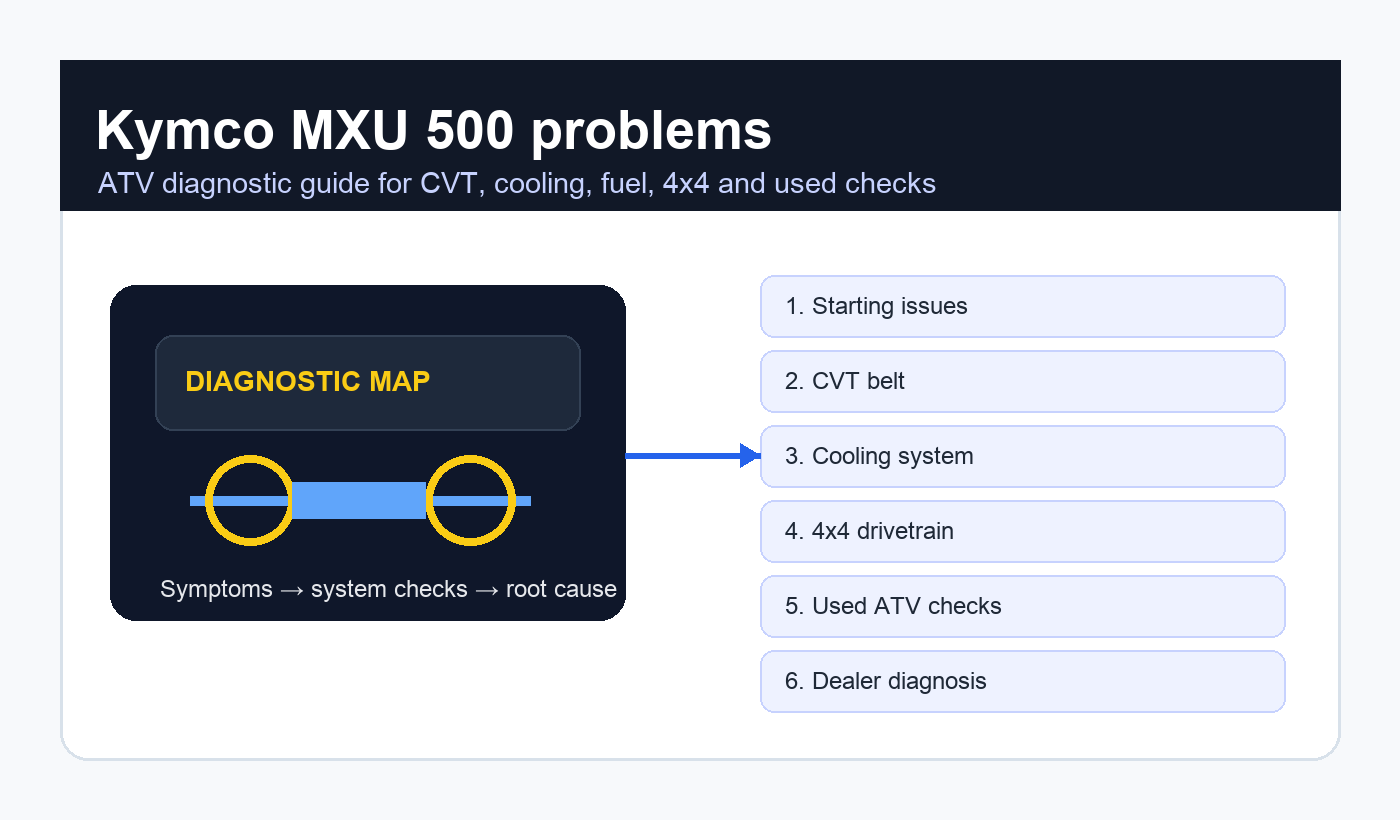
    Fantic Caballero 250 problems

    What owners need to know first

    This guide is written for owners, buyers and technicians dealing with Fantic Caballero 250 problems in the real world. It focuses on symptoms, checks, realistic repair decisions, legal limits where relevant, and the points worth confirming before buying parts or trusting a seller’s claim.

    Associated terms include Fantic Caballero reliability, Caballero Scrambler 250, Caballero Rally, Fantic 250 engine, used scrambler checklist, fuel injection problems, starter relay, battery drain, coolant fan, overheating, clutch cable adjustment, chain wear, sprocket wear, brake pads, fork seals, wheel bearings, spoke wheels, ABS light, ECU warning light, parts availability, dealer support, motorcycle corrosion, off-road use and retro scrambler maintenance.

    Reader needWhat the rider wantsBest answer
    Used buyingIs the 250 risky?Inspect service history, wear and parts support
    Fault diagnosisWhy does it start, stall or run hot?Group symptoms by system
    Comparison250 versus 125 or 500Explain rarity, performance and ownership cost
    Parts concernCan it be maintained easily?Check dealer network and compatible service parts

    What the Caballero 250 is

    The Caballero line is Fantic’s retro scrambler family, blending classic styling with modern brakes, fuel injection and lightweight road/trail attitude. For current brand and model-family context, start from the official Fantic website. The 250 is best understood as a light, stylish single-cylinder motorcycle rather than a heavy touring bike or hardcore enduro.

    Fantic Caballero 250 problems often comes from mismatched expectations. A rider who expects Japanese commuter-level parts availability may be frustrated. A rider who expects a race enduro may also be frustrated. A rider who wants a characterful lightweight scrambler and inspects carefully can have a better ownership experience.

    The fastest symptom map

    When people discuss Fantic Caballero 250 problems, the same system groups appear repeatedly: starting, idle, heat, clutch, chain, brakes, suspension and electrics. The right approach is to identify the system first, then inspect evidence. A weak battery is not an ECU fault. A loose chain is not a gearbox failure. A dirty radiator is not always a bad thermostat.

    SymptomLikely areaFirst checksUrgency
    Slow crank or no startBattery, relay, terminalsLoad-test battery, inspect grounds, check relay clickMedium
    Stalling at idleFuel, intake, throttle body, sensor dataCheck fuel age, air leaks, plug, idle adaptationMedium
    Runs hot in trafficCooling systemFan, coolant level, radiator blockageHigh
    Hard shiftingClutch adjustment or oilLever free play, cable, oil condition, chain tensionMedium
    Wobble or vague steeringTires, bearings, suspensionTire age/pressure, head bearings, fork sealsHigh
    Random warning lightVoltage or connector issueBattery, charging voltage, scan codes, connectorsMedium

    Starting and battery issues

    Fantic Caballero 250 problems often begins with a no-start story. Lightweight motorcycles use relatively small batteries, and a bike that sits between weekend rides can become weak quickly. A battery can show acceptable voltage at rest and still fail under starter load. The first step is a real load test, not a guess.

    Inspect terminals, ground points, starter relay, main fuse and charging voltage. If the bike has aftermarket lights, USB chargers, alarms or tracking devices, check for parasitic draw. Owners sometimes replace the battery repeatedly while the real problem is poor charging, a weak ground or an accessory wired badly.

    Fuel injection, idle and stalling

    Fuel-injected singles can be sensitive to basic maintenance. Fantic Caballero 250 problems with idle trouble may involve old fuel, dirty injector, intake leak, weak spark plug, throttle-body deposits, sensor faults or low voltage. If the bike stalls only when hot, heat-related electrical behavior or idle control should be considered.

    A scan tool or dealer diagnostic system is useful when a warning light is present. But do not ignore mechanical basics. A dirty air filter, tight valve clearance, poor fuel or cracked intake boot can create symptoms that look electronic.

    Cooling system checks

    Fantic Caballero 250 problems with heat symptoms should be taken seriously. A small single-cylinder engine can run hot in traffic, especially after slow trail-style riding or muddy conditions. Check coolant level, radiator fins, fan operation, hoses, cap condition and signs of leaks. Make sure the fan actually switches on before assuming the gauge is wrong.

    If overheating repeats, stop riding until diagnosed. Continued heat can damage gaskets, oil quality, sensors and engine components. A used bike that has been repeatedly overheated is worth less than one with clean fluids and stable temperature behavior.

    Clutch, gearbox feel and chain condition

    Some Fantic Caballero 250 problems searches are really about driveline adjustment. A tight or dry chain can make shifting feel harsh. A loose chain can snatch and clunk. Poor clutch free play can make neutral hard to find. Old oil can affect shift feel. Before blaming the gearbox, inspect the service items that make the gearbox feel good.

    ComplaintLikely simple causeWhat to inspect
    Hard to find neutralClutch free play or oil conditionCable adjustment, lever, oil service
    Snatchy low-speed rideChain slack or throttle abruptnessChain tension, sprockets, fueling
    Clunk on/off throttleChain/sprocket wearHooked teeth, tight spots, rear cush drive if fitted
    Slipping under loadClutch wear or wrong oilOil spec, cable free play, clutch plates

    Suspension, brakes and tires

    Fantic Caballero 250 problems can include complaints about handling, but tires and suspension setup are often the real cause. Scrambler-style bikes may wear mixed-use tires, and tire choice changes the feel dramatically. Old rubber, low pressure, squared tread or mismatched tires can make the bike wander.

    Check fork seals, shock leakage, steering-head bearings, wheel bearings, spoke tension if applicable, brake pad thickness, rotor condition and brake-fluid age. A light motorcycle should feel easy and precise. If it feels vague, heavy or nervous, inspect the chassis before assuming the model is bad.

    Electrical connectors and weather exposure

    Many lightweight stylish motorcycles are used in cities, rain, short trips and occasional dirt roads. Fantic Caballero 250 problems with intermittent electrical behavior can come from connectors, grounds, battery voltage or moisture. Inspect exposed connectors, switchgear, fuse box, regulator wiring and any non-factory accessories.

    Use contact cleaner carefully and fix damaged seals rather than just spraying everything. Electrical diagnosis should be methodical: battery first, charging second, grounds third, then switches, sensors and wiring.

    Parts availability and dealer support

    One practical part of Fantic Caballero 250 problems is not a mechanical defect at all: parts support. Less common models can be perfectly enjoyable but slower to support if a specific panel, sensor, exhaust part or trim piece is needed. Before buying, call a dealer or parts supplier and ask about common service items and known delays.

    Consumables such as oil filters, chains, sprockets, pads, tires, levers and batteries should be easy enough to source. Model-specific plastics, sensors or exhaust components may require more patience. That should influence the price of a used bike.

    Used buying checklist

    A buyer researching Fantic Caballero 250 problems should never inspect only the paint and seat. Ask for a cold start. Let the bike idle until warm. Confirm fan operation. Check charging voltage. Inspect chain, tires, brake pads, fork seals, lights, warning lamps and service invoices. Look underneath for impact damage and around the engine for leaks.

    AreaGood signWarning sign
    Cold startStarts cleanly without throttle dramaSeller warms it before arrival
    TemperatureFan cycles and heat stays controlledCoolant smell, stains, rising gauge
    DrivelineClean chain, smooth clutch, good sprocketsHooked teeth, tight spots, hard neutral
    ElectricsStable voltage and no warning lightsRandom accessories and dead battery history
    ChassisStraight bars, clean fork seals, fresh tiresWobble, bent controls, old tires
    PaperworkInvoices and original partsNo service history or unclear modifications

    Modifications and owner habits

    Fantic Caballero 250 problems on a modified bike needs extra caution. Exhausts, air filters, ECU modules, tail tidies, LED indicators and bar-end mirrors can be fine when installed correctly. They can also create fueling issues, warning lights, bad wiring, inspection trouble or water entry. A clean stock bike is often a better buy than a modified one with no documentation.

    Off-road styling does not mean the bike has been treated gently. Look for mud packed behind guards, damaged rims, scratched engine cases, bent levers and impact marks. Light trail use is different from repeated hard impacts.

    Cost thinking

    The smart way to approach Fantic Caballero 250 problems is to price the bike with its maintenance needs. A cheap purchase can become expensive if it needs tires, chain kit, brake service, fork seals, battery, fluids and diagnostic work immediately. Those are normal wear items, but they still cost money.

    Do not reject every bike with wear. Use wear as negotiation evidence. A well-used bike with honest records can be better than a shiny bike with hidden overheating or electrical problems.

    Road test procedure

    A road test should be calm and deliberate. Begin with a cold start, then listen for chain noise, valve noise, exhaust leaks and starter behavior. Let the bike warm fully. Check that idle settles without hunting, the throttle returns cleanly and the clutch engagement point is predictable. A short ride around the block is not enough if the complaint appears only when hot.

    During the ride, test low-speed fueling, steady throttle, gentle acceleration, braking, suspension response and straight-line stability. The motorcycle should not surge badly at constant speed, wander under braking or feel unstable over small bumps. After the ride, inspect again for coolant smell, oil seepage, brake heat, fan operation and new warning lights. A second inspection after heat soak often reveals leaks that are invisible when cold.

    Paperwork that changes the value

    Documentation can be worth real money. Service invoices, previous MOT or inspection records, dealer stamps, parts receipts and original accessories help prove that the motorcycle has been looked after. A rare or less common model without paperwork is not automatically bad, but uncertainty should reduce the price.

    Look for evidence of regular oil changes, coolant service, brake-fluid changes, chain kits, tires, battery replacement and any diagnostic work. If the seller mentions a known issue that was repaired, ask for the invoice. A verbal claim is weaker than a dated receipt with part numbers.

    Parts strategy for long-term ownership

    A smart owner builds a small parts strategy. Identify the nearest dealer or specialist, note common consumable part numbers and check availability for filters, pads, chain kits, levers and cables before a trip or riding season. This is especially useful for motorcycles that are stylish but not as common as mass-market commuter bikes.

    Keeping the bike reliable is often about planning rather than panic. Ordering service parts before they are urgent, keeping the battery charged during storage and fixing small leaks early prevents many “reliability” stories from starting in the first place.

    For a rider who uses the bike daily, it is also worth keeping a simple maintenance log. Date, mileage, oil, filters, chain adjustments, tire pressures and any warning-light events create a record that makes future diagnosis faster and resale easier.

    When to use a dealer or specialist

    Home checks are reasonable for tires, chain, battery, visible leaks, brake pads and basic service history. A dealer or specialist is better for warning lights, fuel injection diagnosis, repeated overheating, charging faults, ABS concerns and internal engine noises. For safety recalls in markets where the vehicle is listed, official databases such as NHTSA recalls are worth checking, alongside local dealer support.

    A good technician should ask how the bike is used: city commuting, weekend riding, trail roads, storage, rain, short trips or long rides. Use pattern changes likely causes.

    How to separate model problems from owner problems

    Every used motorcycle carries two histories: the engineering history of the model and the personal history of the owner. A design can be basically sound and still become troublesome after poor storage, cheap accessories, skipped oil changes, pressure washing, crash damage or repeated short rides on a weak battery. That is why a serious inspection does not begin with reputation alone.

    Look for patterns. A single worn chain is maintenance. A chain, sprockets, tires, pads, fork seals and battery all near the end of life show a bike that has been consumed rather than maintained. A bike with minor cosmetic marks but fresh fluids, good tires and honest receipts may be the better machine.

    Storage and seasonal use

    Seasonal storage can create faults that look like model weaknesses. Old fuel can make idle poor. A discharged battery can damage starting confidence. Corrosion can creep into connectors. Tires can develop flat spots or age before they wear out. Before judging the motorcycle, restore the basics: fresh fuel, charged battery, clean terminals, correct pressures and a proper warm-up inspection.

    Common mistakes

    The first mistake with Fantic Caballero 250 problems is assuming rarity equals unreliability. The second is assuming style equals durability. The third is buying a modified bike without paperwork. The fourth is ignoring battery and charging basics. The fifth is treating poor chain maintenance as gearbox failure.

    Another mistake is comparing every Caballero 250 complaint with the 500 or 125. Family styling does not mean identical engine behavior, parts price or used-market support.

    Related internal reading

    For more owner-diagnostic logic, read our Kymco MXU 500 problems guide, Kymco X-Town 300i problems guide, and powersports problem guides. The machines differ, but the inspection method is the same: start with symptoms, verify basics and price the used vehicle honestly.

    FAQ

    Is the Caballero 250 unreliable?

    Not automatically. Many Fantic Caballero 250 problems searches come from used-bike age, maintenance gaps, battery condition, chain wear or modifications rather than one universal defect.

    What should I check first?

    Start with battery, charging voltage, service history, chain condition, tires, coolant level and warning lights. Those basics explain many complaints.

    Should I buy a modified one?

    Only if the work is clean, legal, documented and the original parts are included. Undocumented wiring or exhaust changes increase risk.

    Are parts hard to find?

    Consumables are usually easier than model-specific trim or electronics. Check local dealer support before buying a rare used example.

    Final practical verdict

    The practical answer to Fantic Caballero 250 problems is that the bike should be judged by condition, service history and support, not by forum fear. A clean, documented Caballero 250 can be an enjoyable lightweight scrambler. A neglected one can become expensive quickly.

    Fantic Caballero 250 problems after storage usually begins with battery and fuel checks.

    Fantic Caballero 250 problems with heat symptoms should begin with coolant, radiator and fan operation.

    Fantic Caballero 250 problems with hard shifting should include clutch, chain and oil checks.

    Fantic Caballero 250 problems with warning lights needs voltage and diagnostic scanning.

    Fantic Caballero 250 problems on a used bike should include tire, brake and fork inspection.

    Fantic Caballero 250 problems with modifications should be judged by paperwork and workmanship.

    Fantic Caballero 250 problems can be normal wear, but repeated symptoms deserve proper diagnosis.

    Fantic Caballero 250 problems with poor parts support should affect negotiation before purchase.

    Fantic Caballero 250 problems are best handled with calm inspection, service records and realistic used-bike pricing.

    Fantic Caballero 250 problems should not stop a buyer automatically, but it should make the inspection serious.

  • Kymco X-Town 300i problems: Complete Scooter Diagnostic Guide

    Kymco X-Town 300i problems: Complete Scooter Diagnostic Guide

    Kymco X-Town 300i problems: Complete Scooter Diagnostic Guide for Owners and Buyers

    Kymco X-Town 300i problems usually means one of six practical things: starting trouble, CVT vibration, overheating, brake or ABS concerns, charging faults, or age-related maintenance on a mid-size commuter scooter. The phrase is searched by riders who want to know whether the X-Town 300i is unreliable, but the better question is sharper: what system is complaining, when does it happen, and what evidence can prove the cause?

    The X-Town 300i sits in a useful space. It is large enough for commuting, highway connectors and two-up city use, but still simple enough that many checks can be understood by an attentive owner. That simplicity can be misleading. A scooter combines engine, transmission, charging, cooling, brakes, tires and chassis into a compact package where one neglected item can imitate another fault.

    This guide treats Kymco X-Town 300i problems as a diagnostic subject, not a rumor. It is written for owners, used buyers, workshop advisors and riders comparing scooters such as the Downtown, People, Xciting, Yamaha XMAX, Honda Forza and other maxi-scooter alternatives. It explains symptoms in normal language, then turns them into a sensible inspection plan.

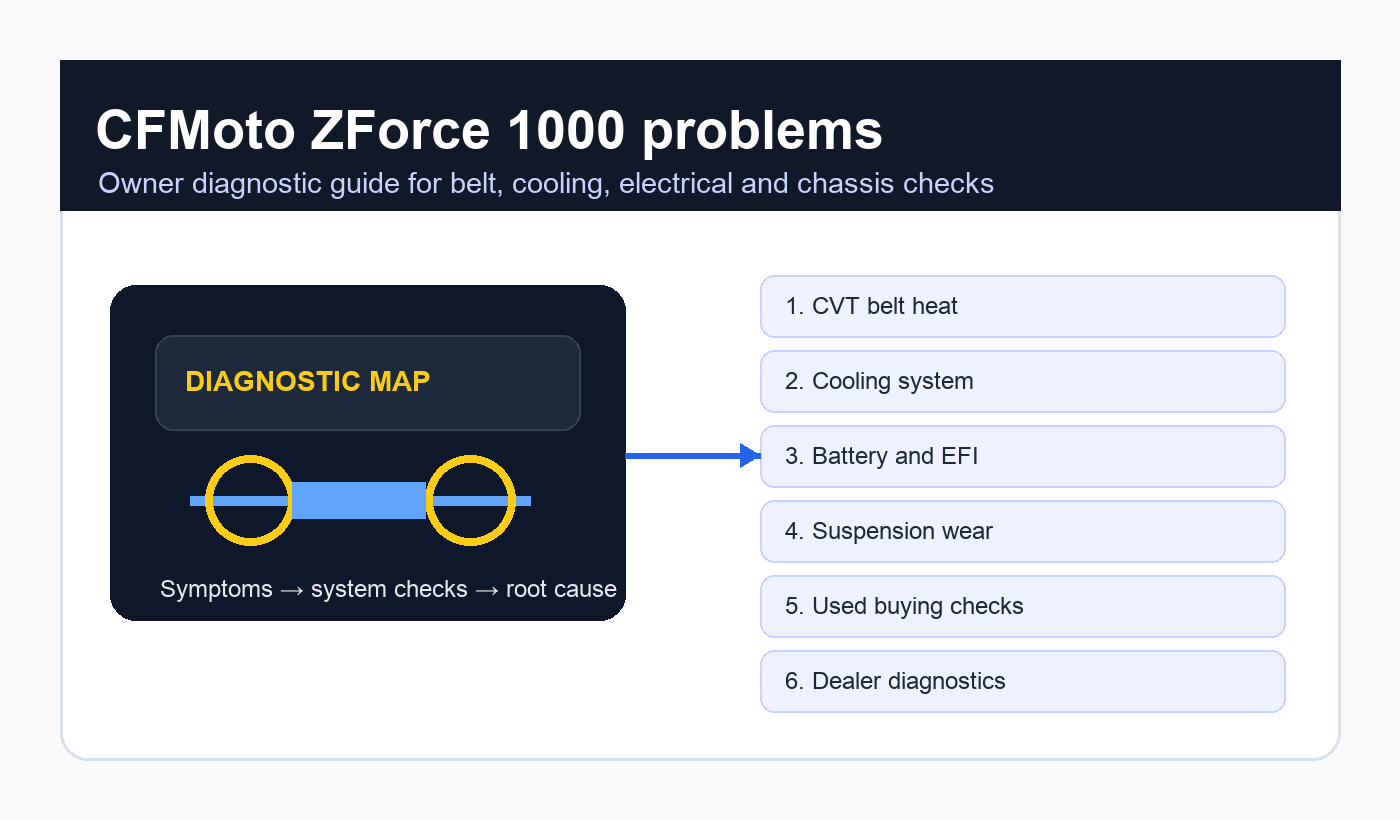
    Kymco X-Town 300i problems

    What owners need to know first

    This guide is written for owners, buyers and technicians dealing with Kymco X in the real world. It focuses on symptoms, checks, realistic repair decisions, legal limits where relevant, and the points worth confirming before buying parts or trusting a seller’s claim.

    Associated searches and entities around this topic include Kymco X-Town 300i review, Kymco X-Town 300i ABS, scooter CVT vibration, scooter belt slipping, 300cc scooter overheating, scooter battery drain, scooter charging system, scooter no start, idle problem, fuel injection scooter, maxi scooter maintenance, used scooter checklist, brake lever pulsation, ABS warning light, radiator fan not working, variator rollers, clutch shoes, starter relay, regulator rectifier, spark plug, air filter, coolant leak and throttle body cleaning.

    Reader needWhat the rider really wantsBest article answer
    Buying researchIs the scooter risky used?Explain inspection points, not fear
    Fault diagnosisWhy does it start, shake, heat or stall?Group symptoms by system
    Maintenance planningWhat should be serviced first?Prioritize fluids, belt, battery, tires and brakes
    Safety concernCould brakes, ABS or tires be involved?Escalate safety-related symptoms quickly

    What the X-Town 300i is mechanically

    The X-Town 300i is a liquid-cooled, fuel-injected scooter built around everyday usability: twist-and-go transmission, under-seat storage, weather protection, disc brakes and, on many market versions, ABS. Its 300-class engine is not tuned like a sport bike. It is meant to start cleanly, pull predictably and tolerate stop-start commuting when maintained correctly.

    That design shapes diagnosis. A motorcycle owner might think first about clutch lever feel or gear selection. A scooter owner must think about belt transmission, variator rollers, clutch engagement, cooling airflow behind body panels, small battery capacity and the way short trips punish charging systems. Many complaints blamed on the model are really scooter-specific maintenance patterns.

    Usage pattern matters as much as mileage. A scooter that rides twenty highway miles every day may have an easier electrical life than one used for five-minute errands, even if the odometer is higher. Short trips leave the battery undercharged, keep moisture inside the exhaust and crankcase longer, and make stop-and-go heat more common. That is why a careful owner asks how the scooter was used, not only how far it has traveled.

    The fastest symptom map

    When people discuss Kymco X-Town 300i problems, the same broad patterns appear again and again. The useful move is to sort the complaint before buying parts. A cold no-start is not the same as a hot stall. A vibration at takeoff is not the same as a vibration at speed. A high temperature reading in traffic is not the same as coolant loss overnight.

    SymptomMost likely areaFirst checksRisk level
    Slow crank or no crankBattery, terminals, starter circuitLoad-test battery, inspect grounds, check relayMedium
    Starts then stallsIdle control, fuel, intake, throttle bodyCheck fuel age, air leaks, plug, injector serviceMedium
    Shudder on takeoffCVT clutch, belt, variatorInspect belt dust, clutch glazing, roller wearMedium
    Runs hot in trafficCooling systemFan, coolant level, radiator blockage, capHigh
    Brake pulsing or ABS lightBrake hardware or ABS sensorInspect pads, rotors, sensors, tone ringsHigh
    Battery dies repeatedlyCharging system or parasitic drawMeasure voltage running, check regulator and accessoriesMedium

    Starting and idle complaints

    Kymco X-Town 300i problems often begins with a starting story. The scooter cranks slowly after a week, fires only with throttle, starts cold but stalls warm, or behaves differently after winter storage. The battery is the first suspect, but it should be tested rather than guessed. A small scooter battery can show decent voltage at rest and still collapse under load.

    The next layer is connection quality. Battery terminals, ground points, starter relay contacts and fuse-box condition matter because scooters live under panels that trap humidity and road grime. A weak ground can imitate a starter motor problem. A loose terminal can create intermittent faults that disappear when the scooter is inspected, which is why owners sometimes feel the machine is playing tricks on them.

    Fuel and air matter just as much. Old fuel, dirty injectors, a neglected air filter, a fouled spark plug or a small intake leak can make a fuel-injected scooter idle poorly. Short trips make it worse because the engine may not reach full operating temperature long enough to burn off moisture and deposits.

    CVT vibration, belt wear and takeoff shudder

    Many searches for Kymco X-Town 300i problems are really searches about the CVT. The continuously variable transmission is convenient because the rider does not shift gears, but it has wear parts. Belt width, belt glazing, clutch shoe condition, variator roller shape and dust inside the cover all affect the way the scooter leaves a stop.

    A light shudder when pulling away can come from glazed clutch shoes or a dirty clutch bell. A belt that slips under load may feel like a weak engine. Flat-spotted rollers can make acceleration uneven. A belt past its service limit can create noise, heat and poor response. The mistake is to treat every vibration as an engine issue before inspecting the transmission that actually launches the scooter.

    CVT clues that matter

    Listen for squeal, rattle, metallic scrape and changes after warming up. Smell for burnt belt odor after hill starts or two-up riding. Look for black dust, cracks across the belt, missing chunks, blue heat marks on the clutch bell and uneven roller wear. If the scooter has been ridden aggressively in city traffic, the CVT deserves attention even if mileage looks moderate.

    Overheating and cooling system faults

    Kymco X-Town 300i problems with heat symptoms should be taken seriously. Liquid cooling is reliable only when coolant level, radiator airflow, fan control, thermostat operation and cap pressure are correct. A scooter can run acceptably on open roads and still overheat in traffic if the fan does not switch on or if airflow through the radiator is restricted.

    The first inspection is simple: coolant level, visible leaks, fan operation, radiator fins and hose condition. The second inspection is more technical: pressure testing, thermostat behavior, temperature sensor output and water pump circulation. Do not keep riding a scooter that repeatedly climbs into an unsafe temperature range. Heat turns small repairs into engine repairs.

    Brake, ABS and tire concerns

    Brake complaints are sometimes described as Kymco X-Town 300i problems, but safety symptoms deserve their own category. Pulsing at the lever can be rotor thickness variation, pad deposits, warped hardware or wheel bearing play. An ABS light can come from sensor gaps, damaged tone rings, wiring, low voltage or module faults. Tires can mimic suspension or brake trouble when they are squared off, old, mismatched or underinflated.

    A used scooter inspection should include pad thickness, rotor surface, brake-fluid age, caliper movement, wheel bearings, tire date codes, sidewall cracks and steering-head feel. A scooter with storage, low mileage and old tires can be more dangerous than a higher-mileage scooter with fresh service records.

    Electrical and charging issues

    Repeated dead batteries are a classic part of Kymco X-Town 300i problems. The scooter may be used for short commutes, parked for long periods, connected to accessories or exposed to moisture. Before replacing the battery again, measure charging voltage at idle and at higher rpm, then check for parasitic draw with the ignition off.

    Common electrical areas include the regulator rectifier, stator output, main ground, ignition switch, starter relay, fuse contacts, USB or alarm accessories and aftermarket wiring. Any add-on should be treated as suspicious until proven clean. Neat wiring is not decoration; it is reliability.

    Fuel injection, hesitation and throttle response

    Fuel-injected scooters are usually easier to live with than carbureted scooters, but they are not immune to hesitation. Dirty fuel, a weak pump, clogged injector, old plug, restricted filter or throttle-body deposits can make the scooter stumble. If the symptom appears after storage, begin with fuel quality and basic service before assuming an expensive electronic fault.

    A diagnostic scan can help when a warning light is present, but it does not replace mechanical checks. A sensor code can be the result of a real sensor fault, damaged wiring, poor voltage or a condition outside the sensor’s control. Good diagnosis asks what the data means, not just what code appeared.

    Body panels, water entry and practical ownership

    Scooters hide their mechanical parts under panels, which is good for weather protection but inconvenient for inspection. Owners sometimes delay service because access takes time. That delay can hide coolant seepage, cracked hoses, loose terminals, worn belts and rodent damage until the symptom becomes obvious.

    Water entry is another practical issue. Rain riding is normal, but pressure washing electrical areas is not kind to connectors. If a fault appears after washing or heavy rain, inspect exposed connectors, switchgear, battery area and fuse box before replacing expensive parts.

    Used buyer checklist

    A buyer researching Kymco X-Town 300i problems should ask for a cold start, observe idle, check charging voltage, inspect tires, test both brakes, confirm ABS light behavior, ride at low and moderate speed, listen to CVT takeoff, watch the temperature gauge and inspect service records. A shiny scooter with no maintenance trail is not automatically a good scooter.

    Inspection itemGood signWarning sign
    Cold startStarts cleanly without throttleSeller has warmed it before arrival
    CVTSmooth launch and steady accelerationShudder, squeal or burnt smell
    CoolingTemperature stable, fan worksCoolant stains or rising heat in traffic
    BrakesFirm levers and straight stopsPulsing, dragging, ABS warning
    ElectricalStable voltage and clean wiringAccessory chaos or repeated dead battery
    PaperworkReceipts and mileage historyNo proof of belt, fluids or tires

    Repair priority table

    Not every issue has the same urgency. The safest way to handle Kymco X-Town 300i problems is to separate ride-stopping faults from maintenance jobs and safety defects.

    PrioritySymptomsAction
    Stop ridingOverheating, brake failure, severe wobble, fuel leakInspect immediately or tow
    Diagnose soonBattery drain, ABS light, repeated stalling, belt slipTest system before longer rides
    Plan serviceOld tires, aged fluids, mild CVT dust, weak batterySchedule maintenance before it becomes a fault
    MonitorMinor noise with no progressionRecord condition and recheck after service

    Common mistakes owners make

    The first mistake is replacing the battery without testing charging voltage. The second is ignoring tires because tread depth looks acceptable while the rubber is old. The third is blaming the engine for CVT wear. The fourth is riding through overheating because the scooter “still feels fine.” The fifth is buying a used scooter without seeing it start cold.

    Another mistake is reading every forum complaint as a model-wide verdict. Forums are valuable because they reveal patterns, but they are biased toward problems. Happy commuters rarely write long posts saying the scooter started normally again today. Use owner reports as clues, then verify the actual machine in front of you.

    When to use a dealer or specialist

    Home checks are reasonable for battery condition, visible leaks, tires, brake pad thickness, belt inspection if you have the tools, and basic service history review. A dealer or scooter specialist is the right choice for ABS faults, repeated overheating, charging diagnosis beyond a simple voltage check, internal CVT inspection, fuel injection testing and anything that affects braking or steering.

    For official brand and dealer context, start with KYMCO USA. For U.S. safety recall research, use the official NHTSA recalls database. Those sources should sit above forum guesses whenever safety or model-specific information matters.

    Related internal reading

    For more practical diagnostics, see our motorcycle electronics guides, motorcycle buying guides, and Toyota electronic key fault guide. Different vehicles use different hardware, but the diagnostic discipline is the same: identify the system, test the basics and avoid replacing parts blindly.

    FAQ

    Is the X-Town 300i unreliable?

    Not automatically. Many Kymco X-Town 300i problems searches come from maintenance items, storage, battery age, CVT wear, tires and normal scooter service needs rather than a single fatal design defect.

    What should I inspect first?

    Start with the symptom. No-start means battery, terminals, starter circuit and fuel. Takeoff vibration means CVT. Heat means cooling. Brake pulsing means brakes, tires and bearings.

    Is CVT shudder expensive?

    It can be minor if it is dust or glazing, but it becomes more expensive if a worn belt, damaged clutch or ignored heat is involved. Inspection is cheaper than guessing.

    Should I buy a used one?

    Yes, if the scooter starts cold, idles cleanly, accelerates smoothly, stops straight, holds stable temperature, charges correctly and has service records. Be cautious with hidden overheating, ABS lights, poor wiring or no maintenance history.

    Final practical verdict

    The smartest way to think about Kymco X-Town 300i problems is not “avoid the scooter” or “ignore the complaints.” It is to inspect the systems that age hardest on any commuter scooter: battery, charging, CVT, cooling, brakes, tires and service history.

    Kymco X-Town 300i problems after winter storage usually begins with battery and fuel checks.

    Kymco X-Town 300i problems with takeoff vibration usually begins with the CVT cover, belt and clutch.

    Kymco X-Town 300i problems with high temperature should be treated as a cooling fault until proven otherwise.

    Kymco X-Town 300i problems with brake symptoms should be handled before the next ride.

    Kymco X-Town 300i problems with repeated battery failure needs charging and draw testing.

    Kymco X-Town 300i problems on a used scooter should trigger a cold-start inspection.

    Kymco X-Town 300i problems with old tires can feel like suspension or brake trouble.

    Kymco X-Town 300i problems after accessory installation should include wiring inspection.

    Kymco X-Town 300i problems that returns after repair means the root cause was not found.

    Kymco X-Town 300i problems with hesitation should include fuel, plug and intake checks.

    Kymco X-Town 300i problems with steering wobble should include tires, bearings and front-end inspection.

    Kymco X-Town 300i problems with coolant smell should be inspected before longer rides.

    Kymco X-Town 300i problems with service records is easier to judge than a polished scooter with no history.

    Kymco X-Town 300i problems is best solved by patient diagnosis, service records and respect for safety-critical symptoms.

  • Kymco MXU 500 problems: Complete ATV Diagnostic Guide

    Kymco MXU 500 problems: Complete ATV Diagnostic Guide

    Kymco MXU 500 problems: the complete ATV owner’s guide to common faults, diagnosis, maintenance and used buying

    Kymco MXU 500 problems is a practical search, not a casual one. People type it because they are hearing a noise, fighting a no-start condition, comparing a used ATV, seeing overheating, smelling belt heat, or trying to decide whether a KYMCO utility quad is dependable enough for work and trail use. A useful answer needs more than a list of complaints. It needs to explain which symptoms are normal wear, which are maintenance-related, and which should stop a purchase or ride.

    The KYMCO MXU 500 is typically used as a utility ATV: farm work, hunting access, snow plowing, light hauling, trail riding and muddy property use. Those jobs are hard on CVT belts, cooling systems, bushings, batteries, brakes and electrical connectors. Many conversations around Kymco MXU 500 problems are not proof that the ATV is fundamentally flawed. They often show how a utility quad ages when it is worked hard, stored outside, modified, or serviced irregularly.

    This guide is written for owners, buyers and technicians dealing with Kymco MXU 500 problems in the real world. It focuses on symptoms, checks, realistic repair decisions, legal limits where relevant, and the points worth confirming before buying parts or trusting a seller’s claim.

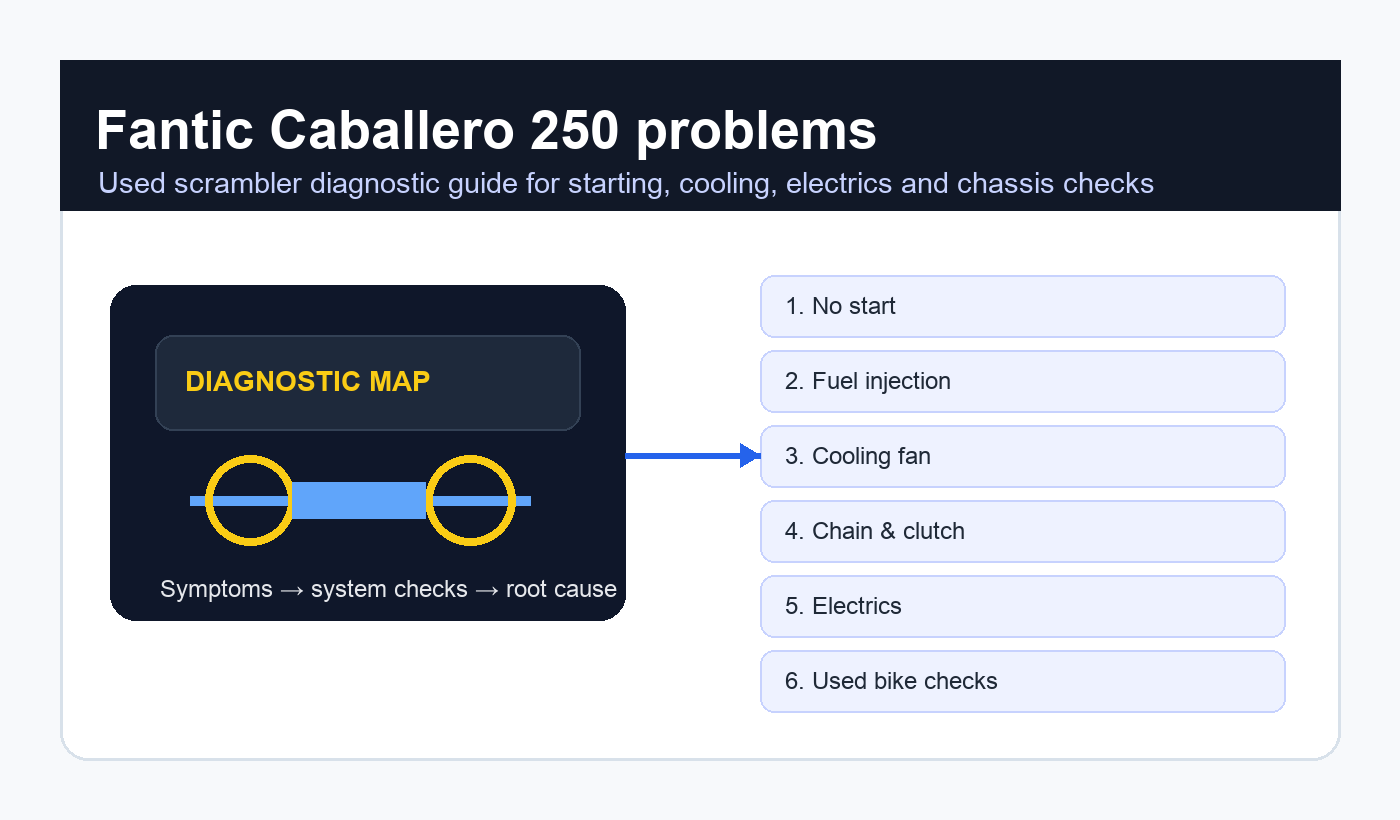
    Kymco MXU 500 problems
    Kymco MXU 500 problems diagnostic map: CVT belt, cooling, battery, fuel system, 4×4 drivetrain and used-buying inspection.

    Quick answer: what owners usually mean

    Kymco MXU 500 problems usually means one of five areas: starting and battery trouble, CVT belt or clutch complaints, overheating after work or mud, suspension/steering wear, or fuel/electrical issues from age and storage. The MXU 500 is often judged as a work ATV, so symptoms appear when it is loaded, idled, crawled, plowed or ridden in messy conditions.

    The smart approach is to diagnose by system. If the ATV will not start, begin with battery, fuel, spark and safety switches. If it smells hot or loses drive, inspect the CVT. If it overheats, clean and test the cooling system. If it clunks or wanders, inspect suspension and steering. If it has intermittent faults, look at grounds, connectors and water intrusion.

    SymptomLikely systemFirst checkUrgency
    No start or slow crankBattery, starter, fuel, sparkLoad-test battery and check fuel deliveryMedium
    Belt smell or slippingCVT belt/clutchInspect belt, cover and sheavesHigh if repeated
    Runs hotCooling systemClean radiator and check fanHigh
    Hard shiftingIdle speed, linkage, CVT dragCheck idle and shift linkageMedium
    Clunking front endBushings, ball joints, wheel bearingsLift and inspect playMedium

    Starting problems and weak battery symptoms

    One of the most common Kymco MXU 500 problems patterns is a machine that cranks slowly, visits, starts only with a jump, or runs fine once warmed up. ATV batteries are small, often exposed to vibration and temperature swings, and frequently left sitting. A weak battery can make the starter sound bad, confuse ignition diagnosis and create intermittent electrical behavior.

    Check voltage under load, not only at rest. Inspect terminals, grounds, starter relay connections and fuse holders. If the ATV has accessories such as a winch, heated grips, sprayer, light bar or plow control, inspect wiring quality and parasitic draw. Utility ATVs often accumulate wiring additions over years, and those additions can become the real fault.

    Fuel and ignition checks

    If cranking speed is healthy but the engine will not fire, move to fuel, spark and air. Old fuel, dirty filters, clogged jets on carbureted versions, injector issues on fuel-injected versions, weak spark, bad plug caps and restricted air filters can all produce owner complaints. Storage history matters. An ATV that sits through seasons with stale fuel can become a diagnostic puzzle.

    CVT belt, clutch and shifting complaints

    Another major part of Kymco MXU 500 problems is the CVT system. The belt works hardest when the ATV is used slowly under load: towing, plowing, climbing, mud riding or hauling. A burning smell, belt dust, poor takeoff, high revs with weak movement, jerky engagement or repeated belt failure should be inspected immediately.

    A belt can fail because it is old, but repeated failures point deeper. Check clutch faces, belt alignment, cover sealing, intake/exhaust vents, idle speed, one-way bearing behavior and rider usage. A machine used for work should be operated in the correct range. Lugging or slipping the CVT under heavy load creates heat.

    Hard shifting

    Hard shifting can come from high idle, linkage adjustment, CVT drag, worn mounts or drivetrain load. Do not force the lever. If the ATV creeps at idle or resists gear selection, inspect the idle speed and clutch behavior before assuming the transmission is failing.

    Overheating and cooling system complaints

    Overheating appears often in discussions of Kymco MXU 500 problems, especially with machines used in mud, tall grass, snow plowing or slow work. The radiator may look acceptable from the outside while the core is packed with fine debris. A fan that works intermittently can also cause temperature rise at low speed.

    Check coolant level when cold, radiator cleanliness, fan operation, cap condition, thermostat behavior, hose condition and leaks. Never keep riding an overheating ATV to “see if it clears.” Heat can turn a small cleaning job into a head gasket or engine damage problem.

    Cooling clueLikely causeCheck
    Hot after mudBlocked radiatorClean fins gently and thoroughly
    Hot at idleFan/relay/sensor issueConfirm fan cycles
    Coolant lossLeak, cap, hose, overflowPressure test if possible
    Fast temperature spikeAir pocket or circulation issueBleed/test system

    4×4, differential and drivetrain issues

    A utility ATV’s drivetrain works hard. Clicking on turns, grinding, binding in 4×4, torn CV boots, differential noise and vibration may be described as Kymco MXU 500 problems. Some noises are normal gear or tire sound; others are warnings. A torn boot that is ignored can quickly destroy a CV joint. Water-contaminated differential oil can create expensive damage.

    Inspect boots, axle play, differential fluid, driveshaft joints, mounts and wheel bearings. If 4×4 engagement is electrical, check the switch, actuator, wiring and fuse before condemning the mechanical differential. If a used machine has oversized tires, remember that added tire mass stresses CV joints, bearings, steering and belt drive.

    Suspension, steering and brake wear

    Suspension complaints are common on older utility ATVs. Worn bushings, ball joints, tie rods and wheel bearings can make the machine wander, clunk or feel vague. Brakes suffer from mud, water and grit. A good inspection includes pad thickness, rotor condition, caliper movement, brake fluid, parking brake operation and wheel bearing play.

    Kymco MXU 500 problems on a used machine should always include a chassis check. Lift the ATV safely, rock each wheel, inspect steering joints and look for bent arms or damaged skid plates. Cosmetic plastics tell only a small part of the story.

    Used buying checklist

    A buyer researching Kymco MXU 500 problems should inspect cold-start behavior, belt smell, cooling fan, fluids, 4×4 engagement, electrical accessories, brakes, steering play and service records. A seller who refuses a cold start or test ride is giving you information. A machine that starts only when warm may be hiding fuel, choke, compression or battery problems.

    AreaGood signWarning sign
    Cold startStarts without dramaSeller pre-warms it
    CVTSmooth takeoffBurnt smell or slipping
    CoolingFan cycles, temp stableCoolant stains or overheating
    Drivetrain4×4 engages cleanlyGrinding, binding, torn boots
    ElectricalClean wiringRandom switches and dead battery

    Maintenance habits that prevent most issues

    The best answer to Kymco MXU 500 problems is preventive work. Keep the air filter clean, change fluids on schedule, inspect the CVT belt, clean the radiator after dirty use, keep the battery maintained, grease service points where applicable, inspect boots and bushings, and store the ATV with stable fuel practices.

    For official model and dealer information, start with KYMCO USA. For U.S. product safety recalls, use the official Consumer Product Safety Commission recall database. Official sources are essential when safety, recalls or model-specific documentation matter.

    Home diagnosis versus dealer diagnosis

    Home diagnosis is useful for batteries, visible belt damage, dirty radiators, loose terminals, torn boots, worn pads and obvious play. Dealer diagnosis is better for repeated no-starts, recurring warning lights, charging faults, 4×4 actuator problems, internal clutch issues or suspected engine damage.

    A good technician should ask about use. Plowing snow, towing, long idle time, mud riding and storage all change the likely cause. Diagnosis without usage history is incomplete.

    Cost thinking

    Do not measure repair cost only by the first part replaced. A belt is cheap compared with clutch diagnosis, but three belts are not cheap. A battery is cheap, but replacing it repeatedly without fixing a draw is waste. A radiator cleaning is cheap, but ignoring heat is expensive.

    Write down the symptom, when it appears, what changed recently and what has already been replaced. That record prevents circular diagnosis and helps a shop avoid repeating failed guesses.

    How to separate normal wear from a real defect

    Utility ATVs live harder lives than most road vehicles. They tow, idle, crawl, carry tools, climb wet ground, sit through winter and then get asked to start instantly in spring. That means some complaints are not evidence of a bad model; they are evidence of age, use and incomplete service. The useful question is whether the symptom appears under a predictable condition and whether it changes after basic maintenance.

    Normal wear usually has a trail. A belt that slowly becomes noisy, a battery that weakens after storage, bushings that loosen after years of trail use and brake pads that wear after mud riding all make mechanical sense. A real defect or serious fault is different. It returns immediately after repair, affects safety, creates heat, causes loss of drive, drains the battery repeatedly or leaves the ATV unreliable even after service items are corrected.

    The owner should also compare the machine against its job. An ATV used for gentle property work can tolerate ordinary maintenance intervals. A machine that has pulled trailers, worn aggressive tires, pushed snow or spent weekends in deep mud needs a stricter schedule. When the use is severe, the inspection must be severe too.

    PatternLikely meaningBest response
    Symptom appears only after sittingFuel, battery, corrosion or storage issueService fuel system, charge/load-test battery, clean terminals
    Symptom appears only when hotCooling, clutch heat, ignition or electrical expansion issueCheck temperature, airflow, fan operation and heat-sensitive parts
    Symptom appears under loadCVT belt, clutch, drivetrain or engine power issueInspect belt, sheaves, rollers, intake and fuel delivery
    Symptom appears after modificationLoad or compatibility problemReview tire size, accessories, wiring and gearing effect

    Questions to ask before buying parts

    Before ordering parts, ask a few disciplined questions. Did the issue begin suddenly or gradually? Was the ATV stored recently? Was the battery replaced without being tested? Were larger tires installed? Was the radiator packed with dirt? Was the belt cover opened after water riding? Did a warning light appear with the symptom, or did the symptom happen alone?

    Parts replacement without questions can become expensive very quickly. A weak battery can imitate a bad starter. A restricted vent can imitate a fuel problem. A dirty radiator can imitate a thermostat fault. A worn bushing can imitate a shock problem. Slow diagnosis feels less dramatic than buying parts, but it usually costs less and creates a more reliable machine.

    Service records that matter most

    For a used ATV, service history is more valuable than polished plastics. The records that matter most are oil changes, air-filter service, coolant maintenance, brake service, belt inspection, differential fluids, battery replacement date and any work on the 4×4 system. A seller who can explain when those items were done gives you a better starting point than a seller who only says the machine “runs great.”

    Photographs also help. A picture of the odometer, underside, tires, brake rotors, radiator face, battery area, belt cover and fluids can reveal the machine’s real life. Look for mismatched fasteners, stripped drain plugs, silicone where gaskets should be, non-factory wiring and missing clips. Small clues often predict large ownership costs.

    Terrain and riding style

    Terrain changes diagnosis. Dust attacks filters and intake boots. Mud attacks cooling systems, brakes and electrical connectors. Water crossings attack bearings, fluids and CVT housings. Steep terrain exposes weak belts and clutch heat. Snow plowing stresses charging systems, idle time, battery health and front-end components.

    A machine used on clean farm lanes can have very different problems from one used in wet trails every weekend. This is why forum advice can be useful but incomplete. Two owners can report the same symptom while the root cause is completely different because one ATV lives in dust and the other lives in water.

    When the repair should stop and diagnosis should restart

    There is a point where repeating the same repair becomes a sign that the diagnosis is wrong. A second battery in a short period demands charging and parasitic draw testing. A second belt demands clutch alignment, venting and riding-load checks. Repeated overheating demands airflow, coolant circulation, fan trigger and possible engine checks. Repeated brake noise demands caliper slide and bearing inspection, not only new pads.

    The best shops know when to pause. They reproduce the symptom, record readings, inspect related systems and explain the logic before selling another part. Owners can do the same on a smaller scale: take notes, change one variable at a time and verify the result before moving to the next part.

    Related internal reading

    For more practical powersports diagnostics, see our fitment guides, motorcycle electronics guides, and CF Moto CForce 625 fitment guide. The vehicle types differ, but the same logic applies: check heat, power, wear, compatibility and service history.

    FAQ

    Is the KYMCO MXU 500 unreliable?

    Not automatically. Many Kymco MXU 500 problems searches come from age, storage, utility use or maintenance gaps rather than a single fatal design issue.

    What should I check first?

    Start with the symptom. No-start means battery/fuel/spark. Slipping means CVT. Heat means cooling. Clunks mean chassis and drivetrain inspection.

    Is overheating common on utility ATVs?

    It is common when radiators are blocked by mud or debris. Repeated overheating on a clean radiator needs deeper diagnosis.

    Should I buy a used MXU 500?

    Yes if it starts cold, drives smoothly, has clean fluids, stable temperature, good 4×4 function and clear maintenance history. Walk away from hidden overheating, major electrical chaos or drivetrain grinding.

    Final owner strategy

    The best way to handle Kymco MXU 500 problems is to diagnose the system, not the rumor. Utility ATVs age by use pattern. Belt, cooling, battery, fuel, drivetrain and chassis checks solve more problems than guessing.

    Kymco MXU 500 problems after storage usually begins with battery and fuel quality.

    Kymco MXU 500 problems after mud usually begins with radiator and CVT cleaning.

    Kymco MXU 500 problems after oversized tires should include drivetrain and belt load checks.

    Kymco MXU 500 problems on a used ATV should trigger a full cold-start and chassis inspection.

    Kymco MXU 500 problems that repeats after basic service deserves professional diagnosis.

    Kymco MXU 500 problems with hard shifting should be checked for idle speed and CVT drag.

    Kymco MXU 500 problems with electrical accessories should include wiring and parasitic draw inspection.

    Kymco MXU 500 problems with cooling symptoms should never be ignored.

    Kymco MXU 500 problems with brake noise should include pad, rotor and caliper checks.

    Kymco MXU 500 problems with 4×4 engagement trouble should include actuator and switch testing.

    Kymco MXU 500 problems with fuel smell should be inspected before further riding.

    Kymco MXU 500 problems with repeated belt dust should lead to clutch and vent inspection.

    Kymco MXU 500 problems with front-end wander should not be dismissed as tire pressure only.

    Kymco MXU 500 problems with old fuel should start with cleaning and fresh fuel before deeper repairs.

    Kymco MXU 500 problems is best approached with maintenance records, careful inspection and calm troubleshooting.

  • CFMoto ZForce 1000 problems: Complete Owner Diagnostic Guide

    CFMoto ZForce 1000 problems: Complete Owner Diagnostic Guide

    CFMoto ZForce 1000 problems: the long-form owner’s guide to symptoms, causes, fixes and buying decisions

    CFMoto ZForce 1000 problems is a problem wording with a very clear intent: the rider is not browsing casually. They may already own the side-by-side, they may be shopping for a used ZForce, or they may be standing beside a machine that will not start, overheats on a slow trail, makes belt noise, shows an EFI light, or feels different after a hard weekend. The value of a good guide is not to scare people away from the vehicle. It is to separate normal side-by-side wear from patterns that deserve a careful inspection.

    The CFMOTO ZForce 1000 sits in a world where people expect a lot from one machine. It may be used for forest roads, farm tracks, mud, hunting access, dunes, snow, towing light loads, and rough recreational riding. That variety matters because many complaints described as CFMoto ZForce 1000 problems are really usage patterns meeting maintenance gaps: a CVT belt that was cooked by slow high-load riding, a radiator packed with mud, suspension wear after rocky terrain, or a battery that has been drained by accessories.

    This guide is written for owners, buyers and technicians dealing with CFMoto ZForce 1000 problems in the real world. It focuses on symptoms, checks, realistic repair decisions, legal limits where relevant, and the points worth confirming before buying parts or trusting a seller’s claim.

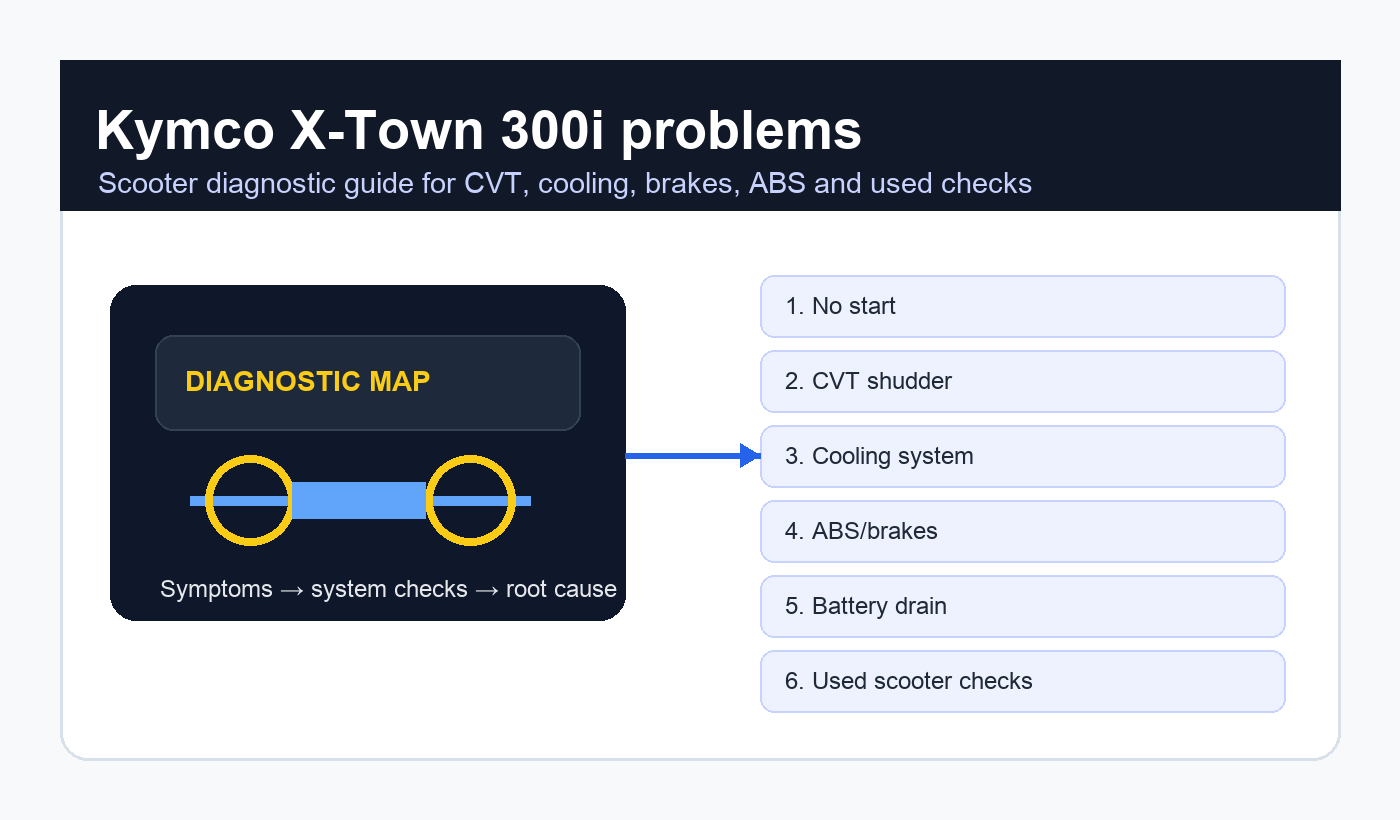
    CFMoto ZForce 1000 problems
    CFMoto ZForce 1000 problems diagnostic map: belt, cooling system, electrical supply, drivetrain, suspension and maintenance history.

    Quick verdict: are the problems serious?

    CFMoto ZForce 1000 problems can be serious when the symptom points to overheating, repeated belt failure, loss of steering control, brake fade, electrical shutdown, fuel smell, or a warning light that returns after clearing. But many owner complaints are not catastrophic. The most common patterns tend to involve CVT belt heat, dirty cooling systems, weak batteries, connector corrosion, worn suspension bushings, brake wear, clutch calibration complaints, and accessory wiring that was added without enough planning.

    The ZForce is not a passenger car. It is a powersports machine that lives in dust, water, vibration and heat. A fair diagnosis has to account for terrain, load, riding style, service intervals and modifications. A machine that spends its life on dry hardpack may have a very different problem history from one that crawls through mud with oversized tires and extra lighting wired into the battery.

    SymptomMost likely areaFirst checkRisk level
    Burning rubber smell or loss of driveCVT belt and clutchingInspect belt, sheaves, vents and riding historyHigh if repeated
    Fan runs often, temperature climbsCooling systemClean radiator, check coolant, inspect fan operationHigh
    Slow crank or no startBattery, starter circuit, fuel/EFILoad-test battery and scan codesMedium
    Clunks over bumpsSuspension bushings, ball joints, shocksLift and inspect playMedium
    Intermittent warning lightsVoltage, sensors, connectorsCheck grounds, battery and stored codesMedium to high

    What owners need to know first

    The phrase CFMoto ZForce 1000 problems usually comes from three groups of people. The first group already owns the machine and wants to know whether a symptom is common. The second group is shopping used and wants to know what to inspect before handing over money. The third group is comparing CFMOTO with Polaris, Can-Am, Yamaha or Kawasaki and wants to understand reliability trade-offs.

    That reader need is important because “problems” does not mean “bad vehicle.” It means the reader wants evidence. A serious article should explain what fails, what merely wears, what maintenance prevents, what a dealer should diagnose, and what a buyer should walk away from. That is the standard used here.

    CVT belt and clutch complaints

    Among the most common CFMoto ZForce 1000 problems conversations, CVT belt behavior sits near the top. A side-by-side CVT works hard. It manages engine torque through sheaves, belt tension, airflow and heat. Slow riding in high load, oversized tires, aggressive throttle, mud, sand, towing and poor break-in can push the belt beyond its comfort zone.

    A belt problem may show up as a burning smell, jerky takeoff, high revs with poor movement, belt dust in the cover, vibration, squealing or sudden loss of drive. When a belt fails once, replacing it may solve the immediate issue. When belts fail repeatedly, the cause is usually deeper: clutch alignment, dirty sheaves, blocked CVT intake/exhaust, wrong belt, driving style, tire size, or contamination inside the clutch cover.

    How to inspect the CVT system

    Remove the cover only when the machine is safe, cool and supported correctly. Look for glazing, missing belt cogs, belt dust, rubber transfer on sheaves, oil contamination and signs of heat. Check whether vents are blocked by mud or debris. If the machine has oversized tires, ask whether clutching has been adjusted for the new load.

    CFMoto ZForce 1000 problems related to belt heat should never be diagnosed from the belt alone. A new belt on dirty clutch faces can fail quickly. A perfect belt in a poorly vented cover can still overheat. A rider crawling in high gear can create heat that looks like a mechanical defect.

    Overheating and cooling system issues

    Overheating is one of the complaints that should be taken seriously. A ZForce that runs hot after mud riding may simply have a packed radiator. A ZForce that overheats on clean trails with normal airflow deserves deeper diagnosis. Cooling complaints can involve radiator blockage, low coolant, trapped air, fan failure, thermostat behavior, water pump problems, electrical fan control, damaged fins or coolant leaks.

    When people discuss CFMoto ZForce 1000 problems in owner groups, overheating is often linked to real-world riding conditions. A radiator that looks acceptable from the front may be packed in the core. Mud dries like concrete. Grass seeds and dust reduce airflow. Slow technical riding gives the cooling system less natural air movement, leaving the fan to do more work.

    Cooling symptomLikely causeOwner-level checkProfessional check
    Hot only after mudRadiator core blockedCarefully clean fins from both sidesPressure test if coolant loss appears
    Hot at idleFan or fan control issueListen for fan operationCheck fan command and relay circuit
    Coolant smellLeak or overflowInspect hoses and cap areaPressure test cooling system
    Temperature spikes quicklyAir pocket, thermostat, water pumpCheck coolant level when coldBleed/test system correctly

    Starting problems, battery drain and electrical faults

    Electrical complaints are another major part of CFMoto ZForce 1000 problems. They can be frustrating because the same machine may start fine in the garage and fail at the trailhead. Many side-by-sides are fitted with winches, light bars, sound systems, GPS units, heated gear connectors and accessory panels. Each accessory adds potential current draw, wiring mistakes, ground problems and water-entry points.

    Start with the battery. A weak powersports battery can show voltage but collapse under load. Loose terminals can mimic a failing starter. Corroded grounds can create intermittent sensor faults. A machine stored for weeks without a maintainer can develop low-voltage symptoms that look like ECU, injector or starter problems.

    EFI and sensor warnings

    EFI lights, rough idle, hesitation and limp behavior should be scanned instead of guessed. Possible causes include low voltage, dirty air filter, fuel quality, sensor connector problems, throttle position issues, intake leaks, exhaust oxygen sensor faults, or wiring damage. A code is not a part number. It is a direction for testing.

    Suspension, steering and chassis wear

    Side-by-side suspension lives a hard life. Clunks, looseness, wandering steering and uneven tire wear may be described online as CFMoto ZForce 1000 problems, but many of these issues are wear inspections rather than brand-specific failures. Bushings, ball joints, tie rods, wheel bearings, shock mounts and control-arm hardware should be checked after hard riding.

    If a used ZForce has been lifted, fitted with larger tires, driven in deep mud or jumped, inspect the chassis more carefully. Modifications can increase leverage on suspension parts. A machine with clean plastics can still have play in the front end. A careful buyer lifts the vehicle safely, rocks the wheels, checks steering joints and inspects skid plates for impact history.

    Brakes, drivetrain noise and transmission feel

    Brakes on off-road vehicles wear differently from road vehicles. Mud, grit and water can shorten pad life. Squeal is not always failure, but grinding, pulling, low pedal feel or fluid leaks are urgent. Drivetrain noise can come from normal gear whine, worn U-joints, CV joints, wheel bearings, differential issues, loose mounts or tire noise. The context matters: a click while turning under power is different from a clunk when shifting from park to drive.

    CFMoto ZForce 1000 problems related to drivetrain feel should be inspected early because small issues can become expensive. A torn CV boot can lead to joint failure. A loose mount can stress surrounding components. Contaminated gear oil can reveal water entry or neglected service.

    Used buying inspection checklist

    A buyer searching CFMoto ZForce 1000 problems before purchasing is doing the right thing. The best used ZForce is not necessarily the cleanest one in photos. It is the one with maintenance records, a cold-start video, honest disclosure, matching tires, clean fluids, working fan, healthy battery, good belt history and no hidden electrical modifications.

    Inspection areaWhat to look forWalk-away sign
    Cold startStarts cleanly without throttle tricksSeller warms it before arrival
    CVTNo burning smell, smooth engagementFresh belt plus unresolved slipping
    CoolingFan cycles, temp stableCoolant loss or repeated overheating
    ElectricalClean accessory wiring and terminalsTwisted wires, random switches, dead battery
    SuspensionNo excessive joint playLoose steering or bent arms
    FluidsCorrect levels and clean appearanceMilky oil or metal debris

    Maintenance that prevents many complaints

    The best answer to CFMoto ZForce 1000 problems is often disciplined maintenance. Clean the radiator after dirty rides. Inspect and break in belts correctly. Keep the air filter serviced. Use a battery maintainer during storage. Check fasteners after hard riding. Inspect CV boots. Change fluids on schedule. Keep accessories fused and grounded properly. Do not ignore small noises just because the machine still drives.

    For official model documents and specifications, start with the manufacturer’s site: CFMOTO USA. For safety recalls in the United States, use the official government recall search: U.S. Consumer Product Safety Commission recalls. These are stronger references than anonymous posts when safety or model documentation matters.

    How terrain changes the diagnosis

    A side-by-side that lives on smooth fire roads does not fail in the same pattern as one used in deep mud or tight technical crawling. Terrain changes temperature, airflow, belt load, suspension impact, brake wear and contamination. This is why a symptom that sounds identical online can have two different causes in the workshop.

    On slow rocky climbs, the CVT may spend more time slipping and building heat. In mud, the radiator and CVT vents are exposed to blockage. In sand, the belt and clutch face sustained load. In snow, moisture and freeze-thaw cycles can affect linkages, switches and connectors. On farm tracks, repeated low-speed hauling can stress cooling and drivetrain components even if the machine never looks abused.

    When interviewing an owner or seller, ask where the machine was used, not only how many hours it has. Hours are useful, but hour quality matters. A low-hour machine that was repeatedly submerged can be less attractive than a higher-hour machine maintained carefully on dry trails.

    Dealer diagnosis versus home diagnosis

    There is a point where home inspection becomes guesswork. Owners can inspect belts, clean radiators, test batteries, check fluids and look for loose joints. But warning lights, sensor faults, intermittent EFI behavior and repeated electrical failures are better handled with diagnostic software and service data.

    A good dealer or independent powersports technician should not simply clear codes and return the machine. They should record codes, inspect related wiring, reproduce the symptom if possible, check battery voltage under load, inspect connectors for water intrusion and verify the repair after the machine reaches operating temperature. If a fault appears only after heat soak or rough riding, a stationary garage test may miss it.

    Problem patternHome diagnosis is enough?Why a shop may be needed
    One worn belt after hard useOften yesInspecting belt and vents may solve it
    Repeated belt failuresNoClutch alignment, sheave condition and setup need deeper checks
    Radiator packed with mudOften yesCleaning and coolant check may restore operation
    Overheats on clean trailsNoFan control, thermostat, water pump and pressure tests may be needed
    Random EFI warningUsually noCodes and live sensor data are needed

    Cost thinking: repair the cause, not the complaint

    The cheapest repair is not always the lowest-priced part. A belt replacement is cheaper than clutch diagnosis, but if the belt fails again the owner has paid twice and still has the same root problem. A battery is cheaper than electrical diagnosis, but if a parasitic draw from accessories keeps draining the new battery, the real repair was never completed.

    Think in systems. A hot CVT is a system problem involving belt, clutch, airflow, load and rider behavior. A hot engine is a system problem involving coolant, airflow, fan control, pump movement and combustion load. A no-start complaint is a system problem involving battery, fuel, spark, sensors, starter circuit and security logic. This mindset keeps the diagnostic path honest.

    How to document the issue before asking for help

    Good documentation saves time. Before calling a dealer or posting in an owner group, write down the year, mileage, hours, modifications, tire size, recent service, terrain, ambient temperature, fuel age and exact symptom. Take photos of warning lights and short videos of noises or starting behavior. If a belt failed, keep the belt and photograph the clutch cover before cleaning everything.

    Document whether the symptom happens cold, hot, uphill, after water, after storage, under load or only at idle. That timeline often matters more than a vague description. “It overheats” is not as useful as “the temperature climbs after ten minutes of slow mud riding, the fan runs, and the radiator was recently cleaned.”

    Related internal reading

    For more model-specific powersports diagnostics, read our CF Moto CForce 625 exhaust fitment guide, our fitment guides, and our motorcycle electronics guides. The platforms differ, but the diagnostic habit is the same: inspect power, heat, fitment, wear and service history before replacing parts.

    FAQ

    Are CFMOTO ZForce 1000 machines unreliable?

    Not automatically. The phrase CFMoto ZForce 1000 problems often reflects hard use, maintenance gaps or used-buying concerns. Reliability depends heavily on service, terrain, modifications and how the CVT and cooling system are treated.

    What is the first thing to check?

    Start with the symptom. For drive issues, inspect the CVT belt and clutch area. For heat, inspect the radiator and fan. For no-start, test the battery under load. For warning lights, scan codes before replacing parts.

    Is belt failure always the vehicle’s fault?

    No. Belt life depends on break-in, load, gear selection, clutch condition, tire size, ventilation and riding style. Repeated belt failure needs root-cause diagnosis.

    Should I avoid a used ZForce 1000 with accessories?

    No, but inspect accessory wiring carefully. Poorly installed lights, audio systems and winches can cause battery drain and intermittent electrical issues.

    Final owner strategy

    The smartest approach to CFMoto ZForce 1000 problems is calm evidence. Do not treat every forum complaint as a defect, and do not dismiss every symptom as normal wear. Start with the visible system: belt, cooling, battery, connectors, suspension and fluids. Then move to scan data and dealer-level checks when needed.

    CFMoto ZForce 1000 problems after a hard mud ride often points toward cleaning and cooling checks.

    CFMoto ZForce 1000 problems after storage often starts with battery and fuel checks.

    CFMoto ZForce 1000 problems after oversized tires may involve clutch load and drivetrain stress.

    CFMoto ZForce 1000 problems before buying should lead to a full used-vehicle inspection, not just a price negotiation.

    CFMoto ZForce 1000 problems that repeats after repairs deserves professional diagnosis with codes, live data and physical inspection.

    CFMoto ZForce 1000 problems with a burning smell should be treated as a CVT heat warning until proven otherwise.

    CFMoto ZForce 1000 problems with coolant odor should trigger a cooling-system pressure check.

    CFMoto ZForce 1000 problems with slow cranking should begin with a battery load test.

    CFMoto ZForce 1000 problems with steering play should be inspected before the next fast trail ride.

    CFMoto ZForce 1000 problems with a repeated EFI light should be scanned, not guessed.

    CFMoto ZForce 1000 problems on a modified machine should include a review of tire size, clutching and accessory wiring.

    CFMoto ZForce 1000 problems on a low-hour used machine can still be real if the machine was abused.

    CFMoto ZForce 1000 problems is best solved by matching the symptom to the system instead of replacing parts in hope.