
Peugeot Pulsion 125 tuning: a practical mechanic’s guide to sharper response, safer setup and realistic scooter performance
Peugeot Pulsion 125 tuning should begin with a clear, honest aim: make the scooter feel cleaner, more responsive and better suited to your riding, without turning a refined urban GT into a noisy, unreliable project. The Pulsion is already a strong 125 for city and commuting use, with a liquid-cooled injected engine, ABS, practical storage and enough comfort to cover daily miles. Good tuning respects that base.
Owners usually arrive at Peugeot Pulsion 125 tuning for one of five reasons. The scooter feels lazy away from traffic lights, it struggles slightly on faster roads, the rider wants a better exhaust note, the CVT has started to feel tired, or a tuning module is being considered for a cleaner throttle response. Those are valid goals, but the correct answer depends on model year, engine health, CVT condition, road legality and the exact parts being fitted.
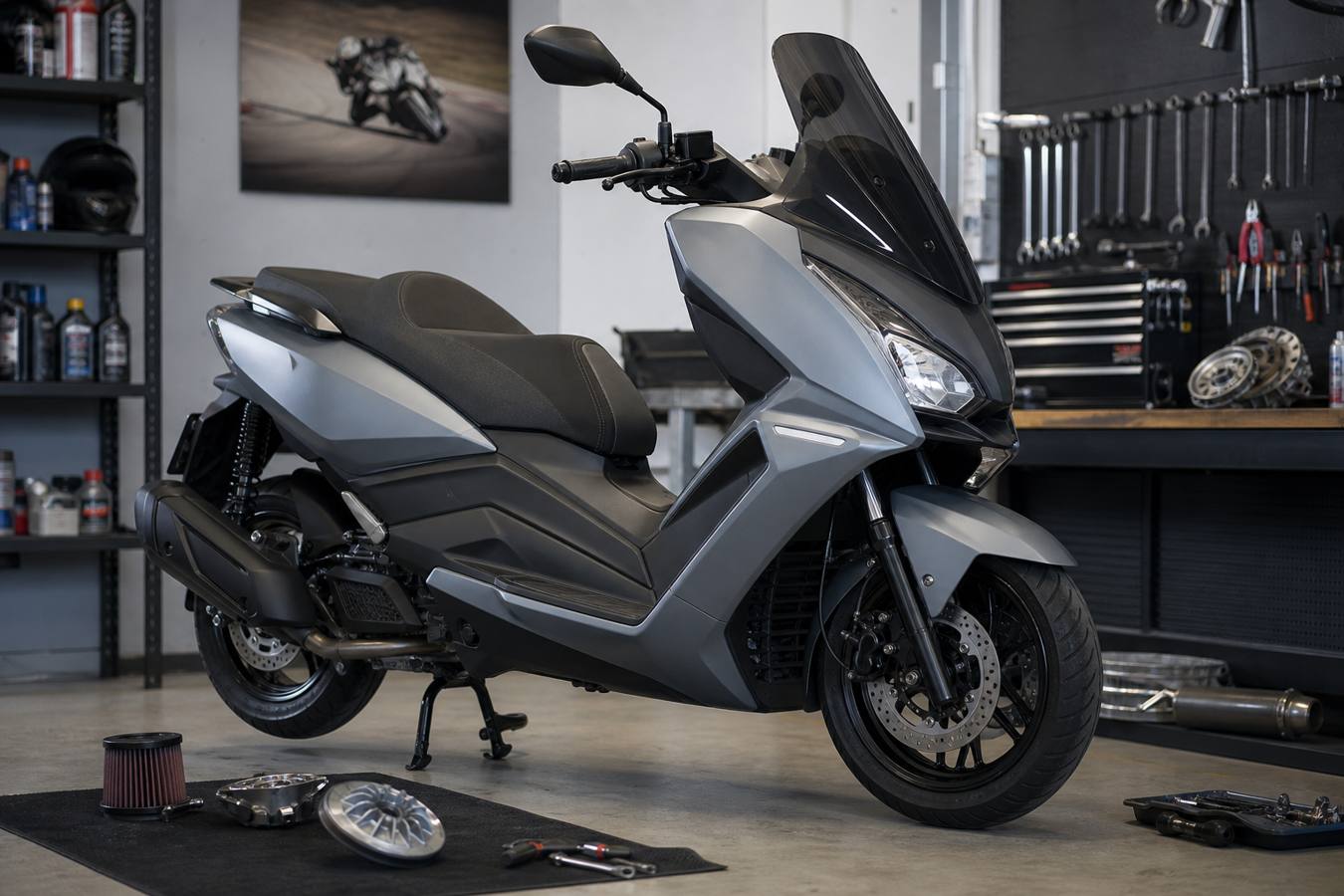
What this scooter setup can and cannot do
Peugeot Pulsion 125 tuning is not about pretending a 125cc scooter will perform like a 300. The useful gains are in throttle smoothness, launch behaviour, midrange feel, CVT efficiency, braking confidence, tyre grip and rider comfort. A standard Pulsion GT or Allure is designed to be civilised: quiet, economical, practical and friendly in traffic. A good setup should preserve those strengths.
The official Pulsion GT specification published by Peugeot Motocycles lists a Euro 5, liquid-cooled, electronically injected PowerMotion 125 engine with 10.6 kW and 12.4 Nm, ABS braking, 120/70-14 front tyre and 130/70-13 rear tyre sizes. Those figures matter because they show where the scooter is already close to the A1-class ceiling. Peugeot Motocycles technical information is a useful reference when checking the basic model layout before buying tuning parts.
In real use, Peugeot Pulsion 125 tuning should be judged by how the scooter behaves in the first 30 metres from a stop, how steadily it holds 40-55 mph, how cleanly it responds after the throttle is reopened, and whether it remains pleasant after 20 minutes of riding. Peak speed claims are often less useful than repeatable everyday behaviour.
Start with the baseline: service before performance parts
The best Peugeot Pulsion 125 tuning begins with a boring inspection. That is where many fast-looking projects fail. A worn belt, flat-spotted rollers, old spark plug, dirty air filter, dragging brake, underinflated tyre or tired fuel can make the scooter feel restricted even when no electronic limit is involved. If those basics are wrong, expensive parts only hide the problem for a week.
Workshop checks before changing anything
Check belt width against the service limit, inspect the variator faces for grooves, spin both wheels by hand, confirm the rear brake is not dragging, inspect the intake tract for leaks, look at the air filter, test battery voltage and make sure the throttle returns cleanly. On a liquid-cooled 125, also check coolant level and fan operation because heat soak can make a weak scooter feel weaker in traffic.
| Check | Why it matters | What a rider may feel |
|---|---|---|
| CVT belt width and condition | A worn belt changes effective gearing | Poor launch, lower cruising efficiency |
| Roller or slider wear | Flat spots stop smooth ratio change | Jerky acceleration or a stuck-rev feel |
| Air filter and intake sealing | Fuel injection depends on clean airflow | Flat throttle, hesitation, higher fuel use |
| Tyre pressure and tyre age | Rolling resistance and grip change dramatically | Heavy steering, vague cornering, slow feel |
| Brake drag | A dragging caliper steals power continuously | Scooter feels held back after stopping |
| Battery and charging voltage | Modern scooters rely on stable electronics | Starting issues, warning lights, odd idle |
Anyone planning Peugeot Pulsion 125 tuning should treat this table as the first shopping list. Fixing a worn belt or brake drag is often more valuable than adding a louder exhaust. For related scooter setup logic, compare the Peugeot Pulsion 125 problems guide before spending money on performance parts.
CVT, variator and roller tuning on the Pulsion 125
For many owners, Peugeot Pulsion 125 tuning is really CVT tuning. The continuously variable transmission controls how quickly the engine reaches its useful rev range and how smoothly the scooter changes ratio. On a 125, this can affect feel more than a bolt-on exhaust.
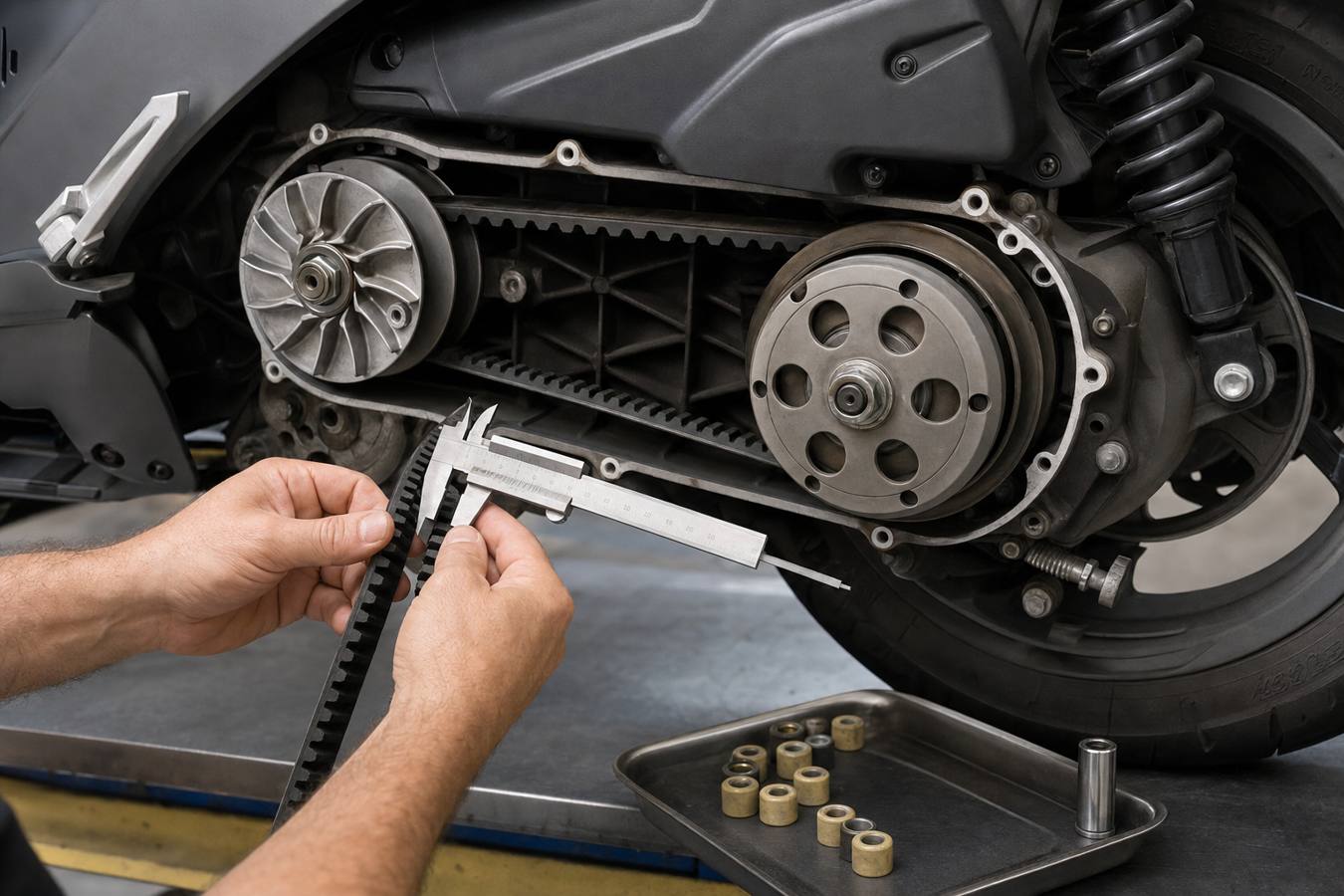
Roller weight is a trade-off, not a magic trick
Lighter rollers can let the engine rev more quickly, which may improve launch and hill response. Too light, and the engine can sit at high revs with more noise, heat and fuel use. Heavier rollers can calm the scooter, but if they are too heavy the engine may fall below its useful power band. The correct setting depends on rider weight, terrain, belt condition, variator design and whether the scooter is mostly used in town or on faster roads.
Variator upgrades need measured installation
A performance variator can be a sensible part of Peugeot Pulsion 125 tuning when the original CVT is healthy and the owner wants a sharper ratio curve. It should be installed with clean faces, correct torque, correct ramp plate position, no grease where it does not belong, and a belt that matches the intended setup. If the scooter vibrates, slips or loses top-end after installation, the setup is not automatically “sporty”; it may simply be wrong.
| CVT solution | Main advantage | Possible downside | Best for |
|---|---|---|---|
| Fresh OEM-style belt | Restores lost efficiency | No dramatic personality change | Older or high-mileage scooters |
| Slight roller adjustment | Noticeable launch tuning | Can increase revs if overdone | Town riding and hills |
| Slider weights | Smoother ratio movement | Fitment must be exact | Riders wanting refinement |
| Performance variator | Changes acceleration character | Needs careful setup and testing | Enthusiasts who accept tuning work |
| Clutch spring changes | Can alter engagement rpm | May make traffic riding harsh | Specific launch problems only |
Before ordering CVT parts, compare fitment carefully and use the X Moto Parts shop for related scooter parts and upgrade ideas that match the way you actually ride.
Exhaust, intake and fuelling: where the setup gets sensitive
Peugeot Pulsion 125 tuning often includes the question of exhausts. A quality exhaust may reduce weight, improve sound and sometimes make throttle response feel cleaner, but it should not be treated as guaranteed horsepower. On a Euro 5 injected scooter with emissions equipment, the exhaust, catalytic converter, lambda feedback, intake and ECU strategy all work as one system.
When an exhaust makes sense
An exhaust makes sense if the original system is damaged, excessively corroded, too heavy for your preference, or too muted for your taste. It must fit the mounting points, pipe diameter, centre stand clearance, body panels and rear suspension area. If a system is sold as track-use-only or off-road-use-only, do not assume it is legal for public roads.
Air filter and intake changes
A high-flow air filter can be useful only if it seals properly and does not let dirt bypass the element. Open filters on scooters are often worse for road use because they can inhale hot air, water and grit. For Peugeot Pulsion 125 tuning, the original airbox is usually worth keeping unless a complete, proven intake solution is being installed by someone who understands injection behaviour.
Plug-in tuning module or ECU work
A reversible module may help refine fuelling when matched to the correct sensor layout, but compatibility matters. Do not buy by model name alone. Confirm the exact year, Euro standard, connector type, engine version and whether the scooter is GT, Allure, Active or another market-specific variant. A clean installation should route wiring away from heat, steering movement, suspension travel and water traps.
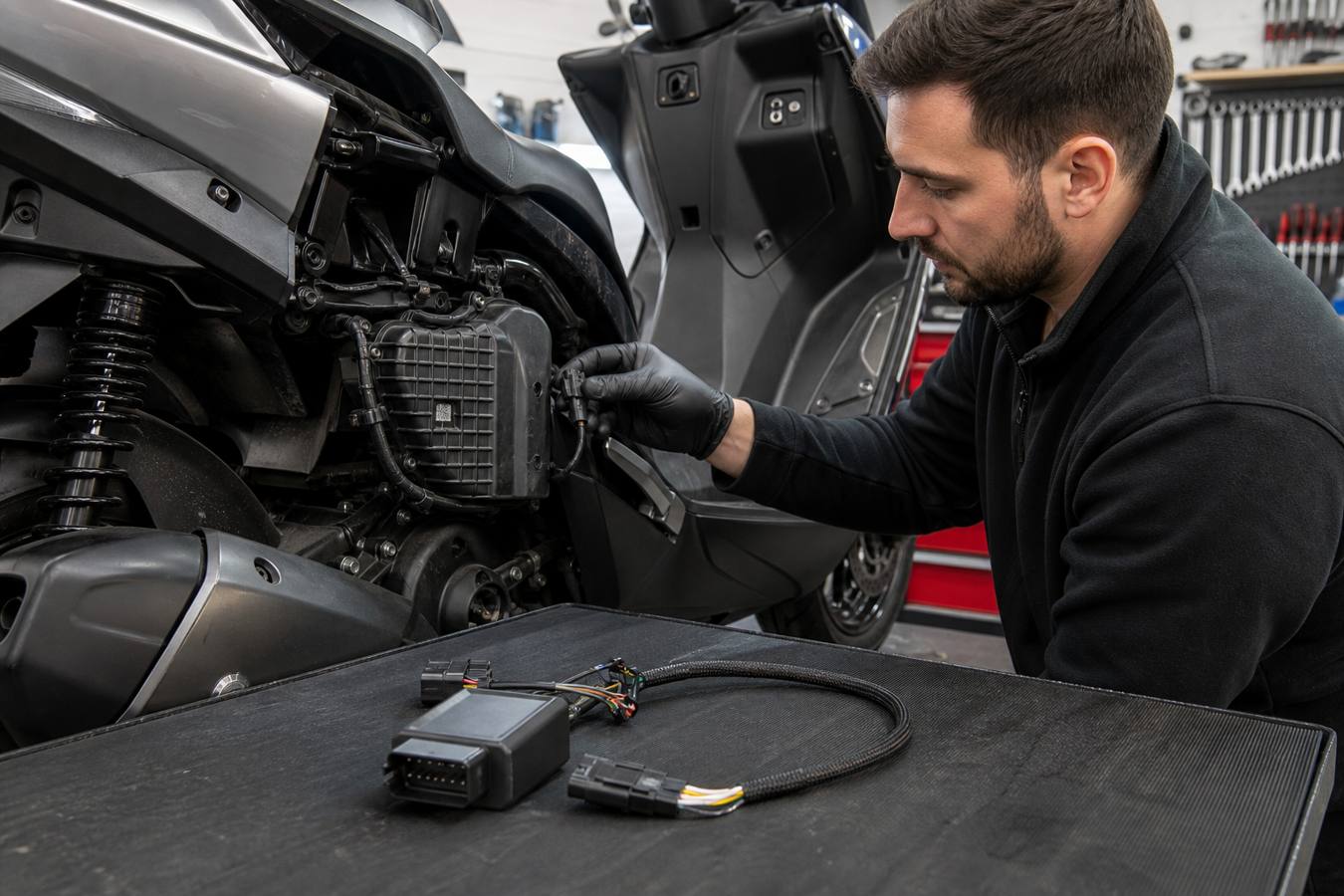
If you are comparing scooter tuning paths, the Peugeot Django 125 tuning guide and the Peugeot Tweet 125 tuning guide show how similar principles apply to different Peugeot scooters.
Compatibility table for Pulsion 125 parts
The biggest practical risk in Peugeot Pulsion 125 tuning is buying a part that is almost correct. A 125 scooter may have different emissions versions, different connectors, different exhaust mounting details and different CVT parts across markets. “Fits Pulsion” is not enough information when money, time and roadworthiness are involved.
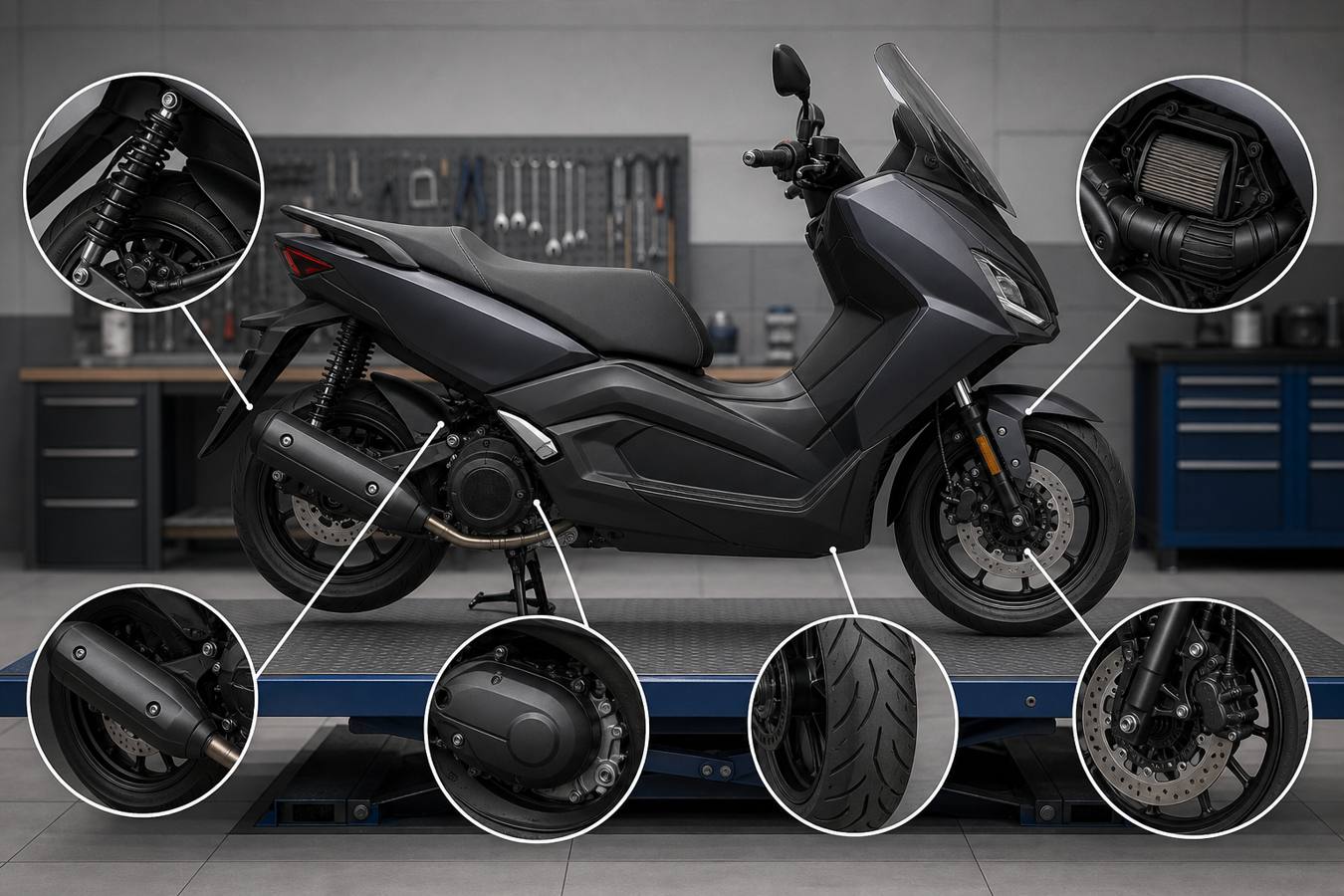
| Part or system | Compatibility question | Important note |
|---|---|---|
| Variator kit | Does it match the engine and CVT generation? | Check ramp plate, boss length, belt width and roller size. |
| Rollers or sliders | Are the dimensions correct? | Weight alone is useless if diameter or width is wrong. |
| Exhaust system | Does it fit the header, hanger and body clearance? | Confirm catalytic converter, DB-killer and road approval status. |
| Tuning module | Does it match the sensor connector and Euro version? | Photos of the connector are safer than relying on a listing title. |
| Air filter | Does it seal inside the original airbox? | A poor seal can damage the engine faster than it improves response. |
| Tyres | Are size, speed rating and load rating correct? | Changing tyre size can affect handling, ABS behaviour and insurance. |
| Brake pads | Are the compound and caliper fitment correct? | Better pads help only if discs, fluid and calipers are healthy. |
UK road legality, MOT and other English-speaking markets
Peugeot Pulsion 125 tuning must be separated into road use, track use, private land and off-road claims. In the UK, a scooter used on public roads must remain roadworthy, insured and compliant with relevant requirements. Exhaust noise, insecure parts, emissions-related equipment and unsafe modifications can all become real problems, not just paperwork.
The DVSA motorcycle MOT inspection manual explains that modifications are assessed on whether they adversely affect roadworthiness or are likely to cause injury, and it includes motorcycle exhaust noise and structure checks. Riders can review the official GOV.UK motorcycle MOT inspection manual for the current test framework in England, Scotland and Wales.
E-mark, noise, catalytic converter and insurance
If an exhaust has an E-mark or other approval marking, check what it actually covers and whether the DB-killer and catalyst are present. Removing baffles, deleting catalytic equipment or fitting a race-only system may affect road legality, MOT outcome and insurance. In the United States, Canada, Australia, New Zealand and Ireland, rules differ by state, province, territory or national authority, so a UK answer should not be copied blindly into another market.
Track-use-only parts
A track-use-only component can be legitimate in the right setting, but it should be sold and used honestly. If Peugeot Pulsion 125 tuning is for a road scooter, choose parts that preserve safe braking, secure mounting, reasonable noise and reliable emissions equipment. If the scooter is used only on private land, the legal framework changes, but mechanical safety still matters.
Common mistakes during Pulsion 125 upgrades
Most failed Peugeot Pulsion 125 tuning projects are not caused by one bad part. They are caused by a chain of small assumptions. The owner buys by photograph, ignores model-year differences, fits a part to a worn scooter, and then tries to tune around a mechanical fault.
| Mistake | Why it causes trouble | Better approach |
|---|---|---|
| Buying an exhaust without checking approval | Noise and emissions equipment may not suit road use | Confirm E-mark, catalyst, DB-killer and market suitability. |
| Changing roller weight too aggressively | The scooter may rev hard without moving faster | Make small changes and test one variable at a time. |
| Ignoring belt wear | A worn belt changes gearing and masks results | Measure the belt before judging any CVT upgrade. |
| Fitting open intake parts | Hot air, water and dirt can reduce reliability | Keep the airbox unless a proven sealed kit is used. |
| Assuming all Pulsion variants are identical | Connectors and emissions versions may differ | Check year, trim, Euro standard and connector photos. |
| Expecting huge horsepower gains | The 125cc engine has limited headroom | Focus on response, CVT efficiency and ride quality. |
| Skipping post-install checks | Loose parts and leaks appear after heat cycles | Recheck fixings, belt area, exhaust joints and wiring after riding. |
Real workshop method: how to build a sensible setup
A careful Peugeot Pulsion 125 tuning plan uses stages. Stage one is service: belt, rollers, plug, filters, tyres, brakes, fluids and battery. Stage two is feel: adjust controls, suspension preload, tyre pressure and CVT behaviour. Stage three is breathing and fuelling: exhaust, intake filter and reversible module only where compatible. Stage four is verification: ride, inspect, recheck and compare fuel use, noise and heat.
Street commuting setup
For daily commuting, Peugeot Pulsion 125 tuning should stay mild. Use a fresh belt, healthy rollers or conservative sliders, quality tyres, clean brakes and a legal exhaust only if the original system is damaged or too muted. The scooter should start easily, idle cleanly, pull away smoothly and remain quiet enough for early mornings.
Urban response setup
For stop-start city riding, a slightly sharper CVT setup may help more than extra noise. The aim is smoother clutch engagement, better launch and less hesitation when filtering through traffic. If fuelling feels inconsistent after airflow changes, stop and diagnose; do not keep adding parts.
Longer A-road setup
For riders who use faster roads, Peugeot Pulsion 125 tuning should avoid over-revving. A setup that feels exciting for ten seconds in town can become tiring at steady speed. Keep the engine in a sensible rev range, preserve cooling performance, and avoid exhaust systems that drone at cruise.
Buying advice before you order parts
Before ordering for Peugeot Pulsion 125 tuning, write down the scooter’s exact model year, trim, engine version, emissions standard, current mileage and the problem you want to solve. Then inspect the part listing for actual fitment details, not only attractive photos. If you cannot confirm connector shape, pipe diameter, bracket position or approval status, ask before buying.
A rider looking for a sensible next step can browse the motorcycle exhausts category and compare it with the main X Moto Parts shop. The right part is not the loudest one; it is the one that fits, works and keeps the scooter usable.
FAQ about Pulsion 125 upgrades
Is Peugeot Pulsion 125 tuning worth it?
Peugeot Pulsion 125 tuning is worth it if your goal is better response, smoother CVT behaviour, improved road feel and a cleaner setup. It is not worth it if you expect a 125cc scooter to gain dramatic power from one bolt-on part.
What is the best first upgrade for a Peugeot Pulsion 125?
The best first upgrade is usually a full baseline service. Belt condition, rollers, tyre pressure, brake drag, filter condition and spark plug health should be checked before performance parts are judged. Many scooters feel faster simply because lost efficiency has been restored.
Can a variator improve acceleration?
Yes, a variator can improve acceleration feel when fitted correctly and matched with the right belt and roller setup. For Peugeot Pulsion 125 tuning, the key is not fitting the most aggressive kit; it is finding a ratio curve that suits the engine and rider.
Does an exhaust increase power on a Pulsion 125?
An exhaust may improve sound, reduce weight and slightly alter response, but large power gains should not be assumed. Fitment, road approval, catalyst status, fuelling and noise are more important than marketing claims.
Do I need a remap or tuning module?
A standard scooter does not normally need one. A compatible module may be considered if intake or exhaust changes create a clear fuelling need, but connector type, sensor layout and Euro version must be confirmed before installation.
Is a tuned Pulsion 125 legal in the UK?
It depends on the parts and installation. Road use requires a safe, roadworthy scooter with compliant noise, secure components and appropriate emissions equipment. MOT outcome and insurance can be affected by exhaust and engine modifications.
Can I fit universal scooter parts?
Some universal accessories may fit, but engine, CVT, exhaust and electronic parts should be treated as model-specific unless proven otherwise. A universal claim is not the same as plug-and-play compatibility.
When should I use a mechanic?
Use a mechanic for CVT work if you lack the correct tools, for exhaust fitment if brackets or sealing are uncertain, and for any wiring-related work where water protection, heat routing or sensor signals are involved. Bad installation can undo every benefit of Peugeot Pulsion 125 tuning.
Final verdict: build a better scooter, not a fragile one
Peugeot Pulsion 125 tuning works best when it is practical. Start with the scooter’s condition, then improve the CVT, tyres, brakes and controls before chasing noise or miracle horsepower. Choose road-appropriate parts, confirm fitment with real measurements, keep the airbox and emissions equipment in mind, and recheck everything after heat cycles.
If you want a smarter Pulsion, aim for a scooter that pulls away cleanly, cruises without strain, brakes confidently and remains legal enough for daily use. For most riders, that means a conservative CVT refresh, careful exhaust choice, correct tyres, clean intake, reliable fuelling and honest expectations. Used this way, Peugeot Pulsion 125 tuning can make an already capable urban GT scooter feel sharper, safer and more enjoyable without spoiling the reason you bought it.