Yamaha XMAX 125 derestriction
Yamaha XMAX 125 derestriction is worth understanding properly before buying parts, changing rollers or asking a workshop to alter the scooter, because the XMAX 125 is already a well-developed 125cc maxi-scooter and the wrong modification can make it slower, louder, less reliable or illegal for road use.
The sensible way to look at Yamaha XMAX 125 derestriction is not as one magic trick that suddenly turns a 125 into a 300. It is a practical check of what is limiting the scooter in real life: worn CVT parts, heavy rollers, belt condition, throttle response, fuelling, exhaust flow, software strategy, rider weight, wind, service condition and local road regulations. On a healthy XMAX 125, careful setup can improve pick-up, make overtakes feel less lazy and help the engine hold its strongest rev range. It should not be sold as a guaranteed top-speed miracle.
For riders comparing upgrades, the most useful starting point is to keep Yamaha XMAX 125 derestriction separate from general tuning. Derestriction usually means removing or reducing a specific limitation, while tuning means improving the whole setup around the engine, transmission and exhaust. If you need model-specific electrical context, read the Yamaha XMAX 125 chip tuning guide. If your scooter needs dashboard or fitment work, the Yamaha X-Max 125 digital speedometer guide is a useful internal reference. For parts browsing, keep the X Moto Parts shop open while checking compatibility.

What derestriction really means on the XMAX 125
Yamaha XMAX 125 derestriction normally starts with a simple question: is the scooter electronically limited, mechanically limited, or just not running at its best? Many owners assume there is a hidden limiter because the scooter feels flat at motorway speeds or struggles into a headwind. In practice, a 125cc four-stroke scooter has modest torque, a continuously variable transmission and a tall frontal profile. Those three facts explain much of the behaviour before any “restriction” is found.
Yamaha lists the modern XMAX 125 as a fuel-injected, liquid-cooled, four-valve, single-cylinder scooter with V-belt automatic transmission. The official specification gives a useful baseline because it reminds riders that any derestriction work must respect the engine’s original design, cooling capacity and emissions equipment. You can check the current model specification on Yamaha Motor Europe.
Derestriction is not the same as forcing the engine
Good Yamaha XMAX 125 derestriction keeps the engine in the range where it pulls cleanly. Bad derestriction makes the scooter rev noisily without road speed, runs the belt too hot or removes parts that were protecting the engine from poor fuelling. A workshop will usually inspect the variator, clutch, belt, intake, exhaust and sensor wiring before recommending any part.
The realistic result owners should expect
The best result from Yamaha XMAX 125 derestriction is usually better acceleration from junctions, more consistent hill climbing and a cleaner response when the throttle is opened from mid-speed. Some scooters may gain a little top-end if the old CVT setup was worn or poorly matched, but a legal 125cc engine is still limited by displacement, aerodynamics and the A1-class power ceiling.
| Owner expectation | Realistic outcome | Workshop comment |
|---|---|---|
| Huge top-speed gain | Unlikely on a healthy scooter | Check wind, rider weight, belt wear and rev range first |
| Sharper launch | Often possible | CVT rollers and belt condition matter more than noise |
| Better hill climbing | Possible with correct setup | A lighter roller setup may help, but too light can over-rev |
| Louder exhaust | Not automatically faster | Noise without fuelling control can reduce drivability |
| Plug-and-play electronic response | Depends on connectors and model year | Confirm sensor layout before ordering any module |
Checks before buying parts
Before spending money on Yamaha XMAX 125 derestriction, make the scooter boringly healthy. That sounds less exciting than buying a tuning part, but it is what separates a clean result from an expensive disappointment. A dragging rear brake, old belt, flat-spotted rollers, clogged air filter or weak spark plug can make a scooter feel restricted even when nothing has been deliberately limited.
Service baseline
Start with engine oil, coolant level, air filter, spark plug, tyre pressures and brake drag. A 125cc scooter is sensitive to small losses because there is not much spare torque. If the scooter has more than a few thousand miles on the belt, inspect width and glazing. The first practical step in Yamaha XMAX 125 derestriction is often replacing worn service parts, not removing anything.
Model year and market version
The XMAX 125 has been sold across different countries and model years, so derestriction should never be planned from a forum post alone. Euro 4 and Euro 5 scooters can differ in ECU strategy, oxygen sensor behaviour, exhaust catalyst layout, diagnostics and connector positions. A UK-market machine may not be identical to a French, Italian or import-market version, even when the bodywork looks the same.
Useful owner measurements
Measure the exhaust inlet diameter, inspect the silencer mounting points, photograph the intake air temperature sensor connector, note belt mileage and record the engine speed at which the scooter pulls hardest. If you are considering a response module, compare the connector shape against the product photos before ordering. Riders looking for a conservative next step can also compare compatible scooter parts through motorcycle exhausts and related parts.
Compatibility table
Yamaha XMAX 125 derestriction is most successful when the part matches the scooter’s exact configuration. A product that fits a 300cc XMAX or a different 125cc Yamaha scooter should not be assumed to fit the XMAX 125. CVT dimensions, exhaust brackets and electronic connectors need checking.
| Vehicle or part area | Compatibility | Important note |
|---|---|---|
| Yamaha XMAX 125 scooter | Yes, when year-specific | Check engine generation, Euro standard and sensor connectors |
| Yamaha XMAX 300 parts | Usually no | Similar styling does not mean shared CVT, ECU or exhaust fitment |
| Universal scooter exhaust | Depends on dimensions | Pipe diameter, bracket position, lambda sensor and catalyst layout must match |
| CVT rollers and variator | Only if exact size matches | Weight alone is not enough; diameter and width must be correct |
| Chip or response module | Depends on connector and fuelling strategy | Confirm model year, sensor type and stock or modified condition |
| Track-use parts | Technically possible | May be unsuitable or illegal for public roads |
CVT, variator and belt setup
The CVT is where many riders feel the biggest change from a derestriction setup. The variator controls how quickly the belt moves through the pulley range. Rollers that are too heavy can make the engine drop below its best power band; rollers that are too light can make the engine scream without adding road speed. A worn belt can also sit lower in the pulley and reduce effective gearing.
What to inspect inside the transmission case
When opening the transmission, inspect belt width, belt cracks, roller flat spots, variator ramp wear, clutch bell glazing, clutch shoe condition and rear pulley movement. A scooter that judders away from traffic lights may need clutch cleaning or replacement before any performance part is judged. Torque the variator nut correctly and do not lubricate areas that must run dry.
Roller weight and road feel
A small change in roller weight can make the XMAX 125 feel livelier, but the goal is controlled acceleration, not maximum noise. During road testing, change one thing at a time on the same road, with the engine warm and tyre pressures correct. If the scooter launches better but loses top-end, the setup may be too short. If it feels lazy until high speed, the rollers may be too heavy or the belt may be tired.
| CVT condition | Typical symptom | Practical fix |
|---|---|---|
| Flat-spotted rollers | Uneven acceleration or pulsing revs | Replace with correct-size rollers or sliders |
| Worn belt | Lower top speed and weak pull | Measure belt width and replace if below service limit |
| Glazed clutch bell | Judder from a standstill | Clean or replace worn clutch parts |
| Too-light rollers | High revs without matching speed | Increase weight gradually |
| Too-heavy rollers | Slow response and poor hill climbing | Reduce weight carefully, then road test |
ECU, chip modules and throttle response
Electronic derestriction sometimes involves plug-in parts, but the safest approach is conservative. A response or chip module can only help when it is matched to the right sensor system and adjusted sensibly. It cannot create displacement, repair worn CVT parts or make a restricted exhaust flow like a race system.
Connector checks before installation
Photograph the sensor connector, count pins, check locking tabs and compare the harness route before ordering. If the connector is forced, the scooter can develop intermittent signals, fault lights or poor hot starting. For a product-focused next step, the Yamaha X-Max 125 digital LED LCD speedometer page is useful for seeing how model-specific electrical fitment pages are structured, while the chip tuning article explains the performance side in more depth.
Setup method
For an electronic module, install with ignition off, secure wiring away from heat, start at the lowest setting and ride only after the engine is fully warm. If the scooter hesitates, smells rich, surges at steady throttle or starts poorly when hot, reduce the setting or remove the module and diagnose the baseline. A good mechanic will not mask a service fault with extra fuelling.
Exhaust changes and UK road legality
Exhaust work is one of the most misunderstood parts of this job. A better silencer can improve sound, reduce weight and sometimes support smoother response, but an illegal, leaking or badly matched exhaust can fail an MOT, annoy everyone nearby and make fuelling worse.
UK road use, E-mark and MOT reality
In the UK, road use depends on the whole vehicle remaining compliant, not just on whether a part looks tidy. The DVSA motorcycle MOT manual explains that exhaust noise can be a major defect if it is clearly above the level expected from a similar motorcycle with a standard silencer, and insecure exhaust parts can also fail inspection. You can read the official MOT exhaust-noise guidance on GOV.UK.
For Yamaha XMAX 125 derestriction, this means checking E-marking, catalyst retention where required, DB-killer status, exhaust leaks, mounting security and insurance disclosure. A part sold for track use or off-road use may not be suitable for public roads. In the United States, Canada, Australia, Ireland and New Zealand, rules can differ by state, province, registration year and emissions category, so do not apply UK MOT logic blindly to another market.
Exhaust fitment checks
Measure pipe diameter, check flange type, confirm oxygen sensor position, compare bracket spacing and make sure the centre stand and side stand do not contact the pipe. A soft call to action belongs here because it helps the rider avoid buying twice: anyone considering exhaust work should first compare exact dimensions and mounting points against a relevant scooter exhaust category.
| Solution | Main advantage | Possible disadvantage | Best for |
|---|---|---|---|
| Original exhaust | Quiet, compliant and reliable | Less sound and limited weight saving | Daily commuting and MOT simplicity |
| Road-approved sports silencer | Better tone with clearer compliance path | Compatibility and paperwork must be checked | Riders wanting sound without trouble |
| Universal silencer | Flexible and often affordable | Fabrication may be required | Custom projects with workshop support |
| Full exhaust system | Greater flow potential | More cost, more legal and fuelling checks | Experienced owners or workshop builds |
| Track-use system | Maximum focus on performance and weight | Not suitable for public roads | Private land or circuit use only |
Common mistakes with Yamaha XMAX 125 derestriction
The common mistakes in Yamaha XMAX 125 derestriction are predictable because most of them start with impatience. Owners buy the loudest exhaust without checking pipe diameter, fit rollers without measuring the belt, remove a DB-killer without thinking about UK road use or expect a 125cc engine to behave like a larger scooter.
Buying parts only by model name
“XMAX 125” is not enough information. Year, market, emission standard and part numbers matter. The same warning applies to variators, belts, exhausts, sensors and modules. In real workshop terms, a clean setup should start with photos, measurements and VIN/model-year confirmation.
Ignoring the belt and rollers
A worn CVT can waste the benefit of every other part. If the belt is narrow or the rollers have flat spots, the scooter will feel inconsistent. Replace worn consumables before judging whether a tuning part works.
Confusing sound with speed
A loud exhaust can make the scooter feel faster because the rider hears more engine. That does not mean the road speed has improved. Test with repeatable conditions, not just noise. Check for exhaust leaks after installation and inspect the mounting bolts again after the first heat cycles.
Forgetting insurance and local law
In the UK, modifications can affect insurance even when the scooter still passes an MOT. Tell your insurer what has been changed. If a product is described as race only, track use only or off-road use only, treat it accordingly. Sensible derestriction keeps paperwork as tidy as the installation.
Workshop advice from real-world scooter setup
A careful mechanic approaches the XMAX 125 with a notebook rather than guesswork. Record belt width, roller weight, tyre pressure, rider weight, weather, engine temperature and road-test behaviour. Make one change, test it, then decide. If three things are changed at once, you will not know which one helped.
After installation, recheck all fasteners, make sure wiring is clipped away from the exhaust, inspect for coolant or oil leaks, listen for CVT rattles and verify that the scooter starts cleanly hot and cold. If the scooter shows an engine warning light, stalls, overheats or loses top speed, stop testing and diagnose the cause. The best Yamaha XMAX 125 derestriction is the one you can ride every day without wondering what will break next.
Image metadata prepared for this article
| File name | Title | Alt text | Caption | Position |
|---|---|---|---|---|
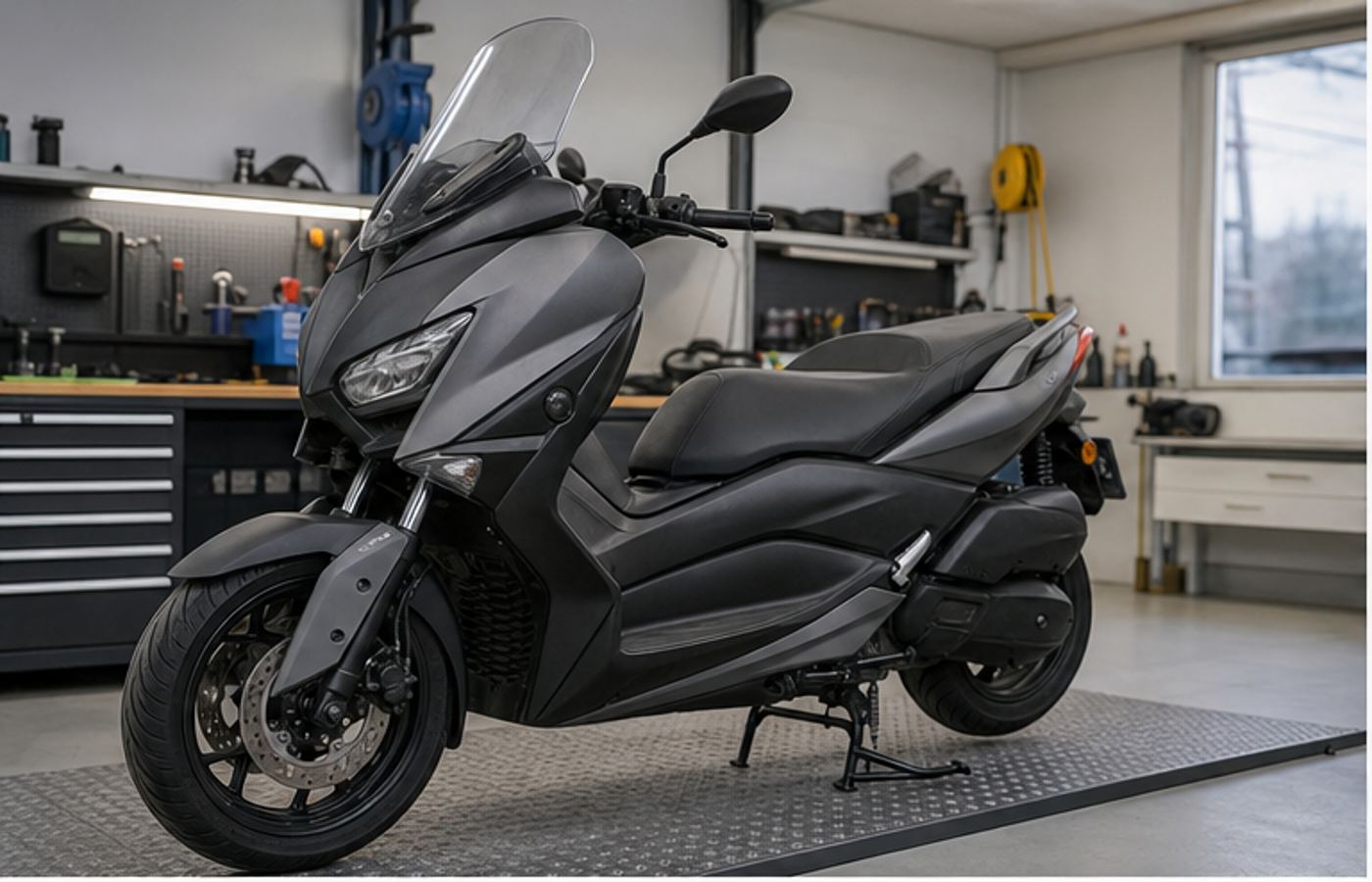
| yamaha-xmax-125-derestriction.jpg | Yamaha XMAX 125 derestriction | Yamaha XMAX 125 derestriction workshop scooter setup | A clean workshop view before checking the Yamaha XMAX 125 for derestriction, CVT and exhaust compatibility. | Main image below introduction |
| yamaha-xmax-125-derestriction-cvt-check.jpg | Yamaha XMAX 125 CVT derestriction check | Yamaha XMAX 125 CVT variator rollers and belt inspection | Inspect the belt, variator and rollers before changing the scooter transmission setup. | CVT section |
| yamaha-xmax-125-derestriction-installation.jpg | Yamaha XMAX 125 module installation check | Mechanic checking Yamaha XMAX 125 sensor connector during derestriction setup | Connector shape, wiring route and heat protection should be checked before fitting electronic parts. | ECU section |
| yamaha-xmax-125-derestriction-exhaust-measurements.jpg | Yamaha XMAX 125 exhaust measurement guide | Yamaha XMAX 125 exhaust pipe diameter and bracket measurement | Pipe diameter, bracket position and DB-killer condition are essential exhaust fitment checks. | Exhaust section |
FAQ about Yamaha XMAX 125 derestriction
Is Yamaha XMAX 125 derestriction legal in the UK?
Yamaha XMAX 125 derestriction is only suitable for UK road use if the scooter remains compliant with its registration, licence category, emissions equipment, noise expectations, insurance declaration and MOT requirements. Removing road-legal equipment, making the exhaust excessively noisy or altering emissions control can create legal and insurance problems.
Does the Yamaha XMAX 125 have a simple speed limiter?
Some riders search for one hidden limiter, but most XMAX 125 performance complaints are a mix of 125cc engine output, CVT setup, belt wear, wind resistance and service condition. Yamaha XMAX 125 derestriction should be diagnosed before parts are ordered.
Will lighter rollers make the XMAX 125 faster?
Lighter rollers can improve acceleration if the original setup is pulling the engine below its useful rev range. Too light, and the scooter over-revs without gaining speed. For Yamaha XMAX 125 derestriction, roller changes should be tested gradually and paired with belt inspection.
Do I need to remap after changing the exhaust?
A mild road-approved silencer may not need a full remap, but fuelling behaviour should still be checked. If the exhaust changes flow significantly, or if the scooter runs hotter, hesitates or smells rich, professional diagnosis is sensible. Yamaha XMAX 125 derestriction should not rely on guessing fuel mixture.
Can I use XMAX 300 parts on an XMAX 125?
Do not assume XMAX 300 parts fit an XMAX 125. Body style can be similar while the engine, CVT, exhaust and electronic systems differ. Proper Yamaha XMAX 125 derestriction uses 125-specific measurements and model-year checks.
What is the safest first upgrade?
The safest first step is a full service baseline, then CVT inspection. Once the scooter is healthy, choose parts that solve a specific problem. For many owners, Yamaha XMAX 125 derestriction starts with belt, rollers and careful road testing rather than aggressive electronic changes.
Will derestriction damage reliability?
Careful, conservative setup should not automatically damage reliability, but poor installation can. Over-revving, overheating, loose exhaust mounts, wrong fuelling and unsupported wiring are real risks. Treat Yamaha XMAX 125 derestriction as a mechanical setup job, not a shortcut.
Should I use a mechanic or fit parts myself?
If you can measure parts, use a torque wrench, inspect CVT wear and route wiring safely, basic work may be manageable. If you are unsure about sensor wiring, exhaust sealing, variator torque or road legality, use a qualified mechanic. Yamaha XMAX 125 derestriction is cheaper when it is done once and checked properly.
Final buying advice
Yamaha XMAX 125 derestriction is best approached as a complete scooter setup: service condition first, CVT second, exhaust and electronic parts only after compatibility is clear. Check the exact model year, measure the exhaust, inspect the belt, confirm sensor connectors, keep road legality in mind and avoid products that promise impossible gains. If the scooter is used daily in the UK, a quiet, tidy, insured and MOT-friendly build is worth more than a noisy setup that creates problems every time inspection or renewal comes around.
For the next practical step, compare the existing Yamaha XMAX 125 chip tuning guide, the digital speedometer fitment guide and the wider X Moto Parts shop before ordering. A measured, compatible and road-aware setup is the right way to make Yamaha XMAX 125 derestriction useful rather than risky.
{
“@context”: “https://schema.org”,
“@type”: “Article”,
“headline”: “Yamaha XMAX 125 derestriction”,
“description”: “A practical XMAX 125 guide covering CVT setup, exhaust fitment, UK legality, compatibility checks and workshop advice.”,
“author”: {“@type”: “Organization”, “name”: “X Moto Parts”},
“publisher”: {“@type”: “Organization”, “name”: “X Moto Parts”, “url”: “https://xmotoparts.com/”},
“mainEntityOfPage”: “https://xmotoparts.com/yamaha-xmax-125-derestriction/”,
“image”: “https://xmotoparts.com/wp-content/uploads/yamaha-xmax-125-derestriction.jpg”
}
{
“@context”: “https://schema.org”,
“@type”: “FAQPage”,
“mainEntity”: [
{“@type”: “Question”, “name”: “Is derestriction legal on a Yamaha XMAX 125 in the UK?”, “acceptedAnswer”: {“@type”: “Answer”, “text”: “Derestriction is only suitable for UK road use if the scooter remains compliant with its registration, licence category, emissions equipment, noise expectations, insurance declaration and MOT requirements.”}},
{“@type”: “Question”, “name”: “Does the Yamaha XMAX 125 have a simple speed limiter?”, “acceptedAnswer”: {“@type”: “Answer”, “text”: “Many performance complaints are caused by 125cc output, CVT setup, belt wear, wind resistance and service condition rather than one hidden limiter.”}},
{“@type”: “Question”, “name”: “Will lighter rollers make the XMAX 125 faster?”, “acceptedAnswer”: {“@type”: “Answer”, “text”: “Lighter rollers can improve acceleration when correctly matched, but rollers that are too light can make the scooter over-rev without increasing road speed.”}},
{“@type”: “Question”, “name”: “Do I need to remap after changing the exhaust?”, “acceptedAnswer”: {“@type”: “Answer”, “text”: “A mild road-approved silencer may not need a full remap, but fuelling should be checked if the exhaust changes flow significantly or the scooter hesitates, runs hot or smells rich.”}},
{“@type”: “Question”, “name”: “Can I use XMAX 300 parts on an XMAX 125?”, “acceptedAnswer”: {“@type”: “Answer”, “text”: “XMAX 300 parts should not be assumed to fit an XMAX 125 because engine, CVT, exhaust and electronic systems can differ.”}},
{“@type”: “Question”, “name”: “What is the safest first upgrade?”, “acceptedAnswer”: {“@type”: “Answer”, “text”: “The safest first step is a full service baseline, then CVT inspection, belt measurement and carefully tested roller changes.”}},
{“@type”: “Question”, “name”: “Will derestriction damage reliability?”, “acceptedAnswer”: {“@type”: “Answer”, “text”: “Careful setup should not automatically damage reliability, but over-revving, overheating, loose exhaust mounts, wrong fuelling and unsupported wiring are real risks.”}},
{“@type”: “Question”, “name”: “Should I use a mechanic or fit parts myself?”, “acceptedAnswer”: {“@type”: “Answer”, “text”: “Use a qualified mechanic if you are unsure about sensor wiring, exhaust sealing, variator torque, CVT inspection or road legality.”}}
]
}