Yamaha YBR 125 power increase
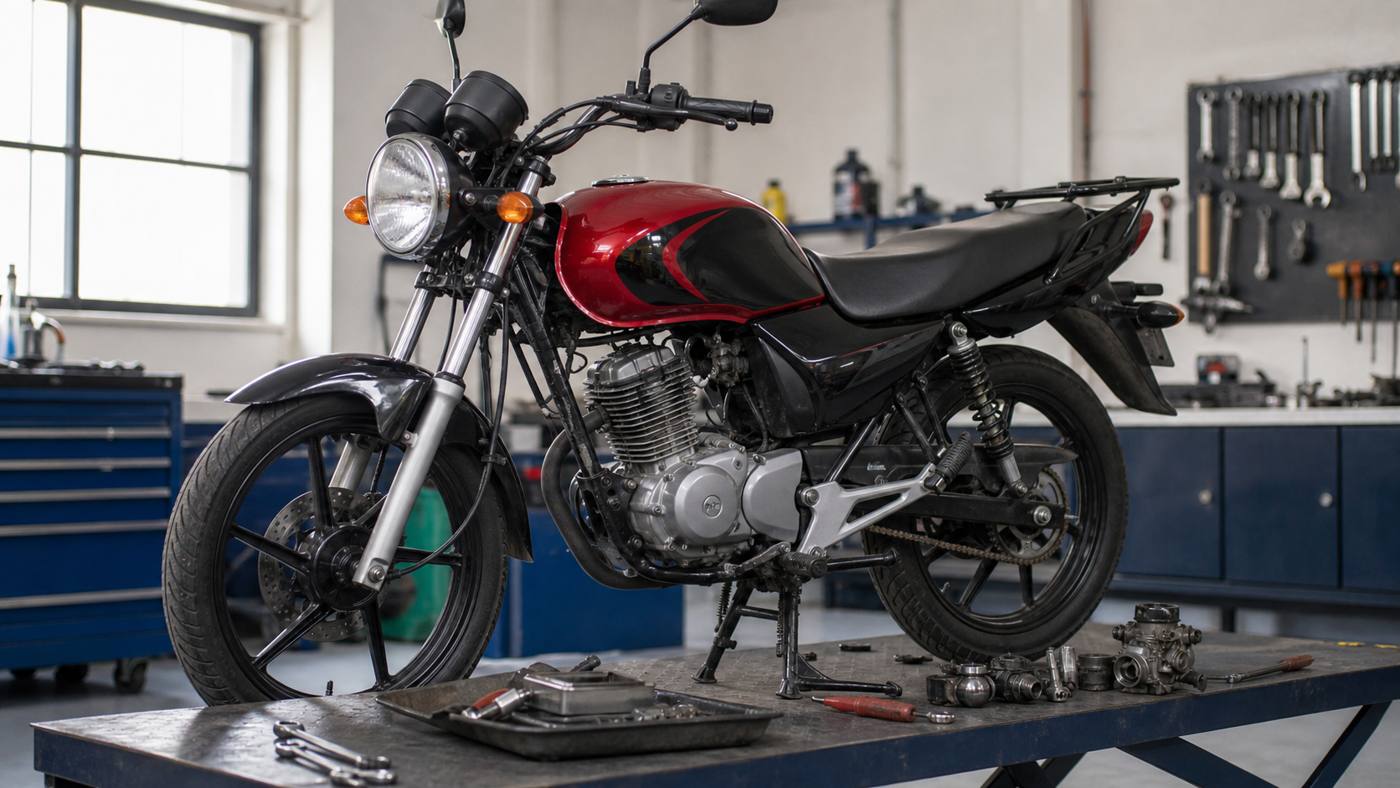
Yamaha YBR 125 power increase is a realistic goal only when the motorcycle is treated as a light, economical 125 rather than a small bike trying to become a 300. The YBR is popular because it is simple, cheap to run, easy to ride and forgiving. That also means the best improvements usually come from restoring lost performance, reducing mechanical drag, choosing sensible gearing and matching intake, exhaust and fuelling carefully. Big promises rarely survive the first proper road test.
For most owners, Yamaha YBR 125 power increase really means better response in town, easier hill climbing, cleaner acceleration from low revs and less struggle holding speed into wind or with luggage. It does not mean turning the motorcycle into a fast bike. The engine is small, the legal class matters in many countries, and reliability is worth protecting. A YBR that starts instantly, idles cleanly, pulls smoothly and carries speed efficiently is more useful than one that is loud, over-geared and unpleasant.
If you are comparing small-capacity tuning ideas, read the motorcycle chain tension adjustment guide, the Honda CB125R power increase guide and the Suzuki Intruder 125 power increase guide. The models differ, but the same workshop truth applies: on a 125, small losses matter.
Start by finding lost power
Yamaha YBR 125 power increase should start with the motorcycle as it is, not with an online parts basket. Many YBRs are used for commuting, training, delivery work or budget transport. They often have tired chains, old tyres, worn sprockets, dirty air filters, neglected valve clearances, stiff brakes, old fuel or poorly adjusted clutches. Each fault is small. Together they make the bike feel slow.
A full baseline service can feel like a performance upgrade because a 125 does not have spare torque to hide neglect. Check oil, plug, air filter, valve clearance where applicable, fuel quality, carburettor cleanliness or EFI sensor condition, chain tension, sprocket wear, brake drag and tyre pressure. If the motorcycle rolls badly or the engine breathes poorly, no tuning part will give a fair result.
| Baseline check | What to look for | How it affects performance |
|---|---|---|
| Air filter | Dust, oil contamination, poor sealing | Restricted or dirty air makes the engine lazy |
| Spark plug | Worn electrode, wrong heat range, rich/lean signs | Weak spark hurts starting and throttle response |
| Chain and sprockets | Tight spots, hooked teeth, dry links | Final-drive drag steals power at the rear wheel |
| Brakes | Dragging pads, sticky caliper, rear drum adjustment | Brake drag can feel like engine weakness |
| Tyres | Low pressure, squared profile, wrong size | Rolling resistance and handling both suffer |
A good plan for Yamaha YBR 125 power increase begins with a test route. Use the same hill, same tyre pressures and same fuel load before and after each change. If you cannot repeat the test, you cannot tell whether the bike improved or the weather simply changed.
Another reason Yamaha YBR 125 power increase should start with measurement is that wind, rider position, luggage and tyre pressure can change the result more than a small bolt-on part.
Engine, intake and fuelling checks
Yamaha YBR 125 power increase depends on the version you own. Earlier and market-specific bikes may be carburetted, while later or regional versions may use fuel injection. Do not buy tuning parts until you know which system your bike has. A carburettor jetting discussion does not apply directly to an EFI motorcycle, and an electronic module will not help a carburetted bike unless the product is designed for a different function.
Carburetted YBR 125 models
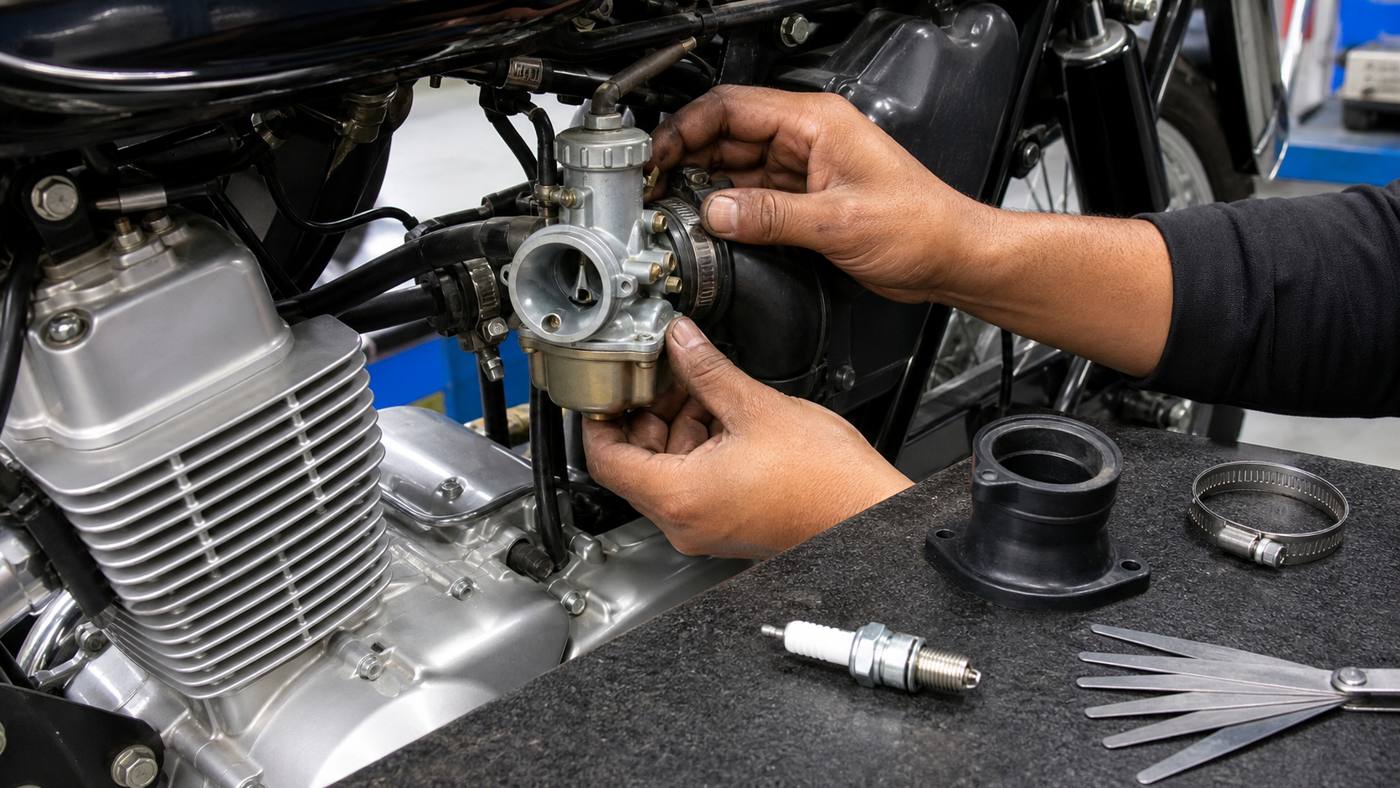
On a carburetted motorcycle, throttle response depends on clean jets, float height, mixture setting, airbox seal, intake rubber condition and exhaust back pressure. A partially blocked pilot jet can make the bike hard to start and weak at small throttle openings. A split intake boot can create lean running. A poorly fitted pod filter can make the bike louder and worse in rain. For Yamaha YBR 125 power increase, carburettor work should be measured, not guessed.
Fuel-injected YBR 125 models
On EFI versions, the ECU uses sensor information to control fuelling. A dirty air filter, weak battery, poor ground, intake leak or exhaust leak can still cause poor running. A fuel module may be considered only after the motorcycle is healthy and compatibility is confirmed. For product-style research, the chip tuning modules category is relevant, but the correct part must match the exact year, connector and fuel system.
Valve clearance and compression
Yamaha YBR 125 power increase can be impossible if the engine has lost compression or the valve clearances are wrong. Tight valves can make starting harder and reduce performance when hot. A tired engine may feel flat no matter what exhaust or sprocket is fitted. If the bike has high mileage or unknown service history, compression and valve checks are more valuable than styling upgrades.
| Engine-side change | Main benefit | Possible downside | Best use |
|---|---|---|---|
| Full service | Restores lost response | Feels less exciting than tuning parts | Every YBR before modifications |
| Clean standard airbox | Reliable airflow and weather protection | Less intake noise | Road use and commuting |
| Performance filter | May improve airflow if correctly matched | Can weaken fuelling if poorly fitted | Healthy engine with checked fuelling |
| Fuel module or jetting | Can refine response after airflow changes | Wrong settings can hurt reliability | After confirming carburettor or EFI version |
| Big-bore conversion | Largest potential change | Cost, legality, insurance and reliability questions | Private-road or specialist builds only |
Exhaust upgrades and realistic gains
Yamaha YBR 125 power increase is often associated with exhaust upgrades, but the exhaust should be treated honestly. On a small four-stroke commuter, a better exhaust can improve sound, reduce weight and sometimes sharpen response if the original system is restrictive or damaged. It will not create a dramatic horsepower jump by itself.
A road exhaust must fit properly: header diameter, mounting bracket, gasket, silencer support, heat shield clearance and footrest position all matter. A leak at the header can make the bike pop, run poorly and sound rough. A silencer with no proper support can crack mounts. A pipe that is too loud can become tiring and legally troublesome.
DB-killer, catalyst and road use
For Yamaha YBR 125 power increase, removing a DB-killer or catalytic converter where fitted is not a casual road modification. The motorcycle may become louder, less compliant and harder to insure. If the exhaust was approved with a baffle installed, using it without that part can change its legal status. Always keep paperwork and choose a road-sensible system for public roads.
Chain, sprockets and gearing choices
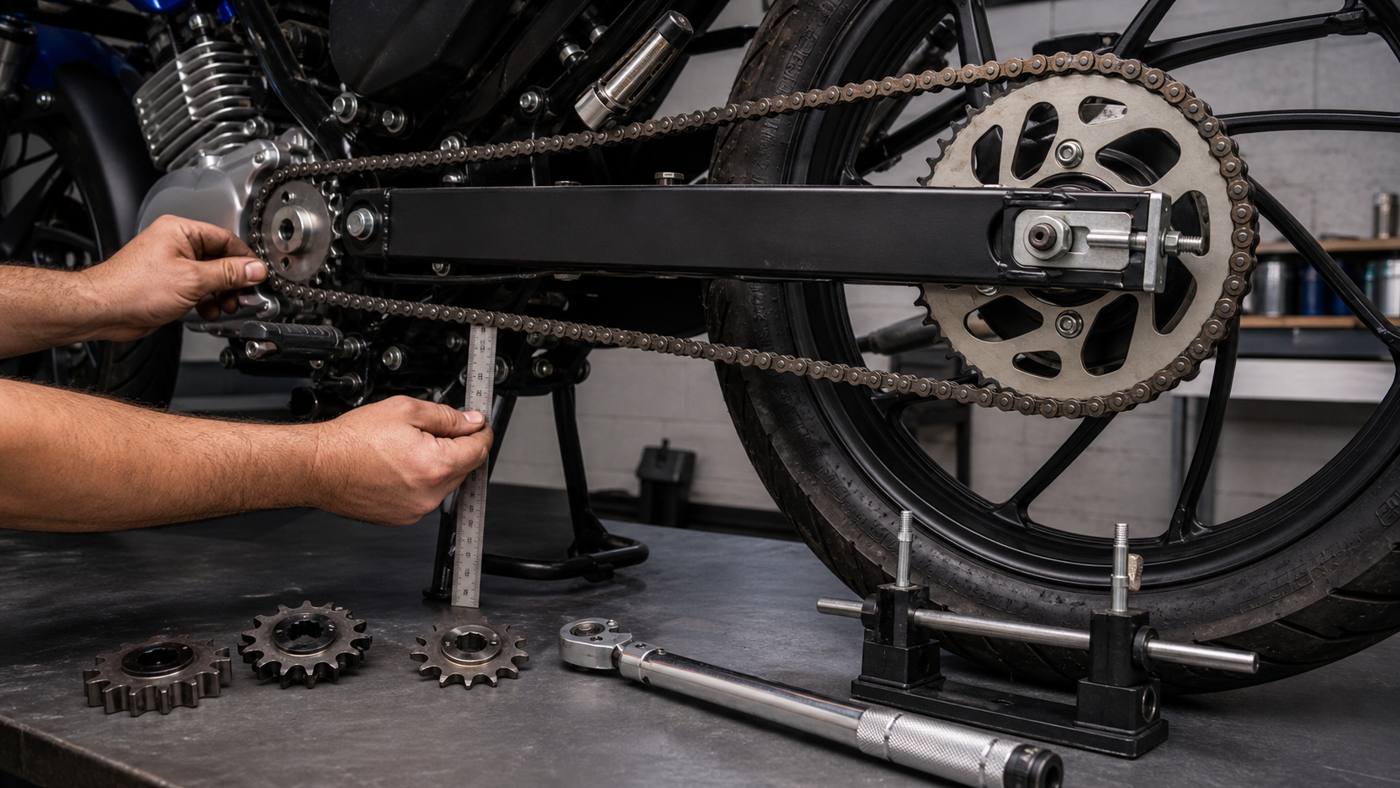
Yamaha YBR 125 power increase is often felt most clearly through gearing rather than engine output. Changing sprocket sizes does not create power, but it changes how the available power is used. Shorter gearing can improve pull-away and hill response. Taller gearing can reduce revs at cruising speed, but if the engine cannot pull it, the bike becomes slower and more frustrating.
Shorter gearing for town and hills
A slightly smaller front sprocket or larger rear sprocket can make the YBR feel more eager at low speed. This helps riders in traffic, on hills or with heavier loads. The trade-off is higher rpm at cruising speed and possibly lower comfortable top speed. For Yamaha YBR 125 power increase, that trade-off may be worth it if the bike spends most of its life in town.
Taller gearing for cruising
Taller gearing sounds attractive because it promises lower revs, but a 125 needs revs to make power. If the engine cannot pull the gearing into wind or uphill, the rider changes down more often and loses speed. Taller gearing should be mild and tested carefully. A relaxed speedometer reading is not useful if the motorcycle cannot hold real road speed.
| Gearing choice | Main advantage | Possible disadvantage | Best for |
|---|---|---|---|
| Standard gearing | Balanced factory behaviour | May feel weak with hills or luggage | Mixed commuting |
| Slightly shorter gearing | Better acceleration feel | Higher cruising rpm | Town, hills and heavier riders |
| Slightly taller gearing | Lower rpm at steady speed | Can feel weaker into wind | Flat roads and light riders |
| Fresh chain kit | Reduces drag and vibration | Needs correct adjustment | Worn final-drive systems |
| Extreme ratio change | Feels dramatic at first | Usually creates new problems | Specialist/private projects only |
Compatibility before ordering parts
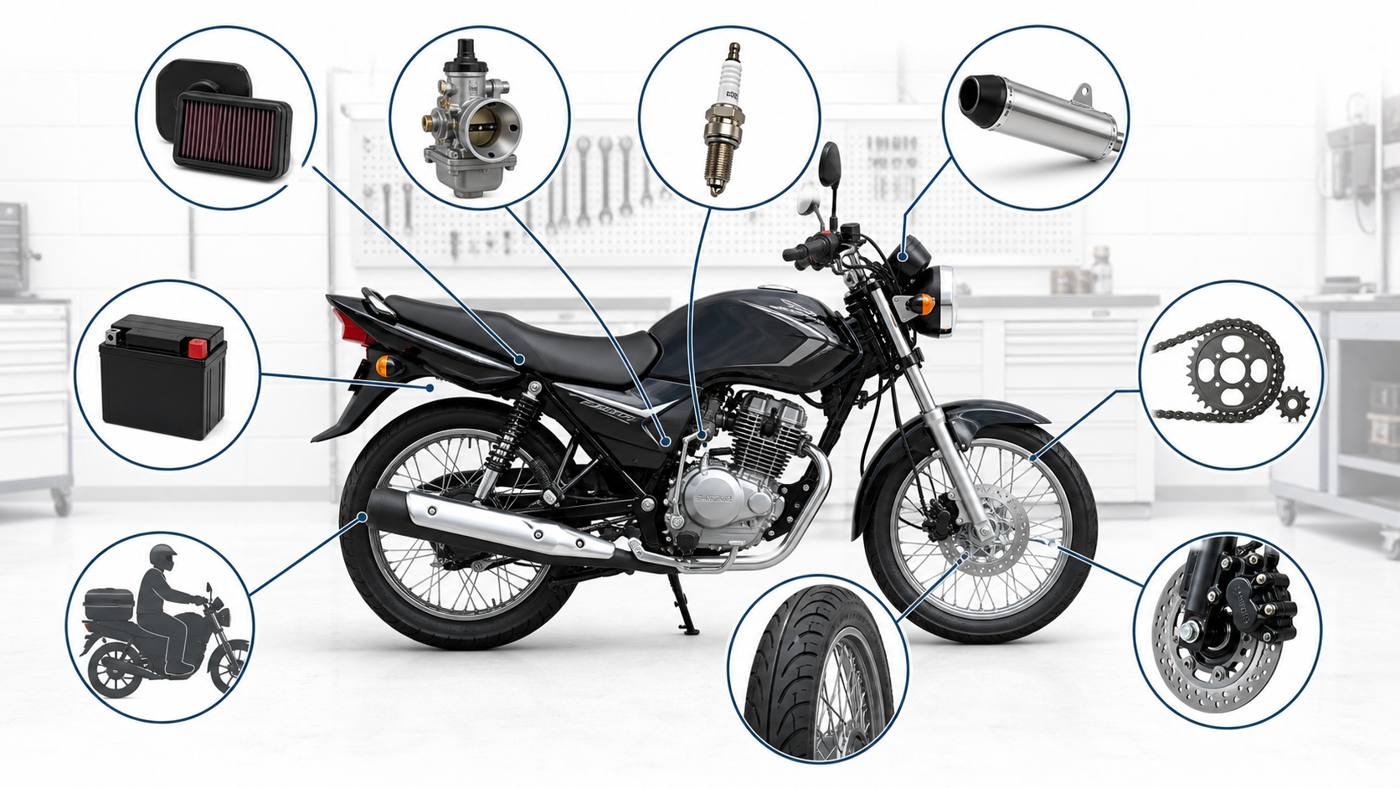
Yamaha YBR 125 power increase depends heavily on model year and market. The YBR family has been sold across many countries, and details such as carburettor, fuel injection, emissions equipment, exhaust shape, front brake type, wheel design and electrical connectors may vary. A part that fits one YBR 125 is not automatically correct for another.
| Part type | Compatibility check | Important note |
|---|---|---|
| Exhaust | Header diameter, bracket, gasket and year | Universal silencers may need fabrication |
| Air filter | Airbox shape and carb/EFI version | Poor sealing lets dust into the engine |
| Sprockets | Tooth count, chain pitch and hub pattern | Wrong parts can damage the chain drive |
| Fuel module | EFI connector and sensor layout | Not relevant to carburetted versions in the same way |
| Tyres | Correct size, load and speed rating | Oversizing can hurt handling and gearing |
| Big-bore kit | Engine version, cylinder, head and legal use | Usually needs specialist installation and disclosure |
Anyone considering Yamaha YBR 125 power increase should ask for photos, measurements and model-year confirmation before ordering. If the part listing only says “YBR 125” without year, fuel system or mounting details, ask questions before paying.
For a road bike used every week, Yamaha YBR 125 power increase should never make service access, cold starting or wet-weather reliability worse.
UK road legality and insurance notes
Yamaha YBR 125 power increase must be separated into road use, private land and competition-style projects. In the UK, a learner-legal 125 must stay within the licence and insurance context that applies to the rider. Exhaust noise, emissions equipment, number plate visibility, mirrors, indicators, tyres and general roadworthiness also matter. Check current official guidance such as the GOV.UK motorcycle MOT inspection manual. For model-specific owner information and service documents, use the official Yamaha owner manuals portal.
Road rules differ across the United States, Canada, Australia, New Zealand and Ireland. A part sold for off-road use, racing use or private land may physically fit the motorcycle but still be wrong for public roads. Insurance disclosure is also important. A small engine modification can become a problem after an accident if the insurer was not told.
Common mistakes
Yamaha YBR 125 power increase goes wrong when owners start with the loudest part or the biggest claim. A 125 rewards precision. It punishes shortcuts because there is so little power to waste.
- Fitting an open filter without correcting fuelling or protecting it from rain.
- Changing sprockets without replacing a worn chain.
- Choosing taller gearing because it sounds faster, then losing hill speed.
- Ignoring valve clearance, compression and spark-plug condition.
- Buying parts for an EFI bike when the motorcycle is carburetted, or the reverse.
- Removing baffles or emissions equipment for road use without checking legality.
- Expecting exhaust sound to equal measurable performance.
- Using poor tyres and brakes after making the bike more eager.
- Not declaring modifications to insurance.
- Testing changes on different roads and calling the result proof.
Workshop method for a better YBR
Yamaha YBR 125 power increase should follow a calm order: service first, rolling resistance second, gearing third, breathing and fuelling fourth. Start with the bike cold. Check starting, idle and throttle response. Warm it fully. Ride a known route. Record what it does. Then make one change. Ride the same route again.
After any exhaust change, recheck mounting bolts and gasket sealing after heat cycles. After sprocket changes, recheck chain slack and rear axle torque. After intake work, inspect for air leaks and wet-weather behaviour. After fuelling changes, check plug colour, idle stability, hot restarting and whether the bike runs cleanly at steady throttle. This is the part of Yamaha YBR 125 power increase that separates a useful build from a noisy guess.
When Yamaha YBR 125 power increase is tested this way, the owner can tell the difference between a genuine improvement and a louder motorcycle that only feels quicker.
Which upgrade path makes sense?
| Owner goal | Best first step | What to avoid | Why |
|---|---|---|---|
| Better town response | Service, chain kit and slightly shorter gearing | Very loud exhaust first | Town riding rewards response, not noise |
| Hill climbing | Baseline engine health and gearing check | Taller gearing | The engine needs revs under load |
| Cleaner sound | Quality road-legal exhaust | Unsupported universal silencer | Fitment and legality matter |
| Reliability | Standard airbox, fresh service and good tyres | Open intake in wet use | Reliable airflow beats noisy intake drama |
| Private project | Specialist engine work and proper fuelling | Road use without disclosure | Legal and insurance issues can outweigh gains |
If you want a natural next step, browse X Moto Parts motorcycle parts and compare any part against your exact YBR version before ordering. A useful part is one that solves a real limitation on your motorcycle.
FAQ
Is Yamaha YBR 125 power increase worth it?
Yamaha YBR 125 power increase is worth it if your goal is better response, cleaner running and easier hill work. It is not worth it if you expect big horsepower from cheap bolt-on parts.
What is the best first modification?
The best first modification is usually not a modification at all: full service, chain and sprocket inspection, tyre pressure, brake check, clean air filter and correct valve clearance. Then choose gearing or exhaust based on the result.
Will an exhaust make a YBR 125 faster?
An exhaust may improve sound, reduce weight and sometimes sharpen response, but it rarely transforms a small four-stroke by itself. For Yamaha YBR 125 power increase, exhaust work should be matched with fuelling and legal fitment.
Should I change the sprockets?
Sprocket changes are useful if you understand the trade-off. Shorter gearing improves pull-away and hill response but raises cruising rpm. Taller gearing can feel weaker if the engine cannot pull it.
Can I fit a big-bore kit?
A big-bore kit may be possible on some engines, but it changes cost, reliability, insurance, licence and road-legal questions. It is not a casual commuter upgrade and should be handled by a specialist.
Is an open air filter a good idea?
Usually not for everyday road use unless fuelling, weather protection and filtration are handled properly. A clean standard airbox is often better for reliability and smooth response.
Do carburetted and fuel-injected YBRs tune the same way?
No. Carburetted bikes involve jets, mixture, float height and intake sealing. Fuel-injected bikes involve sensors, ECU logic and compatible modules. Always confirm the exact version before buying parts.
Is tuning a YBR 125 legal in the UK?
Road legality depends on the modification, noise, emissions equipment, insurance, MOT condition and rider licence context. Keep road-use parts compliant and disclose modifications to your insurer.
Final verdict
Yamaha YBR 125 power increase is best approached as refinement. Make the bike healthy, reduce drag, choose gearing that suits your roads, keep the intake sealed, use a sensible exhaust and match fuelling only when needed. Do not chase fantasy numbers. The YBR is at its best when it remains easy to start, cheap to run and pleasant to ride.
A carefully prepared YBR can feel much livelier without becoming unreliable. Check the exact model year, fuel system, chain size, exhaust fitment, tyre size and legal requirements before ordering anything. Done well, Yamaha YBR 125 power increase gives you a cleaner, sharper and more confident small motorcycle rather than a loud collection of mismatched parts.
{
“@context”: “https://schema.org”,
“@type”: “Article”,
“headline”: “Yamaha YBR 125 power increase”,
“description”: “A practical guide to improving a Yamaha YBR 125 through service, gearing, intake, exhaust, fuelling, compatibility checks and legal road-use decisions.”,
“image”: “https://xmotoparts.comhttps://xmotoparts.com/wp-content/uploads/2026/07/yamaha-ybr-125-power-increase.jpg”,
“author”: {
“@type”: “Organization”,
“name”: “X Moto Parts”
},
“publisher”: {
“@type”: “Organization”,
“name”: “X Moto Parts”,
“logo”: {
“@type”: “ImageObject”,
“url”: “https://xmotoparts.com/wp-content/uploads/x-moto-parts-logo.png”
}
},
“mainEntityOfPage”: {
“@type”: “WebPage”,
“@id”: “https://xmotoparts.com/yamaha-ybr-125-power-increase/”
}
}
{
“@context”: “https://schema.org”,
“@type”: “FAQPage”,
“mainEntity”: [
{
“@type”: “Question”,
“name”: “Is Yamaha YBR 125 power increase worth it?”,
“acceptedAnswer”: {
“@type”: “Answer”,
“text”: “It is worth it if the goal is better response, cleaner running and easier hill work, but not if the rider expects big horsepower from cheap bolt-on parts.”
}
},
{
“@type”: “Question”,
“name”: “What is the best first modification?”,
“acceptedAnswer”: {
“@type”: “Answer”,
“text”: “The best first step is a full service, chain and sprocket inspection, tyre pressure check, brake check, clean air filter and correct valve clearance.”
}
},
{
“@type”: “Question”,
“name”: “Will an exhaust make a YBR 125 faster?”,
“acceptedAnswer”: {
“@type”: “Answer”,
“text”: “An exhaust may improve sound, reduce weight and sometimes sharpen response, but it rarely transforms a small four-stroke by itself.”
}
},
{
“@type”: “Question”,
“name”: “Should I change the sprockets?”,
“acceptedAnswer”: {
“@type”: “Answer”,
“text”: “Sprocket changes can help if the rider understands the trade-off. Shorter gearing improves pull-away and hill response but raises cruising rpm.”
}
},
{
“@type”: “Question”,
“name”: “Can I fit a big-bore kit?”,
“acceptedAnswer”: {
“@type”: “Answer”,
“text”: “A big-bore kit may be possible on some engines, but it changes cost, reliability, insurance, licence and road-legal questions.”
}
},
{
“@type”: “Question”,
“name”: “Is an open air filter a good idea?”,
“acceptedAnswer”: {
“@type”: “Answer”,
“text”: “Usually not for everyday road use unless fuelling, weather protection and filtration are handled properly.”
}
},
{
“@type”: “Question”,
“name”: “Do carburetted and fuel-injected YBRs tune the same way?”,
“acceptedAnswer”: {
“@type”: “Answer”,
“text”: “No. Carburetted bikes involve jets, mixture, float height and intake sealing, while fuel-injected bikes involve sensors, ECU logic and compatible modules.”
}
},
{
“@type”: “Question”,
“name”: “Is tuning a YBR 125 legal in the UK?”,
“acceptedAnswer”: {
“@type”: “Answer”,
“text”: “Road legality depends on the modification, noise, emissions equipment, insurance, MOT condition and rider licence context.”
}
}
]
}