
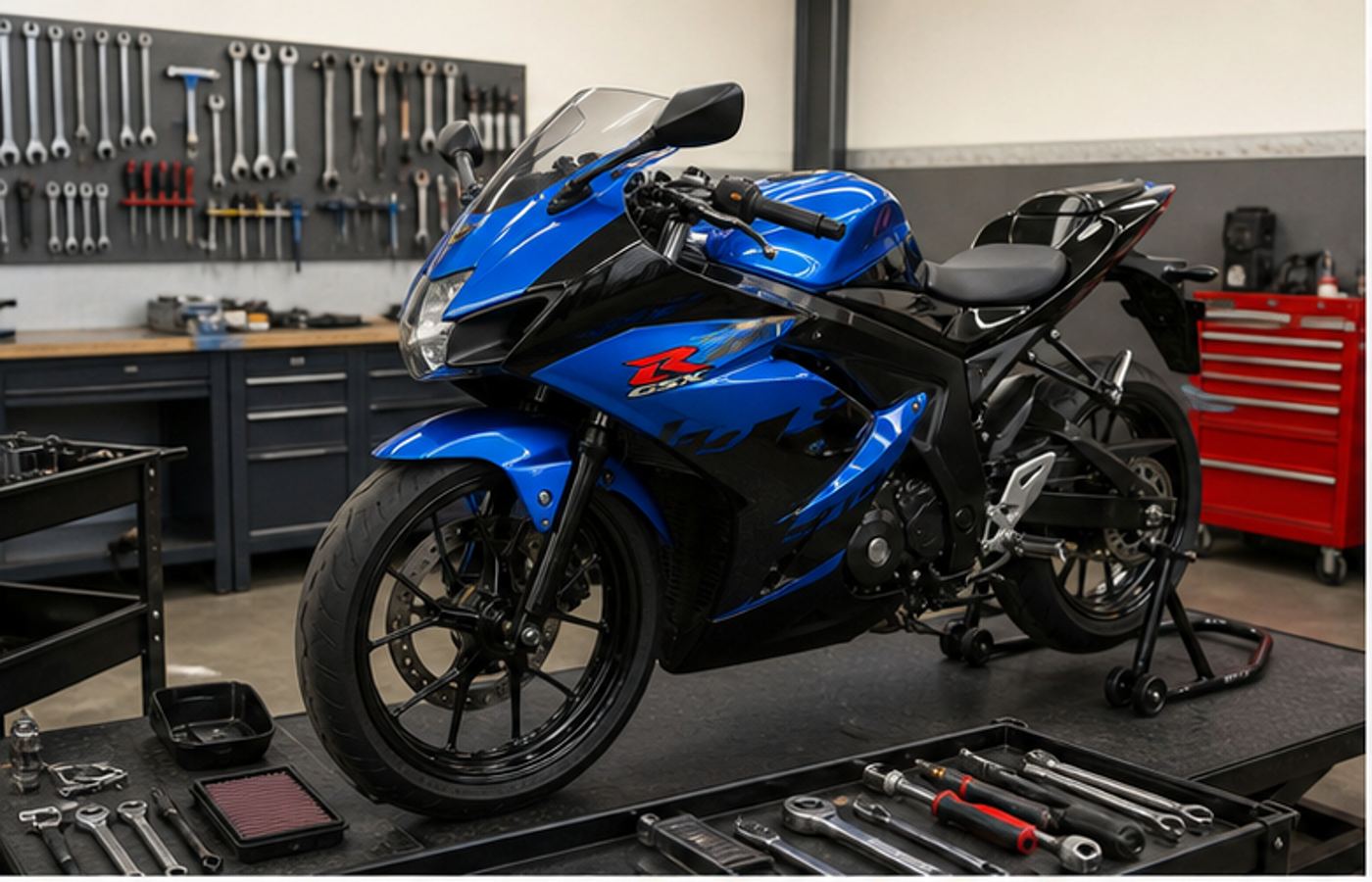
Suzuki GSX-R 125 power increase
Suzuki GSX-R 125 power increase is a tempting idea because the GSX-R125 looks and feels like a proper small sportbike, but the useful gains come from careful setup rather than fantasy horsepower claims. This is a 125 cc, learner-friendly, fuel-injected, liquid-cooled single built to work inside the A1 class, so the right approach is to make the bike pull cleanly, breathe properly, run smoothly and use its gearing well without turning a reliable road motorcycle into a noisy problem.

The GSX-R125 rewards precision. A tight chain, dirty air filter, tired spark plug, dragging brake, worn sprockets or poorly fitted exhaust can make the bike feel flat before any tuning part is considered. Once the basics are right, a road-sensible exhaust, clean intake path, healthy fuelling, correct gearing and measured installation can make the motorcycle feel sharper. The aim is better throttle response, cleaner roll-on and stronger drive through normal riding speeds, not pretending that a 125 will behave like a 300.
Realistic gains on a GSX-R125
Suzuki GSX-R 125 power increase searches usually come from riders who already like the bike but want more drive out of corners, better response when overtaking slower traffic and a little more confidence on faster A-roads. That intention is reasonable. The limit is physics. A modern 125 cc four-stroke sportbike has a small piston, tight emissions calibration and a power ceiling shaped by learner rules. The best results are normally felt in response and consistency rather than large dyno numbers.
Suzuki UK positions the GSX-R125 as a lightweight A1 sport machine, and the official model context is worth checking before buying parts. The Suzuki UK GSX-R125 page is a useful starting point for understanding the standard bike, equipment and intended use. A sensible Suzuki GSX-R 125 power increase respects that baseline: the bike should still start cleanly, idle correctly, cool properly, pass normal road-use checks and remain pleasant enough for daily riding.
What riders normally want to improve
Most owners are not chasing a race build. They want the bike to pick up sooner from low rpm, hold speed on hills with less effort, feel less strangled at the top of the rev range and respond more directly after an exhaust or air filter change. These are setup questions. A Suzuki GSX-R 125 power increase begins by asking whether the engine is healthy, whether the final drive is correct and whether the fitted parts actually suit a small single-cylinder engine.
A small-capacity sportbike can feel surprisingly different after simple corrections. A clean chain with correct slack reduces drag. Fresh tyres at proper pressure reduce rolling resistance. A new plug can clean up cold starts. A sealed exhaust joint prevents false noise and unstable running. These jobs are not glamorous, but they matter more than a cheap part bolted onto a neglected motorcycle.
Service baseline before buying performance parts
Suzuki GSX-R 125 power increase work should start with a maintenance inspection. Check oil level and service interval, coolant level, radiator condition, spark plug, air filter, throttle free play, clutch adjustment, brake drag, tyre pressure, chain slack and sprocket wear. If the bike is used through winter, also inspect connectors, battery voltage and corrosion around exhaust fasteners.

A bike that is down on maintenance often feels like it needs tuning when it really needs care. If the chain is too tight, the rear suspension movement loads the gearbox output shaft and creates drag. If the air filter is blocked, the engine cannot breathe. If the brake pads drag, acceleration suffers. Anyone planning a Suzuki GSX-R 125 power increase should solve those faults first, then choose parts with a clear reason. Riders comparing upgrades can start with the performance parts category once the bike is mechanically ready.
Baseline inspection table
| Area to check | Why it affects performance | Workshop note |
|---|---|---|
| Chain slack | Too tight creates drag and stress; too loose gives snatch | Measure with the rider load in mind and follow the manual range |
| Sprockets | Hooked teeth waste drive and damage the chain | Replace chain and sprockets as a set when worn |
| Air filter | Restricted airflow weakens throttle response | Check sealing and condition, not just colour |
| Spark plug | Poor ignition causes hesitation and rough running | Inspect gap, colour, age and correct specification |
| Exhaust joints | Leaks create noise and unstable fuelling signals | Check gasket, studs, hanger alignment and sensor area |
| Brakes and tyres | Drag and pressure loss can feel like low power | Spin wheels, check pad clearance and set correct pressures |
Compatibility on the GSX-R125
Suzuki GSX-R 125 power increase compatibility depends on model year, market version, exhaust layout, sensor connectors, ECU strategy, fairing clearance and final-drive dimensions. A part listed for a generic 125 may not fit the Suzuki correctly. A part listed for the GSX-S125 may share some engine family logic but can still differ in bodywork clearance, bracket position or intended riding use.
| Upgrade type | Compatibility | Important note |
|---|---|---|
| Slip-on exhaust | Only if pipe size and hanger match | Check link pipe, gasket, silencer mount and road approval |
| Full exhaust system | Model-year specific | Sensor, catalyst and fairing clearance are critical |
| Air filter panel | Usually possible when shaped for the airbox | Open intake kits can reduce rideability if poorly matched |
| Fuel or response module | Depends on connector layout | Confirm sensor plug shape and compatibility before ordering |
| Sprocket gearing | Possible with correct pitch and tooth count | Changes acceleration, cruising rpm and speedometer behaviour |
| Custom race setup | Possible with professional work | May be unsuitable for public roads and insurance |
For a Suzuki GSX-R 125 power increase, compatibility must be checked with the bike in front of you. Measure pipe diameter, inspect the hanger line, look for oxygen sensor placement, check catalyst position and make sure the fairing will not touch a hot component. The universal motorcycle exhaust buying guide explains the pipe-diameter and DB-killer checks that often decide whether a part is realistic or a headache.
Exhaust, intake and fuelling
Suzuki GSX-R 125 power increase conversations often begin with exhausts because sound changes immediately. A good exhaust can save weight, tidy the look and improve response if it is correctly matched. A bad exhaust can make the bike louder, weaker at low rpm, harder to insure and unpleasant on longer rides. On a 125, pipe diameter matters. Too much volume can hurt gas speed and make the engine feel soft where riders need it most.
An air filter upgrade should keep the original airbox logic unless the rest of the setup justifies a more serious change. The standard airbox protects the engine from water, dirt and hot air. Removing that protection for a noisy open filter is often a step backwards on a road 125. A careful Suzuki GSX-R 125 power increase uses airflow improvements that remain stable in rain, traffic and normal commuting.
When fuelling support makes sense
Fuelling support is not a magic horsepower button. It makes sense when exhaust or intake changes create lean surging, flat throttle response, excessive popping, hot running or inconsistent pull. Connector compatibility is the first question. The second is adjustment. Start conservatively, test when fully warm and avoid settings that make the bike smell rich, hesitate or foul plugs. If the bike shows warning lights, undo the latest change and diagnose properly.

Gearing and chain setup
Suzuki GSX-R 125 power increase can also mean making better use of the power the engine already has. Sprocket changes do not create engine output, but they change how the bike feels. Shorter gearing can help acceleration and hill response, especially for heavier riders or town riding. Taller gearing can reduce cruising rpm, but only if the engine has enough strength to pull it. Too tall and the bike becomes slower everywhere that matters.
Front and rear sprocket choices
Changing one tooth at the front is a large step; changing the rear is usually more gradual. A smaller front sprocket can make the GSX-R125 feel more urgent but may increase rpm at cruising speed. A larger rear sprocket has a similar effect. A Suzuki GSX-R 125 power increase based on gearing should include chain length, adjuster position and speedometer implications before buying parts.
Comparison of practical routes
| Solution | Main advantage | Possible disadvantage | Best use case |
|---|---|---|---|
| Service and chain refresh | Restores lost performance | Does not change the bike’s character dramatically | Used bikes and commuters |
| Road-approved exhaust | Better sound and possible weight saving | Must be legal, sealed and correctly fitted | Riders wanting sound without major risk |
| Air filter panel | Maintains airbox protection with cleaner flow | Small gains if used alone | Daily road bikes |
| Fuel or response module | Can smooth modified setups | Connector and adjustment must be right | Bikes with exhaust/intake symptoms |
| Shorter final drive | Improves acceleration feel | Raises cruising rpm and may affect indicated speed | Town, hills and twisty roads |
Installation checks that prevent trouble
Suzuki GSX-R 125 power increase parts should be fitted one change at a time. Install the exhaust, test it, then move to intake or fuelling. Change gearing, test it, then decide whether another step is needed. When everything is fitted together, a new hesitation could come from the exhaust, intake, chain, sensor, plug, wiring or a simple mistake under the fairing.
Exhaust installation details
Use a new gasket when needed, align the header before tightening the hanger, check clearance to the fairing and rear brake area, and make sure the silencer cannot stress the pipe. A leaking exhaust joint near the head can make a Suzuki GSX-R 125 power increase feel worse because the bike becomes noisy without gaining useful drive. After the first heat cycle, let the bike cool and recheck fasteners.
Electrical and module installation details
If a module is used, route wiring away from heat, steering movement and sharp bodywork edges. Do not pull on sensor wires. Use weather-safe routing, keep connectors fully seated and avoid crushing wires under panels. If the bike develops a warning light, do not keep riding and hoping it clears. Read the fault, inspect the connector and return to the previous setup if necessary.

UK road legality, A1 limits and insurance
Suzuki GSX-R 125 power increase choices must respect the market where the bike is ridden. In the UK, the GSX-R125 sits in the A1/learner-friendly 125 cc world, so licence entitlement, insurance, MOT condition and road legality matter. GOV.UK explains motorcycle categories and the A1 class on its motorcycle licence requirements page. Do not assume a modification is acceptable because it fits physically.
Exhaust legality is especially important. A road bike should not be clearly unreasonably louder than a similar motorcycle with a standard silencer, and insecure exhaust components are a roadworthiness issue. E-mark status, DB-killer presence, catalyst removal, emissions equipment, track-use-only markings and insurance disclosure all matter. A Suzuki GSX-R 125 power increase for private land or track use is different from a setup used every day on public roads.
In the United States, Canada, Australia, New Zealand and Ireland, rules can vary by state, province, territory and registration class. Noise limits, emissions requirements, learner limits and inspection rules are not identical. If a part affects power, noise, emissions or declared specification, check local rules before using the bike on public roads.
Common mistakes
Suzuki GSX-R 125 power increase mistakes often start with buying by appearance. A shiny exhaust is not automatically better. A loud pipe is not automatically faster. A universal part is not automatically plug-and-play. A fuelling box is not automatically compatible. The correct process is to measure, inspect, confirm and then fit.
Buying mistakes
Do not order a silencer without checking link-pipe diameter and hanger position. Do not buy sprockets without confirming pitch and tooth count. Do not assume an intake kit is better than the standard airbox. Do not buy a module without connector confirmation. Do not choose a part only because it promises a big gain. On a small sportbike, honest compatibility matters more than bold advertising.
Setup mistakes
Do not change gearing and exhaust on the same day if you want to understand the result. Do not ignore brake drag. Do not over-tighten the chain. Do not remove road-use equipment from a road motorcycle. Do not keep riding with lean symptoms, misfires, warning lights or a hot smell. A proper Suzuki GSX-R 125 power increase should make the bike feel more precise, not more stressed.
Real workshop signs that the setup is right
A successful Suzuki GSX-R 125 power increase is easy to feel. The engine starts cleanly, idle is steady, throttle response is predictable, the bike pulls more cleanly through the mid-range and there is no harshness from the chain or clutch. The exhaust does not leak, the fairing does not touch hot parts and the bike does not smell rich or hot after a normal ride.
| After-change symptom | Likely cause | Practical fix |
|---|---|---|
| Louder but slower at low rpm | Exhaust too open or leaking | Check gasket, DB-killer, pipe size and fuelling behaviour |
| High rpm cruising feels strained | Gearing too short | Return closer to standard gearing or change less aggressively |
| Flat roll-on after intake work | Airbox disturbance or fuelling mismatch | Recheck filter seating and intake sealing |
| Warning light after module fitting | Connector or sensor issue | Stop, inspect wiring and read fault codes |
| Snatchy drive after sprocket change | Chain slack or worn drivetrain | Set slack correctly and inspect chain/sprocket wear |
When the upgrade is worth it
Suzuki GSX-R 125 power increase work is worth doing when the goal is a sharper, cleaner and better-sorted 125. It is not worth doing if the rider expects large top-speed gains or big-bike acceleration. For most road riders, the smart route is service baseline, chain and sprocket health, a road-suitable exhaust if desired, an airbox-friendly filter, then conservative fuelling support only when needed.
If the bike is used daily, keep the setup reversible and documented. Keep original parts, note sprocket sizes, keep receipts and record any module settings. Riders choosing parts should match the exact model year and riding use, then compare relevant options through X Moto Parts shop or related 125 tuning guides such as Suzuki GSX-R 125 derestriction.
FAQ
Can you increase power on a Suzuki GSX-R125?
Yes, but gains are modest. A Suzuki GSX-R 125 power increase should focus on service condition, airflow, exhaust fitment, fuelling quality and gearing rather than unrealistic horsepower claims.
What is the best first upgrade for a GSX-R125?
The best first step is a full baseline check: oil, coolant, air filter, spark plug, chain slack, sprockets, tyre pressure and brake drag. Once the bike is healthy, performance parts can be judged fairly.
Does an exhaust make a GSX-R125 faster?
An exhaust can improve sound, save weight and sometimes sharpen response, but only if pipe size, sealing, catalyst/sensor layout and fuelling are suitable. A loud exhaust alone does not guarantee more speed.
Do I need to remap after fitting an exhaust?
It depends on the exhaust and how the bike runs afterwards. If the motorcycle surges, pops excessively, feels flat or runs hot, fuelling support or professional diagnosis may be needed.
Can sprockets improve acceleration?
Yes. Shorter gearing can make the bike feel stronger at low and mid speeds, but it raises cruising rpm and can reduce relaxed top-end behaviour. Gearing changes should be chosen carefully.
Is Suzuki GSX-R125 tuning legal in the UK?
It depends on the modification. The motorcycle must remain roadworthy, insured and suitable for the rider’s licence category. Exhaust noise, E-mark status, catalyst removal and track-use-only parts can create problems.
Will performance modifications affect insurance?
It can. Exhausts, fuelling modules, gearing changes and other performance parts may need to be declared. Always check with the insurer before using a modified bike on public roads.
Can I fit universal parts to a GSX-R125?
Sometimes, but universal does not mean bolt-on. Measure pipe diameter, hanger position, fairing clearance, sensor layout and chain/sprocket dimensions before ordering.
Final buying advice
Suzuki GSX-R 125 power increase planning should be calm and mechanical. Start with the bike’s condition, not the product promise. Measure the exhaust, inspect the chain, confirm sprocket sizes, keep the airbox sensible, check road legality and make one change at a time. Choose a universal part only when you are ready to measure and adapt it. Choose a model-specific part when you want easier installation and fewer surprises. Ask a mechanic when wiring, fuelling, exhaust alignment or drivetrain wear is outside your comfort zone.
The best Suzuki GSX-R 125 power increase is the one that makes the bike cleaner, sharper and still dependable. A small sportbike is most enjoyable when every part works together: engine, exhaust, intake, chain, gearing, brakes, tyres and rider expectations.
{
“@context”: “https://schema.org”,
“@type”: “Article”,
“headline”: “Suzuki GSX-R 125 power increase”,
“description”: “Practical GSX-R125 guide covering realistic gains, exhaust fitment, intake, fuelling, gearing, installation and UK road legality.”,
“author”: {
“@type”: “Organization”,
“name”: “X Moto Parts”
},
“publisher”: {
“@type”: “Organization”,
“name”: “X Moto Parts”,
“logo”: {
“@type”: “ImageObject”,
“url”: “https://xmotoparts.com/wp-content/uploads/x-moto-parts-logo.png”
}
},
“mainEntityOfPage”: “https://xmotoparts.com/suzuki-gsx-r-125-power-increase/”,
“image”: “https://xmotoparts.com/wp-content/uploads/suzuki-gsx-r-125-power-increase.jpg”
}
{
“@context”: “https://schema.org”,
“@type”: “FAQPage”,
“mainEntity”: [
{
“@type”: “Question”,
“name”: “Can you increase power on a Suzuki GSX-R125?”,
“acceptedAnswer”: {
“@type”: “Answer”,
“text”: “Yes, but gains are modest. The best approach is service condition, airflow, exhaust fitment, fuelling quality and gearing rather than unrealistic horsepower claims.”
}
},
{
“@type”: “Question”,
“name”: “What is the best first upgrade for a GSX-R125?”,
“acceptedAnswer”: {
“@type”: “Answer”,
“text”: “The best first step is a baseline check: oil, coolant, air filter, spark plug, chain slack, sprockets, tyre pressure and brake drag.”
}
},
{
“@type”: “Question”,
“name”: “Does an exhaust make a GSX-R125 faster?”,
“acceptedAnswer”: {
“@type”: “Answer”,
“text”: “An exhaust can improve sound, save weight and sometimes sharpen response, but pipe size, sealing, sensor layout and fuelling must be suitable.”
}
},
{
“@type”: “Question”,
“name”: “Do I need to remap after fitting an exhaust?”,
“acceptedAnswer”: {
“@type”: “Answer”,
“text”: “It depends on how the bike runs. Surging, excessive popping, flat response or hot running can mean fuelling support or diagnosis is needed.”
}
},
{
“@type”: “Question”,
“name”: “Can sprockets improve acceleration?”,
“acceptedAnswer”: {
“@type”: “Answer”,
“text”: “Yes. Shorter gearing can improve acceleration feel, but it raises cruising rpm and should be chosen carefully.”
}
},
{
“@type”: “Question”,
“name”: “Is Suzuki GSX-R125 tuning legal in the UK?”,
“acceptedAnswer”: {
“@type”: “Answer”,
“text”: “It depends on the modification. The motorcycle must remain roadworthy, insured and suitable for the rider’s licence category.”
}
},
{
“@type”: “Question”,
“name”: “Will modifications affect insurance?”,
“acceptedAnswer”: {
“@type”: “Answer”,
“text”: “They can. Exhausts, fuelling modules, gearing changes and performance parts may need to be declared.”
}
},
{
“@type”: “Question”,
“name”: “Can I fit universal parts to a GSX-R125?”,
“acceptedAnswer”: {
“@type”: “Answer”,
“text”: “Sometimes, but universal does not mean bolt-on. Pipe diameter, hanger position, fairing clearance, sensor layout and drivetrain dimensions must be checked.”
}
}
]
}